

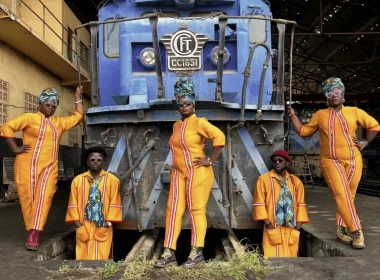


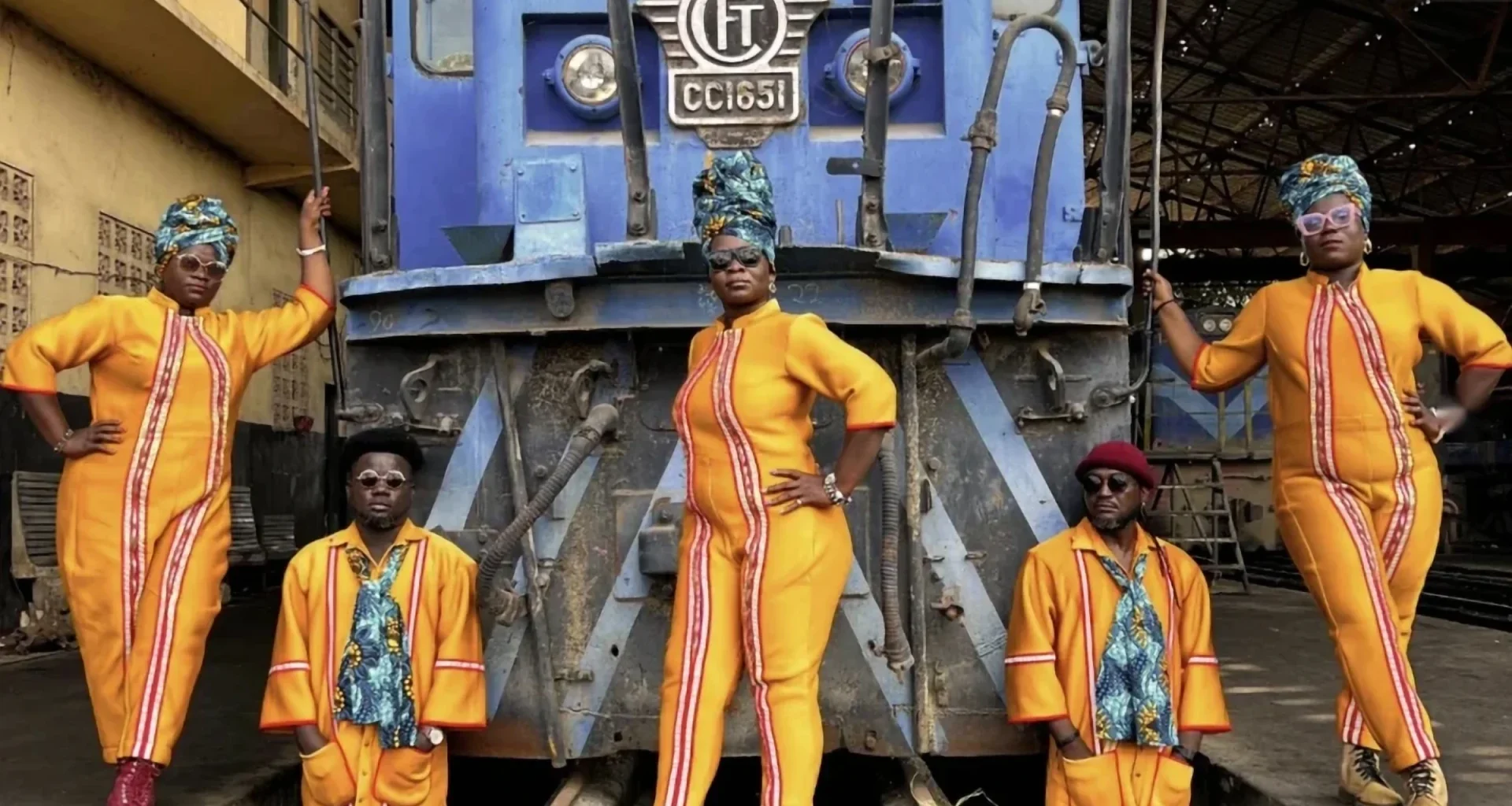
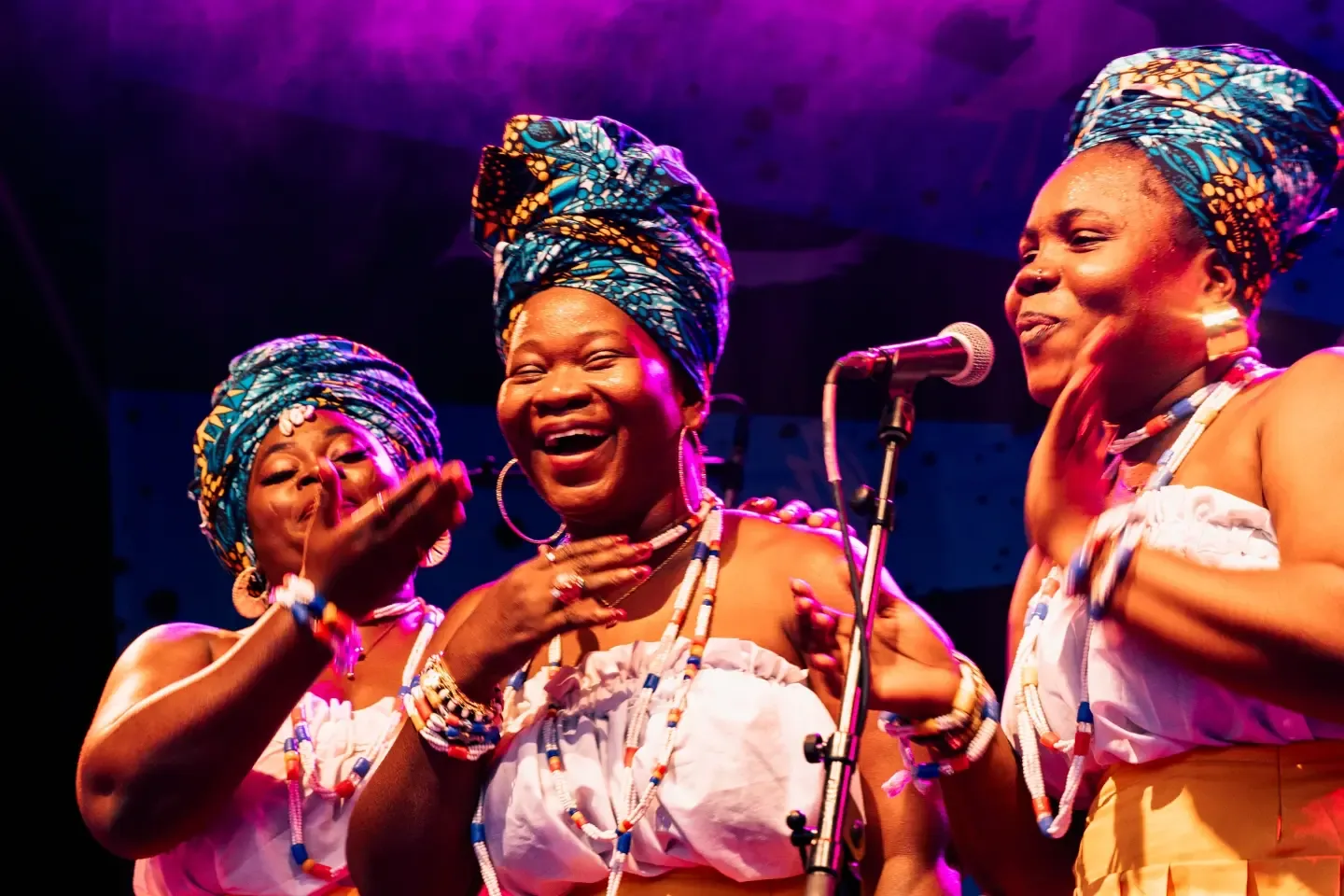
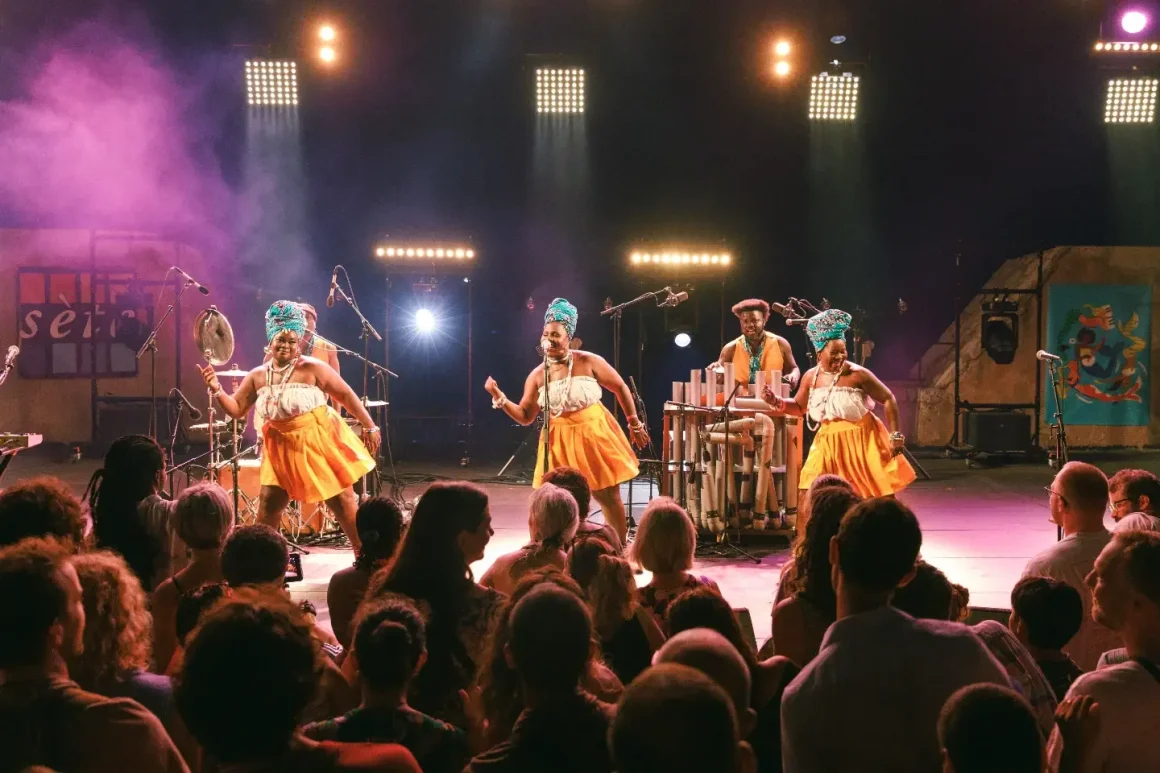
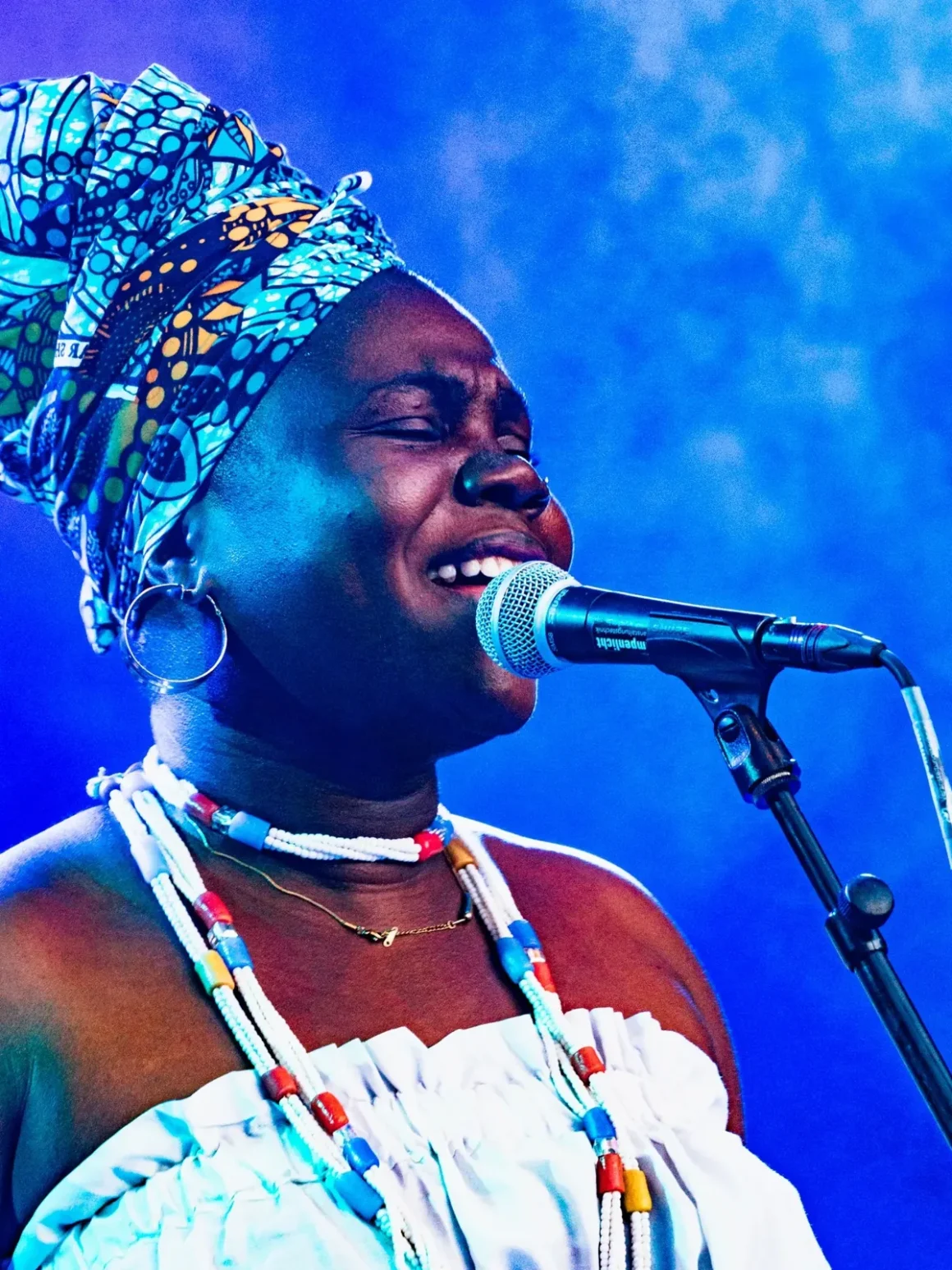
Nana Benz du Togo are a trendy band from Lomé, Togo’s capital on the Gulf of Guinea. Formed in 2019 after a musical residency with Peter Solo of Vaudou Game, the group brings together three singers and two musicians who mix the chants and rhythms of Vodun with electronics and instruments built from recycled materials. Their songs, sung mostly in Mina and French, champion Vodun, the environment and women’s rights.
The band took its name from the Nana Benz, the Togolese women traders who built fortunes in the wax-print textile business and became symbols of female economic power. Since their European debut at the Transmusicales festival in Rennes in December 2021, Nana Benz du Togo have toured stages across the continent, as far north as Thisted in Denmark.
With Locals Insider they share how the group began, what “digital Vodun” means, the situation for women in Togo today, and the Lomé they would show a first-time visitor.
Who Are Nana Benz du Togo?
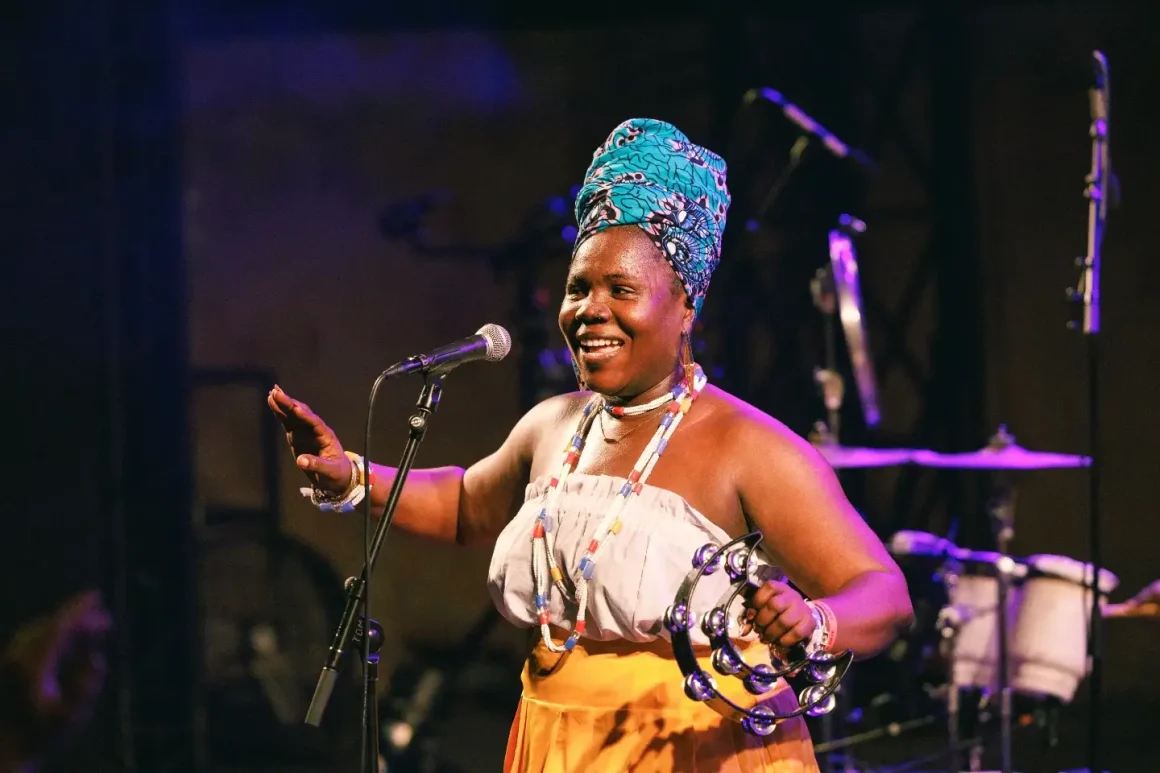
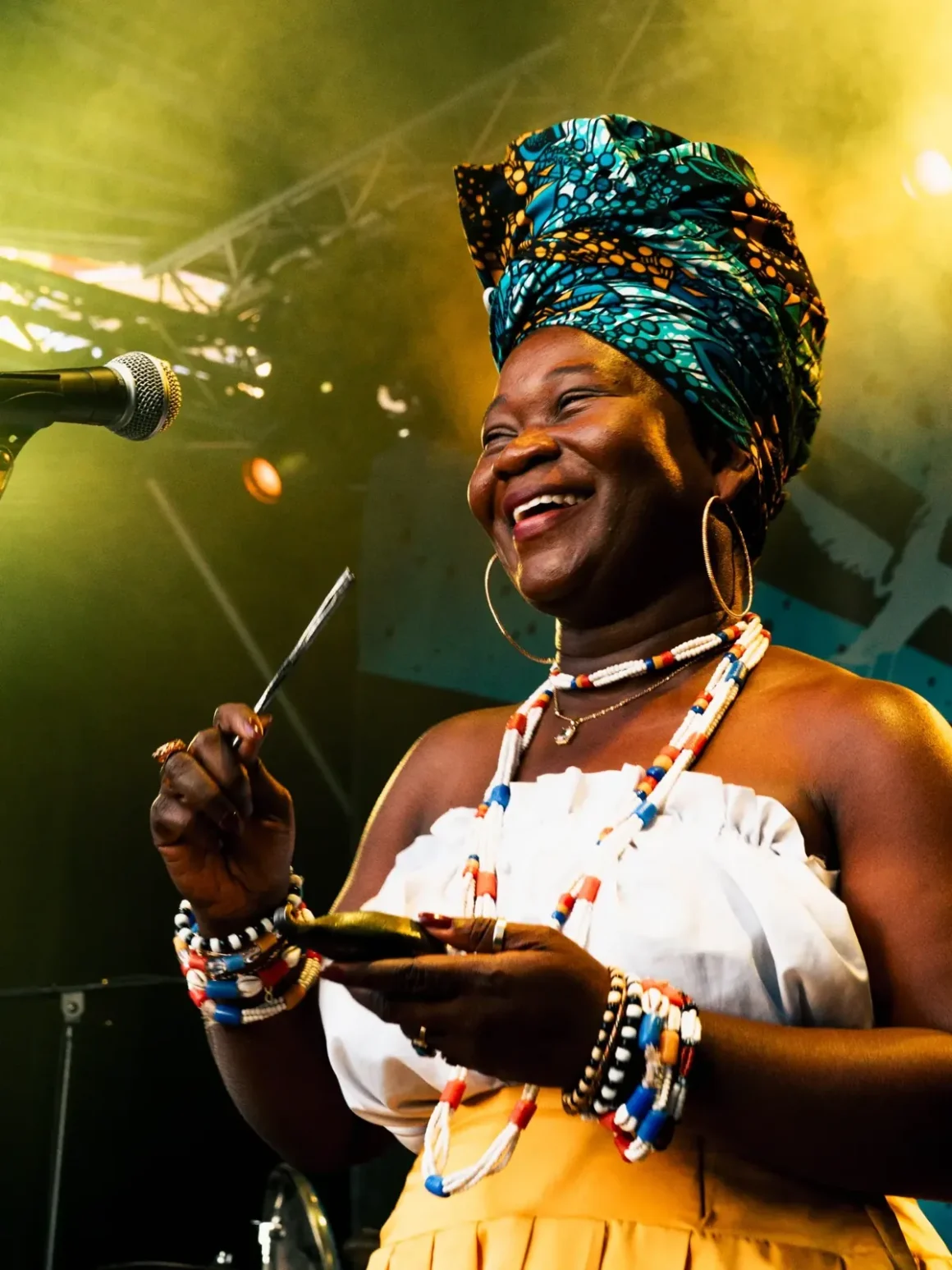
Nana Benz du Togo is a Togolese group consisting of three singers and two musicians. We create music we call Electro Digital Vodun, where Vodun sounds and traditions meet electronic music and instruments made from recycled materials. Through our music, we advocate for Vodun, environmentalism, and women’s rights.
How the Group Began
The group was formed in 2019, following a musical residency centered on the vaudou scale of Peter Solo from Vaudou Game. He discovered our different personalities and musical potential and suggested we form a group. After giving it some thought, we accepted the challenge, and Nana Benz du Togo was born.
Why We Chose the Name Nana Benz
When we thought about the band’s identity and the themes we wanted to champion, it seemed obvious to us, as women, that women’s issues should play a significant role in our music.
So we asked ourselves which women could serve as examples of power and independence for us—socially, economically, and even politically. The answer was obvious: the Nana Benz of Togo.
We consider them heroines and role models. They’ve shown that a woman can claim her place, build her independence, and become an important figure in society.
For us, being a Nana Benz means being a woman who is fully confident in herself, who knows her worth, and who shows the world that she deserves the same respect and opportunities as men.
“Being a Nana Benz means being a woman who is fully confident in herself, who knows her worth.”
Women in Togo Today
Togolese women have always been examples of intelligence, strength, and courage. In recent years, we’ve seen significant progress. In many cities and villages, girls’ education is increasingly taken for granted, and women now hold important positions in the country’s political and professional spheres.
This is a major step forward, but there is still much to be done. Before becoming a woman, one is first a girl. We must therefore ensure their education and access to schooling.
There are still places where girls do not attend school, as well as practices such as forced marriages and female genital mutilation. At our level, we try to raise awareness and help change attitudes.
We also believe that a woman should be able to be a woman, a mother, and a professional all at once, without having to choose between these different aspects of her life.
Things are changing, but there’s still a long way to go.
What “Digital Vodun” Means to Us
Our main inspirations come from the Vodun convents, their chants, their rhythms, and that special relationship between music, the body, and spirituality.
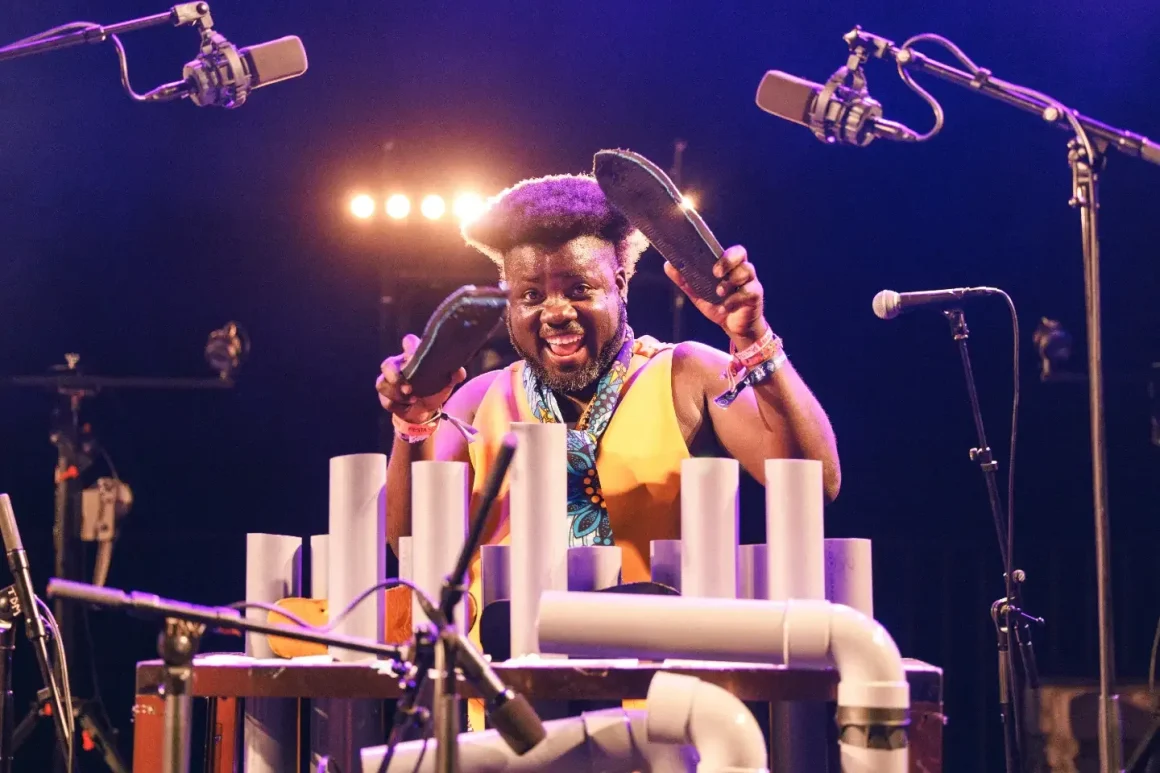
But we’re not simply trying to reproduce traditional music. We take this material from our history and create a dialogue between it and the contemporary world: electronics, our voices, and instruments made from recycled materials, such as our “Gazé Tuyau” bass (PVC pipes) and our DIY drum set.
That’s what we call “Digital Vodun”: the meeting of a very ancient tradition and a contemporary musical language.
For us, it’s not a matter of choosing between tradition and modernity. We want to show that a culture can evolve, transform, and travel without losing its soul.
“We want to show that a culture can evolve, transform, and travel without losing its soul.”
Our First Shows in Europe
We’ve been performing on European stages since December 2021, and what we’re experiencing here is simply extraordinary. The connection with the audience and the experience we gain on every tour are incredibly enriching.
Our first performance was at the Transmusicales festival in Rennes. As we were about to go on stage, we were frozen with nerves, but as soon as we set foot on stage, we were swept up in a trance.
A Summer Gig in Thisted, Denmark
You’d have to ask Heikki Eiden, our agent, how he managed to land us that gig in Thisted, Northern Denmark!
By the way, thanks, Heikki, for that amazing tour you landed for us. We approached it with professionalism, our positive energy, and a lot of solidarity among ourselves, as usual.
Singing in Mina, French and English
For us, language isn’t just a way to say something. It carries energy, memory, and a way of thinking and feeling.
We sing a lot in Mina and French because these languages are part of our daily lives and our history. But sometimes, a song naturally leads us to another language, like English. We let the song guide us.
Our languages are part of our identity, but we don’t want to confine them to the idea of “tradition.” A language can be ancient and, at the same time, completely contemporary.
That’s also what we try to do with our music: take something that comes from a long way back and give it a new form, without stripping it of its soul.
Can Audiences Feel It Without the Words?
Yes. Because before words, there is the body.
When someone dances, when someone cries, when someone feels something in their gut, they don’t need a translation.
In African traditions, music has never been separate from life. It accompanies births, celebrations, mourning, ceremonies, and spirituality. It’s also a way to communicate with something beyond us.
On stage, we try to recapture that energy. We don’t just want people to listen to our songs. We want them to feel them.
And sometimes, someone who doesn’t understand our language at all can feel a song more deeply than someone who understands every word. That’s when music truly becomes universal.
“Before words, there is the body.”
What We’d Like Visitors to Know About Togo

I’d like them to take the time to see Togo in a different light.
People often come to Africa with a preconceived image in their minds. We’d like people to arrive without expecting to find what they think they know about Africa.
Togo is small geographically, but very rich in terms of its people and culture. You have to meet the people, go to the markets, taste the food, listen to the languages, and above all, get out of Lomé if you have the chance.
And we’d really like people to take the time to understand Vodun.
Vodun isn’t something evil, as it’s often portrayed in the West. For us, it’s a connection to life, to water, to the earth, to fire, and to air. It’s a way of understanding nature, our ancestors, the forces around us, and our place in the world.
That’s also why, in “Nana Benz du Togo”, we talk a lot about nature and women. For us, these things are deeply interconnected. When we don’t respect women, we don’t respect nature either.
“When we don’t respect women, we don’t respect nature either.”
Our Lomé: Don’t Be in a Hurry
First, we’d tell you: don’t be in a hurry.
You have to experience Lomé. It doesn’t necessarily reveal itself to you at first glance.
Go to the market. Look at the fabrics, the colors, the women working, the conversations, the smells, the hustle and bustle. That’s also where you can understand part of the history of the Nana Benz and of our country.
Head to the beach, too. But not just to take a nice photo. Sit down. Watch the fishermen, listen to the people, feel the wind. The sea is part of Lomé.
And eat local. Really taste our cuisine: akoumé, adémé, grilled fish, fufu… You have to eat with your hands at least once! Best places to try local cuisine: Nopegali, Brovi, Tanti D.
When it comes to art and music, we’d especially recommend following the locals. Ask residents where they’re going, which artists they listen to, and where there’s a concert or an exhibition. There are so many things that aren’t necessarily listed in guidebooks.

And then, set aside an evening just to walk around, sit somewhere, have a drink, and watch Lomé come alive. Best local bars: Zanzibar, Patio, La Villa.
For us, Lomé isn’t just a place. It’s an energy.
It’s a city that’s sometimes chaotic, sometimes gentle, sometimes noisy, sometimes very calm. But it has a soul. And if you give it time, it will eventually speak to you.
“Lomé isn’t just a place. It’s an energy. If you give it time, it will eventually speak to you.”
Nana Benz du Togo’s Lomé: Where to Eat and Drink in Togo’s Capital
Nopegali VIP
A Lomé institution for African dishes and Togolese specialties, with an air-conditioned dining room next to its own open-air maquis. Order the guinea fowl or the gombo (okra) sauce; a meal runs roughly 5,000–10,000 CFA francs, and it’s open every day from 10am to midnight. Address: 173 Boulevard du 13-Janvier, next to Média +, Lomé
Chez Brovi (Maquis La Grâce de Dieu)

A popular local maquis — the casual open-air eateries Lomé runs on — loved by locals and expats alike for its grilled fish, with chicken and attiéké (cassava couscous) too. Good value and a lively evening atmosphere. Address: 29 Avenue Nicolas Grunitzky, Nyékonakpoè, opposite the town hall, Lomé
Tanti D
A no-frills neighborhood address for Togolese staples, especially corn pâte and fufu (pounded yam) with sauce — the place to eat with your hands, as the band suggests. Address: Djidjolé district, Lomé
ZanziBar Lomé

A spacious open-air cocktail bar and rooftop on the way to the beach, with food, DJs and late nights. Open every day from 5pm to 3am. Address: Boulevard du 13-Janvier, Kodjoviakopé (towards the beach), Lomé
Le Patio
A guesthouse, restaurant and spa in the leafy Cité OUA, set around a pool with a traditional straw-roofed bar. The menu mixes Togolese flavors with European dishes, and it’s a calm spot for a drink or dinner, about 25 minutes from the center by car. Address: Lot 9, Cité OUA, Lomé
La Villa

A lounge bar near the Confortium gallery, one of the pillars of Lomé’s evening scene, with local beers and cozy seating for an evening out. Closed on Mondays and Tuesdays. Address: near the Confortium gallery, central Lomé (Plus Code 46J7+VQJ)