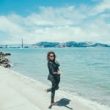


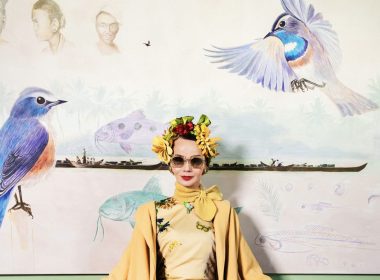


Hélène Havard is a French photographer who grew up in France, lived in England and Canada, and now makes her home in French Polynesia. Her work — collected in atmospheric series with poetic titles like Pacifica, The Quiet Season, Pacific Insomnia and Out of Time — is less about documenting places than about photographing the feeling of being in them. Her images have a soft, cinematic quality: careful light, patient color, a stillness in the people she photographs that recalls painting as much as photography.
For Locals Insider, Hélène wrote about what made her stay in French Polynesia after coming with no plan to, how her photographs of Cuba became a personal memory rather than a portrait, how the California of her Pacifica series emerged in the space between myth and reality, what she has learned about people and the places they shape, and — for anyone visiting Tahiti for the first time — why the island is worth much more than its resorts.
Follow Hélène at heleneharvard.com and on Instagram at @helenehavard_travel.

From France to French Polynesia — and Why I Stayed
I did not necessarily come to French Polynesia with the idea that I would stay permanently. I first came because I was curious about the place, its landscapes, its culture and the feeling of being somewhere so far from everything I knew.
Having lived in different countries before, I was already used to adapting to new environments. However, French Polynesia was different. The relationship between the islands, the ocean, the isolation and the people created a very particular atmosphere that I immediately felt.
What made me stay was not simply the beauty of the islands. I think that would be too easy an answer. What interested me was the possibility of living in a place that constantly made me look differently at my surroundings.

Even after many years, I still feel that I am discovering things here. The light changes, the weather changes, the people change, and my own relationship with the place changes as well. I think that is probably what has kept me here.

“What made me stay was not simply the beauty of the islands. I think that would be too easy an answer.”
Cuba, and What My Photographs Actually Preserve
I do not think my photographs transform a place intentionally. They transform it because they are necessarily filtered through my own experience.
When I photograph somewhere, I am not trying to create a definitive portrait of that place. I photograph what I felt, what caught my attention and what stayed with me.

Cuba is a good example. In person, Cuba was much more complex than the images I had imagined before going there. There was color, decay, energy, beauty, poverty, humor, silence and a very strong human presence. I could never have photographed all of it.
My photographs therefore became a kind of personal memory of Cuba. They do not show Cuba as it is, but Cuba as I experienced it at certain moments.
I think this is what photography does. It does not necessarily preserve reality. It preserves a way of seeing it.

“Photography does not necessarily preserve reality. It preserves a way of seeing it.”

How the Titles Come After the Photographs, Not Before
Usually, the photographs come first.
I do not generally arrive somewhere with a precise concept or a series already defined in my mind. I need to experience the place first.
The title often comes later, when I start looking at the photographs together and understand that they share something, perhaps a feeling, a rhythm or a particular atmosphere.
Sometimes the title helps me understand the work retrospectively. It gives me another way of entering the series.
For me, a title does not need to explain the photographs. I actually prefer when it opens another door rather than giving the viewer the answer.
California in Pacifica: The Space Between Myth and Reality
California existed in my imagination long before I went there.
I had seen it through films, photographs, music, and books, so I already had an idea of what California was supposed to look like. The reality was obviously much more complex.
What interested me was precisely the distance between the California I had imagined and the California I actually encountered.

Sometimes reality confirmed the myth. At other times, it completely contradicted it. However, the most interesting moments were when I could no longer clearly distinguish between the two.
That is probably what Pacifica is about for me. Not California as a destination, but the relationship between an imagined place and a real one.
How I Photograph a Place: Wander, Wait, and Let It Reveal Itself
I rarely have a precise photographic plan before arriving somewhere.
I may know where I am going, but I do not know what I am going to photograph. I prefer to leave that open.
When I arrive somewhere, I need time to understand how the place feels. I walk, I observe, and I wait. Sometimes I photograph immediately. Sometimes it takes several days before I really start seeing.
I am particularly sensitive to light, color, silence and the presence of people. A place can be visually beautiful without saying anything to me. Another place can be completely ordinary and suddenly affect me deeply.
So I do not really photograph a destination. I photograph my relationship with it.
And that relationship changes with time. The longer I stay somewhere, the more I understand why certain things attract me and why I keep returning to them.
“I do not really photograph a destination. I photograph my relationship with it.”
The Visual Language: Color, Cinema, and Photographers Who Shaped My Way of Seeing
I think my style developed more through observation than through a conscious decision to create a particular aesthetic.
I have always been very sensitive to color and light. I also love cinema, painting and photography, so my visual language has probably been influenced by all of them.
I am interested in images where people seem completely natural, even when they are aware of the camera. I do not necessarily want a portrait to feel like a traditional portrait. Sometimes I prefer to let the person remain slightly within their own world.
I have been inspired by many photographers, including James Nachtwey, Robert Doisneau and Alex Webb, although my own work is very different from theirs. I am attracted to photographers who can create an atmosphere within a single frame.

Color has also become increasingly important to me. I love black and white, but I have a strong preference for color because it allows me to express something very personal. It can completely change the emotional reading of an image.
Slow Travel: Why Waiting Is Not Wasted Time
Stay longer in one place.
And do not try to see everything.
I think we often travel with the idea that we need to collect experiences, places and photographs. However, sometimes the most interesting things happen when you stop looking for them.
Have breakfast somewhere and stay a little longer than necessary. Walk without a destination. Return to the same place at a different time of day. Talk to people. Sit somewhere and simply observe.
A place reveals itself differently when you stop treating it as a list of things to see.
For me, photography has taught me that waiting is not wasted time. Sometimes it is when you are doing nothing that you begin to really see.

Tahiti Beyond the Resorts
I would encourage people not to limit their experience of Tahiti to the resorts. The island has a much more complex identity than the image of the tropical paradise that is often presented to visitors.
I would suggest simply taking the time to explore the island, particularly its less touristy areas, the smaller villages and the interior. Drive around, walk, stop when something catches your attention. The mountains and valleys offer another perspective on Tahiti, very different from the lagoon.
I also think it is important to take an interest in the history and culture of the islands. Understanding the place makes you see the landscape differently.

Rather than giving a list of specific addresses, I would encourage visitors to look beyond the places that are designed specifically for tourists and to observe how people actually live here.
For me, that is where the real character of Tahiti can be found.
On Hidden Places in French Polynesia
I hesitate to call them hidden, because the moment you name a place, it becomes a little less hidden.
However, I do think that visitors sometimes focus too much on the most famous islands and resorts.
There are many places where the experience is much quieter and more connected to everyday life. The smaller islands and less developed parts of the archipelago can offer something completely different.
For me, the most interesting places are often not the ones with the most spectacular views, but the ones where you can feel the rhythm of everyday life.

What Photography Has Taught Me About People and Places
It has taught me that people are deeply shaped by where they live.
The environment influences the way people move, work, interact and even imagine their lives. However, the relationship works both ways. People also transform the places they inhabit.
That is something I have become increasingly interested in.
When I arrive somewhere new, I do not only look at the landscape. I look at how people occupy it. I notice what they have built, what they have left behind, where they gather and where they remain alone.
With time, I have realised that what interests me is not only a place or a person, but what happens between the two.
That is often where my photographs begin.
One Piece of Advice: Do Not Try to Photograph Everything
Do not try to photograph everything.
Give yourself the time to be somewhere before trying to understand it or photograph it.
Look at what is around you, but also pay attention to what you feel. A place does not have to be beautiful, famous or spectacular to be worth photographing.
Sometimes the most ordinary place can stay with you for years.
I think meaningful travel is less about how many places you visit and more about how deeply you allow yourself to experience them.
“Meaningful travel is less about how many places you visit and more about how deeply you allow yourself to experience them.”
Fine Art Prints: Sizes, Editions, and International Shipping
I offer my photographs at heleneharvard.com as both limited-edition and open-edition fine art prints, available in a wide range of sizes and prices. Smaller prints start at a few hundred US dollars, while larger limited editions can reach over US$1,000. I also ship internationally.
Where to Stay on a First Trip to French Polynesia: Les Tipaniers, Moorea, and Four Seasons Bora Bora
If you are planning a trip to French Polynesia and you are looking for that dream Polynesian scenery without necessarily staying in a luxury resort, I would recommend Les Tipaniers in Moorea. The water is incredibly clear, there is a beautiful white sand beach, and the setting is really lovely. If you can travel outside the high season, I would definitely recommend it. French Polynesia is still relatively uncrowded compared with many other tropical destinations, but it is even more peaceful outside the busiest periods.

If you have a bigger budget and want to experience a beautiful high end resort, I would recommend the Four Seasons in Bora Bora. The view is absolutely stunning. It is obviously a completely different budget, but the setting is hard to beat.

And for breakfast, you definitely won’t have any trouble finding eggs — Tahitians eat a lot of eggs, and scrambled eggs are very easy to find in hotels and cafés. So I wouldn’t choose a place specifically for that. I would choose it for the atmosphere and the location.