
There is a specific kind of silence found only on the Mongolian steppe—a silence so vast it feels audible. It is this raw stillness that renowned photographer Max Avdeev has captured in this striking series.
Now based in Berlin and celebrated for his ability to find the human pulse within extreme environments, Avdeev’s lens has documented everything from the frontlines of global conflicts to the furthest reaches of the Siberian tundra.
When LocalsInsider met with Max in Berlin recently, we were so moved by his latest journey through the “Land of the Eternal Blue Sky” that we asked him to share these works with our readers. He graciously agreed to this exclusive feature.
In this collection, Avdeev avoids the typical “postcard” tropes. Instead, he offers an intimate look at a nation in flux—where ancient nomadic traditions and 21st-century industry don’t just coexist, but collide. Through his eyes, we see the grit of the coal mines, the spiritual focus of young monks, and the quiet resilience of herders navigating a landscape as beautiful as it is unforgiving.
The Steel Silk Road & Nomadic Dreams: Max Avdeev’s Mongolian Series
Join us as we traverse the open plains and high-altitude outposts of Mongolia through the masterful eye of Max Avdeev.
This photoreport is an exclusive collaboration. All rights reserved by the photographer.
The Steel Silk Road
The Trans-Mongolian Railway is a feat of extreme engineering, cutting a 2,215-kilometer path from Russia to China. The Mongolian segment alone covers 1,110 kilometers of the world’s most sparsely populated terrain, where the current population density remains a mere 2.1 people per square kilometer.
This “Green Line” operates on a high plateau averaging 1,580 meters in elevation, serving as a vital lifeline through the rolling steppe and the Gobi Desert. Historically, this route replaced ancient tea-caravan trails, reducing a three-month camel trek to a journey of just a few days following its full completion in 1956.
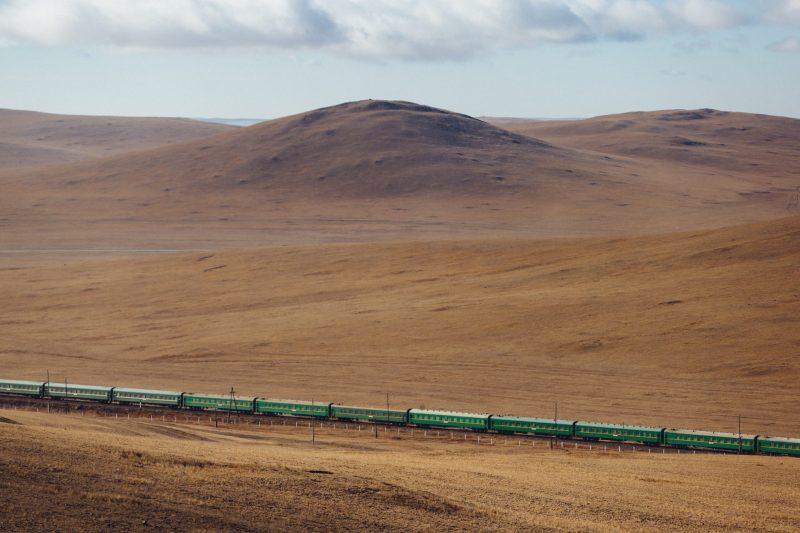
The railway is defined by its resilience to “climate whiplash,” with steel tracks engineered to withstand temperature swings from -40°C in winter to 40°C in summer. Because Mongolia utilizes the 1,520 mm Russian broad gauge while China uses the 1,435 mm standard gauge, international trains undergo a unique “bogie exchange” at the border.
During this four-hour technical intermission, entire carriages are hoisted on hydraulic jacks to swap their wheelsets. Today, the route remains a primary window into nomadic life, passing through remote halts that often consist of nothing more than a solitary signal house against a vast, sun-baked horizon.
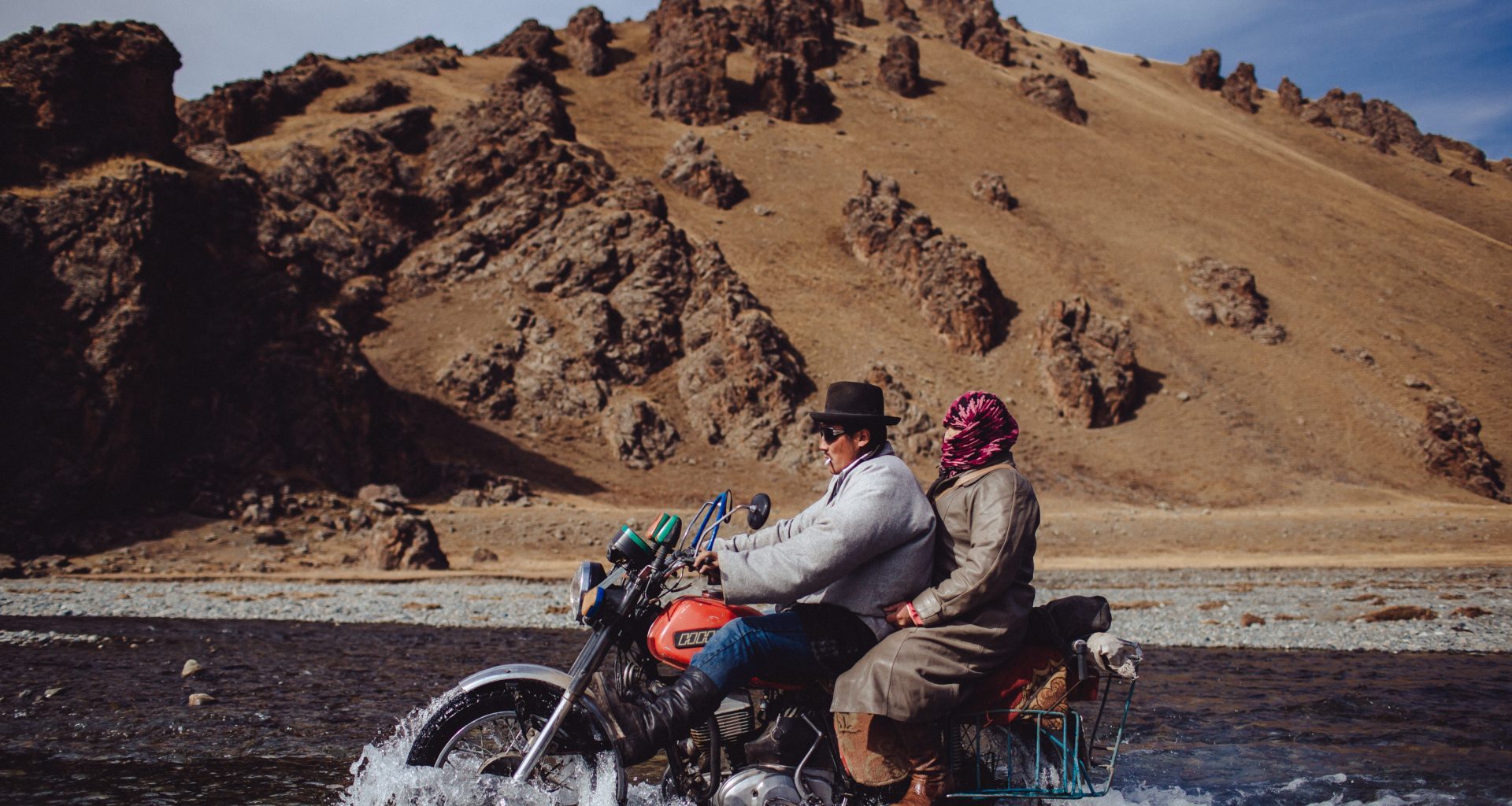
The Grassland Lifeline
This valley is part of a massive pastoral network where natural grasslands cover 73% of Mongolia’s 1.56 million square kilometers. It is one of the world’s last surviving nomadic ecosystems, supporting over 64 million livestock—a population that outnumbers humans by nearly 20 to 1.
Roughly one-third of the nation’s 3.5 million people depend directly on this land, moving herds of sheep, goats, cattle, horses, and camels in seasonal migrations known as otor.
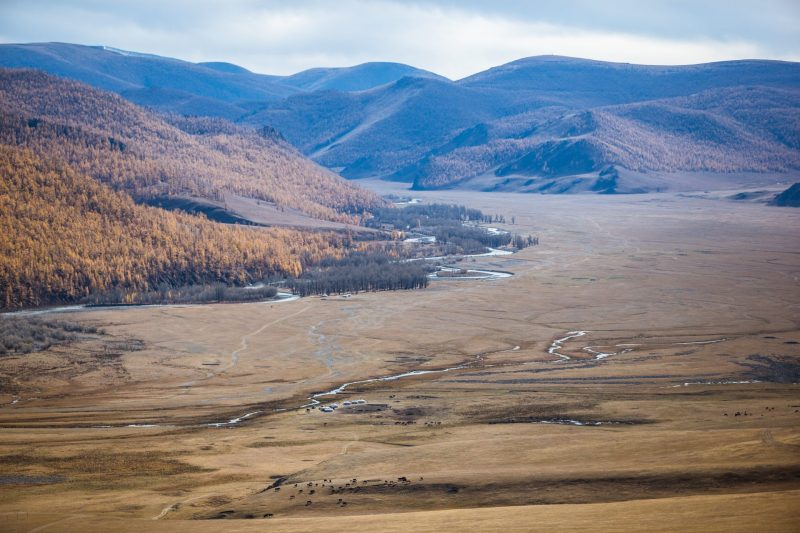
The winding rivers are vital, as surface water accounts for less than 1% of the country’s territory. These high-altitude plains, averaging 1,580 meters in elevation, face extreme “climate whiplash” with a growing season of only 100 days.
Herders must navigate the dzud, a deadly winter phenomenon where temperatures plunge to -50°C. Despite these risks, the steppe remains the nation’s cultural and economic backbone, contributing approximately 13% to the national GDP.
The Steppe Protocol
This image captures two soldiers in light-blue dress uniforms rolling out a ceremonial red carpet across the open steppe, a striking display of state protocol in one of the world’s most remote landscapes. In Mongolia, official welcomes are not confined to the capital; military honor guards frequently deploy to rural airfields to greet dignitaries, symbolizing the government’s presence across its entire 1.56 million square kilometers.
These ceremonies are a key part of the “Third Neighbor” policy—a strategic diplomatic framework intended to build strong ties with nations beyond its immediate borders of Russia and China.
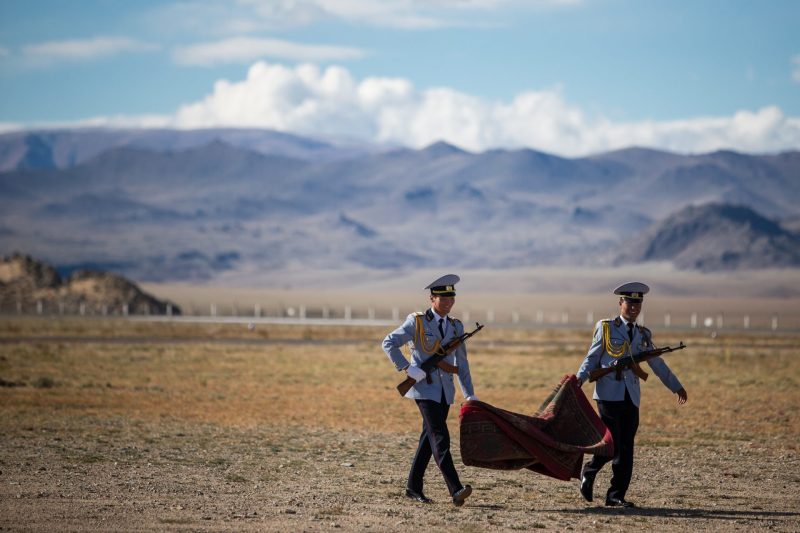
Politically, Mongolia is a semi-presidential republic that remains a democratic outlier in Central Asia. As of 2026, the Mongolian People’s Party (MPP) holds the majority in the State Great Khural (Parliament), which was recently expanded to 126 seats to ensure broader regional representation.
While the country enjoys high levels of political participation, the 2026 World Press Freedom Index highlights a complex landscape: though the media is independent, it faces challenges from concentrated ownership and strict defamation laws. Nevertheless, for a population of 3.6 million, these formal displays of sovereignty are vital assertions of independence in a strategically sensitive region.
The Blue Pearl’s Gateway
Known as the “Blue Pearl,” Lake Khövsgöl is a geological marvel, formed over 2 million years ago and containing nearly 70% of Mongolia’s fresh surface water.
The village of Khatgal sits at an elevation of 1,645 meters, framed by the Sayan Mountains where peaks exceed 3,000 meters. While Mongolia is the world’s most sparsely populated nation, with a density of just 2.1 people per square kilometer, settlements like this are vital social anchors.
As of 2026, roughly 30.7% of the country’s 3.56 million residents still live in rural areas, maintaining a delicate balance between modern settlement and ancient nomadic traditions.
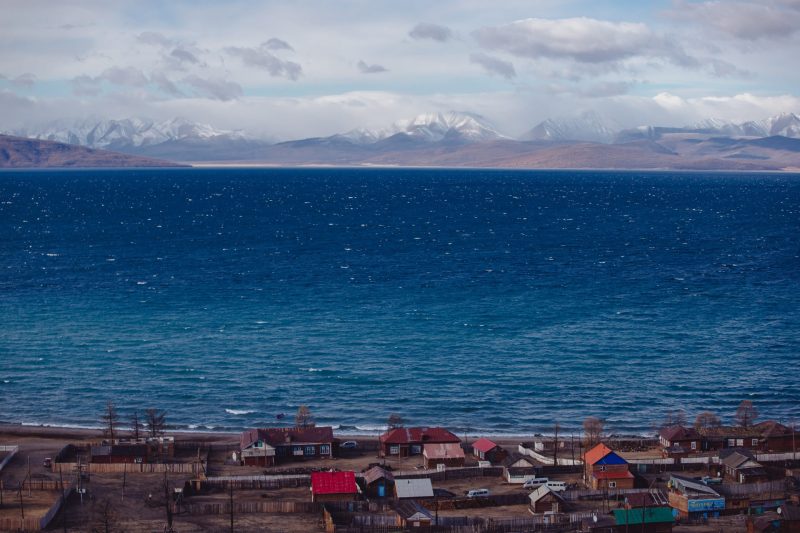
The lake itself is ultra-oligotrophic, meaning its water is so pure it is often drinkable without treatment—a rarity for a body of water that reaches depths of 262 meters. This purity is protected by its status within Khövsgöl National Park, a 1.18-million-hectare UNESCO Biosphere Reserve.
For the villagers, life is defined by the seasons: in winter, the ice can grow over one meter thick, becoming a literal highway for vehicles, while summer brings a transformation into a vibrant destination for travelers seeking the intersection of Alpine beauty and Central Asian culture.
The High-Altitude Outpost – Ölgii
This panoramic view captures Ölgii, the provincial capital of Bayan-Ölgii in far western Mongolia. At an elevation of 5,610 feet (1,710 meters), this city serves as a stark contrast to the national urbanization trend centered on Ulaanbaatar, which now houses approximately 48% of the country’s population.
While the capital expands, provincial hubs like Ölgii remain modest, with populations typically ranging between 35,000 and 40,000. These settlements are critical lifelines for a region where the population density is significantly lower than the national average of 5.4 people per square mile (2.1 per km²).
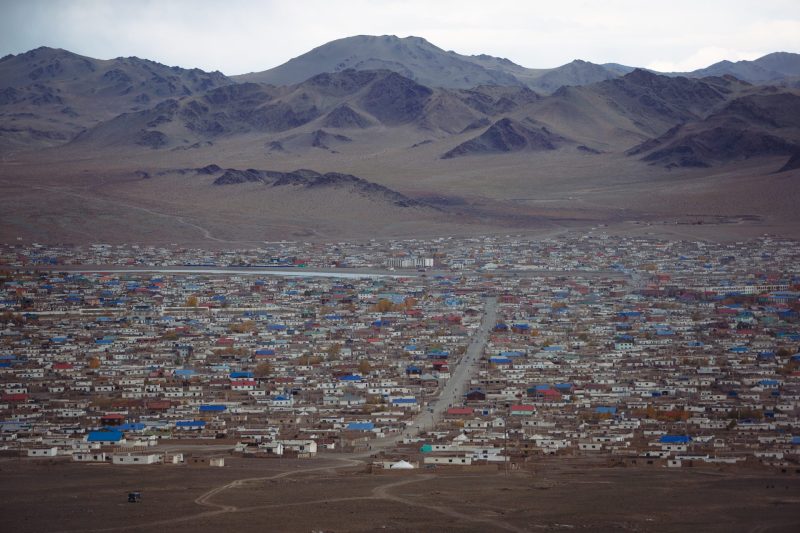
The town’s layout is defined by “ger districts,” where colorful rooftops mark fenced-off plots that often contain both a permanent brick house and a traditional felt tent (ger). This hybrid housing is a practical response to an extreme continental climate with annual temperature swings exceeding 144°F (80°C).
As the gateway to Altai Tavan Bogd National Park, Ölgii is the cultural heart of Mongolia’s Kazakh minority, who make up roughly 90% of this province. This unique demographic maintains the ancient tradition of golden eagle hunting, making the town a global center for heritage preservation.
Hoop Dreams on the Steppe
Against the backdrop of the Altai Mountains, youth in Ölgii engage in a pickup game on a dirt court, illustrating the country’s deep-rooted passion for basketball. While traditional sports like wrestling and archery dominate the national festivals, basketball has become Mongolia’s most popular modern pastime.
Despite the nation’s extreme climate, where winter temperatures average -13°F (-25°C), the youth in rural areas—who make up a significant portion of the 30.7% of Mongolians living outside major cities—utilize informal spaces for recreation. These makeshift courts are ubiquitous across the 21 provinces, often constructed from repurposed timber and scrap metal.
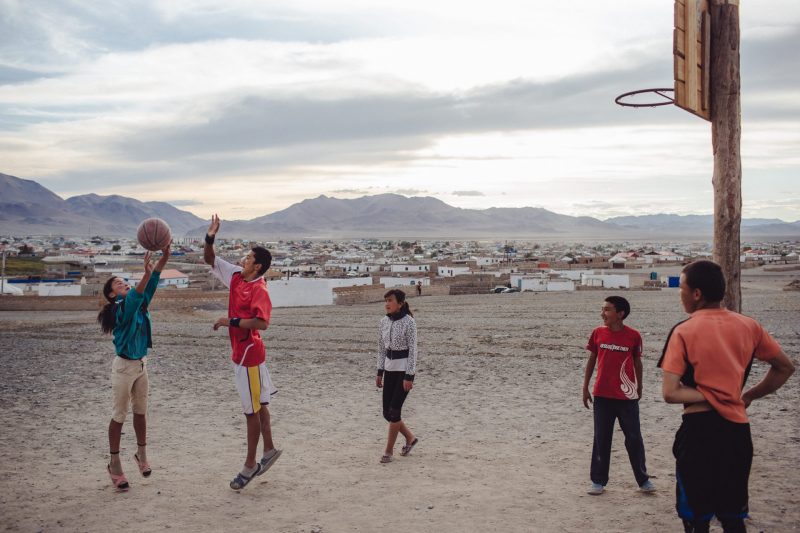
The surge in basketball’s popularity is backed by significant data: Mongolia’s 3×3 National Team is currently ranked among the top in Asia, a remarkable feat for a nation of only 3.5 million people.
This success is driven by a grassroots movement where approximately 15% of the rural development budget has been allocated toward improving community sports infrastructure over the last five years. In towns where the population density is a staggering 2.1 people per square kilometer, these courts serve as vital social hubs, fostering community resilience and providing a primary outlet for the 35% of the population that is under the age of 18.
Sovereigns of the Steppe
In the vast landscape of Mongolia, horses are more than livestock; they are the primary architects of the nation’s nomadic identity. With a population of approximately 4.8 million horses as of 2026, Mongolia boasts one of the highest horse-to-human ratios on Earth, with roughly 1.4 horses for every person.
As seen in the photograph below, these semi-wild herds often congregate in shallow lake waters during the summer months—a behavioral adaptation used to escape biting insects and regulate body temperature in a climate where summer highs can reach 104°F (40°C).
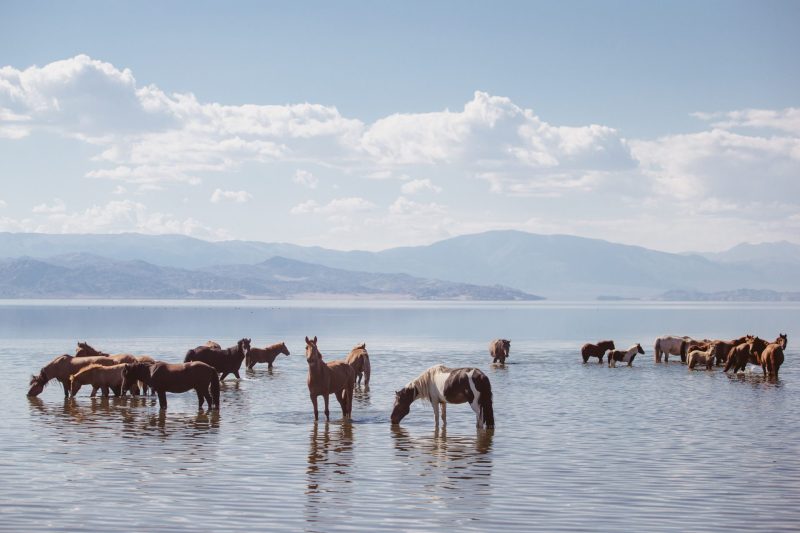
Genetically unique and virtually unchanged since the era of Genghis Khan, these horses are renowned for their staggering endurance and self-sufficiency. They live outdoors year-round, grazing on natural pastures even in winter by digging through the snow, and can withstand a bodyweight loss of up to 30% during the harsh winter months.
Culturally, the horse is considered a “wind horse” (khiimori), symbolizing the human soul, and is prominently featured on the Mongolian national coat of arms. Whether providing the milk for the national beverage, airag, or competing in 15- to 30-kilometer endurance races during the Naadam festival, the Mongolian horse remains the pulse of the high plateau.
The Soft Gold of the Steppe
In this scene, herders manage a portion of Mongolia’s goat population, which reached 23.2 million head as of the 2025/2026 livestock census. These goats are the source of “soft gold”—Mongolian cashmere—which accounts for approximately 40% of the world’s raw cashmere supply.
Driven by global luxury demand, the goat population has skyrocketed from just 5 million in 1990 to representing nearly 40% of the country’s total livestock today. For the roughly 230,000 herding families in Mongolia, these animals are a primary economic engine, with a single pound of high-quality raw fiber fetching upwards of $100 in the 2026 market.
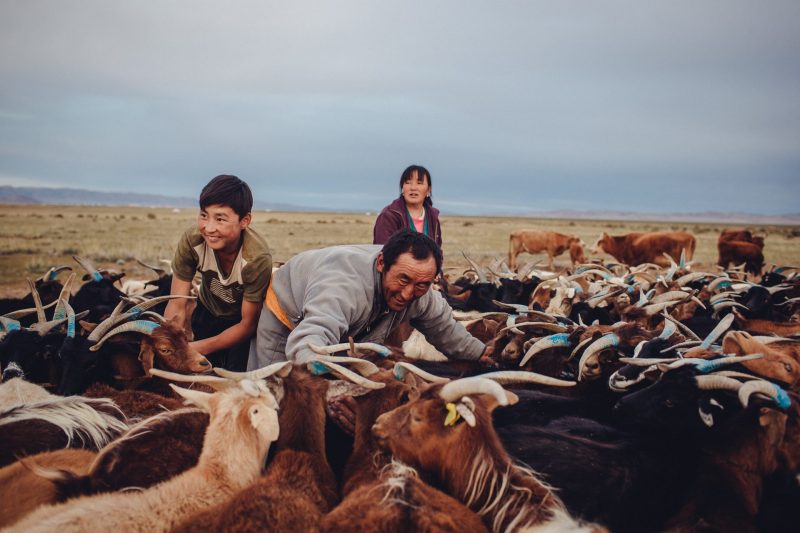
This economic boom, however, comes with a significant environmental cost. Unlike sheep, which graze on the tops of grasses, goats have a more aggressive grazing style that can damage the root systems of the fragile steppe. This has contributed to the degradation of nearly 70% of Mongolia’s grasslands, fueling a national debate on sustainable herding.
To manage this, herders use the colored ribbons seen in the photo to identify age, ownership, or specific breeding groups within the “five snouts” (the five traditional types of Mongolian livestock). As of 2026, the government has introduced subsidy programs and loans totaling $100 million to encourage value-added processing within Mongolia rather than exporting raw fiber, aiming to balance economic growth with the preservation of the ancestral plains.
Sentinels of the High Peaks
In the high-altitude reaches of the Khangai and Altai mountains, the domestic yak (Bos grunniens) is the ultimate survivor. As of the 2025/2026 livestock census, Mongolia is home to a thriving population of approximately 1.1 to 1.3 million yaks, making it the second-largest yak population in the world after China.
These animals are uniquely engineered for life above 6,500 feet (2,000 meters), possessing hearts and lungs significantly larger than those of lowland cattle to process thin alpine air. Their thick, multi-layered coats consist of long outer guard hairs and a dense, downy undercoat that allows them to remain active in temperatures as low as -40°F (-40°C), where most other livestock would perish.
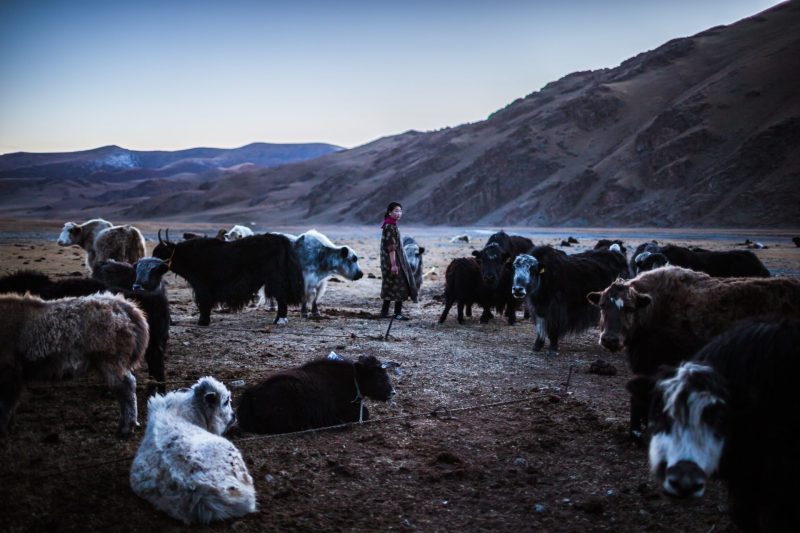
Beyond their resilience, yaks are an economic cornerstone for roughly 250,000 herding households. Often referred to as “all-purpose” animals, they provide rich milk with a high fat content (up to 7%), durable leather, and nutrient-dense meat.
A growing sector of the economy is the harvest of yak down, a sustainable alternative to cashmere. Unlike goats, which can damage the steppe’s root systems, yaks have a lighter environmental footprint on the delicate alpine tundra.
As Mongolia celebrates the International Year of Rangelands and Pastoralists, these high-altitude sentinels remain the primary reason human settlement is possible in the country’s most forbidding, snow-streaked landscapes.
Interior of the Nomadic Kitchen
Inside the wooden lattice walls of a traditional Mongolian ger (yurt), a herder prepares for the long winter by processing borts, or air-dried meat. This method of preservation is a cornerstone of nomadic survival; fresh sheep meat is sliced into long strips and hung from the roof rafters where the dry, circulating air transforms it into concentrated, shelf-stable protein over the course of a month.
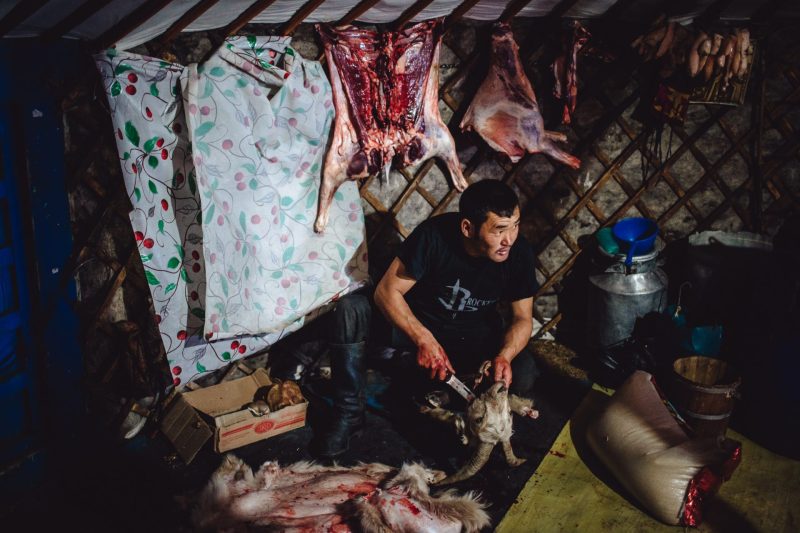
As of 2026, the cultural and economic reliance on livestock remains staggering. With a national population reaching 3.56 million people, the livestock population has surged to over 70 million animals, a ratio that maintains Mongolia’s status as a global leader in animal-to-human density.
This vast herd—consisting of 32.3 million sheep, 29.3 million goats, and over 4 million horses—not only provides the essential caloric intake for rural households but also anchors a lifestyle that has remained structurally unchanged for centuries. In this unembellished interior, the “five snouts” (sheep, goats, cattle, horses, and camels) are not just a resource; they are the literal architecture of everyday life.
The Modern Nomad’s Camp
This scene in the Altai foothills captures the high-tech evolution of Central Asian pastoralism. While roughly 30% of Mongolia’s 3.6 million people continue to live a nomadic or semi-nomadic lifestyle, their camps are far from isolated from the 21st century.
The presence of satellite dishes and solar panels is now standard; as of 2026, nearly 90% of nomadic households have access to electricity through portable solar home systems. This energy powers LED lighting, mobile phones, and satellite TV, allowing herders to monitor weather forecasts and market prices for livestock and cashmere from the most remote valleys.
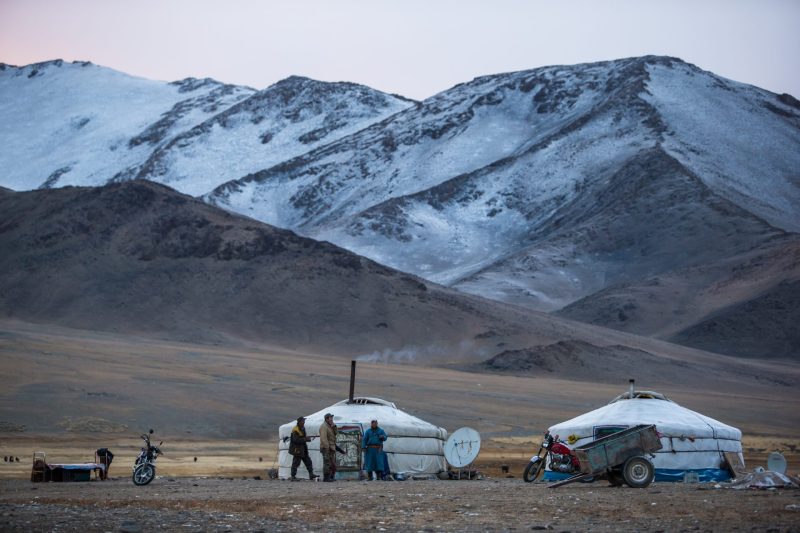
The motorbikes parked outside are the “new horses” of the steppe. In 2025 and early 2026, Mongolia saw record-breaking motorcycle sales, with over 46,000 units sold annually to meet the demand for affordable, individual mobility. These rugged, often Chinese-made bikes allow herders to manage vast territories in a fraction of the time once required by horseback.
Despite these modern conveniences, the core challenges of the landscape remain: at elevations exceeding 1,500 meters, families must navigate extreme winters where absolute low temperatures frequently reach -40°F (-40°C). The thin trails of smoke from the chimneys signify the burning of dried dung or coal, a critical heat source for the thick, wool-felt gers that have sheltered Mongolians for over two millennia.
The Glow of the Ger
As dusk settles over the high plateau, the warm orange light from a central stove spills through the doorway of a ger, illuminating a family in the heart of their home. While Mongolia’s population reached 3.56 million in 2026, the cultural and practical reliance on this ancient structure remains absolute.
Approximately 38% of the nation – nearly 1.35 million people – live in gers year-round. This includes both nomadic herding families in the countryside and thousands of urban residents in the “ger districts” surrounding Ulaanbaatar.
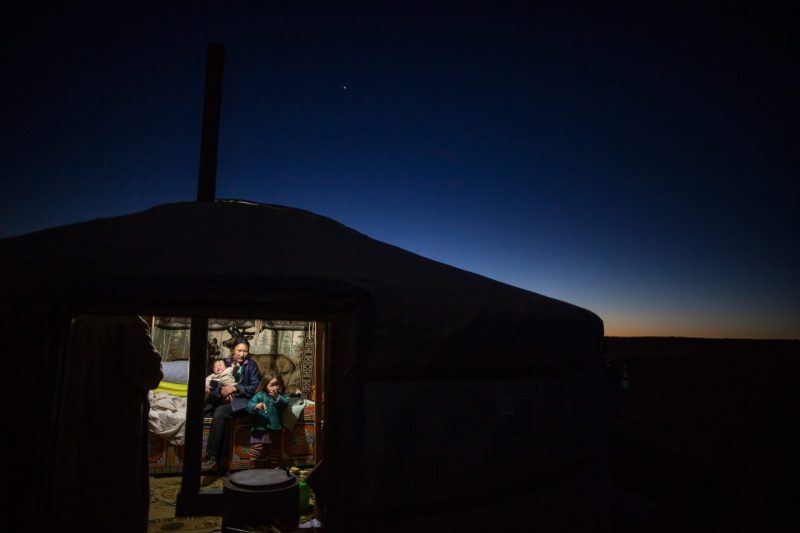
The ger is a masterpiece of thermal engineering. To survive a climate where seasonal temperatures swing from -40°C (-40°F) in January to over 30°C (86°F) in July, the wooden lattice frame is wrapped in multiple layers of sheep-wool felt.
This natural insulation is breathable in the summer yet exceptionally efficient at trapping heat during the long Mongolian winter. Inside, life is organized in a circle around the gal golomt (the central fire), which serves as the kitchen, the heater, and the spiritual anchor.
For the 25–30% of the population that still maintains a nomadic or semi-nomadic lifestyle, the ger is the ultimate portable home—sturdy enough to withstand 100 km/h winds, yet capable of being dismantled and loaded onto a truck or camel in under two hours.
The Hearth of the Steppe
Inside the wooden lattice walls of a traditional ger, the layout follows a sacred, centuries-old floor plan that mirrors the Mongolian worldview. The door always faces south to welcome the sun, while the northern “honored” side is reserved for the family altar and important guests.
To the east (right of the entrance) lies the women’s domain, housing kitchen tools and dairy supplies, while the west (left) is the men’s side, traditionally used for saddles, airag bags, and hunting gear. This circular living space is a masterpiece of aerodynamic engineering; its low-profile dome and lack of flat surfaces allow it to withstand desert gales of up to 65 miles per hour (100 km/h) by simply deflecting the wind.
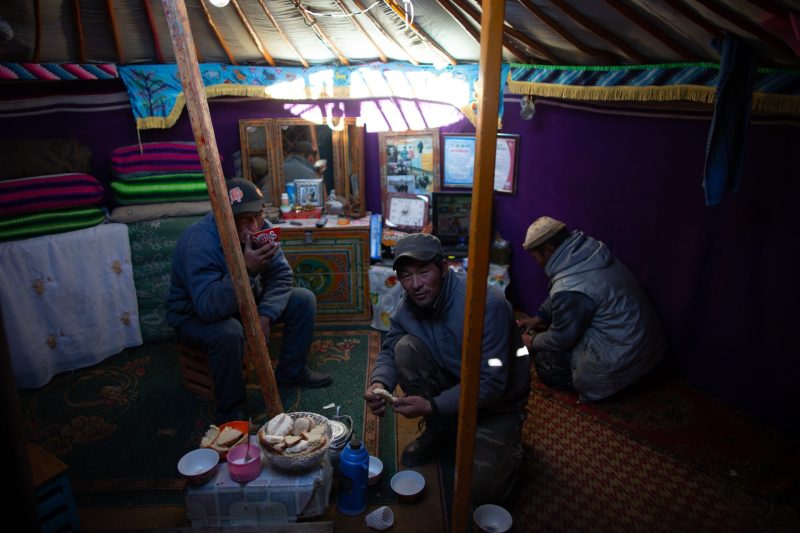
As of 2026, the ger remains a cornerstone of Mongolian housing, though its role is shifting. While nearly 71% of the country’s population has moved to urban centers, over 60% of Ulaanbaatar’s residents still live in “ger districts”—informal neighborhoods where families utilize these portable homes on permanent plots.
In rural regions, roughly 160,000 to 180,000 households continue to rely on the ger as a seasonal dwelling, moving their entire home in under two hours to follow the grazing needs of their livestock. Whether on the open steppe or in a city suburb, the central stove—the gal golomt—remains the symbolic and literal heart of the home, where hospitality rituals like the offering of suutei tsai (milky tea) continue to define the Mongolian spirit of welcome.
The Resurgence of the Spirit
A young monk in traditional crimson robes traverses the courtyard of Gandantegchinlen Monastery in Ulaanbaatar, the spiritual heart of Mongolia. Once the only operating monastery permitted during the socialist era, “Gandan” now anchors a nationwide religious revival. Since the transition to a parliamentary republic in 1990, the number of active Buddhist institutions has grown from just one to approximately 130–150 monasteries across the country.
While nearly all of Mongolia’s roughly 700 monasteries were destroyed during the purges of the late 1930s, today 51.7% of the 3.6 million residents identify as Buddhist, with many younger generations returning to the teachings that define the nation’s cultural heritage.
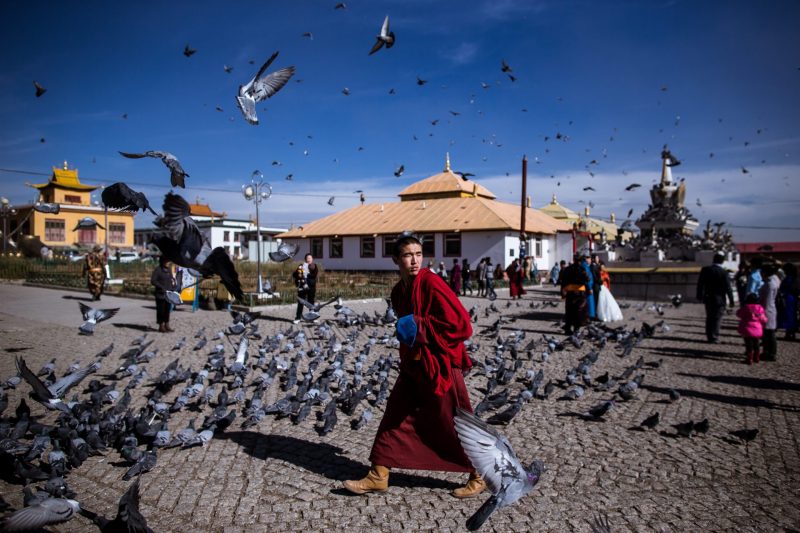
The pigeons seen here are a staple of the monastery square, fed by devotees who believe the birds carry their prayers toward the heavens.
For many, these golden-roofed sanctuaries are more than places of worship; they are centers of traditional medicine, astrology, and philosophy. In 2026, as Mongolia continues to balance its rapid modernization with its spiritual roots, monasteries like Gandantegchinlen serve as vital links to the past.
The complex houses the 85-foot-tall (26.5 meters) Migjid Janraisig statue, a gilded symbol of the nation’s resilience and a testament to the community’s ability to rebuild its most sacred spaces from the ground up.
The New Guard of Tradition
In a classroom in Ulaanbaatar, young monks study ancient Tibetan texts alongside modern subjects, bridging the gap between centuries-old wisdom and the 21st century. This monastic revival is a cornerstone of Mongolia’s cultural landscape: as of 2026, over 140 Buddhist schools and colleges operate across the country, serving a monastic population that has stabilized at approximately 15,000 to 18,000 monks.
While nearly all religious education was dismantled during the socialist period, today’s curriculum has evolved to include the “Five Great Sciences”—philosophy, logic, grammar, medicine, and art—integrated with modern science, mathematics, and English.
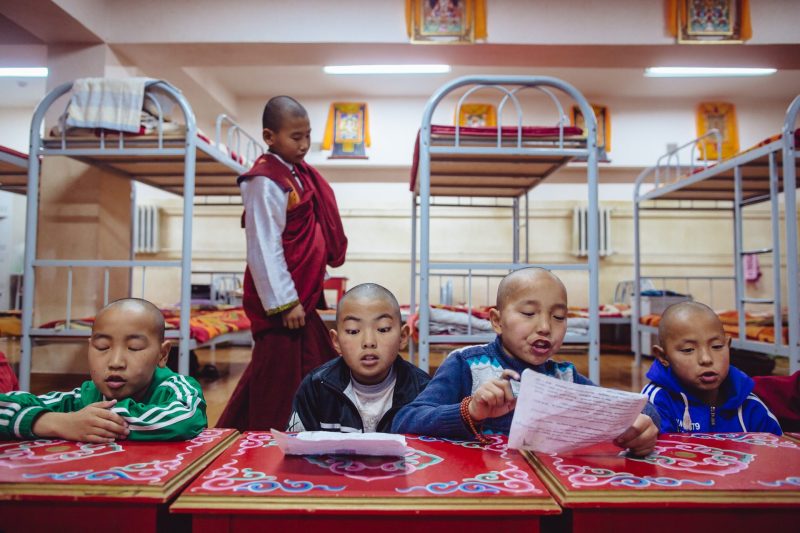
The resurgence of monastic life also plays a unique role in Mongolia’s broader social fabric. Recent 2026 reports from the Ministry of Education indicate that in certain rural provinces, up to 10% of boys choose monastic life as an alternative to traditional vocational tracks, often seeking both a spiritual path and a stable community.
These institutions are not merely relics; they are interactive learning centers where students participate in rigorous philosophical debates—a teaching method that dates back to the 18th century.
The Fabric of the Steppe
On a sun-drenched hill, men adjust their deels, the traditional kaftan-like garment that has served as Mongolia’s national dress for centuries.
The deel is a marvel of functional design, tailored for a life on horseback with long sleeves that double as gloves and a high collar to block the piercing winds of the plateau. In the foreground, the unfurling of a yellow khadag (ceremonial scarf) signifies a deep cultural blessing; while blue is the most common color (symbolizing the “Eternal Blue Sky”), yellow is specifically associated with the sun and Buddhist teachings.
Today, roughly 40% of Mongolia’s 3.6 million people still actively participate in these seasonal rituals, which are inextricably linked to the nomadic lunar calendar.
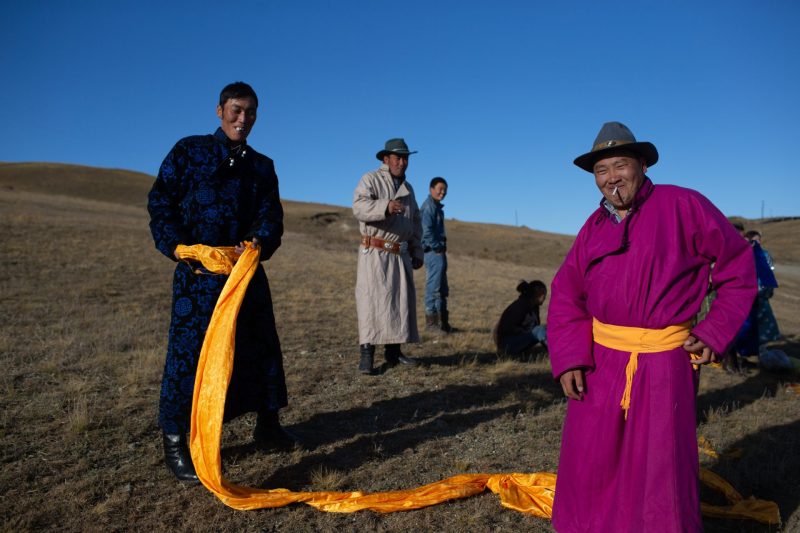
The vibrancy of these garments is most visible during Naadam, the “Three Manly Games” festival, which celebrates wrestling, archery, and horse racing. While urban fashion in Ulaanbaatar often mirrors global trends, the deel remains the mandatory attire for official ceremonies and major holidays.
As of 2026, the traditional clothing industry has seen a 15% growth in domestic production, driven by a “Heritage Pride” movement among the youth. These festivals are more than just entertainment; they are vital social hubs for a nation with a population density of only 2.1 people per square kilometer, providing one of the few occasions where thousands of nomadic families from remote provinces gather to reinforce their shared identity under the vast Mongolian sky.
Coal – The Engine of the East
These photographs by Max Avdeev capture the gritty reality of Mongolia’s “Coal Economy,” where the nation’s vast mineral wealth meets the raw physical labor of its people. As of 2026, Mongolia’s reliance on coal is absolute; the mineral accounts for roughly 90% of the country’s electricity generation and nearly half of its total export earnings.
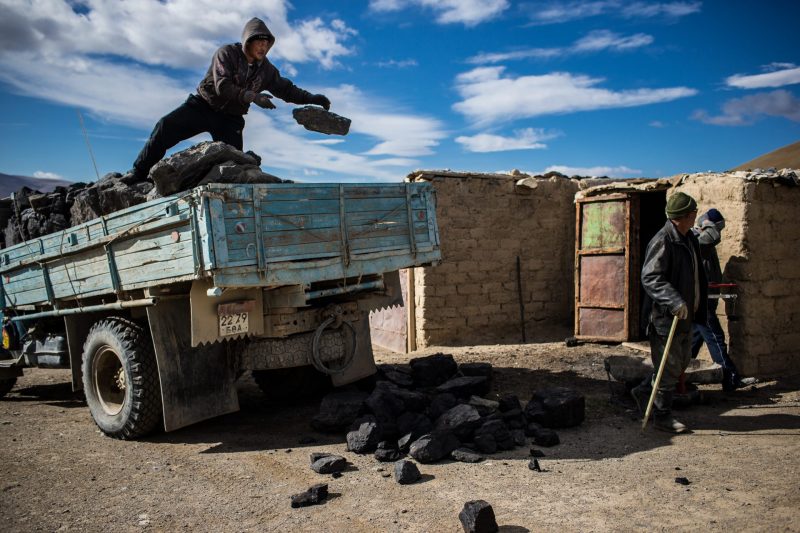
In the industrial south and remote provincial districts, mining isn’t just an industry—it is the primary driver of the national GDP, which has seen a 7% growth in the last year fueled largely by metallurgical coal exports to China.
While massive state-owned mines like Tavan Tolgoi dominate the headlines, the photographs reveal the shadow industry of “ninja miners” and small-scale operations. In towns like Nalaikh, thousands of workers navigate hazardous, unmapped tunnels to extract coal that heats the “ger districts” of Ulaanbaatar, where winter coal consumption can reach 1.2 million tons annually.
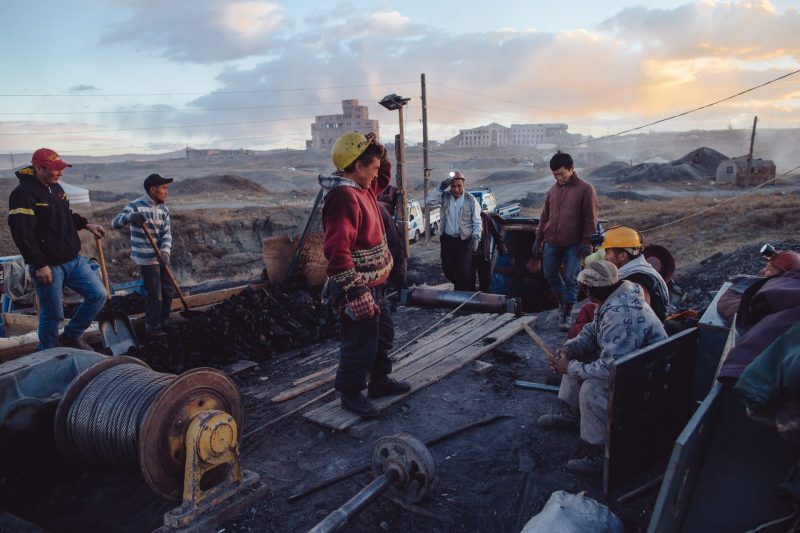
Despite government efforts to transition to “refined fuel” to combat some of the world’s worst seasonal air pollution, raw coal remains the most accessible energy source for a population facing temperatures of -40°F.
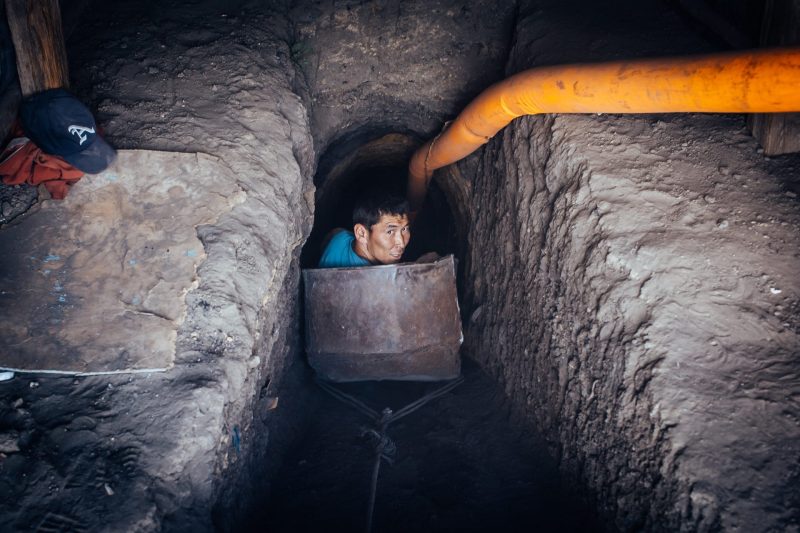
The coal mining sector supports over 60,000 formal jobs and thousands more informal livelihoods, representing a difficult tension between economic survival and environmental health in the 21st century.
Mongolia 2026: Key Data
| Population Density | 2.1 people / km² | The lowest in the world; over 48% live in Ulaanbaatar. |
| The “Five Snouts” | 71 Million+ Livestock | Sheep, Goats, Cattle, Horses, and Yaks; 20:1 animal-to-human ratio. |
| Climate Extreme | 80°C Thermal Range | Steel rails and felt gers must survive from -40°C to +40°C. |
| Energy Profile | 90% Coal Dependency | Coal drives the economy (>25% GDP) but poses air quality challenges. |
| Political System | Semi-Presidential | 126-seat Parliament (Great Khural); stable democracy since 1990. |
| Spiritual Life | 51.7% Buddhist | A massive revival since the 90s, with over 140 monastic schools. |
Official Sources We Used
- Conservation: UNESCO World Heritage & Biosphere Reserve Directory
- Demographics & Livestock: National Statistics Office of Mongolia (1212.mn)
- Economic Outlook: World Bank Mongolia Economic Monitor 2026
- Infrastructure: Ulaanbaatar Railway (UBTZ) Technical Archives
- Diplomacy & Press: Freedom House (2026) and Reporters Without Borders (RSF)
Getting to Mongolia from the USA & Europe
- From the USA: Travelers can now take advantage of United Airlines’ seasonal non-stop service from Newark (EWR), which resumed in April 2026. For those on the West Coast, connections via Seoul (ICN) or Tokyo (NRT) remain popular, though a direct San Francisco (SFO) route is currently pending final certification for late 2026.
- From Europe: Turkish Airlines remains a primary carrier with frequent flights from Istanbul, while MIAT Mongolian Airlines offers direct connections from hubs like Frankfurt and Istanbul. Additionally, Condor has expanded its seasonal flights to Ulaanbaatar from several European cities.
The Traveler’s Digital Toolkit for Mongolia
To navigate the logistics of a Mongolian adventure, Locals Insider would recommend these vpns and esims or portable wi-fi servcies, as well as these travel apps:
| Task | Top App | Why It’s Best for Mongolia |
| Flight Search | Skyscanner | Best for tracking “multi-city” routes that combine major carriers with regional links like MIAT. |
| Itinerary Planning | Wanderlog or AI travel planning tools | Allows you to map out remote coordinates (like specific ger camps) alongside your flight details. |
| Navigation | maps.me or google map alternatives | Essential for Mongolia; it provides reliable offline maps for the steppe where data signal is non-existent. |
Planning Tip from Locals Insider: Remember that Mongolia has extended its visa-free entry for many nationalities. Always check the latest digital arrival card requirements on the official E-Mongolia portal before you fly.