



Twice or three times a year, somebody in Copenhagen hands over the keys to their home and lets a few hundred strangers walk through it.
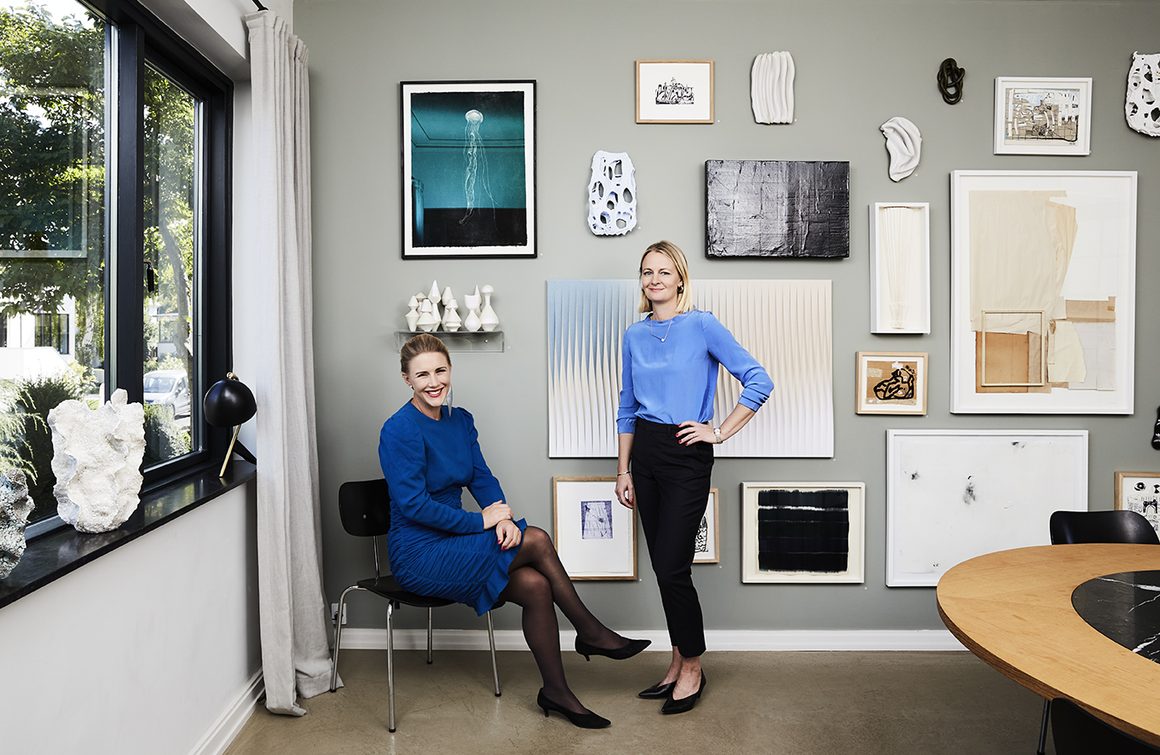
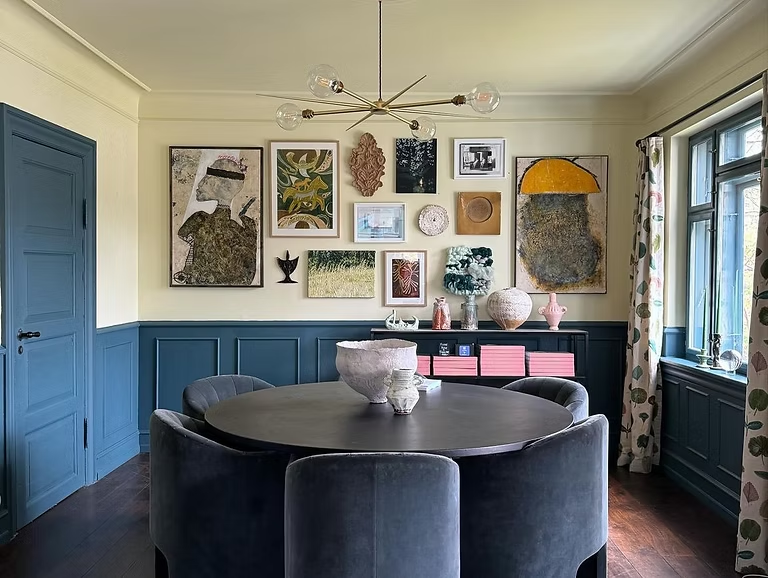
That’s the premise of Kunstsalonen — a nomadic art salon run by Anne Aarsland and Mette Helena Rasmussen since December 2017. They choose the artists, curate the works to suit the rooms, and for one weekend a private flat or house becomes a public gallery. One salon, in a 1933 functionalist house on Emanuel Olsens Vej, held more than 200 works by around 30 artists across three floors and drew over a thousand visitors.
Anne trained in art history and visual communication at the University of Copenhagen and works as a visual artist; since 2022 she has also run her own gallery inside her flat on Frederiksberg Allé. Mette Helena graduated as a visual artist from the Royal Danish Academy of Fine Arts, works as an interior stylist, owns the vintage shop Retro Villa and appears as a design judge on Danish television.
They have moved the salon 27 times. The 28th opens this November in a flat on Tordenskjoldsgade in central Copenhagen.
Here they explain how the format works, why a home changes the way you see a painting, who gets to host — and where they go in Copenhagen when they aren’t hanging someone else’s walls.
“Ordinary People Can Become Patrons of the Arts for a Weekend”: Anne Aarsland and Mette Helena Rasmussen on Hanging Contemporary Art in Strangers’ Homes
“It takes a certain amount of courage to invite that many strangers into your private home for a weekend.”
It Began With a Rented Flat and an Italian Lighting Brand
We started working together in 2017. Mette had rented Anne’s apartment for a PR event for an Italian lighting brand, using the space as a location for styling, an event, and a photo shoot. The project lasted a few days, and by the end of the week, we realised how much we had enjoyed working together.
Anne suggested that we should find a way to do something more together. We sat down and started exchanging ideas, and that was when the idea of creating a group exhibition of contemporary art in a private home first emerged.
A Painting Looks Different Above Someone’s Sofa
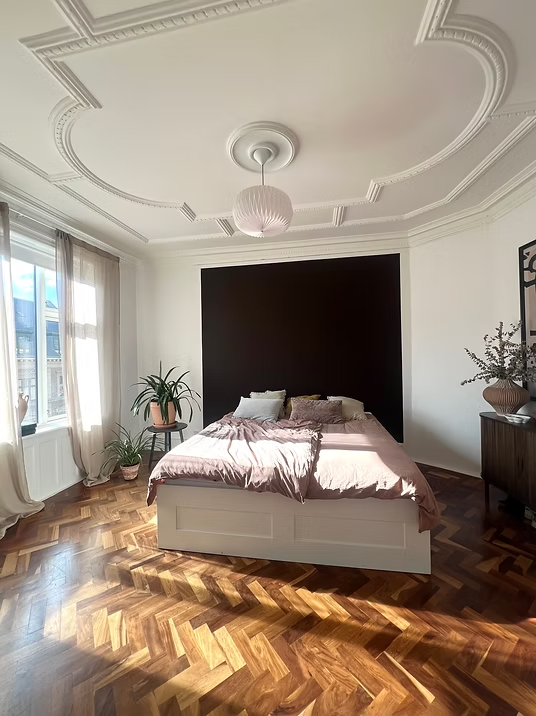
The idea of creating a nomadic exhibition concept came about almost by chance. But we soon realised how much the different homes bring to each exhibition. Every show becomes a completely unique experience — not only because the artworks and artists change, but also because of the setting itself.
There is something very special about exploring a private home and experiencing contemporary art in dialogue with the interior, the architecture, and the personal surroundings. The home adds something to the way you see and experience the art, just as the art adds something new to the home.
We really like this exchange between the two, and it is one of the reasons why the art salon has remained nomadic. It is a dynamic format that constantly changes character depending on where we are and the home we are invited into.


Since then, Anne has also opened her own permanent gallery, where she works closely with a small, carefully selected group of artists. In that sense, the two formats complement each other: the art salon is nomadic, fluid, and constantly changing, while the gallery offers a more permanent setting and the opportunity to build long-term relationships with a smaller group of artists.
“The home adds something to the way you see the art, just as the art adds something new to the home.”
It Takes Courage to Let 1,000 Strangers In
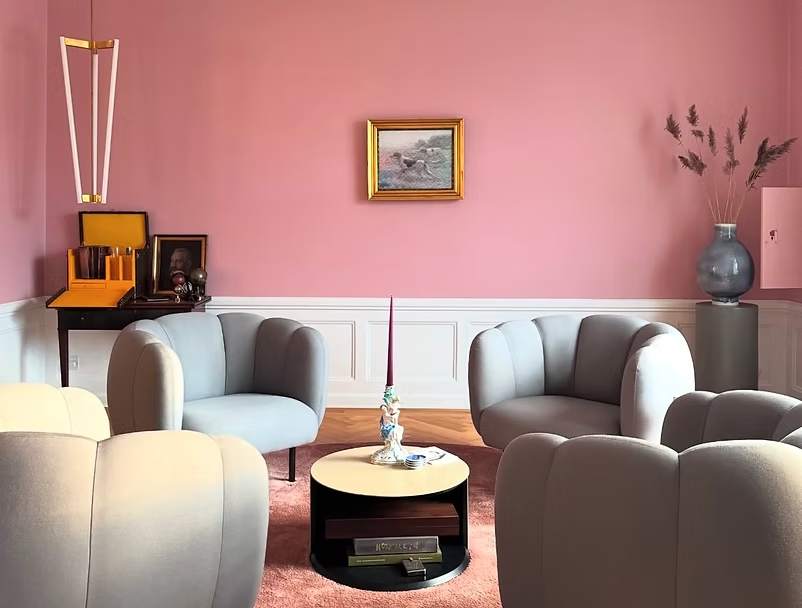
We are very dependent on generous and adventurous hosts who are willing to open their homes to us — and to the many visitors who come to our art salons. It takes a certain amount of courage to invite that many strangers into your private home for a weekend.
Our hosts have been very different. Some are families with a strong interest in art, while others have been brands with a more commercial reason for collaborating with us. One of the things we love about the concept is that ordinary people can become patrons of the arts for a weekend simply by opening their homes.
Most people are proud of where they live and enjoy the opportunity to share it with others. Some also live in architecturally or historically significant homes and feel that these places deserve to be experienced by a wider audience. We are incredibly grateful for the generosity and trust our hosts have shown us over the years.
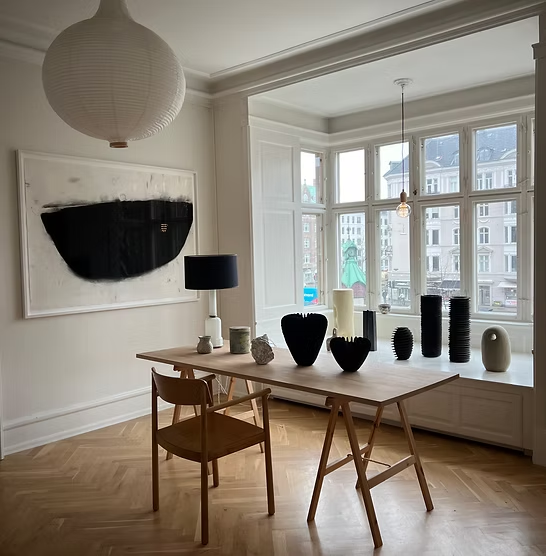
You do not need to have a particular kind of home to host an art salon. We have exhibited in all kinds of places — from a tiny house on the island of Mors and an apartment in Aarhus to a house in Tisvilde and many different apartments around Copenhagen. Most recently, we held an art salon at a historic residence in Skovshoved designed by the Danish architect Carl Petersen.

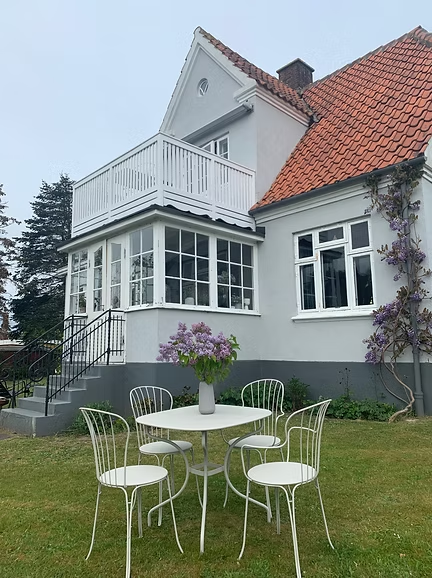
That said, as the salons have grown, it is certainly an advantage to have a fairly large home with plenty of wall space. We want to show as much art as possible, and we also welcome a lot of visitors.
Our next exhibition, Art Salon No. 28, will take place from 20–22 November in an apartment in Tordenskjoldsgade in central Copenhagen, where our host, Tina, is generously opening her home to us.
“Ordinary people can become patrons of the arts for a weekend simply by opening their homes.”
Mostly Danish, Mostly Women, Often Still at Art School
We show contemporary art, predominantly by Danish artists, and perhaps surprisingly, a large number of the artists we have worked with are women. Over the years, we have also collaborated with artists from Iceland, Sweden, Iran, Norway, the UK, and Australia, although most of the artists we work with have some connection to Denmark.
That connection is important to us because we like to build a close relationship with the artists. We want to visit them in their studios, follow their work, and understand their practice. We are particularly interested in discovering emerging artists, sometimes while they are still studying at the Royal Danish Academy of Fine Arts.
In fact, this process of discovery is one of the most exciting parts of what we do: finding artists whose work we believe in, meeting them in their studios, selecting and curating the works, and finally introducing them to our audience in a new setting.
Put Us in Separate Rooms and We’d Choose the Same Paintings
Anne and I are quite different in many ways, but surprisingly, we have very similar taste when it comes to art. I sometimes imagine that if you put us in separate rooms and asked us to tick off the artworks we found interesting, the artists we wanted to work with, or the paintings we would like to exhibit, our choices would probably be remarkably similar.
Because of that, we tend to trust our instincts. If we both respond strongly to a work and feel that it is good, that is usually enough for us to want to show it. At the same time, we are both quite flexible and pragmatic. If one of us feels very strongly about an artist or a particular work, the other is usually happy to go along with it.
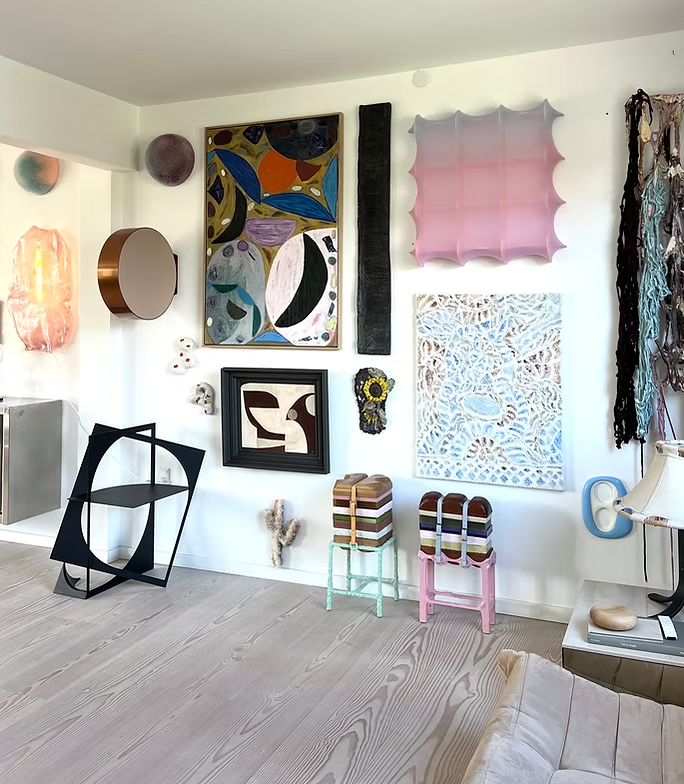
Our approach to curating is very intuitive and driven by enthusiasm. We work with artists who are serious about their practice, who have a strong professional foundation, and who are committed to developing their work.
Many are graduates of art academies and have established professional practices, but we are equally curious about very young artists and students who are still at art school. For us, it is ultimately about encountering a work that excites us and makes us want to share it with others.
“If you put us in separate rooms and asked us to tick off the works we found interesting, our choices would probably be remarkably similar.”
Everything on the Walls Is for Sale
The artworks we exhibit are for sale. When artists exhibit with us, we have the works on consignment, and if a work is sold, we take a commission on the sale. So there is a commercial side to the project, and this is how our business model works.
They’ve Been Invited to Hollywood and a Czech Castle. They Stayed in Denmark
We have occasionally played with the idea of taking the art salon beyond Denmark. Over the years, we have actually been invited to do exhibitions in places as different as Hollywood and a castle in the Czech Republic.
So far, however, we have moved the art salon 27 times to different locations within Denmark. Most of our exhibitions have taken place in and around Copenhagen, but we have also been to Aarhus and to the island of Mors as part of Kulturmødet.
There are, of course, some practical challenges involved in taking the concept abroad. We have experienced how complicated it can be to ship artworks from countries outside the EU, for example, and working primarily with Danish-based artists makes the logistics much easier.
Over the years, we have also built up a strong network of artists and collectors here, which is an important part of how we work.
We definitely think the concept could travel and work in other countries and cities. The potential is there, but even after almost ten years, we have not quite made that move yet.
Copenhagen’s Art Scene, From the Inside
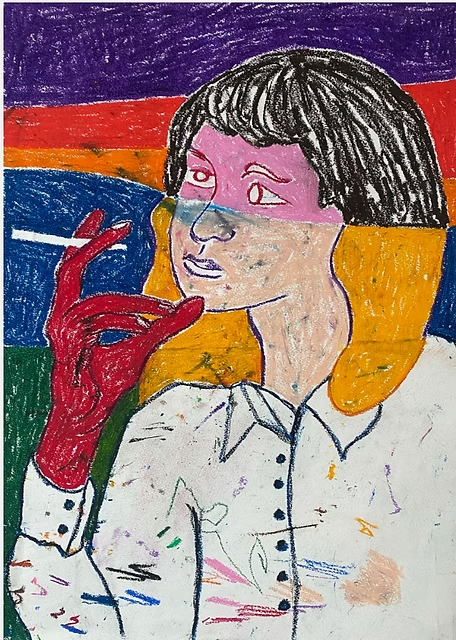
Copenhagen has a very active art scene, with many galleries and plenty of opportunities to experience contemporary art. There is a real curiosity about art and a strong audience for it in the city.
Anne herself opened a permanent gallery around two years ago, and the response has been incredibly positive. The gallery has received a lot of interest and support, which to us is another indication that there is a strong and engaged audience for contemporary art in Copenhagen.
It feels like a city where people are genuinely interested in discovering new artists and following what is happening on the contemporary art scene.
Mette Helena’s Copenhagen: Louisiana, the Ramparts and a Daily Dish
I love visiting the Louisiana Museum of Modern Art. Of course, I enjoy discovering other galleries and museums around Copenhagen as well, but there is something special about leaving the city and making the trip to Louisiana. They consistently have fantastic exhibitions, and the setting itself makes the visit an experience.
I also love walking around the old ramparts of Christianshavn and continuing behind Christiania, where you can see all the alternative houses people have built. I am very drawn to that creative environment — the quirky wooden houses, the individuality, and the atmosphere surrounding the freetown. It is a very particular side of Copenhagen that I really appreciate.
When I am in Christianshavn, I like eating at the small local restaurant Sankt Annæ 8, which serves a daily dish. It is a very cosy place with a special atmosphere. I also enjoy going to Rufino, a small Italian restaurant in Christianshavn that has a wonderful sense of authenticity.
And finally, I have to admit that because so much of my working life revolves around art, design and the city, one of my favourite things is actually to leave Copenhagen altogether. I love spending my free time at my summer house in the countryside, where I can slow down, relax, and have a break from everything.
“Because so much of my working life revolves around art, design and the city, one of my favourite things is actually to leave Copenhagen altogether.”

Locals Insider · Copenhagen · 7 places
Copenhagen Guide by Kunstsalonen: Art Museums, Galleries and Christianshavn Restaurants
Mette Helena’s picks in and around Christianshavn, plus the two art spaces the pair run themselves.
Modern art museum · Humlebæk
Louisiana Museum of Modern Art
Worth the day trip
Louisiana opened in 1958 in Humlebæk, on the Øresund coast north of Copenhagen, and grew around a 19th-century villa. Architects Jørgen Bo and Vilhelm Wohlert designed the low pavilions linked by glass corridors that run through the park, which also holds a sculpture park by the sea. The name comes from the villa's first owner, who gave it the name of his three wives, all called Louise.
They consistently have fantastic exhibitions, and the setting itself makes the visit an experience.
- Gl. Strandvej 13, 3050 HumlebækMap
- Official websitelouisiana.dk
- @louisianamuseum
Self-governing neighbourhood · Christianshavn
Freetown Christiania
Self-built houses
Christiania began in 1971, when squatters occupied an abandoned military barracks on Bådsmandsstræde in Christianshavn. Around a thousand people now live in this car-free, self-governing community, whose self-built houses, workshops and venues sit partly on the old 17th-century ramparts. It has its own official site and a resident-run guide initiative for visitors.
I am very drawn to that creative environment — the quirky wooden houses, the individuality, and the atmosphere surrounding the freetown.
- Freetown Christiania, Copenhagen MunicipalityMap
- Official websitechristiania.org
Address and website: Google Maps
Historic ramparts · Christianshavn
Christianshavns Vold
Waterside walk
The ramparts were built in the 17th century as part of the fortification ring that was meant to protect Copenhagen. According to VisitDenmark, they are the only part of that old fortification still standing around the city, with an 18th-century windmill among the sights. The northern stretch runs through Christiania, where old chestnut trees, crooked houses and small paths wind between the bastions and the lake shore.
I also love walking around the old ramparts of Christianshavn and continuing behind Christiania, where you can see all the alternative houses people have built.
- Vermlandsgade 3, KøbenhavnMap
- Official websitevisitdenmark.com
Address and website: Google Maps
Restaurant · Christianshavn
Sankt Annæ 8
Daily dish
This small restaurant sits on a quiet corner of Christianshavn and runs a seasonal, constantly changing menu built on fresh produce and strong flavours. Lunch centres on sandwiches made with sourdough focaccia, and in the evening the kitchen serves small plates. It also cooks a green dish each day based on the best of the market.
It is a very cosy place with a special atmosphere.
- Wildersgade 52, 1408 København KMap
- Official websitesanktannae8.dk
Italian restaurant · Christianshavn
Rufino Osteria
Italian dinner
Rufino opened on 1 April 2016 and has grown into one of Copenhagen's most popular Italian restaurants. Fresh homemade pasta and dishes from the Italian tradition come out of an open kitchen. The interior keeps the character of a historic Christianshavn building while following the classic osteria idea.
I also enjoy going to Rufino, a small Italian restaurant in Christianshavn that has a wonderful sense of authenticity.