12 September 2025

 Argentina
 Austria
 Azerbaijan
 Belgium
 Brazil
 Canada
 Chile
 China
 Colombia
 Costa Rica
 Croatia
 Cyprus
 Czech Republic
 Denmark
 Egypt
 Estonia
 Finland
 France
 French Polynesia
 Georgia
 Germany
 Greece
 Greenland
 Hong Kong
 Hungary
 Iceland
 India
 Indonesia
 Ireland
 Italy
 Japan
 Kenya
 Lithuania
 Malta
 Mauritius
 Mexico
 Mongolia
 Montenegro
 Morocco
 Netherlands
 Norway
 Oman
 Peru
 Poland
 Portugal
 Saudi Arabia
 Serbia
 Singapore
 Slovenia
 South Africa
 South Korea
 Spain
 Sweden
 Switzerland
 Taiwan
 Thailand
 Türkiye
 USA
 United Arab Emirates
 United Kingdom
 Uruguay
 Uzbekistan
 Vietnam
Kenya
Kenya is the country that wrote the modern African safari template.
The Maasai Mara is the wildlife headline — 1.5 million wildebeest crossing the Mara River July through October during the Great Migration, the highest predator densities in Africa, the camps (Angama Mara, Mahali Mzuri) that have been winning Travel + Leisure World's Best #1 spots.
Amboseli has the elephant herds with Kilimanjaro behind them. Nairobi is the capital with the airport, the Karen Blixen Museum at her actual Out of Africa farm, the Giraffe Manor where breakfast happens with Rothschild's giraffes through the windows.
Beyond the safari focus: Lamu's UNESCO-listed Swahili coastal town, Diani Beach's white sand, the Aberdares for chimpanzee tracking.
Our Kenya coverage focuses on the Mara conservancy lodges, the Nairobi pre-and-post-safari stays, and the practical safari planning that makes Kenya a serious 10-14 day trip.
Capital with elephant orphanage and giraffe centre
Annual migration, big cats, classic safari country
Elephant herds against Kilimanjaro backdrop
Indian Ocean beaches, Swahili culture
1.5 million wildebeest plus 300,000 zebras crossing the Mara River from the Serengeti — one of nature's defining events. The Mara has the predator density (lions, cheetahs, leopards) the Serengeti can match but in a more concentrated, photographable area. Hot air balloon safaris at sunrise.
Fly to Mara airstrips. River crossings July-September. Book camps 6+ months ahead.
The Tanzanian Mount Kilimanjaro (5,895m) rises directly behind Amboseli's elephant herds — the iconic safari photograph. The Amboseli elephants are the most studied in Africa (Cynthia Moss's research since 1972). Open savanna, easier wildlife viewing than the dense Mara forests.
Fly Nairobi-Amboseli (45 min). Best mornings for Kili views (clouds form by 10am).
Checked against Michelin, the venue or Google.
Nairobi's most consistently good restaurant — Mediterranean-Asian fusion in a courtyard garden. Where Nairobi's expats and journalists go. The lamb chops, the crab cakes.
Nairobi's most famous all-you-can-eat — meat carved tableside from Maasai-style spears (no more game meat after 2004 ban; beef, lamb, ostrich, crocodile, camel from farms). Touristy, theatrical, but the experience is the point.
Chef Ariel Moscardi's farm-to-table — Kenyan ingredients reimagined with South American technique. The kitchen garden visible through windows, the seasonal menu changes weekly.
Legendary fish restaurant — fresh tilapia from Lake Victoria served with ugali (cornmeal) and sukuma wiki (kale). Anthony Bourdain visited; Nairobi's politicians regularly do. Cash only.
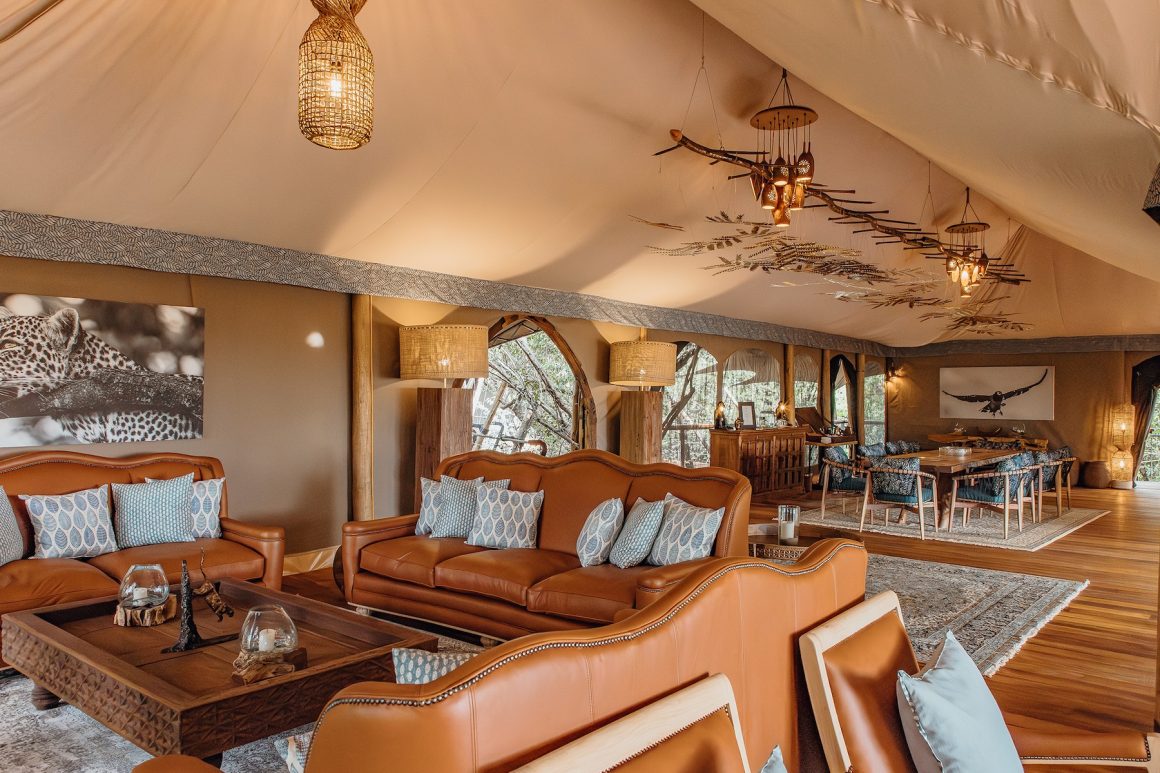
High on the Oloololo Escarpment with panoramic Mara views from every tent — Travel + Leisure World's Best #1 hotel multiple years. Out of Africa filming location. The hot air balloon and beadwork studio.
The famous breakfast with Rothschild's giraffes poking their heads through the dining-room windows — only 12 rooms in a 1932 manor house. Book 12+ months ahead. The Insta-iconic Africa hotel.
Sir Richard Branson's Mara camp — 12 luxury tents on a hillside in the Olare Motorogi private conservancy. World's Best #1 (T+L 2022). Migration route directly through the conservancy.
Karen neighborhood plantation-style hotel — 45 suites, the Ngong Hills view, butler service, walking distance to the Karen Blixen Museum. The reliable luxury Nairobi base before or after safari.
Karen Blixen's 1917 farmhouse outside Nairobi — the Out of Africa setting, restored as a museum. Her writing desk, the gramophone, the views toward the Ngong Hills. Free coffee in the garden.
Includes the Joy Adamson elephant paintings, the Hominid skulls from Olduvai (the human origin story), and the cultural exhibits on Kenya's 42 ethnic groups.
More working orphanage than museum but open to the public for one hour daily (11am-12pm) — orphaned baby elephants taking their daily bath. Adopt an elephant for the rest of the day to revisit.
A few additions for travelers planning the Kenya safari at the highest end:
Two million wildebeest cross the Mara — the greatest wildlife spectacle on Earth
Swahili coastal heritage on Lamu Island — dhow races, donkey racing, henna
Northern Kenya's celebration of 14 tribal cultures around Lake Turkana
Kenya replaced its visa with an Electronic Travel Authorisation (eTA) in January 2024 — it's now mandatory for nearly all non-East-African travelers, including all EU/Nordic countries, the UK, US, Canada, Australia, Japan, and Russia.
Apply at etakenya.go.ke at least 72 hours before travel (processing typically 24–48 hours; pay extra for express). Cost: $30 USD (plus a small service fee), valid for one entry, 90 days.
Passport valid 6 months beyond entry, 2 blank pages. East African Tourist Visa ($100, valid 90 days) is the smarter choice if you're combining Kenya with Uganda and/or Rwanda — single application, multiple entries between the three countries, common for gorilla-trekking combos. Yellow fever certificate required if arriving from a yellow-fever-endemic country (most of sub-Saharan Africa, parts of South America).
Children under 16 are exempt from eTA but still need to be listed on a parent's family eTA. East African Community citizens (Uganda, Tanzania, Rwanda, Burundi, South Sudan) enter visa-free.
Kenya has two distinct dry seasons and two wet seasons. July to October is the headline window — the Great Migration of 1.5 million wildebeest reaches the Maasai Mara from the Serengeti, with the dramatic Mara River crossings peaking late July to early September.
Visibility is best with dry vegetation, animals concentrate at waterholes. January and February are the second dry season — calving season in the Mara, fewer crowds, lower prices, equally excellent game viewing without the migration drama. Avoid the long rains (March–May) — roads in the Mara become mud, some camps close, low season prices but game viewing harder. Short rains (November–December) are workable — light afternoon showers, lush green landscapes, excellent for photographers, dramatically cheaper. Coast (Diani, Lamu, Mombasa) is best December to March (warm, dry, no monsoon) and July to October (cooler, breezy).
Peak migration camps in the Mara (Governors', Angama, Mara Plains) book 12–18 months ahead.
10–12 days minimum for a proper Kenya safari, fly between parks rather than drive (saves 1–2 days each leg). Maasai Mara (3–4 nights): the headline — the Great Migration if July–October, year-round Big Five viewing, walking safaris in the conservancies (Mara North, Naboisho, Olare Motorogi) which are quieter than the central reserve. Amboseli (2 nights): classic elephants with Kilimanjaro as backdrop — the iconic Kenya image.
Best in dry season for dust-free Kili views (Jul–Oct, Jan–Feb). Ol Pejeta or Lewa (2 nights): the rhino conservancies — Ol Pejeta hosts the last two northern white rhinos on Earth and the chimpanzee sanctuary; Lewa is more exclusive. Samburu (2 nights, optional): the dry north — reticulated giraffe, Grevy's zebra, gerenuk, the "Samburu Special Five" found nowhere else. Lake Nakuru (1 night, optional): flamingos and rhinos. Combine with: Diani Beach (1 hr flight) for post-safari coast, or fly to Kigali (Rwanda) for gorilla trekking.
Book through a specialist operator — DIY is harder than in Tanzania.
The safari circuit (Maasai Mara, Amboseli, Ol Pejeta, Samburu, Nakuru, Tsavo, Laikipia) is well-managed and routine for the 2+ million tourists arriving annually — the lodges and conservancies operate at international standards, with armed rangers, communication systems, and consistent infrastructure.
Coast resorts (Diani, Lamu, Watamu) similarly low-risk. Nairobi requires standard urban caution: don't walk Westlands or CBD at night, use Uber not street taxis, keep phones out of sight in matatus (minibuses), pre-arrange transfers from JKIA airport. Avoid the northeast (Kenya-Somalia border, Garissa, Mandera, Wajir) entirely — most government advisories list these as Level 4 "do not travel" due to Al-Shabaab activity. Lamu Island is safe (the mainland coast north of Malindi has the advisory). Health: malaria prophylaxis required for safari areas and coast (not Nairobi); yellow fever certificate; bottled water; standard travel medical kit. Tip: Carry small USD notes for park entrances if your operator hasn't pre-paid (KES not always accepted at gates), and brief tips for camp staff (typically $10–15/day for rangers, $5–10/day for camp staff).
Kenya safari prices vary enormously by tier — knowing the brackets prevents sticker shock. Mid-range lodges and tented camps (Mara Sopa, Ashnil Mara, Sentrim Amboseli, Sweetwaters at Ol Pejeta): $300–500/person/night all-inclusive (room, all meals, game drives, park fees in some packages). Premium safari camps (Mara Intrepids, Kicheche, Porini, Saruni): $700–1,200/person/night — smaller, conservancy locations, expert guides, walking safaris. Top-tier flying safaris (Angama Mara, Mara Plains, Cottar's 1920s, Sirikoi, Segera): $1,500–3,500/person/night — the cinematic version, with the views and service to match. Park fees (Maasai Mara $200/day in high season, Amboseli $100, Ol Pejeta $90) and conservancy fees ($100–150/day on top) are usually separate. Internal flights (Wilson Airport — Air Kenya, Safarilink, AirKenya Express) — $200–400 per leg. 10-day premium safari budget: $7,000–15,000/person all-in. Mid-range 10-day: $3,500–6,000/person.
Self-drive is possible but adds logistical risk most travelers avoid. Tipping: $10–15/day for the guide, $5–10/day for camp staff.
We check every guide against official sources, but places change. Tell us what’s out of date, or the spot you’d send a friend to.
Tell us about itBirthplace of the modern safari — Maasai Mara, Big Five viewing, Indian Ocean beaches, and a country with growing tourism infrastructure that makes the wildlife genuinely accessible.
Destinations
Destinations
Argentina1 Azerbaijan1 Brazil1 Canada1 China1 Colombia1 Cyprus1 Czech Republic1 Finland1 Georgia1 Greenland1 Hong Kong1 Hungary1 Iceland1 India1 Indonesia1 Ireland1 Lithuania1 Martinique1 Mexico1 Peru1
 Romania1
 Scotland1 Serbia1 South Africa1 South Korea1 Sweden1 Switzerland1 Uruguay1