


Nadezhda Stiazhkina spent eighteen years in executive search learning to read what a résumé leaves out. After Moscow, Siberia, Istanbul and business school in Munich, she settled in Berlin’s Prenzlauer Berg, where she runs SchubKI, an AI startup that connects Germany’s family-owned Mittelstand with young tech teams. For Locals Insider she explains how to start a business in Germany, which residence permits work in a country with no digital nomad visa, and why she loves Berlin precisely because nobody says you have to.

Moving to Berlin: A Founder’s Long Road via Moscow, Istanbul and Munich
I’m from Russia, and I came to Berlin the long way: Moscow, then Siberia, then Moscow again. After that came a wonderful stretch of life in Istanbul, on the Asian side, in Fenerbahçe — a place that feels a lot like California. For a while I lived between Istanbul and Munich, because I was studying at Munich Business School. After Munich, the whole family — kids, husband and me — moved to Berlin, and I’ve been here for almost two years now.
I wouldn’t say I ever moved just to live somewhere new for a while. Everywhere I went, I tried to really settle in: to integrate, understand how the system works, find my own outlets and talk to locals. To understand what a place lives for, how you can be happy there, how to enjoy life right now and what the real advantages of living exactly there are. In Moscow, in Istanbul, in Munich and now in Berlin.
Berlin had been on our map for a very long time. My husband and I had been thinking about it for something like twenty years, approaching it at different times and from different angles. Very often we didn’t stay in Moscow for the weekend — we flew to Berlin instead. I heard most of my favorite musicians live here: the Russian rock legends Zemfira and DDT, and Radiohead in Wuhlheide. Not in Russia, not anywhere else — in Berlin.
For eighteen years before the move I worked in executive search, both in-house in HR and in international consulting. The main thing that work taught me is to see what isn’t visible in a résumé — to pull the right combination of experience and skills out of completely unexpected places. It’s a constant fight against stereotypes and templates, and constant work with companies and top management to open their eyes: the map is only part of the territory. What’s written in a résumé or a job description never shows everything.
Now I’m essentially doing the same thing, only in partnership with AI. Our platform matches German mid-sized businesses with early-stage AI startups. Artificial intelligence takes some of the subjectivity out, speeds the process up enormously and delivers powerful analytics. My part is, once again, building trust, fine-tuning the service and uncovering the hidden potential on both sides: the conservative Mittelstand, which looks at anything new with caution, and the young startups nobody has heard of yet.
Why Move to Germany? Twenty Years of Weekend Trips Before the Big Move
Honestly, there are two answers. On one hand, it’s just how things turned out. Many coincidences brought us to Berlin specifically, and now rather than earlier. Over the past twenty years we probably had three chances to move to Germany, and for various reasons I turned them down. Then 2022 practically pushed us out, and the road after that wasn’t easy either.
On the other hand, it isn’t entirely a coincidence. Looking back, you can see the movement toward Germany was long and gradual. I learned German as a hobby, taking courses my employer paid for, just for pleasure. Half of my husband’s relatives are German — late resettlers. Our friends lived here. And we genuinely loved coming to Berlin over the past fifteen or twenty years, for a weekend or for New Year’s. From Berlin you could always get anywhere easily, by plane, train or car, and we did that a lot. So if you dig deeper, there are no accidents here. Germany and Berlin feel more natural and closer to our family.
There’s one more thing that draws me. Germany is a chance to see how a country lives a couple of generations after enormous upheaval — how it comes together and pulls apart, how traumatic, unprocessed experience is passed down to the next generations, and how it is being worked through at the same time. I’m not sure you can feel that anywhere else. And it’s probably useful for us, too, in its own way.
Munich was in our lives because of business school. Back then it was easier to lean on my big network in large corporations, and it seemed that would make the first stretch easier. But then my husband got a real opportunity to continue his career in Berlin. And then our long, calm, years-old love for Berlin caught up with us, with all its pluses and minuses.
Berlin’s Startup Scene: How SchubKI Matches the Mittelstand With AI Teams
The project is called SchubKI. “Schub” is German for a push or an impulse, and “KI” stands for artificial intelligence — Künstliche Intelligenz. The name describes pretty accurately what we do: we give German business a push to finally start working with AI for real.
I should explain what the German Mittelstand is. It’s thousands of family companies you’ve most likely never heard of, but their parts are in your car, your coffee machine and the plane you flew in on. They are the best in the world in their narrow niche, sometimes in the third or fourth generation. And right now they have a huge problem: they understand that without AI they’ll lose in five years, but they don’t know where to start or whom to trust.

On the other side, there are hundreds of early-stage AI startups with very strong technology. But they have no name, no track record and no access to clients like these. The owner of a family company in a small town in Baden-Württemberg will never pick up the phone to an unknown startup from Berlin. These two sides simply never meet.
We make sure they do. Our platform uses AI for the matching: it finds which startup fits a company’s specific task, and does it quickly and with good analytics. Then the human part begins — security checks, building trust and a structured pilot in which both sides understand what they’ll get.
“AI pilots in companies don’t fail because of technology. They fail because of people.”
Why did I decide to do this? At Munich Business School I led a project for Microsoft on the future of work with AI, and my master’s thesis grew out of it — on AI and employee burnout. At some point I understood a simple thing: AI pilots in companies don’t fail because of technology. The technology is fine. They fail because of people. Nobody thinks about the person who will run the pilot. Their workload is already full, they’re scared, and nobody asked them. And I realized that this part — people and trust — is what I do best.
There’s another thing. Throughout my corporate career I almost always came in either to relaunch a team or to build a team or division from scratch. Several times I created new business units — startups, in effect — but always under a corporate umbrella. SchubKI is one of the first times I’m doing it myself, with no umbrella at all.
And I’m not doing it alone. My co-founder Alena was looking for a niche for her first startup at exactly that moment. We arrived at this point from different directions and with different motivations, but very quickly realized we were looking at the same problem. We started in March 2026. Alena is in Munich and handles sales; I’m in Berlin. And we soon understood that one platform wasn’t enough — a whole ecosystem had grown up around us: student communities, universities, chambers of commerce and industry associations. They all need the same thing — innovation, information, trust and security.
Inside SchubKI’s First National AI Hackathon
In spring we ran a pilot hackathon in Aachen, and in October our first national AI hackathon took place online across Germany. There were 290 registrations and more than 70 teams, and 51 teams made it to the final with working demos, solutions and presentations across four tracks. All four companies that set the challenges said the results largely exceeded their expectations. They have already announced offers for the participants — contracts and jobs — and universities have offered places in PhD programs.
For us it’s a way to show German business — small, mid-sized and even large — what people it doesn’t yet see are capable of. Because of certain prejudices, they’re trusted less than heavily promoted startups. Yet these are the very people who study at German universities and build their solutions here. And German business really loves choosing “Made in Germany.”
Locals Insider
The founder’s business · Berlin
SchubKI in numbers
An AI matching platform that connects Germany’s family-owned Mittelstand with early-stage AI startups, then runs the pilot that brings them together.
- Sign-ups
- 290 First national AI hackathon
- Teams
- 70+ Competing online across Germany
- Finalists
- 51 Working demos in 4 tracks
- Company setup
- <2 wks To a registration date
The timeline
- Mar 2026Founded by Nadezhda (Berlin) and Alena (Munich, sales)
- SpringPilot hackathon in Aachen
- Oct 2026First national AI hackathon; all 4 challenge companies say results beat expectations
- End 2026Expansion across the German-speaking region
- Next10+ successful pilots, then the wider EU
How it’s built
- ModelAI matching, security checks and a structured pilot
- FundingStarted on own money; now raising from business angels and pre-seed funds
- PartnersChambers of commerce, universities, industry bodies; neobank talks under way
- ReachClients and startups in Switzerland, Estonia, Luxembourg, Austria and Finland
- NotA marketplace, a freelancer showcase or its own AI model
“AI pilots in companies don’t fail because of technology. They fail because of people.”
Nadezhda Stiazhkina, co-founder of SchubKIGrowing a Startup in Germany: Pilots, Pre-Seed Funding and Expansion
Our nearest goal is to pass ten successful pilots, and to expand and deepen the partnerships we already have with chambers of commerce, universities and industry organizations. We’re currently discussing partnerships with large neobanks. That’s about multiplying the platform’s audience on both sides: the very earliest startups and mid-sized businesses.
The big goal is to become a clear entry point into AI for German business — and not only German business. Even a habit. We want companies to get used to experimenting through us: finding vetted teams that can build a great solution for them, testing hypotheses. It costs substantially less than going through a big vendor, and the solution is built for the company’s specific zoo of systems rather than off the shelf.

For young teams, we want to provide a real chance to win clients. Today it often goes like this: a startup gets endless support — accelerators, coaches, mentors — and at the end of the program it has zero working pilots and zero clients. We want there to be a client at the end.
We’re already seeing interest from investors. They want to see real traction from teams and startups, and with us it’s visible straight away: validated pilots and working cases. That’s why investors want to come to the final pitches of startups that ran pilots at our hackathons.
At the same time, there are things we don’t intend to become. We don’t want to be a big marketplace or a freelancer showcase. And we’re not building our own AI, although we constantly train and improve our matching and predictive analytics. Our strength lies elsewhere. We build trust, and we work with exactly the people many have given up on. On one side, mid-sized businesses that people call too corporate, too bureaucratic, too old-fashioned. On the other, young unknown startups that seem less interesting than the big international players.
Next comes expansion beyond Germany. We’ve already started working with companies from Vienna and Switzerland, and many of our startups are teams from Estonia, Luxembourg, Austria and Finland. So this year, before the end of 2026, we’re moving into the whole German-speaking region, and then into the European Union.
The hackathons seem to have become a regular thing for us, too, and the format turned out to work across completely different industries. Some universities have already said they’ll continue with us, and clients are asking us to run hackathons not only in Germany but across the EU.
That’s why we’re now actively raising investment to get to market faster. We started on our own money, and now we’re raising our first funds from business angels and pre-seed funds.
Pros and Cons of Living in Germany as an Expat
The obvious downsides of Germany are well known, I think — there’s nothing interesting to say about them. But there are some fairly non-obvious upsides.
For example, how different the German states are. You can travel within one country and get a completely different picture every time: a different cuisine, different habits, different approaches, even a different mentality. It starts with the difference between East and West Germany, which, frankly, still haven’t truly reunited, apart from tearing down the Wall. And it goes all the way to the differences between every state. The history of Bavaria, for example, has very little to do with how Brandenburg and Berlin developed.

Another plus: compared with Istanbul or Moscow, Berlin is small — around four million people — but it’s no less intense, and in some ways even more so. The fact that our fairly small city has three opera houses and several concert halls says a lot.
As for minuses, maybe not the biggest one: don’t come to Berlin looking for a grand imperial capital. This isn’t Vienna, Prague, Rome or Paris. Berlin was badly destroyed in World War II, but long before that it was constantly being rebuilt. For centuries nobody held on to a single architectural look: what was useful was used, what wasn’t was cleared away. So the city changed quickly and quite harshly, not at all like the other capitals of the Old World.
Then there’s what everyone considers a big minus: weak digitalization in many areas. For me, it’s the opposite — an opportunity, and one of the reasons I’m building our business. I’m essentially selling access to AI adoption in a country where fax machines still work. Even officials laugh about it. Everything here still runs on paper letters. In everything people consider Germany’s minuses, you can find its own charm and its own opportunities.
“I’m selling access to AI adoption in a country where fax machines still work.”
And yes, people assume Germany is simple and logical. It isn’t. It’s terribly complicated and very illogical. Germans aren’t that punctual, although they love grumbling about other people’s lack of punctuality. One of our lawyers, a born-and-bred Berliner, told us over a glass after an important deal that the main national habit of Germans is complaining and whining — at least in Berlin and the East. He said that in his forty-plus years in Berlin, only now had he begun to feel that Germans were finally moving from whining to acting. Berlin in general is a vivid example of a lack of order in many areas, unlike the rest of Germany. So the stereotype about loving order is both fair and unfair here.
But there are very big pluses: people’s general goodwill, safety, opportunities for children. And culture. Almost every week I can go to a festival, a rave, a concert or the opera, and with the kids to a play or an exhibition. There’s never “enough” here.
How to Start a Business in Germany as a Foreigner — Faster Than Its Reputation
I should say up front that I haven’t been running a business in Germany for very long. But I have plenty to compare it with — Moscow, Istanbul, even Munich is different in its own way. And before, I built business units inside corporations, while here I’m doing everything myself. So I can compare honestly.
We were scared a lot. People told us it would take three or four months to open a company, that with our passports we’d be refused a bank account, that notaries were slow and painful. Some of that is true. But a lot is already changing, and not everyone knows it — people keep complaining out of habit. You can now get notarization done online, by video.
Through platforms and apps you can get an early date for registering a company. It’s no longer months but, honestly, weeks. We were lucky: we got a date in less than two weeks, though it varies by city and state. But of course Germany is still slower and more complicated than countries where you can open a company in a day.

Traditional banks take time, and many people have two apps on their phone just to confirm any transaction. But you get used to it.
Clients often take a long time to decide, too. But it pays off: once you’ve built trust, a client stays with you for a long time. Here they say yes to you slowly, but then very rarely change their minds, and they work with you consistently.
“Here they say yes to you slowly, but then very rarely change their minds.”
On the other hand, there are support programs, grants, universities and chambers of commerce, and the further you go, the more willing they are to help.
Of course, a lot here needs to change, especially now, in the age of AI. But sighing is pointless — you have to work and start with yourself, so every day we try to make our contribution.
And to be fair, Germany remains the largest economy in the European Union and one of the strongest bases of engineering talent. What it’s criticized for most — bureaucracy and regulation — may, I think, be what saves it at some point. Germans love to regulate and know how to do it at a very high level. In the age of AI, that caution could turn out to be a huge advantage.
I think the EU could use Germany as a special skill: to implement the EU AI Act and other rules that should have been in place yesterday — to enter AI more safely and preserve both jobs and the whole system, without things tipping over. There will be many waves of AI ahead; this is only the beginning. Germany just needs to take that niche, and other EU countries will add their own strengths.
Maybe that’s a somewhat idealistic picture. But I truly believe in it, and that’s why I try to give this country and this economy the best I can.
Germany Digital Nomad Visa: The Residence Permits That Work Instead
I’ll say something important straight away, since nomads read this magazine. Germany has no digital nomad visa. There’s nothing like Spain or Portugal, where you work remotely for a foreign employer and simply live in the country. That’s a big minus. But I think officials will gradually get there, perhaps within the next couple of years, because the economy badly needs highly qualified people.

Right now Germany works like this: every residence permit has a specific purpose, and you have to fit it — study, work, family, your own business, freelancing. Many people combine them. I came to Munich on a student visa, then switched to a residence permit through family reunification and the Blue Card. The study route, by the way, is very underrated: after a German degree you get up to eighteen months to find a job.
The fastest route, and the one closest to a passport, is the EU Blue Card. It’s for people with a university degree and a job offer, and the main condition is salary — in 2026 that’s about €50,700 gross a year, less for shortage occupations. With it you can apply for permanent residence after just 21 months if your German is at B1 level, or after 27 months at A1. And everything moves fairly quickly: we were given a four-year residence permit straight away.
There’s also the Chancenkarte, the Opportunity Card, which many people don’t know about at all. You come for a year to look for work without a job offer; you need to score points for education, experience, language and age, and show that you can support yourself. And the closest thing to a nomad visa is the residence permit for freelancers: you need letters from clients and proof that you can make a living.
On any of these permits you feel like a full member of society here. You can open a bank account, sign a lease and run a business without any trouble.
And you have to understand that there are people everywhere. A lot can be solved simply by asking. One official may not meet you halfway, but another will definitely help, even if they grumble. There are a great many humane people here.
The system isn’t always logical. But the important thing isn’t to ask what its logic is — it’s to find out quickly how it works: where things can be sped up, and where you simply have to accept that it will take so many months. Then everything is much easier to plan. And you will have to plan here: a vacation a year ahead, an invitation to a child’s birthday party several months ahead. Although in Berlin there’s a lot of spontaneity, too.
Taxes in Germany for Freelancers, Expats and GmbH Owners
Taxes in Germany are high — no illusions there. But the system is clear, and if you do everything correctly, there won’t be any surprises.
For nomads, the main thing is this: if you live here — meaning you have an apartment here or spend more than half the year in the country — you become a tax resident and pay tax on all your income, including what you earn abroad. Germany has no special regime for nomads.
Freelancers pay income tax on a progressive scale: roughly the first €12,000 a year is tax-free, and the top rate is 42 percent. On top of that there’s 19 percent VAT on invoices, but with a small turnover — up to €25,000 a year — you don’t have to charge it. A company, a GmbH like ours, pays around 30 percent in total on its profits in Berlin.
And my main advice: find a good tax advisor, a Steuerberater, from day one. The right person saves you both money and nerves.
Health Insurance in Germany — and How to Get a Doctor’s Appointment in Berlin
German healthcare stirs mixed feelings, but I wouldn’t say it’s terrible.
Insurance is mandatory, either public or private. I have public insurance plus an additional paid plan for dental care. For employees, the employer pays half the contribution; entrepreneurs and freelancers pay all of it themselves, while children are insured with their parents for free. Private insurance is often cheaper for the young and healthy, but it gets more expensive with age, and going back to public insurance from private is very difficult.
My main advice: in the first six months, see all the doctors that matter to you, whether you have a complaint or not. Write emails — people here answer them — or book through Doctolib. The first appointment may be two or three months away. But the point is to go from being a new patient to being an existing one. Then every subsequent appointment happens much faster: they offer you a slot that’s opened up, see you during urgent-care hours and meet you halfway.

This isn’t Istanbul, where with expensive private insurance a manager meets you at the clinic and escorts you from office to office like a visiting star. But the thoroughness of German medicine shows in moments of crisis. In the emergency room and in hospitals everything runs like clockwork, and it’s all covered by insurance — nobody makes you sign a thousand papers at a difficult moment.
It’s best to find a pediatrician close to home. And be prepared for pediatricians’ own system of mandatory checkups, the U-Untersuchungen, from U1 right after birth to U9 before school. Children are taken through this plan very thoroughly, not just to tick a box.
Where to Live in Berlin: Best Neighborhoods for Expats, Families and Nightlife
I live in Prenzlauer Berg. It’s the same neighborhood I kept coming back to for the past twenty years. I love it dearly, and I really enjoy watching it develop and change — mostly for the better, I think. It’s a place for living, where there’s always something to do: with a child, with friends and with business partners.
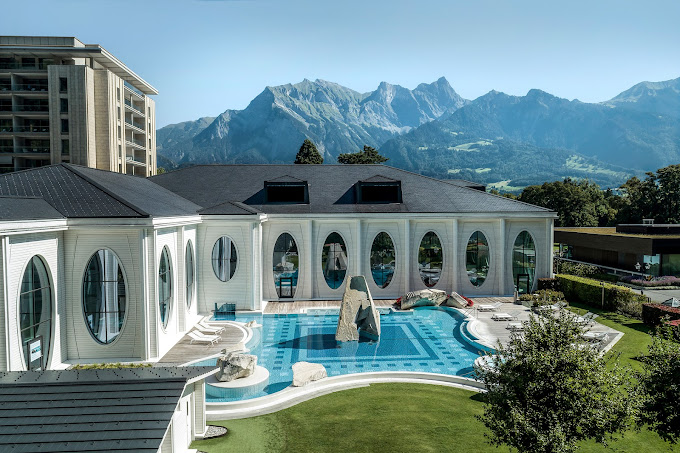
Near my home there’s a beautiful old swimming pool where you can swim, and it also hosts business conferences. Across the street is the Kulturbrauerei, an old brewery with great concerts, by favorite Russian musicians and international ones alike. There’s also a big Christmas market there, festivals all the time, children’s events and touring theater companies. And all of it is within walking distance.
I have several favorite coffee shops. I go most often to the closest one, where my neighbors come too. One of my favorites turns up in a fur coat, a bowler hat and slippers on bare feet. Someone else comes in a floor-length dress, as if heading to the opera. Someone wears construction overalls; someone comes with a dog, with friends, with kids. Someone comes in the morning after a party, someone before an important meeting. We see each other every day, smile silently or wish each other good morning. We learn each other’s names and joke in each other’s languages. Zero judgment, zero evaluation, maximum friendliness. That’s especially nice.

Our neighborhood also has the Mauerpark, where the Berlin Wall once ran, and in general lots of places connected with German history and the Wall. Prenzlauer Berg is one of the few Berlin districts that was barely destroyed in the war. As far as I know, back then it simply wasn’t of interest to anyone: there were no important Nazi buildings or anything like that; it was an outskirt for craftsmen. So it was hardly bombed, a great many old buildings survived, and the district kept its historic look. If you’re attentive, you can learn a lot.
It’s great for party life, for people who love browsing secondhand shops, and for those who go to farmers’ markets, festivals and concerts. And for those who like to step out for coffee in their slippers and walk calmly with a child without worrying about them. It’s very comfortable — for me, one of the most beloved neighborhoods.
But Berlin has other good places with their own special flair. Charlottenburg, for example, reminds me a lot of Munich: calm, elegant, bourgeois, with beautiful streets. There’s the more dynamic Mitte, home to our opera and concert halls. For families, Pankow is also good — quieter and greener.
What’s special about Berlin is that it has no center in the usual sense. Or rather, in the very middle of the city there’s the huge Tiergarten park, with squirrels, rabbits, foxes and other wildlife. For those used to very centralized cities and living in the center, this is unexpected. There are many centers here — East Berlin and West Berlin — and every district is a separate town with everything of its own. Transport also works very well: lots of trams and subway lines, and bike lanes. You can easily live almost without a car. So if you settle somewhere other than the very center, it’s no great pain — everything is close at hand.
If you want nightlife, bars and clubs, that’s Kreuzberg, Friedrichshain and Neukölln: lots of young and creative people, everything buzzing until morning — but noisy, of course. And if your budget is limited, there are neighborhoods changing fast right now, such as Wedding or Moabit.
My advice: before renting an apartment, walk around the neighborhood in the evening and on the weekend. Every district has its own rhythm.
Renting an Apartment in Berlin: Costs, Leases and the Anmeldung
Most people who move here first rent a furnished apartment, for example through Wunderflats. You need that to register your address quickly and calmly start choosing a neighborhood, collecting recommendations and so on. After that you join the general race for apartments.
Berlin’s peculiarity is that rents are regulated: each district has its own benchmark price per square meter. That’s good for people who have rented here for years and bad for those who’ve just arrived and are trying to find a good free apartment. The housing stock is very varied and quite specific, little new housing is being built, and it can’t keep up with the number of people moving here.
Honestly, we were lucky. We first rented a furnished apartment short-term, then simply took it over from the previous tenant and switched to a long-term contract. Once you have one, you’re far better protected and the housing question is solved — and long-term rentals are often noticeably cheaper than short-term ones, so it makes sense to switch fairly quickly.

Don’t put off your registration, the Anmeldung: without it nothing works here — not a bank account, not much else. And here’s a tip: you can book at any Bürgeramt office, not necessarily in your own district. Open the website early in the morning — appointments are released for the whole day ahead, and you’ll almost always find a slot. So you can often get in almost the same day.
By comparison, housing in Munich is significantly more expensive. In Istanbul, in my experience, too. So Berlin overall is a fairly affordable city, although locals complain that prices have risen many times over.
Living in Berlin as a Foreigner: A City Built by Newcomers
I love Germany because you don’t have to love it at all. It’s not even always considered logical to love it.
I love it because my family is safe here and I can build a future here for my children. Because, for all its minuses, it’s a country that took my family in at a difficult time and gave us opportunities without closing its doors on us. How could I not support a country like that?
I love it because it isn’t as simple as it seems. There’s a big, ambiguous history here, complicated people and complicated fates. There’s a lot that’s beautiful here that, for some reason, people don’t talk about, and a lot that’s banal that, for some reason, gets popularized. It’s complex, uneven and multifaceted, and that’s what makes it interesting to me. In some places there’s more order, but in moderation, and that suits me.
And of course, I love Germany for Berlin. Berlin has almost always been a city of newcomers, and many of the people it’s proud of today once moved here themselves. E.T.A. Hoffmann came from Königsberg. Not everyone may know that the story of The Nutcracker, which we love from Tchaikovsky’s ballet, was his invention.
My daughters go to a kindergarten near Gendarmenmarkt, where the wine cellar Lutter & Wegner still operates — the place where Hoffmann read his stories to friends in the evenings. Turgenev came here to study and spent almost two years at the university now called Humboldt University. Einstein later taught there. It matters to me that I walk the same streets.
And it started a very long time ago. Back in the seventeenth century, the local electors were thinking about how to arrange something like a disruption. They had no great resources or capital, and they were looking for ways to lift the economy and find money. So they invited wealthy Jewish families expelled from Vienna to Berlin.
After the Thirty Years’ War, when the country was ruined, they let in Huguenots from France, and for a time one in five Berliners was French. Yes, it was a pragmatic and even cynical calculation. But ever since then, French hasn’t been a foreign language in Berlin; the Berlin dialect is still full of French words. And they say it was the Huguenots who made vegetables popular here that later became classics of Berlin cuisine — asparagus, for example.
Later the king let in Protestant refugees from Bohemia, in today’s Czech Republic, and their village still stands in Neukölln; it’s still called the Bohemian Village. And it wasn’t only Berlin. Nearby, in Potsdam, there’s the Dutch Quarter, built for craftsmen invited from the Netherlands.
In Bavaria, a whole new town in Erlangen was built for the same Huguenots. And in the north, in Schleswig-Holstein, there’s the little town of Friedrichstadt, founded by Dutch Protestant refugees almost four hundred years ago. Germany has made a qualitative leap many times precisely thanks to those it took in.
And that spirit has survived. Today, in any Berlin neighborhood, you can find shakshuka, forshmak and almost any cuisine in the world done well. I think Berlin is the gastronomic capital of Germany — well, maybe together with Hamburg. Wonderful Asian food, great restaurants and cafés, very good coffee.
Lately Berlin has been opening up to me from yet another side. For the first time in my life I went to a meeting with one of the political parties. The politicians invited me themselves, and we spent almost three hours talking with entrepreneurs and lawyers about the development of AI and the future of the city. It wasn’t for show at all, and that’s very winning.
Here my children can attend kindergarten and school almost for free and get an international education. And here I can find pieces of home. For example, I love going mushroom picking, and Germany has a huge number of mushrooms. I don’t want to be cut off from the culture of my homeland, and here that’s possible. At the same time, I like how this system works.
So I love Germany because it’s complicated. And for Berlin.

Is Berlin a Good Place to Live Long-Term?
For now I wouldn’t want to leave, and I don’t think I’ll ever leave for good. Germany seems a good candidate to become our base for a long time. Of course, as a family we dream of living in other places and other countries, and maybe we still will. But Germany looks like an excellent base to come back to — after a month, a year or decades.
I feel part of this society. My children are growing up here, they speak Russian and German fluently, and now they’re starting to learn English. I want to build a successful business here — and not just one — and contribute to changing things for the better. And why go anywhere when you can get to any point in Europe from here in one, two or three hours?
Perhaps, when SchubKI grows more actively in the EU — and that’s already within the next few years — I’ll need to move for a while to launch individual countries. But the base, of course, will stay in Berlin.
FAQ: Moving to Berlin and Starting a Business in Germany
Does Germany have a digital nomad visa? No. Founders and remote workers usually apply for a freelance or self-employment permit, the EU Blue Card or the Opportunity Card. Our digital nomads hub covers alternatives elsewhere in Europe.
Can foreigners start a business in Germany? Yes, with a residence permit that allows self-employment. A GmbH or UG can be notarized online, and Nadezhda’s company had a registration date within two weeks.
Is Berlin a good city for digital nomads? For those planning to stay, yes — a big startup scene, widespread English and easy links across Europe. Short stays are harder: there is no nomad visa, and long-term residents become German taxpayers.
How much money do you need to live in Berlin? Roughly €2,100–2,500 a month for a single person, including a one-bedroom apartment.
Is Berlin expensive compared with Munich? No, mainly thanks to housing: a one-bedroom in Munich typically costs €1,500–2,100 a month, against €967–1,369 in Berlin.
What insurance do you need in the first weeks in Berlin? Residents need German health insurance. For the first weeks of flat-hunting, many newcomers add travel medical cover — compare SafetyWing’s Nomad Insurance and Heymondo, and check the policy meets your visa’s requirements.
How do you get mobile data and stay safe online when you arrive? A travel eSIM works from the airport, before you have a German contract — see our Airalo eSIM review and best eSIM promo codes. For banking on café Wi-Fi, a VPN such as NordVPN is worth having: see our VPN guides.
What are the best neighborhoods in Berlin for expats? Prenzlauer Berg and Pankow for families, Charlottenburg for calm, Kreuzberg, Friedrichshain and Neukölln for nightlife, Wedding and Moabit on a budget.
Can you live in Berlin without speaking German? Day to day, largely yes — Berlin ranks sixth among capital cities in the EF English Proficiency Index 2025. Paperwork is mostly in German, though, so a few lessons and a good Steuerberater help.
Best Places in Berlin: A Local Founder’s Favorites
There are so many places I love in Berlin. I’ll try to name the most important ones.
Tempelhofer Feld, the former airport in the middle of the city. It’s wonderful to sit on the grass there during the kite festival and watch the kites soar over the runway.
All three Berlin opera houses and, of course, the Philharmonie. They all have wonderful ensembles, a superb program every year and powerful tours by world-class performers. And in the heat, it’s great to escape to a cool hall for the ballet.
Coffee shops. I love having coffee at the Hackesche Höfe, at the Tunisian café Ben Rahim. And several Bonanza locations: my very favorite is by Gendarmenmarkt, and there’s another great one near the Mauerpark.
Mauerpark on Sundays. Forty or fifty drummers gather there and hold a real jam session. Nearby, in the amphitheater, there’s open-air karaoke. People who are just strolling through the park sit down on the stands and take turns coming out to sing hits from all over the world, while everyone else sings along, claps and rejoices like children. It’s a very popular Berlin tradition. In my experience, karaoke is loved in many kindergartens and schools too: children get music put on and sing freely, without shyness. Maybe that’s why there are so many people here who adore singing.
The Saturday market on Kollwitzplatz, where I take all my guests. People come just to look at other people: some stroll, some chat over a glass of farmers’ wine and listen to street musicians, some talk to the farmers and choose cheeses, fruit, fennel, honey, Mexican food and cuisines from around the world. It’s a meeting with friends, a social outing and a source of street-style inspiration all at once. It’s equally fine to turn up in a bikini and heels or in pajamas and slippers straight from home.
Grunewald, the forest in the west of Berlin. It’s lovely to walk its trails to the lake, where there’s a nudist beach, or to the spots where blackberries grow.
The banks of the Spree. Not everyone knows how many canals Berlin has and how many places you can reach by boat. Just sitting by the river is already a rest. And in the heat, from our neighborhood you can take the tram for twenty minutes to the Weißer See lake in Weißensee and go for a swim.
Museum Island. It’s our family’s place of power; my husband, the kids and I all adore it. It hosts the Long Night of Museums, the Festival of Lights and all kinds of celebrations. And in the heat, it’s great to hide out in the café of the Bode Museum, the sculpture museum.
Unexpected museums worth visiting. The Natural History Museum. The Samurai Museum with its superb collection. For kids — perhaps surprisingly, but very interesting — the museum of magic. And the Hamburger Bahnhof, the museum of contemporary art in an old railway station building. The exhibitions change about every six months, and it’s always a great space for both adults and children.
There are dozens more places, obvious and not. For example, every September in Charlottenburg there’s the Antikmeile, the Antiques Mile, on Suarezstraße. The street is closed off, antique shops throw their doors wide and set out their collections right on the sidewalks, and about a hundred more dealers come.
It’s also great to go up to the roof of the Humboldt Forum, opposite Museum Island. Sunset, a glass of wine, the whole city from above. And my gift to you, a tip: to avoid the tourist line, just book a table at the rooftop restaurant and take the elevator straight up.
Of course, take a river boat. And simply sit on the terrace of a good café in some neighborhood, eat fresh oysters and cheeses, and chat. Berlin’s bars are very cool, and with the latest waves of migration they’ve become even more interesting: great restaurateurs have arrived from different countries, including mine, and they have opened and keep opening many good places. There are very unconventional guides who run their own tours about Berlin’s completely crazy history. There are excellent jazz clubs, and jazz and food festivals.
“Berlin doesn’t demand anything of you. You can just be who you are.”
Berlin is very alive. And for all its capital-city status, it’s very simple and relaxed. It doesn’t demand anything of you, doesn’t make claims on you, isn’t aggressive and doesn’t oblige you to live up to anything. You can just be who you are. The main thing is not to demand that others live up to your expectations either.
Here, in November, you can walk with lanterns in the St. Martin’s procession to the church and a big bonfire. Or you can go to a parade in support of the queer community. And it all happens on the same streets, very positively and without any aggression. Berlin has a capital’s scale, but a calm one.
Locals Insider
Expat, nomad & founder fact file
Berlin, GermanyVisas, taxes and living costs for expats and founders
The lowest trade-tax rate of Germany’s million-plus cities, and clear permit routes for freelancers and founders.
- Income tax
- 14–45% Tax-free up to €12,348
- Company tax
- ≈30.2% GmbH in Berlin, all-in
- VAT
- 19% Exempt under €25,000 turnover
- Health insurance
- ≈17.5% Public, average rate
Visas & residence
Every German permit has a purpose — pick the one you fit
- Digital nomad visa
- None
- Freelancer permit
- Section 21(5): client letters and proof you can support yourself; issued for up to 3 years
- Self-employment permit
- Section 21(1): business plan plus economic interest or regional need; settlement permit possible after 3 years
- EU Blue Card
- Degree and job offer paying €50,700+ (€45,934.20 in shortage roles); permanent residence after 21 months with B1 German, 27 with A1
- Opportunity Card
- 12-month job search without an offer: 6 points, €1,091 a month in funds, up to 20 hours’ work a week
Opening a business
Company formation and registration basics
- GmbH
- €25,000 share capital, half paid in at registration
- UG (mini-GmbH)
- From €1 share capital
- Notary
- Formation can be notarized online by video
- Freelancers
- Register with the tax office via ELSTER; no trade tax for liberal professions
- Trade business
- Register at the district office; sole traders get a €24,500 trade-tax allowance
- Anmeldung
- Register your address within 14 days of moving in — at any Bürgeramt
Taxes in detail
For tax residents (more than 183 days a year or a home in Germany)
- Income tax
- 0% to €12,348 · 14–42% · 42% from €69,879 · 45% from €277,826
- Solidarity surcharge
- 5.5% of income tax, higher earners only
- Corporate tax
- 15% + 5.5% surcharge = 15.825%
- Trade tax, Berlin
- Multiplier 410% ≈ 14.35% of profit
- VAT
- 19% (7% reduced); exempt if turnover was under €25,000 last year and stays under €100,000 this year
- Nomad tax regime
- None — residents pay on worldwide income
Cost of living & ratings
Numbeo data unless stated
- One-bed apartment
- €1,369 center · €967 outside
- Single person
- €1,107 a month, excl. rent
- Coffee & lunch
- Cappuccino €4.15 · cheap lunch €15.66
- Transport
- Deutschlandticket €63 a month, all local transport nationwide
- Cost of living index
- 70.0 (New York = 100)
- Safety · healthcare
- 55/100 · 66/100
- Expat Insider ranking
- Germany 30th of 31 countries (InterNations)
Where to live
Nadezhda’s Berlin shortlist
Families: Prenzlauer Berg, Pankow · Elegant and calm: Charlottenburg · Nightlife: Kreuzberg, Friedrichshain, Neukölln · On a budget: Wedding, Moabit
Official links
Apply and check the rules at the source






 Martinique
 Romania
 Scotland