“Denmark Built Its Own ChatGPT. It Started With a Dictionary”: Peter Revsbech of Ordbogen on Sovereign Models, Silicon Valley — and Where to Eat in Svendborg
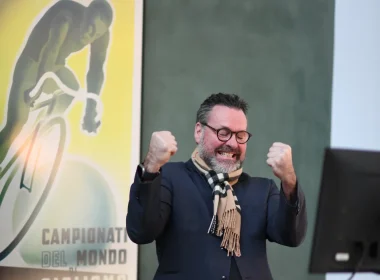
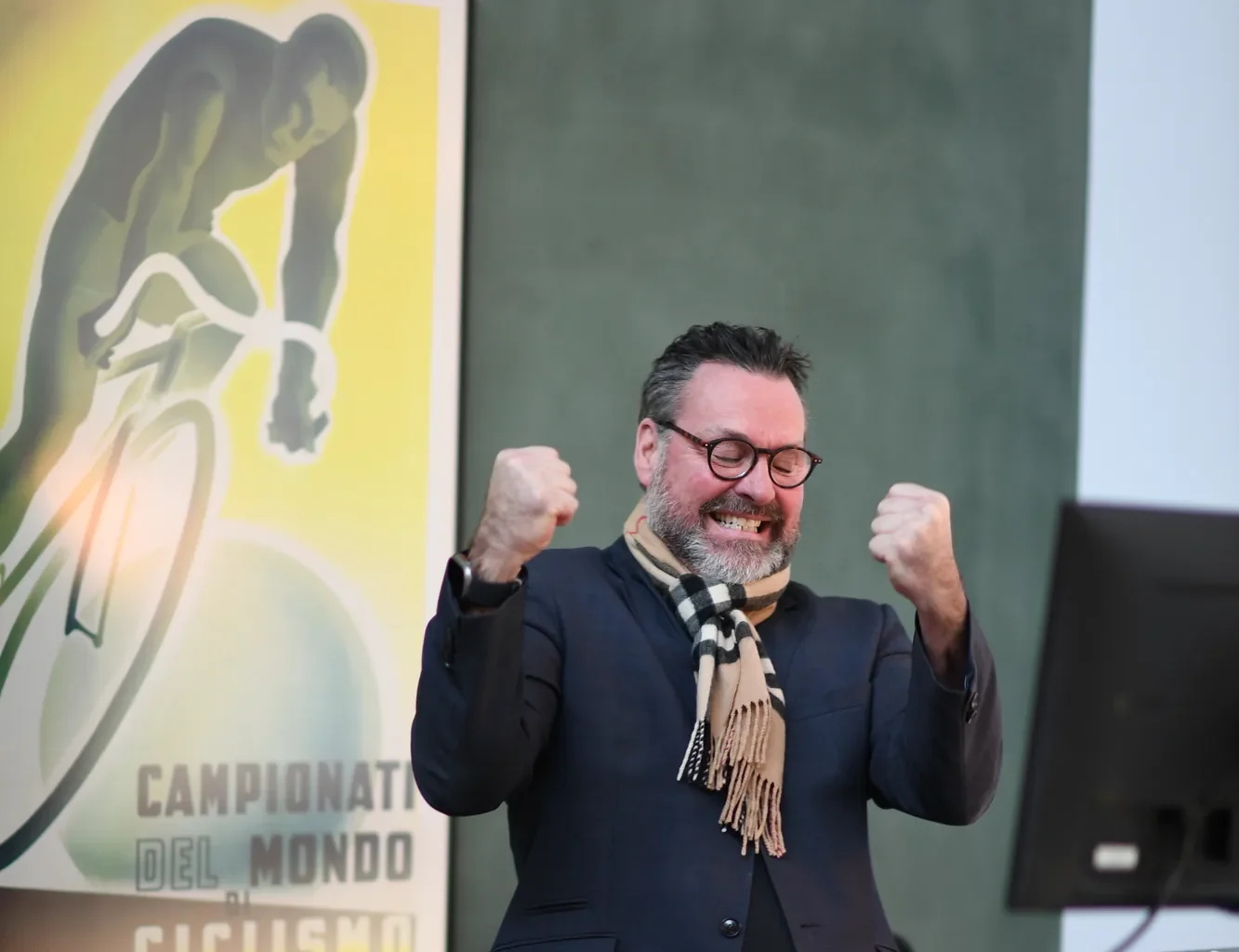
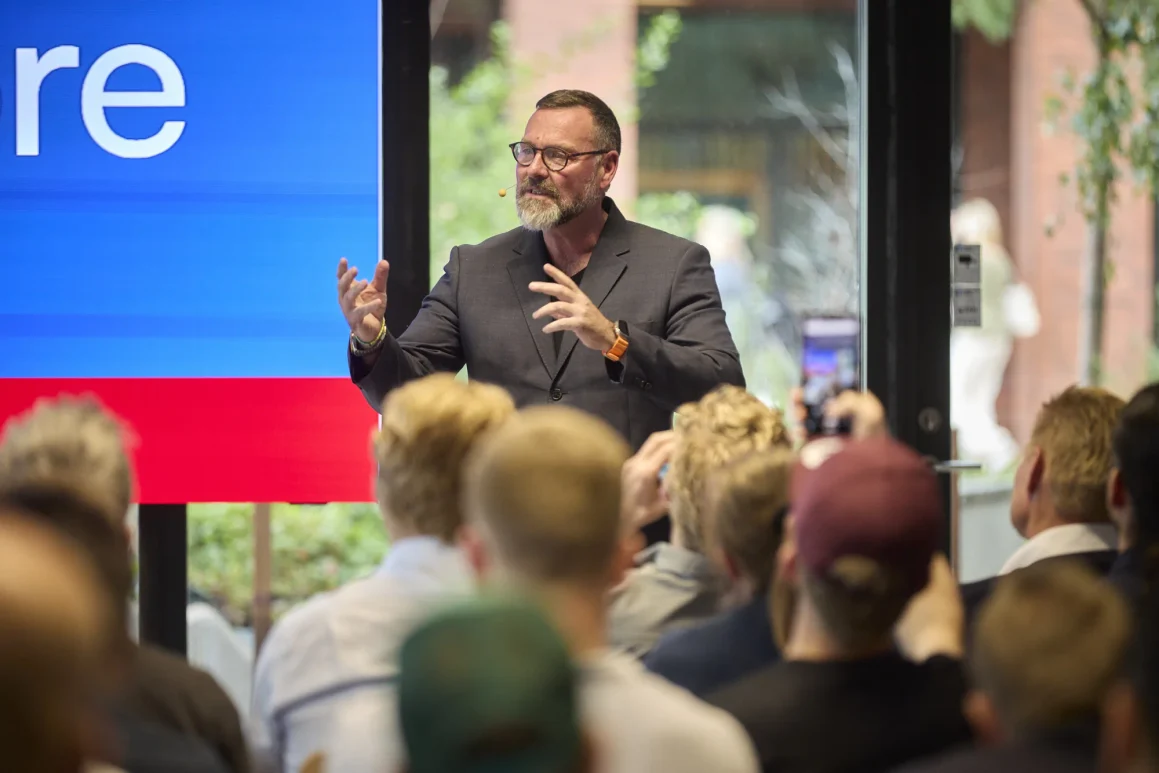
Peter Revsbech is the man behind Ordbogen — the online dictionary every Dane has used since school, over a million lookups a day — and now behind chat.dk, Denmark’s own AI chat. He has led the Odense company for decades, and rather than rent a model from America he built one: trained on the company’s own GPUs, hosted in its own data centres, with no data leaving the country. In August 2026 it released Mimir, a Danish model that matches models five times its size, four months after winning the Dataetikprisen for the way it was built.
He describes ChatGPT as a little dachshund wagging its tail, and says it without malice. He just doesn’t think a language model should want you to like it.
LocalsInsider’s Alex and Martin are from Denmark – and we use AI every week to plan trips, find fares and read menus. All of it runs on American models. American companies drew $285.9 billion in private AI investment in 2025 against Europe’s $20.9 billion, by Stanford’s 2026 AI Index. So we were curious where European AI is actually going, and whether anyone small was building rather than renting. A dictionary company an hour from us was.
For Locals Insider, Peter wrote about why he built it, what it costs to behave well when your competitors don’t, and why he will never make an image generator. And then he did what our contributors do. He lives in Svendborg, on Funen — the island of Hans Christian Andersen’s birthplace and Denmark’s many vineyards such as By Stokkebye, an hour and a half from Copenhagen and a world away from it. These are the places he’d take a visitor.
We Thought We’d Better Kill It Ourselves
We’ve worked with language models for a very long time. And we could see that online dictionaries for business had a limited lifespan.
“So we thought we’d better kill it ourselves, before others did it for us.”
And then we got started on the language models. We called the whole language model business Odincore. And we already had all the customers, Martin. They just knew us for something else. Today a lot of people know us from the dictionaries, but in business, more people know us from Odincore and our language models.
Then we looked out at the market and thought: where can we differentiate ourselves? Because we can’t beat Big Tech in America at all. So we said we’d be the best at Danish.
Eighty Per Cent of the Words Are Never Used
We thought we could do it, because for one thing we have over 6 billion lookups through the years. And we have more than 350 million solved exercises on Grammatip, our other big platform. And we could bring all of that into these language models.
We also found out quickly that we couldn’t do it alone. We had to have help from some universities. The ones we work very closely with today are Aarhus University and SDU. We have five PhD students employed — we’ve just taken on a sixth, so six right now — and two professors working on these models with us.
The reason a smaller model can compete is something we learned from the dictionaries. We have so many words in our database, and 80 per cent of them are never used. Ever. It’s the 20 per cent that get used a lot, and the 5 per cent that get used enormously.
“It’s the same with the technology behind these big language models. There’s masses of things in there they never answer on.”
Right now they’re buying up all sorts of antiquarian books. But how many people are interested in, or ask the model about, something written in an antiquarian book?
Mimir, and the Road to Sixty Billion Parameters
Mimir is the first thing we’ve shown: that it’s possible to train a model so it becomes significantly better than the American and Chinese ones.
Mimir is a research model, which an ordinary user can’t use on chat.dk yet, or on EduChat. It’s one billion parameters, and we’ve been given 50,000 hours on a large server in Germany, where we can train it up to 3.3 billion parameters. Our goal is to go up there, if the research proves right.
Then we’re as good as models with over 10 billion parameters. The next one up is 9.9 billion, and then we can measure ourselves against models with 30 billion. And from there we’d go up to 6 billion — and then we’re getting quite good. Then we can measure ourselves against the good models from the Americans and the Chinese, while being by far the best at Danish.
“This one-billion model has shown us: we can do this. It’s still research. But suddenly you can see we’ve found the recipe for how to scale.”
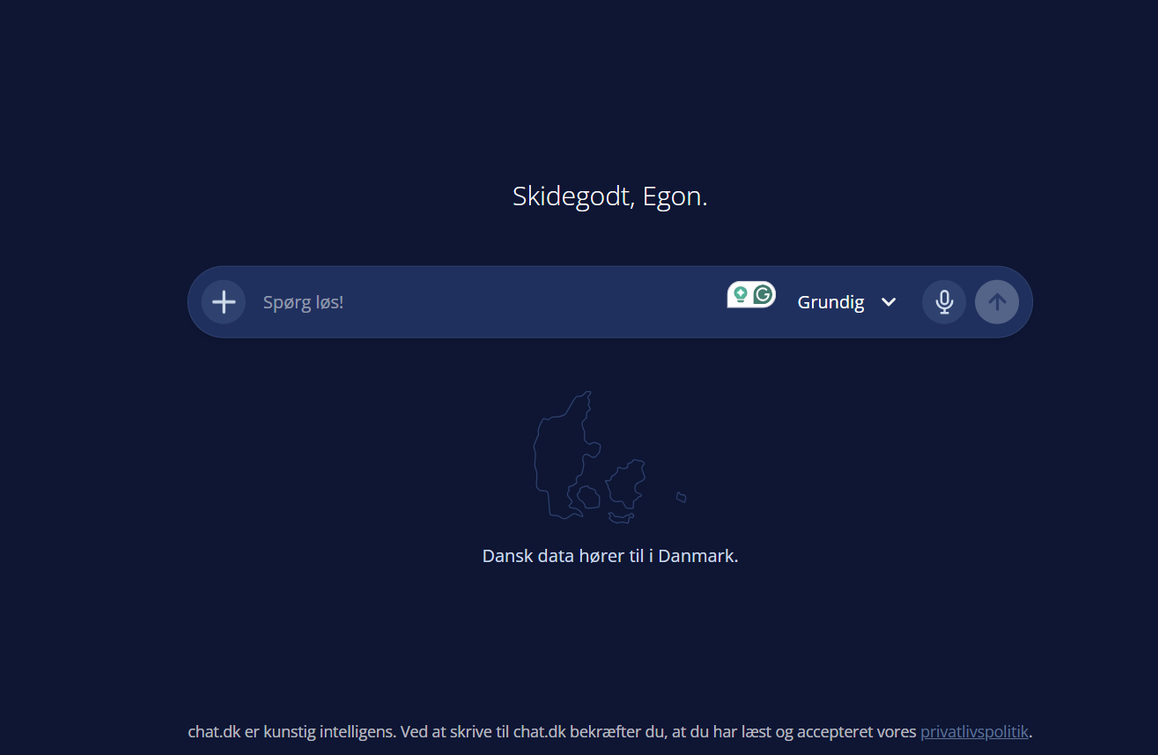
chat.dk, Denmark’s ChatGPT, developed by Ordbogen in Odense
Our Direct Opponent Isn’t Big Tech. It’s Mistral.
Our direct opponent isn’t Big Tech. It’s Mistral — the American Mistral. It isn’t French. A lot of people think Mistral is French. It isn’t French, it’s American. It’s located in France, and they say they’re European, but they’re still owned by American investors. And they still use Amazon to host all their things.
We host everything ourselves here in Odense. We train ourselves, we host ourselves, we deliver the service from here in Odense. And there’s no data with us that gets shared with anyone else at all.
We train ourselves. We own all the metal. We have the graphics cards, we have the GPUs, we have all the racks ourselves. Everything you could possibly imagine sits with us. The search engine is our own — we’ve developed our own search engine, so we don’t even use any of the American search services. It’s the language models that search in the search engine.
“When we make a data agreement with our user, there are no subcontractors.”
Six Reasons Someone Chooses Us
What our absolute selling points are is that we’re locally anchored. If you look right from the top: we’re a Danish company, owned by three Danes. One.
Two: we’re the most data-ethical on the market right now. Three: everything runs with us. Four: we host the things as well. Five: we don’t train on any data from outside at all. And six: we can build these really good models. And then the foundation for all of it is our own LLMs, at some point.
We won the Dataetikprisen, and we’re bloody proud of it, because that’s the stack we make — where you own the whole stack yourself and don’t train on user data. And then best at Danish. Those are the three things where we really differ from the big tech giants.
Every time you use them, you’re a customer in their shop. The data you put in, they save it and train on it and spit it out again.
If You Behave Properly, You Get More Boring
There’s a limitation to it, and I’ll say it plainly. It means we’ll never get up there. I think we can beat Mistral — that’s what we’re going for, to be better than Mistral. But not all the others.
“If you’re going to behave properly, you get more boring. People who don’t behave properly are sexier than people who do.”
What chat.dk Is, and What It Isn’t
chat.dk is a chat like the American chats, and it does roughly the same as they do. We’re also bringing in the ability to upload PDFs and all the other things you can do on some of the other models over at the Americans.
chat.dk runs on our medium model. It’s a shop window for what we can do in the medium class. It’s a first-division team standing behind it, where chat.business and the API are the Superliga.
EduChat is made as a teaching product, so it differs significantly from the others.
“Here we never give the answer. We motivate the students. We make them curious. We help them along if they’ve got stuck.”
If you’re working on maths problems, we can read things aloud — you can’t solve maths if you can’t read what’s written around it. So it’s much more guiding.
And over on business, we can build agents ourselves. If there’s a municipality or a state organisation or a company that says, I want some kind of first line of defence on my customer service, we can build an agent-driven application for them that’s the first thing to pick up the phone. And again, the company isn’t afraid to use it, because we don’t train on that data. All that data is the company’s data.
Why We’ll Never Make Images
We’re not looking into making images at all. It’s not something for us, and we won’t compete on it, because it isn’t in our value base at all.
“And I don’t think images create much value for users. You can bloody well see it’s artificial. Those people aren’t real people, you can tell. They’re too perfect.”
Our guardrails are much narrower than the American ones. You also have to remember that AI is, in my opinion — artificial intelligence is intelligence, but it isn’t always very clever. It isn’t always that the output you get is very clever.
I also think the better you are at prompting, the better the output the system gives you. If you use the Americans, you can see you don’t have to be very good at prompting to get a good answer. But that answer is the answer they want to deliver. It’s their own answer.
ChatGPT Is a Dachshund Wagging Its Tail
What we’re trying to do is make it so you don’t have to mix all that American into everyday language. But again — computer. The Swedes call it a datamat. When we call it a computer in Denmark, that expression has become Danish. Fuck mig, fuck dig, fuck alle mulige — that’s practically become Danish too. Everyone goes around saying it today. So there’s maybe no reason to start lecturing users about all sorts of other things.
But all the things in our spelling products which have both a Danish synonym and a Danish equivalent — there we do go in and tell the user that this is an American expression, and actually you can use this in Danish too.
“ChatGPT is a little dachshund standing there wagging its tail. And the more you use it, the more it wags its tail and licks its lips. It’s out to please you in every possible way. We’re rather more critical.”
We’re not out to sell you anything. So we’re not out to advertise anything in particular. We just want to give you an answer. And that answer should be correct. And that answer preferably shouldn’t be stolen from somewhere.
If a user wants that kind of answer, then it isn’t in our domain. Then we’re just worse than the others, if you want to put it that way. Our niche is not to sell you anything. You’ve bought the service, or it’s a free service. We won’t give you an American answer with American biases at all. Or, even worse, with Chinese ones trying to create some kind of Chinese democracy in the whole world with their language models.
“We’re completely apolitical. We’re just out to help. To create value for the user as fast as humanly possible.”
Danish First, Then Scandinavian
To begin with we’ll be best at Danish, as we’ve said. After that we’ll be best at the Scandinavian languages, and then we can work our way down towards Germany instead. Or afterwards.
The Scandinavian languages — at least Norway, Sweden and Denmark — are built on the same language core. So it isn’t difficult to make the LLMs better at those languages. Finnish is suddenly something else entirely.
France is also very, very leading in being very critical of the Americans. It’s about finding partners for us where together we can play each other better.
As for what we’ll train on: we’ll train both with synthetic data, and with data that isn’t copyright protected. There’s masses of research people would very much like to have shared. So you can go in and get an enormous amount of research that can be useful — at least for the business users. And there they have one interest, which is that it’s shared.
A Year From Now, You Won’t Need Claude
We use our own models internally in the house. And we’re making a mathematical model now that we can also train on internally. It looks rather good.
“So when you want to vibe-code, Martin, you won’t need to use Claude or anything at all. You can use our secure, closed model within about a year, I think.”
The one we have now, if you compare it with Claude — we can’t. But in a year’s time we think we can.
Peter’s Funen: Where a Local Eats, Drinks and Walks in Svendborg
Peter lives in Svendborg, on the island of Funen — Denmark’s third largest, an hour and a half from Copenhagen and a world away from it. He moved there two years ago, from a city, like a lot of people are doing. We asked him for his places.
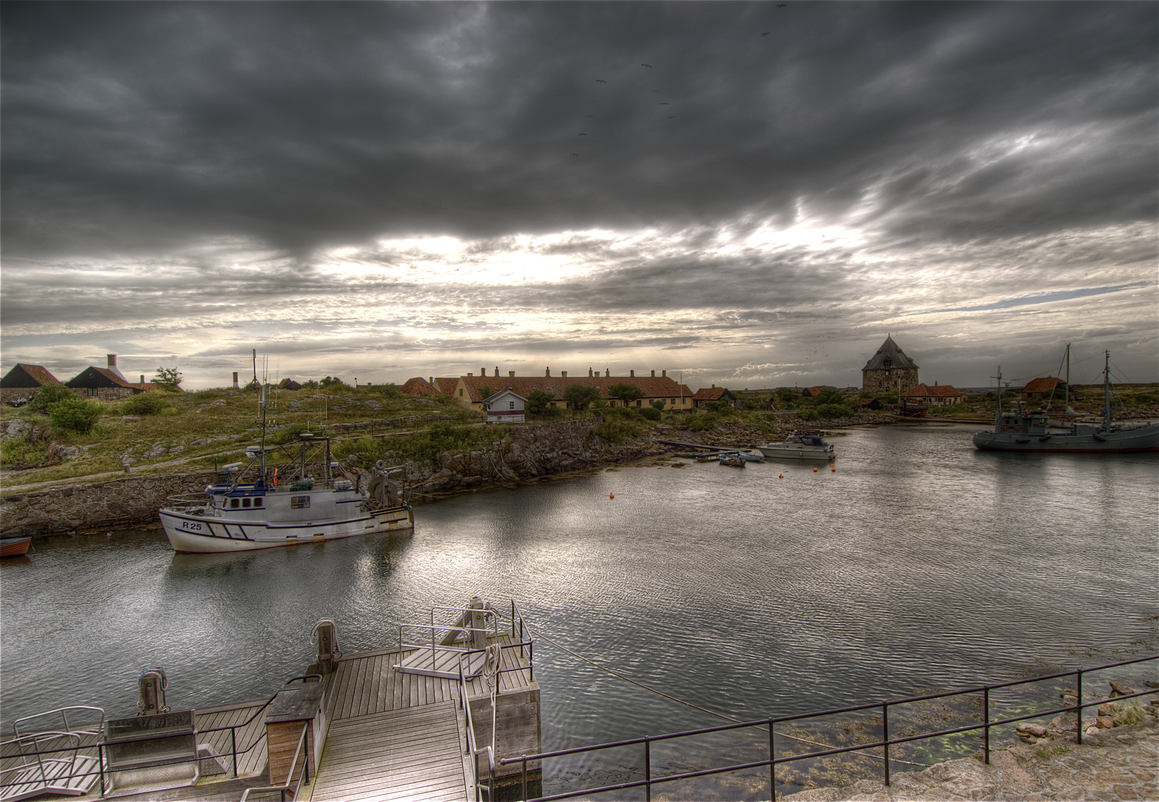
If it’s five great places in Svendborg, then I think the harbor — the whole environment around the harbor, the marina — is outstanding. And if you like beer and going to a pub, Svendborg is one of the towns with the most pubs per inhabitant. There’s a place called Frederiksø which is a pretty great spot. They’ve made a beach there. There are plenty of places to eat and drink to choose between, and food of high quality.
Frederiksø
The whole area around the church in Svendborg has playgrounds and cafés — a really cosy pedestrian-street environment, the kind a small provincial town has, with all sorts of different shops. But it isn’t overrun with tourists the way Copenhagen is, and you can walk with your bike without riding into people.
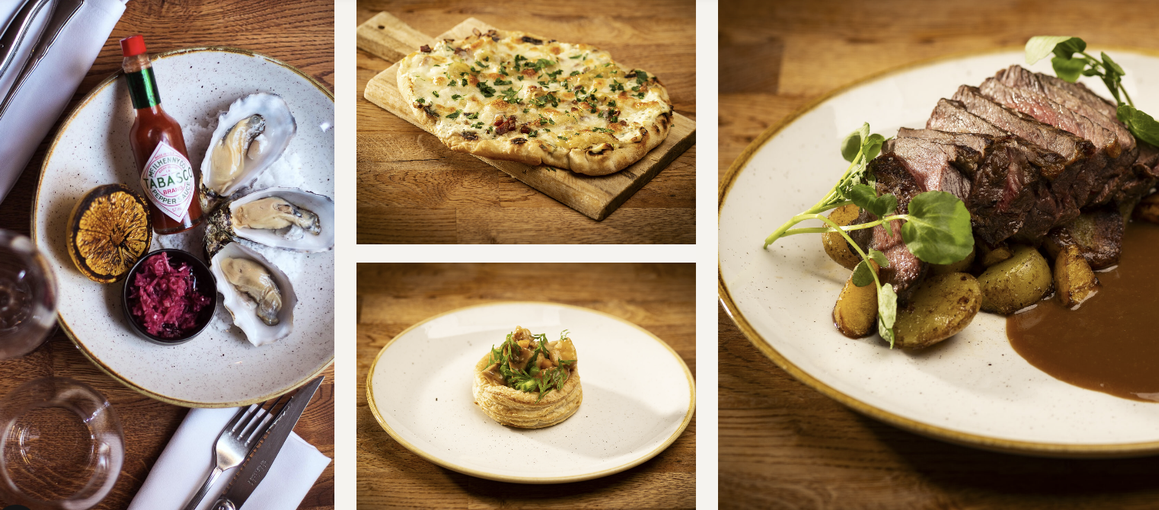
There are two really good places to eat that I’m fond of myself. One is Restaurant Resumé, which is in the former blue church. It’s simply outstanding food. Salig Simons Gaard is also an insanely good place — the same people behind Resumé, where you’re at about the level below Michelin, I think. It’s super, super good. And we’re out in the provinces here, where the portions aren’t microscopic. You can actually get full from what you order.
saligsimonsgaard.dk
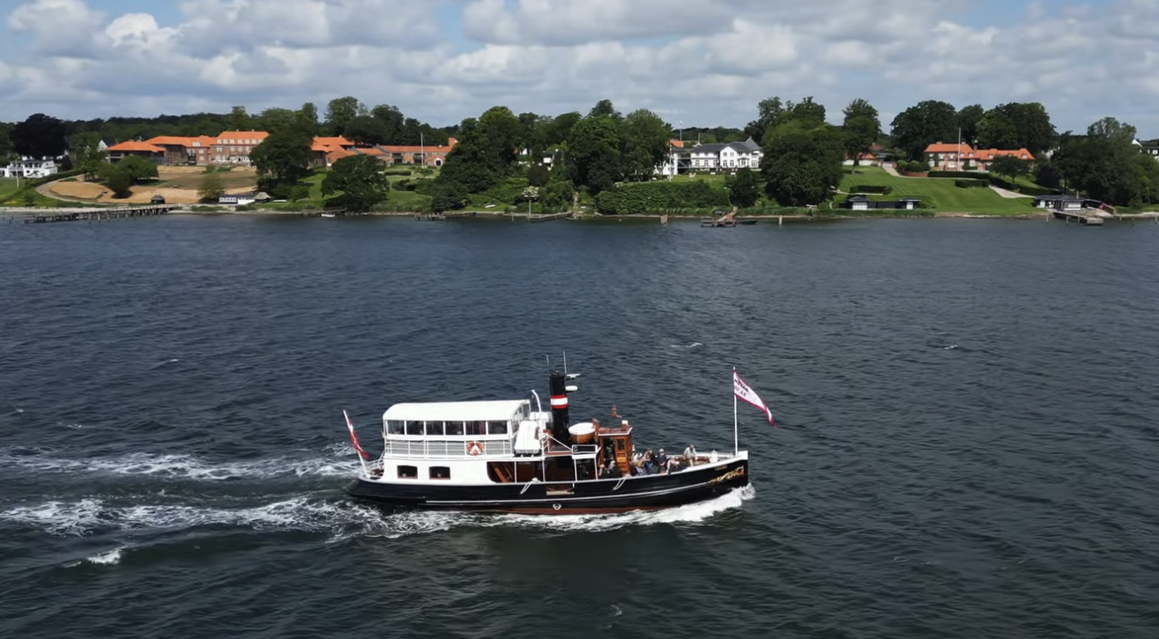
And then there’s Hotel Stella Maris, their restaurant. There’s the view too — you sit looking out over Svendborgsund. They even have a landing quay, so if you want to sail there, you can sail to their own jetty, walk up and eat lunch and sail back again.
If you want sushi, there’s a place down on the pedestrian street — I can’t remember what it’s called — an excellent sushi bar, where you don’t queue for three quarters of an hour like you do in Copenhagen.
And there are still local butchers here. Vester Åby Slagter, for example, is an outstanding butcher.
“I was down there with the children a few weeks ago, and the butcher said to me: do you want to see what kind of meat you’re eating?”
And then we went out the back to the barn, and there was a pet pig called Put or whatever the hell it was called. There were some cows over in the corner, and they were allowed to pet all the others, sheep and so on. And then: “But what now?” “Well, they’re getting shot in a little while, when you go home. You mustn’t watch. And then they get hung up. And then you come on Tuesday, and you can buy the meat.”
And I could see the girls — “Dad, can’t we have that pig in the boot? Can’t we take it home?”
Yes. That’s the cycle. That’s how it is. And I came down the week after and bought meat from that pig, which tasted completely wild. And the kids ate it anyway. It’s pretty exceptional that you can do that.
“Come to Svendborg, Martin. It’s a great town.”
Locals Insider · Peter’s Funen
Where to Eat in Svendborg: Five Places From a Local
Two restaurants, a hotel dining room you can sail to, a butcher and the harbour — the five places Peter Revsbech of Ordbogen returns to on Funen. Addresses, opening days and the days they shut.
Part of the same restaurant group as Restaurant Resumé. Peter described the level as, in his view, just below Michelin — “super, super good” — but with the advantage of being out in the provinces, where the portions are not microscopic and you can actually leave full. 4.6 from 387 reviews.
Restaurant Resumé
Former church · Restaurant
Lundevej 5, 5700 Svendborg · check current opening before you drive out
Set inside a former church, still easy to recognise by its blue exterior. Peter described the food simply as excellent, and singled out Resumé as one of his two favourite places to eat around Svendborg.
Hotel Stella Maris
Kogtved · Hotel Restaurant
Kogtvedvænget 3, 5700 Svendborg · restaurant and bar · +45 62 21 25 25
You sit looking out over Svendborgsund, and there is a jetty: sail in, eat lunch, sail back. A tree-lined drive, a lawn down to the water and a deck you can jump off. Rooms are plainer than the setting; the food and staff are what people remember. 4.6 from 464.
Vester Åby Slagter
Vester Åby · Butcher
Svendborgvej 412, 5600 Vester Åby · Tue, Thu, Fri 09:00–17:00, Sat to 12:00, closed Mon, Wed, Sun · +45 40 18 95 53
The butcher who took Peter’s children out the back to meet the pig. Freshly slaughtered, organic, cheaper than the supermarket according to regulars. Twenty minutes west of town, and open only four days a week.
Peter’s outstanding place: the whole environment around the marina, and Frederiksø with its made beach and its restaurants. One of the towns with the most pubs per head in Denmark, and the harbour is where they cluster.
Addresses, opening days and phone numbers verified against each place’s current listing. Salig Simons Gaard closes Mondays and the butcher trades only four days a week — the two most likely to catch you out. Svendborg is about ninety minutes from Copenhagen by train.
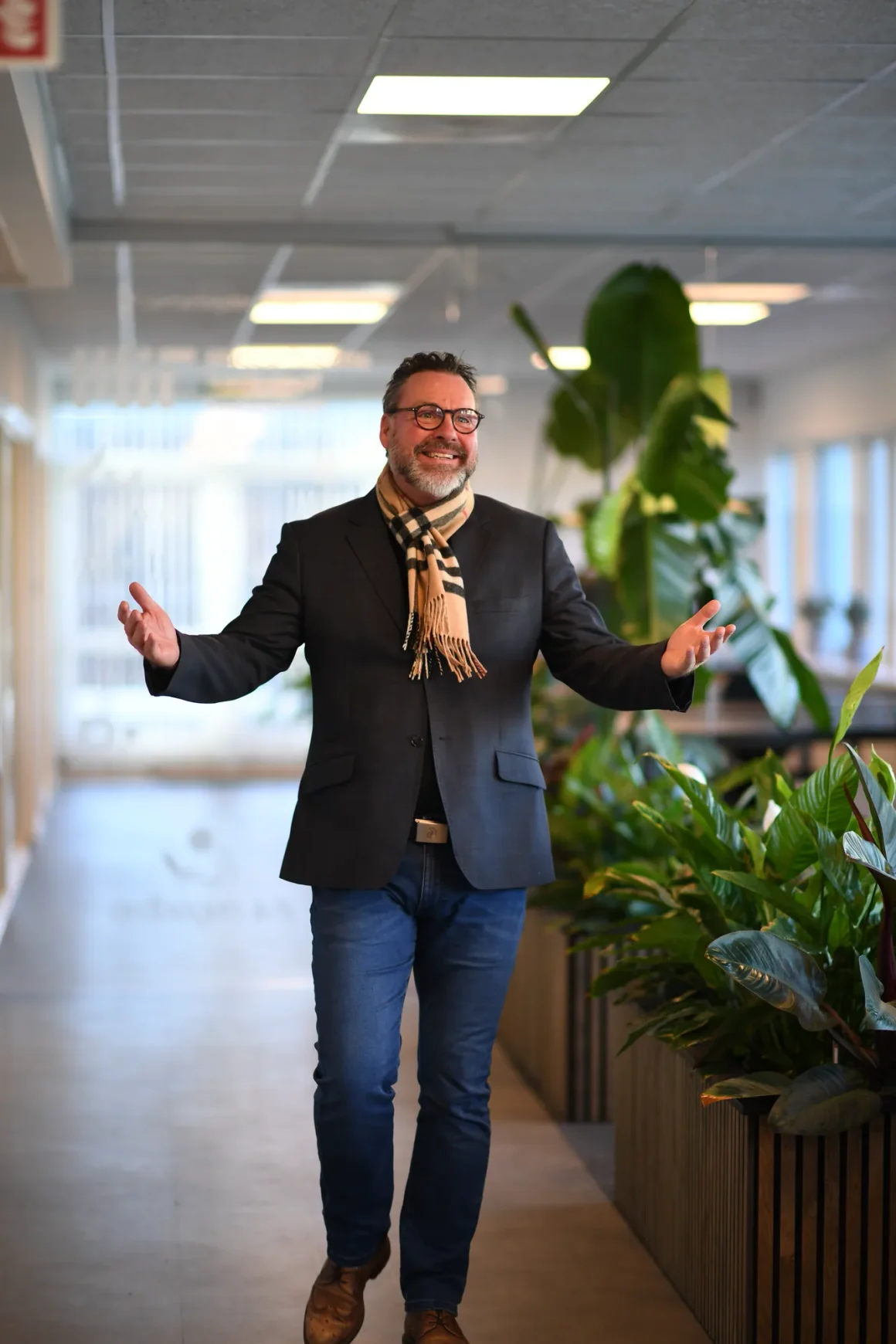
Peter Revsbech is CEO of Ordbogen A/S, where he is building Denmark's own AI. Since 2009 he has led the Odense company behind the country's largest online dictionary; in 2026 it released Mimir, a Danish language model trained on Danish hardware with no data leaving the country, and won the Dataetikprisen for it. He also advises DI, the Confederation of Danish Industry, on AI and digital infrastructure, and lives in Svendborg.