

Destinations › Malta › Valletta
City · Malta
Valletta
Valletta: A First-Timer's Guide to Malta's Baroque UNESCO Capital
Your Valletta guide, curated by Locals Insider
Valletta, by Locals Insider
Valletta is the Maltese capital — possibly the most concentrated Baroque architectural ensemble in the world, on a 0.61-square-kilometre peninsula — that travelers consistently rate as the Mediterranean's most rewarding small-city visit, with the iconic St John's Co-Cathedral (with two Caravaggio originals), Grand Master's Palace, and the surrounding Three Cities visible across the harbour.
This guide is built for first-timers but holds up on the return trip.
We've started with picking the right base (within the walls vs the gardens of the Phoenicia outside the gates) and worked through the hotels (the 1947 Phoenicia Malta with seven acres of gardens and a sea-cliff infinity pool, the design-forward Iniala Harbor House in four 16th-century townhouses on the Grand Harbor), the restaurants from chef Jonathan Brincat's one-Michelin-star Noni to Simon Rogan's one-Michelin-star ION Harbor at the Phoenicia, the museums (St John's Co-Cathedral with Caravaggio's Beheading of St John the Baptist — his largest canvas, the only signed work), and the unique places.
Famous for
Caravaggio's Beheading of St John the Baptist (his largest canvas), St John's Co-Cathedral, the UNESCO Baroque-fortified city, the Grand Harbor (one of the world's great deep-water ports), the 2018 European Capital of Culture, the Knights of St John heritage.
Did you know?
Valletta is the smallest capital city in the European Union — just 0.8 km². The entire city is a UNESCO World Heritage Site, built between 1566 and 1571 by the Knights of St John after they survived the Great Siege.
Ask a local’s list
Stories · updated as we publish
Latest from Valletta
All 4 stories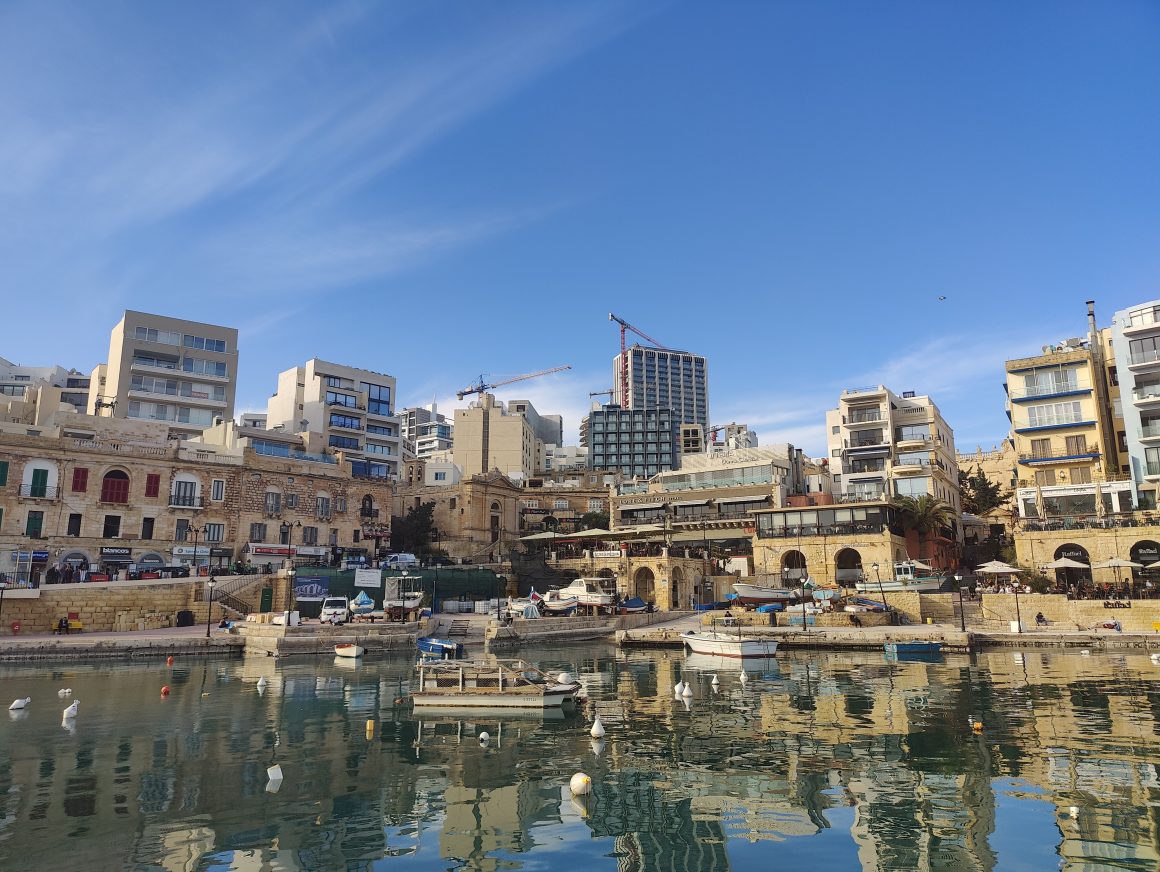
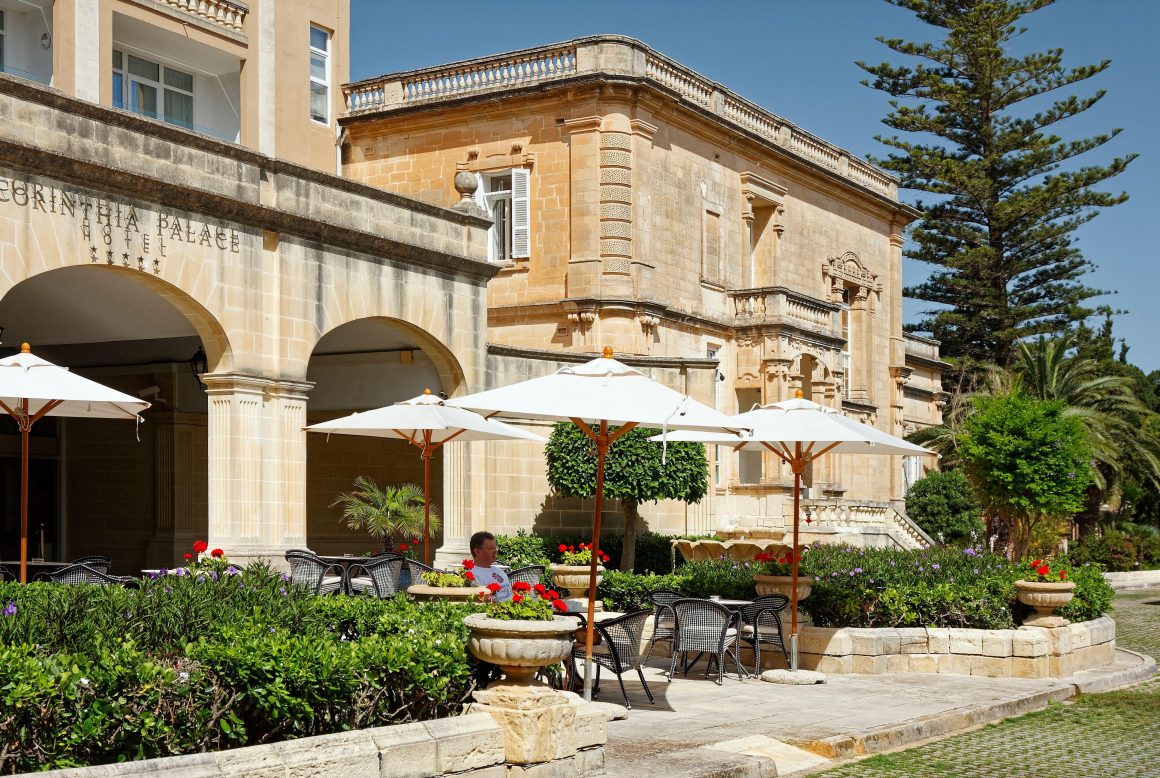
Recommended in our stories
Valletta places our authors recommend
Place
Barriera Wharf, Liesse Hill, Valletta VLT 1941, Valletta Waterfront
Mediterranean cooking with French influences and seasonal local produce, in an 18th-century building whose dining room was once an icehouse.
Open in Google Maps ↗In Mette Lorenzen’s story · “Cupcakes, Coffee and Champagne: What More Do You Need?” Danish Hygge at Mettelina Café and Mette Lorenzen’s Guide to the City
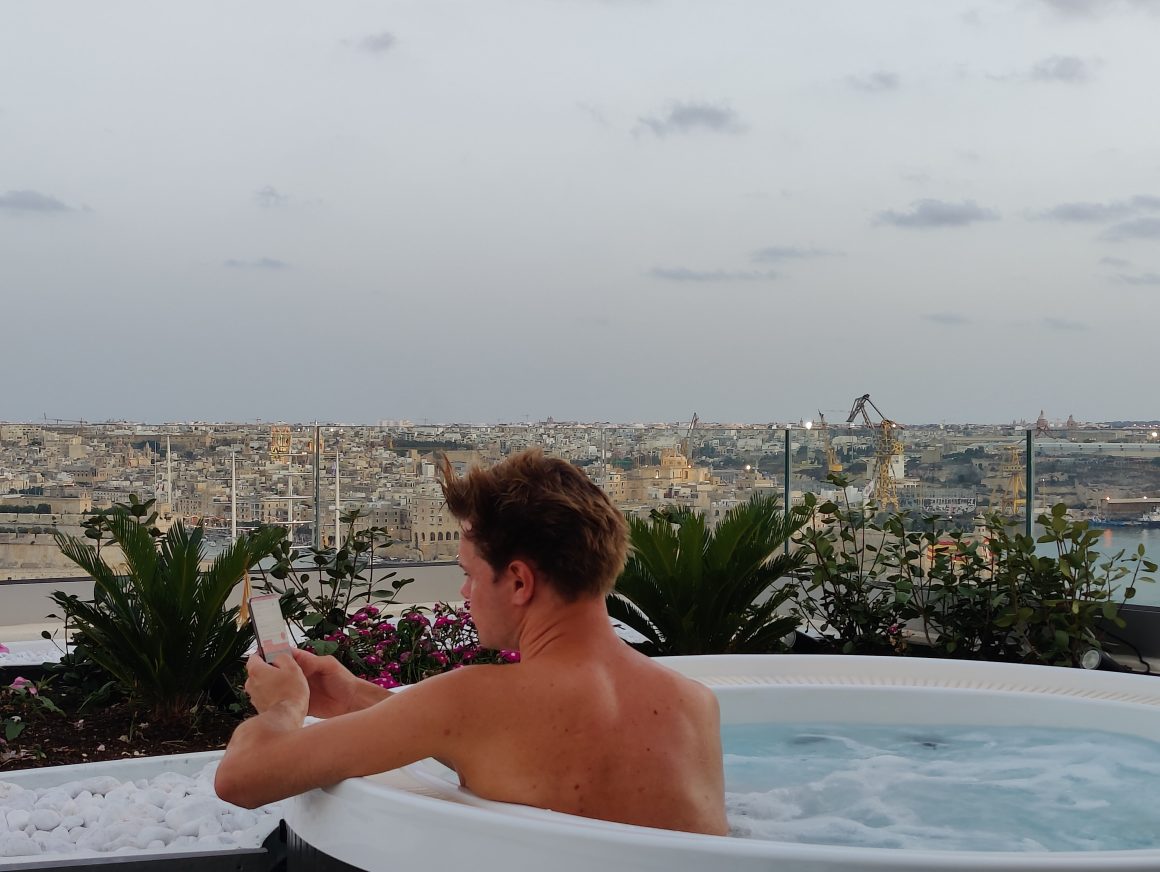
Rooftop
Valletta, Malta
Palazzo Ignazio is a small, simple boutique hotel in the heart of Valletta, perfect for those who want a comfortable stay with great views.
Open in Google Maps ↗In Alex Copenguy’s story · Boutique Luxury Hotels in Valletta and Malta (With Spa, Views & History)
Place
211 Republic Street, Valletta
Chef Jonathan Brincat reinterprets dishes from Malta and the Mediterranean with a touch of classic French cuisine.
Open in Google Maps ↗In Mette Lorenzen’s story · “Cupcakes, Coffee and Champagne: What More Do You Need?” Danish Hygge at Mettelina Café and Mette Lorenzen’s Guide to the City

Hotel
Valletta
Iniala Harbour House (located on one of Valletta's silent sea front view streets) combines sleek, modern interiors with Valletta’s old-world architecture.
Open in Google Maps ↗In Alex Copenguy’s story · Boutique Luxury Hotels in Valletta and Malta (With Spa, Views & History)
Place
49 Old Bakery Street, Valletta VLT 1454
A Spanish taberna founded by Antonio Cortés, with tapas and recipes from regions across Spain and a wine list to match.
Open in Google Maps ↗In Mette Lorenzen’s story · “Cupcakes, Coffee and Champagne: What More Do You Need?” Danish Hygge at Mettelina Café and Mette Lorenzen’s Guide to the City

Hotel
Heart of Valletta
About: Palazzo Rosaria brings classic Maltese architecture into the present with cozy, stylish rooms in the center of Valletta.
Open in Google Maps ↗In Alex Copenguy’s story · Boutique Luxury Hotels in Valletta and Malta (With Spa, Views & History)
The Valletta guide
Where to stay, eat and drink in Valletta
Picked by Locals Insider. Every address checked against the venue or Google.
Iniala Harbor House
Luxury · Grand Harbor waterfront
€700-3,000
Four 16th-century townhouses on the Grand Harbor — the most design-forward stay in Malta. Each room individually designed by a different international designer. 23 suites; the most ambitious Maltese luxury hotel.
St Barbara Bastion, Valletta VLT 1961Website ↗
The Phoenicia Malta
Historical luxury · Floriana (just outside the gates)
€350-1,200
A 1947 hotel just outside Valletta's gates with seven acres of gardens and a sea-cliff infinity pool. Among the Mediterranean's most cinematic luxury hotels. The ION Harbor restaurant is here.
The Mall, Floriana FRN 1478Website ↗
Casa Ellul
Boutique luxury · Within the walls
€350-800
A boutique nine-suite hotel in a 19th-century palazzo on Old Theater Street — properly designed by the owners (the Ellul family). Among Malta's most refined smaller luxury stays.
81 Old Theater Street, Valletta VLT 1426Website ↗
The Saint John Boutique Hotel
Boutique · Within the walls
€220-500
Across from St John's Co-Cathedral — modern boutique in a properly restored historic building. Among Valletta's best smaller boutiques.
Saint John's Square, VallettaWebsite ↗
Tritoni 1881 Boutique Hotel
Boutique · Within the walls
€180-380
Restored 19th-century building near the City Gate — properly designed, well-located. Best mid-budget heritage boutique.
Triton Square, Valletta VLT 1145
The British Hotel
Historical · Within the walls
€150-300
Open since 1865 — Valletta's oldest still-operating hotel. Properly old-Maltese, family-run, harbor-view rooms.
267 St Ursula Street, Valletta VLT 1230Website ↗
Palazzo Prince d'Orange
Boutique · Within the walls
€140-300
Restored palazzo on Strait Street — properly heritage interiors. Among the most personal Valletta boutiques.
Strait Street, Valletta
Valletta Vintage
Apartments · Within the walls
€100-300
Curated apartment rentals in restored historic buildings across Valletta — the properly local way to stay. Each apartment with original heritage features.
Multiple Valletta locationsWebsite ↗
Noni
Michelin · Within the walls
★€90-150 tasting menu
One Michelin star. Chef Jonathan Brincat's modern Maltese — the first Maltese chef to earn a Michelin star. In a 17th-century Valletta cellar.
211 Republic Street, Valletta VLT 1116Website ↗
ION Harbor by Simon Rogan at The Phoenicia
Michelin · Floriana (Phoenicia Hotel)
★€120-200 tasting menu
One Michelin star. The Aulis-Rogan satellite in Malta — Simon Rogan's hyper-local seasonal tasting menu approach applied to Maltese ingredients. The Phoenicia's sea-cliff terrace is the setting.
The Mall, Floriana FRN 1478Website ↗
Under Grain
Modern Maltese · Within the walls
€60-100 per person
Modern Maltese in a Valletta cellar — properly serious about Maltese ingredients with international technique.
Old Theater Street, Valletta
Rampila
Modern Maltese · Within the walls
€55-90 per person
In a 16th-century bastion — atmospheric setting, modern Maltese cuisine. Among Valletta's most cinematic dinner venues.
St John's Cavalier, VallettaWebsite ↗
Trabuxu Bistro
Modern Maltese · Strait Street
€40-70 per person
Sister to the wine bar — properly modern Maltese cuisine. Among the most loved Strait Street dinner spots.
Strait Street, Valletta VLT 1431Website ↗
Legligin
Maltese wine and meze · Within the walls
€35-60 per person
Traditional Maltese small-plates and wine bar — properly local, properly atmospheric. Among Valletta's most charming dinner spots.
St Lucy's Street, Valletta
Caffé Cordina
Historic café-restaurant · Within the walls
€20-50 per person
Open since 1837 — Valletta's most historic café. The Republic Square terrace is the proper Maltese lunch tradition.
Republic Street, VallettaWebsite ↗
Caffé Cordina
Historic café · Within the walls
Listed above — Valletta's most historic breakfast spot. The Republic Square terrace at 9am is properly local.
Republic Square, VallettaWebsite ↗
Lot Sixty One Coffee Roasters (Sliema, worth crossing)
Specialty coffee · Across in Sliema
Worth the 10-minute ferry — Malta's most respected specialty coffee.
Sliema
Café Society
Modern café · Within the walls
Modern Valletta café-restaurant — properly cooked Western breakfast, good coffee.
Saint John Street, Valletta
Crystal Palace
Pastizzi · Within the walls
24-hour pastizzi (Maltese savory pastry) institution — €0.40 each, eaten standing. The properly local Maltese breakfast.
St Paul Street, Valletta
Piadina Caffè
Italian breakfast · Within the walls
Italian-style café — properly pulled espresso, fresh pastries.
St Ursula Street, Valletta
Trabuxu Wine Bar
Wine bar · Within the walls
In a 16th-century Valletta cellar — Malta's most respected wine bar. Properly serious about Maltese-and-international wine.
Strait Street, Valletta VLT 1432Website ↗
Bridge Bar
Strait Street institution · Strait Street
Long-running Strait Street bar — properly atmospheric, late-night, properly Valletta.
Strait Street, Valletta
Tico Tico
Cocktail · Strait Street
Strait Street cocktail bar — among Valletta's most respected newer drinking spots.
Strait Street, Valletta
Caffe Cordina evening terrace
Historic café-bar · Within the walls
Listed for breakfast — also the proper Maltese aperitivo spot at 6pm. The Republic Square setting is the cinematic Maltese moment.
Republic Square, Valletta
Bridge Bar 'Friday Jazz' nights
Music · Strait Street
Friday jazz nights at Bridge Bar — among Valletta's longest-running music events.
Strait Street, Valletta
Café Jubilee
Traditional · Within the walls
Long-running properly traditional Maltese café-bar — heavy wooden interiors, properly local.
St Lucy's Street, Valletta
St John's Co-Cathedral
Cathedral with Caravaggio
Caravaggio's Beheading of St John the Baptist (his largest canvas, the only signed work) hangs in the oratory. Plus a second Caravaggio (Saint Jerome Writing). The cathedral's marble-inlaid floor is among Europe's most spectacular church floors.
Among Europe's most important single-painting museums.
St John Street, Valletta VLT 1110Website ↗
MUŻA
Maltese art
The national community art museum, reimagined 2018 inside the Auberge d'Italie. Maltese art from the Knights' era to contemporary. Among the most thoughtful recent European museum projects.
Auberge d'Italie, Merchants Street, VallettaWebsite ↗
National Museum of Archaeology
Archaeology
In the Auberge de Provence — Malta's prehistoric collection. The Sleeping Lady from the Hypogeum and the Venus of Malta are the masterpieces. Among Europe's most important prehistoric collections.
Republic Street, VallettaWebsite ↗
Grand Master's Palace State Rooms
Historic palace
The 16th-century palace of the Knights' Grand Masters — now the office of the President of Malta. The State Rooms with their Caravaggesque ceiling frescoes and the Armoury (Europe's most complete Knights' weapons collection).
Palace Square, Valletta
Lascaris War Rooms
WWII underground
The actual underground war headquarters from which the WWII defense of Malta was directed — restored 2009 with original equipment and maps. General Eisenhower planned the invasion of Sicily here.
Hastings Garden, VallettaWebsite ↗
Casa Rocca Piccola
Historic noble home
A 16th-century noble Maltese palace — still lived in by the Marchese de Piro family, who give private tours of their preserved home. Among Europe's most personal heritage experiences.
Republic Street, VallettaWebsite ↗
St John's Co-Cathedral interior
Cathedral · Within the walls
Listed above — the Caravaggio plus the marble-inlay floor of the entire cathedral (each panel a Knight's tomb). Among Europe's most overwhelming church interiors.
St John Street, Valletta VLT 1110
Upper Barrakka Gardens + Saluting Battery
Garden + view · Within the walls
The 17th-century garden on the highest point of the bastions — the panoramic view across the Grand Harbor to the Three Cities. The Saluting Battery fires noon and 4pm daily (a properly cinematic moment).
Castille Place, Valletta
Lower Barrakka Gardens
Garden + view · Grand Harbor side
The lesser-known harbor garden — quieter than Upper Barrakka, equally spectacular views. The Siege Bell War Memorial (1992) overlooks the harbor entrance.
Lower Barrakka Gardens, Valletta
Grand Harbor boat tour
Harbor cruise · Various
One of the world's great deep-water natural harbors — boat tours circle Valletta, the Three Cities, and the fortifications. The most cinematic Maltese boat experience.
Valletta Waterfront
Strait Street walk
Historic street · Strait Street
The notorious WWII-era British sailors' nightlife strip — now properly gentrified with restaurants and bars. The history (the original Maltese cabaret scene was here) is properly preserved.
Strait Street, Valletta
Manoel Theatre
Historic theater · Within the walls
Built 1731 — one of the oldest working theaters in Europe. Properly atmospheric Baroque interior. Daytime tours; check evening performances.
Old Theater Street, VallettaWebsite ↗
City Gate + Renzo Piano Parliament Building
Modern architecture · City Gate
Renzo Piano's 2015 redevelopment of Valletta's entrance — the City Gate, the new Parliament building, the Royal Opera House open-air theater. Among the most architecturally ambitious recent European urban interventions.
Republic Street entrance, Valletta
Upper and Lower Barrakka Gardens
Heritage gardens
Listed above. The two main public gardens within Valletta's walls — free, properly atmospheric.
Valletta
Hastings Garden
Bastion garden
Less-visited Valletta garden on the Marsamxett Harbor side — views across to Sliema. Properly peaceful.
Hastings Garden, Valletta
The Three Cities (Birgu walk)
Historic harbor towns
Cross the Grand Harbor by ferry from Valletta — older than Valletta itself, properly preserved. The Birgu marina at sunset is among Malta's most beautiful settings.
Birgu, Senglea, Cospicua
Mdina day trip (the Silent City)
Walled city
Malta's ancient walled capital — only 300 residents, no traffic, properly atmospheric. 30 minutes from Valletta by bus. Half-day.
Mdina, Malta
Gozo day trip
Island
Ferry from Cirkewwa (1 hour from Valletta) — Malta's quieter sister island. Properly rural, properly Mediterranean. Full-day or overnight.
Gozo, Malta
Neighborhoods
Valletta neighborhoods: where to base yourself
Within the walls (Republic Street axis)
The Capital Valletta
The grid-planned 16th-century city — Republic Street as the main spine, the side streets stepping down to the harbor. Where every building is a UNESCO landmark.
Best for First-timers, anyone wanting walkable history
Feels like Baroque Malta preserved in amber
Strait Street
The Cool Valletta
Once Valletta's red-light strip (the British sailors' 'Gut'), now the city's most concentrated restaurant-and-bar street. Properly atmospheric, deeply gentrified.
Best for Younger travelers, food obsessives, design lovers
Feels like Valletta's hippest emerging quarter
Floriana (just outside the gates)
The Garden Valletta
The suburb between Valletta's walls and the modern Malta — formal gardens, the Phoenicia Malta hotel, government buildings. The breathing room of Valletta.
Best for Families wanting calm, luxury seekers
Feels like Valletta with garden space
Grand Harbor waterfront
The Harbor Valletta
The eastern side of the peninsula — the Lower Barrakka Gardens, the Siege Bell War Memorial, views across to the Three Cities. The most cinematic Valletta walking.
Best for Photographers, families, repeat visitors
Feels like Valletta at its most spectacular
Manderaggio area
The Local Valletta
The northwestern corner — historically the poorest area, now residential. Where actual Valletta residents live (the remaining 5,800).
Best for Repeat visitors wanting local feel
Feels like The Valletta tourists don't see
Marsamxett Harbor side
The Sliema-Facing Valletta
The western side — facing across to Sliema. The Ferries terminal, the Hastings Garden, properly working-Valletta feel.
Best for Day visitors arriving by ferry
Feels like Valletta's working harbor side
Editor’s picks
Six things to do in Valletta
The Phoenicia Malta
A 1947 hotel just outside Valletta's gates with seven acres of gardens and a sea-cliff infinity pool.Iniala Harbor House
Four 16th-century townhouses on the Grand Harbor; the most design-forward stay in Malta.Casa Ellul
A boutique nine-suite hotel in a 19th-century palazzo on Old Theater Street.Noni
Chef Jonathan Brincat's modern Maltese; one Michelin star.ION Harbor by Simon Rogan at The Phoenicia
One Michelin star; the Aulis-Rogan satellite in Malta.St John's Co-Cathedral
Caravaggio's *Beheading of St John the Baptist* (his largest canvas, the only signed work) hangs in the oratory.
Through the year
Valletta festivals and what’s on
February (Pre-Lent)
Valletta Carnival
The Saturday parade through Republic Street is Malta's biggest Carnival event — float-building competitions, costumes, properly local.
Late June - early July
Malta International Arts Festival
Three weeks of music, theater and dance — many events at the open-air Pjazza Teatru Rjal (the bombed-out Royal Opera House).
August 15
Santa Marija
Malta's Assumption of Mary day — public holiday, the most-celebrated village festas across Malta on the same day.
September 8
Victory Day (Il-Bambina)
Maltese national day commemorating the end of the Great Siege of 1565 and victory in WWII — boat races in Grand Harbor. Public holiday.
December
Valletta Christmas markets + lights
Republic Street decorated, small Christmas markets at multiple Valletta squares. Properly local Maltese Christmas atmosphere.
Good to know
Valletta at a glance
Population5,800 (the smallest EU capital)
Time zoneCET (UTC+1)
Safety 9.2/10
Among the safest capital cities in Europe. Pickpocketing in tourist areas only. The biggest practical concern is uneven cobbled streets (Valletta is built on a steep grid; lots of steps).
Properly comfortable walking shoes essential.
LGBTQ+ friendly 9.4/10
Malta is consistently ranked the most LGBTQ+-friendly country in Europe by ILGA-Europe — same-sex marriage since 2017. Valletta has a small, properly tolerant scene. Malta Pride parade in September.
Questions
Valletta FAQ
Where do locals eat in Valletta?
Three picks across the spectrum of how Maltese actually eat in the EU's smallest capital.
For the iconic Maltese institution: Rampila Restaurant, at St John's Cavalier, Valletta VLT 1311.
A properly atmospheric restaurant inside the 16th-century bastions of the Valletta city walls — properly serious traditional Maltese cuisine (the iconic fenkata rabbit stew, bragioli stuffed beef rolls, lampuki pie with the Mediterranean dorado fish, the famous pastizzi flaky pastries).
The vaulted-stone heritage dining room is among Malta's most architecturally significant restaurant settings.
For the modern, Michelin-starred pick: Noni, at 211 Republic Street, Valletta VLT 1117.
Chef Jonathan Brincat's one-Michelin-star restaurant in a converted 17th-century townhouse — properly serious modern Maltese cuisine emphasizing the iconic Maltese ingredients (gozo cheese, sun-dried tomatoes, the famous Maltese honey from the iconic Apis mellifera ruttneri Maltese honey bee subspecies).
Reservations 1-2 months ahead.
For the affordable, locals' standard: Is-Suq tal-Belt (Valletta Market), at Merchants Street, Valletta VLT 1175. The 1861-built Victorian covered market — fully renovated and reopened in 2018 as a contemporary food hall.
Proper Maltese counter food (the iconic pastizzi, hobż biż-żejt (Maltese bread with tomato paste, capers, anchovies, olives), the famous ftira flatbread). Walk-in friendly. For street-food pastizzi, the iconic Crystal Palace in Rabat-Mdina remains the most-cited Maltese pastizzeria.
Where can I get the best seafood with champagne or sparkling wine in Valletta?
For Valletta seafood with serious Champagne, the destination is Caviar & Bull, at The Reef, Strand Towers, Sliema (with a separate Valletta location at 27/29 Old Theatre Street).
Chef Marvin Gauci's properly serious seafood-and-steak restaurant with multiple locations across Malta — daily fresh Mediterranean catch (the iconic Maltese amberjack, denci, gilthead bream, plus international caviar selections), and a properly serious Champagne and Maltese wine list.
For a more iconic Valletta-specific alternative with the iconic Grand Harbour view, Phoenicia Restaurant Pegasus at the iconic Phoenicia Malta hotel offers proper Maltese-Mediterranean fine dining with serious Champagne service overlooking the Valletta bastions.
Maltese sparkling wines (Marsovin, Camilleri) are increasingly serious — the Maltese viticulture industry has developed substantially over the past two decades.
For a casual seafood-and-wine alternative, Lot Sixty One Coffee Roasters and the small wine bars along Strait Street (Malta's iconic historic red-light district that has been rehabilitated as a creative-and-nightlife quarter since the 2010s) serve proper Maltese seafood with serious sparkling-wine selections.
Which historical boutique hotel should I stay at in Valletta?
For an old-world historical stay in Valletta, the reference is The Phoenicia Malta, at The Mall, Floriana, Valletta FRN 1478.
Opened in 1947 — Malta's most historically significant Belle Époque luxury hotel, sitting on the slope between the Valletta bastions and the Floriana settlement just outside the city walls. 136 rooms across the original heritage building, fully restored 2017.
Queen Elizabeth II (who lived in Malta with Prince Philip during 1949-1951 — the iconic Maltese royal residency), Princess Margaret, Sir Laurence Olivier, and most British colonial-era heads of state stayed. The hotel's iconic terraced gardens overlook the iconic Marsamxett Harbour.
The Pegasus Restaurant with the iconic harbour view and the Club Bar continue the heritage atmosphere.
Pricing from around €350/night. Bookings via the official site.
For a smaller heritage boutique alternative within the Valletta city walls, The Saint John Hotel at 30 St John Street (a small heritage boutique in a 16th-century townhouse directly opposite St John's Co-Cathedral) is the contemporary boutique choice.
For a contemporary luxury alternative, Iniala Harbour House at 33 St Barbara Bastion (a 23-suite ultra-luxury boutique converted from a 17th-century townhouse, opened in 2019) is the modern luxury option.
What is the LGBTQ+ scene like in Valletta?
Malta has been a surprisingly progressive LGBTQ+ leader despite its small size and historically conservative Catholic culture — Malta legalised same-sex marriage in 2017 and has ranked #1 on ILGA-Europe's annual Rainbow Map LGBTQ+ rights index for nearly a decade.
Malta also became the first European country to ban so-called "conversion therapy" in 2016. Malta Pride takes place in mid-September.
The neighborhood: There is no defined gay quarter in Valletta, but Strait Street (the rehabilitated former red-light district running parallel to Republic Street) has the highest concentration of LGBTQ+-friendly bars and is the iconic Valletta nightlife district.
The wider Maltese LGBTQ+ scene is concentrated in Paceville (the iconic nightlife district just outside St Julian's, 15 minutes from Valletta).
The bars and clubs: AXM Club at Paceville, St Julian's is the iconic central Maltese gay nightclub — long-running, multiple themed nights, the country's most-cited LGBTQ+ destination. Michelangelo in Paceville is the contemporary alternative.
In Valletta itself, StrEat Whisky Bistro on Strait Street is widely LGBTQ+-friendly with regular drag-show nights.
Saunas: Bears Bar in Paceville is the central men's bar-and-meeting venue.
What unique small museum, new 2024-2026 landmark, or 1-3 day itinerary should I plan for Valletta?
The famous-person small museum: St John's Co-Cathedral, at St John's Street, Valletta VLT 1411.
The 1577-completed Catholic co-cathedral of the Knights of Malta — among Europe's most architecturally significant Baroque churches, with the iconic marble tomb floor (every square metre is a tomb of a Knight of Malta) and the most extensive Baroque interior on the island.
The Cathedral Oratory houses Caravaggio's Beheading of Saint John the Baptist (1608) — the only painting Caravaggio ever signed (he signed it in the painted blood of Saint John, beneath the body), and among Caravaggio's most powerful works. Closed Sundays for non-tourist services.
The recent landmark: MUŻA - Malta National Museum of Art, at Auberge d'Italie, Merchants Street, Valletta VLT 1175 — Malta's national art museum reopened in 2018 in the iconic 16th-century Auberge d'Italie (one of the original eight Auberges of the Knights of Malta — each housing one of the original eight nationalities of the Order).
The contemporary curatorial approach has rethought traditional museum display in a properly engaging way. Closed Mondays.
Pair with the iconic Grand Master's Palace on Republic Street (the iconic 16th-century residence of the Grand Masters of the Order of Malta, with the iconic State Rooms and Armoury).
1-3 day itinerary: Day 1 — Valletta historic centre walking (St John's Co-Cathedral and Caravaggio, Grand Master's Palace, Upper Barrakka Gardens for the iconic Saluting Battery noon ceremony, dinner at Rampila).
Day 2 — Three Cities boat day (Birgu/Vittoriosa, Senglea, Cospicua — the iconic Knights of Malta historic harbour settlements, with the iconic Fort St Angelo from where Grand Master Jean de Valette commanded the 1565 Great Siege of Malta).
Day 3 — Day trip to Mdina (the iconic medieval Silent City — the original Maltese capital before Valletta, 30 minutes by car) and the iconic Blue Grotto sea caves on the southern coast, or by ferry to Gozo (Malta's small sister island, with the iconic Ġgantija Neolithic temples — UNESCO World Heritage from 3600 BCE, older than the pyramids).