





Before I moved abroad, I needed an online bank that actually worked internationally – lower currency exchange fees, faster transactions, fewer surprises.
There are many online banks, but I signed up for the most popular Wise and Revolut. Yes, both of them. I wanted to test them side by side. Both do the job, but they feel very different.
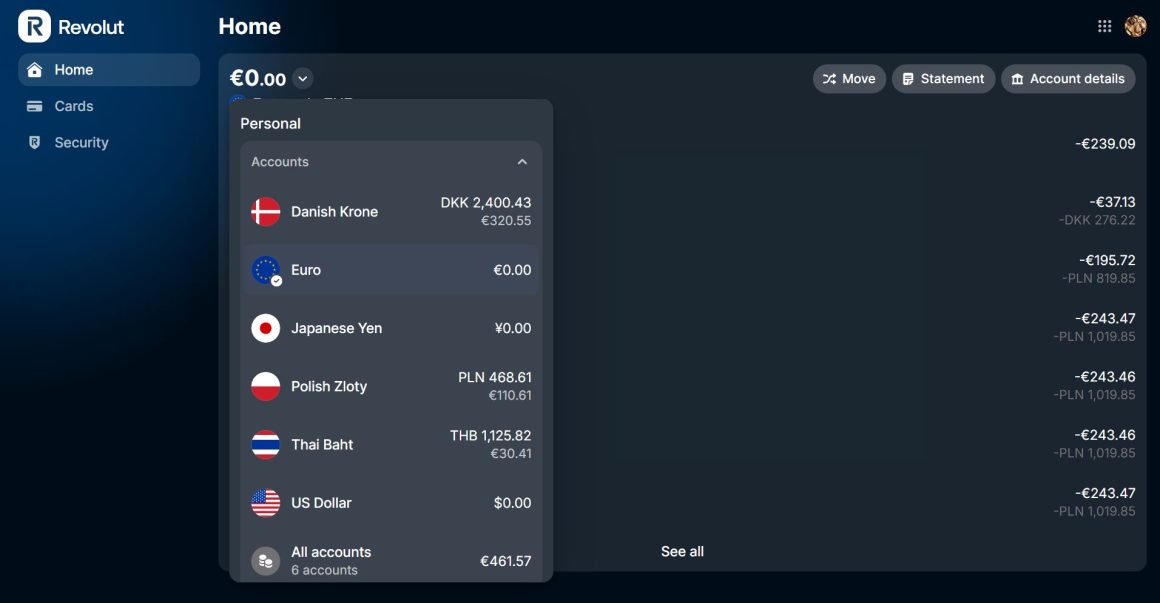
Revolut feels like a fully fledged digital bank. It has everything you expect – plus more. Trading, stocks, crypto, an eSIM, subscription bundles, tiered benefits depending on your plan.
I use Revolut Ultra. It gives me lounge access, travel insurance for up to three months at a time, and fee-free withdrawals up to €2,000 per month. In practice, it almost replaces a credit card – even though it is technically a debit card.
They also bundle services like VPNs (NordVPN has good offers, btw), Financial Times, Perplexity, esim services and others. If you would pay for those anyway, it makes sense. If not, they are just extras.
Wise is different. It is more of a utility. I paid around €7 for shipping the card, and there is no monthly subscription. It does not try to be a lifestyle product. It just focuses on moving money at low cost.
How Online Banks Really Charge You: Fees, Exchange Rates, Subscriptions
Where Wise and Revolut really differ is in how they make money on us, users.
With Wise, every currency exchange is done at the mid-market rate – the same rate you see on Google – and then they add a clearly visible fee before you confirm.
Depending on the currency, that fee is usually somewhere around 0.4% to 1%. You see it. You accept it. That is the model. No subscription, no bundled perks – just transparent pricing per transaction.
Revolut works differently. On paid plans like Ultra, weekday exchanges are done at the interbank rate without the additional markup that lower plans charge. On free plans, weekend exchanges usually include a small percentage fee. On the Ultra plan, that weekend markup is generally removed.
So instead of paying per conversion, you are paying a fixed subscription – around €55 per month. Over a year, that is about €660.
At that point, the question becomes personal: am I using this enough to justify it? I used to be in the tier below (€100 or so a year), but with my travel activity, it made sense to upgrade, at least in the short term.
Withdrawals are another difference. Wise gives two free withdrawals up to €200 per month. After that, small fees are charged.
Revolut Ultra allows up to €2,000 p