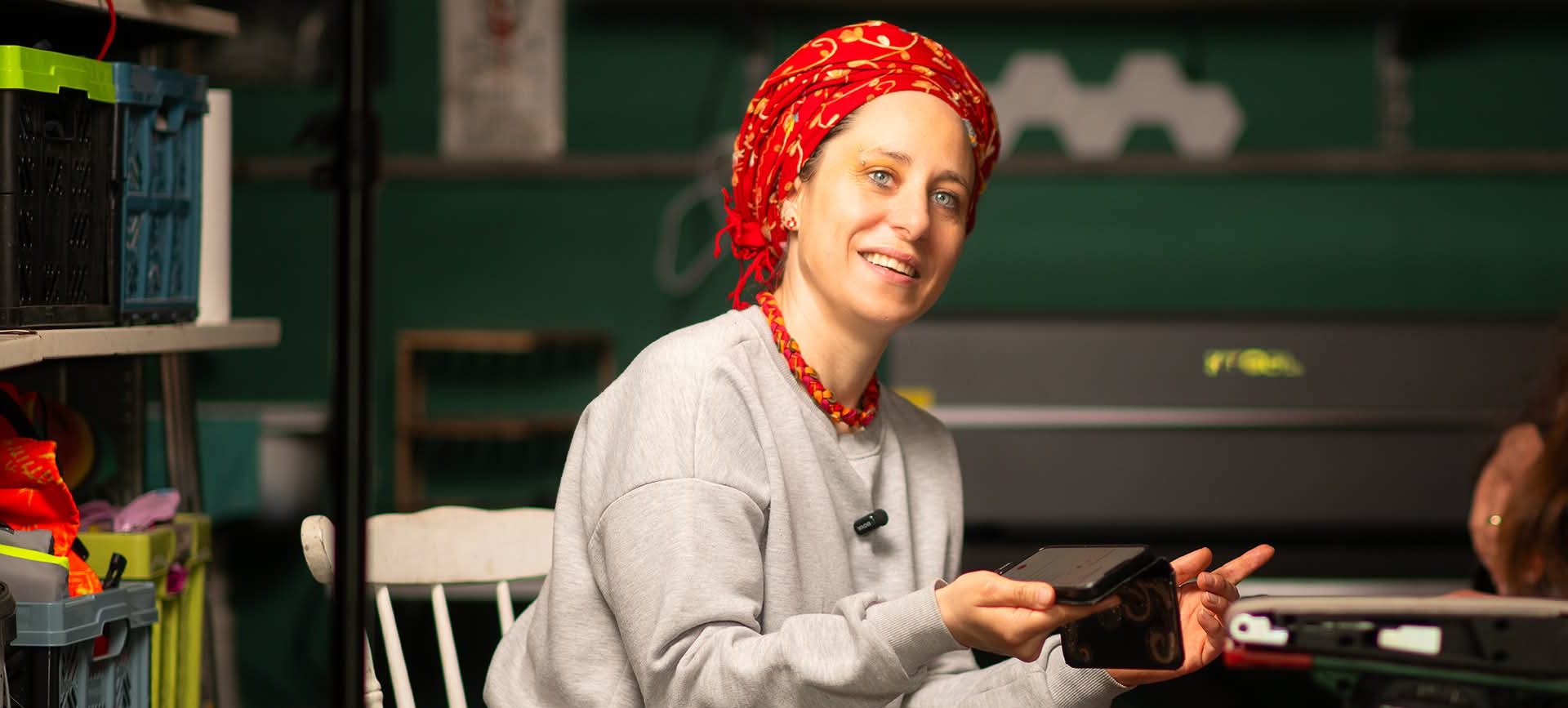
Some voices manage to be many things at once. Miriam Synger is an Orthodox Jewish woman, a Polish patriot, a wife and mother of five, a sociologist by training, and the writer behind two books — I Am Jewish for adults and “Dziennik Rut” (Rut Diary) for children.
She was born in Kraków and has spent almost her entire life in the city, apart from four years in Israel and five in Łódź. Through her Instagram account @jestem_zydowka (I am Jewish), she introduces a large following to Jewish culture, tradition and everyday life in Poland.
She switches off her phone on Saturdays. In December, instead of a Christmas tree, she lights a Hanukkah menorah. In spring she dresses up as a ladybird. In summer she bakes cheesecake. She doesn’t believe in taboo subjects — you can ask her anything.
For LocalsInsider, Miriam wrote about Kraków, education, tolerance, kosher food, and the city she keeps returning to.
From Jewish education to Instagram and two books
I’ve always been involved in Jewish education – that is, talking about the history of Polish Jews, about Judaism and about Jewish culture. My work is aimed at both a Polish audience and people from abroad, to whom I can also tell a bit more about what sort of country Poland is.
At some point, I set up an Instagram account, which allowed me to reach a wider audience. And then came the two books: I Am a Jewish Woman for adults and Rut’s Diary for children. However, I knew I wanted to write long before these books were published.
The messages from strangers that keep me going
I draw strength from people who tell me that what I do matters to them. Some have started to see not only Jews, but also other religious minorities and even sexual minorities, in a different light. Someone else has decided not to be afraid to talk about their background.
I regularly receive messages saying that, thanks to my content, someone has become interested in their family history. Or that they have deepened their faith in God. Or that they have started to notice things they hadn’t noticed before. With messages like these, anti-Semitism will never prevail.
“With messages like these, anti-Semitism will never prevail.”
What Polish schools don’t teach — and why aggression is resurfacing
I get a lot of rubbish. But I don’t think I’m alone in this. There’s something about us humans that makes us want to hurt others, even though they’re not doing us any harm.
I believe that the level of anti-Semitism, as well as racism and homophobia in general, is decreasing in Poland. But it’s a slow process. Unfortunately, I see a major problem in the education system.
Children learn loads of things that they’ll never need. But there are no ‘global citizenship’ lessons where they’d learn not only to build their own self-confidence but also to show mutual respect. More and more often, there are teachers who try to broaden the children’s horizons. And they deserve a huge round of applause. They’re the ones who influence future generations.
With a poor education system, even the strictest political correctness won’t achieve anything. Because when there’s a good example of how to treat others, people tend to keep their views to themselves.
But then, for example, the government changes, and people feel they can get away with more again, so the aggression resurfaces. And that’s the sort of time we’re living through in Poland right now. Some people feel they’re allowed to do more, and they’re spewing their hatred with redoubled force.
Why I came back to Kraków after Israel and Łódź
Because it’s my country, my city. I’m a Polish patriot and, for the time being, I feel a sense of responsibility towards it.
“Because it’s my country, my city. I’m a Polish patriot.”
The Kraków I’d show you: synagogues, Kazimierz and one festival
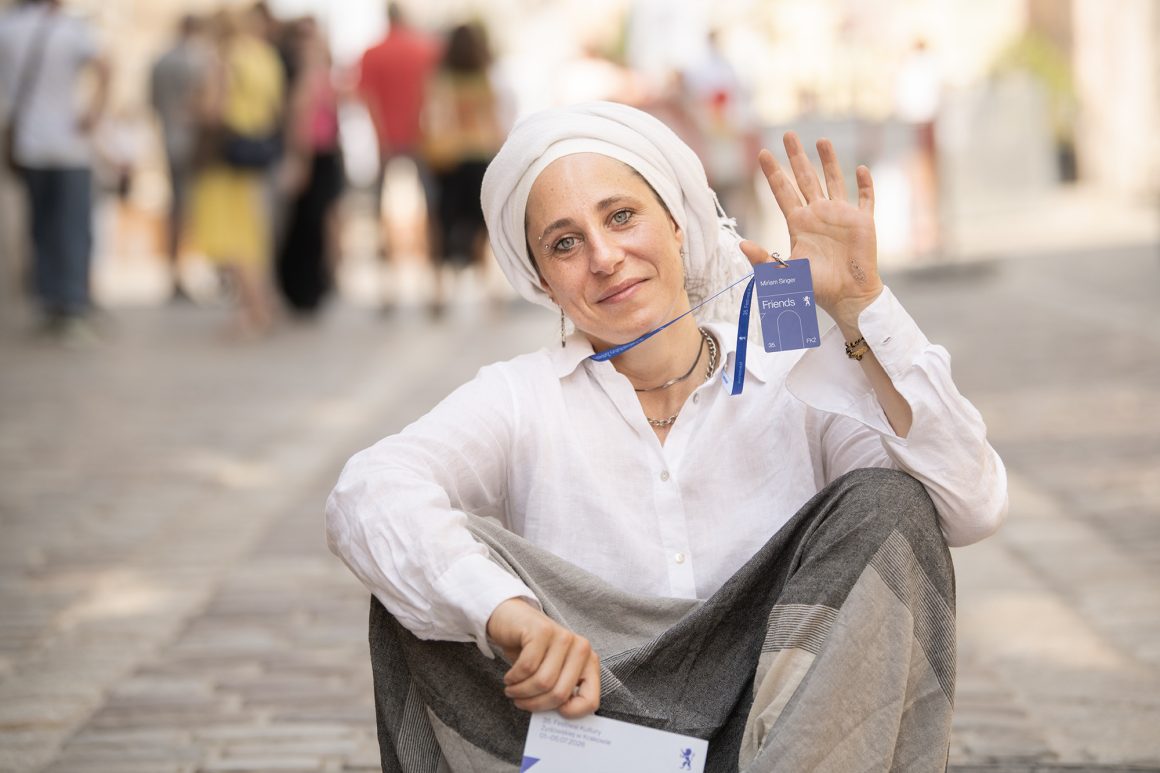
I’d recommend the synagogues, the cemetery and a stroll through the streets of Kazimierz. But I’d also highly recommend the Jewish Culture Festival, which has been held at the end of June and beginning of July for several decades.
Keeping kosher in Kraków — what’s easy, what’s hard, and where I go for coffee
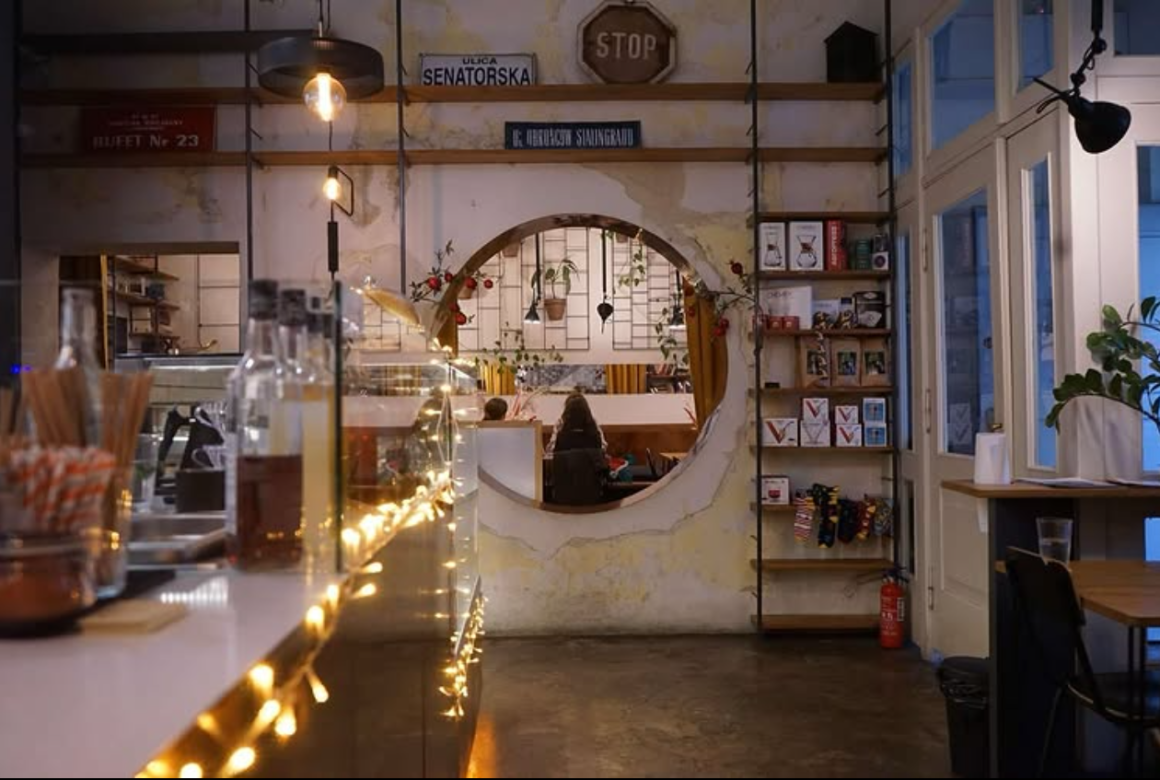
Basic ingredients such as vegetables, fruit, fish, grains, pasta and some dairy products are readily available as they don’t involve many kosher rules. It’s more difficult when it comes to more processed foods and kosher restaurants. I regularly go to Cafe Hafuch, where they serve tasty coffee, cakes, savoury snacks and breakfasts.
My Kraków, in three words
Fascinating, still undiscovered and ever-changing.
“Fascinating, still undiscovered and ever-changing.”
Where it’s easiest to be Jewish in Poland today
I’m not in a position to answer that question because I only visit Polish cities for one, two, or at most three events. However, I’m consistently impressed by the commitment of local libraries, cultural centres and schools. The fact that they give their residents the chance to learn about something unfamiliar to them is a great thing.
As for the places in Poland where it’s easiest to be Jewish, I’d mention those with the largest Jewish communities: Warsaw, Kraków and, perhaps, Łódź.
What has to happen for Poland to become more tolerant
Of course! But each of us has to make sure that happens. The first step is to be open-minded; then to overcome our fear of people living differently from us. After that, it’ll be plain sailing.
“The first step is to be open-minded; then to overcome our fear of people living differently from us. After that, it’ll be plain sailing.”