


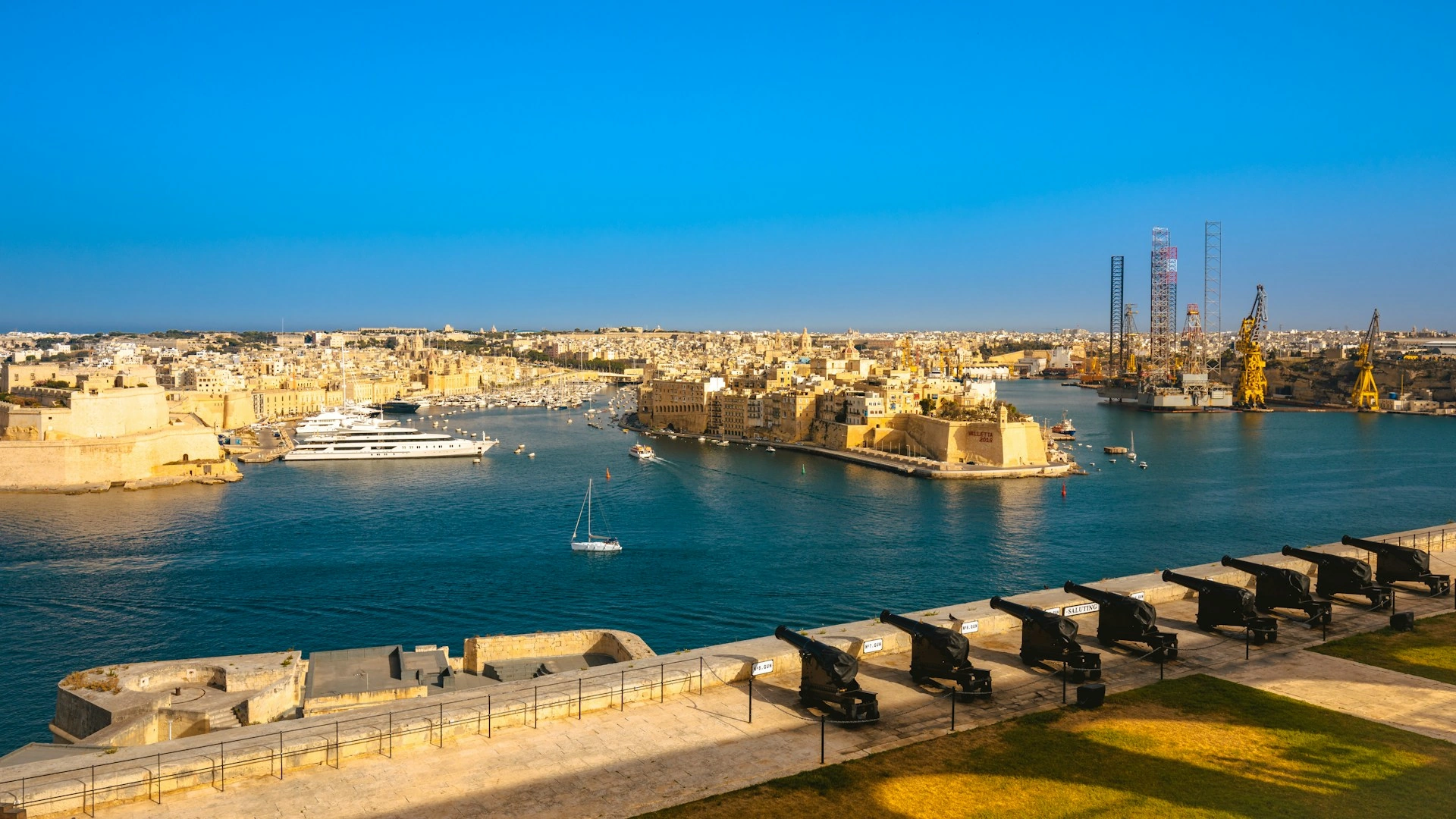
Malta Travel Guide: Valletta, Sliema, Gozo & Where to Go in 2026
Malta’s blend of history, rocky beaches, and charming towns with unique balconies is captivating. LocalsInsider offers travel insights into Malta’s boutique hotels, eco-spots, and historical sites with local guidance.
Malta is the Mediterranean country that punches well above its weight. Three inhabited islands, roughly half a million people, English as a second official language, and 7,000 years of layered history visible in the limestone — Phoenician, Roman, Arab, Norman, Knights of St John, British. Valletta is the UNESCO-listed Baroque capital. Sliema is the modern waterfront most travelers actually stay in. Gozo, the smaller second island, is rural, slow, and where Maltese themselves go to disconnect. The diving is excellent year-round. The food is more interesting than it looks — fenkata (rabbit), pastizzi, the Sicilian-Arab-British fusion that doesn't exist anywhere else.
Our Malta coverage is solid — six articles across the islands, the boutique hotels worth booking, and the swimming spots locals know.
The travel personality: The Mediterranean Compact Traveler
Quick facts
Live right now
Best time to visit
| Season | Why go |
|---|---|
| April–June, September–October | Malta's mild January-February makes it an unusual off-season European warm escape |
| March, November | Shoulder season — fewer tourists, often cheaper, weather still good |
| December–February (mild winters, perfect for cities) | Off-season — quiet, best deals, plan around weather |
Top cities to visit
Experiences you'll probably love
- Sunset over Valletta's Grand Harbour from Upper Barrakka Gardens
- The Blue Lagoon on Comino (early morning to avoid crowds)
- Ġgantija temples on Gozo (older than the pyramids)
- Diving the wrecks and reefs around the archipelago
- Festa season (May–September) — village fireworks every weekend
Not many tourists know about…
- Marsaxlokk fishing village for Sunday morning market
- Hypogeum of Ħal Saflieni — book months ahead
- The Dingli Cliffs at sunset
- Gozo's salt pans at Marsalforn
- Three Cities (Birgu, Senglea, Cospicua) across the harbour from Valletta
- Mġarr ix-Xini bay on Gozo — Brad-and-Angelina secret cove
If you visit only once, make it this
Valletta is a UNESCO-listed entirely-walled 16th-century capital — built by the Knights of Malta after they repelled the Ottoman siege of 1565. Saint John's Co-Cathedral houses Caravaggio's largest canvas (The Beheading of Saint John the Baptist) plus another Caravaggio.
Walking distance from ferry/airport bus. The cathedral charges €15 entry.
Where to walk & breathe
Six interconnected sea caves on Malta's southern coast where sunlight refracts off the limestone to turn the water electric blue. Small boats take 6-8 people in for 25-minute tours. The viewpoint above on Triq Wied iż-Żurrieq is the iconic photograph.
Boat tours run when the sea is calm (April-October mostly). €10 per person.
Museums worth your time
Malta's national art museum in the former Auberge d'Italie — Mattia Preti, Caravaggio influence on Maltese painters, plus Maltese contemporary.
Visit website →5,000-year-old underground burial complex carved from solid limestone — UNESCO-listed, the only Neolithic underground temple in the world. Only 80 visitors per day; book 2+ months ahead.
Visit website →The Insider's Edit
A few additions for travelers planning Malta at the high end:
Four 16th-century townhouses on the Grand Harbour — the most design-forward stay in Malta.
A boutique nine-suite hotel in a 19th-century palazzo on Old Theatre Street.
Chef Jonathan Brincat's tasting menu of refined Maltese cooking — one Michelin star.
Caravaggio's Beheading of St John the Baptist — his largest canvas, the only signed work — hangs in the oratory.
The national community art museum, reimagined in 2018 inside the Auberge d'Italie — the strongest collection of Caravaggio-school works after Naples.
Where to eat
Malta's first Michelin-starred restaurant (2020) — chef Victor Borg's contemporary Mediterranean tasting menus in a converted 16th-century townhouse.
One Michelin star with chef Simon Rogan (of UK's L'Enclume) — harbor-view fine dining in Iniala Harbour House, Malta's most ambitious recent luxury opening.
Inside Valletta's 16th-century city walls — Maltese specialties (lampuki fish, rabbit stew/fenkata), atmospheric stone-vaulted dining.
Marsaxlokk fishing village seafood — fresh Mediterranean fish, the boat-painted luzzu fleet visible from the terrace. Family-run for 40+ years.
Where to stay
Three connected 16th-century townhouses converted to 23-suite luxury hotel, opened 2022 — ION Harbour Michelin-starred restaurant, infinity pool with Valletta harbor view.
1947 Art Deco hotel on the Valletta peninsula — 7.5-acre gardens, infinity pool with harbor view, the Phoenix restaurant. Where the Queen stayed in 2007.
Only 8 suites in a converted 1830s Valletta palace — Italian marble bathrooms, rooftop terraces with cathedral views, walking distance to Saint John's Co-Cathedral.
17th-century palace inside Mdina's medieval walls (the 'Silent City') — De Mondion Michelin-starred restaurant, 17 suites, completely silent at night (no cars allowed in Mdina).
Realistic daily budget
Per person, per day. Excludes flights. Peak season can run 20-40% higher.
Travel safety & inclusivity
Safety scores reflect UK FCDO & US State Department travel advisories. LGBTQ+ scores reflect Equaldex and ILGA-Europe rankings. Both refreshed quarterly.
Major festivals
Need a visa for Malta?
Many travelers can enter Malta visa-free, but it depends on your passport. Check your specific requirements:
Powered by evisas.com · We'll open your nationality-specific requirements page in a new tab.
Partner link — Locals Insider may receive a small commission at no extra cost to you. Always confirm the latest requirements with the official embassy.
Not sure if Malta is right for your next trip? We'll compare 53 destinations against your travel style. Take our country matcher quiz →
Frequently asked questions about Malta
What's the best hike in Malta if I only have one day?
The Dingli Cliffs coastal walk — Malta's highest point dropping straight into the Mediterranean. The classic route runs from Dingli Chapel south toward the Blue Grotto (around 13km, moderate, mostly exposed), passing 4,000-year-old cart ruts in the garigue landscape and the tiny Chapel of St Mary Magdalene. For something shorter, the Victoria Lines — Malta's 12km "Great Wall," a 19th-century British defensive ridge — gives you the island's spine in half a day. Both are best between October and May; summer heat above 30°C makes coastal hiking unpleasant. If you have a second day, take the early ferry to Gozo: the Mġarr-to-Xlendi coastal walk past Sanap Cliffs is the best hike in the Maltese islands.
Where do locals actually eat in Valletta?
Valletta's food scene quietly became one of Europe's most exciting after the Michelin Guide arrived in 2020 — Condé Nast Traveller called the capital an underrated foodie hotspot. Skip the harbour-facing tourist menus on Republic Street. Locals book Rampila (built into the old city walls, serious Mediterranean menu) for a special meal, and Nenu the Artisan Baker on St Dominic Street for ftira — Malta's flatbread, baked in a wood oven that's been running since the 1850s. For seafood with a view, Porticello just outside Valletta in Sliema is the locals' tip, not the cruise-ship crowd's. Lunch hours are short (12:30–2:30); dinner doesn't really start until 8.
Which luxury hotel in Malta is worth the money?
Two genuine answers, depending on what you want. The Phoenicia Malta, just outside Valletta's city walls, is the only Maltese hotel in Condé Nast Traveller's 2025 Readers' Choice Awards — colonial-era grand hotel with seven acres of gardens, an infinity pool over Marsamxett Harbour, and the kind of unhurried service that's getting rare. Iniala Harbour House in Valletta itself is the more contemporary pick, with 23 designer-led rooms above the Grand Harbour and the highest TripAdvisor rating on the island. For something different, The Xara Palace Relais & Châteaux inside Mdina's silent city walls is a 17th-century palazzo with no equivalent elsewhere in Europe.
Do I need to rent a car in Malta?
Malta is small (just 27km long) but its public buses are slow and crowded, and the best parts of the island — Dingli Cliffs, the south-coast fishing villages, the Victoria Lines, Mdina at sunset — are awkward to reach by bus. A small rental car (€20–40 per day off-peak) gives you the island in three or four days. Two warnings: Malta drives on the left, and Valletta is closed to non-resident cars during the day — park at Floriana or MCP and walk in. For Gozo, take the ferry as a foot passenger and rent a car on arrival; it's cheaper than bringing your Malta car across. See our car rental services guide for the apps locals use.
When is the best time to visit Malta, and is winter worth it?
April to early June and mid-September to October are the sweet spots — water warm enough to swim (20–24°C), days in the mid-20s, the Mediterranean light at its best, no summer crowds. July and August are brutal: 32–35°C, beaches at capacity, hotel rates doubled. Winter is genuinely underrated — 15–18°C, almost no rain compared to mainland Europe, and Valletta's restaurants accept walk-ins again. You won't swim much, but the hiking is at its best and the historical sites (Hypogeum, Mdina, the Tarxien Temples) are blissfully empty. December and January are when locals book a long weekend; the Mediterranean light in February is some of the prettiest of the year.
Locals Insider's Articles About Malta
Articles in this section are written by Locals Insider editorial team. Want to share your experience about Malta? Email us at hello@localsinsider.com.