Lithuania Travel Guide: Vilnius, Trakai, Curonian Spit in 2026
Experience Lithuania with LocalsInsider’s travel guide and local tips. Discover hidden Baltic gems, sustainable dining, boutique stays in the Old Town, and the best things to do in the country.
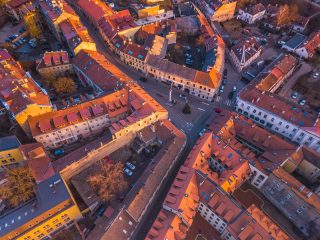
Lithuania is the largest of the Baltic states and the one most American travelers know least, which works in everyone's favor. Vilnius is the UNESCO Baroque capital — Europe's largest old town, the self-declared Republic of Užupis with its own constitution, and a café culture that takes itself seriously. Trakai's lake-island castle is the postcard image. The Curonian Spit, the 60-mile sand peninsula on the Baltic, is UNESCO-listed for a reason. And Vilnius's food scene has quietly become one of the most interesting in Northern Europe.
Our Lithuania coverage is small but considered — Vilnius walking guides and the unusual corners of a country that punches above its weight.
The travel personality: The Baltic Discoverer
Quick facts
Live right now
Best time to visit
| Season | Why go |
|---|---|
| May-June | Blossom season, mild, longer light each day |
| July-August | Peak summer, Baltic Sea swimming season (briefly) |
| September | Mushroom season, fall colors, perfect city weather |
Top cities to visit
Experiences you'll probably love
- Walk Vilnius's Old Town — Europe's largest Baroque city center, mostly intact
- Cross into Užupis — the self-declared artists' republic with its own constitution
- Trakai Island Castle on Lake Galvė — Lithuania's most photographed image
- Curonian Spit cycling — UNESCO sand dunes between the Baltic and the lagoon
- Cold beetroot soup (šaltibarščiai) in summer — pink, refreshing, very Lithuanian
Not many tourists know about…
- Užupis is touristy now but the cafés and galleries are still genuinely worth it
- Lithuanian rye bread is among Europe's best — try Bandelės at Vilnius Markets
- Mushroom foraging is a national obsession in autumn — locals know the spots, ask
- Vilnius has Europe's best basketball scene if you can get to a Žalgiris or Rytas game
- Hill of Crosses near Šiauliai — strange, atmospheric pilgrimage site with 100,000+ crosses
If you visit only once, make it this
Self-declared independent 'republic' on the east bank of the Vilnia river — Vilnius's bohemian neighborhood with its own (mock) constitution carved on metal plates in 23 languages, its own flag, ambassadors, and an Angel of Užupis statue. Independence Day is April 1.
Walk across the small bridge from the Old Town. Free, always open, takes 2-3 hours to explore.
Where to walk & breathe
98km sand peninsula in the Baltic, half Lithuanian half Russian — Europe's largest sand dunes, traditional fishing villages, Thomas Mann's former summer house in Nida. UNESCO World Heritage.
Reached by ferry from Klaipėda. The Lithuanian side ends at the Russian border.
Museums worth your time
Daniel Libeskind-designed (2018) — Lithuania's first major private contemporary art museum, focused on Soviet-era and post-Soviet Lithuanian art. Sculpture rooftop.
Visit website →Hall of mirrors, Ames room, vortex tunnel — the Vilnius location of the international chain. Good rainy-day option.
Visit website →The Insider's Edit
A few additions for travelers heading to Vilnius and beyond:
A 17th-century palace in the Old Town with frescoed ceilings and a restored Renaissance courtyard.
In a 17th-century complex of Old Town buildings, with Relais & Châteaux affiliation.
Daniel Libeskind's first project in the Baltics (opened 2018) — a private contemporary museum of Lithuanian post-WWII art.
One of Lithuania's most ambitious modern tasting menus — named for the year of Lithuanian independence.
Not luxury, but unforgettable — over 100,000 crosses planted on a small hill, growing organically since the 19th century.
Where to eat
One Michelin star (2024, Lithuania's first ever) — chef Andrius Kubilius's contemporary tasting menu in central Vilnius, named for Lithuania's 1918 independence.
One Michelin star — chef Liutauras Čeprackas's experimental Lithuanian cuisine in a 19th-century townhouse near the train station.
Game restaurant since 1972 in a vaulted 15th-century cellar in Vilnius Old Town — wild boar, elk, beaver. Touristy but the venison is the real thing.
Family restaurant in Trakai serving Karaite cuisine (the small Turkic minority community) — kibinai (pasties stuffed with mutton), čiburekai. View of Trakai Castle.
Where to stay
Vilnius's only 5-star international luxury hotel — on Cathedral Square, walking distance to Gediminas Castle. Three restaurants, rooftop bar.
17th-century Baroque palace converted to boutique hotel in 2018 — preserved frescoes, the Nineteen18 Michelin-starred restaurant on-site, central Old Town.
Country resort 15 minutes from Vilnius — golf course, spa, the Verkiai park access. Renovated 2024.
Old Town family-run boutique (Relais & Châteaux) in a 17th-century mansion — Vilnius's most historically atmospheric hotel.
Realistic daily budget
Per person, per day. Excludes flights. Peak season can run 20-40% higher.
Travel safety & inclusivity
Safety scores reflect UK FCDO & US State Department travel advisories. LGBTQ+ scores reflect Equaldex and ILGA-Europe rankings. Both refreshed quarterly.
Major festivals
Need a visa for Lithuania?
Many travelers can enter Lithuania visa-free, but it depends on your passport. Check your specific requirements:
Powered by evisas.com · We'll open your nationality-specific requirements page in a new tab.
Partner link — Locals Insider may receive a small commission at no extra cost to you. Always confirm the latest requirements with the official embassy.
Not sure if Lithuania is right for your next trip? We'll compare 53 destinations against your travel style. Take our country matcher quiz →
Frequently asked questions about Lithuania
Do I need a visa to visit Lithuania?
Lithuania is an EU member, Schengen Area country, and eurozone country, so standard Schengen rules apply. EU/EEA/Swiss citizens: passport or national ID, no time limit. UK, US, Canada, Australia, Japan, South Korea, Brazil, Argentina, Mexico, and around 60 other Schengen-visa-exempt nationalities: visa-free 90 days in any 180-day period across the entire Schengen Area. ETIAS pre-authorisation (€7) is required for these nationalities as of the 2026 rollout — apply online before travel. Russian and Belarusian passport holders need a Schengen visa, and Lithuania has not issued Schengen visas to Russian citizens since 2022; Russians typically apply via Hungary, Italy, or France. Passport valid 3 months beyond exit. Crossing to Kaliningrad (Russian exclave between Lithuania and Poland) has been restricted since 2022 — the train transit through Lithuania to Kaliningrad still operates but is reserved for Russian citizens with proper documentation. From Riga or Tallinn: the Lux Express/Ecolines coaches make the Baltic capitals a 5-hour drive apart on Schengen-internal travel.
When is the best time to visit Lithuania?
Mid-May to mid-September is the universal sweet spot — 18–25°C, long days, Vilnius's terraces and the Curonian Spit beach season fully open. July is peak (also coincides with festival season — the Vilnius Summer Music Festival, St. Christopher's Festival). Joninės (Midsummer, June 23–24) is the biggest national celebration — bonfires, fern-flower searches, all-night dancing especially in Kernavė. Mid-September to mid-October is the slow-tourism sweet spot — Vilnius's baroque domes in golden autumn light, mushroom-foraging season (huge in Lithuanian culture), Tartu/Vilnius/Kaunas terraces still warm enough. Late November to mid-December: Vilnius Christmas Tree at Cathedral Square is regularly voted Europe's best — the trees are themed differently each year (2024's was "Pyramid of Letters," attracts millions of social-media views). January–February: -5 to -15°C, atmospheric snow but seriously cold. Avoid mid-October through mid-November and March — grey, wet, dark. Sun rises 9am, sets 4pm in December.
How long do I need in Lithuania and what's the classic route?
2–3 nights for Vilnius alone, 5–7 nights for the full country. Vilnius (2–3 nights): Europe's largest baroque Old Town (UNESCO) — the Cathedral and Bell Tower, St. Anne's Church (Napoleon famously wanted to take it home in his palm), Vilnius University (one of Eastern Europe's oldest, founded 1579), the Gates of Dawn, the haunting MO Modern Art Museum. Don't miss Užupis — the bohemian republic across the Vilnia river that declared independence on April 1, 1997 (visit the Constitution wall in 23 languages). Trakai (day trip, 30 min from Vilnius): the Trakai Island Castle on Lake Galvė — the picture-postcard 14th-century red-brick castle, try kibinai (Karaite meat pastries). Kaunas (1–2 nights): 2nd city, 2022 European Capital of Culture — modernist 1930s architecture (UNESCO-listed since 2023), Pažaislis Monastery, the Devils' Museum. Curonian Spit (Neringa, 2 nights, summer): the 98-km sand-dune peninsula (UNESCO), shared with Russia — Nida village, the Hill of Witches, parnidis dune. Hill of Crosses (day trip from Šiauliai): 200,000+ crosses, an extraordinary site of pilgrimage.
What's Lithuanian food and drink culture like?
Lithuanian cuisine is hearty, rustic, and deeply seasonal — potatoes, dairy, mushrooms, beetroot, dill, pork, and rye in roughly equal measure. Must-try classics: cepelinai (the national dish — large potato-dough "zeppelins" stuffed with meat or cheese curd, drowned in sour cream and bacon — order 2, you'll struggle to finish), šaltibarščiai (the cold beetroot soup with kefir and dill — the bright pink summer dish, served with hot potatoes on the side, the Instagram star of Lithuanian food), kugelis (potato pudding/casserole), kibinai (Karaite meat pastries, especially in Trakai), skilandis (smoked stuffed pig stomach, an EU-protected geographical indication), rye bread (Lithuanian dark sourdough is genuinely world-class). Drinks: Švyturys and Volfas Engelman are the main beer brands; midus is traditional fermented honey mead; krupnikas is the herbal honey liqueur. Where to eat: in Vilnius, Lokys (medieval cellars, game meats), Etno Dvaras (traditional menu), Sweet Root (modern foraged tasting menu, Michelin-starred), Halé Halé Market for street food and produce. Lithuanian cuisine is having a properly trendy moment — international press has been catching on since 2023.
What about the Curonian Spit and is it worth visiting?
The Curonian Spit (Kuršių Nerija / Куршская коса) is one of Europe's most extraordinary landscapes — a 98-km-long sand-dune peninsula separating the Curonian Lagoon from the Baltic Sea, jointly UNESCO-listed by Lithuania and Russia. The Lithuanian half (the northern 52 km, called Neringa municipality) is the accessible half. What to do: stay in Nida (the southernmost Lithuanian town, just 4 km from the Russian border) — Thomas Mann's summer house museum, the colorful weathercock-decorated fishermen's huts, the giant Parnidis Dune sundial. Walk or cycle the Spit — the entire Neringa cycle path runs the length of the peninsula through pine forests, sand dunes, and beach access. Hill of Witches (Juodkrantė) — an open-air sculpture trail of 80+ wooden Baltic-mythology carvings in the forest. How to get there: ferry from Klaipėda (the only city on Lithuania's short Baltic coast — 4h drive or 5h bus from Vilnius), 5-minute ferry across to Smiltynė, then bus or car down the spit (Nida is 50 km south of Klaipėda). Best time: July–August for the beach, June and September for everything else. You cannot cross to the Russian half of the Spit since 2022. Worth a 2-night detour for nature-focused travelers; skip if Old Towns are your priority.
Locals Insider's Articles About Lithuania
Articles in this section are written by Locals Insider editorial team. Want to share your experience about Lithuania? Email us at hello@localsinsider.com.