Buenos Aires Travel Guide: Where to Stay in Palermo, Recoleta, and San Telmo
Buenos Aires is the Argentinian capital that travelers consistently call the most European city outside Europe — Belle Époque Recoleta architecture, the tango clubs of San Telmo, the parrilla steak culture (Argentina is among the world's top three beef producers), and a 24-hour cultural intensity that rivals New York or Madrid. Palermo's tree-lined creative neighbourhoods, the iconic Caminito painted houses of La Boca, and the Recoleta Cemetery (where Eva Perón is buried) anchor the visitor experience; the food and milonga culture defines the after-dark.
This guide is built for first-timers but stays useful on the return trip. We've started with picking the right barrio — Palermo vs Recoleta feels different — and worked through the hotels (the 1934 Palacio Duhau-Park Hyatt with South America's deepest wine cellar, Philippe Starck's red-velvet Faena), the restaurants (Don Julio's Palermo parrilla on the World's 50 Best list), the museums (MALBA, the defining 20th-century Latin American art collection), and the unique places — including a private tango lesson at Salón Canning, the serious Palermo milonga.
Quick facts
Live right now
Where to base yourself
First-time visitor? Pick a neighborhood that matches your vibe and stay there.
Palermo (Palermo Soho / Palermo Hollywood)
The Stylish Buenos Aires
The biggest, most varied barrio — Soho (the cool boutique area), Hollywood (the restaurant-and-creative area), Bosques de Palermo park. The most popular neighborhood for first-time visitors. Tree-lined, walkable, deeply photogenic.
Recoleta
The Elegant Buenos Aires
The most refined, most European neighborhood — the Recoleta Cemetery (where Evita is buried), Avenida Alvear's flagships, the Museo de Arte Decorativo. Where old Argentine money lives.
San Telmo
The Bohemian Buenos Aires
The historic center — colonial buildings, cobbled streets, the famous Sunday antiques market on Plaza Dorrego, live tango on the streets. The most atmospheric, most traditional barrio.
Puerto Madero
The Modern Buenos Aires
A converted dockland district from the 1990s — modern skyscrapers, the Faena Hotel, the Puente de la Mujer bridge (Calatrava). Where the city's contemporary architecture is.
Belgrano
The Quiet Buenos Aires
A leafy residential neighborhood north of Palermo — Chinatown is here. Where Buenos Aires families actually live; less touristed than the central barrios.
Villa Crespo
The Indie Buenos Aires
Once working-class, now Buenos Aires's most rapidly-creative barrio — indie cafés, the Mercado de Pulgas (Sunday flea market), El Galpón de Guevara antique-furniture warehouse. The Palermo overflow.
The Insider's Edit
Three picks Buenos Aires regulars send their friends to — curated from Tatler 2026, the World's 50 Best lists, and verified hospitality reporting.
A restored 1934 palace in Recoleta with one of South America's deepest wine cellars.
Philippe Starck's red-velvet, gold-mirrored fever-dream in Puerto Madero.
The Palermo parrilla on the World's 50 Best Restaurants list; dry-aged Argentine beef benchmark.
Where to stay
A restored 1934 palace in Recoleta — connected to a modern wing by underground galleries. The Duhau wine cellar has one of South America's deepest collections. The garden terrace, the spa.
“Among the most refined hotels in South America.”
Opened 2023 in a 1940s Art Deco tower — Casa Lucia is the most stylish newer central Buenos Aires opening. The rooftop pool, the brasserie restaurant.
“Best newer luxury hotel.”
Philippe Starck's red-velvet, gold-mirrored fever-dream — converted from an old grain mill. 88 rooms, the Library Lounge, the Big Bamboo Restaurant.
“Among the most theatrical hotels in Latin America.”
1932 Belle Époque grand dame — Recoleta's classic luxury. Where every state visitor has stayed.
“The L'Orangerie restaurant, the legendary afternoon tea.”
A historic French-style mansion (Palacio Mansilla, 1916) plus a modern tower. The Elena restaurant is among the city's best. Heated outdoor pool.
“Among Recoleta's most consistent luxury hotels.”
32-room boutique designed by Catalan architect Lluís Clotet — using local materials (Argentine quebracho wood).
“Among Buenos Aires's most architecturally significant boutique hotels.”
Restored 1910 Belle Époque mansion in Palermo Soho — 8 rooms, all individually designed, courtyard with magnolia trees.
“Among the most personal Palermo stays.”
Properly stylish Palermo Soho boutique — 15 rooms, a beautiful rooftop terrace.
“Best mid-budget Palermo design.”
20-room design boutique in Palermo Hollywood — owned by Argentine architects/musicians. The pool deck, the homemade breakfast.
“Among the most properly cool boutique hotels in Buenos Aires.”
Design-hostel in San Telmo — private rooms, dorms, beautiful courtyard.
“Best value design accommodation in the historic center.”
Where to eat
Argentine fine-dining in the Four Seasons — chef Ezequiel Gallardo's modern Argentine.
“The most refined Buenos Aires tasting menu.”
World's 50 Best Restaurants top-15 regular — the Palermo parrilla that's redefined how the world thinks about Argentine beef. Dry-aged Argentine beef benchmark. The chorizo, the provolone, the steaks.
“Reservations weeks ahead.”
Chef Germán Martitegui's tasting menu in a graffiti-covered Palermo townhouse — Latin America's 50 Best Restaurants regular.
“Inventive, properly Argentine.”
Modern Jewish-Argentine — chef Tomás Kalika's reinterpretations of Ashkenazi classics. Latin America's 50 Best Restaurants regular.
“Bagels and pastrami done with Argentine precision.”
Chef Gonzalo Aramburu's tasting menu — Latin America's 50 Best Restaurants regular. Modern Argentine with strong technique focus.
“Among Buenos Aires's most refined dinners.”
Open since 1952 — properly old-school Argentine bodegón (taverna). The matambre relleno, the milanesas, the tortilla de papas.
“Pablo Rivero (Don Julio) reopened it in 2019.”
Chef Pedro Bargero's modern Argentine — Latin America's 50 Best regular. Strong on Argentine ingredients (the gulpo, the corn from northern Argentina).
“Properly serious.”
Where to have breakfast
Open since 1858 — Buenos Aires's most historic café. The Art Nouveau interior, the medialunas (Argentine croissants) with submarino (hot chocolate with chocolate bar inside).
“Touristy but properly atmospheric.”
Buenos Aires's most respected specialty coffee — Australian-influenced, properly pulled. The Palermo morning standby.
“Multiple locations.”
Modern Palermo brunch — Western-style eggs, properly cooked, with Argentine touches.
“The fresh-squeezed orange juice.”
Properly designed bakery-café — French-Argentine pastries, sourdough, the most photogenic Palermo Hollywood morning.
1884 Buenos Aires confitería — stained-glass windows, marble columns, properly Belle Époque.
“The traditional Argentine breakfast (medialunas, café con leche).”
Museums worth your time
The defining 20th-century Latin American art collection — Frida Kahlo, Diego Rivera, Tarsila do Amaral, Wifredo Lam. In a sharp 2001 Palermo building.
“Among the most important museums in South America.”
Visit website →Argentina's national art museum — strong on European paintings (Goya, El Greco, Manet) and 19th-20th-century Argentine art.
“Free.”
Visit website →A 1911 Beaux-Arts palace with a quietly extraordinary collection of European decorative arts — furniture, porcelain, tapestries.
“Among Buenos Aires's most under-visited museums.”
Visit website →Contemporary art space in La Boca — strong rotating shows, plus the rooftop café with view of the Riachuelo.
“Among Buenos Aires's most thoughtful contemporary spaces.”
Visit website →Buenos Aires's main contemporary art museum — strong on geometric abstraction, Argentine contemporary.
“Smaller than MALBA but more rigorous.”
Visit website →In a mansion that Evita Perón used to house single mothers — devoted to her life and political legacy. Properly thoughtful, not hagiographic.
“Free.”
Visit website →Only-here places
Where Evita Perón is buried — a 6-hectare maze of marble mausoleums, some by the country's leading architects. Free.
“Among the most architecturally extraordinary cemeteries in the world.”
Visit website →1908 opera house — among the world's most acoustically perfect. Pavarotti, Toscanini, Maria Callas all performed here.
“Guided tours available; the opera season runs March-November.”
Visit website →The serious milonga of Palermo — where porteños (Buenos Aires locals) actually dance tango. Multiple nights per week.
“Arrange a private lesson with a maestro through your hotel (Four Seasons, Faena) first.”
Visit website →Sundays only — Buenos Aires's biggest antiques and street market spreads from Plaza Dorrego up Calle Defensa. Antique furniture, vintage clothes, vinyl, leather goods.
“Live tango on the street.”
The colorful tin-house street — the most photographed Buenos Aires landmark. Touristy but iconic. La Bombonera (Boca Juniors stadium) is nearby.
“Daytime only; the surrounding area is rough.”
Santiago Calatrava's swing bridge (2001) — supposedly representing a couple dancing tango. The signature image of modern Buenos Aires.
“Best at sunset.”
A 1919 theater converted into a bookshop — the original frescoed ceiling, the theater boxes turned into reading nooks, the stage now a café. Among the world's most beautiful bookshops (named so by National Geographic).
“Free.”
Tours & things to do in Buenos Aires
In partnership with GetYourGuide, Locals Insider recommends these tours and things to do in Buenos Aires.
Nature & quiet
The Palermo Woods — Buenos Aires's biggest central park. Rose Garden (free), Japanese Garden (paid), planetarium, lake.
“Where porteños spend Sundays.”
Inside Bosques de Palermo — a properly serious Japanese garden, gift of the Argentine-Japanese community.
“Tea ceremonies on Sundays.”
350-hectare nature reserve on the Río de la Plata behind Puerto Madero — wetlands, walking and cycling paths, birdwatching. Free.
“The most unexpected wilderness in central Buenos Aires.”
An hour north by train — the Paraná Delta, a vast network of islands and rivers. Boat tours, lunch at riverside restaurants, the casino.
“Half-day from Buenos Aires.”
An hour by ferry across the Río de la Plata to Uruguay — UNESCO World Heritage colonial town. Cobbled streets, the lighthouse, the Portuguese colonial-era heritage.
“Half-day-to-full-day.”
City festivals
- AugustTango BA Festival y Mundial
The world's biggest tango festival — two weeks of performances, classes, the World Tango Championship final. The Argentina cultural event that draws international tango pilgrims.
- October-NovemberCarnival (Carnaval Porteño)
Less famous than Rio's or Salvador's — Buenos Aires's Carnival is largely neighborhood-based, with murga (street dance/music groups) performing in different barrios. Mostly local.
- DecemberFestival de Tango de Buenos Aires
The second annual tango festival — slightly more intimate than August's. Free outdoor performances at multiple venues.
- January (entire month)Buenos Aires summer
Buenos Aires's quietest month — porteños leave for the coast. Many restaurants close. Hot, humid, properly Latin American. The locals' summer escape is January.
- AprilBAFICI (Buenos Aires International Festival of Independent Cinema)
Latin America's leading independent film festival — 10 days of premieres and screenings across multiple Buenos Aires cinemas.
Travel safety & inclusivity
Buenos Aires is generally safe for tourists by Latin American standards. Pickpocketing in tourist areas (San Telmo Sunday market, La Boca) is the main risk. Avoid La Boca at night. Use Uber/Cabify (not street taxis). The 'mustard scam' is a common tourist trick.
Argentina was the first Latin American country to legalise same-sex marriage (2010) — among the world's most progressive LGBTQ+ legal frameworks. Buenos Aires has a visible gay scene (San Telmo, Palermo). Pride parade in November draws 200,000+.
Safety scores reflect UK FCDO & US State Department travel advisories. LGBTQ+ scores reflect Equaldex and ILGA-Europe rankings. Both refreshed quarterly.
Frequently asked about Buenos Aires
Where do locals eat in Buenos Aires?
Three picks across the spectrum of how Porteños actually eat.
For the iconic Argentine asado institution: Don Julio, at Guatemala 4699, C1425 Cdad. Autónoma de Buenos Aires in Palermo. The most-cited parrilla (grill restaurant) in Argentina — properly serious dry-aged Argentine beef from family ranches, the iconic ojo de bife (ribeye) and the bife de chorizo (sirloin), the chimichurri made in-house, and an extensive Mendoza-and-Salta wine list. World's 50 Best Restaurants #14 in 2023. Reservations essential.
For the modern, Michelin-starred pick: Tegui, at Costa Rica 5852, C1414 Cdad. Autónoma de Buenos Aires in Palermo. Chef Germán Martitegui's modern Argentine tasting-menu restaurant — Argentine ingredients elevated through molecular and contemporary techniques. Multiple World's 50 Best Restaurants list entries.
For the iconic café-culture standard: Café Tortoni, at Avenida de Mayo 825, C1084 Cdad. Autónoma de Buenos Aires. The 1858 traditional café — Argentina's most historic literary-and-tango café, with the original Belle Époque interior preserved, marble tables, and stained glass. Borges, García Lorca, Carlos Gardel were regulars. Touristy but the medialunas (crescent pastries) and submarino (warm milk with chocolate bar) are properly executed. Walk-in.
Where can I get the best seafood with champagne or sparkling wine in Buenos Aires?
Argentina's iconic wine country (Mendoza, Salta) produces some of the world's most respected sparkling wines from the Bodega Chandon (founded by the French champagne house) and Bodega Cruzat operations. For Buenos Aires seafood with serious Argentine sparkling wine and Champagne, the destination is Aramburu, at Salta 1050, C1074 Cdad. Autónoma de Buenos Aires.
Chef Gonzalo Aramburu's high-end tasting-menu restaurant — modern Argentine cuisine with serious seafood courses (Patagonian centolla king crab, Atlantic snapper, ocean-cold sea bass) and a serious wine list featuring Argentine sparkling alongside Champagne. Among Argentina's most consistent fine-dining restaurants.
For a more dedicated raw-bar alternative, the Recoleta-area seafood specialist Crizia at Gorriti 5143 is the contemporary seafood-focused restaurant. For something more accessible, the iconic El Obrero in La Boca (a 1954 working-class parrilla that has hosted Anthony Bourdain) is the laid-back affordable favourite with proper Argentine sparkling on the menu.
Which historical boutique hotel should I stay at in Buenos Aires?
For an old-world historical stay in Buenos Aires, the reference is Palacio Duhau - Park Hyatt Buenos Aires, at Avenida Alvear 1661, C1014 Cdad. Autónoma de Buenos Aires in Recoleta.
Built in 1934 as the residence of Duhau family (Argentine cattle aristocracy) — a French-style 1930s palace converted to the Park Hyatt in 2006, with 165 rooms across the original palace and a new tower behind. The Salon Duhau remains the original Belle Époque ballroom; the wine cellar contains 5,000+ bottles of Argentine and international wine; the Duhau garden is the most beautiful hotel garden in the centre of Buenos Aires. The Gioia restaurant has serious modern-Italian credentials.
Pricing from around USD 600/night. Bookings via the official site. For a smaller boutique alternative, Casa Lucia at Carlos Pellegrini 1099 (a 1942 Art Deco building converted to a 90-room boutique in 2023) is the contemporary heritage choice.
What is the LGBTQ+ scene like in Buenos Aires?
Argentina was the first country in Latin America to legalise same-sex marriage (in 2010), and Buenos Aires has the most visible LGBTQ+ scene in South America. Marcha del Orgullo takes place in November, with around 250,000+ attendees.
The neighborhood: There is no defined gay quarter in Buenos Aires the way Marais is in Paris, but Palermo (specifically Palermo Soho and the streets around Plaza Serrano) has the highest concentration of LGBTQ+-friendly venues. San Telmo has the more alternative-queer scene.
The bars and clubs: Sitges at Av. Córdoba 4119, C1188 Buenos Aires is the iconic Buenos Aires gay bar. For nightclub energy, Amerika at Gascón 1040, Almagro is the largest gay nightclub in South America (3 levels, capacity 3,000+, Saturday nights legendary). Casa Brandon at Luis María Drago 236 in Villa Crespo is the iconic queer cultural centre and bar with regular drag, music, and art events.
Saunas: Roman Lounge Sauna at Bulnes 2386 in Palermo is the central men's sauna.
What unique small museum, new 2024-2026 landmark, or 1-3 day itinerary should I plan for Buenos Aires?
The famous-person small museum: Evita Museum (Museo Evita), at Lafinur 2988, C1425 Cdad. Autónoma de Buenos Aires. The 1923 Italianate villa where Eva "Evita" Perón established her social-welfare foundation in the 1940s — preserved with her original Christian Dior gowns, photographs, personal documents, and the iconic Don't Cry for Me Argentina balcony scene archives. Among Argentina's most-visited single-person museums. Closed Mondays.
The recent landmark: MALBA - Museo de Arte Latinoamericano de Buenos Aires at Av. Pres. Figueroa Alcorta 3415, C1425 Cdad. Autónoma de Buenos Aires continues to deliver South America's most consistent contemporary art programming since its 2001 opening. For more recent architectural significance, the Teatro Colón on Avenida 9 de Julio is the iconic 1908 opera house — among the world's most acoustically perfect concert halls (Pavarotti named it as his favourite venue globally) — and continues to deliver major opera and ballet seasons. Guided tours daily.
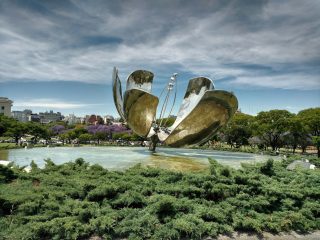
1-3 day itinerary: Day 1 — Centro and Microcentro (Plaza de Mayo, Casa Rosada, Catedral Metropolitana, Café Tortoni for medialunas, Teatro Colón guided tour). Day 2 — Recoleta (Recoleta Cemetery with Evita's grave, Floralis Genérica metal flower sculpture, MALBA, lunch in Palermo Soho), evening tango at Café de los Angelitos or Rojo Tango. Day 3 — La Boca and San Telmo (Caminito coloured houses, Sunday San Telmo Antiques Market if Sunday, lunch at El Obrero), evening parrilla dinner at Don Julio.
Planning more than just Buenos Aires? Our Argentina travel guide covers the whole country — weather and currency live, hotels and restaurants across regions, must-visit experiences and where else to go.
Articles in this section are written by the Locals Insider editorial team. Got a Buenos Aires tip we missed? Email us at hello@localsinsider.com — we read every one.