
Destinations › South Africa › Cape Town
City · South Africa
Cape Town
Cape Town things to see and 36 places to visit: evocative Robben Island, acclaimed FYN and The Vista Bar (Mount Nelson)
Your Cape Town guide, curated by Locals Insider
Cape Town, by Locals Insider
Cape Town is the southwestern South African city — possibly the most photogenically positioned major city in the world — sitting between Table Mountain, the Atlantic Ocean, and the Cape of Good Hope an hour south, with 500 years of layered colonial history and one of Africa's most respected food-and-design scenes.
The hotel scene is among the most ambitious in Africa. The Silo Hotel (in a converted grain silo, with a Mark Bidwell sculptural pillow-style exterior), the iconic 1899 Belmond Mount Nelson ('The Pink Lady'), One&Only Cape Town on the waterfront, and Ellerman House in Bantry Bay define the upper end.
The food story includes FYN (Latin America's 50 Best–style global recognition), La Colombe, the cult Wolfgat (in Paternoster up the coast — World Restaurant of the Year 2019 per the World Restaurant Awards), and the Cape Winelands at Stellenbosch and Franschhoek 45 minutes east, which is properly one of the world's great wine regions.
Famous for
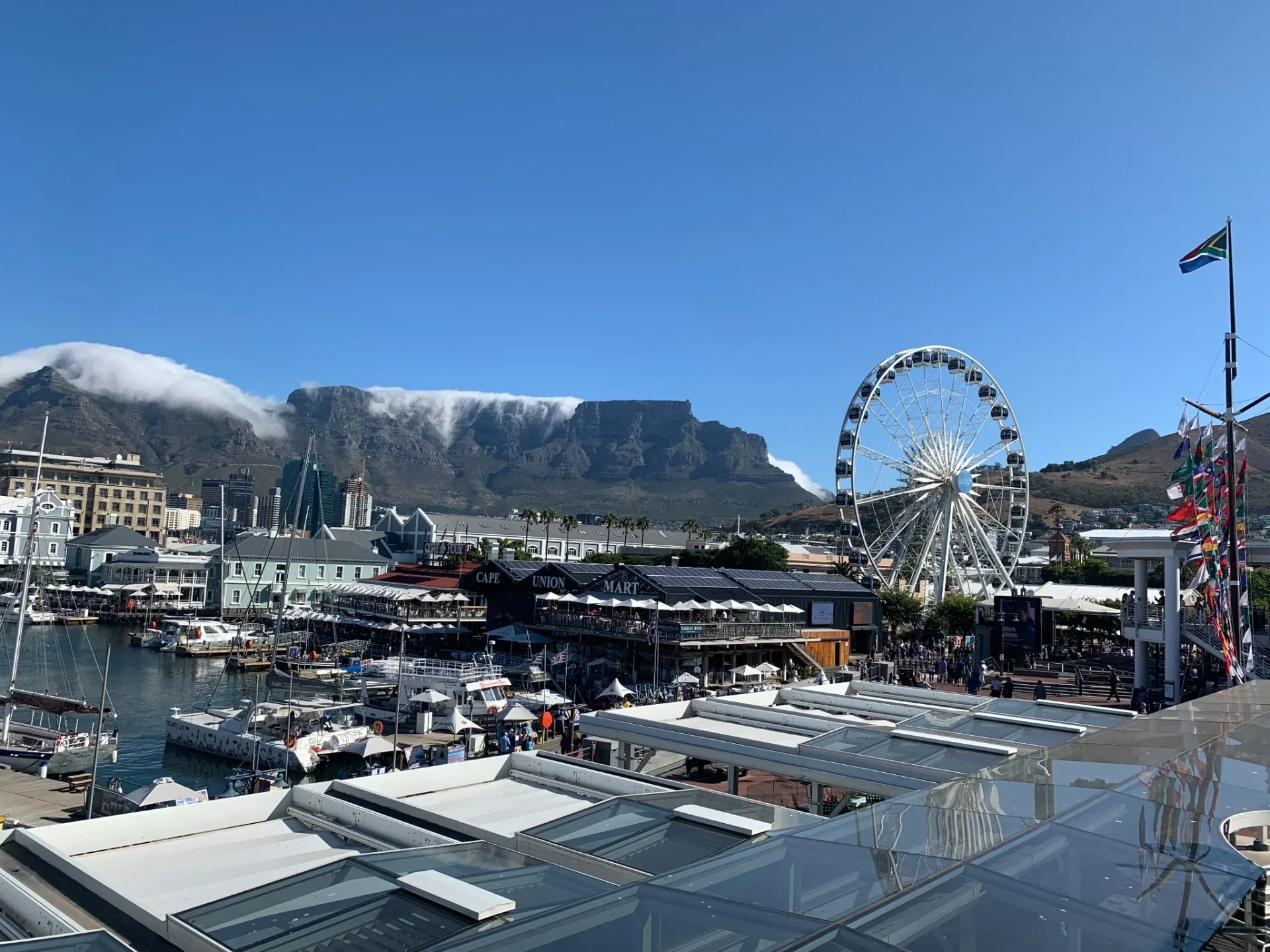
Table Mountain (UNESCO Natural Heritage, accessed by cable car or hike), the V&A Waterfront, the iconic Bo-Kaap coloured-houses Muslim Quarter, the Cape of Good Hope and Cape Point, Robben Island (where Nelson Mandela was imprisoned for 18 years), Camps Bay and Clifton beaches, the Cape Winelands at Stellenbosch and Franschhoek, the Constantia historical wine estates (Groot Constantia is the oldest wine estate in the Southern Hemisphere), and the surrounding Garden Route and game-park-extension flight access.
Did you know?
Table Mountain is one of the world's oldest mountains — at over 600 million years old, it's significantly older than the Himalayas or the Alps. The flat top is the result of vast geological erosion over hundreds of millions of years, leaving the harder sandstone cap while the surrounding granite eroded away. The 'tablecloth' clouds rolling over the summit form when the south-east winds force moist air up the mountain slope — a daily Cape Town meteorological theatre.
Ask a local’s list
Stories · updated as we publish
Latest from Cape Town
1 storyArticles in this section are written by the Locals Insider editorial team.
Recommended in our stories
Where to go in Cape Town: places we recommend
Place
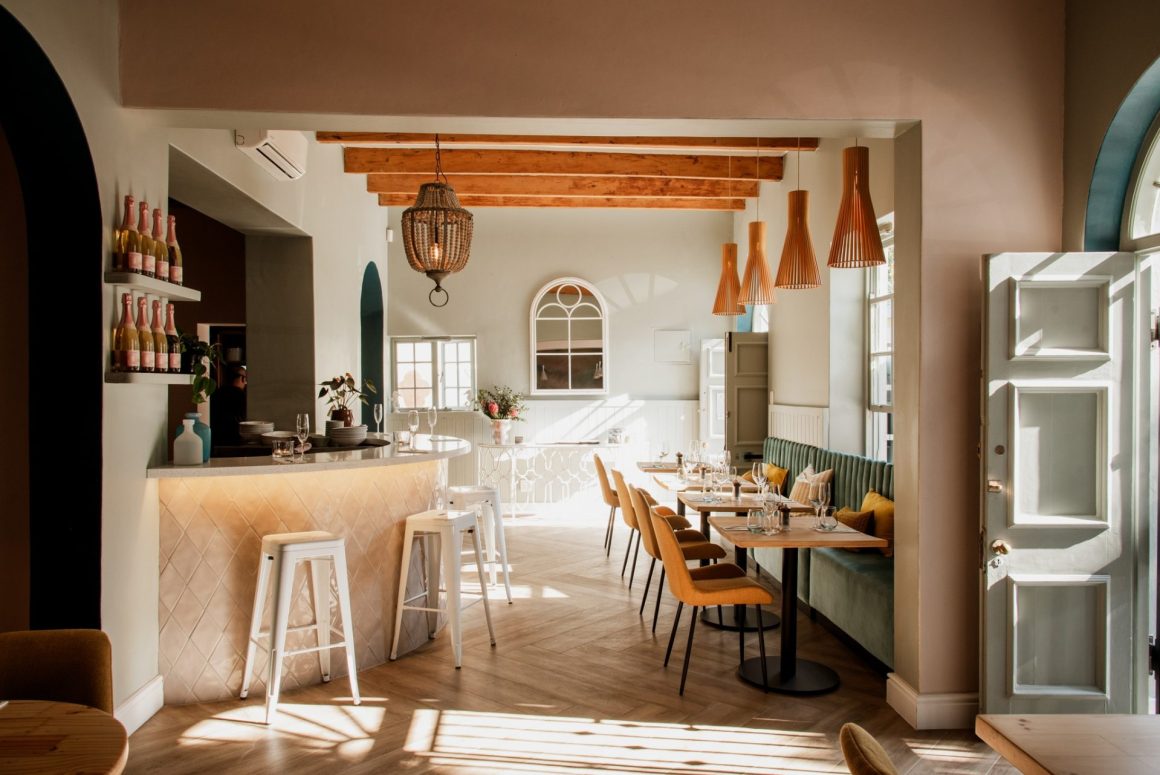
A local legend beloved by Cape Town foodies and travelers alike, this spot is the definition of "dock-to-table." The menu is a love letter to the South Afric…
In Locals Insider’s story · A First-Time Cape Town Travel Guide: What to See, Eat, and Explore
The Cape Town guide
Where to stay, eat and drink in Cape Town
Picked by Locals Insider. Every address checked against the venue or Google.
The Silo Hotel
Iconic design luxury · V&A Waterfront
R 18,000–48,000
Converted from the 1924 Grain Silo Complex by Heatherwick Studio in 2017 — 28 rooms in pillowed glass facades cut through the silo's original concrete. Plus the public-accessible Zeitz Museum of Contemporary Art Africa below. The most architecturally significant African hotel of the 21st century.
Belmond Mount Nelson Hotel
Iconic 1899 heritage · City Bowl (Gardens)
R 9,000–24,000
Cape Town's grande dame since 1899 — 'The Pink Lady' beneath Table Mountain, 198 rooms across 9 acres of gardens. The iconic high tea (since 1899) and the recently refurbished restaurants. Among the world's most photographed colonial-era grand hotels.
One&Only Cape Town
Modern luxury, V&A · V&A Waterfront
R 12,000–32,000
On a private island in the V&A Waterfront — 91 rooms, two infinity pools, the Reuben's restaurant by chef Reuben Riffel, plus serious spa. The most polished international luxury experience in Cape Town.
Ellerman House
Boutique luxury villa · Bantry Bay
R 22,000–55,000
A 1912 Belle Époque mansion turned 13-bedroom boutique luxury hotel, plus 2 villas — the most exclusive Cape Town stay. The Ellerman wine cellar holds one of South Africa's most ambitious private collections (7,000+ bottles).
Cape Grace
Heritage luxury, waterfront · V&A Waterfront
R 8,000–22,000
On its own quay in the V&A Waterfront — 121 rooms in Cape Dutch-style architecture, the iconic Bascule whisky bar (with the country's largest single-malt selection). Reopened 2024 after a substantial refurbishment.
12 Apostles Hotel & Spa
Atlantic-coast luxury · Camps Bay (just past)
R 8,000–22,000
On the Atlantic coast between Camps Bay and Llandudno, with the Twelve Apostles mountains as the back wall — 70 rooms, an iconic infinity pool above the Atlantic, the Azure restaurant. The smartest beach-and-mountain combination stay in the city.
Cape Cadogan
Boutique heritage hotel · City Bowl (Gardens)
R 3,200–6,800
A restored 1842 Cape Dutch townhouse with 16 rooms — properly atmospheric, walking distance to the City Bowl restaurants and Table Mountain cable-car station. Best charm-per-rand mid-priced stay.
Delaire Graff Estate (Stellenbosch)
Wine country lodge luxury · Stellenbosch wine country (40 min east)
R 28,000–60,000
Laurence Graff's wine-estate lodge on the Helshoogte Pass between Stellenbosch and Franschhoek — 10 luxury lodges, the iconic infinity pool over the vineyards, two restaurants (Indochine, Delaire Graff Restaurant). The defining Cape Winelands luxury stay.
FYN
Modern South African, World's 50 Best · City Bowl
R 1,950 tasting menu
Chef Peter Tempelhoff and Ashley Moss's modern South African tasting menu with Japanese influence — appeared in the World's 50 Best Restaurants in recent years. Among Africa's most acclaimed restaurants. Reservations 1-2 months ahead.
La Colombe
Modern fine dining, World's 50 Best · Constantia
R 2,200 tasting menu
Chef Scot Kirton's modern Cape cuisine on the Silvermist wine estate — multiple-year World's 50 Best Restaurants appearances. The defining South African fine-dining experience. 14-course tasting menu.
Wolfgat (Paternoster, 2 hours north)
Iconic coastal restaurant · Paternoster (2 hours up the west coast)
R 1,850 set menu
Named World Restaurant of the Year at the 2019 World Restaurant Awards — chef Kobus van der Merwe's strandveld (coastal-foraged) cuisine in a small fishing-village restaurant. Worth the 2-hour drive each way. Booking 3-6 months ahead.
The Pot Luck Club
Modern small-plates · Woodstock (Old Biscuit Mill)
R 600–1,200 per person
Luke Dale-Roberts's small-plates restaurant on top of the Old Biscuit Mill in Woodstock — properly serious global small plates, panoramic city view from the rooftop. The defining Woodstock dining experience.
Chefs Warehouse (Beau Constantia)
Modern South African · Constantia
R 1,000–1,500 tasting menu
Chef Liam Tomlin's small-plates restaurant on the Beau Constantia wine estate — properly creative modern cooking with a constantly evolving menu. Among the city's most consistent serious dinners.
GOLD Restaurant
Pan-African cultural experience · Green Point
R 800–1,200 per person
A 14-course tasting menu of dishes from across Africa, paired with traditional African music and dance — touristy but properly cultural. The defining 'introduction to African cuisine' Cape Town experience.
Kloof Street House
Modern bistro / Victorian villa · Gardens
R 250–500 per person
A Victorian mansion in Gardens converted into a multi-room restaurant and bar — modern bistro cooking, properly serious wine list of Cape and international bottles. Properly atmospheric. The reliable Gardens dinner choice.
Bascule Bar (Cape Grace)
Iconic whisky bar · Cape Grace, V&A Waterfront
Inside the Cape Grace hotel — the bar has South Africa's largest single-malt whisky selection (450+ bottles). Among the most respected hotel bars in Africa. Properly serious.
Cause & Effect
Iconic craft cocktail bar · Bree Street, City Bowl
Cape Town's most respected craft cocktail bar — properly serious drinks list, dark grown-up atmosphere, properly serious bartending pedigree. The defining Cape Town evening drink.
The Vista Bar (Mount Nelson)
Iconic hotel terrace bar · Belmond Mount Nelson
The Mount Nelson's main terrace bar — Table Mountain backdrop, properly classical hotel bar atmosphere, the iconic high tea program. Among the most photographed hotel-bar settings in Cape Town.
Foxcroft Bar (Foxcroft restaurant)
Cocktail bar / restaurant · Constantia
Chef Glenn Cunningham's wine-bar-and-restaurant on the Constantia Uitsig wine estate — properly serious wine and cocktail list, modern Cape cuisine to match. Among the most consistently smart suburban-Cape Town drinks.
Zeitz Museum of Contemporary Art Africa (Zeitz MOCAA)
Africa's largest contemporary art museum
Heatherwick Studio's 2017 conversion of the historic grain silo into Africa's largest contemporary art museum — 9 floors of African contemporary art, 80 galleries.
The atrium space (carved out of the original silo tubes) is itself one of the most architecturally significant single museum spaces of the 21st century.
Robben Island
UNESCO former prison island
Where Nelson Mandela was imprisoned for 18 years (1964-82). Now a UNESCO World Heritage site — guided by former political prisoners on the most evocative single tour in South Africa. Ferry from the V&A Waterfront; 3.5-hour total visit.
Book weeks ahead.
District Six Museum
Apartheid memorial
The memorial to the forcibly removed multi-racial District Six community (1966 onwards) — properly serious, properly moving, with former residents as guides. Among the most affecting Cape Town museum visits.
Iziko South African National Gallery
National art museum
South Africa's national art collection — strong on 19th and 20th-century South African art (Pierneef, Sekoto, Tretchikoff) plus a properly serious contemporary programme. Half-day visit.
South African Museum & Planetarium
Natural history museum
The country's main natural history museum — strong on Karoo dinosaurs, African ethnography, and a popular planetarium. Best for families or rainy afternoons.
Bo-Kaap Museum
Cape Malay cultural museum
Inside one of the oldest houses (1768) in the Bo-Kaap Muslim Quarter — covers the history of the Cape Malay community (descendants of enslaved people brought from South-East Asia by the Dutch East India Company). Properly contextual for a Bo-Kaap walking visit.
Table Mountain Cable Car
Iconic cable car to flat-topped summit
The rotating cableway up Table Mountain (rebuilt 1997) — 5 minutes from base to 1,067m summit. Plus walking trails on top. Operating depends on wind; check the daily 'tablecloth' weather.
The defining Cape Town experience.
Bo-Kaap walking tour
Iconic coloured-house Cape Malay Quarter
The 18th-century Muslim Quarter at the foot of Signal Hill — pastel-painted Georgian and Cape Dutch houses, the oldest mosque in South Africa (Auwal Mosque, 1794), and the cooking-class-and-tour tradition that's properly authentic. Walk the steep Wale and Chiappini Streets. Free.
Cape Point & Cape of Good Hope
Iconic southern tip of Africa
The dramatic southern tip of the Cape Peninsula — the lighthouse at Cape Point, the cliff at the Cape of Good Hope, baboons everywhere, and the meeting of the Atlantic and Indian Ocean currents just off shore. A 1.5-hour drive each way; a proper full-day excursion.
Boulders Beach Penguin Colony
Iconic penguin colony
A colony of around 3,000 African penguins on a small beach near Simon's Town — accessible by boardwalk to swim with the penguins (the only place in the world where you can do so legally). Combine with a Cape Point day.
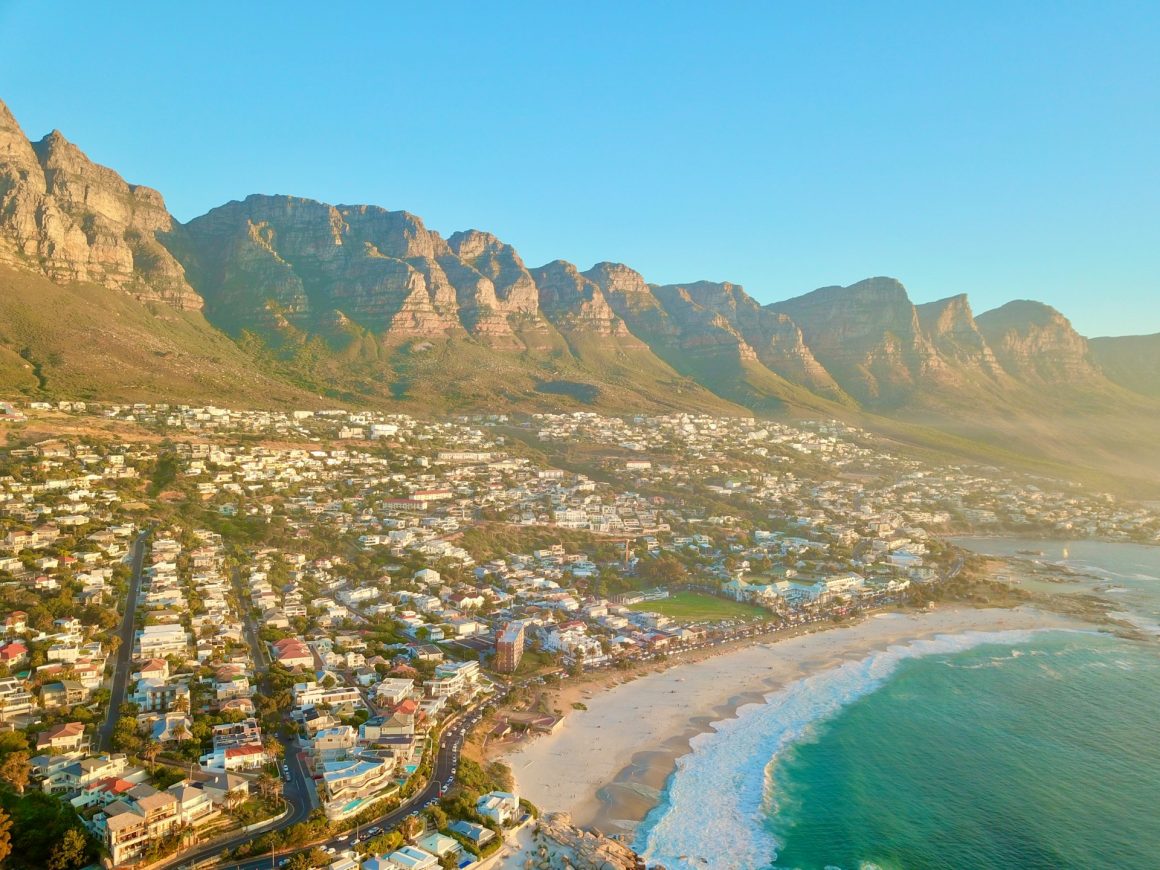
Camps Bay sunset
Iconic Atlantic beach + Twelve Apostles backdrop
The broad sandy crescent at Camps Bay — with the Twelve Apostles section of Table Mountain rising directly behind. Among the world's most photographed urban beaches. Best at sunset; line of restaurants and bars across the promenade for the after-light dinner.
Cape Winelands tasting day
Iconic wine country day-trip
The Stellenbosch-and-Franschhoek wine region — over 200 wine estates, with the most respected including Klein Constantia, Boschendal, Mont Rochelle, Tokara, Delaire Graff, Babylonstoren. The classic Cape Town day-trip; ideally overnight at one of the wine-estate lodges.
Lion's Head walk (sunrise or sunset)
Iconic hillside walk
The smaller peak (669m) next to Table Mountain — a 1.5-hour return walk to the summit, popular for full-moon evening hikes. Best panoramic alternative to Table Mountain itself.
Kirstenbosch Botanical Garden
World-class botanical garden
On the eastern slopes of Table Mountain — 36 hectares of indigenous Cape flora (the smallest of the world's six floral kingdoms, but one of the most concentrated). Plus the iconic Boomslang Canopy Walkway. Best in spring (September-November) for wildflowers.
Sea Point Promenade
Iconic Atlantic beach promenade
A 5-km pedestrianised Atlantic seafront promenade — between the V&A Waterfront and Bantry Bay. Where Cape Town actually walks on Sunday morning, with families, joggers, the iconic Sea Point Pavilion swimming pools. Free.
Cape Point Nature Reserve
Iconic Cape Peninsula reserve
A 7,750-hectare nature reserve covering the southern tip of the Cape Peninsula — walking trails, baboons, ostriches, bontebok antelope, and the famous Cape Point lighthouse. Cape Town's biggest natural reserve.
Stellenbosch & Franschhoek vineyard walks
Wine country walks
The Stellenbosch vineyard area has dozens of walking and cycling trails through the vineyards (many estates have wine-and-trail packages). Best in March-April when the harvest is happening and the autumn colours are starting.
Neighborhoods
Cape Town neighborhoods: where to base yourself
First-time visitor? Pick a neighborhood that matches your vibe and stay there.
City Bowl & Bo-Kaap
Historic core + coloured-house quarter
The flat 'bowl' at the foot of Table Mountain — the colonial Company Gardens, the Cape Town Stadium, the Bo-Kaap (the Cape Malay Muslim Quarter with its iconic pastel-painted 18th-century houses), and Long Street nightlife. Walkable, properly central, the first-time visitor heart.
Best for First-timers, walkers, central stays
Feels like A 17th-century Dutch-colonial trading port crossed with a Muslim Cape Malay village
V&A Waterfront
Redeveloped Victorian harbour
The 1990s redevelopment of the historic Victoria & Alfred working harbour — now anchored by The Silo Hotel, the Zeitz Museum of Contemporary Art Africa (Africa's biggest contemporary art museum), the One&Only, and the Watershed creative market. Ferry departure for Robben Island.
Best for First-timers, families, luxury stays
Feels like A successful Victorian harbour redevelopment that became Africa's most-visited single tourist destination
Camps Bay & Clifton (Atlantic Seaboard)
Atlantic beaches
Along the Atlantic Seaboard at the western foot of Table Mountain — Camps Bay with its broad sandy beach and palm-lined main street; Clifton's four small coves and the Atlantic Seaboard mansion strip. Where Cape Town's wealthy actually live, and where the celebrity-A-list comes to stay.
Best for Beach days, celebrity sightings, summer holidays
Feels like A South African Côte d'Azur with Table Mountain as the backdrop
Sea Point
Beachfront promenade
Between the V&A Waterfront and Clifton — Sea Point with its long pedestrianised promenade along the Atlantic, residential apartment blocks, casual restaurants, the wider Cape Town Sunday-walking population. Properly residential, well-connected.
Best for Repeat visitors, longer stays, walkers
Feels like A Cape Town residential beachfront where actual Capetonians live
Constantia & Southern Suburbs
Historical wine estates + leafy residential
South of Table Mountain — Constantia is one of the oldest wine regions in South Africa (Groot Constantia, founded 1685, is the oldest estate in the Southern Hemisphere), with the Cape Dutch homesteads in a leafy semi-rural setting. Plus the residential Southern Suburbs (Newlands, Rondebosch, Bishopscourt) where the leafy old-money lives.
Best for Wine country day trips, longer stays, families
Feels like A Cape Dutch wine valley 20 minutes from the city centre
Cape Winelands (Stellenbosch, Franschhoek, Paarl)
Major wine country, 45 min east
Cape Town's main wine region — the historic university town of Stellenbosch, the French Huguenot town of Franschhoek, and the larger Paarl. World-class Chenin Blanc, Pinotage, Bordeaux-style red blends, Cap Classique sparkling. Properly serious. Stay overnight at Delaire Graff, Babylonstoren, or Boschendal.
Best for Wine country day trips, overnight extensions
Feels like One of the world's most beautiful and underrated wine regions
Editor’s picks
How to spend your days in Cape Town
Cape Town rewards 5-7 days minimum. Day 1: Table Mountain cable car, Bo-Kaap walk, dinner at FYN or Kloof Street House. Day 2: Robben Island morning, Zeitz MOCAA afternoon, V&A Waterfront walk.
Day 3: Cape Point and Boulders Beach penguins day-trip. Day 4: Constantia wine estates morning, La Colombe lunch. Day 5: Stellenbosch and Franschhoek wine-country day.
Day 6 (optional): Hermanus whale watching (June-November), or Paternoster for Wolfgat lunch (worth the 2-hour drive).
The smart pattern is 3-4 nights in the City Bowl/V&A area, then 1-2 nights at a Cape Winelands estate (Delaire Graff, Babylonstoren, Boschendal) for the wine-country experience.
Add a separate game-park-and-Garden-Route extension (5+ days via Kruger or the Sabi Sands) for the proper South Africa experience.
South Africa's tourism seasons run opposite to Northern Hemisphere — the summer is November-March (warm and dry, peak prices), winter is May-August (cooler with Atlantic storms but cheaper and the Cape Winelands look spectacular in autumn).
January-February is peak season; September-October (spring) is the smartest combination of weather, wildflowers, and value.
Through the year
What’s on in Cape Town: festivals and events
January (Tweede Nuwe Jaar, 2 January)
Cape Town Carnival (Kaapse Klopse Minstrels)
The annual Kaapse Klopse Minstrels parade — costumed, painted-faced minstrel troupes parading from the District Six area to the City Bowl on 2 January. A Cape Town tradition since the 1860s. The defining single-day cultural event of the year.
March
Cape Town International Jazz Festival
South Africa's biggest jazz festival — two-day event at the Cape Town International Convention Centre, with international and South African jazz acts. Late March or early April; properly serious programming.
August
Cape Town International Film Market & Festival
South Africa's most established serious film festival — week-long international and African cinema programme across multiple venues.
October–November
Spring wildflowers in West Coast National Park
Late August through early October — South Africa's spectacular West Coast wildflower season, with the Postberg section of the West Coast National Park (90 min north of Cape Town) being the prime destination. Properly worth the day-trip.
Tours
Tours and day trips in Cape Town
Good to know
Cape Town at a glance: what to know before you go
Population433,000 (Cape Town metro 4,600,000)
Time zoneSAST (UTC+2, no daylight saving)
Safety 5/10
Cape Town requires more active safety awareness than most international tourist destinations — South Africa has elevated crime rates including violent crime. The major tourist zones (V&A Waterfront, Camps Bay, Constantia, central wine routes) are generally safe with standard urban awareness.
The cautions: never walk between zones at night (use Uber); don't display valuables; be aware of car-hijack risks at quiet intersections (keep doors locked, windows up). Hotels and tour operators give location-specific guidance.
Solo travel including for women in the tourist zones, with awareness, is reasonable. Take particular care around the train station, the central CBD at night, and the townships (Khayelitsha, Langa, Mitchells Plain) — these are visitable only with respectable township-tour operators.
LGBTQ+ friendly 8/10
South Africa was the fifth country in the world to legalise same-sex marriage (2006) — the first in Africa, and the only African country with full LGBTQ+ legal rights. The country's constitution explicitly protects against sexual-orientation discrimination.
Cape Town has South Africa's most visible LGBTQ+ scene, particularly around Green Point and De Waterkant ('the Pink Village'). Cape Town Pride is held in February-March. Visible affection in the city's tourist zones is completely normal.
Safety scores reflect UK FCDO & US State Department travel advisories. LGBTQ+ scores reflect Equaldex and ILGA-Europe rankings. Both refreshed quarterly.
Questions
Cape Town FAQ
Where do locals eat in Cape Town?
Three picks across the spectrum of how Capetonians actually eat.
For the modern South African fine-dining reference: La Colombe, at Silvermist Estate, Constantia Nek, Cape Town.
Chef Scot Kirton's two-Michelin-star restaurant on the Constantia wine route — modern South African tasting menus emphasizing Cape Town's biodiversity (Cape lobster, kudu venison, Karoo lamb, fynbos herbs).
Among Africa's most-cited fine-dining restaurants, multiple World's 50 Best Restaurants Africa rankings.
For the iconic Test Kitchen-school pick: Pot Luck Club, at The Old Biscuit Mill, 373-375 Albert Road, Woodstock, Cape Town.
Chef Luke Dale-Roberts's smaller, more affordable sister to the famous (now closed) Test Kitchen — Asian-Mediterranean-South African small plates on the rooftop of the Old Biscuit Mill creative complex with sunset views over Table Mountain. Reservations weeks ahead.
For the affordable, locals' standard: V&A Waterfront Food Market at Dock Road, V&A Waterfront, Cape Town 8002 — proper South African and international food in a covered market setting.
For Cape Malay cuisine (the iconic Cape Town-specific cuisine with Indonesian-Indian-Dutch fusion roots), Bo-Kaap Kombuis at 7 August St, Bo-Kaap, Cape Town in the colourful Bo-Kaap neighborhood serves proper Cape Malay bobotie, denning vleis, and bredie.
Where can I get the best seafood with champagne or sparkling wine in Cape Town?
The Western Cape is South Africa's iconic Méthode Cap Classique (MCC) sparkling wine region (Champagne-style traditional-method sparkling wines from Franschhoek and Stellenbosch).
For Cape Town seafood with serious MCC and Champagne, the destination is Codfather Seafood & Sushi, at 37 The Drive, Camps Bay, Cape Town 8005.
The most-cited Cape Town seafood-by-the-weight specialty — choose your fish from the daily display ice counter (West Coast crayfish, Knysna oysters, line-caught yellowtail, butterfish), priced by weight, prepared however you want.
The MCC and Champagne list runs to several pages (Graham Beck, Krone, Pongrácz are the South African references). Camps Bay beachfront setting with sunset views over the Atlantic.
For a more refined alternative with serious wine programme, The Round House Restaurant in Camps Bay (in the 17th-century lord's residence with Cape Town's most cinematic dining setting) has the local MCC and seafood pairings.
Which historical boutique hotel should I stay at in Cape Town?
For an old-world historical stay in Cape Town, the reference is Belmond Mount Nelson Hotel, at 76 Orange Street, Cape Town 8001.
Opened in 1899 and known affectionately as "the Pink Lady" for its distinctive painted pink Victorian exterior — Cape Town's most historic