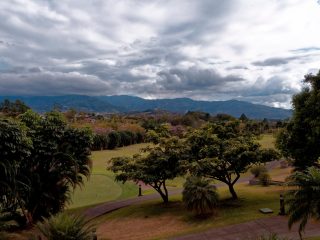




Costa Rica Travel Guide: Beaches, Rainforest & Where to Go 2026
Costa Rica is an eco-lover’s paradise with lush rainforests, pristine beaches, and amazing wildlife. LocalsInsider travel guide covers top resorts and insider tips for dining and having fun during your trip to Costa Rica.
Costa Rica is the country that decided the future was ecotourism and built a national brand on 6% of the world's biodiversity. The headline destinations spread across the country — Manuel Antonio's rainforest beaches, Monteverde's cloud forest, Arenal's perfect volcanic cone with hot springs at its base, the Osa Peninsula's wildest jungle, Tortuguero's nesting turtles. San José is the small modern capital used as a stopover — Silvestre and Sikwa are quietly putting Costa Rican fine dining on the world's 50 Best lists. The boutique-lodge scene (Nayara, Lapa Rios, Hacienda AltaGracia) is internationally serious.
Our Costa Rica coverage focuses on the eco-luxury lodge scene, the volcanic and rainforest itineraries, and the practical work that makes Costa Rica a great first tropical-Americas trip.
The travel personality: The Eco Adventurer
Quick facts
Live right now
Best time to visit
| Season | Why go |
|---|---|
| December–April (dry season) | Green season is beautifully lush — and 30-40% cheaper |
| May, November | Shoulder season — fewer tourists, often cheaper, weather still good |
| May–November (green season — afternoon rain) | Off-season — quiet, best deals, plan around weather |
Top cities to visit
Experiences you'll probably love
- Arenal volcano area — hot springs, hiking, hanging bridges
- Wildlife spotting in Corcovado (Osa Peninsula)
- Surfing in Santa Teresa or Pavones
- Cloud forest canopy in Monteverde
- Sloth and turtle watching on Caribbean coast (Tortuguero)
Not many tourists know about…
- Bahía Drake on Osa — gateway to Corcovado, fewer crowds
- Río Celeste's turquoise waterfall in Tenorio National Park
- Uvita and Marino Ballena National Park whale-tail beach
- Boruca village indigenous mask culture
- Cahuita on the Caribbean side for Afro-Caribbean culture
- Rincón de la Vieja — volcano with mud pots and waterfalls
If you visit only once, make it this
Costa Rica's most-visited national park — 4.9 sq km where Pacific rainforest meets crescent-shaped beaches. Capuchin and squirrel monkeys, sloths in the canopy, the Cathedral Point lookout. The classic introduction to Costa Rica's biodiversity.
3 hours by road from San José. Park closed Tuesdays. Avoid weekend crowds.
Where to walk & breathe
A perfect cone-shaped volcano (1,670 m) — last erupted 2010, still classified active. The hot springs around the base (Tabacón, EcoTermales) channel the geothermal heat into landscaped pool networks. La Fortuna town is the base.
3 hours from San José. Combine with the Mistico hanging bridges in the cloud forest.
Museums worth your time
Pre-Columbian stone spheres (the mysterious Diquís spheres), gold artifacts, the butterfly garden in the former Bellavista military fortress (whose 1948 abolition of the army the country still celebrates).
Visit website →Underground museum with 1,600 pre-Columbian gold pieces — the second-most significant gold collection in Latin America after Bogotá's Museo del Oro.
Visit website →The Insider's Edit
A few additions for travelers seeking deeper Costa Rica experiences:
Reachable only by white-water raft or 4x4 — the Linda Vista Suite has a 360-degree open-air bedroom over the canopy.
Just nine bungalows above Lake Origins, between two volcanoes — named one of Latin America's best new hotels at opening.
A surprisingly excellent five-floor museum of pre-Columbian jade in the heart of the capital.
The Auberge Resorts mountaintop ranch in the Talamanca highlands offers private plane transfers — plus equine therapy and curanderismo healing rituals onsite.
Where to eat
Chef Santiago Fernández-Bal's tasting menu through Costa Rican biomes — Latin America's 50 Best. The chayote, the wild fish, the cacao desserts. San José's most ambitious restaurant.
Chef Pablo Bonilla's tasting menu showcasing indigenous Costa Rican ingredients (Bribri, Cabécar, Ngäbe-Buglé recipes). Pre-Hispanic cuisine reimagined. Latin America's 50 Best.
Inside the Mercado Central — Costa Rican casado (rice, beans, plantain, meat) for $5. The soda (lunch counter) format is the country's authentic everyday food. Cash.
La Fortuna's most consistent restaurant since 1995 — open-air terrace, Costa Rican classics done well (gallo pinto, ceviche, grilled meats), regional craft beers.
Where to stay
Adults-only luxury tented camp on a hillside above the Arenal Volcano — each tent with private plunge pool facing the volcano. Three Nayara properties on the same estate connected by bridges.
Ronald Zürcher-designed on a Pacific peninsula — three beaches, the rope-and-bamboo lobby, family-friendly with serious resort facilities. Multi-generational appeal.
Sustainability pioneer (1990) on the wildest stretch of Costa Rican Pacific — 17 thatched bungalows in 1,000 acres of rainforest. National Geographic Unique Lodge.
Auberge Resorts ranch-style retreat in the mountains south of San José — 50 private casitas across 850 acres. The wellness program, the equestrian center.
Realistic daily budget
Per person, per day. Excludes flights. Peak season can run 20-40% higher.
Travel safety & inclusivity
Safety scores reflect UK FCDO & US State Department travel advisories. LGBTQ+ scores reflect Equaldex and ILGA-Europe rankings. Both refreshed quarterly.
Major festivals
Need a visa for Costa Rica?
Many travelers can enter Costa Rica visa-free, but it depends on your passport. Check your specific requirements:
Powered by evisas.com · We'll open your nationality-specific requirements page in a new tab.
Partner link — Locals Insider may receive a small commission at no extra cost to you. Always confirm the latest requirements with the official embassy.
Not sure if Costa Rica is right for your next trip? We'll compare 53 destinations against your travel style. Take our country matcher quiz →
Frequently asked questions about Costa Rica
Do I need a visa to visit Costa Rica?
Citizens of around 90 countries — including all EU/Nordic countries, the UK, US, Canada, Australia, Japan, South Korea, and most of Latin America — can enter Costa Rica visa-free for up to 90 days as tourists. Russian citizens can enter visa-free for up to 30 days, or up to 90 days with a valid US, Canadian, UK, or Schengen multi-entry visa. Passport must be valid for at least 1 day beyond your stay (Costa Rica is the most flexible in Latin America on this), but airlines may require 6 months. Proof of onward travel is strictly enforced — immigration regularly turns back travelers without it. Carry a printed exit ticket; bus tickets out (to Panama or Nicaragua) work fine. Costa Rica uses the colón (CRC), but USD is accepted everywhere — most tour prices, hotels, and rental cars are quoted in dollars. Tap water is safe in San José and major tourist areas; rural and jungle zones, use filters or bottled.
When is the best time to visit Costa Rica?
December to April is the dry season (locally called verano) — sunny, warm, low rainfall, the best for Manuel Antonio beaches, Arenal hiking, and Pacific coast destinations. Peak season runs Christmas through Easter; prices climb 30–50%. Semana Santa (Easter Week, April 6–12, 2026) is when the whole country goes on vacation — book months ahead, accept heavy traffic and crowds. May to November is the green season — daily afternoon thunderstorms (rarely all-day rain), the jungle explodes into vibrant neon green, prices drop 30–50%, and wildlife activity peaks (Olive Ridley turtle arribadas at Ostional, July–November). September–October secret: the Pacific side is the rainiest then, but the Caribbean side (Puerto Viejo, Cahuita, Tortuguero) has its driest, calmest, snorkel-perfect months. If you're traveling Sept–Oct, head east.
What's the classic Costa Rica route?
The standard backpacker triangle, 8–10 days: San José (1 night transit only) — most travelers head straight out. Arenal/La Fortuna (3 nights) — the iconic conical Arenal volcano, hanging bridges of Mistico Park, Tabacón hot springs, white-water rafting on the Sarapiquí or Toro rivers. Monteverde (2 nights) — the cloud forest reserve (book sunrise tour for the elusive Resplendent Quetzal, February–May), zipline canopy tours (Selvatura or Sky Adventures invented this here), night walks for nocturnal wildlife. The jeep-boat-jeep transfer between Arenal and Monteverde is itself an experience. Manuel Antonio (2–3 nights) — the most popular national park, beaches with sloths and squirrel monkeys, easy logistics. With 14 days, add the Caribbean coast (Puerto Viejo, Cahuita) or the Osa Peninsula (Corcovado National Park — the wildest, most biodiverse spot in Central America, scarlet macaws, baird's tapirs, possibly jaguars).
Do I need to rent a car in Costa Rica?
Usually yes for flexibility, but not always. Costa Rica's road network has improved a lot, but most travelers do better with a 4x4 SUV — many roads to lodges and beaches are unpaved, river crossings exist in the dry season, and Monteverde's approach is notoriously rough. Daily rental rates run $50–120 in 2026, plus mandatory insurance (around $20/day extra — credit-card coverage often isn't accepted). The alternative: the shared shuttle network (Interbus, Caribe Shuttle) connects all major tourist towns for $50–70 per leg — comfortable, A/C, hotel-to-hotel, no parking hassles. Domestic flights via Sansa or Skyway take you to Quepos, Liberia, Tortuguero, or Drake Bay in 30–60 minutes for $80–150 one way. Skip driving at night — roads aren't lit, animals on the road are real, and rural directions can get confusing. Pura vida: relax into the slower rhythm.
What wildlife will I actually see in Costa Rica?
Costa Rica has 25% of its land in protected reserves and one of the highest biodiversity densities on Earth — wildlife viewing here is among the best in the Americas. Sloths (both two-toed and three-toed) are common in Manuel Antonio, Cahuita, and along most lowland trails — hire a guide with a spotting scope, you'll see them every day. Howler monkeys (you'll hear them at dawn before you see them — louder than you'd believe), white-faced capuchins, squirrel monkeys (only in Manuel Antonio and Corcovado), and the rare spider monkey. Toucans, scarlet macaws (Osa Peninsula and Carara), and the elusive Resplendent Quetzal (Monteverde, breeding season Feb–May). Sea turtles nest at Ostional (July–November arribadas) and Tortuguero (green turtles July–October). Hire local guides at park entrances ($20–40 for half-day) — they spot 10x what you'd see alone.
Locals Insider's Articles About Costa Rica
Articles in this section are written by Locals Insider editorial team. Want to share your experience about Costa Rica? Email us at hello@localsinsider.com.