
 Argentina
 Austria
 Azerbaijan
 Belgium
 Brazil
 Canada
 Chile
 China
 Colombia
 Costa Rica
 Croatia
 Cyprus
 Czech Republic
 Denmark
 Egypt
 Estonia
 Finland
 France
 French Polynesia
 Georgia
 Germany
 Greece
 Greenland
 Hong Kong
 Hungary
 Iceland
 India
 Indonesia
 Ireland
 Italy
 Japan
 Kenya
 Lithuania
 Malta
 Mauritius
 Mexico
 Mongolia
 Montenegro
 Morocco
 Netherlands
 Norway
 Oman
 Peru
 Poland
 Portugal
 Saudi Arabia
 Serbia
 Singapore
 Slovenia
 South Africa
 South Korea
 Spain
 Sweden
 Switzerland
 Taiwan
 Thailand
 Türkiye
 USA
 United Arab Emirates
 United Kingdom
 Uruguay
 Uzbekistan
 Vietnam
Destinations › Europe › Slovenia
Country guide · Europe
Slovenia
Slovenia Travel Guide: Ljubljana, Lake Bled, Soca Valley in 2026
Your Slovenia guide, curated by Locals Insider
Slovenia, by Locals Insider
Slovenia is the country that gets quietly recommended by every well-traveled European, and which most American travelers haven't put on the map yet.
Ljubljana is one of the most walkable, livable small capitals in Europe — riverside cafés, bridges by Plecnik, the kind of city you can fully understand in two days and still want to return to.
Then the country opens up: Lake Bled (the obvious one), the Soca Valley (the better one), the Julian Alps, the small slice of Adriatic coastline that includes Piran. The food scene punches well above its weight, anchored by Ana Ros's Hisa Franko.
Our Slovenia coverage is small but growing — Ljubljana neighborhood walks and Alpine valley routes. Scroll for the archive.
Cities to explore
Where to go in Slovenia
Ljubljana
Riverside capital, café culture, dragon bridge, compact and walkable
Lake Bled
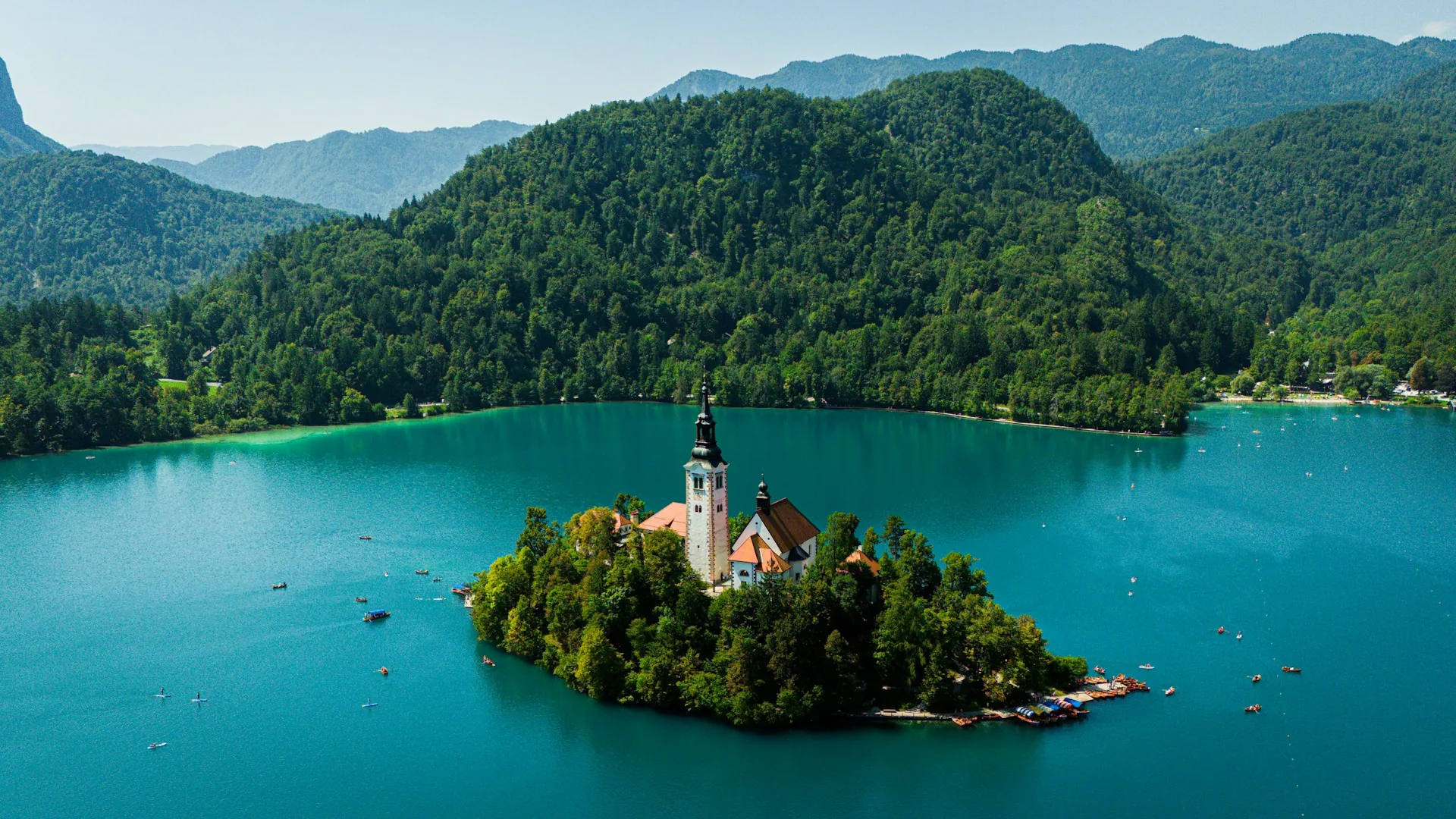
Iconic island church, castle, alpine views
Soča Valley
Emerald river, white-water rafting, WWI history
Piran
Venetian-architecture coastal town, Adriatic seafood
Stories · updated as we publish
Latest from Slovenia
1 storyRecommended in our stories
Places in Slovenia our authors recommend

Place · Lake Bled
Alpine Slovenia, Alpska Cesta 111, 4248 Lesce, Slovenia
Open: Seasonally.
Open in Google Maps ↗In Sophie Campbell’s story · From Emerald Lakes to Starry Skies: Slovenia’s Holiday Spots and Retreats
Place · Lake Bled
Veslaska Promenade 11, 4260 Bled
Open: May to September: 10.00am until 18.00pm
Open in Google Maps ↗In Sophie Campbell’s story · From Emerald Lakes to Starry Skies: Slovenia’s Holiday Spots and Retreats
Place · Lake Bled
Cesta Svobode 12, 4260 Bled
Boat for three people: €12 per hour.
Open in Google Maps ↗In Sophie Campbell’s story · From Emerald Lakes to Starry Skies: Slovenia’s Holiday Spots and Retreats
Don’t miss
Don’t miss in Slovenia
Must visit · Upper Carniola
Lake Bled with Bled Island & church
Slovenia's most photographed lake — a small church on a tiny island in the middle, ringed by Alpine mountains, with an 11th-century castle on a cliff above. Take a pletna (handmade wooden boat) out to the island; ring the wishing bell.
45 minutes from Ljubljana airport. Visit autumn (October) for fall colors reflecting on the water.
Karst cave system
Postojna Cave train
21km of cave passages explored on a small electric train that takes you 5km deep into the karst limestone — stalactites and stalagmites, an underground river, the rare olm salamander (the 'human fish'). 90 minutes underground.
40 minutes from Ljubljana. Combine with nearby Predjama Castle (built into a cliff face).
Experiences
Experiences in Slovenia locals love
- Rowing a pletna boat to Lake Bled's island church
- Caving in Postojna or Škocjan (UNESCO)
- Hiking in the Julian Alps and Triglav National Park
- Wine tasting in the Brda region (Italy border)
- The Vipava Valley for slow-food, wine, and orchards
Insider tips
Insider tips for Slovenia
- Lake Bohinj — Bled's quieter, larger neighbor
- The Velika Planina shepherd plateau
- Goriška Brda — the Tuscany of Slovenia
- Logarska Dolina — alpine glacial valley
- Skofja Loka medieval old town
- Ptuj — Slovenia's oldest town, with thermal spas
Our picks
Slovenia’s best restaurants, hotels and museums
Checked against Michelin, the venue or Google.
Hiša Franko
Michelin
$$$$ (€220+ tasting menu)
Two Michelin stars + Green Star — chef Ana Roš (Chef's Table season 2) cooks modernist Slovenian in a remote Soča Valley farmhouse. World's 50 Best Female Chef 2017. Cars only access.
Staro selo 1, 5222 KobaridWebsite ↗
Atelje
Michelin
$$$ (€90+ tasting menu)
One Michelin star in central Ljubljana — chef Jorg Zupan's modern Slovenian, 12 courses in 12 seats. Karst chef-table experience.
Mestni trg 22, 1000 LjubljanaWebsite ↗
Gostilna Repovž
Traditional
$$ (€30-65 per person)
Family-run Slovenian gostilna (inn) in rural Dolenjska — traditional dishes from regional grandmothers' recipes, the cured-meat platter is essential.
Šentjanž 33, 8297 ŠentjanžWebsite ↗
Vila Bled
Boutique
€250-600
Tito's former residence overlooking Lake Bled, converted to a 31-room hotel — Relais & Châteaux, original Yugoslav-era interiors preserved, private lakeshore.
Cesta svobode 26, 4260 BledWebsite ↗
Hotel Cubo Ljubljana
Luxury
€200-450
Boutique in central Ljubljana — minimalist contemporary design, walking distance to everything, the rooftop terrace overlooks Tivoli Park.
Slovenska cesta 15, 1000 LjubljanaWebsite ↗
Nebesa
New 2026
€280-550
Only 4 wooden chalets on a Soča Valley ridge — private sauna, Julian Alps panorama, restaurant in the main lodge. Among Slovenia's most architecturally interesting new escapes.
Livek 39, 5222 KobaridWebsite ↗
Kendov dvorec
Luxury
€220-400
Relais & Châteaux country manor in western Slovenia — only 11 rooms, the renowned Idrijska čipka lacework heritage, restaurant uses ingredients from the surrounding hills.
Na Griču 2, 5281 Spodnja IdrijaWebsite ↗
Museum of Modern Art (MG+MSUM)
Slovenian modern art
Slovenia's national modern art collection — Jakopič, Grohar, plus 20th-century Eastern European artists. The MSUM contemporary annex is in the Metelkova cultural quarter.
Cankarjeva cesta 15, 1000 LjubljanaWebsite ↗
Museum of Illusions Ljubljana
Interactive optical illusions
Surprisingly clever — vortex tunnel, anti-gravity room, head-on-a-platter exhibit. Original Ljubljana location of the chain that's now spread worldwide. Best with kids or hangover.
Kongresni trg 13, 1000 LjubljanaWebsite ↗
On the world lists
Editor’s picks for Slovenia
A few additions for travelers planning Slovenia at the high end:
Hotel Vila Bled, Lake Bled
Tito's former summer residence — communist-era frescoes restored, lake-facing.Hiša Franko, Kobarid
The two-Michelin-starred restaurant-with-rooms of chef Ana Roš (named World's Best Female Chef) — foraged Soča Valley cuisine.Vander Urbani Resort, Ljubljana
A 20-room boutique on the Ljubljanica river — a rooftop pool over the Old Town.Postojna Cave with a private vivarium tour
The 24km cave system with the olm ("baby dragon") — a blind cave salamander only found in Dinaric karst.Lipica Stud Farm
The original 1580 home of the Lipizzaner horses — a serious dressage school still operating.
Through the year
Slovenia festivals and what’s on
July-September
Ljubljana Festival
Major summer festival of classical music, ballet and opera
February
Kurentovanje
Ptuj's ancient pre-Lent festival, costumed Kurent figures
July
Bled Days
Bled lake festival — candles floating on the lake at night
Questions
Slovenia FAQ
Do I need a visa to visit Slovenia?
Slovenia is an EU member, Schengen Area country (since 2007), and eurozone country (since 2007), so the standard Schengen rules apply. EU/EEA/Swiss citizens travel freely with passport or national ID. UK, US, Canada, Australia, Japan, South Korea, Brazil, Argentina, Mexico, and around 60 other Schengen-visa-exempt countries: visa-free 90 days in any 180-day period across the entire Schengen Area. ETIAS pre-authorisation (€7) is required for these nationalities as of the 2026 rollout — apply online before travel. Russian passport holders need a Schengen visa, with significantly reduced availability since 2022 (Hungary, Italy, and France remain the main practical channels).
Passport valid 3 months beyond exit. Crossing from Croatia, Italy, Austria, or Hungary is Schengen-internal (no passport check usually). Note on Schengen reintroduction: Slovenia briefly reintroduced spot checks on its borders with Croatia and Hungary in 2023–24 over migration concerns — generally a 1-minute formality, but allow buffer on overland routes. From Ljubljana: it's a 2-hour drive to Venice, 4 hours to Vienna, 1.5 hours to Zagreb.
When is the best time to visit Slovenia?
Mid-May to mid-June and September are the two universal sweet spots — 18–25°C, dry, wildflowers or autumn colors in the Julian Alps, Lake Bled and Lake Bohinj at their cinematic best, hiking trails open, Ljubljana's terraces alive but not overwhelmed. July–August is high tourist season — temperatures comfortable (22–28°C), but Bled and Bohinj parking is rationed and tour-bus heavy, prices peak. Late September into mid-October brings the autumn colors to the Soča Valley and Triglav National Park — among Europe's most spectacular foliage. December: Ljubljana's Festive Fair is one of central Europe's prettiest Christmas markets, the Old Town strings of lights are extraordinary. January–March: ski season at Kranjska Gora, Vogel (above Lake Bohinj), and Krvavec — small Alpine resorts with good value compared to Austria/Switzerland. Avoid mid-November and early March — grey, wet, in-between everything. The Slovenian coast (Piran, Portorož): best mid-May–September, swimming pleasant June–early October.
What's the classic Slovenia itinerary?
Slovenia is small (the country is 4 hours' drive end-to-end), so 5–7 days is enough to cover the highlights with a rental car. Ljubljana (2 nights): the small, walkable, Plečnik-designed capital — the river embankments, Triple Bridge, Dragon Bridge, the castle (funicular up), Tivoli Park, Metelkova alternative cultural complex.
The Central Market (Saturdays best). Lake Bled (2 nights, or 1 with Bohinj): the picture-postcard alpine lake with the island church (rowing-boat pletna ride 30 min, ring the bell and make a wish) and the cliffside castle.
Walk the 6 km lake path. Lake Bohinj (1–2 nights, the locals' lake): 30 min from Bled — larger, wilder, less Instagram, deeper into Triglav National Park.
Hike Savica Waterfall and Vogel cable car. Soča Valley (1–2 nights): the turquoise Soča River — Kobarid, Bovec, rafting, the Triglav road, the WWI Isonzo Front history. Postojna Cave + Predjama Castle (half-day): the most-visited cave in Europe (electric train through huge chambers) + the medieval castle built INTO a cave mouth. Piran (1 night): the Venetian-influenced coastal town. Or wine: Goriška Brda (next to Italy) for orange wine and Movia.
Are Lake Bled and Lake Bohinj actually worth it?
Yes, but they're different lakes and you can't really substitute one for the other. Lake Bled: 2 km long, 1 km wide, with the church-on-the-island and the cliff-perched castle — the postcard Slovenia image, visited by 1.5 million people a year.
It's genuinely beautiful, but it's also the country's busiest tourist spot — go at sunrise (6–8am the lake mist with the castle visible is the photo) or after 6pm to escape the day-trip buses.
Stay 2 nights, not 1 — gives you time to walk the lake path (6 km, mostly flat), take a pletna rowing boat to the island (€18 return), eat the kremšnita custard cake at Park Café (the original 1953 recipe), hike to Mala Osojnica viewpoint (45 min steep up, the iconic high-angle photo). Lake Bohinj: 4 km long, 30 minutes' drive south of Bled — deeper into Triglav National Park, wilder, no central village, fewer hotels, much less Instagram.
Activities: swim in the cold alpine water (16–22°C in summer), hike to Savica Waterfall (40 min walk in), Vogel cable car for Triglav views, kayak the lake. If choosing one: Bled for the icon, Bohinj for the nature. Most travelers do both, basing 1 night in each.
What's Slovenian food and wine culture like?
Slovenia is a culinary crossroads — Italian, Austrian, Hungarian, and Balkan influences in equal measure across 24 distinct gastronomic regions. Must-try dishes: potica (the rolled walnut nut-cake — the most-loved Slovenian dessert, every grandmother makes it differently), kranjska klobasa (the protected Carniolan sausage), štruklji (rolled dough dumplings, savory or sweet), idrijski žlikrofi (the only PDO-protected Slovenian pasta — small filled pasta from the mercury-mining town of Idrija), jota (Italian-Slovenian bean and sauerkraut stew), žganci (buckwheat or corn polenta-equivalent), kremšnita (the Bled custard-cream cake). Wine: Slovenia has three wine regions — Primorska (coastal, Italian-influenced, the home of orange wine in Goriška Brda — Movia, Edi Simčič, Burja), Posavje (south, lighter reds), Podravje (north-east, similar to Austrian Styria — excellent dry Rieslings and Furmint, especially around Maribor and Ptuj). Restaurants worth seeking: Hiša Franko (Kobarid — Ana Roš, 3-Michelin-starred, properly transformative), Atelje (Ljubljana), Dvor Jezeršek (Brnik). Ljubljana's Open Kitchen (Odprta Kuhna) Friday street food market March–October is the country's culinary showcase.
Capital LjubljanaTime CET (UTC+1)Plugs Type C/F (230V)
Locals Insider
Spotted a mistake? Know a better place?
We check every guide against official sources, but places change. Tell us what’s out of date, or the spot you’d send a friend to.
Tell us about itMore countries
Is Slovenia for you?
You want Alpine lakes and mountains, Mediterranean coastline, and Italian-quality food — all in a country smaller than New Jersey and refreshingly uncrowded. Slovenia is Europe's most underrated travel secret.
You’re
The Hidden Europe Explorer
Adventure travelers
Couples
Nature lovers
Wine enthusiasts
Slow travel
Walkability9
Getting around7
Safety10
Weather8
Value for money8
LGBTQ+ friendly7
Crowds4
Digital nomads7
When to go
Best time to visit Slovenia
9 places on the map
Elsewhere on Locals Insider


 Martinique
 Romania
 Scotland