
 Argentina
 Austria
 Azerbaijan
 Belgium
 Brazil
 Canada
 Chile
 China
 Colombia
 Costa Rica
 Croatia
 Cyprus
 Czech Republic
 Denmark
 Egypt
 Estonia
 Finland
 France
 French Polynesia
 Georgia
 Germany
 Greece
 Greenland
 Hong Kong
 Hungary
 Iceland
 India
 Indonesia
 Ireland
 Italy
 Japan
 Kenya
 Lithuania
 Malta
 Mauritius
 Mexico
 Mongolia
 Montenegro
 Morocco
 Netherlands
 Norway
 Oman
 Peru
 Poland
 Portugal
 Saudi Arabia
 Serbia
 Singapore
 Slovenia
 South Africa
 South Korea
 Spain
 Sweden
 Switzerland
 Taiwan
 Thailand
 Türkiye
 USA
 United Arab Emirates
 United Kingdom
 Uruguay
 Uzbekistan
 Vietnam
Destinations › Europe › Switzerland
Country guide · Europe
Switzerland
Switzerland Travel Guide: Zurich, Lucerne, Alps & Where to Go in 2026
Your Switzerland guide, curated by Locals Insider
Switzerland, by Locals Insider
Switzerland is the country that always over-delivers. Trains run on the minute. The Glacier Express crosses 291 bridges between Zermatt and St.
Moritz. Hotels at every price point are quietly excellent — Badrutt's Palace winters royalty in St. Moritz, The Dolder Grand watches over Zürich.
Andreas Caminada holds three Michelin stars at Schloss Schauenstein in a Graubünden village of 400 people. The Alps deliver in winter and summer with completely different personalities.
Our Switzerland coverage runs across the lake cities, the Alpine luxury hotels, and the seasons that work best for each. Five articles and counting.
Cities to explore
Where to go in Switzerland
Cities with a full guide are marked “City guide”.
Zurich
Lakefront finance capital, design hotels, museum mile
Lucerne & Central Switzerland
Lake views, Mount Pilatus, the Rigi
The Jungfrau Region
Alpine villages — Grindelwald, Wengen, Lauterbrunnen
Zermatt
Matterhorn views, car-free village, ski-and-hike paradise
Stories · updated as we publish
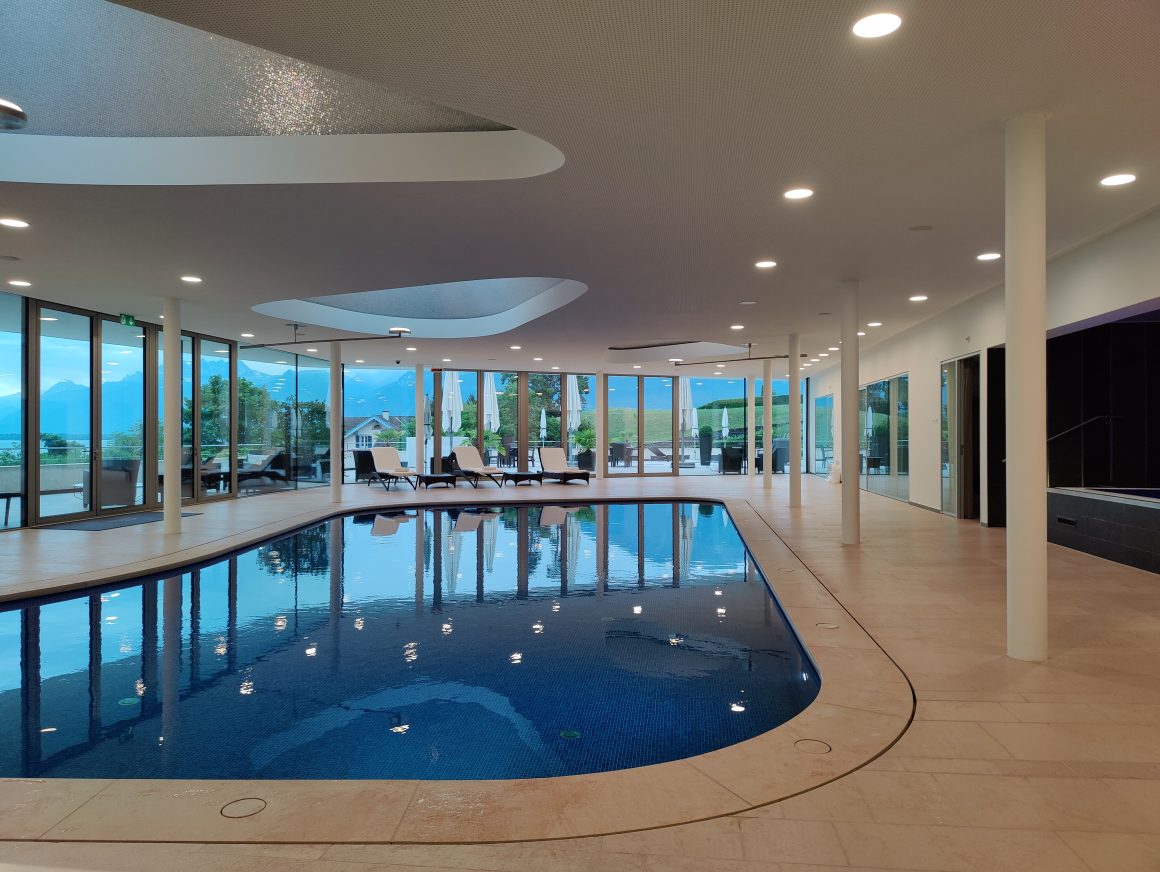
Latest from Switzerland
All 5 stories
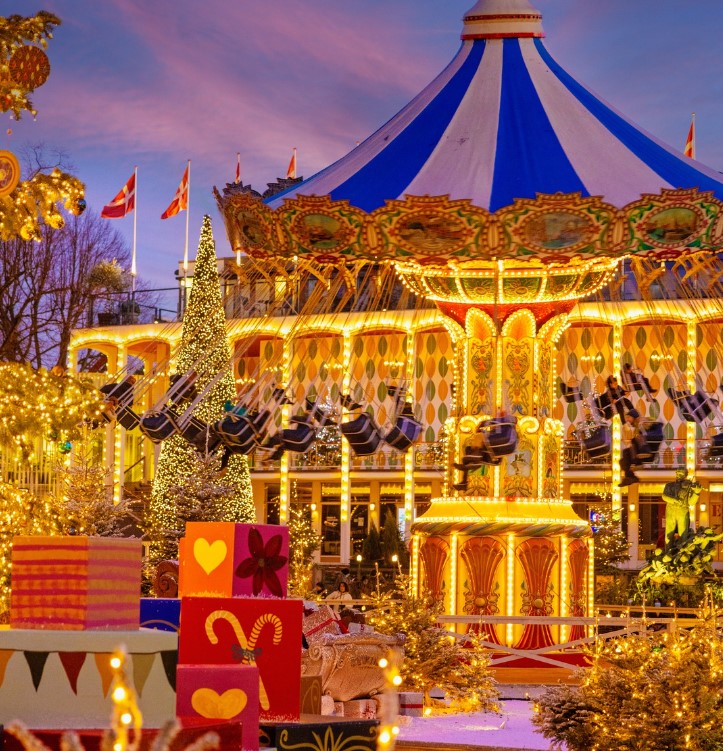
Recommended in our stories
Places in Switzerland our authors recommend
Market
St. Moritz Christmas Market, Plazza da Scoula, 7500 St. Moritz, Switzerland
Open in Google Maps ↗In Martin Eriksen (Danemaq)’s story · Europe’s Best Christmas Markets
Don’t miss
Don’t miss in Switzerland
Must visit · Valais to Engadin
The Glacier Express rail journey
An 8-hour panoramic train journey from Zermatt to St. Moritz across the Swiss Alps — crosses 291 bridges, 91 tunnels, climbs to 2,033m at the Oberalp Pass. Panoramic windows curve into the ceiling.
Among the world's great train journeys, and Switzerland's signature one.
Reserve seats 1-2 months ahead. Excellence Class includes meals; standard class still extraordinary.
Largest glacier in the Alps
Aletsch Glacier viewpoint at Bettmerhorn
The 23km Aletsch Glacier — UNESCO-listed, Europe's longest. Take the cable car from Bettmeralp to the Bettmerhorn (2,647m) for the panorama. Walk along the high path toward Eggishorn for the full sweep.
Cable cars run year-round. The glacier is visibly receding — visit while you still can.
Experiences
Experiences in Switzerland locals love
- The Glacier Express scenic train (Zermatt to St. Moritz)
- Hiking the Eiger Trail beneath the North Face
- Lake Geneva wine villages and Lavaux vineyard terraces
- Skiing in Verbier, St. Moritz or Zermatt
- Riding the Bernina Express through the Alps
Insider tips
Insider tips for Switzerland
- Appenzell — eastern Switzerland's storybook villages
- The Aletsch Glacier walk (the Alps' longest glacier)
- Ticino — Italian-speaking Switzerland with Mediterranean food
- Andermatt — central Alpine village with high-altitude trails
- Schynige Platte scenic railway — Jungfrau views, fewer crowds
- Take the boat across Lake Geneva from Lausanne to Évian
Our picks
Switzerland’s best restaurants, hotels and museums
Checked against Michelin, the venue or Google.
Schloss Schauenstein
Michelin
$$$$ (CHF 380+ tasting menu)
Andreas Caminada's three-Michelin-star castle restaurant in tiny Fürstenau village — Caminada also runs the IGNIV restaurants in Zurich, Bad Ragaz, St. Moritz, and Bangkok. Tasting menu only.
Hauptstrasse 32, 7414 Fürstenau (Graubünden)Website ↗
Restaurant Stucki
Michelin
$$$$ (CHF 280+ tasting menu)
Two Michelin stars in Basel — chef Tanja Grandits's vegetable-forward, color-themed menus (each menu literally focuses on one color). Quietly one of Switzerland's most original kitchens.
Bruderholzallee 42, 4059 BaselWebsite ↗
Kronenhalle
Traditional
$$$ (CHF 80-160 per person)
Zürich's 1924 brasserie where Joyce, Picasso, Chagall, Giacometti all ate — and their works hang on the walls (real Picassos and Chagalls). The Zürcher Geschnetzeltes is the signature dish.
Rämistrasse 4, 8001 ZürichWebsite ↗
Whymper-Stube
Traditional
$$$ (CHF 40-80 per person)
Zermatt's fondue and raclette institution since the 1850s, in the Hotel Monte Rosa — where Edward Whymper stayed before the first ascent of the Matterhorn in 1865. Cheese fondue done properly.
Bahnhofstrasse 80, 3920 ZermattWebsite ↗
Badrutt's Palace Hotel
Luxury
CHF 1,800-5,500
St. Moritz's 1896 Belle Époque palace — Le Grand Hall, the Polo Cup at Lake St. Moritz, where royalty winters.
Closed in shoulder seasons; refresh dates posted online.
Via Serlas 27, 7500 St. MoritzWebsite ↗
The Dolder Grand
Luxury
CHF 1,200-3,500
Norman Foster-renovated 1899 mountain resort overlooking Zürich — 4,000m² spa, golf course on the hillside, two Michelin-starred restaurants. 10 minutes from central Zürich by tram.
Kurhausstrasse 65, 8032 ZürichWebsite ↗
Mont Cervin Palace
Luxury
CHF 800-2,500
Zermatt's grand resort opposite the train station — Leading Hotels of the World, in-house ski guides, three restaurants. Direct Matterhorn views from select rooms.
Bahnhofstrasse 31, 3920 ZermattWebsite ↗
7132 Hotel
Boutique
CHF 600-1,500
Peter Zumthor designed the architecturally legendary Thermal Baths in 1996; the hotel attached now is one of the most architecturally ambitious in Switzerland. Tadao Ando, Kengo Kuma, and Thom Mayne each designed suite categories.
7132 Vals (Graubünden)Website ↗
Fondation Beyeler
Modern & contemporary art
Renzo Piano-designed museum housing Hildy and Ernst Beyeler's collection — Monet's water lilies, Rothko, Giacometti, Cézanne. Set in a sculpture park with views across the Rhine plain.
Baselstrasse 101, 4125 Riehen (near Basel)Website ↗
Kunsthaus Zürich
Swiss & European art
Switzerland's largest art museum — major Giacometti, Hodler, and Munch holdings, plus the David Chipperfield extension opened 2021. The Bührle collection has been controversial.
Heimplatz 1, 8001 ZürichWebsite ↗
Olympic Museum Lausanne
Olympic history
The IOC's home museum on Lake Geneva — Olympic torches from every Games since 1936, athlete equipment, the Olympic park sculptures outside. More engaging than its concept suggests.
Quai d'Ouchy 1, 1006 LausanneWebsite ↗
On the world lists
Editor’s picks for Switzerland
A few additions for travelers planning Switzerland at the highest end:
The Dolder Grand, Zürich
A fairytale-castle hotel above the city — one of Europe's best hotel spas (4,000 sqm Foster + Partners spa).Beau-Rivage Palace, Lausanne
On the shore of Lake Geneva since 1861 — six restaurants and bars, including Anne-Sophie Pic's two-Michelin-starred restaurant.Schauenstein Schloss Restaurant Hotel, Fürstenau
A 1,200-year-old castle in Graubünden with chef Andreas Caminada's three-Michelin-starred restaurant.Fondation Beyeler, Riehen (near Basel)
Renzo Piano's pavilion outside Basel — one of Europe's best Picasso-Cézanne-Monet-Rothko collections.The Park Gstaad, A Four Seasons Hotel
A 2026 opening — Four Seasons' first alpine European hotel.Glacier Express + Bernina Express
The two most famous Alpine train journeys — book the Excellence Class on the Glacier Express for the guaranteed window seat and five-course meal.
Through the year
Switzerland festivals and what’s on
July
Montreux Jazz Festival
Legendary lakeside music festival on Lake Geneva
February/March
Fasnacht
Basel's spectacular three-day pre-Lent carnival
April
Sechseläuten
Zürich's spring festival, climaxing with burning the Böögg snowman
Questions
Switzerland FAQ
Do I need a visa to visit Switzerland?
Switzerland is in the Schengen Area (since 2008) but not in the EU. EU, EEA, and Swiss citizens enter freely. Citizens of the US, UK, Canada, Australia, Japan, and around 60 other visa-exempt countries can stay up to 90 days within any 180-day period across the Schengen Area.
From late 2026, those travelers will need an ETIAS online authorization (around €7, valid three years) before flying. Russian and Chinese passport holders need a Schengen short-stay visa via VFS Global or the Swiss consulate.
Travel insurance should cover at least €30,000 medical across the Schengen area. Switzerland uses the Swiss franc (CHF), not the euro — though euros are accepted at many tourist places, change is typically given in francs at a poor rate. Passport must be valid 3 months beyond departure.
Is the Swiss Travel Pass worth it?
It depends on your itinerary and pace. The Swiss Travel Pass gives unlimited travel on trains, buses, boats, and many city public transport networks, plus free entry to 500+ museums, for 3 / 4 / 6 / 8 / 15 consecutive days.
Worth it if you're moving cities every 1–2 days (Zurich → Lucerne → Interlaken → Zermatt → Lausanne pattern) and want simplicity. Less worth it if you're basing in one region (e.g. only Jungfrau or only Zermatt) — a regional pass like the Jungfrau Travel Pass or Peak Pass is often cheaper.
Many Swiss residents use the Half Fare Card (CHF 120/month) which halves all tickets — better for travelers staying longer or moving less. Important 2026 change: Eiger Express and Harder Kulm now only get partial discounts, no longer free with the pass. Buy passes through the SBB app or Rail Europe.
Zermatt or Interlaken — which mountain base?
Zermatt for the iconic Matterhorn — a car-free Alpine village dominated by the 4,478m peak. The Gornergrat railway climbs to a viewpoint that puts the Matterhorn directly in front of you (it's the photo you've seen).
For the high-altitude experience, the Matterhorn Glacier Paradise cable car reaches 3,883m.
Hiking from late June to October, skiing November to April. Interlaken is the gateway to the Jungfrau region — three iconic peaks (Eiger, Mönch, Jungfrau), the famous Lauterbrunnen Valley with its 72 waterfalls, car-free villages of Wengen and Mürren, and the Jungfraujoch at 3,454m ("Top of Europe").
More varied scenery and easier to base for day trips. Recommended split: 2 nights Zermatt + 3 nights Interlaken if you have a week, plus 2 nights in a city (Lucerne or Zurich).
When is the best time to visit Switzerland?
Two completely different trips. June to mid-September for hiking, lakes, and high-altitude trails — wildflowers in June, warm enough for lake swimming in July–August, mountain refuges and cable cars all running.
July–August are peak (busy, expensive). Mid-December to mid-March for skiing — Zermatt, Verbier, St. Moritz, the Jungfrau region.
Christmas markets in Zurich, Basel, and Lucerne run late November through December. Shoulder seasons (mid-September to October, late March to May) are a tradeoff: lower prices, smaller crowds, but many mountain cable cars and high-altitude trails close for maintenance — check what's open for your chosen region before booking.
Avoid April and early November — neither ski nor hiking conditions are reliable. Weather changes fast in the mountains; pack layers in every season.
How much should I budget for Switzerland?
Switzerland is genuinely expensive — usually the most expensive country in Europe.
Realistic 2026 daily budgets per person: budget (hostels, supermarket meals, 2nd class trains, free hiking) CHF 120–180; mid-range (3-star hotel, restaurants, Swiss Travel Pass, occasional cable car) CHF 280–400; comfortable (4-star hotel, restaurants, all-in mountain excursions including Jungfraujoch) CHF 500–800+.
Real ways to save: cook your own breakfasts from Coop or Migros (a CHF 25 hotel breakfast = lunch elsewhere); book mountain restaurants ahead for fixed-price hiking lunches; use SBB Saver Day Pass for unlimited travel on chosen days (cheaper than peak fares); stay in mountain villages (Wengen, Mürren, Grindelwald) rather than Zermatt itself for the same mountain access at lower prices.
A coffee runs CHF 5; a basic sit-down meal CHF 25–40.
Capital BernTime CET (UTC+1)Plugs Type J (230V)
Locals Insider
Spotted a mistake? Know a better place?
We check every guide against official sources, but places change. Tell us what’s out of date, or the spot you’d send a friend to.
Tell us about itMore countries
Is Switzerland for you?
You want jaw-dropping alpine scenery, infrastructure that just works, and the world's best train system delivering you to villages, lakes and peaks effortlessly. Switzerland is expensive but rewards every franc spent.
You’re
The Alpine Aesthete
Adventure travelers
Couples
Skiers
Nature lovers
Multi-generational families
Walkability9
Getting around10
Safety10
Weather6
Value for money1
LGBTQ+ friendly8
Crowds6
Digital nomads7
When to go
Best time to visit Switzerland
From a local
Locals in SwitzerlandLocals here
All authors
Alex Copenguy
Alex Copenguy, founder of Localsinsider.com, loves exploring cities on foot, finding cozy, historic boutique hotels, and avoiding tourist spots.
He's passionate about Scandinavian simple yet functional design, contemporary art, and enjoys mussels with fries and cold prosecco. A fan of saunas and banyas, he always seeks out a good male massage when traveling.
Hannah Forrest
Hannah Forrest is a travel and marketing writer with over 11 years of experience crafting contentfor brands like Best Western and Apartments.com.
She's also a published author and a contributor to Chicken Soup for the Soul.
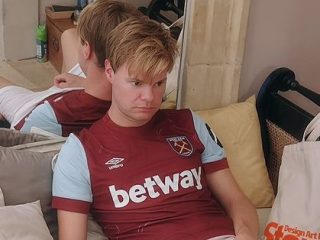
Martin Eriksen (Danemaq)
Martin Eriksen, editor at LocalsInsider.com, was born and raised in Thy, Northern Jutland, Denmark.
He studied pharmacy in Copenhagen and has since traveled extensively, living and working in different parts of the world as a digital nomad before settling in Malta.
With a scientific background and a keen interest in history, social sciences, and local cultures, he combines an analytical perspective with firsthand travel experiences and insights gained from living abroad.
12 places on the map
Elsewhere on Locals Insider


 Martinique
 Romania
 Scotland