Morocco Travel Guide: Marrakech, Fez, Sahara & Where to Go 2026
Morocco is the country at the western edge of the Arab world that has compounded its appeal over the past two decades — Marrakech's medina alive at every hour, the Atlas Mountains rising directly behind the city, the Sahara at Erg Chebbi and Erg Chigaga, the Atlantic coast at Essaouira and Taghazout, the imperial cities of Fes (the medieval medina UNESCO-listed) and Meknes. La Mamounia in Marrakech is the legend; Royal Mansour the most discreet; the dozens of restored riads (Riad Yasmine the most photographed) define mid-range luxury. The food culture runs from tagines and couscous to the medieval medina street food.
Our Morocco coverage focuses on the Marrakech-Atlas-desert classic itinerary, the riad versus resort decision (riads are the soul; resorts are the comfort), and the Fes side trip most travelers underbook.
The travel personality: The Sensory Wanderer
Quick facts
Live right now
Best time to visit
| Season | Why go |
|---|---|
| March–May, September–November | Sahara in summer is genuinely dangerous; coast stays moderate |
| February, December | Shoulder season — fewer tourists, often cheaper, weather still good |
| June–August (very hot inland) | Off-season — quiet, best deals, plan around weather |
Top cities to visit
Experiences you'll probably love
- Stay in a Marrakech riad with rooftop dinner
- Sahara overnight camel trek (Merzouga or Zagora)
- Atlas Mountains hike from Imlil
- Cooking class with Marrakech home cook
- Surf and yoga in Taghazout
Not many tourists know about…
- Volubilis Roman ruins near Meknes
- Dakhla — desert kitesurf paradise (southern Morocco)
- Aït Benhaddou — Game of Thrones filming kasbah
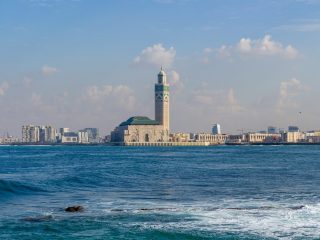
- Hassan II Mosque in Casablanca at sunset
- Akchour waterfalls near Chefchaouen
- Skoura palm oasis and Ouarzazate
If you visit only once, make it this
Marrakech's main square at sunset — snake charmers and storytellers in the day, food stalls and gnaoua music after dark. UNESCO recognized it for the intangible cultural heritage of the storytelling tradition. Watch from a rooftop café (Le Grand Balcon du Café Glacier) for the panoramic view.
Be prepared for the energy. Cash for the food stalls.
Where to walk & breathe
The orange-red dunes near Merzouga — 150 meters tall, reached by 4WD and then camel from M'Hamid or Merzouga villages. Stay overnight at a desert camp (basic to luxury); sunset on top of a dune, breakfast as the sun rises over the dunes the next day.
10-hour drive from Marrakech (or fly to Errachidia). Best October-April.
Museums worth your time
Studio KO-designed building (2017) next to the Jardin Majorelle that YSL famously rescued. The terracotta-brick facade, the YSL design archive across 50 years.
Visit website →Painter Jacques Majorelle's 1923 garden — the cobalt-blue Art Deco villa (Majorelle Blue, the named color), the cactus collection, the Berber Museum inside the villa with Berber jewelry and costumes.
Visit website →19th-century palace with intricate carved-cedar ceilings, zellige-tile courtyards, the harem section. The most accessible introduction to Moroccan royal architecture.
The Insider's Edit
Morocco had an extraordinary year on the world's rankings — additions worth noting:
Named Best Hotel in Africa — individual riads with rooftop pools.
The legend, refurbished by Patrick Jouin — the gardens alone are worth the stay.
A six-suite riad-of-the-moment in the Medina with a heavily curated mid-century interior — favourite of art collectors.
One of Africa's best contemporary spaces, in a Marrakech sculpture-park setting.
Skip Merzouga — Erg Chigaga's M'hamid camps (Dar Ahlam, Erg Chigaga Luxury Camp) are quieter and more remote.
Where to eat
The Mamounia houses three Michelin-Guide-recognized restaurants — Le Marocain (Moroccan, in a garden tent), Pierre Hermé patisserie, the Italian Asian. Reservations open to non-guests.
Rooftop modern-Moroccan in the medina — the menu mixes Moroccan technique with international flavors. Lunch with views across the Atlas Mountains in clear weather.
Cultural-meeting-spot restaurant in the Fes medina — the famous camel burger, traditional storytellers in the evening, cooking classes. Three locations across Morocco.
Garden restaurant inside a restored riad in the medina — Moroccan and Mediterranean menu, the green palette consistent with the name. Lunch escape from the souks.
Where to stay
Marrakech's most legendary hotel since 1923 — the Jacques Garcia-restored gardens, the multiple pools, the spa, the historic Churchill-era atmosphere. Where royalty stays in Marrakech.
King Mohammed VI's commission — 53 private riads (each with private pool and rooftop), connected by underground tunnels for staff. The most discreet luxury in Morocco.
The Instagram-famous riad with the green-tiled rectangular pool — only 8 rooms, in the heart of the medina. Books months ahead.
Richard Branson's Atlas Mountain kasbah — restored Berber fortress 90 minutes from Marrakech, with Atlas peak views and Berber craftsmanship throughout.
Realistic daily budget
Per person, per day. Excludes flights. Peak season can run 20-40% higher.
Travel safety & inclusivity
Safety scores reflect UK FCDO & US State Department travel advisories. LGBTQ+ scores reflect Equaldex and ILGA-Europe rankings. Both refreshed quarterly.
Major festivals
Need a visa for Morocco?
Most travelers need an eVisa or travel authorization to enter Morocco. Apply online in minutes through our trusted partner:
Apply for your Morocco eVisa →Powered by evisas.com · We'll open your nationality-specific requirements page in a new tab.
Partner link — Locals Insider may receive a small commission at no extra cost to you. Always confirm the latest requirements with the official embassy.
Not sure if Morocco is right for your next trip? We'll compare 53 destinations against your travel style. Take our country matcher quiz →
Frequently asked questions about Morocco
Marrakech or Fes — which should I visit first?
Both, ideally, on the same trip. Marrakech is the showy one — the pink-walled medina, Jemaa el-Fnaa square with its snake charmers and food stalls, Majorelle Gardens, the souks, and the best base for the Atlas Mountains and Sahara excursions. It's louder, more tourist-driven, and easier as a first introduction. Fes is the historical heart — the 9th-century medina of Fes el-Bali is the world's largest car-free urban area, with 9,000 alleys, the Chouara tanneries, and Al-Qarawiyyin (the world's oldest continuously operating university). Riads in Fes offer better value and architectural depth than Marrakech for the same price. Classic route: fly into Marrakech, end in Fes, fly home from Fes. Seven days lets you do both plus the desert.
Is the Sahara excursion worth doing?
If you've come all the way to Morocco — yes, but pick the right desert. Erg Chebbi (near Merzouga) is the iconic one — the rose-gold dunes you imagine, accessed via a long 9–10 hour drive from Marrakech (usually split into two days through the Atlas Mountains and Ouarzazate, with a stopover at Aït Benhaddou's Hollywood-favourite kasbah). Erg Chigaga (near Zagora) is closer to Marrakech (6–7 hours), wilder, less developed. A 3-day desert tour is standard: one night in a kasbah, one in a desert camp with sunset camel ride and starlit dinner, drive back. Camps range from basic bivouacs ($20–40 with dinner) to luxury glamping ($100–500+). Skip the 2-day version — too much driving for one desert night.
When is the best time to visit Morocco?
March to May and September to November are the prime windows — temperatures 18–28°C in the imperial cities, gardens in bloom in spring, manageable desert heat. Spring is particularly good for the High Atlas, where wildflowers and snow on the peaks coexist. Summer (June–August) is punishing inland — Marrakech and Fes regularly hit 40°C+, and the desert is genuinely dangerous in midday. Coastal Essaouira stays cool year-round (a windy 22°C even in August) and is a popular summer escape. Winter (December–February) is mild on the coast and in the cities (12–18°C) but cold at night and in the High Atlas — perfect for a quiet trip to Marrakech and Fes, riad fireplaces, and Berber villages dusted with snow.
Should I stay in a riad or a hotel?
Riad — almost always. A riad is a traditional Moroccan house built around a central courtyard or fountain, hidden behind plain doors in the medina. The experience is the architecture: tiled patios, rooftop terraces, intimate service, often family-run, breakfast included. Fes offers Morocco's best riad value (luxury from €60–120 a night), with Marrakech a close second. Hotels make sense only if you need pool access for kids, accessibility, or you're staying in the modern Gueliz/Hivernage districts outside the medina for business or convenience. Top-end choices: Riad Fès (Relais & Châteaux), Royal Mansour Marrakech, Riad Yasmine for the photogenic budget pick, and Riad Cherifa in Chefchaouen for mountain-town charm. Book riads through the property directly when possible — better rates than aggregators.
Do I need a visa to visit Morocco?
Citizens of most EU countries (including all Nordics, France, Germany, Italy, Spain), the UK, US, Canada, Australia, Japan, and around 70 other countries can enter Morocco visa-free for up to 90 days. No advance application, no fee — just a passport stamp on arrival. Passport must be valid for at least 6 months from entry. Russian citizens can apply for a Moroccan visa through the Moroccan consulate or via the e-Visa portal launched in 2022 — the e-Visa typically takes 3–5 working days and costs around $44. Indian and South African citizens may also use the e-Visa. Morocco is not in the Schengen Area — Schengen visas don't cover it. Have an onward ticket and accommodation address ready for the border officer.
Locals Insider's Articles About Morocco
Articles in this section are written by Locals Insider editorial team. Want to share your experience about Morocco? Email us at hello@localsinsider.com.