

Vietnam Travel Guide: Hanoi, Ho Chi Minh, Hoi An & Where to Go in 2026
Vietnam runs the full length of Southeast Asia and changes character every few hundred kilometers. Hanoi in the north is the colonial-era capital — old quarter alleys, the Sofitel Metropole's century-old Bamboo Bar, cha ca grilled at your table. Saigon is the louder, hotter, more entrepreneurial south — chef Peter Cuong Franklin's Michelin-starred Anan Saigon in the old market, the Reverie's baroque suites, the war history at the Remnants Museum. Between them: Hội An's lantern-lit old town, Đà Nẵng's beaches, Huế's imperial citadel, and Hạ Long Bay's karst islands.
Our Vietnam coverage spans 11 articles — Hanoi neighborhoods, Saigon's rooftop bars, the Con Dao archipelago for the most secluded resorts, and the practical itinerary planning that makes Vietnam work as a 2-week first trip.
The travel personality: The Soulful Explorer
Quick facts
Live right now
Best time to visit
| Season | Why go |
|---|---|
| October–April (dry, cooler) | Vietnam spans three climate zones — north has true winter, south is always warm |
| May, September | Shoulder season — fewer tourists, often cheaper, weather still good |
| May–October (south wet) | Off-season — quiet, best deals, plan around weather |
Top cities to visit
Experiences you'll probably love
- Halong Bay overnight junk cruise
- Hanoi street food walking tour
- Sapa hiking and homestay with H'mong families
- Hoi An's lantern festival each full moon
- Mekong Delta floating market day trips
Not many tourists know about…
- Ninh Binh — Halong Bay on land, fewer crowds
- Phong Nha caves — world's largest cave systems
- Con Dao islands — historic and untouched
- Hue — former imperial capital between Hanoi and HCMC
- Ba Be Lake — northern Vietnam's quiet alternative
- Da Nang — modern beach city between Hanoi and HCMC
If you visit only once, make it this
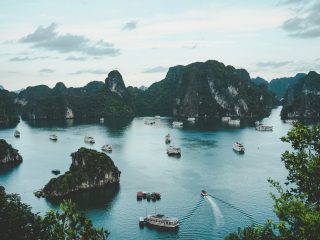
1,600 limestone karst islands rising vertically from emerald water in the Gulf of Tonkin — the postcard image of Vietnam. Skip day trips and stay on the bay overnight; the boats anchor in quiet coves after the tour buses leave, and sunrise tai chi on deck with the karsts emerging from mist is the moment you came for.
3.5 hours from Hanoi. Skip June-September typhoon season. Bhaya or Paradise Elegance for the better operators.
Where to walk & breathe
Home to Sơn Đoòng — the world's largest cave passage (5.5km long, 200m tall). The 4-day expedition trek requires booking with Oxalis a year ahead. Accessible alternatives in the same park: Paradise Cave and Phong Nha Cave, walkable in half a day.
Fly to Đồng Hới from Hanoi or HCMC. Phong Nha town has good guesthouses.
Museums worth your time
Vietnamese women through the wars and the 54 ethnic groups — moving exhibits on marriage customs, traditional costumes, and women's roles in the resistance wars.
Visit website →Saigon's confronting record of the Vietnam War from the Vietnamese perspective — captured American aircraft in the courtyard, photojournalist archives, Agent Orange exhibits. Essential and difficult.
Hanoi's leading independent contemporary art gallery in a French colonial villa. Where the city's contemporary artists actually congregate.
Visit website →The Insider's Edit
A few additions for the Vietnam-bound traveler:
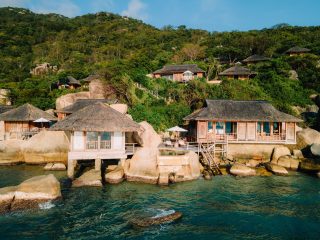
Beach and hilltop villas reached only by boat from Nha Trang — private rock pools and one of Asia's best honeymoon picks.
Bill Bensley's theatrical reimagining of a 1920s opera house — the most styled new hotel in Hanoi.
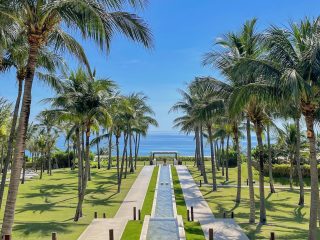
Beachfront villas with private pools on the central coast.
A French colonial building with Vietnamese painting, lacquer, and silk works from the 11th century to contemporary.
Frozen in 1975 — tank-crash gates, war-room map tables, presidential helicopter on the roof.
Where to eat
Vietnam's first Michelin-starred restaurant — chef Peter Cuong Franklin's elevated Vietnamese street food in the old Tôn Thất Đạm market. The pho with foie gras, the rooftop bar Nhau Nhau.
Hanoi's most famous cha ca — turmeric-marinated fish grilled at your table with dill, peanuts, rice noodles. The Doan family has been making it since 1871.
Refined Vietnamese in a French colonial villa — the country's most accessible high-end Vietnamese for first-time visitors. Multiple Saigon locations.
Saigon's most sophisticated vegetarian restaurant — Buddhist-influenced cooking with lotus seeds, pickled bamboo, the famous green curry.
Where to stay
Hanoi's grande dame since 1901 — colonial-era hotel with the Bamboo Bar, Le Beaulieu French restaurant, the bomb shelter tour. The Hemingway/Chaplin/Maugham guest list is real.
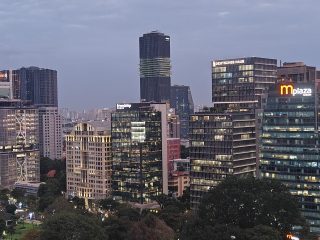
Leading Hotels of the World — Italian baroque interiors at the top of Times Square Saigon. The Royal Pavilion suite the most photographed hotel room in Vietnam.
Vietnam's remote Con Dao archipelago — pool villas on a crescent beach, marine reserve directly offshore, no other resorts. The most secluded Six Senses in Asia.
Opened 2024, refreshed 2025 — 5-star resort on Mui Ne's beach with the red sand dunes nearby. Three pools, family rooms make it suitable for multi-generational groups.
Realistic daily budget
Per person, per day. Excludes flights. Peak season can run 20-40% higher.
Travel safety & inclusivity
Safety scores reflect UK FCDO & US State Department travel advisories. LGBTQ+ scores reflect Equaldex and ILGA-Europe rankings. Both refreshed quarterly.
Major festivals
Need a visa for Vietnam?
Most travelers need an eVisa or travel authorization to enter Vietnam. Apply online in minutes through our trusted partner:
Apply for your Vietnam eVisa →Powered by evisas.com · We'll open your nationality-specific requirements page in a new tab.
Partner link — Locals Insider may receive a small commission at no extra cost to you. Always confirm the latest requirements with the official embassy.
Not sure if Vietnam is right for your next trip? We'll compare 53 destinations against your travel style. Take our country matcher quiz →
Frequently asked questions about Vietnam
North, central, or south Vietnam — where should I focus my trip?
If you only have one or two weeks, pick two regions and connect them with a domestic flight. The north (Hanoi, Halong Bay, Sapa, Ha Giang) is best from November to April — cool, dry, mountainous, deep Vietnamese culture, and the country's most cinematic landscapes. Central Vietnam (Hoi An, Da Nang, Hue) is best February to August — old imperial capital, lantern-lit Hoi An nights, the country's best beach weather. The south (Ho Chi Minh City, Mekong Delta, Phu Quoc) is best December to April — chaotic energy, French colonial layers, floating markets. A classic 14-day route: 3–4 days Hanoi/Halong, 4 days Hoi An, 3 days Saigon/Mekong. Skip the temptation to do all three in 10 days.
Do I need a visa to visit Vietnam?
Citizens of around 90 countries — including France (45 days, extended to March 2028), Germany, Italy, Spain, the UK, Japan, South Korea, and most Nordic countries — can enter Vietnam visa-free for short stays (15–45 days depending on nationality). Citizens of countries not on the visa-exemption list, including the US, Canada, Australia, India, and Russia, need either an e-Visa (90 days, single or multiple entry, applied online via the official Vietnamese government portal, around $25–50) or a traditional embassy visa. Always check current rules before booking flights — Vietnam updates its visa policy frequently. Your passport must be valid for at least 6 months from the date of entry, and you'll need proof of onward travel.
Is Halong Bay still worth visiting, or is it too crowded?
Halong Bay is still extraordinary — 1,600 limestone karsts rising out of emerald water, a UNESCO site for good reason — but the day-trip routes from Hanoi are now overcrowded with junk boats and floating tourist circuits. Two ways around this: book an overnight cruise (not a day trip) so you're on the water at dawn after the day boats leave, or skip Halong entirely and head to Lan Ha Bay just south, which has equally dramatic karst scenery and a fraction of the visitors. Lan Ha is accessed via Cat Ba Island. For the truly off-the-radar option, Bai Tu Long Bay further north is what Halong looked like 20 years ago. Avoid July–August: rough seas often cancel cruises.
Where can I eat the best food in Vietnam?
Vietnamese food is regional — each major city has its own dish you can't get right anywhere else. Hanoi for pho bo (the original beef pho, especially at Pho Gia Truyen on Bat Dan), bun cha (grilled pork with noodles — try the spot Obama and Anthony Bourdain made famous, Bun Cha Huong Lien), and egg coffee invented at Cafe Giang. Hue for bun bo Hue — the country's most complex noodle soup. Hoi An for cao lau, the local noodle dish you literally can't replicate elsewhere (the water comes from one specific Cham-era well). Saigon for the southern, sweeter, more herb-heavy version of everything, plus banh mi (Banh Mi Huynh Hoa for the iconic one). Street food is safer than most restaurants — busy stalls with high turnover, watch the cook, follow the locals.
When is the absolute worst time to visit Vietnam?
Two windows to avoid if you can. September to November in central Vietnam — typhoon season hits Hoi An, Hue, and Da Nang hardest, often causing flooding that closes riverside Hoi An and disrupts flights. The week of Tet (Vietnamese Lunar New Year), which falls late January or February — much of the country shuts down for family celebrations, intercity transport gets impossible, and prices spike. Book around it or visit elsewhere. The deep summer (July–August) brings heavy rain to both north and south but is fine in central Vietnam and Phu Quoc. If the dates are flexible, late October to early December and March to early May are the sweet spots for a north-to-south itinerary in one trip.
Locals Insider's Articles About Vietnam
Articles in this section are written by Locals Insider editorial team. Want to share your experience about Vietnam? Email us at hello@localsinsider.com.