
Egypt Travel Guide: Cairo, Luxor, Red Sea & Where to Go in 2026
This is your insider guide to modern Egypt. Discover top boutique stays, stylish restaurants, scenic cruises, and unique local spots worth seeing.
Egypt is the country whose history runs continuously for 5,000 years. Cairo is the megacity built on layers — Coptic Cairo, Islamic Cairo, the downtown khedivial-era streets, and the brand new Grand Egyptian Museum opened 2024 to house the Tutankhamun collection in proper modern conditions. The Pyramids of Giza sit on the city edge; Mena House lets you watch them from your hotel window. Then the country flows south: Luxor (Karnak temple, Valley of the Kings, the Steam Ship Sudan still cruising the Nile as it did in Agatha Christie's day), Aswan (Old Cataract Hotel, Philae temple, the High Dam), then either Nile cruise or felucca camping back north.
Our Egypt coverage focuses on the new Grand Egyptian Museum (the trip's headline since its 2024 opening), the slow-Nile felucca and Steam Ship Sudan experiences, and the practical itinerary work that makes Egypt feel manageable rather than overwhelming.
The travel personality: The History Pilgrim
Quick facts
Live right now
Best time to visit
| Season | Why go |
|---|---|
| October–April (cooler) | Summer in Upper Egypt is brutal — don't do Luxor in July |
| May, September | Shoulder season — fewer tourists, often cheaper, weather still good |
| June–August (very hot, 40°C+) | Off-season — quiet, best deals, plan around weather |
Top cities to visit
Experiences you'll probably love
- Pyramids of Giza + the Grand Egyptian Museum
- Nile cruise Luxor to Aswan
- Valley of the Kings tombs
- Diving in the Red Sea reefs
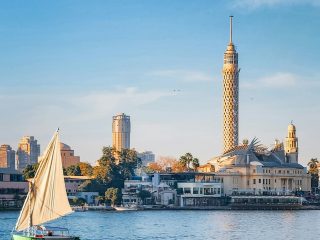
- Felucca sailing on the Nile at sunset
Not many tourists know about…
- White Desert overnight camp (Bahariya)
- Siwa Oasis — Berber culture deep in the western desert
- Dahab — quieter Red Sea diving and bedouin culture
- Alexandria for Mediterranean Egyptian history
- Saqqara stepped pyramid — older than Giza
- Abu Simbel — Ramses II's mountain temples
If you visit only once, make it this
The last surviving Wonder of the Ancient World — the Great Pyramid (Khufu's), Khafre's, and Menkaure's, plus the Sphinx. Arrive at 8am opening, do the panorama point first for the postcard view, then enter the Great Pyramid (extra ticket). The Grand Egyptian Museum nearby (opened 2024) holds the Tutankhamun treasures.
Stay at the Mena House for sunrise pyramid views from your room. Tickets at the gate work; combo with GEM Museum recommended.
Where to walk & breathe
Three-day felucca journey from Aswan to Luxor — sleeping on deck under stars, stopping at Kom Ombo and Edfu temples, the slow rhythm of Nile river life that hasn't changed in 3,000 years. The defining slow-Egypt experience.
Book through reputable operators (Sun Boat IV, Steam Ship Sudan as luxury alternatives if camping isn't for you).
Museums worth your time
The most ambitious museum opening of the decade — opened 2024 next to the Pyramids. 100,000+ artifacts including the entire Tutankhamun collection (his death mask now permanently here). Day-long visit.
Visit website →The 1902 original museum on Tahrir Square — pre-GEM, this held the Tutankhamun collection. Still contains 120,000+ artifacts. Wonderfully chaotic compared to GEM's order.
One of the world's most important Islamic art collections — 100,000+ objects from across the Islamic world. Recently restored after a 2014 bombing.
The Insider's Edit
A few additions for travelers planning Egypt at the highest end:
Just 27 cabins, four nights between Luxor and Aswan — the quietest, most refined way to sail the Nile.
The oldest hotel on the West Bank — a mud-brick hideaway among the Tombs of the Nobles, with Egyptologists in residence.
Eco-lodge built from kershef salt-mud — no electricity, lit by beeswax candles, with private sailings on Siwa Lake at sunset.
The historic hotel beside Giza arranges sunrise breakfasts on the lawn before the site opens.
Fully opened 2025 next to the Pyramids — the complete Tutankhamun collection in one place for the first time.
Where to eat
Garden restaurant on the Nile in Zamalek — Mediterranean-Egyptian menu, the riverside terrace fills with Cairo's elite. Refreshed 2024.
Traditional Egyptian in a 1920s atmosphere — mahshi (stuffed vegetables), mulukhiyah (jute leaf stew), the famous fattah. Where Cairo intelligentsia takes visiting friends.
Cairo street food institution since 1959 — koshari, ful medames, ta'ameya (Egyptian falafel). The downtown location is the original; multiple branches now.
Egyptian seafood with Mediterranean accent — fresh catch from the Red Sea and Mediterranean. Multiple locations, the Cairo waterfront branch the most reliable.
Where to stay
150-year-old palace hotel directly facing the Pyramids — Khedive Ismail's hunting lodge built 1869. The gardens, the pool, the rooms with literal Pyramid views from bed.
Agatha Christie's hotel (where she wrote Death on the Nile) — 1899 colonial-era palace overlooking the Nile, the Elephantine Island view, sundowners on the Terrace. The most atmospheric Egyptian hotel.
Victorian-era hotel facing the Nile in Luxor — the gardens, the high-ceilinged rooms, the cucumber sandwiches at afternoon tea. Where Howard Carter announced the Tutankhamun discovery in 1922.
The 1885 paddle steamer Agatha Christie sailed on for Death on the Nile — only 23 cabins, 4-day Luxor-to-Aswan journey, period interiors, the Nile temples accessed without crowds.
Realistic daily budget
Per person, per day. Excludes flights. Peak season can run 20-40% higher.
Travel safety & inclusivity
Safety scores reflect UK FCDO & US State Department travel advisories. LGBTQ+ scores reflect Equaldex and ILGA-Europe rankings. Both refreshed quarterly.
Major festivals
Need a visa for Egypt?
Most travelers need an eVisa or travel authorization to enter Egypt. Apply online in minutes through our trusted partner:
Apply for your Egypt eVisa →Powered by evisas.com · We'll open your nationality-specific requirements page in a new tab.
Partner link — Locals Insider may receive a small commission at no extra cost to you. Always confirm the latest requirements with the official embassy.
Not sure if Egypt is right for your next trip? We'll compare 53 destinations against your travel style. Take our country matcher quiz →
Frequently asked questions about Egypt
Do I need a visa to visit Egypt?
Most travelers need a visa for Egypt, but the process is straightforward. Citizens of most EU/Nordic countries, the UK, US, Canada, Australia, Japan, and around 50 other countries can get a visa on arrival at Cairo, Luxor, Hurghada, and Sharm El-Sheikh airports — $30 USD cash at the bank kiosk before passport control (US dollars or euros, exact change preferred). The same nationalities can apply for an e-Visa in advance at visa2egypt.gov.eg — $25 single-entry or $60 multiple-entry, valid 30 days, processing 3 business days (apply 1+ week ahead). Russian and Chinese passport holders apply at the Egyptian consulate. Holders of a valid Schengen, US, or UK visa get a free 15-day visa on arrival. South Sinai exception: if your trip is exclusively in Sharm El-Sheikh, Dahab, Nuweiba, or Taba (15 days or less), you receive a free entry stamp at Sharm Airport — no visa needed. Passport valid 6 months beyond arrival.
When is the best time to visit Egypt?
October to April is the universal answer for inland Egypt — comfortable 18–28°C in Cairo and Luxor, ideal for the Pyramids, Karnak, and the Valley of the Kings. November to February is peak season (book Nile cruises 4–6 months ahead, expect crowds at major sites). March is the sweet spot — warm, sunny, before the heat, slightly thinner crowds. Avoid June to August — Luxor and Aswan regularly hit 40–45°C, even the locals struggle inland. May and September are workable for the heat-tolerant — prices drop 30–40%, sites half-empty. The Red Sea coast (Sharm, Hurghada, Marsa Alam) inverts this — beach season is April to October (warm sea, 25–35°C), sea breeze keeps it bearable even in summer. Khamsin sandstorm season (March–early May) is occasional in inland Egypt — usually a single bad day at a time, not a trip-killer.
How long do I need in Egypt and what's the classic route?
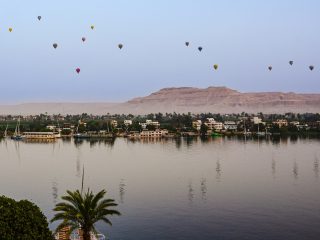
8–10 days minimum for the classic combination. Cairo (3 nights): the Pyramids of Giza and the Sphinx (go at 8am opening to beat tour buses), the new Grand Egyptian Museum (GEM, opened 2024 — the largest archaeological museum in the world, day trip from Cairo), the old Egyptian Museum at Tahrir Square for the original Tutankhamun treasures, Khan el-Khalili bazaar, Coptic Cairo. Nile cruise (4 nights): Luxor to Aswan via Edfu and Kom Ombo temples — book a small dahabiya boat (8–14 guests) over the large floating hotels for atmosphere. Luxor (built into the cruise): Karnak, Luxor Temple, Valley of the Kings (Tutankhamun's tomb costs extra and is worth it), sunrise hot-air balloon over the West Bank. Aswan (built into the cruise): Philae Temple, the High Dam, day trip to Abu Simbel (3-hour drive or short flight — the 4am departure is the rite of passage). Add 3–4 nights at Hurghada or Marsa Alam for Red Sea diving, or skip the beach extension.
Is Egypt safe to visit in 2026?
The tourist circuit (Cairo, Luxor, Aswan, Hurghada, Sharm El-Sheikh, Marsa Alam) is well-policed and routine for the 15+ million visitors arriving annually. The main practical issues are scams and persistent hassle, not violent crime. Expect persistent baksheesh requests at sites — small tips (10–20 EGP) to guards and tomb-keepers are standard; carry small notes. Decline unsolicited "help" at the Pyramids (the camel-ride scammers are aggressive — agree on a price IN WRITING beforehand). Use Uber or Careem in Cairo, not street taxis (Cairo street taxis won't use meters; either insist or use the apps). Avoid the western desert oasis routes beyond Bahariya without a tour operator (Foreign Office advisory for the Libyan border zone). The Sinai Peninsula north of the southern resorts is on most government advisories — stick to Sharm/Dahab/Nuweiba/Taba/St Catherine. Solo female travelers should expect attention and consider modest dress.
What should I know about money, tipping, and scams in Egypt?
Egypt uses the Egyptian pound (EGP) — €1 ≈ 55 EGP in 2026 after several devaluations. USD and EUR are accepted at the Pyramids ticket office, Nile cruise companies, and major hotels — but always at slightly worse rates than ATMs. ATMs at banks (CIB, NBE, QNB) work with international cards; avoid the standalone Euronet machines (high markups). Bring $200–300 USD cash for the visa, tips, and emergencies. Tipping (baksheesh) is universal and built into the economy — budget around 10–15% of your total trip cost for tips. Specific norms: Egyptologist guides $20–30/day, Nile cruise staff $10–15/day per person (split among staff via the boat), restaurant 10% (service often included as 12%), bathroom attendants 5 EGP, tomb guards 10–20 EGP for a photo. Common scams to know: the "the temple is closed, let me show you another" detour, fake papyrus shops, camel rides where the camel doesn't sit back down without an extra payment.
Locals Insider's Articles About Egypt
Articles in this section are written by Locals Insider editorial team. Want to share your experience about Egypt? Email us at hello@localsinsider.com.