Colombia Travel Guide: Cartagena, Medellín, Bogotá in 2026
Colombia’s blend of mountains, beaches, and bustling cities. LocalsInsider travel guide reveals Colombia’s best eco-friendly eateries, unique hotels, and more.
Colombia is the South American country that flipped the script — from cocaine-era pariah in the 1990s to one of the continent's most exciting travel destinations in the 2020s. Cartagena is the headline — South America's best-preserved colonial city, the walled old town at sunset, the Sofitel Santa Clara in a 17th-century convent. Bogotá is the cool, high-altitude capital with Leo (Latin America's 50 Best #1) and the Museo del Oro's pre-Columbian gold collection. Medellín is the city of eternal spring with the famous Comuna 13 escalators-and-street-art tour. Beyond the cities: the Cocora Valley's 60-meter wax palms, the Tayrona Caribbean coast, the Amazon at Leticia.
Our Colombia coverage focuses on Cartagena's design hotels, Bogotá's restaurant scene that's quietly become Latin America's best, and the coffee country (Eje Cafetero) most travelers miss.
The travel personality: The Reinvented Explorer
Quick facts
Live right now
Best time to visit
| Season | Why go |
|---|---|
| December–March, July–August (dry windows) | Andes have two dry/wet cycles per year, different from coastal |
| April, June, September | Shoulder season — fewer tourists, often cheaper, weather still good |
| April–May, October–November (rainy) | Off-season — quiet, best deals, plan around weather |
Top cities to visit
Experiences you'll probably love
- Salsa dancing in Cali (the world capital)
- Coffee farm stay near Salento
- Tayrona National Park beaches and jungle
- Cartagena's Ciudad Amurallada at sunset
- Lost City (Ciudad Perdida) 5-day trek
Not many tourists know about…
- Caño Cristales — the river of five colors (June–November)
- San Andrés and Providencia Caribbean islands
- Villa de Leyva — colonial weekend escape from Bogotá
- Guatapé and El Peñol rock
- Amazon trip from Leticia
- Barichara — beautifully preserved colonial town
If you visit only once, make it this
South America's best-preserved colonial city — pastel-colored townhouses, flowered balconies, fortified walls along the Caribbean. Walk the muralla (city walls) at sunset; cocktails at Café del Mar built right into the rampart.
Fly into Cartagena. Best December-April (dry season). Walking the walls is free.
Where to walk & breathe
The world's tallest palms — Colombia's national tree, the Quindío wax palm, growing 60 meters tall in a cloud forest valley in the coffee zone. The 12km loop hike through hummingbird-stocked forest and out to the open valley of palms is one of South America's defining walks.
20 minutes from Salento (Eje Cafetero). Jeep transport from Salento plaza. Best mornings before mist.
Museums worth your time
55,000 pieces of pre-Columbian gold from Colombia's indigenous cultures (Muisca, Quimbaya, Tairona) — the world's most important gold museum. The El Dorado raft sculpture is the icon.
Visit website →Fernando Botero's personal collection plus 87 Botero works — Picasso, Renoir, Chagall, Degas. Free admission. The most peaceful spot in La Candelaria.
Visit website →Once Medellín's most dangerous neighborhood, now an outdoor street-art museum reachable by escalators built into the hillside. Take a guided tour with a former resident — the story is the substance.
The Insider's Edit
A few additions for travelers heading beyond Cartagena's headline hotels:
Three connected 17th-century mansions in the walled city — frescoed ceilings, a fragment of an aqueduct in the lobby, and a rooftop pool overlooking the cathedral.
A 1946 landmark in Zona G — carved wood, hand-painted tiles, and Bogotá's best business-club breakfast.
The artist's personal collection (Botero's own work plus his Picassos, Renoirs and Mirós), donated to the city. Free admission.
A working cocoa-and-coffee estate near the Cocora Valley wax palms — just seven rooms, horseback rides through bamboo forest.
Where to eat
Chef Rob Pevitts's Caribbean-Colombian tasting menu — Latin America's 50 Best regular. The lionfish ceviche, the bocachico from the Sinú river, the dessert composed at the table.
Chef Leonor Espinosa's tasting menu through Colombia's biomes — Latin America's 50 Best #1 multiple years. Cohabitat menu uses 100% Colombian indigenous ingredients.
Chef Juan Manuel Barrientos's neuroscience-infused dining — chocolate mud for hands, the famous 'tree of life' course. Latin America's 50 Best, multiple international outposts.
Bogotá's most theatrical institution — an hour outside the city, a 1,500-seat ranch-meets-carnival. The bandeja paisa, the tropical fruit garnishes, the live music after midnight.
Where to stay
17th-century convent converted to a hotel — the central cloister with palm-shaded pool, original stone walls, the El Coro lobby bar. The most atmospheric Cartagena stay.
Restored colonial mansion-turned-Relais & Châteaux — 9 suites around a courtyard, walking distance to Plaza Santo Domingo. The most refined small hotel inside the walled city.
Bogotá's design hotel of the moment — the green vertical garden facade, two restaurants, the rooftop bar. Walking distance to Zona G food district.
Medellín's design hotel in Poblado — the rooftop infinity pool with Aburrá Valley views, Énvy nightclub. Walking distance to Parque Lleras.
Realistic daily budget
Per person, per day. Excludes flights. Peak season can run 20-40% higher.
Travel safety & inclusivity
Safety scores reflect UK FCDO & US State Department travel advisories. LGBTQ+ scores reflect Equaldex and ILGA-Europe rankings. Both refreshed quarterly.
Major festivals
Need a visa for Colombia?
Many travelers can enter Colombia visa-free, but it depends on your passport. Check your specific requirements:
Powered by evisas.com · We'll open your nationality-specific requirements page in a new tab.
Partner link — Locals Insider may receive a small commission at no extra cost to you. Always confirm the latest requirements with the official embassy.
Not sure if Colombia is right for your next trip? We'll compare 53 destinations against your travel style. Take our country matcher quiz →
Frequently asked questions about Colombia
Do I need a visa to visit Colombia?
Citizens of most EU/Nordic countries, the UK, US, Canada, Australia, Japan, Brazil, Argentina, Chile, Mexico, Russia, and around 90 other countries can enter Colombia visa-free for up to 90 days, extendable in-country to a total of 180 days per calendar year (apply at Migración Colombia office before the first 90 expires; cost around 120,000 COP). Check-Mig form is mandatory — submit at apps.migracioncolombia.gov.co/checkmig between 1 and 72 hours before arrival (free, takes 5 minutes, you'll need flight number and accommodation). Airlines check it at boarding. Yellow fever certificate required if arriving from a yellow-fever-endemic country, and strongly recommended if visiting Tayrona, the Amazon, Los Llanos, or the coffee region. Passport valid for the duration of stay (no specific buffer required, but 6 months is safest). Russian and Belarusian passport holders enjoy the same 90-day visa-free status. Overstays trigger fines (around $80–150 USD per overstay day, paid before exit).
When is the best time to visit Colombia?
Colombia sits on the equator, so it has no traditional summer/winter — instead, two dry and two wet seasons that vary by region. December to March is the universal sweet spot — dry on the Caribbean coast (Cartagena, Santa Marta, Tayrona), dry in Bogotá and the Andes, harvest season in the coffee region. July and August are the secondary dry window — slightly cooler, excellent for the coffee region and Medellín. September to November is the wet season — heavy afternoon rain on the Caribbean, the Amazon region floods, but lush green landscapes and the lowest prices of the year. April to May is similarly wet. Cartagena: warm year-round (28–32°C), humid, peak crowds Dec–Jan and Holy Week. Medellín earned its "City of Eternal Spring" name — 65–85°F (18–29°C) year-round at 1,500m elevation, no real bad time. Bogotá: cool year-round (10–20°C) at 2,640m — pack a jacket. Coffee region (Eje Cafetero): best December–March for the harvest. Carnival of Barranquilla: February (the world's 2nd-largest carnival).
What's the classic Colombia itinerary?
12–14 days minimum for the classic four-region combination, internal flights essential (Colombia is bigger than Texas + California combined; the bus rides are punishing). Bogotá (2 nights): La Candelaria (the colonial old town, Plaza de Bolívar, the Gold Museum/Museo del Oro — among the world's great museums), Monserrate funicular (3,152m views), Zona G and Chapinero for dining and nightlife. Medellín (3 nights): Comuna 13 (the famous transformation graffiti tour), the Metrocable for elevated barrio views, El Poblado for restaurants and nightlife, day trip to Guatapé and El Peñol (the colorful village and the famous rock you climb). Coffee Region (2 nights): stay at a coffee finca (Hacienda Venecia, Hacienda San José) near Salento — coffee tours, Valle de Cocora hike (wax palms, the world's tallest), the Andean cloud forest. Cartagena (3 nights): the UNESCO walled city (the Caribbean's most photographed colonial centre), Getsemaní for nightlife, Islas del Rosario day trip, Playa Blanca beach. Optional: Tayrona National Park (jungle-meets-Caribbean beaches), Santa Marta and Ciudad Perdida 4-day jungle trek, the Amazon (Leticia).
Is Colombia safe for tourists in 2026?
Colombia has transformed dramatically since the 2000s, but it still requires more situational awareness than most tourist destinations — and the safety picture varies enormously by region. The standard tourist circuit (Cartagena old town, Medellín El Poblado/Laureles, Bogotá La Candelaria/Zona G/Chapinero, Salento, the coffee fincas) is routine for the 5+ million tourists arriving annually. The risk drops further if you stick to daytime tourist zones and follow local etiquette. The US State Department lists Colombia at Level 3 "Reconsider Travel" as of 2026, but this is a country-wide blanket — specific tourist zones are safer than the headline suggests. Rules that locals actually follow: Uber/Cabify/Didi over street taxis everywhere (street taxi "paseo millonario" robbery scams persist, especially in Bogotá); avoid dating-app meetings in unfamiliar locations in Medellín (a serious recent rise in scopolamine and robbery cases); leave the iPhone in your pocket on the street; carry only the day's cash; avoid Comuna 8/13 at night even on the official tour. Avoid entirely: Cauca, Norte de Santander, Chocó's interior, the Venezuelan border, rural Putumayo (FARC-dissident and ELN guerrilla activity). Coca tea is legal and routine in the Andes — not the same as cocaine.
What about coffee culture, food, and money in Colombia?
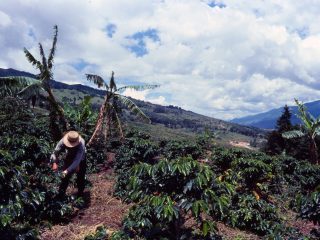
Colombia is the world's third-largest coffee producer and arguably the source of the most prized Arabica. The Eje Cafetero (Coffee Axis) — Quindío, Risaralda, and Caldas departments — is the UNESCO-listed coffee cultural landscape. Stay at a working finca (Hacienda Venecia, Hacienda San José, El Ocaso): 2-hour coffee tours show the entire process from bean to cup, costing around 60,000–90,000 COP. Food: bandeja paisa (Antioquian meat-and-beans plate — the Medellín signature), ajiaco (Bogotá chicken-corn-potato soup with capers and avocado), arepas everywhere (regional variants — the cheesy arepa de huevo from the coast is the best), ceviche on the Caribbean coast, lechona (slow-roasted stuffed pig), buñuelos (cheese fritters), arequipe (caramel), and the fruits — guanábana, lulo, maracuyá, curuba — that don't exist anywhere else. Aguardiente is the national spirit (anise-flavored, served as shots). Money: Colombian peso (COP) — €1 ≈ 4,200 COP in 2026. Cards work in cities; carry cash for street food, taxis, and small towns. ATM withdrawal limits 500,000–1,000,000 COP per transaction.
Locals Insider's Articles About Colombia
Articles in this section are written by Locals Insider editorial team. Want to share your experience about Colombia? Email us at hello@localsinsider.com.