South Africa Travel Guide: Cape Town, Kruger, Garden Route 2026
Discover South Africa with Locals Insider’s guides. Find out what to do and where to go, with recommendations of unique restaurants, boutique hotels and authentic neighbourhoods.
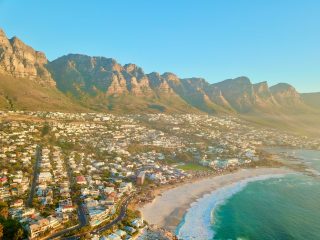
South Africa is the country at the southern tip of the continent that runs a full first-world infrastructure for tourism while delivering African experiences nowhere else can match. Cape Town is the city built on Table Mountain — Constantia wineries, Bantry Bay luxury hotels (Ellerman House the world's best), the Zeitz MOCAA museum at the V&A Waterfront. The Cape Peninsula day trip (Cape Point, Chapman's Peak, the penguin colony) is essential. The winelands beyond Stellenbosch and Franschhoek. The Garden Route along the Indian Ocean coast. And the Kruger safari — best done from private reserves adjacent (Sabi Sand, Timbavati, Thornybush) where Singita and Royal Malewane deliver world-class guiding and the off-road traversing rights that maximize wildlife sightings.
Our South Africa coverage focuses on the Cape Town-winelands-safari classic itinerary, the lodge-versus-camp safari decision, and the practical work that makes South Africa a great first African trip.
The travel personality: The Continental Explorer
Quick facts
Live right now
Best time to visit
| Season | Why go |
|---|---|
| May–September (safari peak — dry, animals concentrate) | Cape Town summer = December–February (opposite Kruger seasons) |
| April, October | Shoulder season — fewer tourists, often cheaper, weather still good |
| Variable by region | Off-season — quiet, best deals, plan around weather |
Top cities to visit
Experiences you'll probably love
- Safari in Kruger or private Sabi Sand reserve
- Wine tasting in Stellenbosch, Franschhoek, or Constantia
- Cage diving with great whites (Gansbaai)
- Whale watching in Hermanus (June–November)
- Drakensberg mountain hiking
Not many tourists know about…
- Wild Coast (Eastern Cape) — Xhosa villages and untouched beaches
- Karoo desert towns (Prince Albert, Graaff-Reinet)
- Madikwe private game reserve — malaria-free safari
- Tsitsikamma forest canopy and bungee
- Robben Island heritage day-trip from Cape Town
- Cederberg mountains for Bushman rock art
If you visit only once, make it this
From Cape Town, drive the Atlantic Seaboard to Cape Point — Hout Bay's fishing harbor, Chapman's Peak Drive's coastal corniche, Boulders Beach's penguin colony, Cape Point itself (where the warm Indian Ocean meets the cold Atlantic — actually slightly farther east at Cape Agulhas, but the Cape Point lighthouse is the iconic point). End at a Constantia winery for sunset.
Full day with stops. The Chapman's Peak Drive toll is worth it.
Where to walk & breathe
South Africa's flagship national park — 19,000 sq km, all Big Five (lion, leopard, elephant, rhino, buffalo). Stay in a private reserve adjacent to Kruger (Sabi Sand, Timbavati) for off-road traversing and the highest-quality guiding — the wildlife is the same.
Fly to Hoedspruit, Skukuza, or Nelspruit. Best May-October (dry season for game viewing).
Museums worth your time
Heatherwick Studio's conversion of a 1921 grain silo into Africa's most ambitious contemporary art museum — the carved-atrium space the architectural moment. Strong rotating shows of contemporary African and diaspora artists.
Visit website →South Africa's most important museum — opened 2001 to document the apartheid era. Visitors are randomly assigned 'white' or 'non-white' tickets at entry, a small but powerful introduction to the systemic separation that defined 1948-1994.
Visit website →Former Old Fort prison (where Mandela and Gandhi were imprisoned) now housing the Constitutional Court of South Africa. The juxtaposition of the country's darkest chapters with its founding documents.
Visit website →The Insider's Edit
A few additions for travelers planning South Africa at the top end:
The contemporary safari benchmark — glass-and-timber lodges suspended over the river. Singita's design defined the modern luxury safari.
A working Cape Dutch farm in the winelands — eight acres of garden, two restaurants, and a spa.
A private contemporary collection in a striking building beside the Steenberg vineyards.
The luxury train from Pretoria to Cape Town (or to Victoria Falls or Dar es Salaam) — wood-panelled carriages, Edwardian service.
Where to eat
Chef Scot Kirton's tasting menu in the Constantia winelands — World's 50 Best Restaurants. The tuna-tin signature course, the smoke-filled bell jar over the table.
Chef Peter Tempelhoff's Japanese-South African — the World's 50 Best #37 in 2024. Tasting menu with sake pairings, the city-view dining room above the Cape Town CBD.
Township restaurant in Langa — traditional South African home cooking (umngqusho, samp and beans, isijingi pumpkin porridge), live jazz, communal tables. The food is the substance; the experience is the rest.
Luke Dale-Roberts (former Test Kitchen, now closed) launched Fledgelings to bring along young chefs — modern South African with international technique. The successor to a legend.
Where to stay
Edwardian mansion on Bantry Bay — only 11 suites and 2 villas, the famous wine cellar (1,500+ South African wines), the cliffside infinity pool. Travel + Leisure World's Best #1 multiple times.
Cape Town's grande dame since 1899 — the famous pink-painted facade below Table Mountain, the legendary afternoon tea, the gardens spanning 9 acres in the city center.
Singita's flagship — multiple lodge styles (Boulders, Ebony, Castleton) on a 45,000-acre concession adjacent to Kruger. World-class guiding, the highest predator densities in southern Africa.
The Royal Portfolio's Kruger property — only 18 suites and the family Royal Suite. Highest-rated guiding team in South Africa (multiple Scott Trackers, master guides). Travel + Leisure World's Best top 5.
Realistic daily budget
Per person, per day. Excludes flights. Peak season can run 20-40% higher.
Travel safety & inclusivity
Safety scores reflect UK FCDO & US State Department travel advisories. LGBTQ+ scores reflect Equaldex and ILGA-Europe rankings. Both refreshed quarterly.
Major festivals
Need a visa for South Africa?
Most travelers need an eVisa or travel authorization to enter South Africa. Apply online in minutes through our trusted partner:
Apply for your South Africa eVisa →Powered by evisas.com · We'll open your nationality-specific requirements page in a new tab.
Partner link — Locals Insider may receive a small commission at no extra cost to you. Always confirm the latest requirements with the official embassy.
Not sure if South Africa is right for your next trip? We'll compare 53 destinations against your travel style. Take our country matcher quiz →
Frequently asked questions about South Africa
Do I need a visa to visit South Africa?
Citizens of most EU/Nordic countries, the UK, US, Canada, Australia, Japan, Brazil, and around 80 other countries can visit South Africa visa-free for up to 90 days. No advance application — the stamp is issued on arrival at OR Tambo (Johannesburg) or Cape Town International. Requirements: passport valid 30 days beyond your exit date, with at least 2 blank pages (this is enforced — count carefully; an entry stamp uses one), proof of onward travel, accommodation address. Children under 18 traveling with a parent need a copy of the unabridged birth certificate (legally required since 2015); if traveling with only one parent, an affidavit from the absent parent is required. Russian and Chinese passport holders need to apply for a visa in advance at the South African embassy (no e-Visa system yet — the eVisa pilot has been limited). South Africa launched a Trusted Tour Operator Scheme (TTOS) in 2024 simplifying group visas from China and India. Visa overstays trigger automatic 12-month bans — leave on time.
When is the best time to visit South Africa?
South Africa's seasons are reversed from the northern hemisphere, and the country has two completely different climate zones that pull travelers in opposite directions. Cape Town and the Garden Route are at their best November to March — Mediterranean summer, 25–30°C, long sunlit evenings, the wineries in full swing. Avoid Cape Town 20 December–5 January — South African families flood the coast, prices double, beaches are packed. Kruger and the safari parks are inverted — May to September is dry winter, vegetation thinned out, animals concentrate at waterholes (Big Five viewing peak), cool mornings (5–10°C) and warm days (22–26°C). Avoid Kruger in December–February (lush vegetation, animals dispersed, high humidity). Whale watching at Hermanus: June to November peak. September and October are the ideal nationwide window — wildflowers in Namaqualand, end of safari season, warm Cape Town but pre-peak crowds. Wineries (Stellenbosch, Franschhoek) are excellent year-round but harvest February–April.
What's the classic South Africa itinerary?
12–14 days minimum for the classic three-region combination. Cape Town (4 nights): Table Mountain (Cableway opens 8am — go early or evening to skip the midday queues), Cape Point and the Cape of Good Hope, Boulders Beach penguins, Robben Island, the V&A Waterfront, Bo-Kaap. Cape Winelands (1–2 nights): Stellenbosch and Franschhoek (the Franschhoek Wine Tram is the classic — hop-on hop-off tram between 8 wine estates). Garden Route (3–4 nights): drive from Cape Town along the N2 — Hermanus (whale watching), Mossel Bay, Knysna and Plettenberg Bay (beaches and forests), Tsitsikamma National Park (Storms River bridge, world's highest commercial bungee at Bloukrans 216m). Kruger National Park (3–4 nights): fly Johannesburg–Skukuza or Hoedspruit, choose between the public park (cheaper, self-drive) and private reserves like Sabi Sand, Timbavati, Manyeleti (premium safari, off-road game drives, walking safaris, around $400–1,500/person/night). Optional add-ons: Drakensberg mountains, Eswatini, Victoria Falls (Zimbabwe/Zambia).
Is South Africa safe for tourists?
South Africa has a complicated safety reputation — high crime statistics nationally but a well-developed tourist circuit that operates routinely for over 9 million international visitors annually. The practical reality: stick to established tourist areas, use Uber, don't display valuables, and the risk profile is similar to any major Latin American or US city. Cape Town: the V&A Waterfront, City Bowl, Camps Bay, Sea Point, and the Atlantic Seaboard are routine; the Cape Flats and townships are unsafe except on an organized township tour. Avoid walking at night in central Cape Town. Johannesburg: stay in Sandton, Rosebank, or Melrose Arch — these are safe and routine. Avoid downtown Johannesburg (Hillbrow, Berea) entirely. Pre-arrange airport transfers. Garden Route and Kruger are very safe — established tourist infrastructure. General rules: Uber over street taxis everywhere, don't walk at night, lock car doors at intersections (smash-and-grab risk), keep phones out of sight, don't wear expensive jewelry, withdraw cash from ATMs inside banks/malls only. Load shedding (scheduled blackouts) has eased dramatically since 2024 but check the EskomSePush app.
What's the best way to do a Kruger safari?
Kruger National Park has two distinct safari models, and choosing between them is the most important Kruger decision. Public Kruger (self-drive or guided): the main park, accessible to anyone with a rental car. Entry around R500/day per international adult, accommodation in SANParks rest camps (Skukuza, Lower Sabie, Satara, Olifants — $50–200/night), well-paved roads, you drive yourself and find animals. Pros: cheap, flexible, the freedom of self-drive, kids-friendly. Cons: stuck on tarmac roads, restricted from off-road, animals shared with many vehicles, gates close at sunset. Private Reserves (Sabi Sand, Timbavati, Manyeleti, Klaserie): bordering Kruger with no fence between them — same animals, completely different experience. All-inclusive lodge stays ($400–1,800/person/night) include game drives in open 4x4s, off-road tracking, walking safaris, sunset and sunrise drives, sundowners in the bush, professional ranger and tracker per vehicle. Best for first-timers who want the cinematic safari without DIY logistics. Top-tier private camps: Singita, Londolozi, MalaMala, Royal Malewane, &Beyond Phinda. Fly from Johannesburg to Skukuza, Hoedspruit, or Phalaborwa (1 hr). Best time: May–September dry winter for game viewing.
Locals Insider's Articles About South Africa
Articles in this section are written by Locals Insider editorial team. Want to share your experience about South Africa? Email us at hello@localsinsider.com.