
Mexico Travel Guide: Mexico City, Oaxaca, Tulum in 2026
Discover Mexico beyond the usual tourist spots with LocalsInsider.com. Explore unique hidden gems, stay in charming boutique hotels, visit eco-friendly restaurants, and immerse yourself in authentic art and culture. From ancient ruins to serene retreats, we guide you to non-touristic experiences that connect you with the heart of Mexico.
Mexico contains entire civilizations within its borders — Aztec, Maya, Olmec, Spanish colonial, modern. Mexico City is the megacity that quietly has the best food scene in the Americas — Pujol and Quintonil hold two Michelin stars each, El Califa de León is the world's first Michelin-starred taqueria. Beyond the capital: the Yucatán's Mayan ruins (Chichén Itzá at the equinox, Tulum's clifftop site) and cenotes (underground freshwater pools), Oaxaca's mezcal and mole and weavers, Mexico City's day-trip pyramids at Teotihuacán, the Pacific coast (Tulum and Cabo and Puerto Vallarta), the Sierra Madre for Copper Canyon.
Our Mexico coverage focuses on Mexico City's restaurant scene that's outpaced most of the world, the Yucatán cenote-and-ruins itinerary, and the boutique luxury hotels (Esencia, Chablé, Belmond Maroma) defining modern Mexican hospitality.
The travel personality: The Cultural Foodie
Quick facts
Live right now
Best time to visit
| Season | Why go |
|---|---|
| November–April (dry, cool) | Caribbean coast (Cancún area) gets afternoon rain in summer but morning sunshine |
| May, October | Shoulder season — fewer tourists, often cheaper, weather still good |
| June–October (rainy, hurricane risk on coasts) | Off-season — quiet, best deals, plan around weather |
Top cities to visit
Experiences you'll probably love
- Day of the Dead in Oaxaca (late October–early November)
- Tacos al pastor in Mexico City's Roma Norte
- Cenote swimming in the Yucatán
- Lucha libre night in Mexico City
- Whale watching in Baja (January–March)
Not many tourists know about…
- San Cristóbal de las Casas — Chiapas highland town
- Bacalar lagoon (Yucatán's lesser-known cousin to Tulum)
- Real de Catorce — desert ghost town in San Luis Potosí
- Sayulita and San Pancho on Pacific coast for slower surf vibes
- Guanajuato and San Miguel de Allende — central highlands silver cities
- Holbox island — quieter Caribbean alternative to Tulum
If you visit only once, make it this
The Mayan pyramid of Kukulkán at Chichén Itzá — visit at the spring (March) or fall (September) equinox when the late-afternoon sun creates a serpent-shaped shadow descending the staircase. The architectural precision is genuinely astonishing. One of the New Seven Wonders.
2 hours from Mérida or Cancún. Arrive at opening (8am) before the heat and tour buses.
Where to walk & breathe
The Yucatán Peninsula's limestone bedrock contains thousands of cenotes — underground freshwater pools accessed via natural sinkholes. Cenote Suytun (the iconic light beam), Cenote Ik Kil (the open well), Gran Cenote (the cave system). Best for swimming, snorkeling, and the surreal photography.
Rent a car from Mérida or Valladolid. Bring biodegradable sunscreen only.
Museums worth your time
Frida Kahlo's Casa Azul — where she was born and died. Personal belongings, the famous corseted dresses, the studio with her wheelchair-accessible easel. Book tickets days ahead online.
Visit website →Latin America's most important pre-Columbian museum — the Aztec calendar stone, Maya stelae, Olmec heads. A full day to see properly. Pedro Ramírez Vázquez's 1964 building still architecturally significant.
Visit website →Carlos Slim's free private museum — the silvered-aluminum-tiled cylindrical building by Fernando Romero is the headline. The collection runs from Rodin sculptures to Murillo paintings.
Visit website →The Insider's Edit
A few additions worth noting after Mexico's strong showing on the world's rankings:
Named Best Hotel in North America — a restored hacienda around a cenote.
Relaunched after a full refit by Tara Bernerd.
Aman's 2026 opening on the Sea of Cortés — modern villas in earth tones with floor-to-ceiling glass.
Design-forward boutique in Cuauhtémoc with a glass-walled lap pool — one of CDMX's coolest hangouts.
Eugenio López Alonso's collection in a David Chipperfield travertine building — one of Latin America's strongest contemporary spaces.
Diego Rivera's pre-Hispanic collection in a temple-like building he designed — pair with Frida's blue house in Coyoacán.
Where to eat
Chef Enrique Olvera's two-Michelin-star (Mexico Guide 2024) — World's 50 Best top 10 since 2010. The mole madre (a mole continuously cooked for 2,000+ days), the taco omakase.
Two-Michelin-star (2024) — chef Jorge Vallejo's tasting menu through Mexico's biomes. World's 50 Best #3 in 2024. The chinicuil grasshoppers, the hoja santa-wrapped fish.
The Mexico City lunch institution — Gabriela Cámara's seafood specialist, the tuna tostadas with chipotle mayo are the city's signature dish. Lunch only (1-5pm), no dinner.
The world's first Michelin-starred taqueria (2024) — chef Arturo Rivera Martínez's gaonera tacos. Standing-room-only, 4 stools, opens 12pm, closes when the meat runs out.
Where to stay
Set on its own white-sand beach between Tulum and Playa del Carmen — Italian-Mexican beach club aesthetic, the cooking school, the Mistura restaurant. Quieter alternative to Tulum's main strip.
Yabu Pushelberg-designed Mexico City luxury — only 35 rooms in Polanco, walking distance to Pujol and Quintonil. The Anatol restaurant and rooftop bar.
20-minute drive from Mérida — 38 freestanding villas around a private cenote, the wellness program built around traditional Mayan healing. The spa pavilions over the cenote.
Reopened 2023 after major renovation — Tara Bernerd-designed, the longest white-sand beach in the Riviera Maya. Multi-generational suites, the Casa Mamá main pool, three restaurants.
Realistic daily budget
Per person, per day. Excludes flights. Peak season can run 20-40% higher.
Travel safety & inclusivity
Safety scores reflect UK FCDO & US State Department travel advisories. LGBTQ+ scores reflect Equaldex and ILGA-Europe rankings. Both refreshed quarterly.
Major festivals
Need a visa for Mexico?
Many travelers can enter Mexico visa-free, but it depends on your passport. Check your specific requirements:
Powered by evisas.com · We'll open your nationality-specific requirements page in a new tab.
Partner link — Locals Insider may receive a small commission at no extra cost to you. Always confirm the latest requirements with the official embassy.
Not sure if Mexico is right for your next trip? We'll compare 53 destinations against your travel style. Take our country matcher quiz →
Frequently asked questions about Mexico
Do I need a visa to visit Mexico?
Citizens of around 70 countries — including all EU/Nordic countries, the UK, US, Canada, Australia, Japan, South Korea, Russia, and most of Latin America — can enter Mexico visa-free for tourism stays of up to 180 days. Immigration may stamp 30, 60, or 180 days depending on the officer — ask politely for the longer stay if you need it. Citizens of non-exempt countries with a valid US, Canadian, UK, Schengen, or Japanese visa can use it to enter Mexico without applying separately. Passport must be valid for the duration of your stay. Quintana Roo state (Cancún, Tulum, Playa del Carmen) charges a departure tourist tax (VISITAX/DNR), around $30 USD, payable online before flying out — easiest to pay through the official Visitax portal before you arrive at the airport. Don't pay third-party booth scammers; only government QR codes are valid.
Is Mexico safe to visit in 2026?
Mexico's safety varies dramatically by state, and any honest answer treats them separately. Level 1 (Exercise Normal Precautions): Yucatán and Campeche are the safest in 2026. Level 2 (Exercise Increased Caution): Quintana Roo (Cancún, Tulum, Playa del Carmen), Mexico City, Oaxaca, Baja California Sur (Los Cabos, La Paz), Mérida, San Miguel de Allende — fine for tourism with normal urban precautions. Level 3 (Reconsider Travel): Baja California, Chihuahua, Jalisco outside Puerto Vallarta. Level 4 (Do Not Travel): Sinaloa, Tamaulipas, Guerrero, Colima, Michoacán, Zacatecas — to avoid entirely. The US State Department updates these per state at travel.state.gov. Routine precautions: stick to known neighborhoods after dark, use Uber over street taxis, avoid driving at night between cities, and don't show valuables.
What's the best 10-day Mexico itinerary?
Three serious options depending on what you're after. Yucatán Peninsula (10 days): Mérida (3 nights — colonial heart, cenote day trips), Valladolid (2 nights — better base than Tulum, Chichén Itzá at opening), Tulum or Playa del Carmen (3 nights — beaches and Sian Ka'an biosphere), Cancún (1 night for departure). Mexico City + Oaxaca (10 days): CDMX (4 nights — Centro Histórico, Coyoacán, Roma/Condesa eating, Teotihuacán day trip), fly to Oaxaca (5 nights — Monte Albán, Hierve el Agua, mezcal palenques, the actual best food scene in the country). Mexico City + Baja (10 days): CDMX (4 nights), fly to Los Cabos or La Paz (5 nights — whale-shark snorkeling Oct–Apr, beaches, Espíritu Santo island). Skip ambitious cross-country routes — distances are huge and overnight buses are not advised.
When is the best time to visit Mexico?
December to April is the dry season across most of the country — perfect for Yucatán beaches and the Caribbean coast. Christmas, New Year, and Spring Break (mid-March to mid-April) bring peak crowds and prices. April–May and October–November are the best value windows — same dry weather, fewer crowds, hotel prices 30–50% lower. June–September is the rainy season — daily afternoon thunderstorms (usually brief), risk of late-season hurricanes on the Caribbean coast (peak August–October). Festivals worth planning around: Día de los Muertos (31 October–2 November, best in Oaxaca and Pátzcuaro), Guelaguetza (two Mondays in late July, Oaxaca — 20 and 27 July in 2026), Independence Day (16 September), and the monarch butterfly migration in Michoacán (November–March). Mexico City sits at 2,240m — light altitude effect on day one.
Are the cenotes in Yucatán worth it?
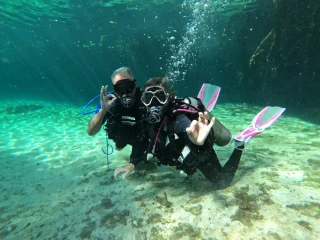
Yes — they're one of Mexico's unique natural experiences. There are roughly 10,000 cenotes across the Yucatán Peninsula — limestone sinkholes filled with crystal-clear groundwater, sacred to the Maya. Three types: open (like a swimming pool — Ik Kil, the famous one near Chichén Itzá, gets very crowded by late morning), semi-open (partial cave roof — Suytun has the iconic light beam shot mid-afternoon), and cave cenotes (fully enclosed, divers' favorite — Dos Ojos in the Tulum area). Base yourself in Valladolid rather than Tulum for the best cenote access — within 30 minutes you've got Cenote Zaci (in town), X'keken, Samula, and Suytun. Arrive at opening time (8–9am) to dodge the tour buses, bring biodegradable sunscreen (most cenotes ban regular sunscreen), and small bills for entry (40–250 pesos depending on facility level).
Locals Insider's Articles About Mexico
Articles in this section are written by Locals Insider editorial team. Want to share your experience about Mexico? Email us at hello@localsinsider.com.