Poland Travel Guide: Kraków, Warsaw, Gdańsk & Where to Go in 2026
Discover Poland with LocalsInsider’s travel guide. Explore boutique hotels, local wine bars, historic treasures, and serene hiking spots in this underrated destination.
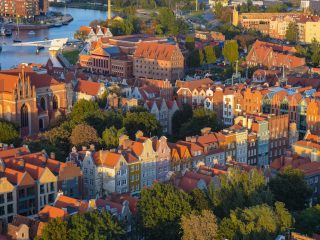
Poland is the Central European country that's been quietly transforming itself for thirty years and is now one of Europe's most rapidly evolving destinations. Warsaw rebuilt itself from rubble after WWII and has become a modern capital with surprising creative energy — Praga district for the rough-edged scene, Hala Koszyki for the food, Łazienki Park for green space. Kraków is the medieval postcard — Wawel castle, Rynek Glowny (Europe's largest medieval main square), and the Kazimierz Jewish quarter that has become one of the city's most interesting neighborhoods. Gdańsk on the Baltic is the Hanseatic port city with the Solidarity history and the amber traditions.
Our Poland coverage focuses on Kraków and Warsaw — the boutique stays, the food scene that's finally moved past stereotypes, and the country routes worth taking.
The travel personality: The Central European Explorer
Quick facts
Live right now
Best time to visit
| Season | Why go |
|---|---|
| May-June | Mild, blossom season, Kraków at its best |
| September | Wine harvest in the south, autumn colors, perfect city weather |
| December | Christmas markets — Kraków's the most famous, Wrocław underrated |
Top cities to visit
Experiences you'll probably love
- Kraków's Old Town and Rynek Glowny — Europe's largest medieval main square
- Auschwitz-Birkenau memorial — sobering, essential, 90 minutes from Kraków
- Wieliczka Salt Mine — UNESCO underground chapels carved entirely from salt
- Pierogi tasting tour in Kazimierz, Kraków's Jewish quarter
- Tatra mountain hiking from Zakopane — Morskie Oko lake or Rysy summit
Not many tourists know about…
- Praga district in Warsaw — the rough-edged neighborhood now hosting the creative crowd
- Hala Koszyki in Warsaw — restored market hall, food stalls locals actually eat at
- Vodka tasting is taken seriously — try frozen Żubrówka with apple juice (szarlotka)
- Kraków in May for blooming horse chestnuts, Kraków in December for the Christmas market
- Polish coffee culture is real now — Coffee Karma in Warsaw, Café Camelot in Kraków
If you visit only once, make it this
UNESCO-listed underground city carved from rock salt — operating from the 13th century until 2007, with chapels, sculptures, and chandeliers all made entirely from salt. The Chapel of Saint Kinga is the size of a church, 101m underground. 800 stairs down, elevator back up.
15 minutes from Kraków by train. Tour required (PLN 130 / €30). Allow 3 hours.
Where to walk & breathe
Europe's last lowland old-growth forest — UNESCO-listed, straddling the Polish-Belarusian border, home to 800 European bison (the largest free-ranging herd). Some trees are 500 years old.
3 hours from Warsaw by car. Guided tours required for the strict reserve zone. Best in autumn for the bison rut.
Museums worth your time
1,000 years of Polish-Jewish history in 8 chronological galleries — Best European Museum 2016. In the former Warsaw Ghetto, opposite the Ghetto Heroes Monument.
Visit website →The largest Nazi German concentration and extermination camp — preserved as a memorial. 90 minutes from Kraków. Free; guided tour required in peak season. Allow a full day; emotionally difficult.
Visit website →Poland's royal castle for centuries — the State Rooms, the Crown Treasury (with the Szczerbiec coronation sword), the cathedral where Polish kings were crowned. Separate ticket for each section.
Visit website →The Insider's Edit
A few additions for travelers heading deeper into Polish history and culture:
A 1901 Art Nouveau landmark on the Royal Route — Warsaw's institutional grande dame.
A 2018 luxury opening in a 19th-century building with one of the largest hotel-held collections of Polish contemporary art (450+ works).
On the former Warsaw Ghetto site — one of the world's best history museums in narrative and design.
Medieval Polish royal complex with the Sigismund Chapel — considered the most beautiful Renaissance chapel north of the Alps.
Difficult, essential — private guides through Belmond's Kraków connections or via the Auschwitz-Birkenau Memorial.
Where to eat
Poland's first Michelin-starred restaurant (2013, currently no longer starred but still a benchmark) — chef Wojciech Amaro's modern Polish, seasonal foraging-based menus.
Two Michelin stars (Kraków's first 2-star, 2023) — chef Przemysław Klima's modern Polish in Kazimierz district, in a converted 19th-century wine cellar.
Pierogi specialist in Kraków's Old Town — 30+ varieties, from classic Russian pierogi to seasonal specialties. The line at lunch is locals as well as tourists.
Contemporary Polish tasting menu in central Warsaw, opened 2021 — chef Adam Konopka's playful takes on Polish classics.
Where to stay
1901 Art Nouveau hotel on the Royal Route — Warsaw's most historic hotel, hosted Roosevelt, Picasso, Pope John Paul II. Marshal Józef Piłsudski's office is preserved here.
Relais & Châteaux in a Renaissance townhouse on Kraków's most beautiful street — frescoes, the underground swimming pool in 14th-century vaults, rooftop terrace with Wawel views.
Boutique on Kraków's Main Market Square — restored Renaissance interiors, underground spa in medieval vaults, walking distance to Wawel.
1857 hotel reopened 2018 after major restoration — Raffles's first Polish property, Long Bar, Europejski Café (Warsaw's longest-running café), walking distance to the Old Town.
Realistic daily budget
Per person, per day. Excludes flights. Peak season can run 20-40% higher.
Travel safety & inclusivity
Safety scores reflect UK FCDO & US State Department travel advisories. LGBTQ+ scores reflect Equaldex and ILGA-Europe rankings. Both refreshed quarterly.
Major festivals
Need a visa for Poland?
Many travelers can enter Poland visa-free, but it depends on your passport. Check your specific requirements:
Powered by evisas.com · We'll open your nationality-specific requirements page in a new tab.
Partner link — Locals Insider may receive a small commission at no extra cost to you. Always confirm the latest requirements with the official embassy.
Not sure if Poland is right for your next trip? We'll compare 53 destinations against your travel style. Take our country matcher quiz →
Frequently asked questions about Poland
Do I need a visa to visit Poland?
Poland is in the Schengen Area (since 2007) and the EU. EU, EEA, and Swiss citizens enter freely. Citizens of the US, UK, Canada, Australia, Japan, and around 60 other visa-exempt countries can stay up to 90 days within any 180-day period across the Schengen Area. From late 2026, those travelers will need an ETIAS online authorization (around €7, valid three years) before flying. Russian citizens need a Schengen short-stay visa via VFS Global or the Polish consulate — submission centers in Russia operate with restrictions; many submit via third countries (Serbia, Turkey, Armenia). Travel insurance should cover at least €30,000 medical. Poland uses the Polish złoty (PLN), NOT the euro — euros are accepted at some hotels and tourist spots but at poor rates. ATMs and currency exchange (kantor) widely available.
Krakow or Warsaw — which should I visit?
Different countries in a way. Krakow is the historic heart — its medieval old town (Rynek Główny is one of Europe's largest medieval squares), the Wawel Royal Castle, the Jewish Quarter (Kazimierz), and crucially the proximity to Auschwitz-Birkenau (1.5 hours away, the country's most-visited site, book English-language tours weeks ahead — it's free but emotionally intense), and the Wieliczka Salt Mine (UNESCO, 30 min away). Plan 3–4 days. Warsaw is the modern rebirth — the meticulously reconstructed Old Town (Stare Miasto, leveled in WWII, then rebuilt brick by brick — also UNESCO), the powerful Warsaw Uprising Museum, the POLIN Museum of the History of Polish Jews, and the contemporary food scene in Praga and Powiśle. Plan 2–3 days. Most first-time visitors do both — connected by the Pendolino express train in 2h20 for around 80 PLN (€19).
When is the best time to visit Poland?
Late May to June and September to early October are the sweet spots — mild temperatures 18–24°C, long daylight, fewer crowds at Auschwitz and Wieliczka, accommodation prices 25–35% lower than peak summer. July and August are warm (24–28°C, sometimes hotter) and peak season, but Baltic coast resorts (Sopot, Gdańsk) come alive. December brings Christmas markets in Krakow's Rynek Główny (one of the most atmospheric in Europe) and Wrocław's market with the famous gnomes — book accommodation early. January–March are cold (-5 to 3°C) but quiet, and prices are at their lowest; this is also when Zakopane's ski season is at its best. Auschwitz visits are emotionally easier in spring or autumn — winter weather adds a layer of difficulty to an already heavy day.
How do I visit Auschwitz-Birkenau?
Auschwitz-Birkenau State Museum is about 70km west of Krakow, 1.5 hours by car or organized tour. Entry is free, but between April and October, visitors must enter with a licensed guide from 10am to 3pm (€20–25 per person) — outside those hours self-guided entry is possible. Book through the official auschwitz.org portal 1–3 months ahead in summer; English tours sell out. Plan a full 6-hour visit — the included shuttle takes you between Auschwitz I (the original camp, with the iconic Arbeit Macht Frei gate) and Birkenau (3km away, the much larger killing center). It's emotionally demanding; don't pair it with another sightseeing activity the same day. Day-tours from Krakow including transport, guide, and entry cost 150–250 PLN (€35–60). Children under 14 are officially not recommended. Photography is allowed except in two specific rooms; respectful silence is expected.
What Polish food and drink should I try?
Poland's food is hearty, deeply seasonal, and remarkably good value. Pierogi (boiled dumplings) — savory with potato-cheese (Russian), meat, mushroom-sauerkraut, or sweet with blueberries and cream. Bigos — "hunter's stew" of sauerkraut, fresh cabbage, sausage, and game; the national winter dish. Żurek — sour rye soup, often served in a bread bowl with sausage and egg. Kielbasa (smoked Polish sausage) — order at any milk bar (bar mleczny, the Communist-era institution still serving full meals for under 30 PLN/€7). Zapiekanka — toasted open-faced sandwich from any street stand. Drink: Polish vodka is its own category — try Żubrówka (bison grass), Wyborowa, or Belvedere. Local beers: Tyskie, Żywiec, Lech. In Krakow, Pierogarnia Krakowiacy for traditional, Hawełka for fine dining, and any of the milk bars on ulica Grodzka for an authentic cheap meal.
Locals Insider's Articles About Poland
Articles in this section are written by Locals Insider editorial team. Want to share your experience about Poland? Email us at hello@localsinsider.com.