Germany Travel Guide: Berlin, Munich, Hamburg & Where to Go in 2026
Explore Germany with LocalsInsider’s travel guide. Dive into cozy boutique stays, craft beer spots, inspiring art scenes, and scenic hiking routes off the beaten path.
Germany contains a contradiction: the country of efficient trains and serious people also produced Berlin, one of the most genuinely creative cities in Europe. Marco Müller's three-Michelin-star Rutz anchors the fine dining scene; Curry 36 anchors the late-night one. Munich is the formal counterweight (beer halls, Bavarian traditions, Tantris). Then there's the country itself — the Black Forest (Schwarzwaldstube three Michelin stars at Traube Tonbach), the Mosel wine valleys, Dresden's rebuilt Baroque core, the Bavarian Alps for skiing.
Our Germany coverage spans Berlin's neighborhoods, Munich's food scene, and the country routes that connect them.
The travel personality: The Curious Cosmopolitan
Quick facts
Live right now
Best time to visit
| Season | Why go |
|---|---|
| May–September | Germany has four distinct seasons — pack accordingly |
| April, October | Shoulder season — fewer tourists, often cheaper, weather still good |
| November (between seasons) | Off-season — quiet, best deals, plan around weather |
Top cities to visit
Experiences you'll probably love
- Berlin's club culture — Berghain to Sisyphos
- Oktoberfest in Munich (late September–early October)
- Romantic Road through Bavaria's medieval towns
- Christmas markets across the country (Nuremberg, Dresden, Cologne)
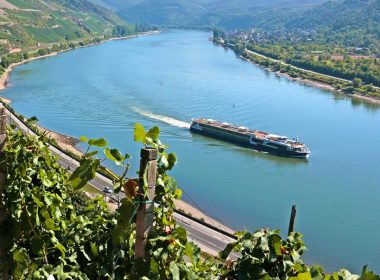
- Rhine Valley castles and wine tastings
Not many tourists know about…
- Leipzig — Berlin's cooler younger sibling, music heritage
- The Saxon Switzerland sandstone landscape near Dresden
- Heidelberg — most romantic German university town
- Sylt — North Sea island for old-money German vacation culture
- Tegernsee — Bavaria's lake-and-mountain weekend escape
- Bremen for its sci-fi-modern Beck's brewery and old town
If you visit only once, make it this
King Ludwig II's 19th-century fairy-tale castle in the Bavarian Alps — the inspiration for Disney's Sleeping Beauty Castle. The view from the Marienbrücke (Mary's Bridge), suspended 90 meters above the Pöllat Gorge, frames the castle against the Tegelberg mountains. Take it at sunset.
2 hours train+bus from Munich. Castle interior tickets timed-entry — book online ahead.
Where to walk & breathe
An hour east of Dresden, the Bastei Bridge crosses 200 meters above the Elbe river between sandstone pillars that have eroded into surreal stone needles. The hike from Rathen takes you across the bridge and through the rock labyrinth.
Train from Dresden to Kurort Rathen, then ferry across the Elbe. Free to walk, no reservation.
Museums worth your time
Houses the Pergamon Altar and Ishtar Gate of Babylon — entire reconstructed ancient monuments. Closed for major renovation; some collections moved to Pergamon Museum: The Panorama nearby.
Visit website →Berlin's contemporary art museum in a former railway station — major Joseph Beuys collection, Anselm Kiefer, Robert Rauschenberg. The lit corridor by Dan Flavin is one of Berlin's signature interior moments.
Visit website →Munich's hub of 20th-century art, design, architecture, and works on paper — Picasso, Beckmann, Klee, plus a Design Museum with the legendary Ettore Sottsass and Dieter Rams collections.
Visit website →The Insider's Edit
A few additions for travelers heading beyond Berlin and Munich:
A 2022 opening in three Mitte townhouses with an extraordinary contemporary art collection (Wolfgang Tillmans, Isa Genzken) curated by the owner.
A literary-and-music retreat near Garmisch-Partenkirchen — two G7 summits have been held here.
Two Michelin stars — Asian-influenced Berlin cuisine in a stripped-back Kreuzberg setting.
Every five years, the world's most serious contemporary art exhibition takes over an industrial German town — the next is 2027 and worth planning ahead.
A converted train station with the best post-1960 collection in Germany — Beuys, Warhol, Kiefer.
Where to eat
Three Michelin stars (since 2020) in Berlin's Mitte — chef Marco Müller's modern German built around regional ingredients, with the Rutz Weinbar wine focus below.
Two-Michelin-star Munich institution since 1971 — the 1970s interior is iconic, the cuisine modernized continuously. Currently chef Benjamin Chmura.
Three Michelin stars in the Black Forest at Hotel Traube Tonbach — chef Torsten Michel. Tragically the original burned down in 2020; the rebuilt restaurant reopened 2022.
The Berlin currywurst institution since 1981, open 24 hours — across from Kreuzberg's Mehringdamm U-Bahn. The signature: currywurst ohne Darm (without skin), with chips and curry sauce.
Where to stay
Berlin's grande dame next to the Brandenburg Gate — rebuilt after WWII reduced it to rubble. Lobby bar where journalists and politicians actually meet, Lorenz Adlon Esszimmer Michelin-starred restaurant.
Munich's 19th-century grand hotel — Volkstheater, Atelier Michelin-starred restaurant, the rooftop pool and spa added in the 2010 modernization. Annual venue of the Munich Security Conference.
1930s Danish embassy converted to boutique hotel beside the Berlin Zoo — Patricia Urquiola interiors, the famous zebra-print lobby, Cinco by Paco Pérez Michelin-starred restaurant.
Bavarian Alps retreat — hosted the G7 Summit 2015 and 2022. Six restaurants (one with two Michelin stars), seven spas, concert hall with year-round chamber music programming. Recently refreshed wellness wings.
Realistic daily budget
Per person, per day. Excludes flights. Peak season can run 20-40% higher.
Travel safety & inclusivity
Safety scores reflect UK FCDO & US State Department travel advisories. LGBTQ+ scores reflect Equaldex and ILGA-Europe rankings. Both refreshed quarterly.
Major festivals
Need a visa for Germany?
Many travelers can enter Germany visa-free, but it depends on your passport. Check your specific requirements:
Powered by evisas.com · We'll open your nationality-specific requirements page in a new tab.
Partner link — Locals Insider may receive a small commission at no extra cost to you. Always confirm the latest requirements with the official embassy.
Not sure if Germany is right for your next trip? We'll compare 53 destinations against your travel style. Take our country matcher quiz →
Frequently asked questions about Germany
Do I need a visa to visit Germany?
Germany is in the Schengen Area and the EU. EU, EEA, and Swiss citizens enter freely. Citizens of the US, UK, Canada, Australia, Japan, and around 60 other visa-exempt countries can stay up to 90 days within any 180-day period across the Schengen Area. From late 2026, those travelers will need an ETIAS online authorization (around €7, valid three years) before flying. Russian and Chinese passport holders need a Schengen short-stay visa via VFS Global or the German consulate. Travel insurance should cover at least €30,000 medical across the Schengen area. Germany uses the euro. Passport must be valid for at least 3 months beyond your intended departure. Major airports (Frankfurt, Munich, Berlin Brandenburg) can have slow non-Schengen passport queues — allow 60–90 minutes for connections.
When is the best time to visit Germany?
May and September are the universal sweet spots — pleasant 18–24°C, hotel rates 30–40% lower than peak summer, lighter crowds, and the major attractions all fully operational. July–August are peak (warmer 20–28°C, longer days, but crowded UNESCO sites and occasional heat waves). September 20 – October 5, 2026 is Oktoberfest in Munich — accommodation books out 6–9 months ahead and prices triple. November 24 – December 24 brings Christmas markets across the country — Nuremberg's Christkindlesmarkt, Dresden's Striezelmarkt (the oldest, since 1434), Cologne's seven separate markets, and the Tollwood Winterfestival in Munich. Book Christmas-market-city hotels 4–6 months ahead for December weekends. January–March delivers the lowest prices but cold weather (0–8°C) and shorter days.
What's a good 10-day Germany itinerary?
Three different trips depending on your interest. The classic culture loop: Berlin (3 nights — Brandenburg Gate, Museum Island, the East Side Gallery, Kreuzberg/Neukölln food), Dresden (1 night — the rebuilt baroque old town), Nuremberg (1 night), Munich (3 nights — Marienplatz, beer halls, day trip to Neuschwanstein Castle), with two nights elsewhere (Hamburg or Cologne). The Rhine + Bavaria route: Frankfurt (1) → Rhine Valley (2 — castle cruises, Bacharach or Bingen base) → Heidelberg (1) → Black Forest (2) → Munich (3) → Berlin (1 for departure). The fast trains (ICE — Deutsche Bahn) make hops easy: Berlin–Munich in 4 hours, Frankfurt–Berlin in 4 hours, Munich–Salzburg in 90 minutes if extending into Austria. Book ICE Sparpreis tickets 60–90 days ahead for the best fares (€20–50 vs €120 walk-up).
Is Oktoberfest worth planning a trip around?
Yes, if you go in with the right expectations. Oktoberfest 2026 runs September 20 – October 5 on the Theresienwiese fairgrounds in Munich. Important to understand: tent reservations require group bookings made 6–9 months in advance through the individual tent operators (Hofbräu, Augustiner, Paulaner — direct websites only), but tables also hold walk-in seats — arrive at 9am on weekdays or 7am on weekends to claim a table. Expect €13–15 per liter of beer, €12–18 for traditional meals, and serious crowds (6+ million visitors). Munich accommodation triples for those weeks — book by March 2026 for any reasonable price. Alternatives if Oktoberfest is full: Cannstatter Volksfest in Stuttgart (overlaps dates, half the crowds, locals' favorite), or Erlanger Bergkirchweih in Erlangen, Germany's second-largest beer festival, every June.
Where do locals eat in Berlin and Munich?
Berlin is one of Europe's best food cities and far cheaper than Munich. Skip the central tourist spots and head to Kreuzberg (Mustafa's Gemüse Kebap, the iconic queue), Neukölln for the modern bistro scene (Lode & Stijn, Hallmann & Klee), and Mitte for the döner kebab originals (Imren and Konnopke's Imbiss for the city's defining currywurst, in business since 1930). Mustafa's, Burgermeister under the U-Bahn, and Markthalle Neun on Thursday Street Food evenings cover the modern Berlin food experience. Munich is more traditional. Don't only do the Hofbräuhaus (it's beautiful but heavily tourist-focused) — try Augustiner-Keller (a true Bavarian beer garden, locals all summer), Schneider Bräuhaus for the city's best Schweinshaxe, and Viktualienmarkt for fresh weisswurst (eaten before noon, peeled with the skin removed). Tip 5–10%, rounded up.
Locals Insider's Articles About Germany
Articles in this section are written by Locals Insider editorial team. Want to share your experience about Germany? Email us at hello@localsinsider.com.