
Denmark Travel Guide: Copenhagen, Aarhus, Bornholm in 2026
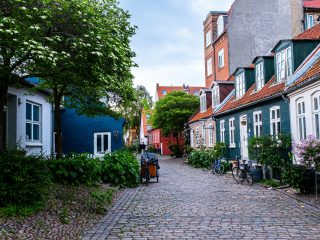
Denmark is the country that quietly figured out how to live well and now exports the formula. Copenhagen is the design capital that earns the reputation — Noma's three Michelin stars on Refshaleøen, Nørrebro's food scene, the world's best bike infrastructure, hotels that all seem to be designed by the same impeccable taste committee. But Denmark opens up beyond Copenhagen: Aarhus is the second city most travelers skip (and shouldn't), Bornholm is the Baltic Sea island where Copenhageners go to disconnect, and Læsø in the Kattegat is the tiny island where the houses are still roofed in eelgrass — the only place in the world this is done.
Our Denmark coverage is the deepest in our European archive — 24 articles across Copenhagen neighborhoods, the boutique hotels worth the splurge (Hotel d'Angleterre, Nimb inside Tivoli Gardens, Sanders behind Nyhavn), Bornholm's slow island culture, and the design city most travelers underestimate.
The travel personality: The Design-Driven Traveler
Quick facts
Live right now
Best time to visit
| Season | Why go |
|---|---|
| May–September (white nights, long evenings) | June 21st is endless daylight — magical for outdoor evenings |
| April, October | Shoulder season — fewer tourists, often cheaper, weather still good |
| November–March (cozy + hygge, but limited daylight) | Off-season — quiet, best deals, plan around weather |
Top cities to visit
Experiences you'll probably love
- New Nordic dining at Geranium, Alchemist or Noma
- Cycling Copenhagen's harbor circuit and bridges
- Tivoli Gardens at dusk
- The Louisiana Museum of Modern Art (north of Copenhagen)
- Faaborg's coastal artist colonies
Not many tourists know about…
- Bornholm — Baltic island with smokehouses, cliffs, cycling
- Reffen street-food market in Copenhagen's industrial reborn district
- Mols Bjerge National Park in Jutland
- Christiania — Copenhagen's car-free freetown
- Roskilde's Viking ship museum and weekend festival in summer
- Refshaleøen island for the most current Copenhagen food scene
If you visit only once, make it this
A tiny Kattegat Sea island, two hours by ferry from Frederikshavn, where the traditional farmhouses are roofed with eelgrass (sea grass) — the only place in the world this is done. Once farmed by women while the men worked the salt huts, the roofs are 20-40 cm thick, last 300 years, and have become quietly internationally famous as cultural landscape. Plus prawns from the Kattegat, salt works still operating since the 13th century, and roughly 1,800 inhabitants.
Ferry from Frederikshavn (1.5 hours each way). Visit May-September for the best weather; rent a bike on arrival.
Where to walk & breathe
Denmark's most dramatic landscape — 6 kilometers of chalk-white cliffs rising 128 meters above the Baltic Sea, formed 70 million years ago. The beech forest above (Klinteskoven) carpets in wild garlic every May. UNESCO Biosphere reserve. Two-hour drive south of Copenhagen.
GeoCenter Møns Klint at the top has a great café. Stairs down to the beach require some effort.
Museums worth your time
Denmark's most important modern art museum, 35 km north of Copenhagen on the Øresund coast. Sculpture park overlooking Sweden, Calder mobiles in the lawn, world-class rotating exhibitions. Take the coastal train from Copenhagen Central; the journey is half the pleasure.
Visit website →Denmark's national gallery — strong Danish Golden Age collection (Hammershøi, Krøyer), plus Matisse, Picasso, and contemporary Nordic art. Free permanent collection. The X Wing extension is architecturally significant in its own right.
Visit website →The story of Danish design from 1900 to now — Hans Wegner chairs, Arne Jacobsen everything, the famous Chair Walk room with hundreds of iconic chairs lined up chronologically. Recently reopened after a major renovation.
Visit website →The Insider's Edit
A few additions for travelers staying longer in Copenhagen and beyond:
A 54-room boutique behind the Royal Danish Theatre — residential, English country-house feel. Possibly the city's most refined small hotel.
Often called the world's most beautiful museum — glass corridors through a sculpture park on the Øresund, with Giacometti, Calder, and Yayoi Kusama.
Carl Jacobsen's Mediterranean antiquities and French sculpture — the Hammershøi rooms in the Danish wing are the depth.
The two-Michelin-star fermentation-driven restaurant from chef Poul Andrias Ziska — easy add-on from Copenhagen.
Where to eat
René Redzepi's three-Michelin-star restaurant — four times ranked World's #1. The conversion announcement (transitioning to a fine-dining test kitchen in 2025) makes a Noma seat increasingly rare. Seasonal menus: Vegetable, Seafood, Game. Book the day reservations open.
Rasmus Kofoed's three-Michelin-star restaurant on the 8th floor of Parken Stadium — World's 50 Best #1 in 2022. Plant-forward 'New Nordic' precision. Tasting menu only; reservations 3 months ahead.
The classic Copenhagen smørrebrød (open-faced sandwich) restaurant since 1877 — pickled herring, marinated salmon, pork rillette, accompanied by snaps. Lunch only, no dinner. The traditional Danish midday meal locals still actually eat.
Two-Michelin-star contemporary Nordic using ingredients from chef Nicolai Nørregaard's Bornholm island. The Christianshavn restaurant moved to its new larger location 2024. Sister Kadeau Bornholm is the summer-only original.
Where to stay
Copenhagen's grande dame since 1755 — the white Neoclassical building overlooking Kongens Nytorv square, the Marchal Michelin-starred restaurant, the legendary Christmas window displays. Where royalty stays in Copenhagen.
Inside Tivoli Gardens — a Moorish-revival palace converted to a 38-room boutique hotel. Brasserie Nimb, the rooftop pool with Tivoli skyline views, and after-hours access to the amusement park gardens that few hotels can match.
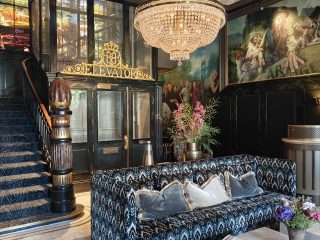
Former dancer Alexander Kølpin's 54-room hotel between Kongens Nytorv and Nyhavn — Lorenzo Castillo interior design (mid-century Danish meets British colonial), the TATA bar locals drink in. Featured Condé Nast Hot List.
Same Alexander Kølpin team's first hotel outside Copenhagen — on Bornholm island, opening late 2025. Coastal villa setting, restaurant with the same Sanders standards. Among the most anticipated Scandinavian openings of 2026.
Realistic daily budget
Per person, per day. Excludes flights. Peak season can run 20-40% higher.
Travel safety & inclusivity
Safety scores reflect UK FCDO & US State Department travel advisories. LGBTQ+ scores reflect Equaldex and ILGA-Europe rankings. Both refreshed quarterly.
Major festivals
Need a visa for Denmark?
Many travelers can enter Denmark visa-free, but it depends on your passport. Check your specific requirements:
Powered by evisas.com · We'll open your nationality-specific requirements page in a new tab.
Partner link — Locals Insider may receive a small commission at no extra cost to you. Always confirm the latest requirements with the official embassy.
Not sure if Denmark is right for your next trip? We'll compare 53 destinations against your travel style. Take our country matcher quiz →
Frequently asked questions about Denmark
Is Noma still open, and where do locals eat in Copenhagen now?
Noma closed as a regular restaurant in mid-2025 and transitioned to a test kitchen, occasional pop-ups, and the Noma Projects product line — so you can't simply book a table the way you used to. The good news: Copenhagen now has 30+ Michelin stars across 19 restaurants. The three-star tier alongside Noma is Geranium (the most accessible booking, on the 8th floor of Parken stadium; book months ahead) and Jordnær. Two-star Alchemist by chef Rasmus Munk is the immersive multi-hour experience locals talk about. For non-Michelin but exceptional: Marv & Ben, Høst, and Pluto are favourites that don't require six-month planning. For everyday meals, head to Torvehallerne food hall or the bakery Hart Bageri (founded by a former Noma baker).
Is Copenhagen actually walkable, or do I need to rent a bike?
Both — and the answer matters. The historic centre (Strøget, Nyhavn, Christiansborg, Rosenborg) is genuinely walkable in a day or two. But Copenhagen is built around cycling — over 380 km of bike lanes, 49% of locals commute by bike year-round, and the city's best neighbourhoods (Nørrebro, Vesterbro, Christianshavn, Refshaleøen) reward the half-hour ride more than a slog on foot. Rent a bike for at least one full day — Donkey Republic and Swapfiets both work via app. Stick to designated bike lanes (they're physically separated from cars), signal turns, and remember: cyclists here are fast and won't slow down for tourists. If you don't cycle, the metro and S-train cover everywhere — get a City Pass for unlimited rides. Buses are reliable but rarely needed in the centre.
What is hygge actually, and where can I experience it?
Hygge (roughly "hue-guh") isn't a noun you can buy — it's the Danish word for the deliberate cultivation of warmth, contentment, and unhurried connection, usually around food, candles, friends, and the worst weather. It's why Denmark consistently ranks among the world's happiest countries despite winters that are dark by 4pm. To actually feel it, skip the marketing version: go to a small candlelit café in Nørrebro in November, order a cinnamon bun and a slow coffee with no laptop. Eat at a wine bar like Manfreds on a wet night. Stay in a converted farmhouse on Funen or Bornholm and read by the woodburner. Hygge can't be performed — you arrive at it when you stop hurrying. Locals often say tourists who hunt for hygge miss the point; you have to slow down first.
Is Copenhagen worth visiting in winter?
Yes, with the right expectations. December is the best month — Tivoli Gardens transforms into a Christmas market (one of Europe's best), Hans Christian Andersen's city lights up, and the dark afternoons are exactly when Copenhagen's indoor culture — Michelin restaurants, candlelit bars, design shops, hot saunas — is at its best. January and February are bleaker: 7 hours of daylight, temperatures often hovering near freezing, occasional snow. But it's also when locals own the city again and prices drop. If you visit then, build the trip around indoor activities: the SMK, Designmuseum Danmark, a cooking class, harbour sauna sessions, long lunches. Pack proper waterproof boots and layers — Danish weather is famously changeable, and the wind off the harbour cuts.
Should I rent a car in Denmark or just take trains?
For Copenhagen, Aarhus, Odense, and Aalborg — take the train. DSB intercity trains are fast, frequent, and the ride from Copenhagen to Aarhus takes 3 hours through some of the country's prettiest scenery. Rent a car only if you're exploring the countryside: Funen's manor houses, Bornholm (technically requires a ferry, but renting on the island is easier), the West Coast beaches, or the Wadden Sea UNESCO area. Denmark drives on the right, road tolls only apply to two bridges (Storebælt and Øresund — about 250 DKK each way), and gas runs around 14 DKK per litre. Parking in Copenhagen is expensive and frustrating; if you base in the city, return the car before that part of the trip. See our car rental services guide.
Locals Insider's Articles About Denmark
Articles in this section are written by Locals Insider editorial team. Want to share your experience about Denmark? Email us at hello@localsinsider.com.