

The Danish badehotel is one of those things Northern Europe quietly perfected without ever needing to explain itself to the rest of the world.
Born around 1900, when Denmark’s emerging coastal middle class began building modest wooden seaside hotels for summer escapes from Copenhagen, the hotel on a Baltic Sea beach has evolved into something more specific than a “beach hotel.” It’s a wooden building at the edge of the dunes or the cliffs; a candlelit four-course dinner in the Danish-design dining room; a sauna or steam bath that opens directly onto the sea or a pampas grass field; and the kind of unhurried Danish hospitality that doesn’t translate cleanly into any other language.
Sea temperatures in early June rarely climb above 16°C — these aren’t Mediterranean swim hotels.
What Danish beach resorts are: small, boutique-like, cozy, beautifully built, deeply food-forward refuges from the city. The wellness facilities, let’s be honest, aren’t quite at the level of the great German Black Forest spas — Germany still owns the European thermal-bath title — but the badehotels more than make up for it in atmosphere, restaurant quality, and the particular hygge that only a thatched dune cottage at the edge of the North Sea can produce.
They’re also, almost without exception, set up to host weddings, corporate retreats, board offsites, and milestone celebrations (but necver too loud for other guests) — most of the properties below have a dedicated event team and a venue page, and a meaningful share of their annual revenue comes from buyouts and private hire.
The Beach hotels in Denmark are weekend hotels. Two nights, a Friday-to-Sunday rhythm, the right kind of book. Cozy evening, ecological breakfast made of local, freshly baked bread, butter, salmon, eggs, and good coffee in the morning. Add sea breeze and a sense of calm.
Below, ten of Denmark’s most defining beach hotels curated by Locals Insider — from the Skagen point to the Bornholm cliffs, from a 1936 Poul Henningsen architectural classic to a brand-new ESS Group resort that landed on Travel + Leisure’s 100 best new hotels of 2026 list. With what to know about who built them, who runs them, what they charge, and what makes each one different from the next.
The shortlist: ten Danish badehotels for design, hygge, and a Nordic weekend
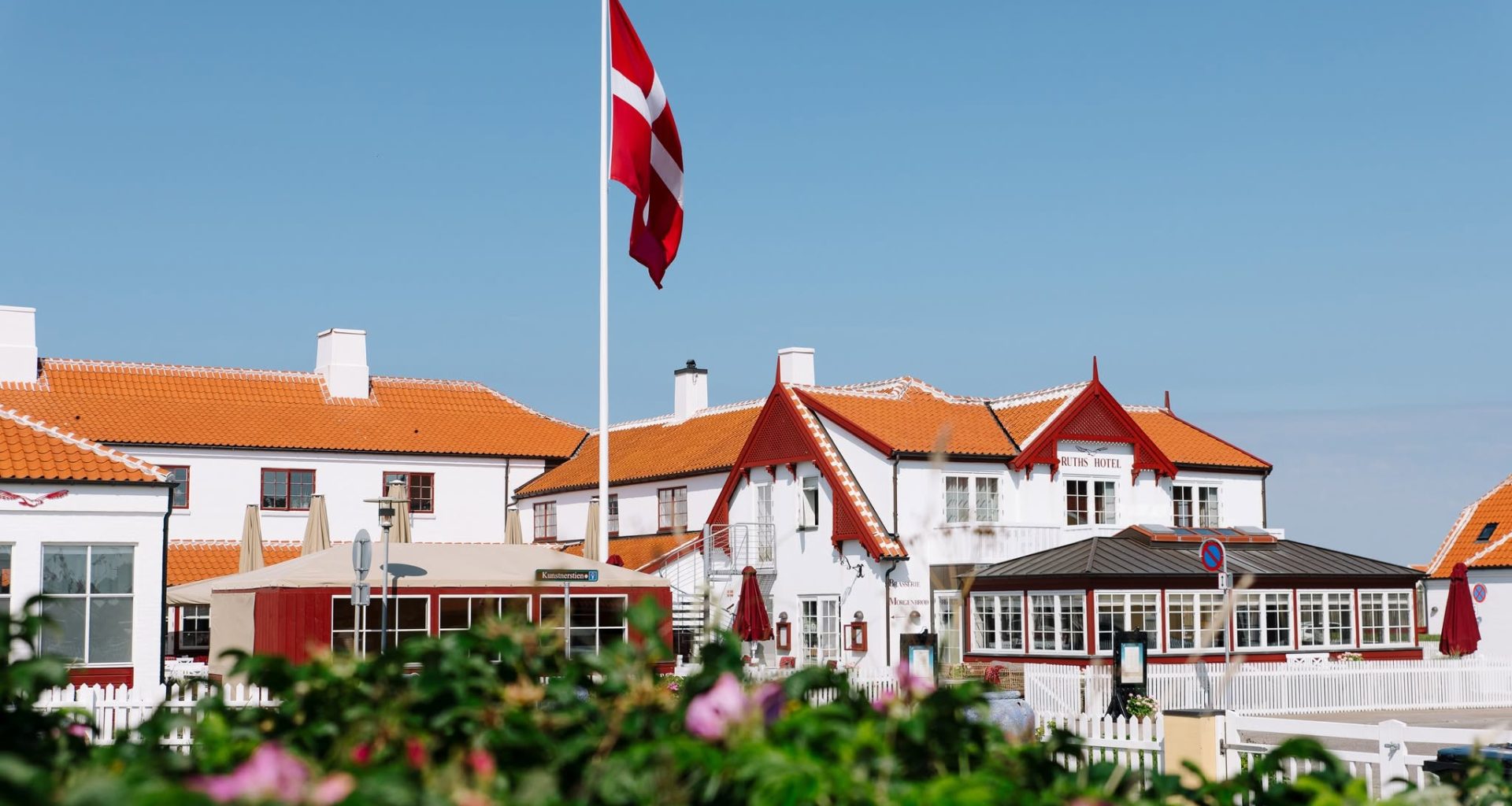
1. Ruths Hotel — Skagen’s grande dame, where Denmark’s coastline ends
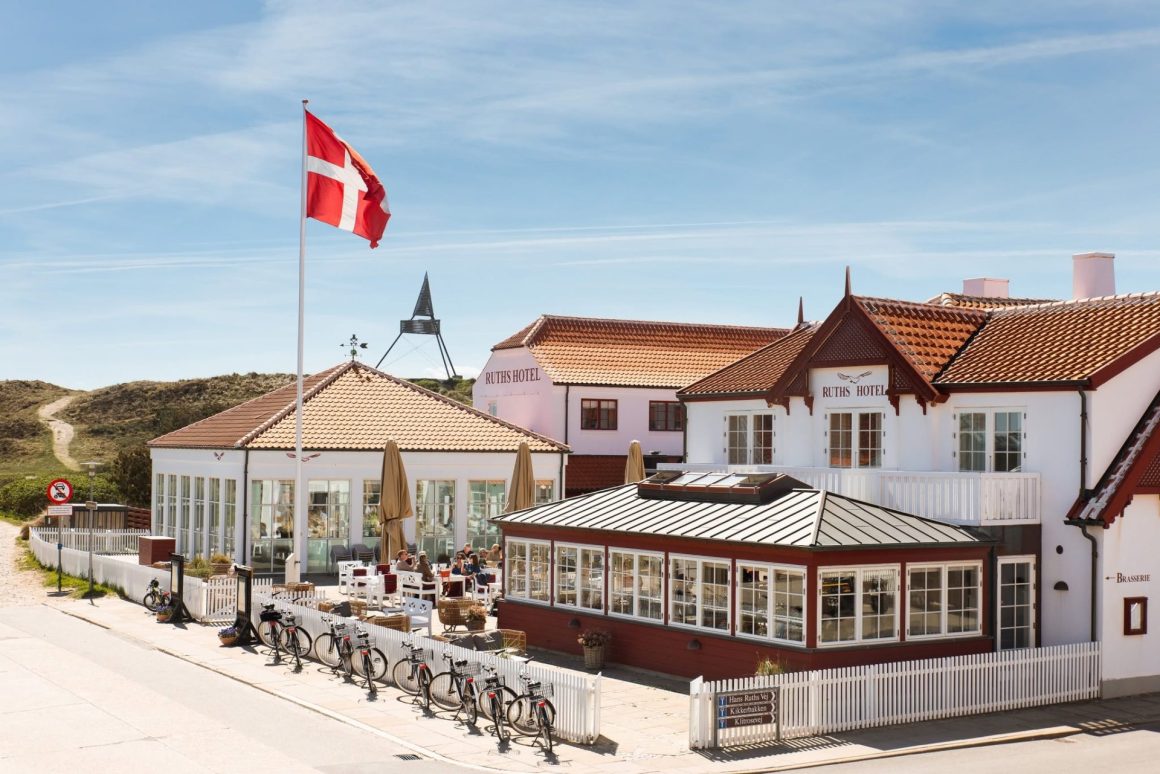
The badehotel you visit first if you want to understand the genre. Emma and Hans Christian Ruth founded the original guesthouse “Vesterhus” in 1903 in Gammel Skagen — that windswept corner where the North Sea meets the Skagerrak strait, light bouncing off both bodies of water at once, the reason the Skagen Painters set up camp here in the 1880s.
The property has stayed in family hands ever since; today it’s owned by the family of Jørgen Philip-Sørensen, the late Danish-Swedish security industrialist, and run as a small luxury collection of historic buildings woven into one estate.
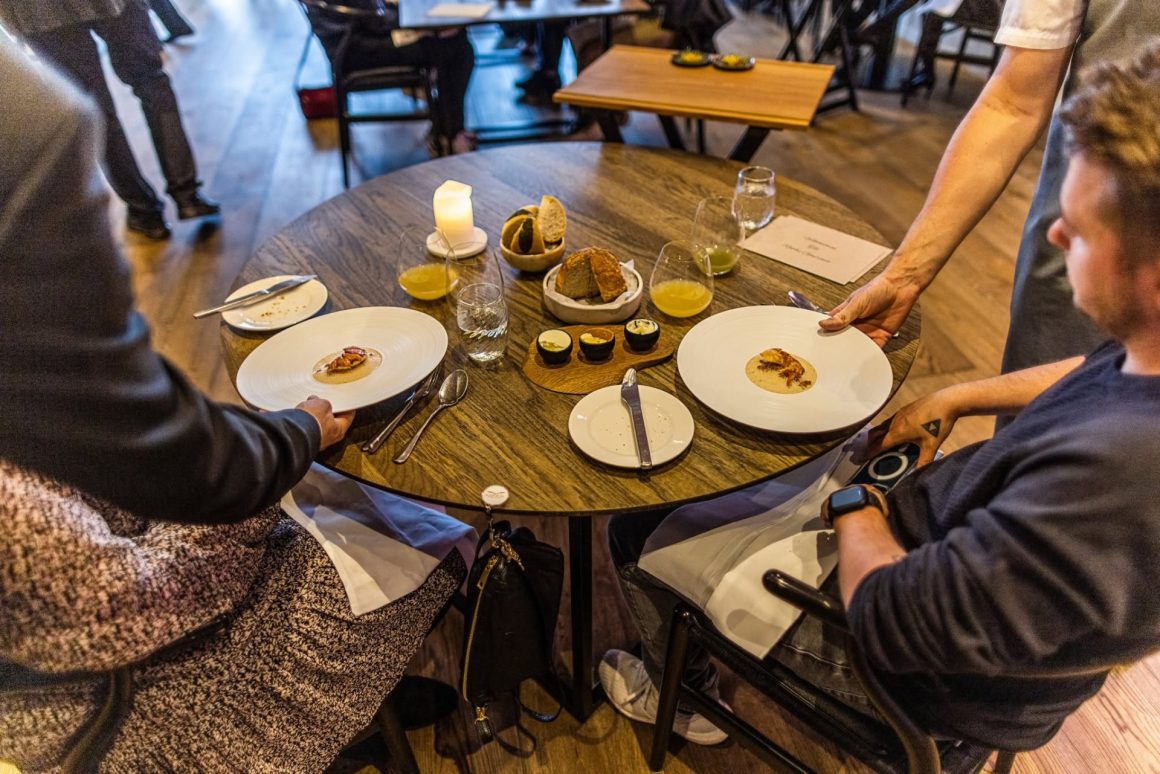
The wellness side is genuinely good for a property this size: Ruths Wellness runs a sauna, steam bath, therapy pool, and a compact fitness room, with a treatment menu of massages and beauty rituals available to non-residents as well. The two restaurants — Ruths Brasserie and the higher-end Ruths Gourmet — are among the most-cited dining rooms in Skagen, and the in-house bakery turns out hot bread every morning.
The location is what you came for: a 200-meter walk to the dune-fringed Sønderstrand, with the Skagen lighthouse and the famous Grenen sandbar a short bike ride east.
Hans Ruths Vej 1, 9990 Skagen · +45 98 44 11 24 · from 2,600 DKK (~$400) per night · 4.5 on Google (872 reviews)
2. Svinkløv Badehotel — the resurrected icon
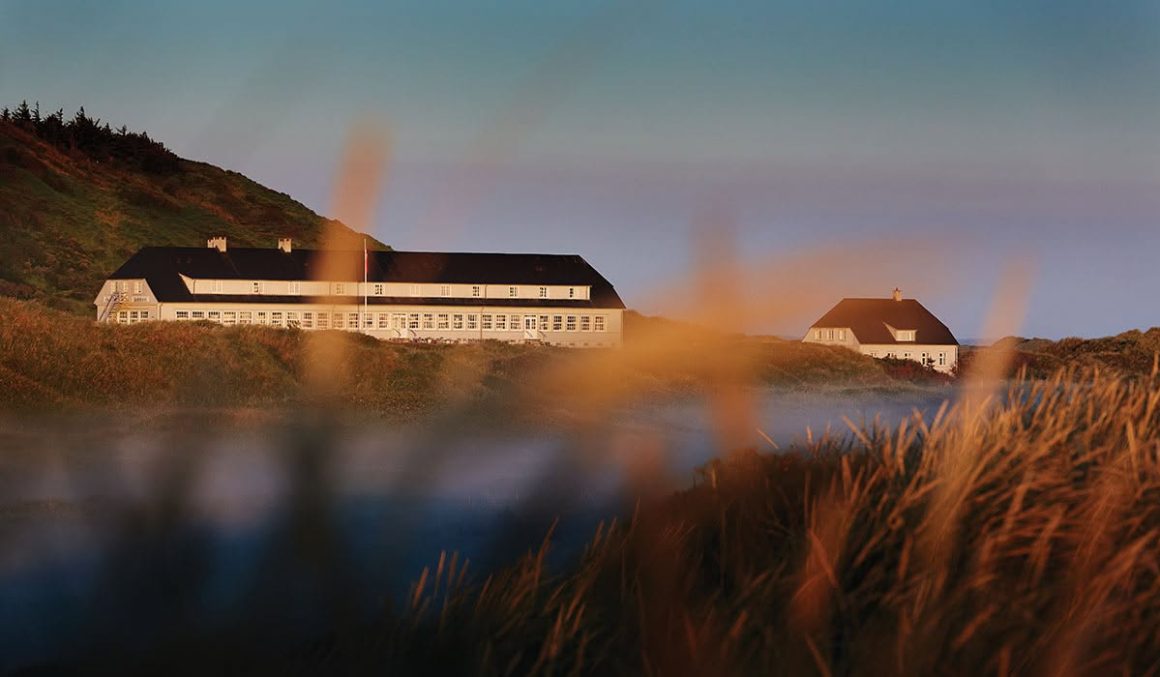
The single most-storied entry on this list. The original Svinkløv was built in 1925 in the dunes of Jammer Bay, North Jutland, and ran beloved for nearly a century before burning to the ground in a 2016 fire. The Danish philanthropic foundation Realdania funded the rebuild; chefs Kenneth Toft-Hansen (winner of the Bocuse d’Or 2019) and his wife Louise Toft-Hansen — who’d just taken over as proprietors a year before the fire — refused to walk away.
Praksis Arkitekter (founder Mette Tony MAA) designed the replacement using the same wooden construction technique as the original, aiming for a 250-year structural lifespan.
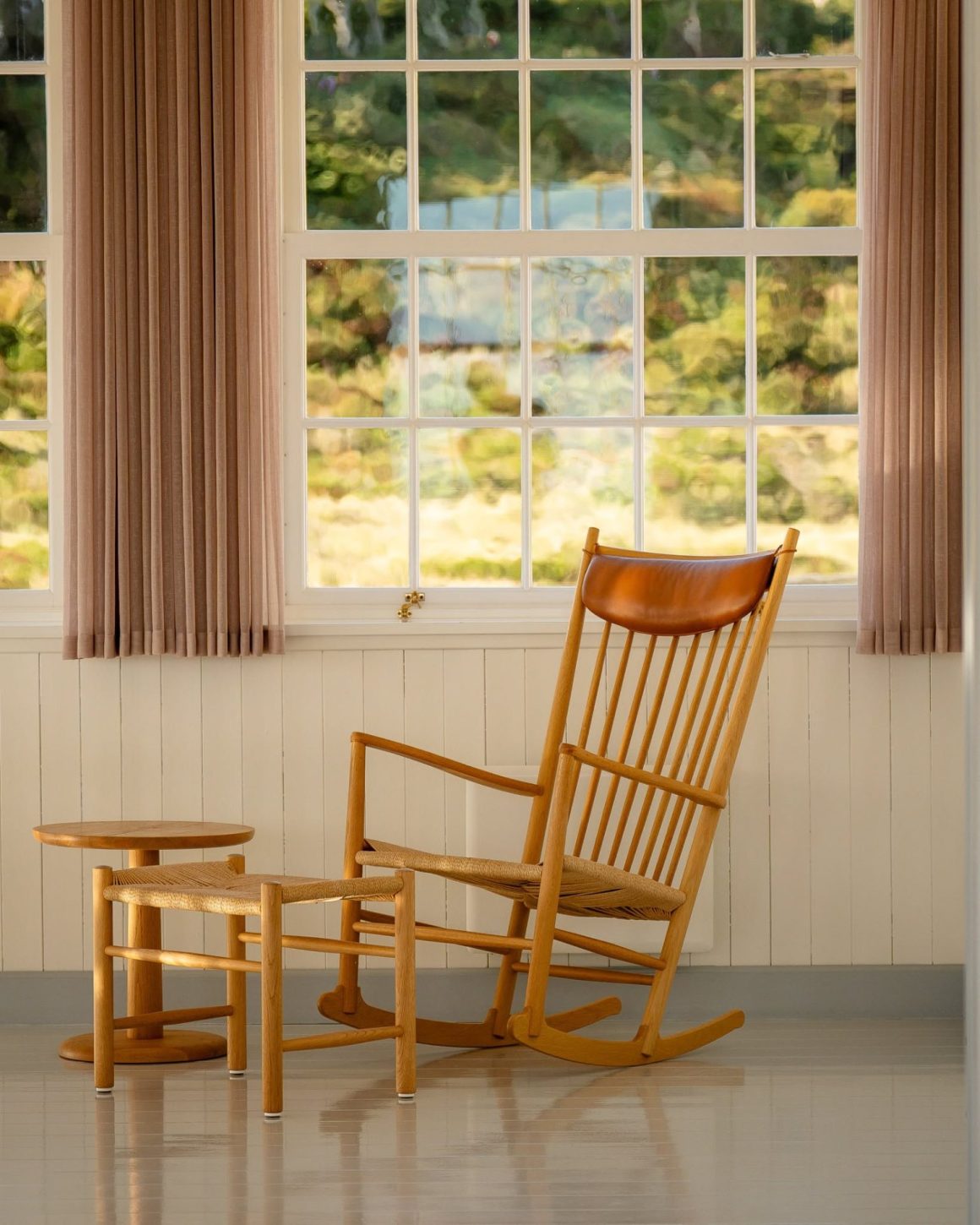
Chris L. Halstrøm designed the interiors, including the custom Vester Chair for the dining room and the Shaker-inspired oak coat racks throughout. The hotel reopened in 2019; it is now widely considered the most architecturally significant new badehotel in Denmark.
The hotel has 36 rooms across two floors, painted in a creamy vanilla white and a duck-egg blue. No televisions. No Wi-Fi. By design.
The food, naturally, is the destination. Toft-Hansen personally leads the kitchen, and the menu changes daily based on what local fishermen, farmers, and growers have brought in; the restaurant is also open to non-guests for lunch, afternoon coffee and cake, and dinner (reservations essential).

Open mid-April to early October only.
Svinkløvvej 593, 9690 Fjerritslev · +45 98 21 70 02 · from 1,300 DKK (~$200) per night · 4.6 on Google (1,277 reviews)
3. Henne Mølle Å Badehotel — the Poul Henningsen original

A piece of Danish design history. Henne Mølle Å was designed in 1936 by Poul Henningsen — the architect, designer, and cultural critic better known internationally for inventing the PH lamp — as a sanctuary that would dissolve into the dunes and heathland of the North Sea coast rather than impose on them. He succeeded almost too well: most first-time visitors driving down the modest gravel track to the property are surprised to find a hotel at the end of it. PH lamps still light most rooms; the architecture is the badehotel-as-design-pilgrimage.
The on-site restaurant is the second reason to come, and arguably the first. Up to 97% of all ingredients in the kitchen are organic — across everything from the meat and dairy down to the sodas and the coffee — and animal welfare is taken seriously enough to drive supplier choice. Beef, lamb, chicken, and young rooster all come from named local producers where the animals grow at their own pace with minimal transport.

The menu changes with what comes in that day. The à la carte is genuinely ambitious for a 30-room badehotel: Fine de Claire oysters at 39 DKK each, a langoustine “Lobster Roll” at 198 DKK, 10g or 30g of Baerii caviar with pani puri at 198 / 385 DKK, butter-poached cod with veal heart, ravioli with octopus and havgus sauce, hamachi ceviche with white asparagus, and main courses running 378 to 478 DKK for the skate wing meunière, the house flounder browned-butter, or steak au poivre with grilled pointed cabbage.
There’s also a tasting menu and a lunch service. Reservations on +45 76 52 40 00 or mail@hennemoelleaa.dk.
The beach is a five-minute walk through the dunes — one of the least-crowded stretches on the Danish North Sea coast — and the property remains intentionally low-tech (the historic rooms have aged with character rather than been over-renovated, for better and worse). For Danish-design-conscious travelers, this is the badehotel you’d put first on a shortlist.
Hennemølleåvej 6, 6854 Henne · +45 76 52 40 00 · from 1,700 DKK (~$260) per night · 4.3 on Google (514 reviews)
4. Molskroen Strandhotel — for the food first
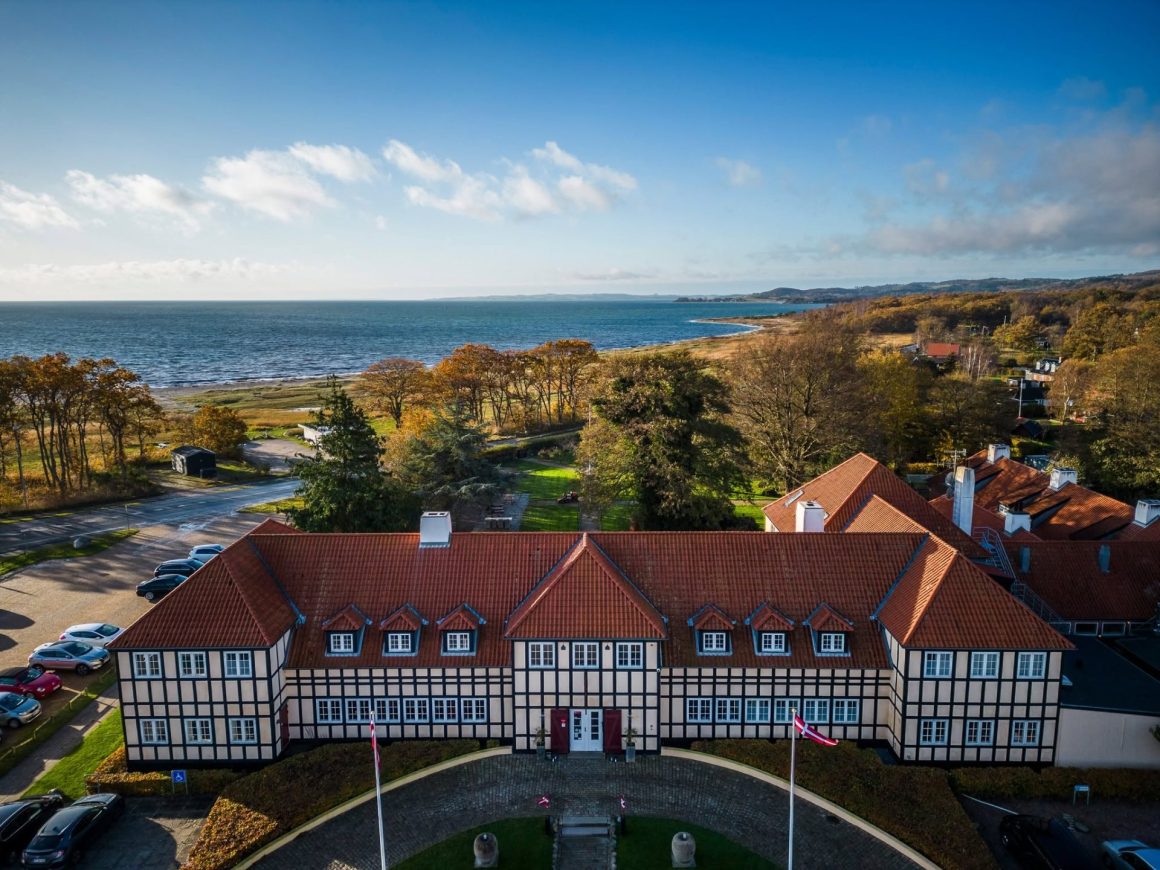
Built in 1923 by architect Egil Fischer on land he’d purchased from a farmer named Sigvard Sørensen, with the original vision of building “a new vacation village” at Femmøller Strand on the Mols peninsula in mid-Jutland. The vacation village never quite happened. The badehotel did, and it’s been one of Denmark’s most serious culinary addresses ever since.
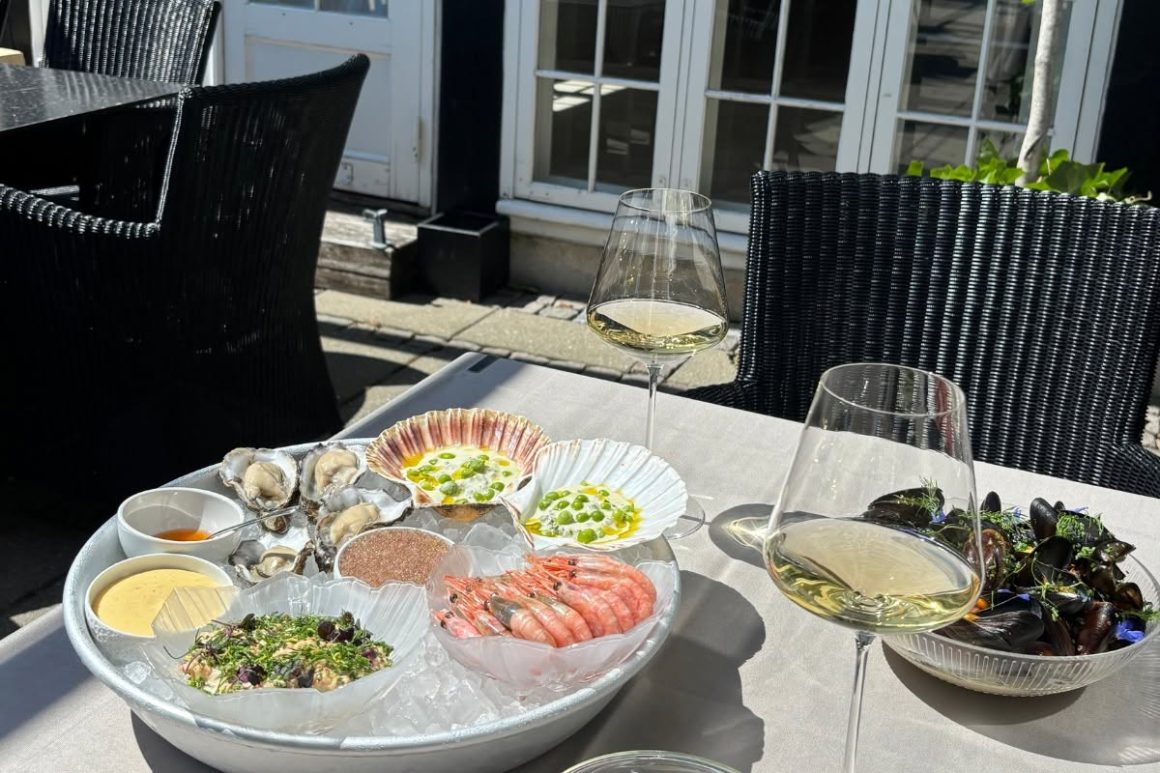
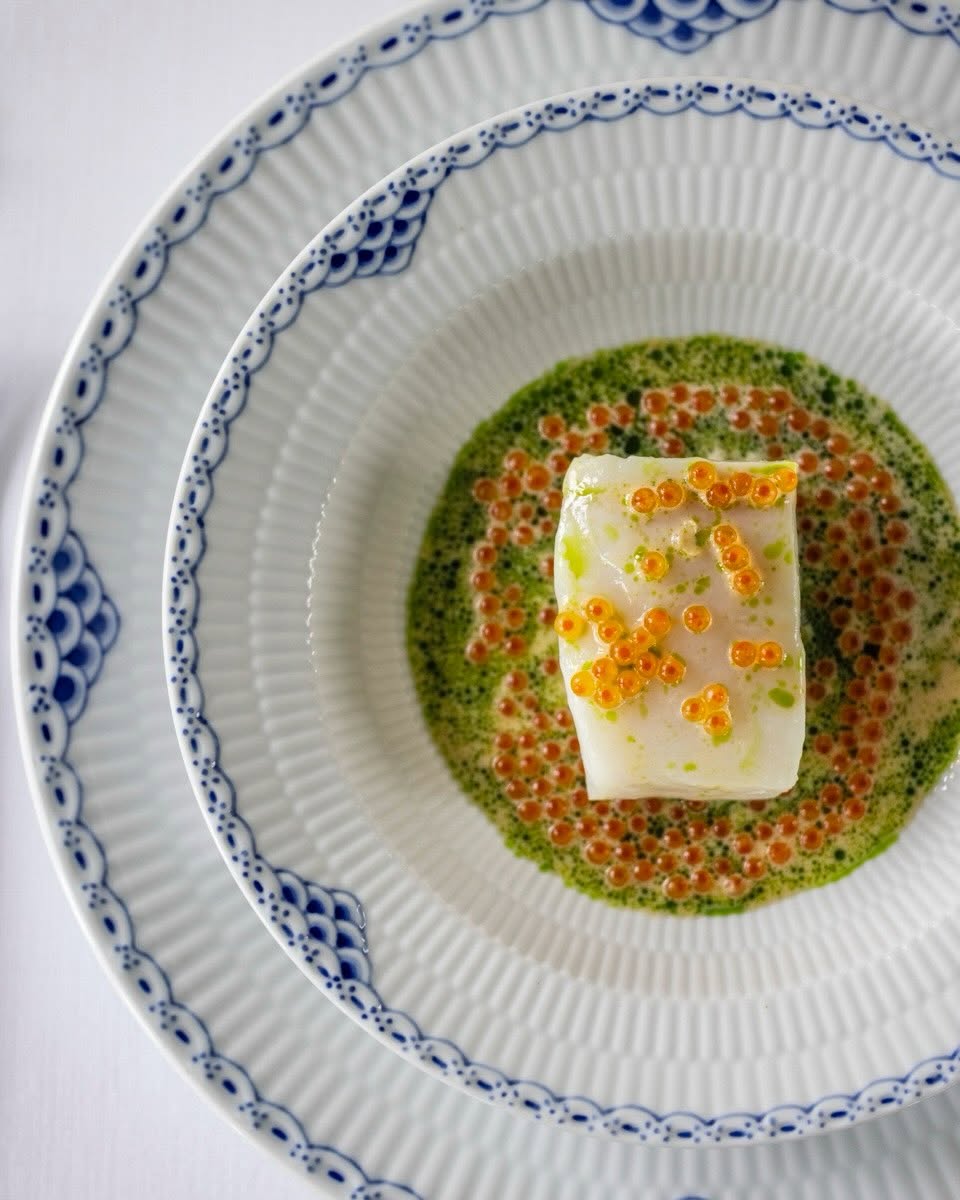
Star chefs Wassim Hallal, Michel Michaud, and Steffen Villadsen have all left their mark on the kitchen over the past decade. In 2021, Molskroen was awarded the Michelin Green Star for sustainable practices (an accolade it has held continuously since), and in 2020 the property was named Best Nordic Seafood Restaurant by 360eatguide.
The hotel itself is modest by comparison to the kitchen — a classic country-inn building with a small number of rooms, plus the more affordable sister property Strandhotellet Mols across the road for guests who want the same dining without the main-hotel price tag.
Rooms in the original kro have garden access and that particular kind of slightly-uneven, deeply-cherished historic charm. Mols and the Mols Bjerge National Park are right at the door; the beach is across the street.
Hovedgaden 16, 8400 Ebeltoft · +45 86 36 22 00 · from 2,300 DKK (~$350) per night · 4.6 on Google (428 reviews) · Strandhotellet Mols at Hovedgaden 31a for the more affordable option
5. Dyvig Badehotel — the Relais & Châteaux outlier on Als
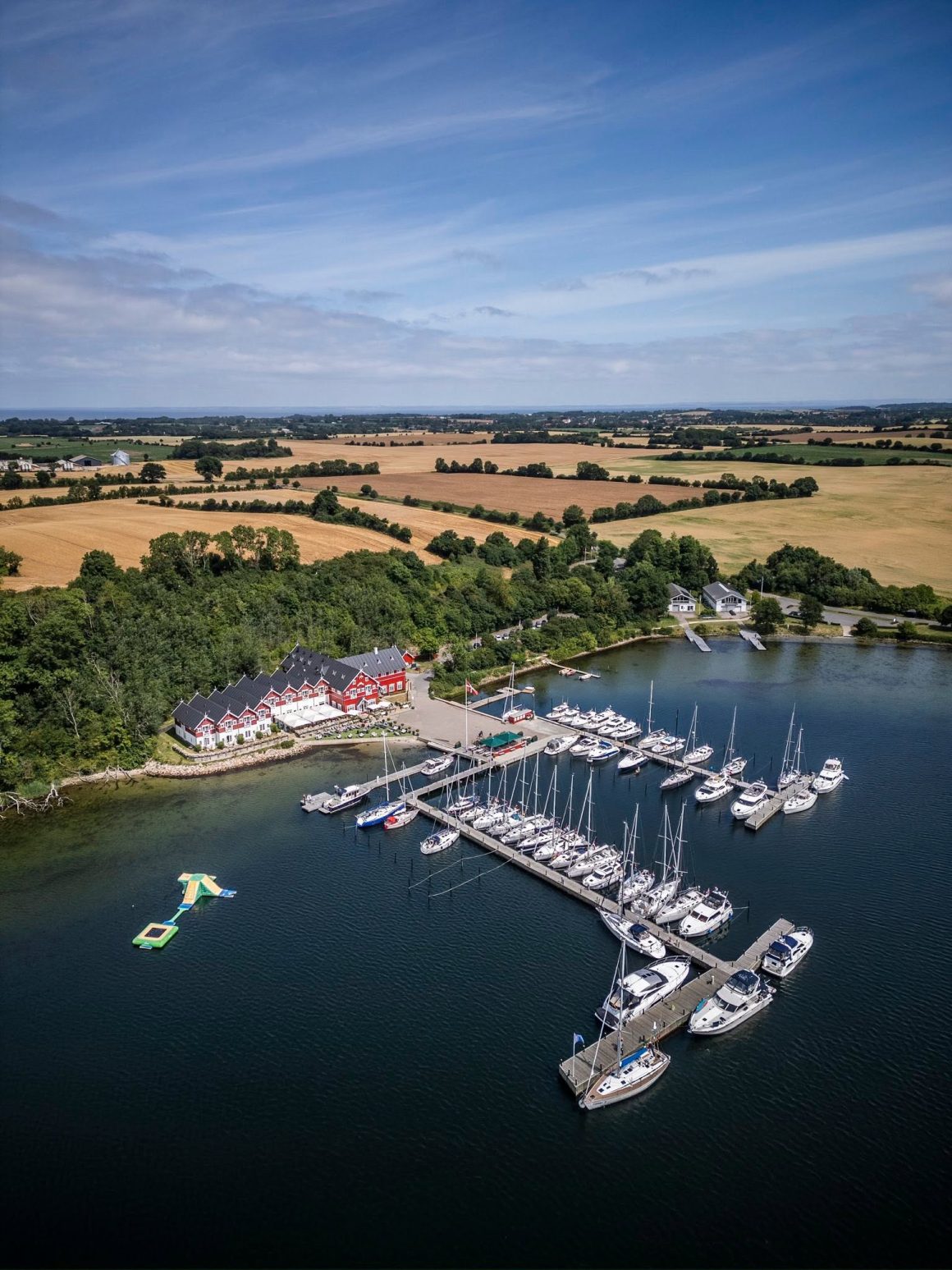
The South Jutland entry. Dyvig is a member of Relais & Châteaux — one of only a handful of Danish properties in the network — and operates as a five-star boutique countryside hotel on the small island of Als, just across the Alssund from the Danish-German border region. The defining sentence from the owners is “We define luxury as quiet tranquility, discretion and superior service, with great attention to detail” — and it lands as accurate.
The famous Red Saloon dining room has hosted Royal-family events and is the room you book for occasions; the Scandinavian-flair interiors run to original art and Royal Copenhagen porcelain.
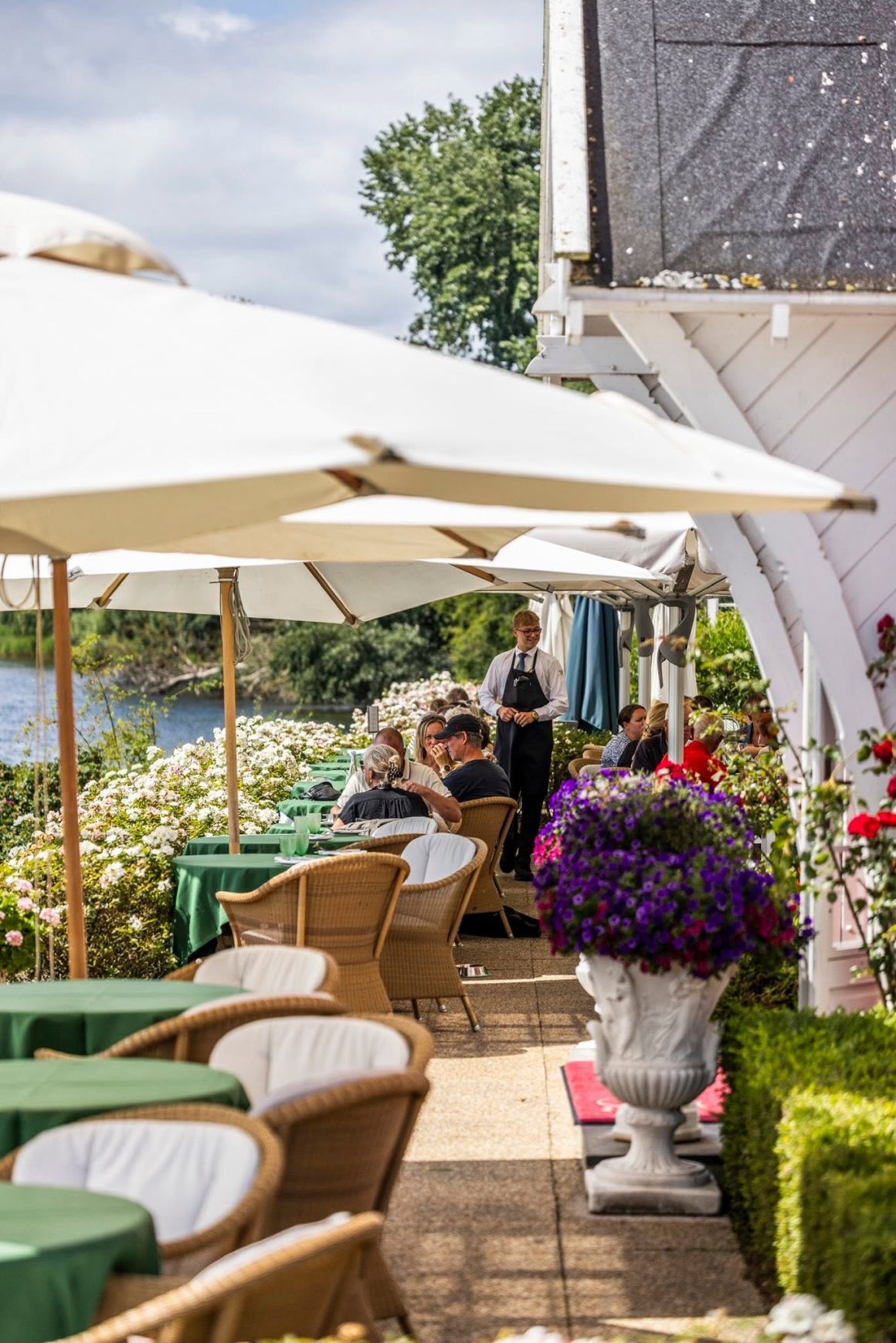
Service ratio is high, the room count low, and the location — at the head of the Dyvig fjord, with sailboats moored at the property’s own jetty — makes this one of the most genuinely tranquil entries on this list. Cuisine is rated among the strongest of any Danish small hotel.
Dyvigvej 31, 6430 Nordborg · +45 73 16 43 00 · from 2,450 DKK (~$380) per night · 4.5 on Google (1,325 reviews) · Relais & Châteaux
6. Strandhotel Røsnæs — for the Danish wine pilgrimage
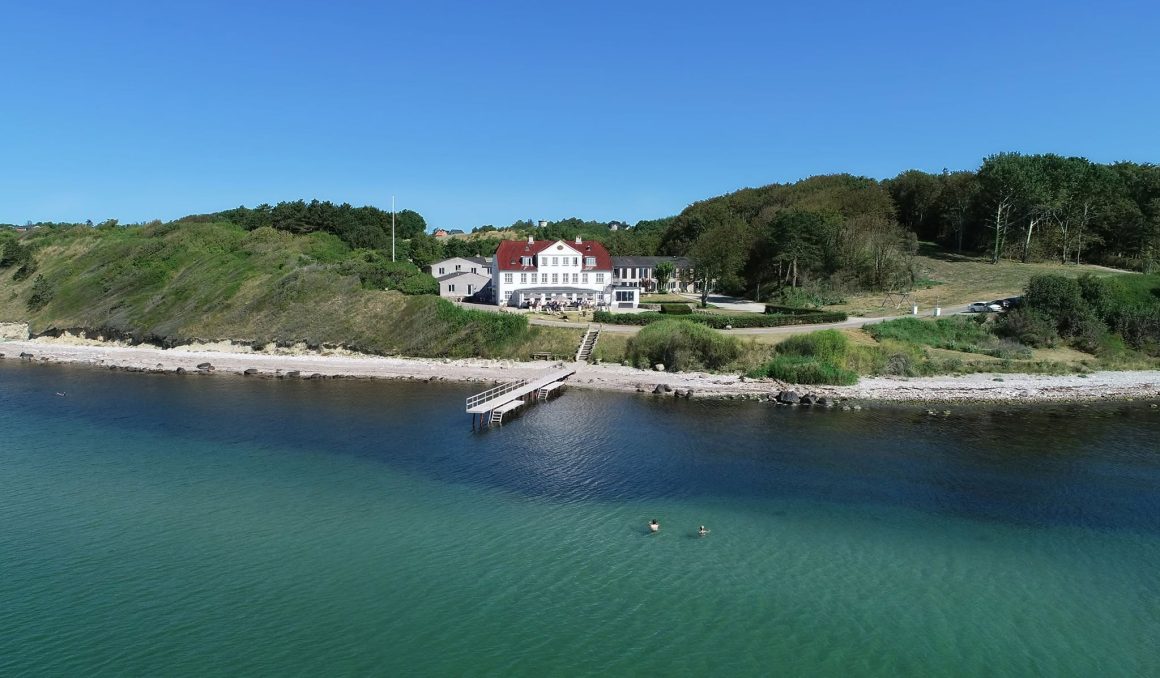
The unexpected one. Røsnæs, the peninsula jutting west from Kalundborg into the Great Belt Strait, has quietly become Denmark’s leading wine region — improbably, given the latitude — thanks to about 100 extra hours of sunshine and 140 mm less annual rainfall than the Danish average, plus chalky south-facing slopes that recall a small-scale version of the Loire.
Four working vineyards now operate within a few kilometers of the hotel, producing roughly 60,000 bottles a year, about 25% of all Danish wine. The geography is unusual enough that the closest vineyard, STUB Vingaard & Wine Tower, sits just 500 meters from the hotel’s front door; Dyrehøj Vineyard is 5 km away, Barfod Vin 9 km, Røsnæs Vineyard 11 km. Most guests do at least one vineyard tasting during a stay; some do all four.
The hotel itself is a classic-design Danish-modern property with a French-inspired restaurant (Restaurant Næs), a private pebble beach with a bathing jetty, a sauna booth out front with direct sea access, and rooms with sea or garden views. The hotel was named Denmark’s Best Beach Hotel in 2021 by Discover Denmark.
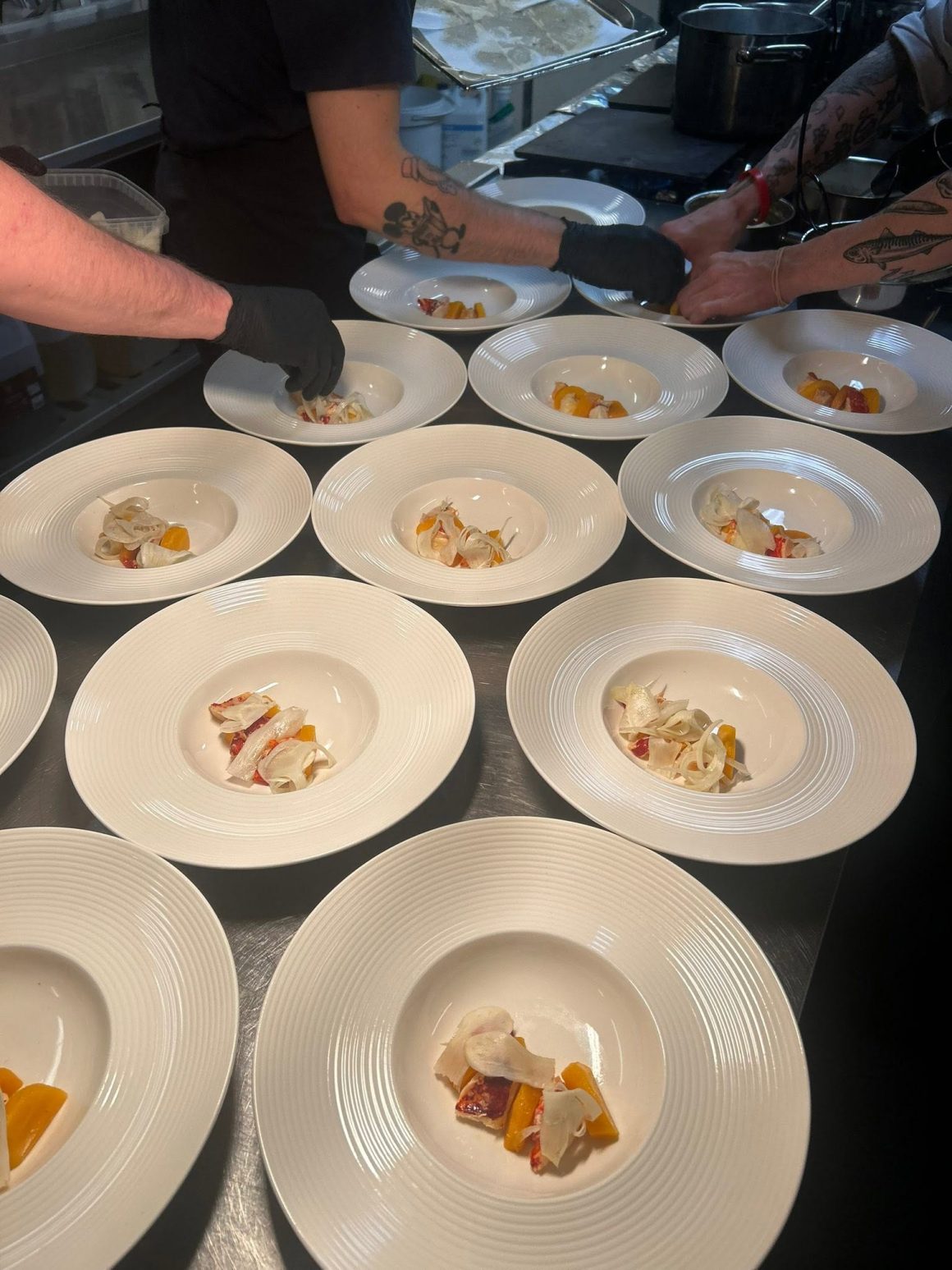
Beyond the vineyards, the immediate surroundings are unusually rich for the size of the peninsula: the Kongstrup Cliffs are 3 km away, Kalundborg’s iconic five-towered Church of Our Lady is 6 km, Røsnæs Lighthouse sits at the very tip at 12 km, and the Vågehøj Observation Post, a preserved Cold War radar bunker, is 11 km. Kalundborg Golf Club is 3 km away for guests who play.
Klintedalsvej 60, 4400 Kalundborg · +45 50 10 30 40 · from 3,825 DKK (~$590) per night · 4.1 on Google (299 reviews)
7. Helenekilde Badehotel — the Tisvilde grande dame
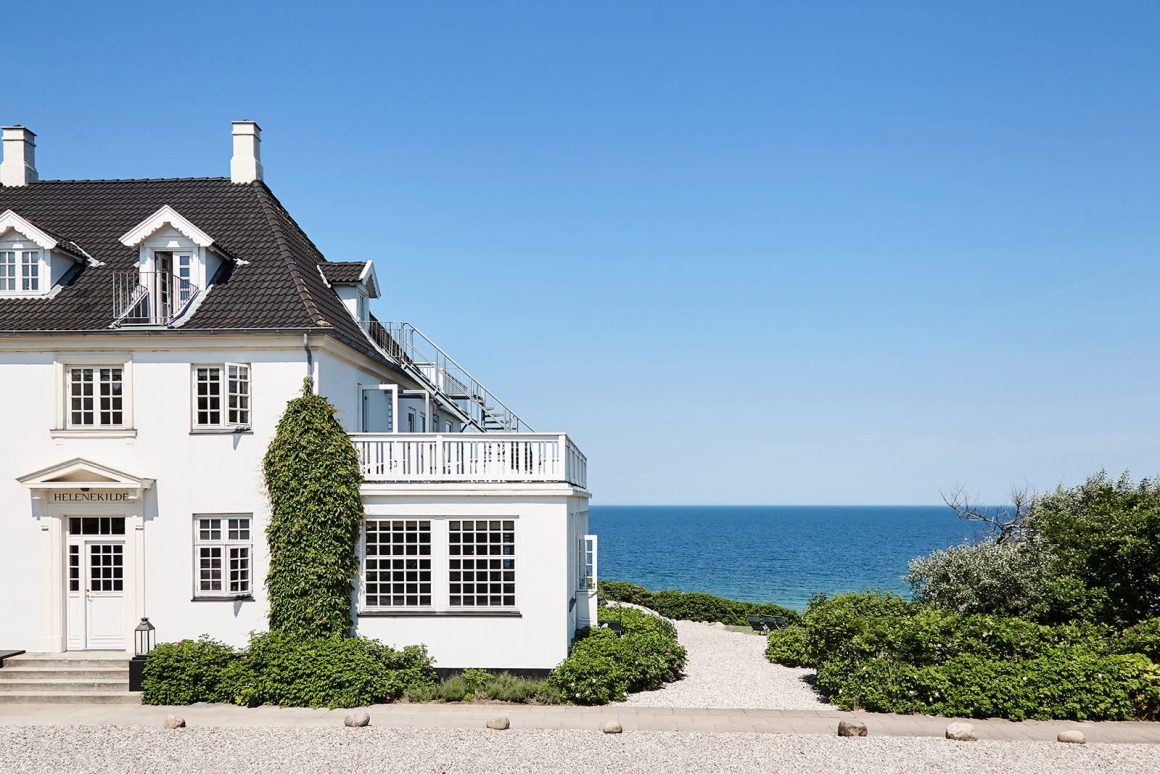
Built in 1896 by Mr. Grüner, a Supreme Court attorney in Copenhagen, as a private summer residence — a declaration of love to his wife and a tribute to the unspoiled beauty of the Tisvilde coastline. The villa was converted into a summer-and-bathing hotel in 1904 and named Helenekilde. The property has been a sanctuary for Tisvilde’s small artistic community ever since, and remains one of the most architecturally and atmospherically intact badehotels in Denmark.
The defining hospitality moments: Wine O’Clock, held daily between 4 and 5 p.m., where guests are offered a complimentary glass of red, white, or rosé from the property’s own Family Wine blend produced in Mallorca. Then Restaurant Kilden in the evening, with a seasonal four-course Signature Menu at 595 DKK per person (excluding beverages) — open to non-residents and a destination dining room in its own right.
The most popular package, the Helenekilde Stay with Signature Menu, bundles one night for two in a double room with the Wine O’Clock, the four-course Signature Menu, the Kildens Breakfast Table, and sauna access into a single rate. The new picture-window sauna with direct views out to the waves — added in a recent renovation — is one of the most-photographed wellness moments on this list.
Tisvilde Hegn, the unspoiled coastal pine forest right behind the property, is the morning-walk destination. The whole experience runs at a slower pace than almost anywhere else in Northern Europe.
Strandvejen 25, 3220 Tisvilde · +45 48 70 70 01 (or +45 46 40 00 40, dial 3 for reservations) · from 5,330 DKK (~$800) per night · 4.3 on Google (455 reviews) · the most expensive entry on this list, and the one most defenders argue earns it
8. Rødvig Kro & Badehotel — for the UNESCO cliff pilgrimage
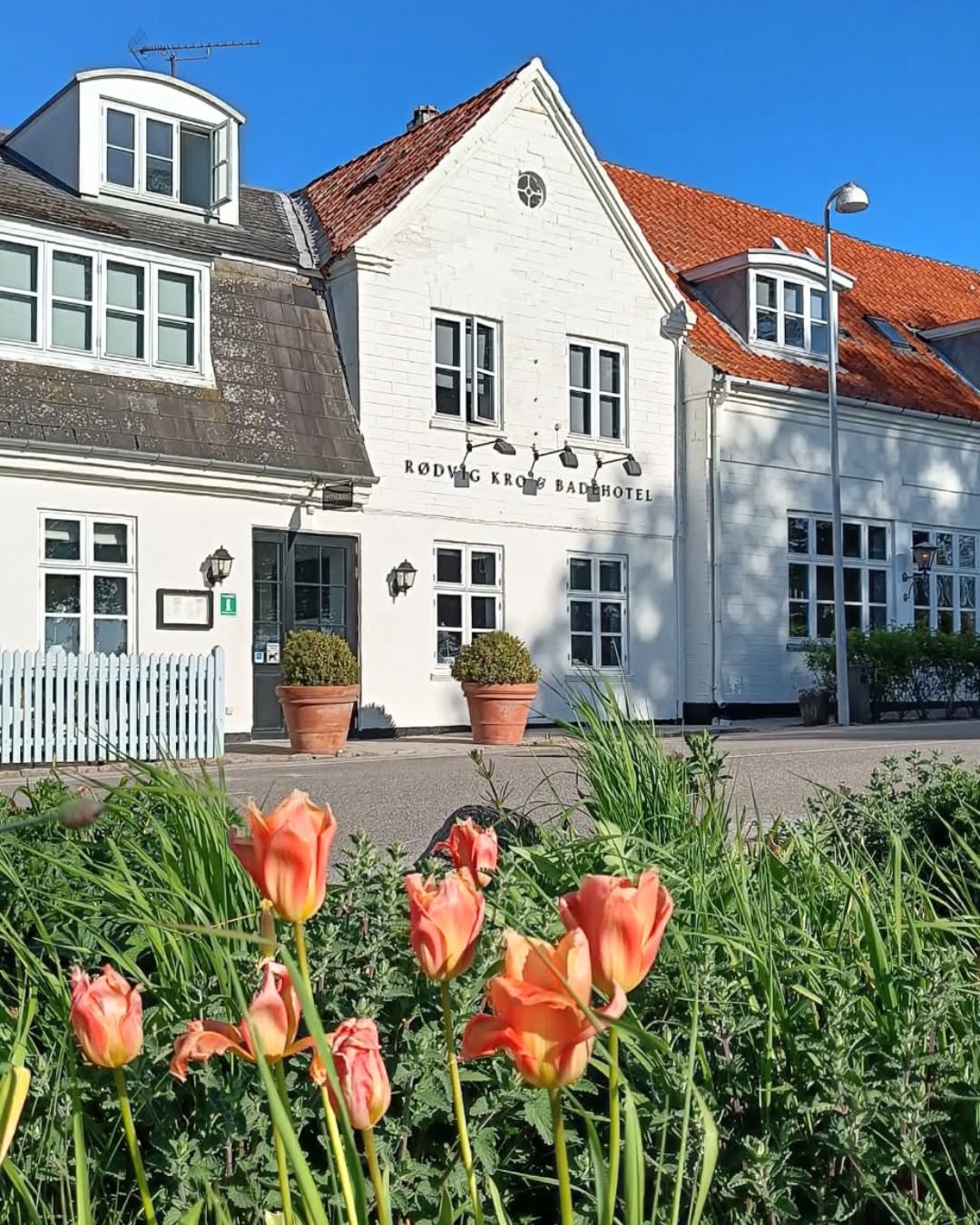
The badehotel built around its surroundings rather than the other way around. Stevns Klint — the dramatic 15-km stretch of chalk cliff that rises directly behind the hotel and runs north to Bøgeskov, in places to 41 m above the Baltic — became a UNESCO World Heritage Site in June 2014.
It is one of the world’s most important geological exposures of the Cretaceous–Paleogene (K–Pg) boundary: the thin “fish layer” of sediment, visible in the chalk face, that records the asteroid impact 66 million years ago that wiped out the dinosaurs and over half of all animal species on Earth.
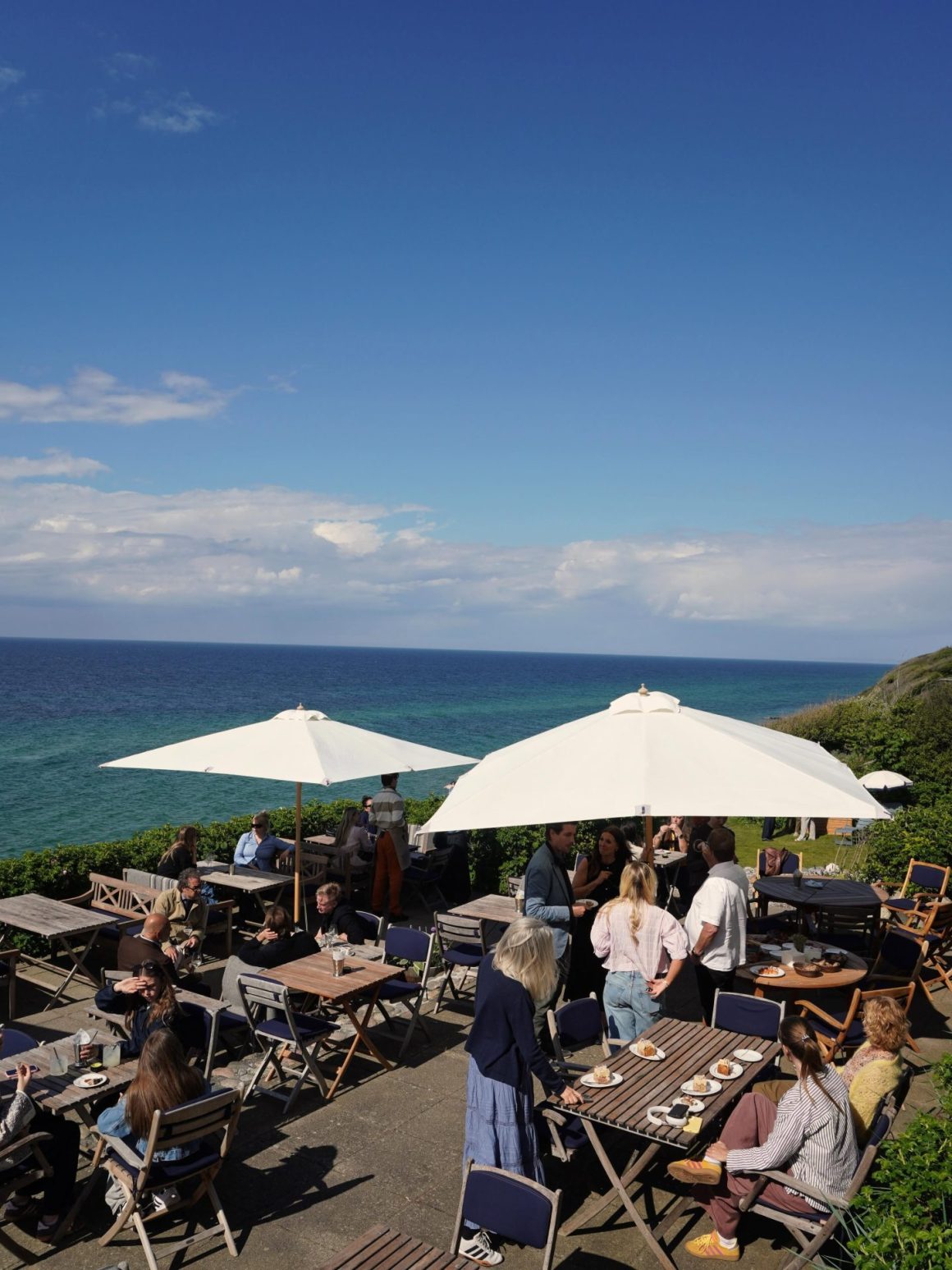
The hotel has the best views of the cliff of any property in Rødvig — from the public rooms, the upstairs sea-facing bedrooms, and the outdoor terrace.
Right across the street from the hotel is the start of the Trampestien — a remarkable 20+ km cliff-edge walking path running from Rødvig harbour to Bøgeskov harbour, made possible because more than 50 private landowners have agreed to keep the path along the edge of the cliff free for public passage.
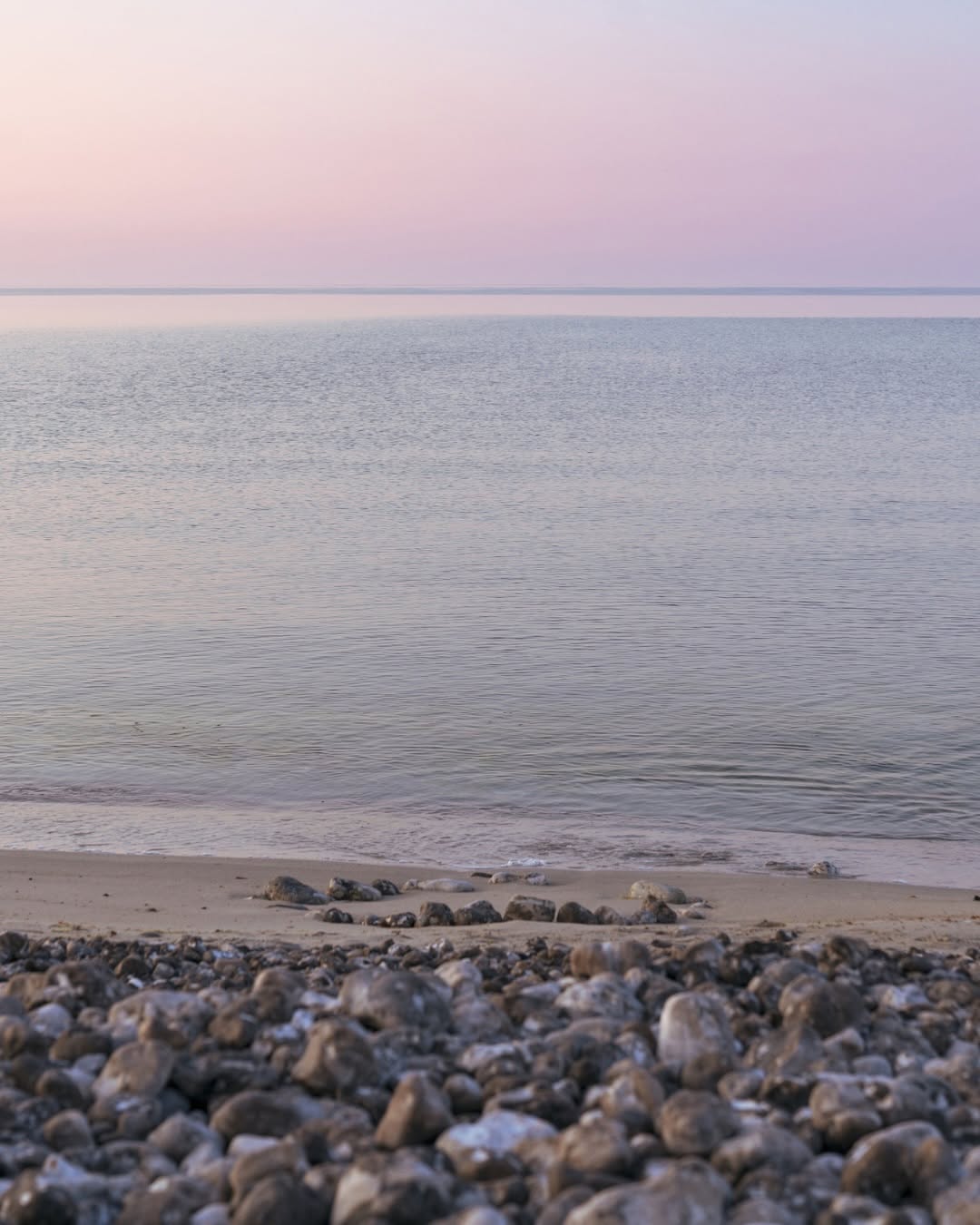
The walk along it is one of the great quiet hikes of Northern Europe. The historic Højerup Old Church at the cliff edge, the Stevnsfort Cold War Museum carved into the cliff itself, the Boesdal Quarry with its acoustically-perfect open-air concert space, and the Camp Adventure observation tower — a 45-meter spiraling structure rising above the Scandinavian boreal forest, the first of its kind on the continent and a one-hour drive from Copenhagen — are all within easy day-trip range.
The beach hotel also runs sea kayaks for guests (300 DKK per day for a 2-adults-plus-1-child set with life jackets) and runs a sister property, Stevns Klint Beach House, for buyouts and overflow.
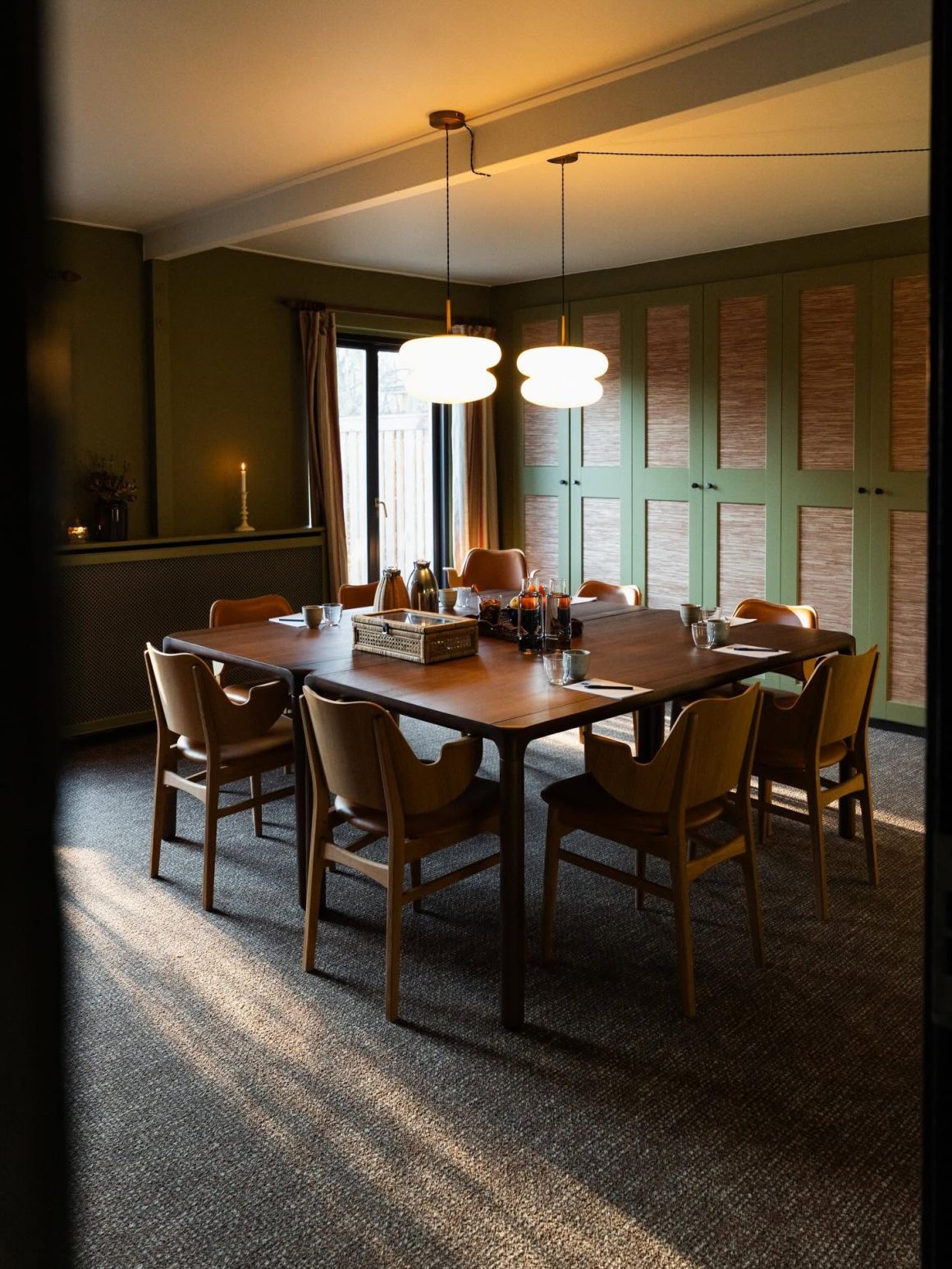
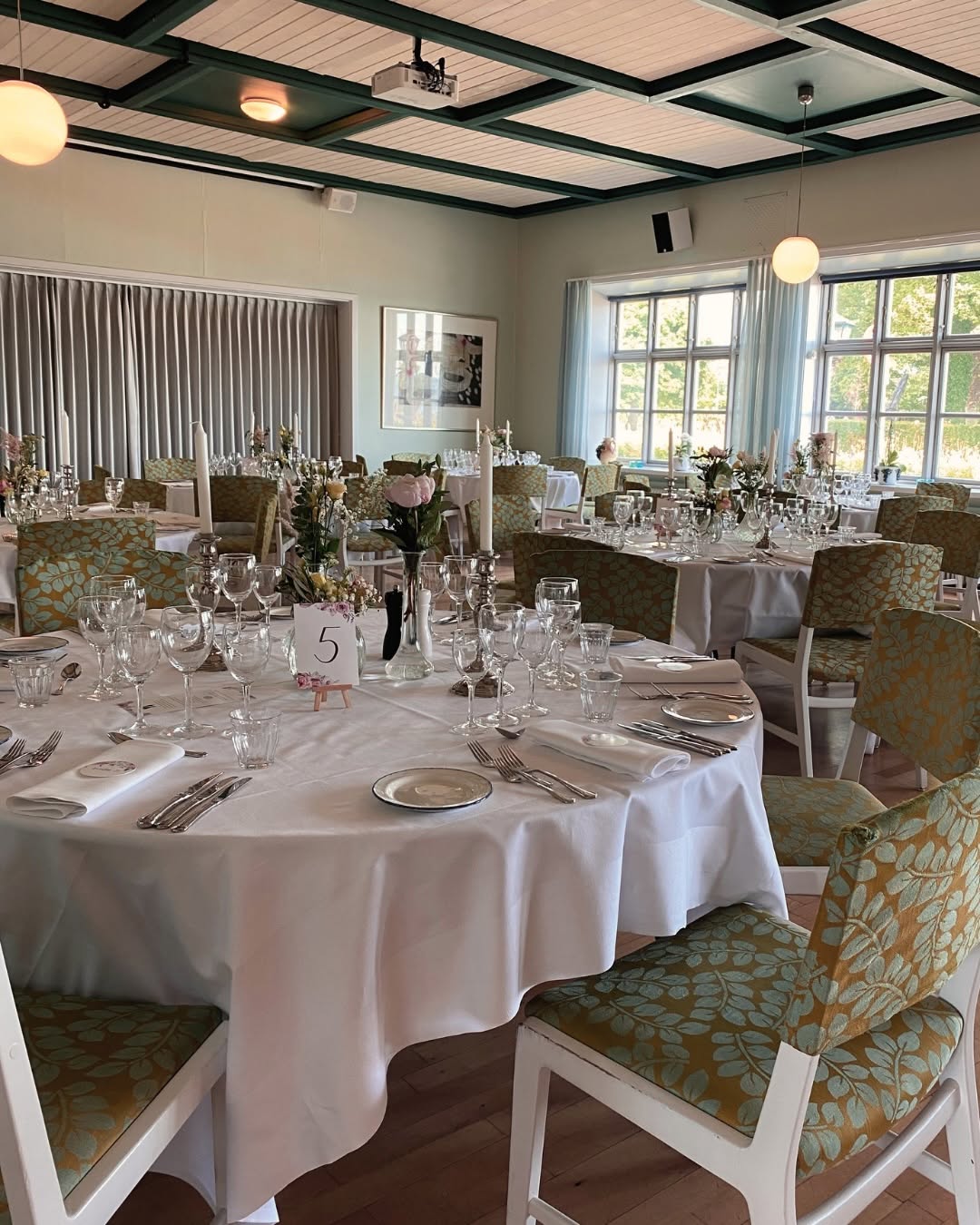
The hotel itself is a 19th-century kro plus an adjacent Chalk House (Kridtgården) accommodation building, with a country-Danish dining room, a quiet bathing jetty across the road, two fireplaces, a well-stocked library, and the kind of restorative two-night weekend rhythm that the Stevns coastline rewards. Rates include breakfast; the property is dog-friendly (350 DKK per dog per stay).
Østersøvej 8, 4673 Rødvig Stevns · +45 56 50 60 98 · from 1,120 DKK (~$170) per night (double, including breakfast) · 920 DKK single · 4.3 on Google (769 reviews) · one of the best-value entries on this list
9. Rox Resort Denmark — the luxury beach hotel newcomer that landed on the world top-100
The one entry that breaks the badehotel mold entirely — a brand-new resort, opened in 2025, half an hour from Copenhagen on the Køge marina. Rox is owned and operated by Swedish hospitality group ESS Group (CEO Jonas Stenberg), whose previous properties include Ystad Saltsjöbad, Hotel Pigalle in Gothenburg, and Ellery Beach House in Stockholm.
The interiors of the Danish luxury beach hotel were designed by ESS’s in-house design arm, Spik Studios (lead designer Lisa Claudelin), with a deliberately cinematic narrative — referencing Wong Kar-wai’s In the Mood for Love, Hong Kong textile traditions, and historic Chinese architectural forms — overlaid on a contemporary Nordic shell.
Velvety chalk-painted walls, deep red doors, marble, brass, soft oak. East meets West, the design brief in a sentence. Travel + Leisure named it one of the 100 best new hotels of 2026.
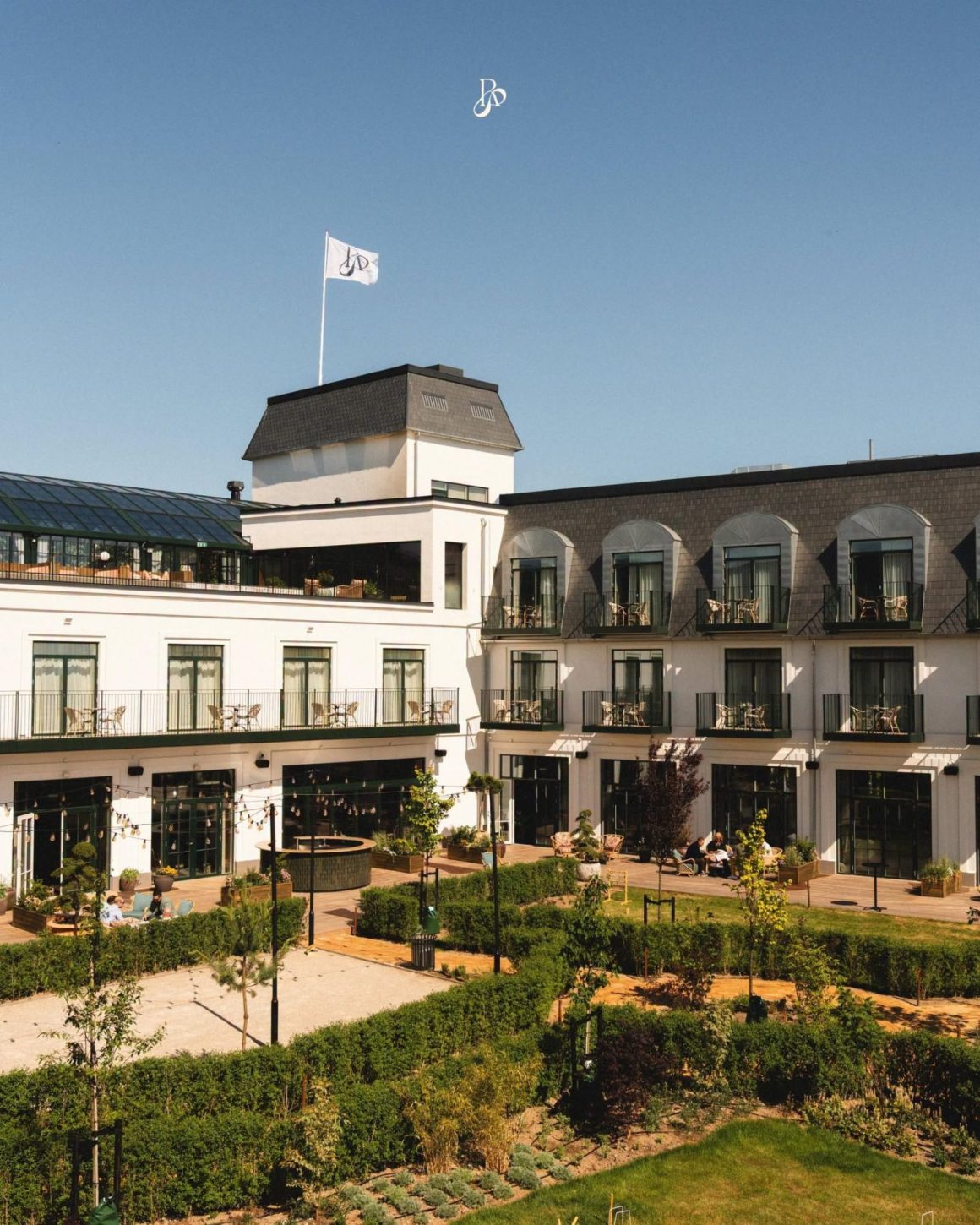
Accommodation runs across five categories, all built with private balconies and king-sized beds: the Elegant Park View (21–22 m², park-facing), the Deluxe Vista Retreat (26–36 m², park-facing, the most-booked category), the Premier Ocean View (21–24 m², oceanfront), the Paramount Junior Suite (33–36 m², two ocean-view balconies, the cinematic showpiece), and the Signature Suite (80 m², two bedrooms, separate living room, four balconies, two entrances — the rare full apartment experience inside a coastal resort). 156 rooms in total, 114 with direct ocean views, 168 balconies, six suites.
Three heated swimming pools — two on the rooftop (open to midnight) and one at ground level — plus a sauna with a sea view, a steam room, and a full-service spa. The spa runs Friday afternoons (3 to 7 p.m.) and weekends (10 a.m. to 7 p.m.), with Sports Massage and Physiotherapy Massage as the signature treatments — 30 minutes at 850 DKK, 60 minutes at 1,495 DKK, 90 minutes at 2,195 DKK; couples versions roughly double.
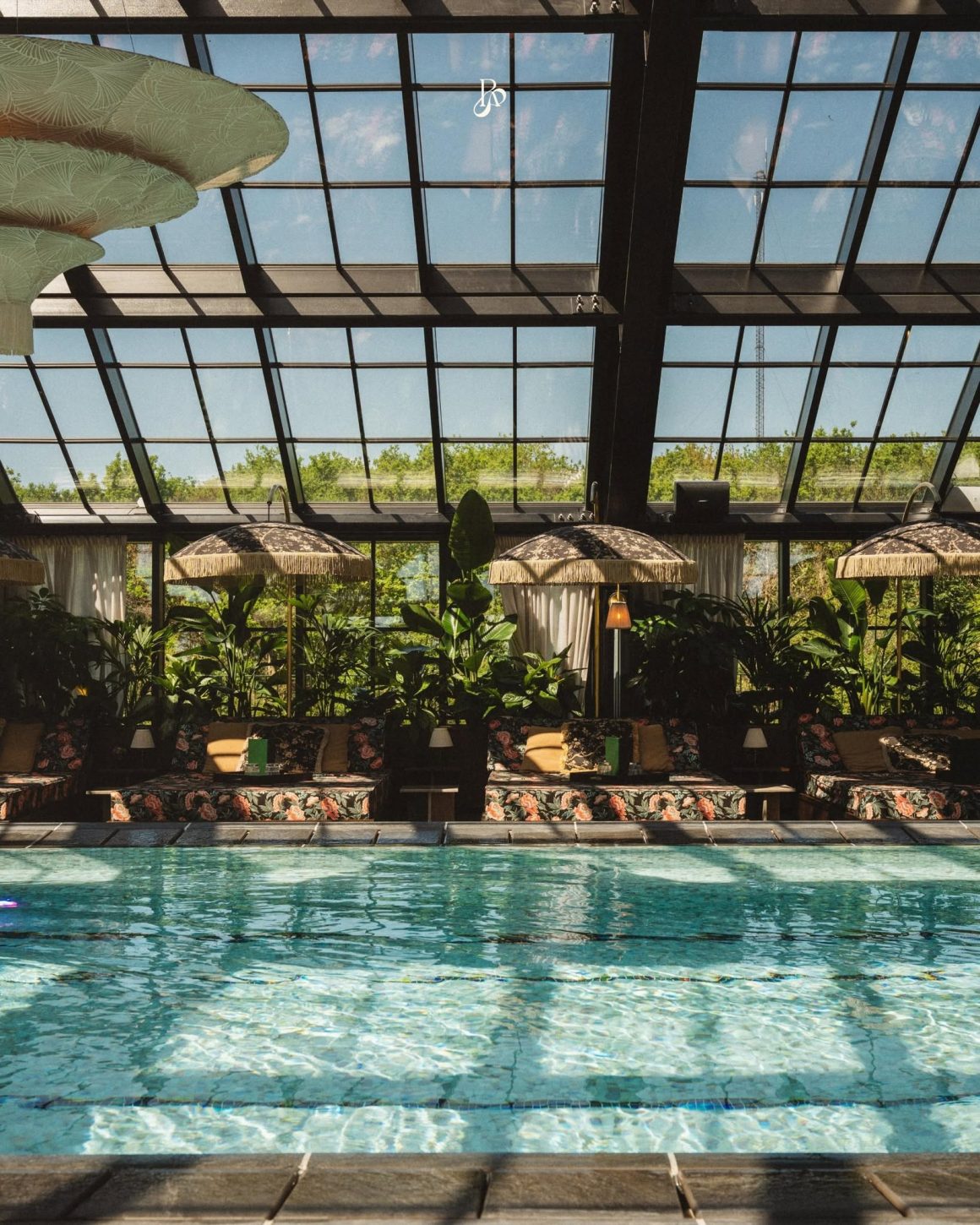
One detail that elevates this for grown-ups: the Pool Club is open to under-16s only between 8 and 10 a.m., after which it converts to an adults-quiet space for the rest of the day. The rooftop and the family pool remain family-friendly all day.
Two signature restaurants: Smith, the in-house take on a steakhouse with a Sichuan edge, and the more relaxed Dumpling Bar, serving handmade dumplings and sushi-leaning small plates poolside. The Birdcage is the late-night cocktail bar. The resort connects to the local district heating plant (powered primarily by wood waste from a nearby sawmill), making it one of Denmark’s most energy-efficient resort properties.
Nordstranden 10, 4600 Køge · +45 32 26 83 83 · from 1,950 DKK (~$300) per night · 4.3 on Google (158 reviews) · 30 minutes from Copenhagen by car, 5 minutes from Køge station
10. Stammershalle Badehotel — the Bornholm finale
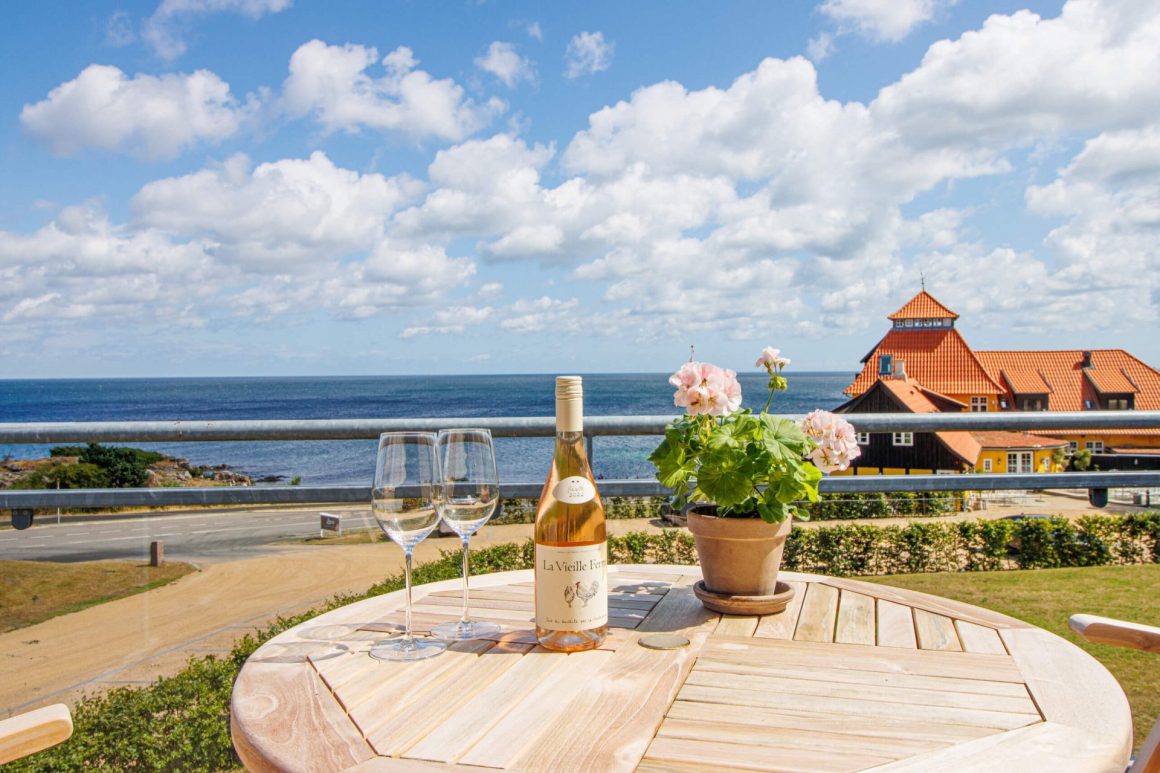
The only entry on this list on Bornholm, that small Baltic island east of mainland Denmark closer to Sweden than to Copenhagen, geologically distinct from anywhere else in the country (granite cliffs, smokehouses, fjord-shaped harbors). Stammershalle was built in 1911 on the rocky coastline between the fishing villages of Tejn and Gudhjem, with sea views across the Baltic toward the rocky outcrop of Christiansø. The main building has the classic badehotel form; a newer wing adds contemporary sea-view rooms in a clean Danish-modern vocabulary.
The destination-grade wine cellar is part of the appeal — Stammershalle runs hosted wine evenings through the season, with bottles dating to the late 1990s available for tasting. The kitchen offers either a daily set menu (two courses) or a four- or seven-course tasting menu in the evenings.
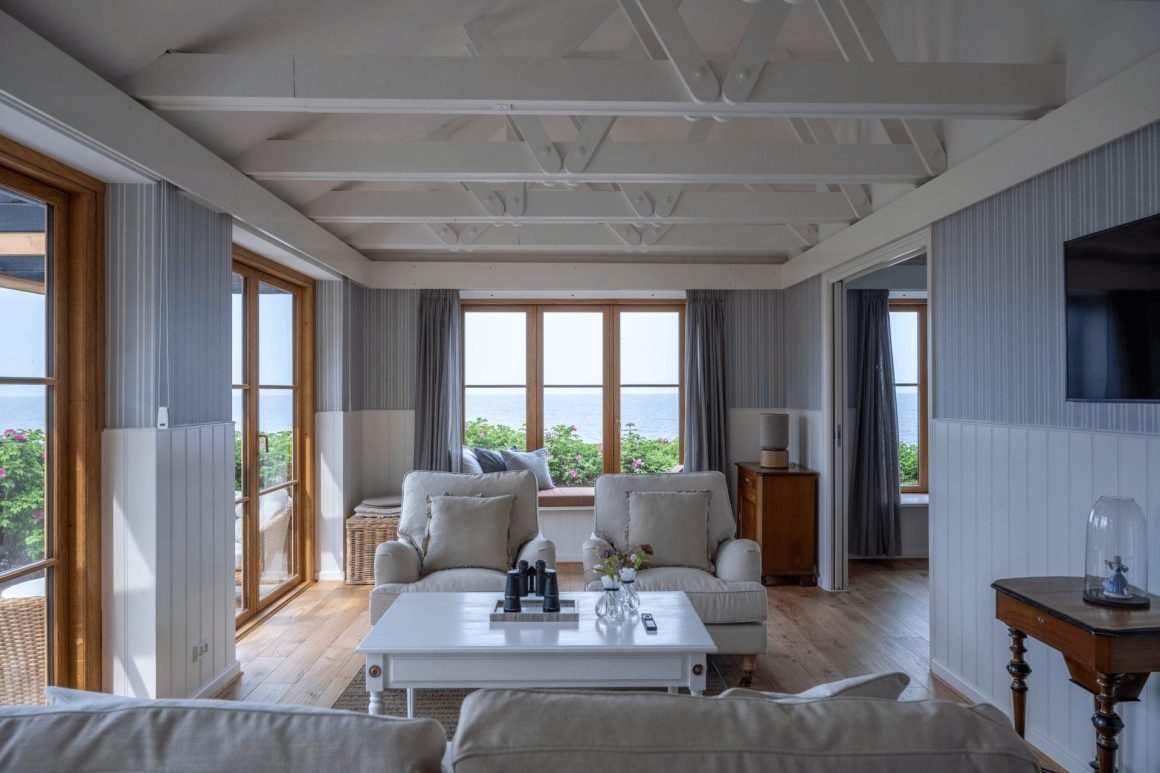
The new Stammershalle Cliff Spa — an outdoor wellness installation built directly into the coastal rocks with the Baltic Sea and Bornholm’s granite cliffs as the immediate setting — opened in the most recent renovation and is one of the more unusual wellness experiences in Northern Europe. Cycling routes leave directly from the hotel into the rest of the island; rentals available on-site.
Søndre Strandvej 128, 3760 Kås, Bornholm · +45 56 48 42 10 · from 2,450 DKK (~$380) per night · 4.6 on Google (424 reviews) · ferry from Copenhagen or 35-minute flight
Where to go from here
The Danish badehotel is having a quietly excellent decade. New builds like Rox Resort prove the format can absorb international design ambition without losing its character; restorations like Svinkløv prove the originals can be carried forward without dilution; and the wine, food, and wellness layers across the category have moved from “Danish countryside acceptable” to “genuinely competitive with anywhere in Northern Europe.”
For more on Northern Europe’s quieter design hotel scene, see our pieces on the new luxury hotels we’re watching in 2026 and on hotels that are more than an Instagram backdrop. Our boutique hotels coverage tracks the broader category across Europe.
Which beach hotel in Denmark is best for you?
- If your priority is design and architecture: Henne Mølle Å for the Poul Henningsen pilgrimage, Svinkløv for the rebuild story, Rox Resort for the contemporary statement.
- If it’s food, first and last: Molskroen (Michelin Green Star), Svinkløv (Bocuse d’Or chef), Henne Mølle Å (97% organic and the most ambitious à la carte on this list), Helenekilde (Wine O’Clock and the Signature Menu).
- If it’s wellness and spa as the main reason to come: Ruths Hotel (the most complete in-house wellness on the list), Stammershalle (the cliff spa is a one-off), Rox Resort (three pools, full spa, sea-view sauna, and adults-only pool hours after 10 a.m.).
- If it’s the Danish wine region story: Strandhotel Røsnæs, hands down — with STUB Vingaard 500 meters from the front door and three more vineyards within 11 km.
- If it’s the UNESCO + serious hiking weekend: Rødvig Kro & Badehotel, base for the 20-km Stevns Klint Trampestien and the K–Pg cliff itself.
- If it’s a quick Copenhagen-weekend break: Rox Resort (30 minutes), Helenekilde (1 hour), Rødvig (1 hour), Strandhotel Røsnæs (1.5 hours).
- If it’s the full Danish-coastline pilgrimage: Ruths Hotel at the top of Jutland, Svinkløv on the North Sea, Molskroen on Mols, Dyvig at the south. Four nights, two driving days, end at the German border.
- If you want the off-mainland finale: Stammershalle on Bornholm — the most geologically distinct, the most isolated, the closest a Dane gets to a Greek-island feel without leaving Denmark.
- If you’re planning a wedding, a milestone, or a company retreat: all ten of these properties accept full or partial buyouts and run dedicated event programming — Dyvig Badehotel for the Relais & Châteaux service ceiling, Sublime Comporta-class. Molskroen for the gastronomy-led offsite. Rox Resort for corporate scale (156 keys, eight conference spaces, three pools, two restaurants, all under one roof). Helenekilde for the small, romantic, atmosphere-led wedding. Strandhotel Røsnæs for a wine-and-nature corporate weekend. Each property’s website has a dedicated venue or events page — and most are bookable for groups directly with the property’s event team.
The German thermal-spa tradition still owns the top of the European wellness pyramid. But for a long weekend of seafood, sea views, slow rituals, and the specific kind of warmth that closes in around you when the wind picks up off the dunes — Denmark has had this figured out for over a century.