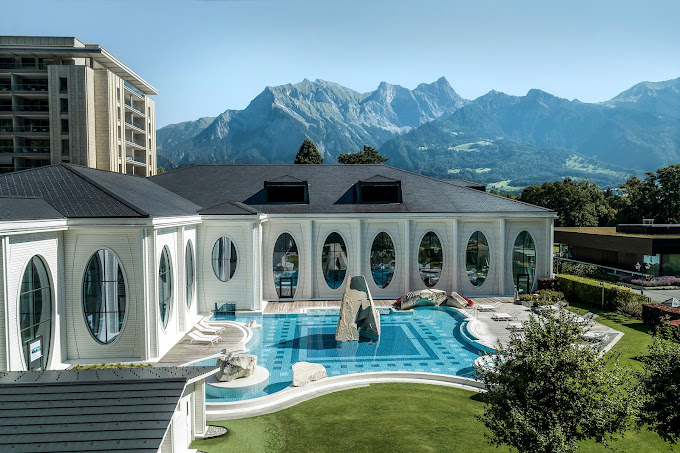

Detox on 850 calories a day, endless massages, and one peach for breakfast — we tried Switzerland’s elite wellness retreat at Chenot Palace Weggis. Would we do it again? Probably not…
After a whirlwind of travel — from Mauritius to London, Paris, and Copenhagen — Martin and I were pretty much running on champagne and restaurant dinners. We were exhausted, bloated, and honestly just craving a reset. Somewhere between Paris and London on the Eurostar, we spotted an article about the top detox retreats in Europe. It felt like a sign.
We wanted something close, peaceful, and easy to reach. That’s how we landed on Chenot Palace Weggis, Switzerland — a lakeside retreat with a mild subtropical climate, palm trees, and fresh Alpine air. Plus, it was just a 10-minute walk to Villa Rachmaninoff. Sold.

What Is Chenot Palace?
Chenot is a luxury wellness brand founded by Henri Chenot back in the 1970s. Today, Chenot clinics can be found in Switzerland, Italy, Morocco, and even Azerbaijan.
The Chenot Palace in Weggis is the brand’s flagship property. It’s not just a hotel — it’s a medical spa with high-tech labs, futuristic therapies, and strict detox protocols (not always though, we saw people cheating and consuming their food). Prices aren’t exactly cheap; programs often start around CHF 6,000 and can go well above CHF 10,000 depending on how many tests and treatments you add. Who stay here? Mostly Americans and Russians, many returning customers.
The Chenot Method: “Kill You to Heal You”
Chenot’s philosophy is simple and tough: “What doesn’t kill you makes you stronger.” The whole idea is to put your body into a stressed state so it triggers cellular repair and autophagy (your body’s own cleaning system).
In short? Controlled discomfort for a bigger long-term gain.
What’s the Fasting-Mimicking Diet at Chenot Palace Weggis?
A big part of the Chenot Method is the Fasting-Mimicking Diet (FMD). It’s a plant-based, low-protein, low-calorie diet designed to mimic the effects of fasting — without actually starving you completely.
It was originally developed by Dr. Valter Longo, a professor of gerontology and biological sciences at the University of Southern California. The diet is based on years of research into longevity and cellular regeneration
You eat about 850 calories a day (yep, you read that right), no animal protein, no sugar, no salt, no alcohol. It lasts at least five days to push your body into repair mode. The first couple of days were brutal, but then you weirdly get used to it and just drift on autopilot.

Why mimic fasting?
When you truly fast (no food at all), your body goes into a protective, repair-focused state. It starts breaking down old or damaged cells (a process called autophagy), reducing inflammation, and triggering regeneration. But full fasting can be really hard, risky, and not super fun (imagine zero meals for five days straight!).
The FMD offers a gentler alternative. By drastically reducing calories (usually around 700–1,100 per day), lowering protein (especially animal protein), and keeping carbs and fats in controlled amounts, your body “believes” it’s fasting.
What do you eat?
In most FMD programs, including at Chenot, meals are plant-based, low-protein, low-sugar, and very low-calorie.
At Chenot Palace, for example, you get about 850 calories per day. The meals are designed to support autophagy and detox while still providing just enough fuel to function and not collapse halfway through a massage.
Why at least 5 days? Because of Autophagy
The key magic happens when your body stays in this fasting-mimicking state for a sustained period — usually at least five days. That’s when the repair and regeneration processes really kick in, encouraging:
- Autophagy: Your body breaks down and recycles old cells and proteins, basically “cleaning house.”
- Reduced inflammation: Helps fight chronic diseases and supports long-term health.
- Cellular renewal: New, healthier cells start replacing the old ones.
- Fat loss: As glycogen stores deplete, your body starts burning fat for fuel.
Shorter periods (like one or two days) aren’t enough to fully trigger these deep metabolic changes.
What’s the big idea?
The main goals of the FMD are to reboot your metabolism, boost your body’s natural repair systems, and promote longevity — all without the extreme discomfort of complete fasting.
In theory, after completing an FMD, your body should be better at fighting inflammation, aging more slowly, and even resisting certain diseases.
We chose the “Recover & Energise” program (CHF 6,400). It included a medical check-up, daily treatments, and of course, the diet.
Getting There
It’s pretty easy to reach Chenot Palace Weggis from Zurich. You take a train to Küssnacht (about 1 hour 20 minutes, CHF 51), then a 15-minute taxi (CHF 30) to the hotel.
By the way, there is a road (not busy but still) separating the beach and the rest of the hotel, you can’t see it on the pictures advertised. The transfers from and to Weggis train station is free of charge.
When we arrived at Chenot Palace, we were welcomed with a sugar-free juice (refreshing, but definitely not sweet) and met by a friendly nutritionist. Our room was already ready, but before settling in, we had to pay a deposit of €1,400 per person.
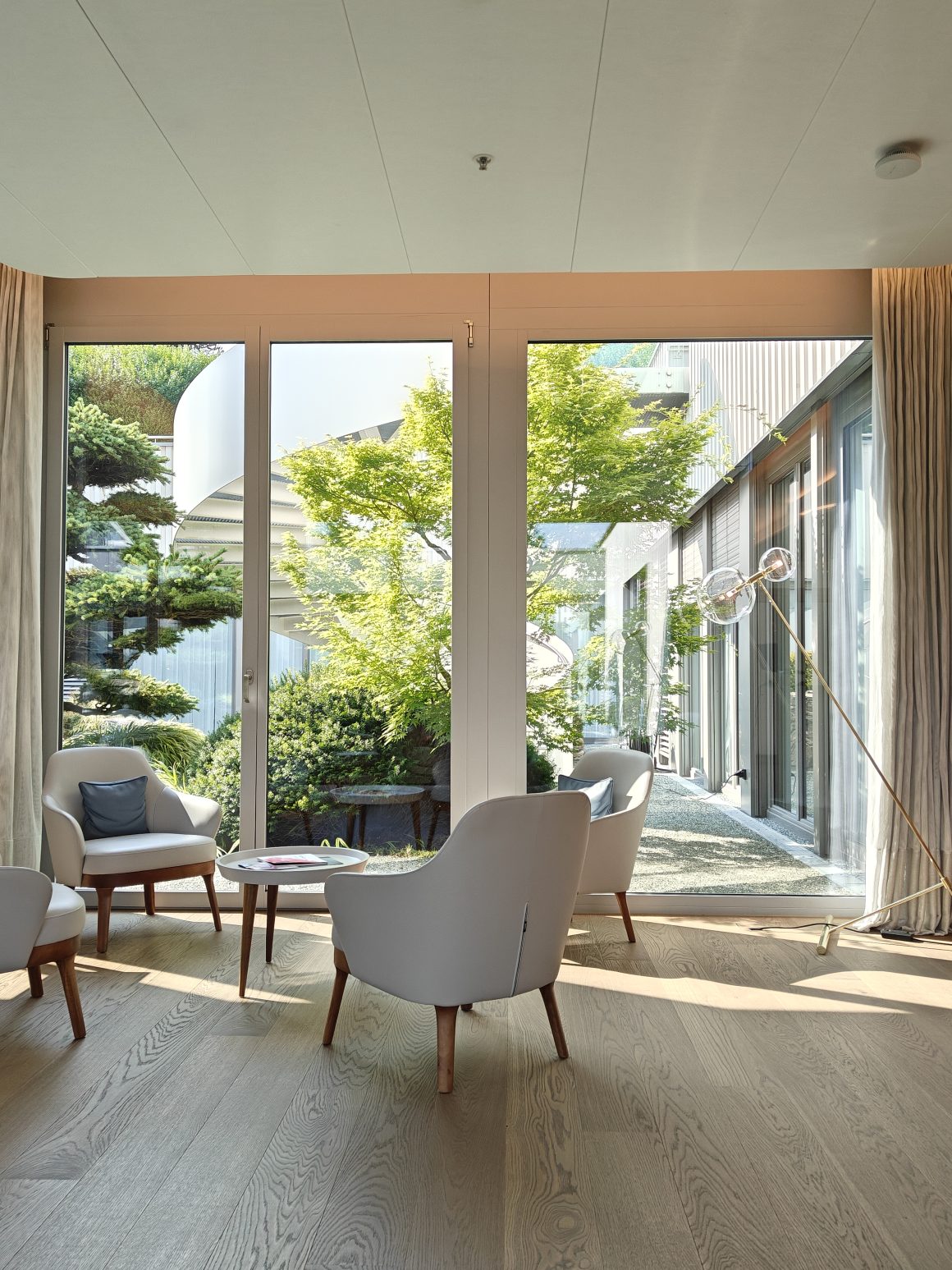
We were also asked to download the MyChenot app, which turned out to be super handy — it showed our daily schedule, treatment times, and even our running tab for extra services. Right away, I booked a back and shoulder massage and a personalized facial (why wait, right?). After that, we had a chat with a nice Italian nutritionist who broke down what the program was all about and set the tone for the detox days ahead.

Our Shared Palace Room (1st Floor)
We shared a spacious room 103 in the historic building on the first floor, close to the elevator to the private lake beach. It costs around $650 per day (cheaper than booking two rooms).


The view from the terrace over Lake Lucerne and the mountains was stunning. But the furniture? Odd. There was a giant table blocking the way to the balcony, which we eventually asked them to remove. The lighting in the bathroom was so bright that we ended up moving a table lamp in to create a more relaxing spa vibe.
It was missing flowers and a bathtub, but they brought us fresh flowers for free upon request.
The mornings were peaceful… except when they started mowing the lawn at 8 am. A 9 am start would have been kinder since most guests are still busy in treatments.

The Spa, Pool & Fitness Center
The spa at Chenot Palace sounded fancy on paper, but to be honest, we’ve seen better. It has a steam room, hammam (though it was under maintenance the entire seven days we were there), a mixed sauna, and a women-only sauna — probably for the guests who prefer more privacy. One woman even swam in the pool fully covered, and I’m not totally sure if she ever used the shower after.
Meanwhile, we saw another girl stroll into the spa casually puffing on a vape, and one guest bragging about dropping from 78 to 73 kg in four days (and then proudly confessing he “rewarded” himself with a secret croissant).

The indoor swimming pool is big and spacious, around 20 meters long — great for real laps. They use chlorine rather than sea salt or ozone, so it felt more like a traditional pool.
The fitness center, though, was top-notch. It had great equipment, including special machines to help people recover from knee injuries. Mario, the friendly instructor, gave me great tips on how to build muscle, do proper pull-ups and push-ups, and guided me on the balance machine (SensoPro) — super fun and probably helpful.
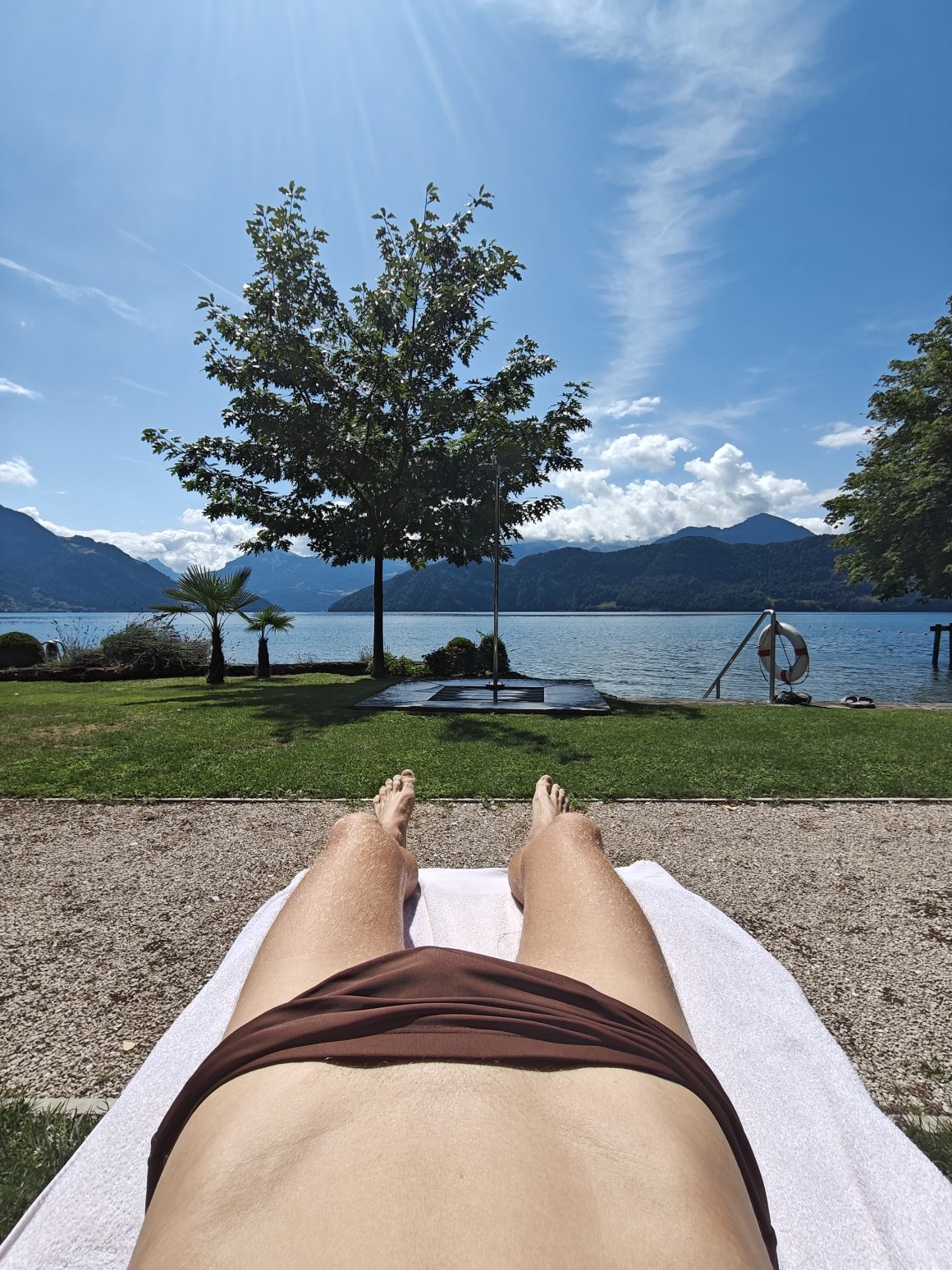
One of our favorite parts was the private beach area. You take the elevator down to floor minus two, then walk under the road to reach it. The water is super clean in the mornings, there are showers, towels, and water all set up. It’s pretty quiet, and you get an incredible view of the lake and mountains. Swimming there feels magical — you float with the ducks and just pray you don’t bump into a giant catfish.
Medical & Nutrition Consultations
The program kicked off with an intro session where we talked about health, food habits, and lifestyle. Think of it like a mini health interview.
Then we had a more detailed medical consultation. It included optional add-ons like mRNA panels to check inflammation markers and neurological health. Nothing felt too gimmicky — it all seemed backed by science.
The idea is to use calorie and protein restrictions (no animal proteins!) to kickstart cellular repair. Treatments are also designed to raise body temperature to help the sympathetic system flush out toxins.
Our nutritionist gave us a final review with recommendations. We got the same printed sheets from the doctor, plus a few extra comments. For example, they suggested adding brown bread in the mornings, which was funny because I had just said I avoid bread at home.
The Food at Chenot Palace Weggis & Second Day Headache
Chenot’s diet is fully plant-based — no meat, no eggs, no dairy, no sugar, no alcohol. You even have to say goodbye to regular salt. I must admit – the next day was terrible, I had a horrible headache, probably because my body was asking Hey, where is my coffee, eggs, chicken and all of that cool stuff? Then it got used to, but the mood was swinging, which is normal, we were warned.
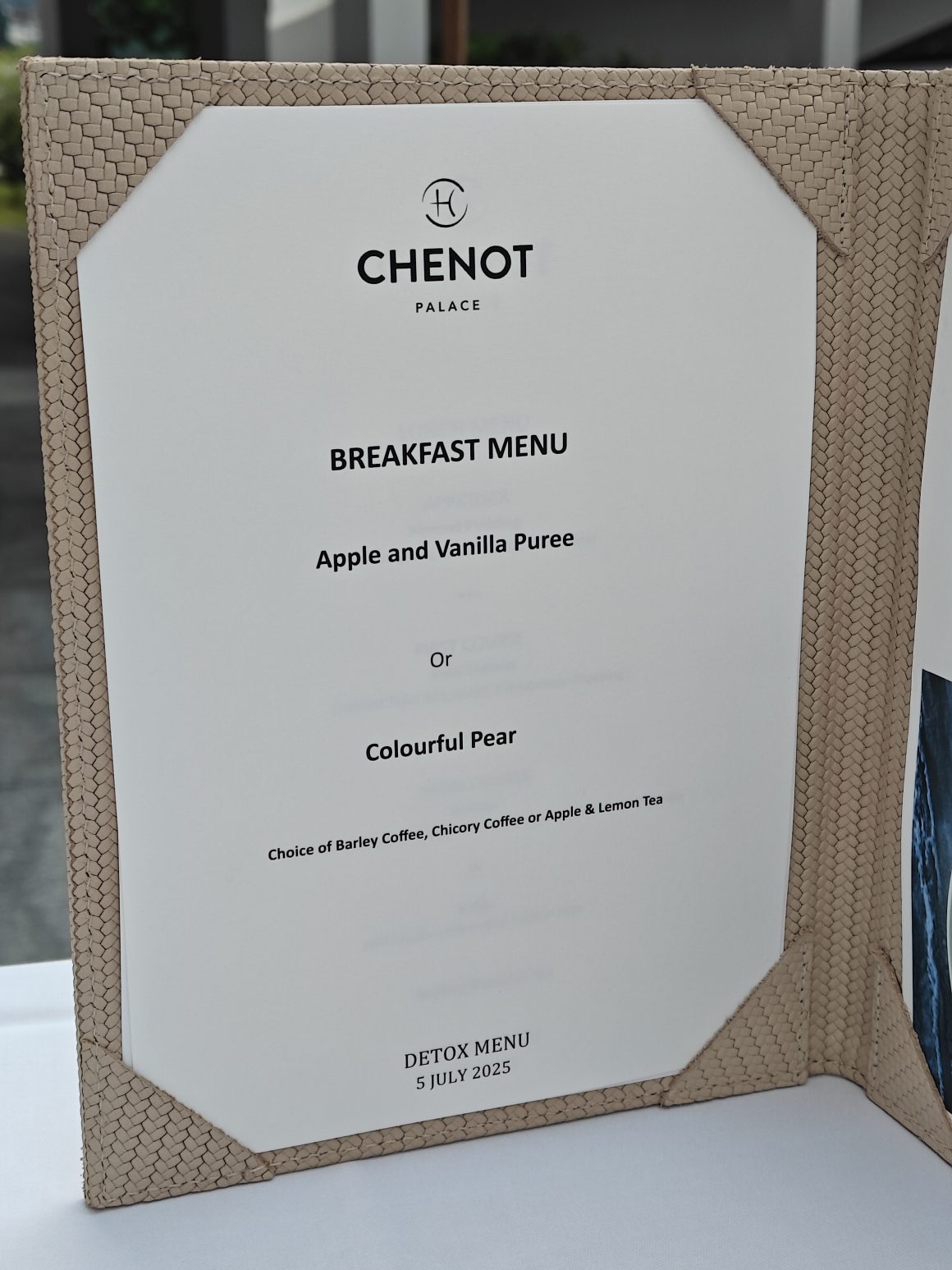
The breakfasts were almost shockingly minimal. On day one, we each got a pear. The next morning? A strawberry mousse. And by day three, we were down to one peach each. Instead of coffee, we got a chicory-based drink with cinnamon, which sort of looked like coffee but definitely didn’t taste like it.
Lunch and dinner were three-course affairs, with a choice of main dish. The big surprise for us was the heavy use of rice, buckwheat, and white wheat pasta — foods we normally avoid at home. Lactose-heavy dishes also popped up, even though we had clearly mentioned our preferences during the nutrition consultations.
For example, on one of our lunch menus, we started with cauliflower sushi, stuffed with avocado, carrot, mango, and cucumber, and served with a lime tamari sauce. This dish was actually a standout — delicate, fresh, and surprisingly satisfying.
For the main, we had the option between beetroot risotto with pine nut crackers or rice tagliatelle with julienne veggies, bean sprouts, and tamari sauce.
After giving feedback to the nutritionist (and politely begging for something different), the kitchen adjusted and added a bit of cabbage for us the same day.


We noticed there was a lot of wheat-based stuff: pies, pasta — we were really hoping for more whole grains or alternative grains, maybe some black rice or millet. Complex carbs were oddly limited, and we kept seeing the same lettuce as “salad” for both lunch and dinner. It would have been so much more interesting to switch it up with arugula, spinach, cabbage, or fresh herbs.
With many Russian guests at Chenot, the dining room sometimes felt like a fancy twist on Russian comfort food — lots of buckwheat and millet, but presented in new, unexpected ways. For American guests, this was probably a totally new and adventurous experience. But for us, it felt a bit repetitive and lacking in creativity.
We really missed more unique, nutrient-dense options. Just imagine how exciting it would have been to get wild rice, which is rare, rich in minerals, and would make you feel like you’re truly eating something special.
The Detox Treatments
The treatment schedule repeated daily:
Hydro-Aromatherapy

A warm 37°C bath with bubbles and two essential oils. Next, a seaweed wrap on a heated massage bed. You get rubbed down limb by limb, wrapped like a burrito, then left cozy and warm under blankets. After 20 minutes, you’re hosed down in a washroom — we felt like muddy animals at a spa carwash.
Phyto Mud Hydra Jet & Energetic Massage
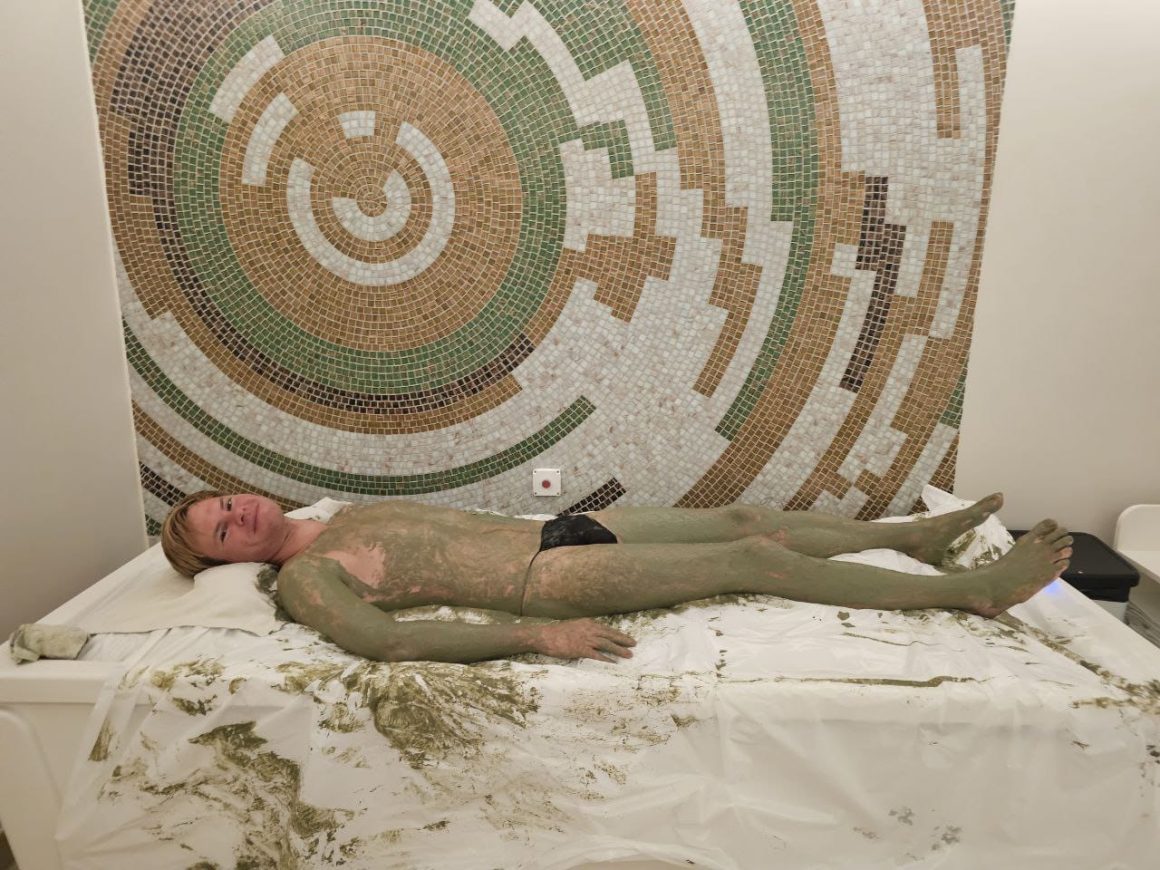
A mix of Chinese and Western techniques, including cupping and pressure points. Each day had a different focus: general drainage, heart, liver, etc. The massages were intense — don’t be shy to ask for less pressure!
Whole Body Photo Bio Modulation (Near Infrared Light Therapy)

At Chenot Palace, one of the trendy futuristic treatments is Whole Body Photo Bio Modulation, better known as near infrared light therapy (NIR). You basically lay in a sleek capsule that looks a bit like a tanning bed (but without the beach vibes).
For about 20 minutes, your whole body is bathed in gentle near infrared light. The idea is that these light wavelengths can penetrate deep into your skin and reach the cells, where they help boost energy production (ATP), reduce inflammation, and kickstart cell repair and regeneration.
Near ifrared light mainly targets the surface and slightly deeper skin layers to boost cell energy and repair, while infrared light penetrates even deeper into tissues and muscles to help with pain relief and circulation.
While you’re lying there (like in a solarium, but with red light), it’s easy to imagine all your cells waking up and rejuvenating — like a mini reboot for your body. It feels warm, calming, and a bit sci-fi, but honestly pretty relaxing after all the treatments and calorie cuts.
Cryotherapy & The Frosty Detox: From Socks to Shivers at -166°F
At Chenot Palace, cryotherapy isn’t just a simple barrel — it’s a full-on, walk-through cold experience with three separate chambers.
Before going in, you gear up with two pairs of socks, a mask, gloves, and a headband to cover your ears (definitely not your usual spa outfit).
First, you step into the first chamber at -10 °C (about 14 °F) for just five seconds — like a quick intro shock. Next, you move into the second room at -60 °C (about -76 °F) for another five seconds. Finally, you enter the main chamber at a bone-chilling -110 °C (about -166 °F) for three whole minutes.
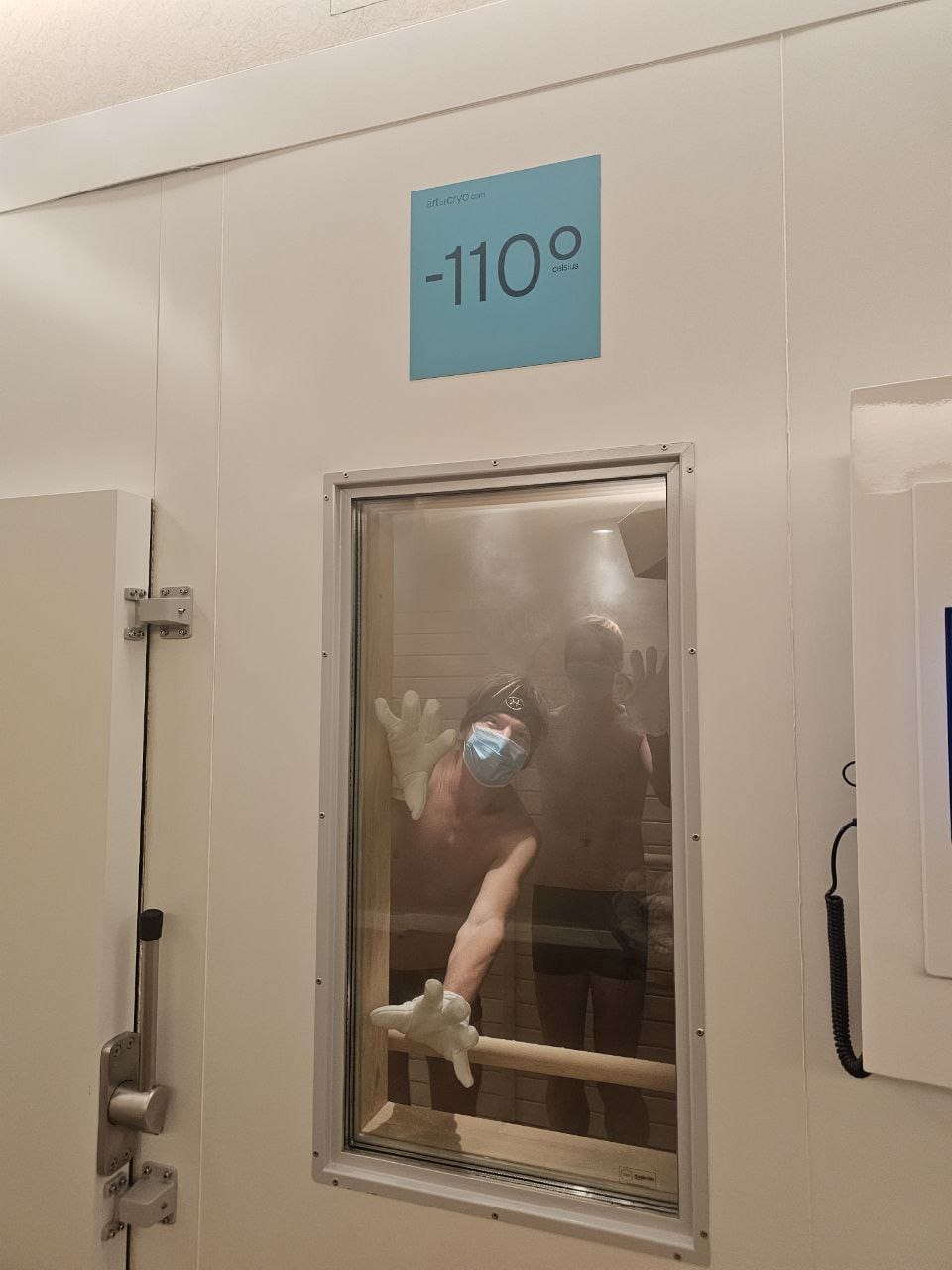
It feels icy and intense, but somehow thrilling. You’re in there with others, so you’re all shivering together, which weirdly makes it more fun. The price for 3 sessions is about $150.
We did three sessions during our stay, and each time we came out feeling amazing — super energized, with a big endorphin rush. We also liked to think it was giving our skin a boost too, though that part might be more wishful thinking than science.
Neuro-Acoustic Relaxation

Headphones with brainwave sounds to push your nervous system into deep rest mode. Super relaxing — we would’ve loved to do this before bed.
How We Slept?
Sleep was light. We woke up early (3-5 am) and struggled to fall back asleep. Dreams were vivid and even included some nightmares. Interestingly, this pattern continued after returning home and back to normal meals for a few days.
Honest Chenot Detox Review: Why We Almost Packed Our Bags After Day One
Chenot Palace is a unique place — part luxury hotel, part hardcore wellness bootcamp. You’ll definitely leave feeling lighter (both physically and mentally), but this isn’t your typical relaxing spa vacation.
We had mixed feelings during and after the program. On one hand, we completely bought into the idea of autophagy — that after day four, your cells start cleaning themselves out, and in theory, this could benefit you long term (even though there’s no solid scientific proof yet). On the other hand, it felt pretty strange to pay to not eat for a whole week — or to eat things you wouldn’t normally choose. In reality, you could stay home and restrict yourself to 850 calories a day without being “locked in” with the same treatments on repeat.
There’s also a mental side to it: you feel angry because you’re hungry. You learn to control yourself, but you’re still irritated, and we know that stress can actually harm your nerve cells. We even saw couples arguing about the food — one guy brought his partner a meal and said he wanted a “real breakfast,” which turned into a tense moment.
But hey, no pain, no gain. I came in at 64.4 kg (about 142 lbs) and left at 62.0 kg (about 137 lbs). Martin dropped 3 kg (about 6.6 lbs), mostly water weight. So yes, we definitely got thinner — no doubt about that.
If you’re up for a serious detox, a true body reset, and don’t mind surviving on a single peach for breakfast, this might be your spot.
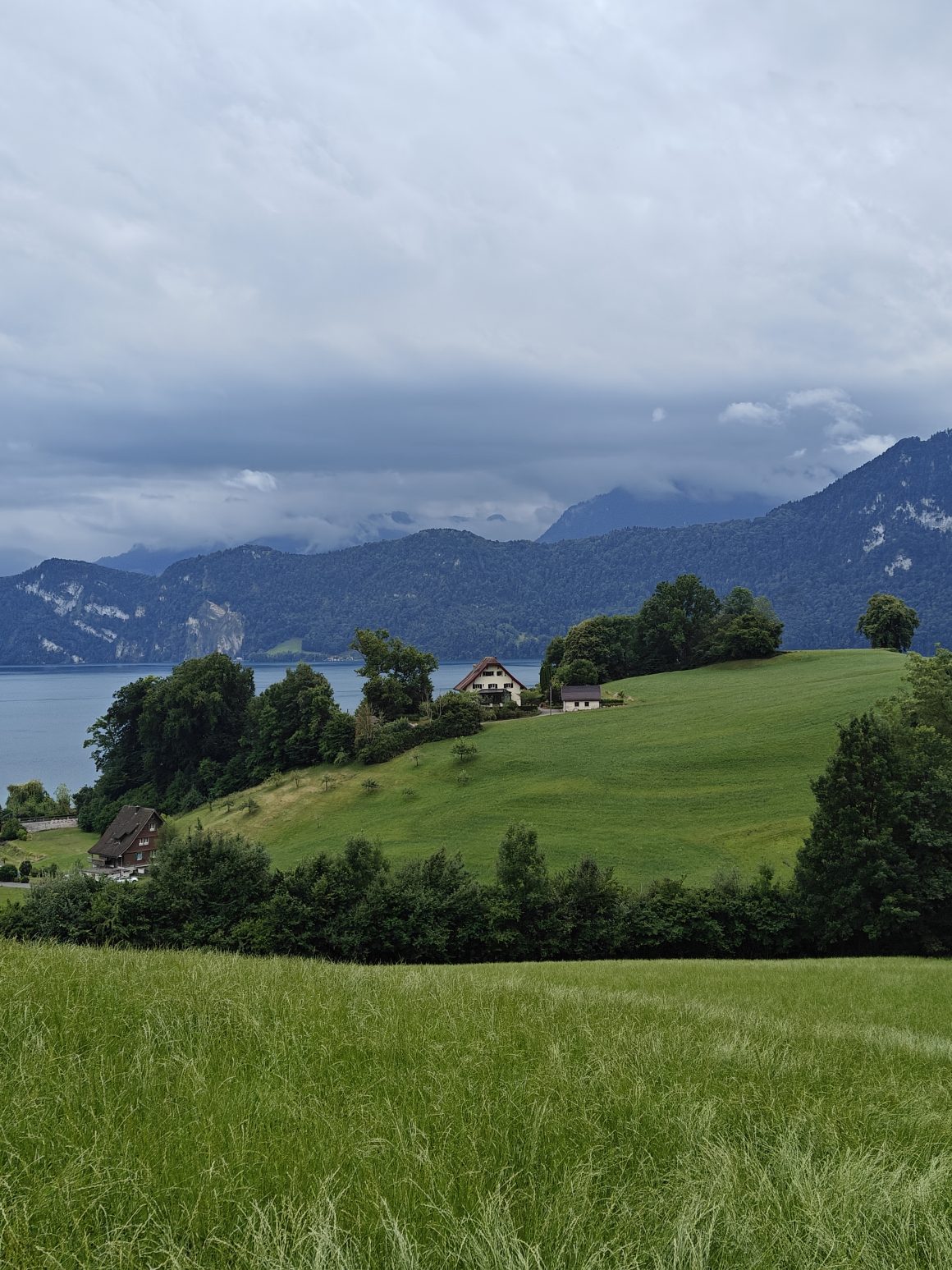
We loved the kind staff, the amazing lake views, and the sense of discipline. We didn’t love the early lawn mowing, the odd furniture choices, or the endless vegan carbs.
In the end, Chenot’s motto, “what doesn’t kill you makes you stronger,” pretty much nails it. We survived — and maybe even feel stronger for it.
Ready to plan your own detox? Drop the champagne (just for a week), grab your hiking boots, and maybe bring a few emergency snacks for the train ride in.
I also stayed at Le Prairie in Montreux.