


Sushi Masa by Ki-Setsu sits quietly above Orchard Road, removed from the pace and polish of Singapore’s main dining strips.
The restaurant is built around a single eight-seat counter, where dinner unfolds slowly through a seasonal omakase menu that might include Mozuku Seaweed, Mehikari Fish, delicately prepared sashimi, gentle Kohada, precisely cut nigiri, warm cooked courses, and uni served at its natural peak.
Rather than presenting omakase as a performance, Sushi Masa treats it as a conversation – one guided by seasonality, preparation, and the people seated at the counter.
To better understand that approach, Locals Insider spoke with Chef Masa about the thinking behind his restaurant in Singapore, his culinary influences, and what he believes omakase should offer today.
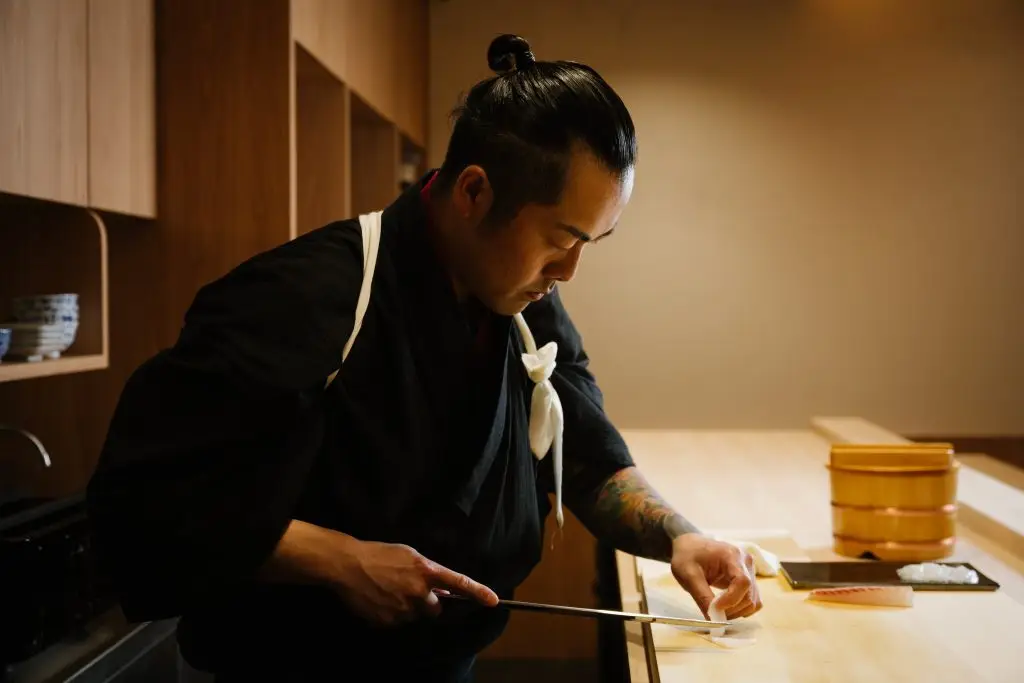
At the Counter, in His Own Words: Chef Masa on the Philosophy Behind Sushi Masa in Singapore
From the beginning, Sushi Masa was never intended to be a large restaurant.
“I realised early on that what I wanted to offer couldn’t exist in a larger setting,” Chef Masa explains. “Omakase, to me, is not just about serving food – it’s about reading the room, adjusting pacing, and responding to each guest in real time.”
With only eight counter seats, the experience remains flexible and personal. Small reactions – how quickly a guest eats, how engaged they seem, whether they prefer explanation or silence – can shape the flow of the evening. “Beyond that number,” he says, “something important is lost.”
A Menu That Changes With the Season, Not the Calendar
Sushi Masa’s omakase menus are guided entirely by seasonality. Ingredients are flown in daily from Japan’s Toyosu Market, and the menu evolves based on what arrives that morning rather than a fixed list of dishes.
Dinner typically moves through a sequence of seasonal appetizers, sashimi, cooked dishes, nigiri sushi, soup, and dessert. Signature elements such as uni, carefully aged fish, and warm courses prepared with light, precise techniques appear regularly – but never in a way that feels repetitive or forced.
“Every ingredient has its story,” Chef Masa says, emphasizing that the menu is planned around balance rather than abundance.
When Sushi Masa first opened, Chef Masa had a clear idea of the emotional tone he wanted the restaurant to leave behind.

“I hoped guests would leave feeling quietly fulfilled rather than impressed,” he says. “Not remembering every dish individually, but remembering how the meal made them feel – comfortable, unrushed, and deeply taken care of.”
That intention explains the restaurant’s unhurried pacing and lack of theatrics. Sushi Masa doesn’t ask for attention; it rewards it.
Chef Masa’s time cooking in Japan remains central to how he approaches omakase today.
“Cooking in Japan taught me restraint,” he explains. “Not every ingredient needs to be showcased loudly, and not every dish needs explanation.”
Instead, he learned to value consistency, repetition, and respect for the seasons. In Singapore—where diners often expect novelty – he keeps the same mindset. “I let the season lead,” he says, “and allow simplicity to speak.”
Staying Grounded in Singapore’s Omakase Scene
Singapore’s omakase scene is famously competitive, but Chef Masa doesn’t view Sushi Masa as a response to what others are doing.
“I focus on the counter in front of me,” he says. “Trends come and go, but the guest sitting across from me is real and present.”
Staying true, for him, isn’t about rejecting trends outright. “It’s about staying focused on why I started cooking this way in the first place.”
A Special Connection to Winter at Toyosu Market
All ingredients served at Sushi Masa are sourced from Toyosu Market and flown in daily. Among the seasons, winter holds particular meaning for Chef Masa.
“Winter ingredients resonate deeply with me,” he says. “The flavours are quieter but more layered – fatty fish, root vegetables, warmer preparations.”
He describes Toyosu in winter as calm and focused, and says that atmosphere naturally influences his cooking during those months.


Tradition as Structure, Not Limitation
For Chef Masa, tradition provides discipline rather than restriction.
“Tradition is the foundation,” he explains. “Once that foundation is respected, small interpretations come naturally.”
Those interpretations are subtle – adjustments to texture, proportion, or pairing rather than dramatic reinvention. “If the dish still feels Japanese at its core,” he says, “then the balance is right.”
Reading the Guest Before the Menu
At Sushi Masa, the experience begins before the first course is served.
“Their body language is the first thing I notice,” Chef Masa says. “Some guests lean forward with curiosity, others sit back and observe quietly.”
That awareness helps him decide how much to explain, how quickly to move, and how interactive the evening should be. “Every counter seat has its own energy,” he adds. “It’s important to respect that.”
Why Sushi Masa Doesn’t Serve Lunch
One of Sushi Masa’s defining choices is its decision not to offer lunch service.
“That time is reserved for preparation,” Chef Masa explains. Ingredients arrive fresh each morning from Toyosu Market, and the hours before dinner are spent preparing, planning, and refining the menu.
“When an evening feels smooth and effortless,” he says, “it’s usually because of the quiet, unseen work behind it.”
Looking ahead, Chef Masa’s vision for Sushi Masa remains understated.
“I hope Sushi Masa is remembered as a place that stayed sincere,” he says. “Not the biggest, not the loudest – but a restaurant where guests felt respected, seasons were honoured, and the counter remained a space for genuine connection.”
In a city known for constant reinvention, Sushi Masa’s story is about staying focused, staying small, and letting quiet consistency speak for itself.
Where the Philosophy Continues Outside the Restaurant
Outside Sushi Masa, Chef Masa gravitates toward places that reflect the same values he holds in his own kitchen.
“I enjoy places that feel unpretentious and consistent,” he says, mentioning Novena Peranakan and Shi Zhen Fish Soup at Toa Payoh Lor 1 Market – both long-standing institutions that have remained largely unchanged for decades.
He also enjoys walking without a destination. “Sometimes the best ideas come when you’re not looking for them.”
Sushi Masa by Ki-Setsu Reservations & Contact
5 Koek Road, #06-03 Cuppage Plaza, Singapore 228796
Opening Hours
Dinner only, from 7:00 pm
Open Tuesday to Saturday
Closed Mondays
Private bookings available on Sundays
reservations@kisetsu.com.sg
+65 9752 5851
Online reservations are recommended; certain menus require advance notice.
Dinner omakase menus vary by season and ingredient availability. Based on current menu tiers, pricing is indicative in the mid-to-high SGD $200s and above per person, depending on the chosen course and market sourcing. Drinks, sake pairings, and premium upgrades are available at an additional cost.