


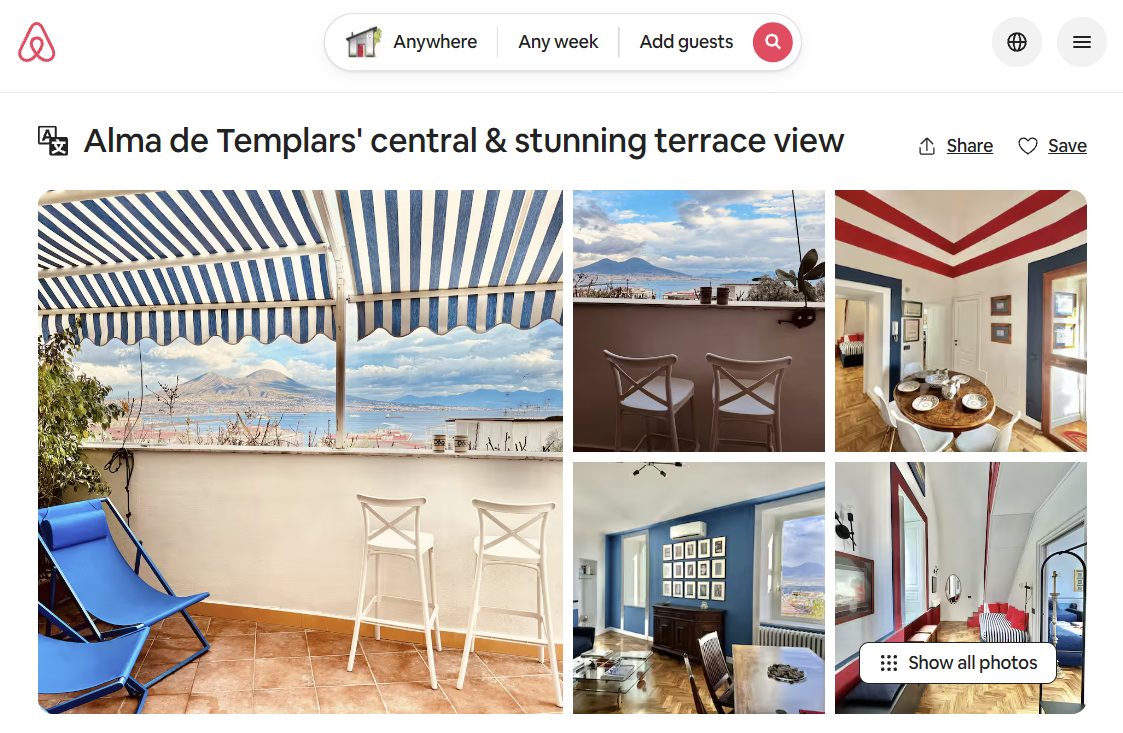
For ten years, Airbnb has accustomed us to the illusion of absolute freedom: any point on the map, a key under the doormat, a couple of nights in a “designer loft” cheaper than a hotel. The service still has some beautiful and affordable places to rent in Europe. But in 2026, it seems that this fairy tale finally crashed into the harsh reality of urban bureaucracy.
Booking a short-term city break in a major hub now feels less like vacation planning and more like navigating a bureaucratic minefield. You find the perfect terrace, only to realize there’s a 30-day minimum stay. Or worse, your confirmed booking vanishes 24 hours before take-off because the host grew nervous about a local audit. This isn’t a platform glitch; it’s the result of a global regulatory “reset” that has finally reached its boiling point.
We learned this in Bangkok. We had our hearts set on Sathorn, specifically the leafy, cafe-lined stretch of Saladaeng. It’s the kind of neighborhood that feels like a secret — until you try to book a week there.
Every listing that caught our eye was gated behind a 30-day minimum requirement. When we finally secured a place, the reason became blindingly obvious. On every single floor of our building on Saladaeng, the management had posted stark, unavoidable signs: “Short-term rentals are illegal. Minimum stay: 30 days.” In 2026, these signs are the new “Welcome” mat.
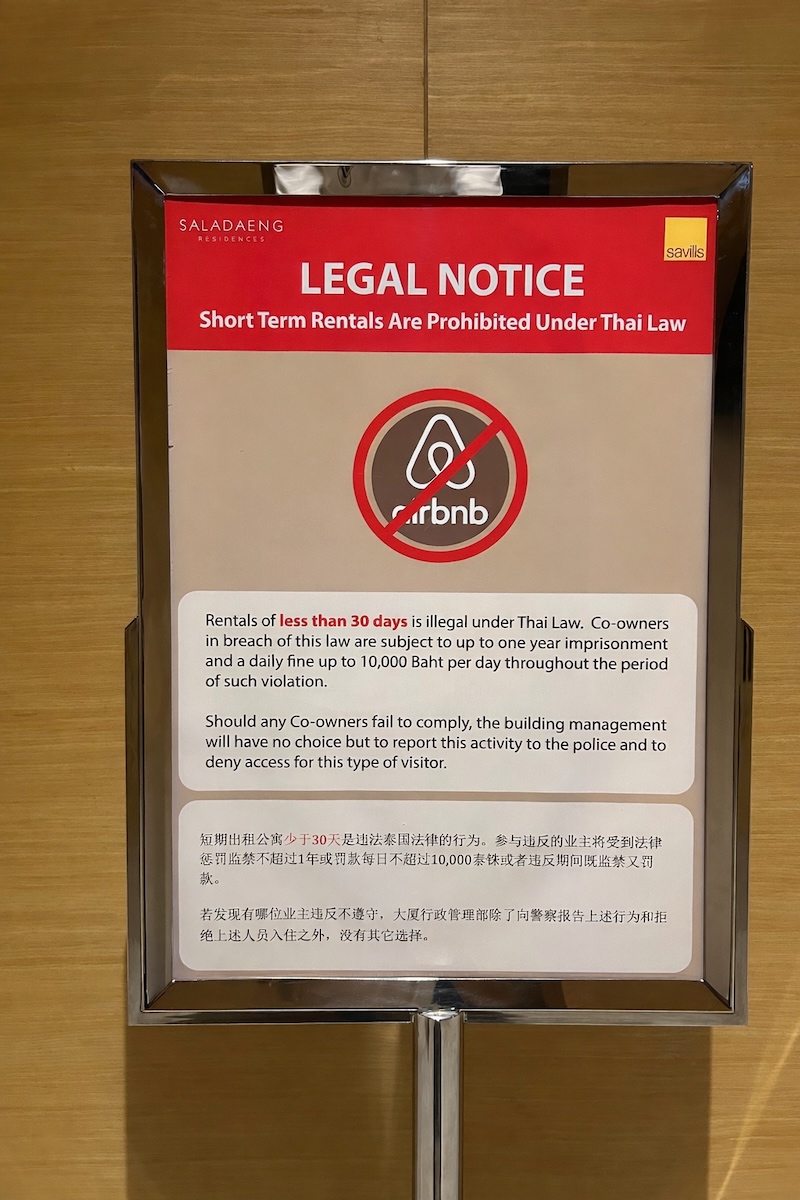
Here is our LocalsInsider’s guide that breaks down Airbnb short-term rental regulations by city in 2026, explains where short stays are still legal, and shows how to spot listings that are most likely to disappear before you arrive. If you’re planning a city break and wondering whether Airbnb is still worth the risk, this is what you need to know.
The “30-Day Club”: Where Short Stays Go to Die
If you aren’t prepared to sign a month-long lease, your Airbnb search in these cities will likely come up empty for entire apartments:
Barcelona: After years of tension, the city has moved to eliminate short-term licenses in the center entirely by 2026.
Bangkok: A strict 30-day minimum for any property without a commercial hotel license.
New York City: Short-term rentals are effectively dead unless you’re sharing the apartment with the host.
Singapore: The global heavyweight of restrictions, requiring a 3-month minimum for private residential stays.
What to Expect from Airbnb in Europe: The Cities Where Short Stays Are (and No Longer) Legal
Budapest: The District 6 Blackout
As of January 2026, the city’s heart — the 6th District (Terézváros) — has officially banned short-term rentals. If you’re looking for that iconic ruin-bar-adjacent apartment, you’re out of luck. You can still find stays in neighboring districts, but expect a thinner market and aggressive enforcement of local tax IDs.
Paris: The Primary Residence Trap
Paris, the City of Light has capped rentals at 120 nights per year and strictly limits them to the host’s primary residence. In 2026, the “investment apartment” has been purged from the center. What’s left are mostly spare rooms or high-end, professionally managed units that feel more like boutique hotels than homes. For short-term apartment rentals in Paris, we often use Blueground – a good Airbnb alternative.
Amsterdam: The 30-Night Ceiling
The math in Amsterdam is brutal: most homes can only be rented for 30 nights per year. In certain high-traffic zones, that limit has dropped to 15 nights. Availability is a unicorn; if you see a legal listing for your dates, book it instantly, because it likely won’t be there in an hour.
Berlin: The Permit Paper Trail
Berlin’s Zweckentfremungsverbot (yes, it’s a mouthful) means renting out an entire apartment requires a permit that is notoriously hard to get. Second homes are capped at 90 days. For the traveler, this means a high rate of “stealth” listings that often get flagged and removed mid-trip.
The Global Outlook
Istanbul: The “Grumpy Neighbor” Clause
New Turkish laws require hosts to get 100% approval from every resident in their building before they can list on Airbnb. In a city of high-rises, that’s a near-impossible task. Unless the building is a dedicated “serviced residence,” your booking is on shaky ground.
New York City: The Death of the Manhattan Loft
The Big Apple was the first to crack down on short-term rentals, and by 2026, the restrictions were absolute. Renting an entire apartment for stays under 30 days is effectively illegal. The only legal Airbnb options are private rooms where the host remains in the residence, which feels more like an old-fashioned bed and breakfast than a private escape. For a classic weekend in the city, boutique hotels and licensed aparthotels have become the “frictionless” choice again.
Los Angeles: The Residency Test
LA has doubled down on its “primary residence only” rule. To list a home, the host must actually live there for more than six months of the year. The result? Fewer “sterile” vacation rentals and more lived-in spaces, which has drastically reduced the inventory in popular beach zones.
The 2026 Airbnb Red Flag Checklist
How to spot a listing that’s headed for a cancellation—or a legal headache.
- Too Good to be True (at 3 Nights): In a market where supply is capped, prices for legal short stays have naturally spiked. If you find a “luxury loft” for three nights in central London or LA at a price that beats local hotels, it’s likely an unlicensed unit on borrowed time.
- The “Shhh, You’re My Cousin” Instruction: If the host sends a message asking you to be “discreet” with neighbors or tell building security that you are a “visiting friend,” the listing is likely illegal. In 2026, security in cities like Bangkok or Istanbul is often incentivized to report short-term guests.
- Missing Registration Numbers: In many European hubs (Paris, Amsterdam, Vienna), legal listings must display an official city registration number in the description. If that field is empty or says “Pending” for a long-established listing, proceed with extreme caution.
- The “Off-Platform” Pivot: A classic red flag. If a host asks to move the conversation to WhatsApp or requests a “security deposit” via a separate link to avoid platform fees, they are likely trying to bypass the new EU or US data-sharing frameworks.
- Vague Addresses in “No-Go” Zones: If a listing in Budapest’s 6th District or NYC’s Manhattan claims to be an “entire apartment” but the map location is intentionally fuzzy or shifts after booking, it’s a sign the host is trying to hide from city digital-tracking tools.
- The “Review Gap”: Check the recent history. If a listing has 500 reviews but none in the last six months, the host may have been flagged by local authorities and is “ghosting” the platform until the heat dies down.
Pro-Tip: Before booking, send the host a quick message: “I’m aware of the local 30-day/licensing regulations. Can you confirm that short stays are allowed in this building?” A professional host in 2026 will have a ready, transparent answer. A shady one will go silent.
Airbnb Rental Rules by City (2026 Updated)
| City | Legal Short Stay? | Minimum Stay | Key Restriction |
|---|---|---|---|
| Barcelona | ❌ Mostly No | N/A | Central licenses eliminated |
| Bangkok | ❌ No | 30 days | Hotel license required |
| New York City | ❌ No | 30 days | Host must be present |
| Paris | ⚠️ Limited | Short stays capped | Primary residence only |
| Amsterdam | ⚠️ Extremely Limited | 15–30 nights/year | Strict annual caps |
| Singapore | ❌ No | 3 months | National regulation |
| Berlin | ⚠️ Rare | Varies | Permit required |
| Istanbul | ⚠️ Unstable | Varies | 100% building approval |
| Los Angeles | ⚠️ Limited | Short stays allowed | Primary residence rule |
Shortlist: 5 Best Airbnb-Friendly Cities in 2026
- Athens (non-core districts) – Limited but possible
- Lisbon (outside historic center) – Still workable with licensed hosts
- Mexico City (select neighborhoods) – Enforcement varies by borough
- Tokyo – Legal with registration (minpaku)
- Dubai – Fully licensed, hotel-like experience
If Airbnb Doesn’t Work, What Does?
- Platforms like Sonder, Blueground, Stay SAKURA, Citadines
- Licensed aparthotels (in Bangkok, for example)
- Small Nice Boutique hotels
- Extended-stay hotels
- Serviced residences
The takeaway for 2026 is clear: The more a city is loved by tourists, the less it loves Airbnb. Short stays have become a luxury of the few or a specialty of the licensed. If you’re eyeing a major global capital for a quick three-night flip, don’t be surprised if the platform directs you toward a hotel or a room in someone’s actual home. The days of “living like a local” in an empty investment condo are over.
Here is our list of the useful travel apps, that includes services for short term rentals and more.