

Most people have heard of Madeira, but few remember that the entire archipelago consists not only of the main island but also several smaller ones, including Porto Santo and the uninhabited Ilhas Desertas. And it is Porto Santo—a small, golden island in the Atlantic—that deserves its own story. It is one of those lesser-known islands that are worth exploring when you are tired of popular destinations.
I’ve been there twice in the span of a single year. And each time, instead of just “checking it off” my list, I felt like… going back right away.
A golden island with yellow sand
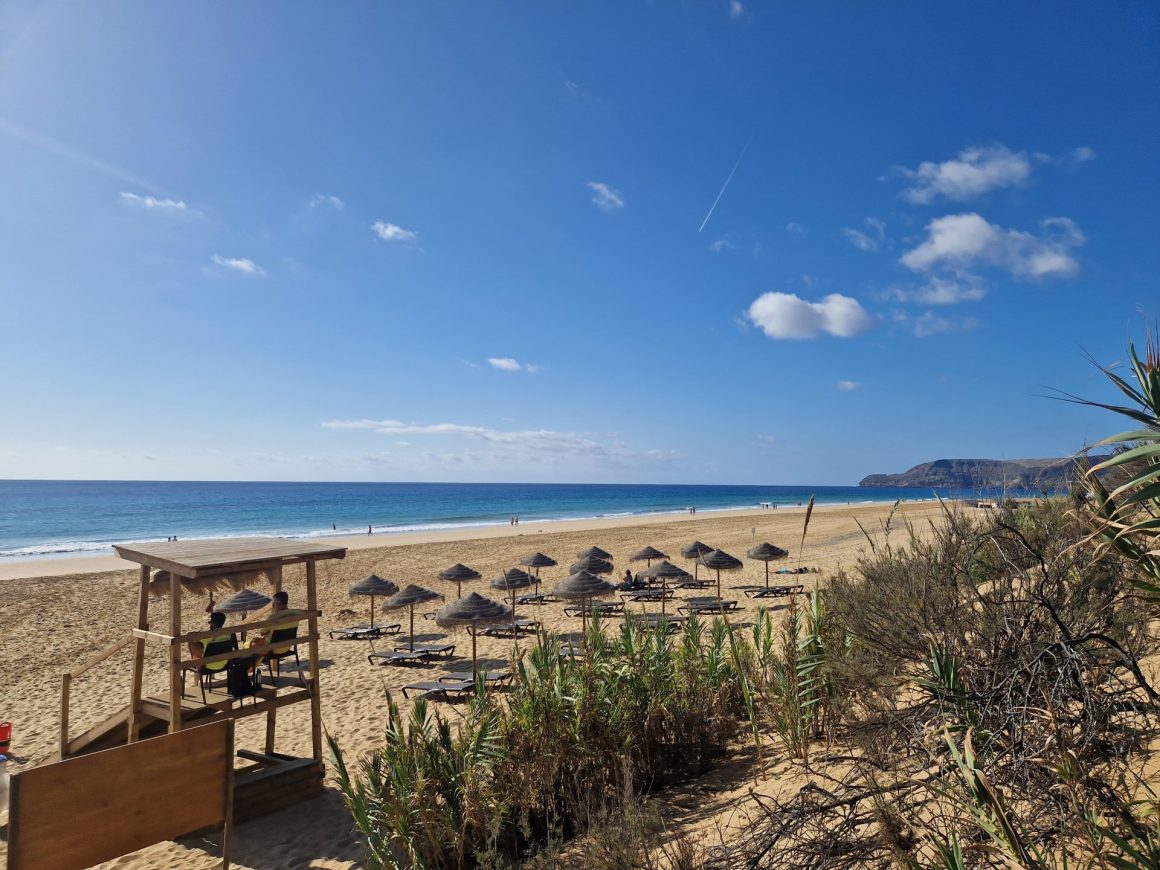
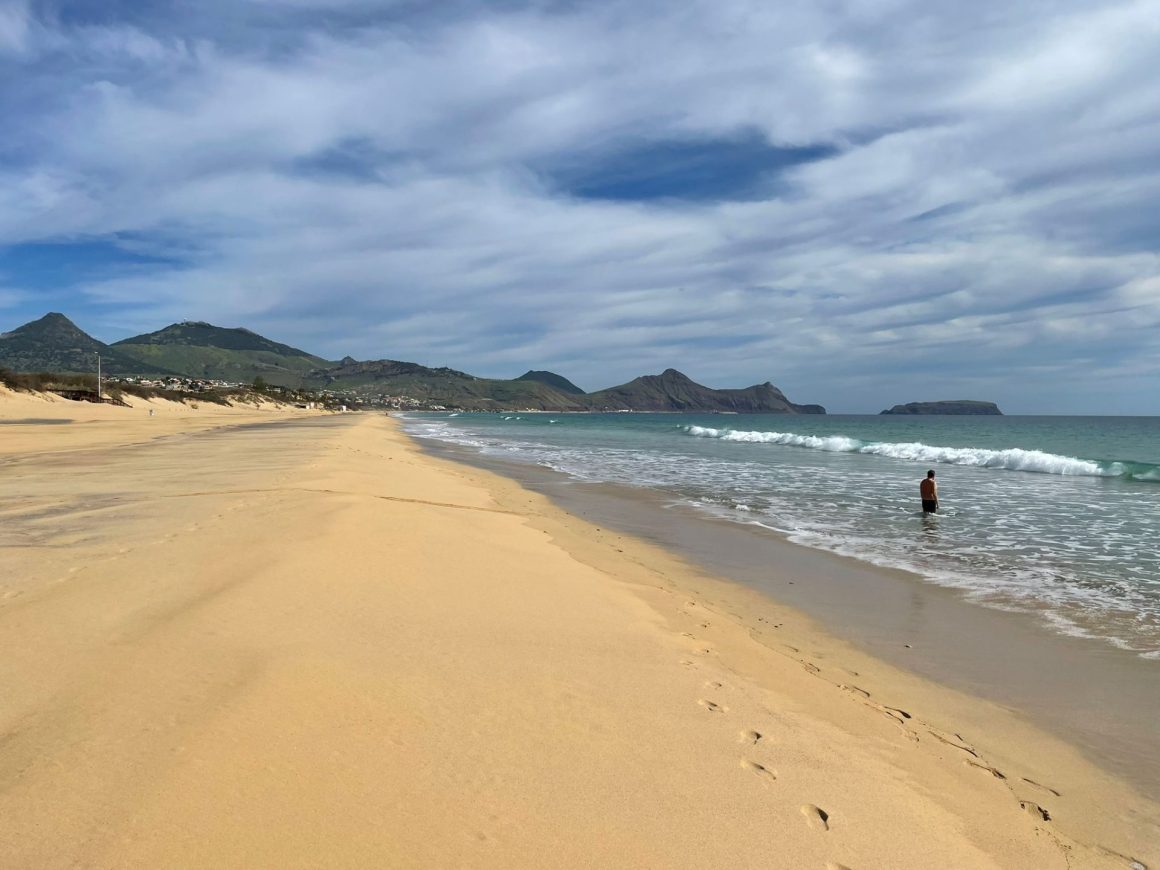
Unlike Madeira, whose greatest assets are its mountains, cliffs, and hiking trails, Porto Santo’s greatest treasure is its beach – eleven kilometers of golden, soft sand.
This isn’t the black, volcanic sand typical of Macaronesia. Here, it’s light and golden, and is even said to have healing properties. That’s where Porto Santo’s nickname comes from: “the golden island.”
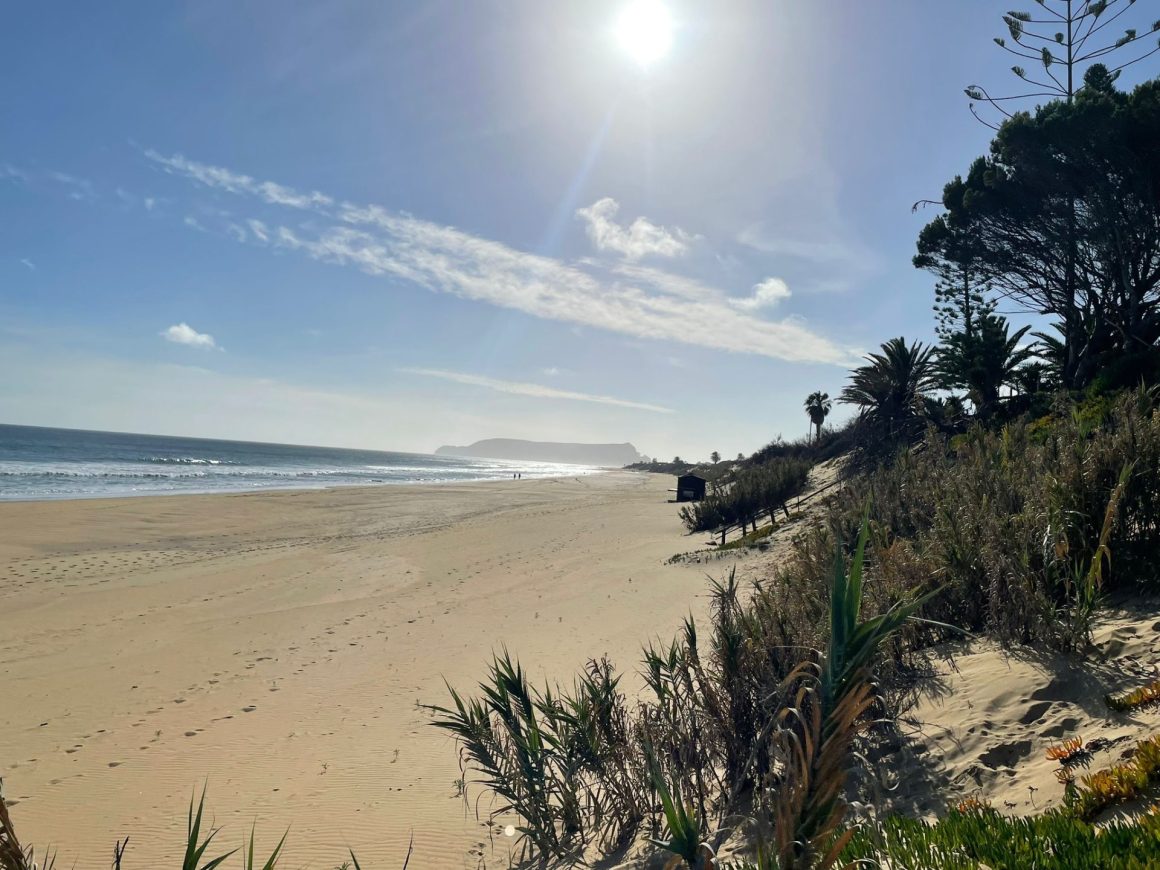
The island is fairly flat, perfect for long walks along the beach. However, there is no shortage of trails climbing up to hills and low mountains – the views from them can truly take your breath away, especially at sunset.
When to Go? Weather in Porto Santo
Porto Santo enjoys a mild, pleasant climate throughout the year, making it an easy destination for both summer beach holidays and quieter winter escapes.
- Summer: around 24–26°C
- Winter: around 17–19°C
- Ocean temperatures: 23–24°C in summer and 17–18°C in winter
Like many Macaronesian islands, the seasons here feel slightly “shifted.” Early autumn often feels more like late October or November, while the cooler winter period is most noticeable in February and March, sometimes stretching into early April.
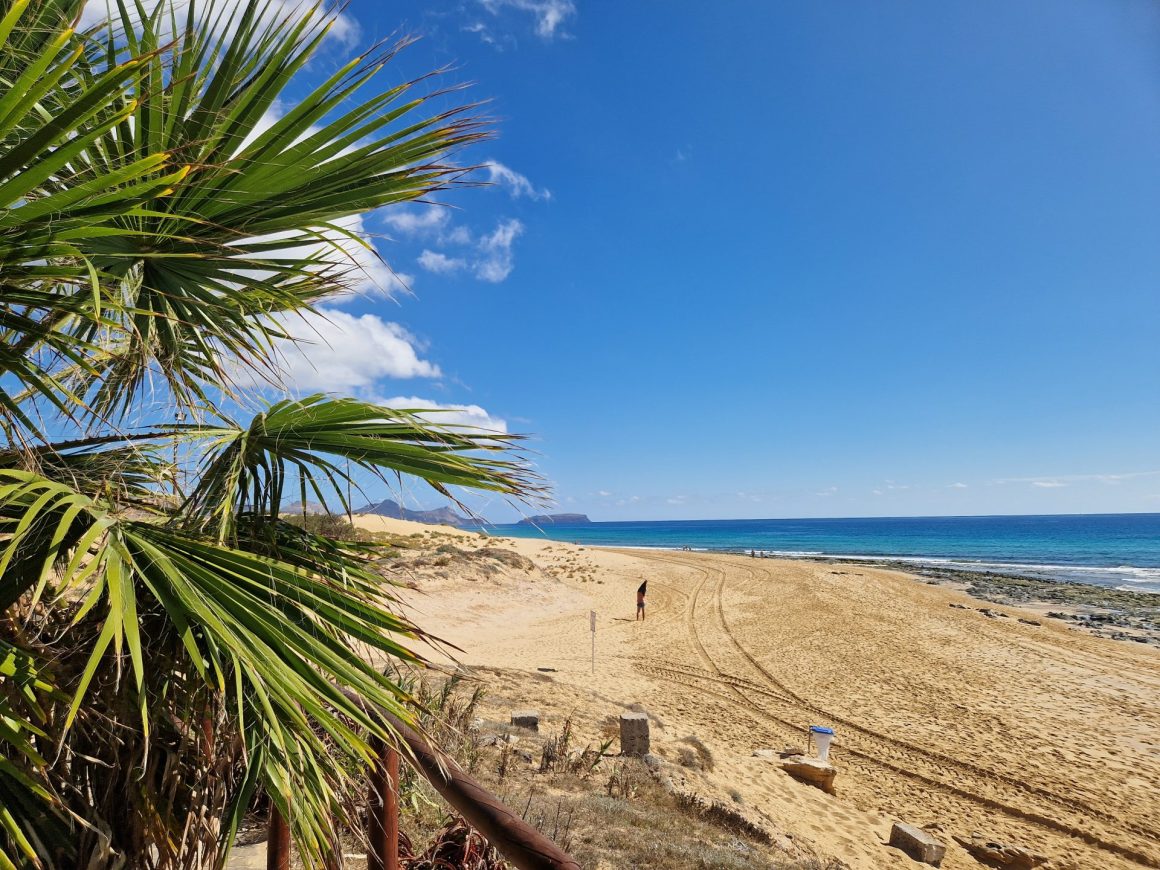
I visited Porto Santo twice — once in October and again in late January/early February. In autumn, there were a few more visitors around, but the island still felt calm and uncrowded. Winter, meanwhile, was wonderfully quiet, with long empty beaches and a slower rhythm that suited the island perfectly.
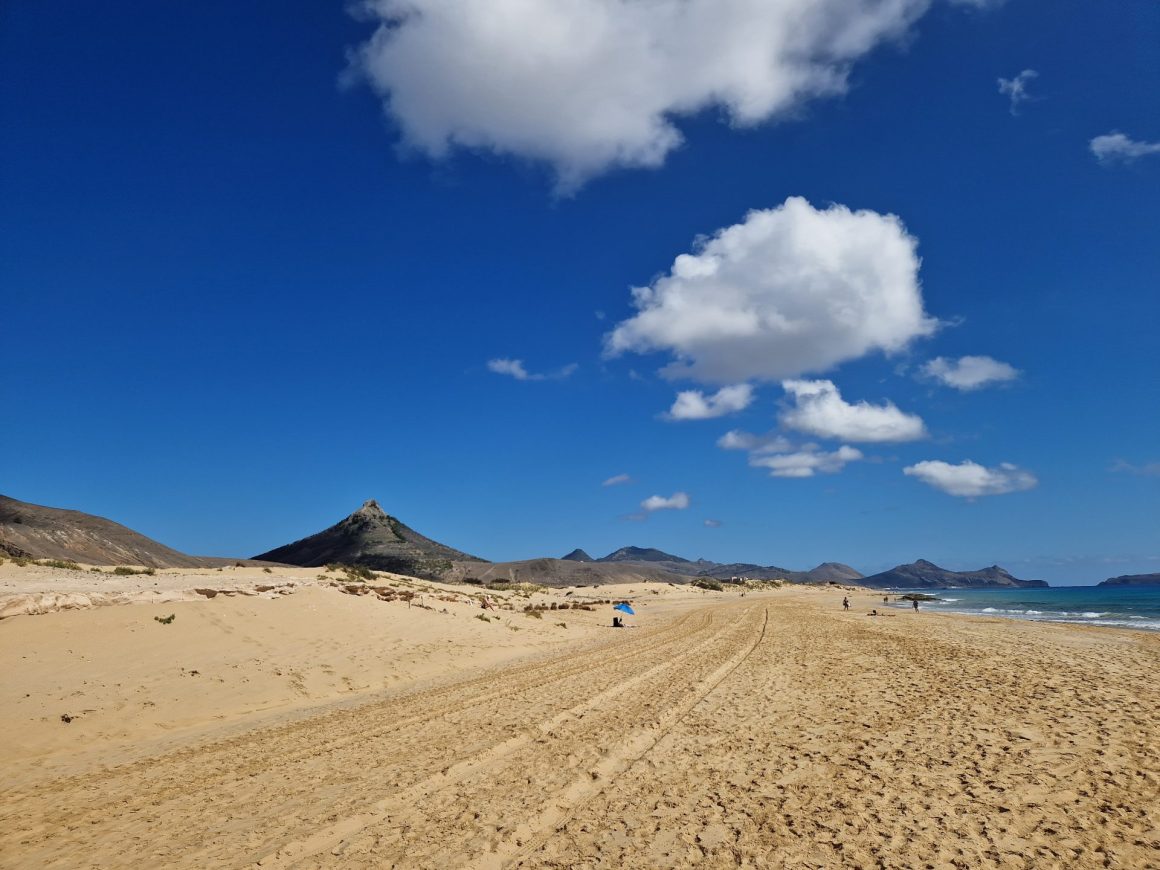
Porto Santo is also drier than Madeira—it rains less here, which is great for sunbathing and long walks.
Where to stay in Porto Santo: All-inclusive hotel or an apartment?
I had the opportunity to try out two completely different types of accommodation: an all-inclusive hotel and an apartment.
Hotel Navigator – all-inclusive for a week

I first visited Porto Santo in October as part of a “Madeira + Porto Santo” trip, spending six days on the island itself.
For that stay, I chose Hotel Navigator — one of the island’s largest and best-known hotels — on an all-inclusive basis.
It turned out to be a very convenient option, especially for a relaxing beach holiday. What I liked most:
- tasty and varied buffet food,
- evening cocktails by the pool bar,
- spacious, comfortable rooms with balconies,
- the simplicity of not having to think about lunch or dinner every day.
For a week focused on slowing down, swimming, and enjoying the island, it worked perfectly.
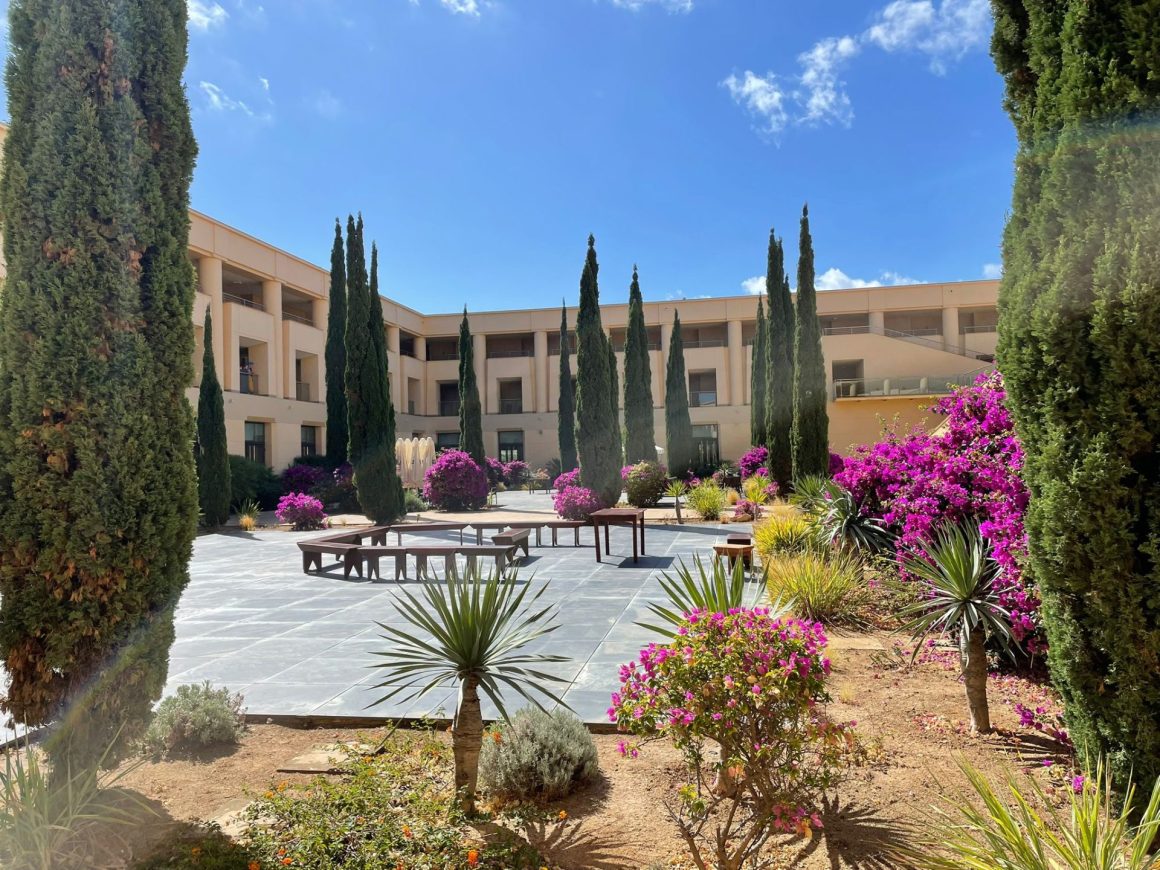
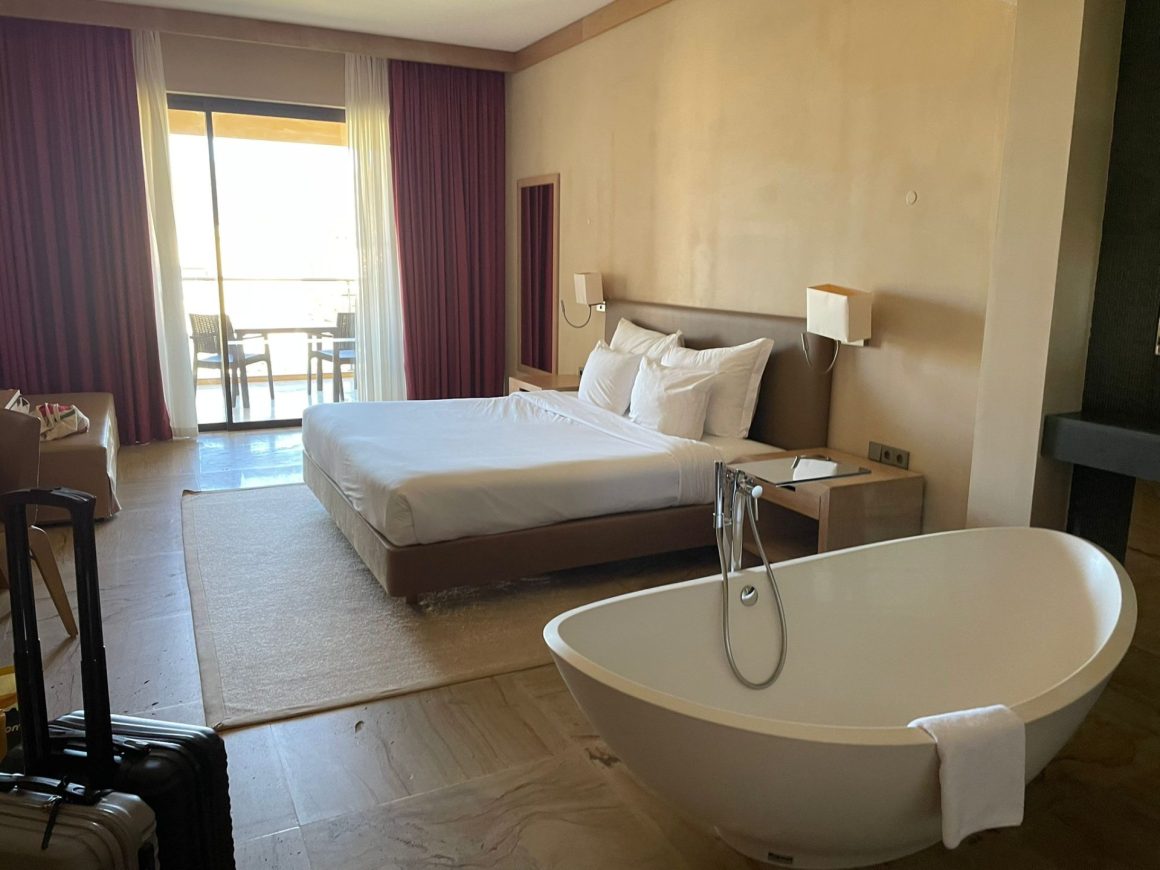
For six days at the hotel, we paid around 1,000 euros for two people, which felt like very good value considering the location, comfort, and all-inclusive setup.
Ocean-View Apartment — 12 Quiet Days in Winter
Our second stay in Porto Santo was completely different. We visited at the end of January and beginning of February, this time choosing an apartment instead of a hotel — and staying for 12 days.
It turned out to be one of the best decisions of the trip.
The apartment was huge, spread across two floors, with a beautiful ocean view and a large upstairs terrace that quickly became our favourite spot for afternoon sunbathing and slow evenings overlooking the Atlantic.
More than anything, it gave us a different feeling of the island — less like a holiday resort stay and more like actually living there for a while.
For 12 days, we paid around 600 euros, which felt like excellent value, especially during the quieter winter season.
Both types of accommodation have their advantages:
apartment: more freedom, better value, and that relaxed feeling of “living on an island” rather than simply visiting one.
hotel: easier, more convenient, meals included, less planning,
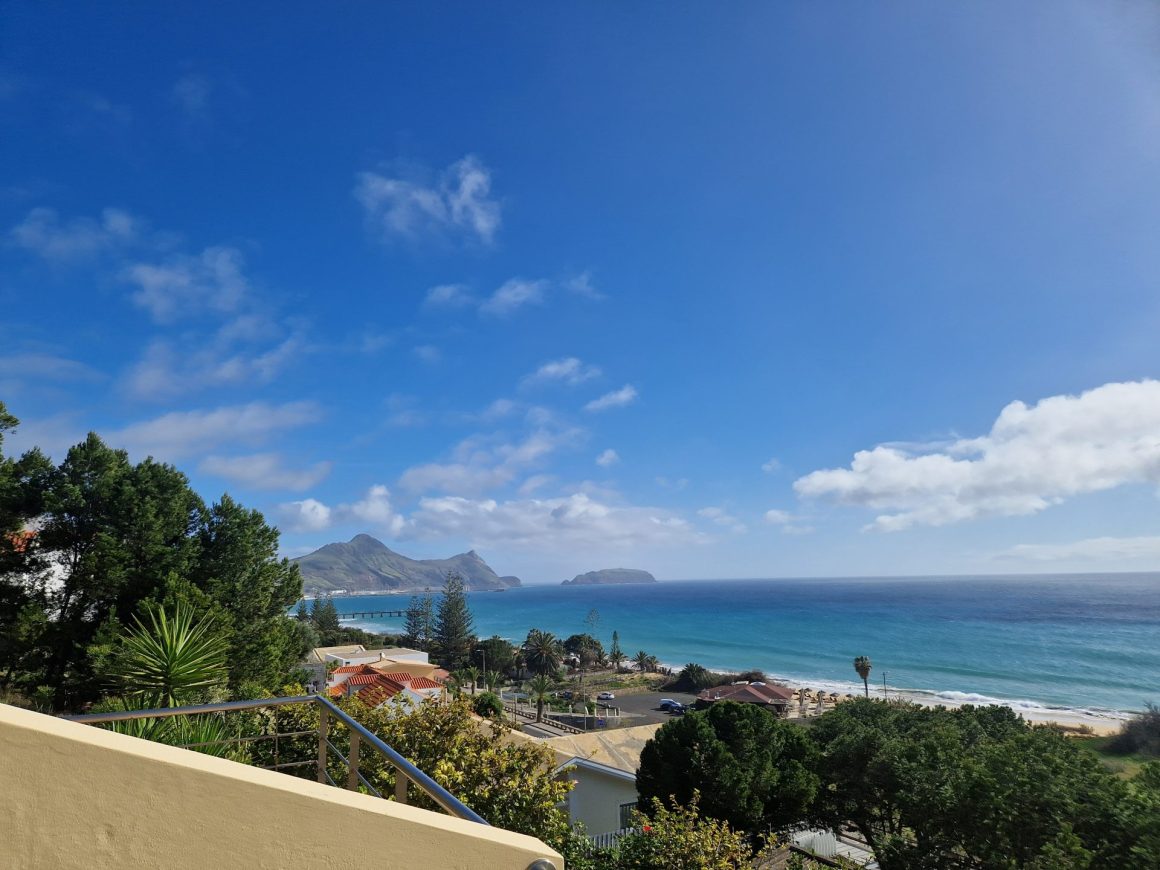
Porto Santo’s beaches – from long walks to secluded coves
Porto Santo is, above all, one beach stretching for miles with crystal-clear water. In addition, there are smaller, more secluded spots.
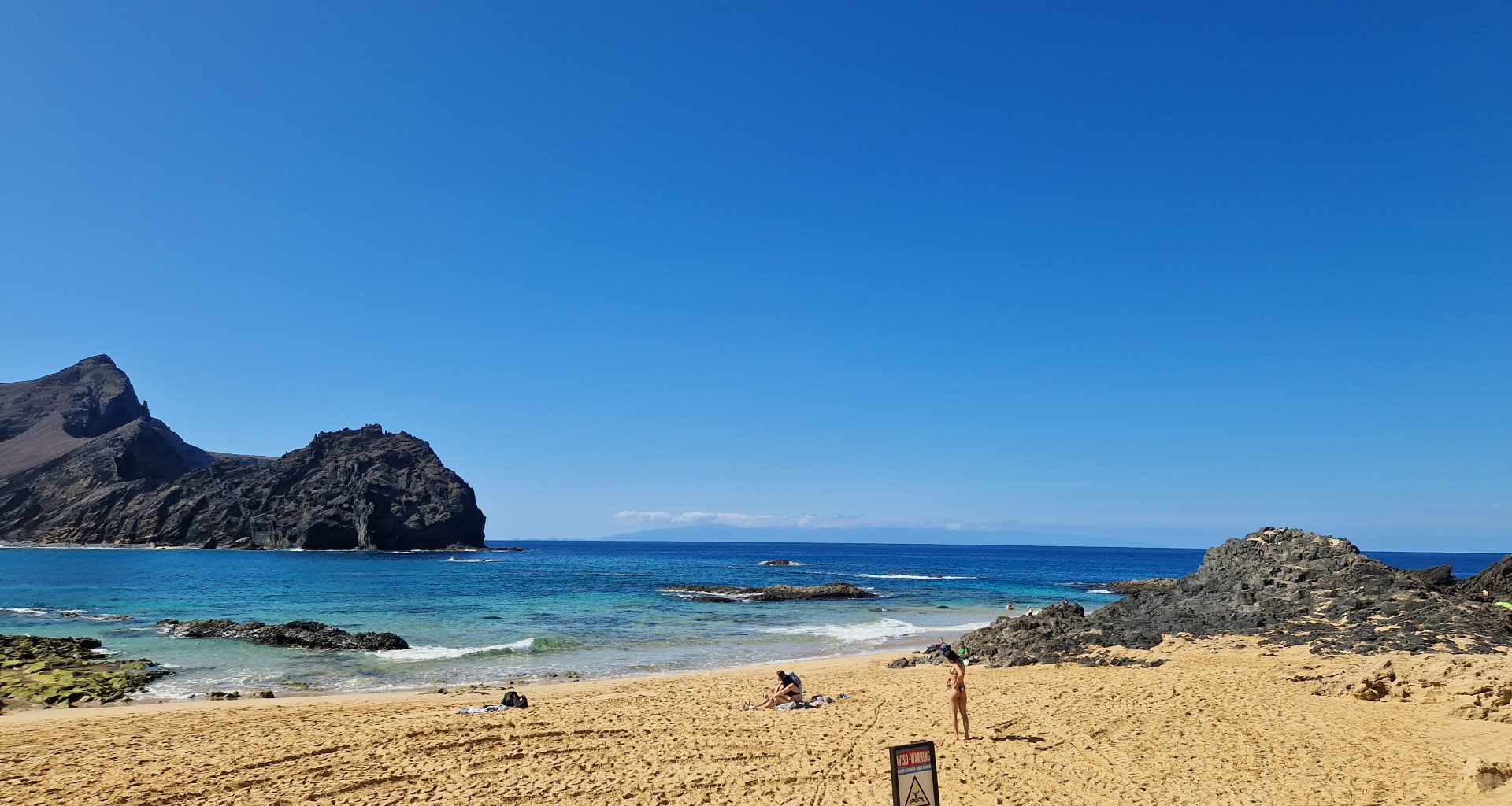
At the very tip of the island lies the tiny Colcheta Beach – it’s really worth a visit.
If the waves aren’t too strong, I recommend swimming here. It has a very exotic atmosphere: rocks, turquoise water, a slight “end of the world” vibe.
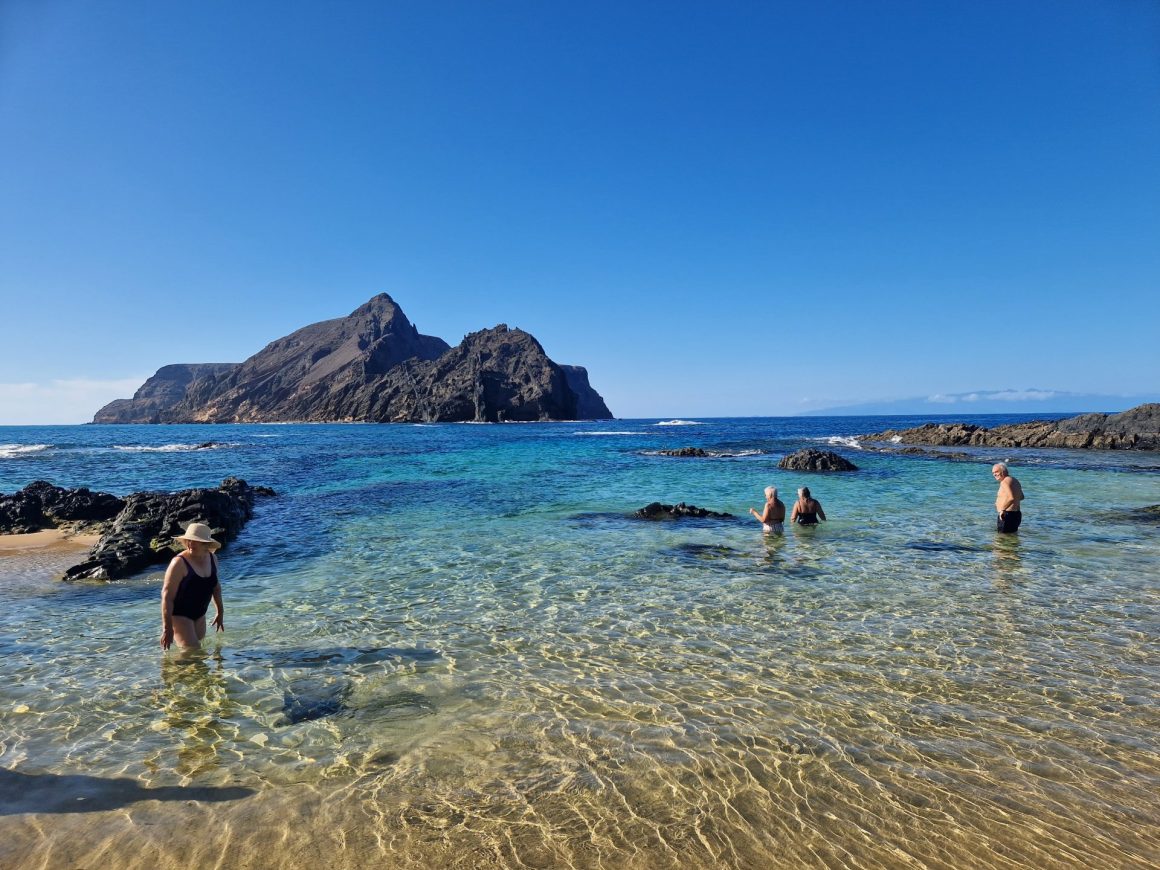
The ocean at Porto Santo’s main beach is usually calmer than on many other Atlantic islands—smaller waves, no strong currents—which makes it ideal for swimming.
Where to Eat? A Few Places I Really Liked
During my first stay in Porto Santo, I was on an all-inclusive plan, so I rarely visited restaurants outside the hotel. The second time — during the quieter winter season — I finally explored more of the island’s food scene and found a few spots I genuinely liked.
Apollo 14 Bar & Bistro
Address: R. Dr. Nuno Silvestre Teixeira, 9400-172 Vila Baleira, Porto Santo, Portugal
Apollo 14 has a relaxed, friendly atmosphere that feels more local than touristy. It’s the kind of place where people stop by for a beer, casual dinner, or evening cocktail without any fuss or pretension.
The menu focuses on simple comfort food — sandwiches, burgers, snacks — and everything I tried was fresh and satisfying. A good option for an easy evening in Vila Baleira.
Baiana Restaurant
Address: R. Dr. Nuno Silvestre Teixeira 9 162, 9400-172 Vila Baleira, Porto Santo, Portugal
Baiana became my go-to place for pizza on the island.
The pizzas are light, well-baked, and generously sized — one was easily enough for two people to share. Prices were also reasonable, with most pizzas costing around 13 euros.
Simple, relaxed, and consistently good.
Pe na Aqua
Address: Estrada Regional 111, 9400-075 Porto Santo, Portugal
This was the closest restaurant to our apartment, located right by the entrance to the beach.
At lunchtime it can get fairly busy, but the setting makes it worth it. The terrace overlooks the ocean and the long golden beach, making it an ideal spot for a slow lunch or afternoon drink.
I tried the traditional beef sandwich here, which was excellent — simple, local, and perfect after a walk along the beach.
Porto Santo beyond the beach – Casa Colombo and Jorge Brum’s house
Porto Santo is not just about the beach and swimming. In the island’s capital, Vila Baleira, it’s worth veering off the main road and exploring the narrow streets. It’s hard to miss the white stone house—that’s Casa Colombo, the Christopher Columbus Museum.
Porto Santo is not only about beaches and swimming. In the island’s small capital, Vila Baleira, it’s worth wandering away from the main streets and exploring the quieter corners of town. One place that immediately stands out is the white stone house of Casa Colombo.
Inside the small museum, there’s a faint scent of old wood and sea air. The rooms transport visitors back to a time when the Atlantic was still filled with unknown routes and blank spaces on maps.
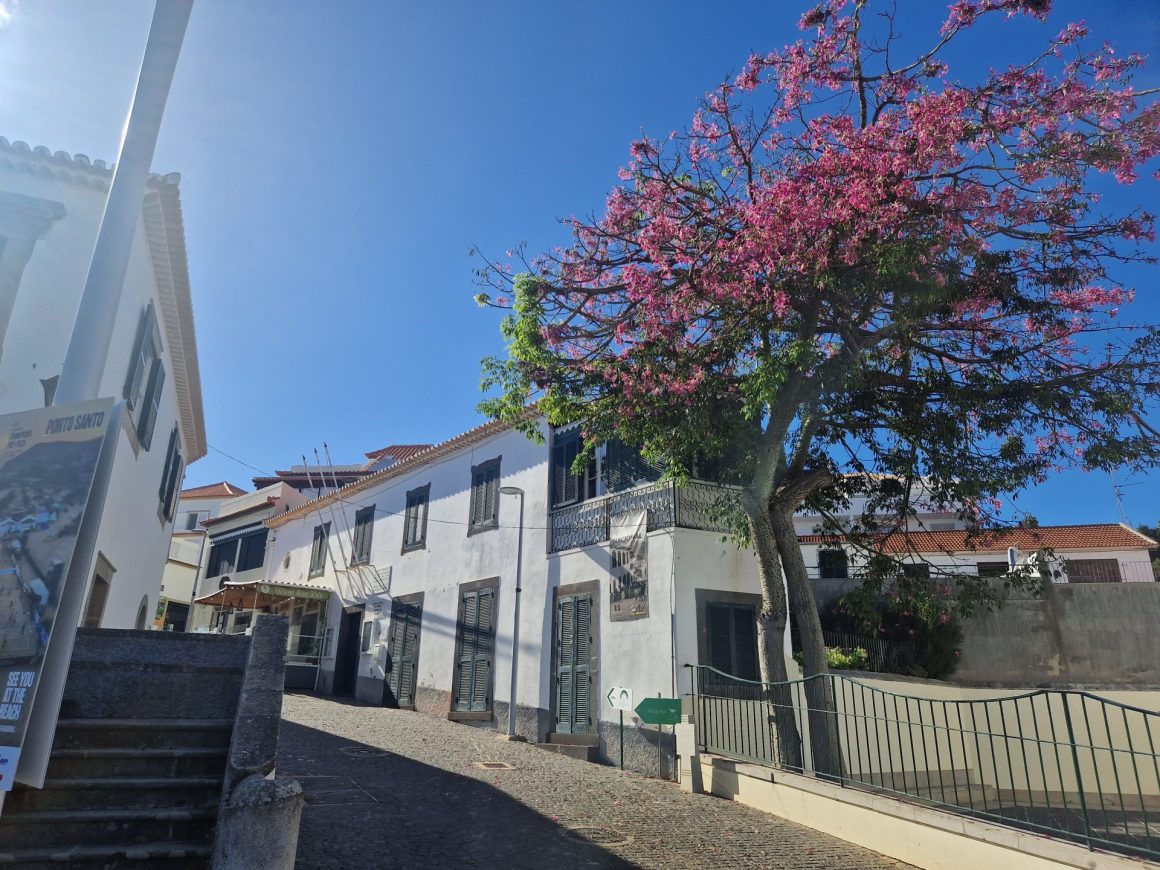
You’ll find:
- detailed models of caravels that look ready to sail into the ocean,
- replicas of early navigational instruments used long before GPS,
- exhibitions explaining Christopher Columbus’s connection to Porto Santo and the sugar trade that once made Madeira and Porto Santo important Atlantic trading points.
The museum itself is quite small — easy to visit in under an hour — making it a perfect stop between a beach day and dinner in town.
As part of the Casa Colombo visit, you can also explore the former home of Portuguese filmmaker Jorge Brum, transformed into a small cultural museum.
Inside the narrow rooms are old photographs, film reels, clapperboards, and personal belongings belonging to the director. More than a film collection, the house feels like a portrait of Porto Santo itself — capturing the island’s fishermen, dockworkers, traditions, and slow daily rhythms through cinema.
What makes the space memorable is how naturally culture and landscape blend together. Here, the sea, wind, and sand are not simply scenery — they become part of the story itself.
Both houses are absolutely worth visiting if you want to experience a quieter, more reflective side of Porto Santo beyond its famous beaches.
Is Porto Santo Worth Visiting?
From my experience — absolutely, and at almost any time of year.
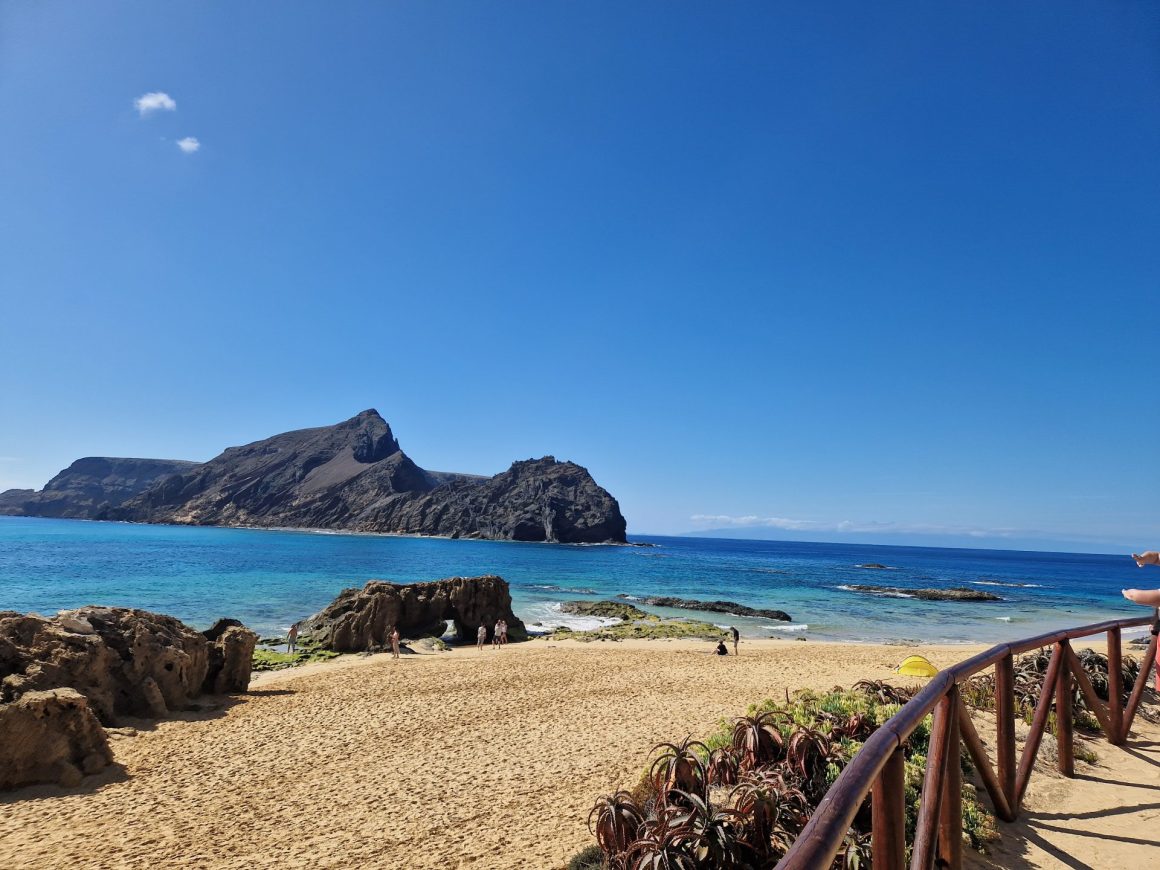
Porto Santo is the kind of destination that quietly grows on you. It’s slower, calmer, and far less crowded than many European beach islands, which is exactly what makes it special.
It’s the perfect place if you:
- love long, peaceful beaches and a warm Atlantic ocean,
- prefer a mild climate without extreme summer heat,
- enjoy destinations that still feel intimate and uncrowded,
- want to combine the dramatic mountains and greenery of Madeira with a more relaxed island focused on beaches, quiet walks, and simplicity.
For me, two visits within a single year were enough to understand why so many people return to Porto Santo again and again. It’s not an island of endless attractions or nightlife — its charm lies in the atmosphere, the pace of life, and the feeling of space and calm that becomes harder to find elsewhere in Europe.
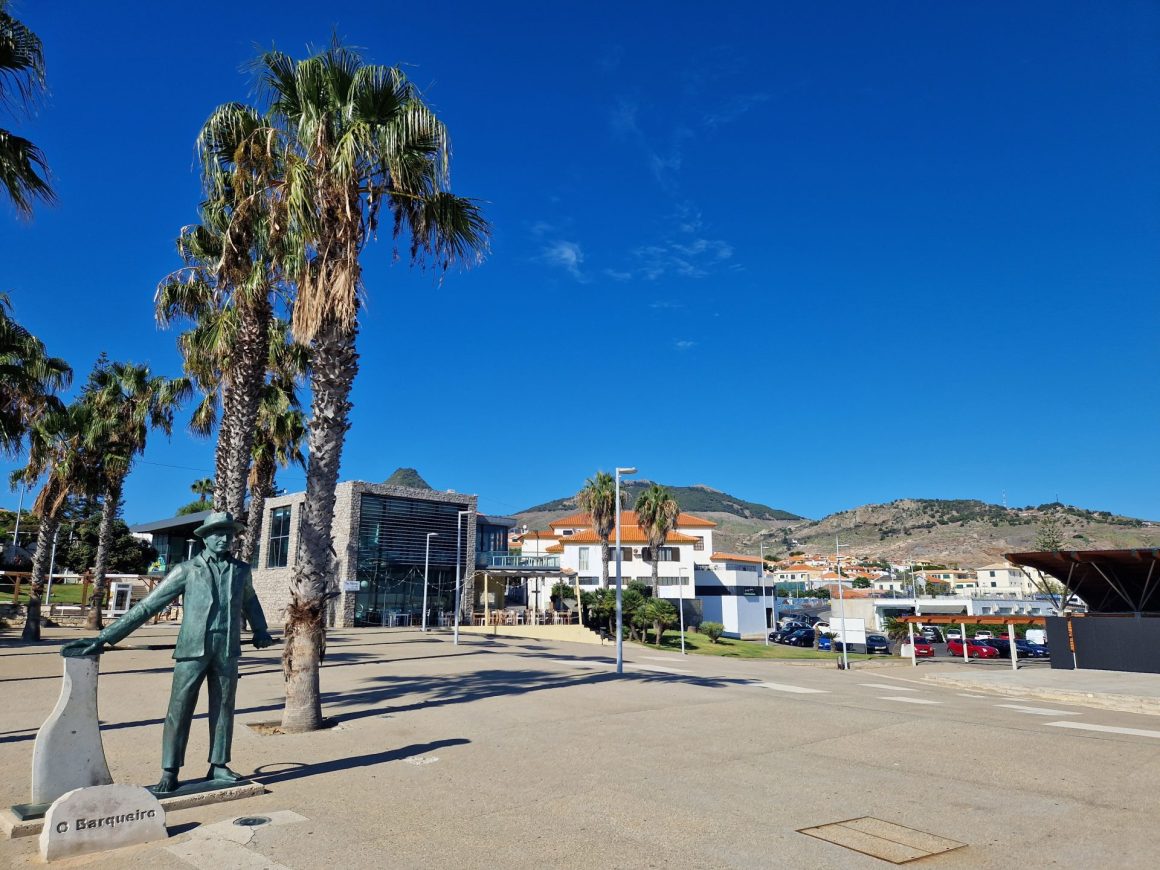
How to Get to Porto Santo
Despite feeling remote and wonderfully disconnected from mass tourism, Porto Santo is surprisingly easy to reach.
From Madeira
The most common way to visit Porto Santo is from Madeira itself, either by ferry or a short domestic flight.
Ferry — Porto Santo Line
The ferry from Funchal is the more scenic and relaxed option.
- Journey time: around 2.5–3 hours
- Departure point: Port of Funchal
- Why choose it: beautiful coastal views, more luggage flexibility than flying, and a calmer travel experience overall
During weekends and peak summer months, it’s definitely worth booking tickets in advance, as the ferry can fill up quickly.
Domestic Flight — Binter
If you’re short on time, flying is incredibly quick.
- Flight time: approximately 15–20 minutes
- Airline: usually operated by Binter
- Best for: shorter trips or travellers combining several islands in one itinerary
From Europe
In the summer season, Porto Santo receives a number of direct charter flights from different European countries, mostly through package holiday operators.
Outside summer, the easiest route is usually:
- Fly to Madeira (Funchal)
- Continue to Porto Santo by ferry or domestic flight
From the United States
In recent years, reaching Madeira from the US has become much easier.
During the summer season, there are direct flights from New York to Madeira with United Airlines. From there, Porto Santo is just a short ferry or flight away.
Other convenient options include:
- TAP Air Portugal via Lisbon
- Azores Airlines via Ponta Delgada in the Azores
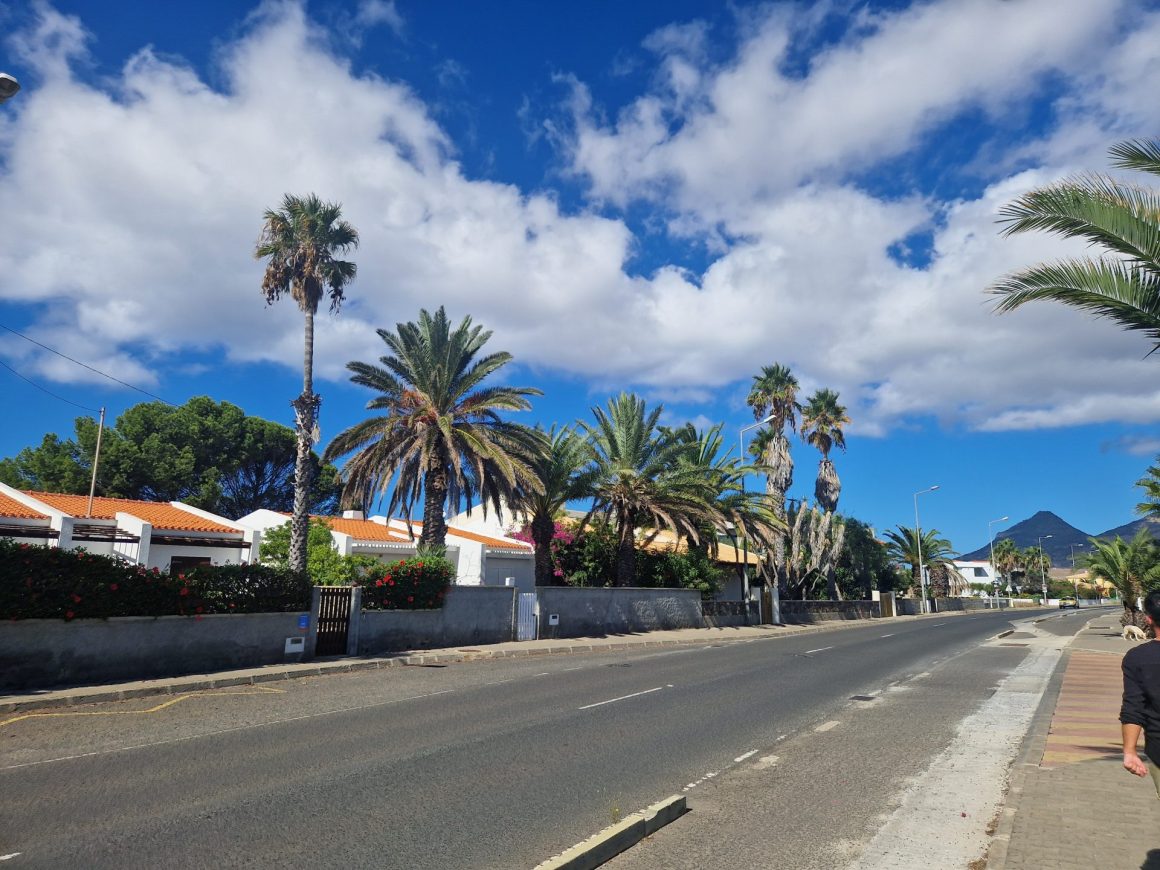
Part of Porto Santo’s charm is that getting there still feels like a small journey — and once you arrive, the slower pace of the island makes it feel even more rewarding.
Here are the best apps that you may need for your next travel.