Guangzhou was not the first city I associated with China. It doesn’t sit on people’s radar the way Shanghai does, or the way Shenzhen or Chongqing gets talked about. And that was exactly the point—I wanted to see what China feels like outside the hyped places.
No One Talks About Guangzhou — So I Went
I went partly out of curiosity, partly for history. Canton—Guangzhou—was one of China’s main gateways to the outside world for centuries: foreign trade was long funneled through here, and after the First Opium War it became one of the treaty ports opened to international community. It reminded me a little of going to Nagoya in Japan: a city no one romanticizes, but one that quietly offers a lot once you arrive.
Another reason is that that the Pearl River Delta has nice mild climate for a winter and spring visit, while summers there is too hot and humit.
If you’ve got three or four days, that’s enough to let Guangzhou show you its different moods without forcing a plan.
First impressions of Guangzhou: a quiet kind of megacity
What surprised me was how quiet the streets can feel with around 19 mio. in city proper and in metro up to 70 mio., the largest urban area in the world right now. So many scooters are electric—no engine noise, just a soft glide—until one sneaks up behind you.
English is sparse, but people try to help. And practically: Guangzhou is quite walkable, with a metro that works well when you don’t feel like doing the distance on foot. Or a Didi taxi via one of the apps.
Stay in Guangzhou: where I’d base myself (and why)
I stayed at Paco Business Hotel near Ouzhuang Metro—affordable, central, good for one person. It made it easy to split my days between older west-side Guangzhou and the newer east-side districts. I wanted to be in the middle of it all, but for good fresh hotels, this area is a but limited.
If you want a glossy hotel life, Tianhe is where it’s concentrated, such as the Guangzhou W Hotel. The older west side of the city felt thinner on standout accommodation, which is why staying central and commuting west worked well for me.
Eat in Guangzhou: how I’d do food here
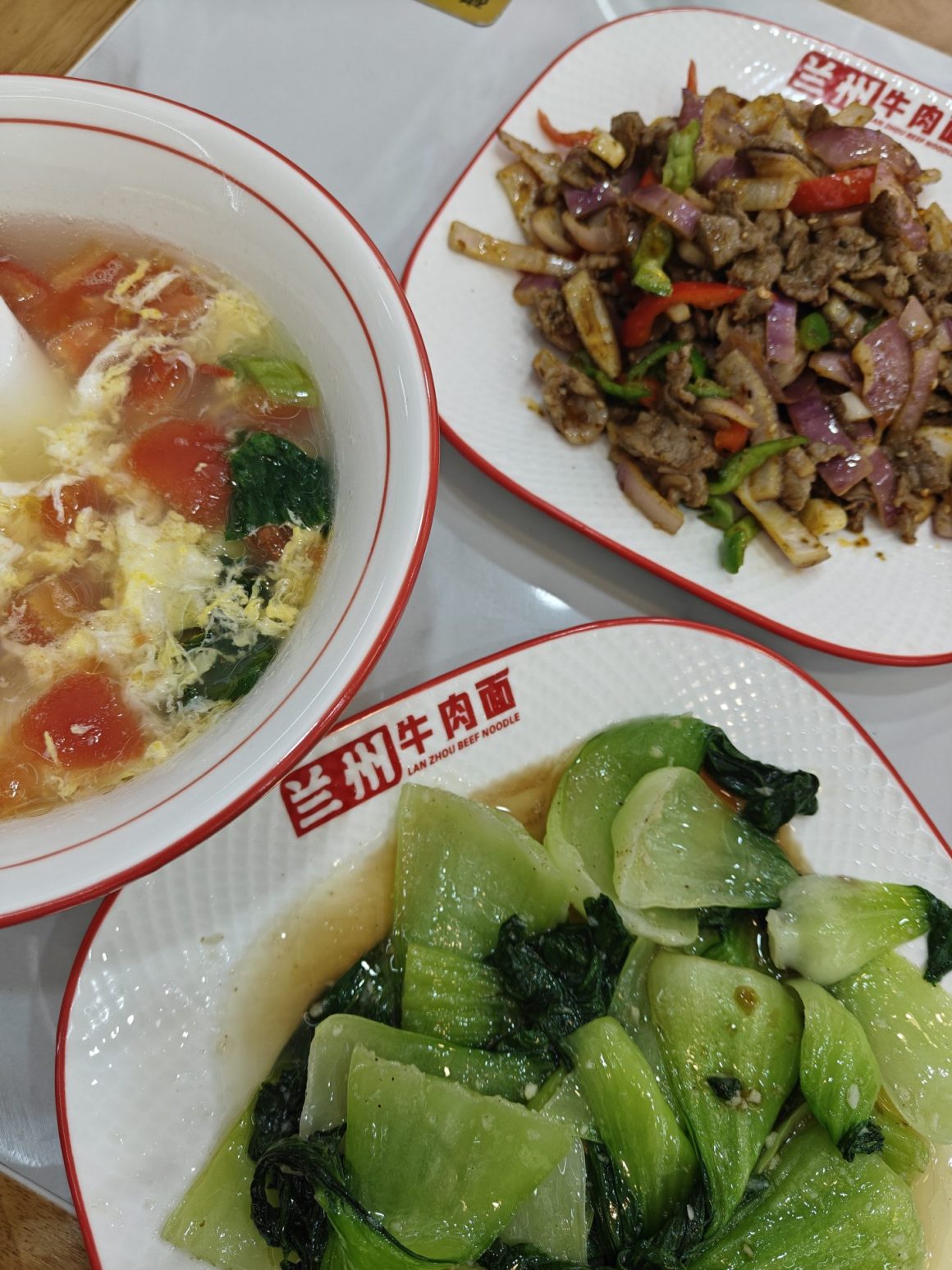
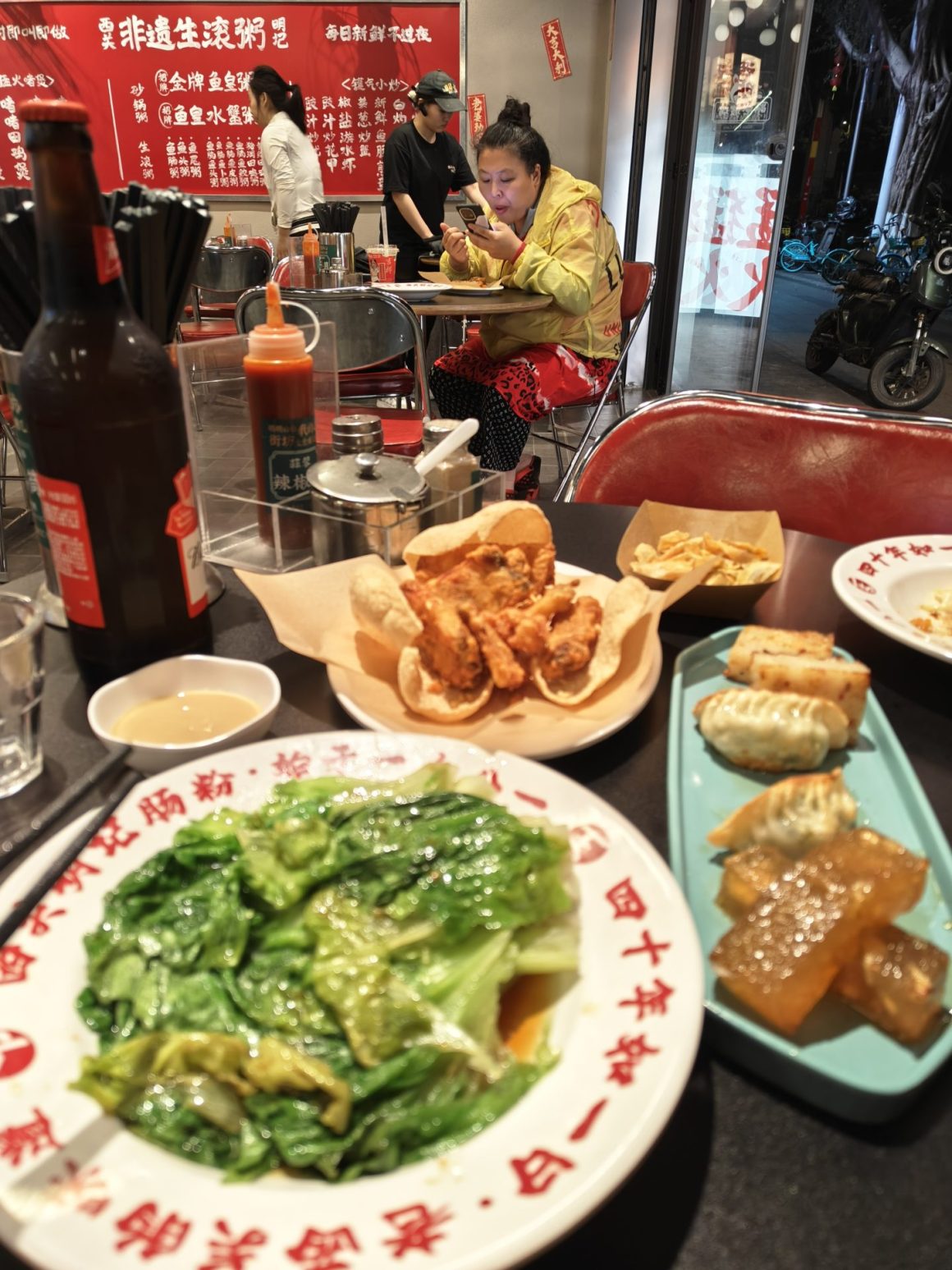
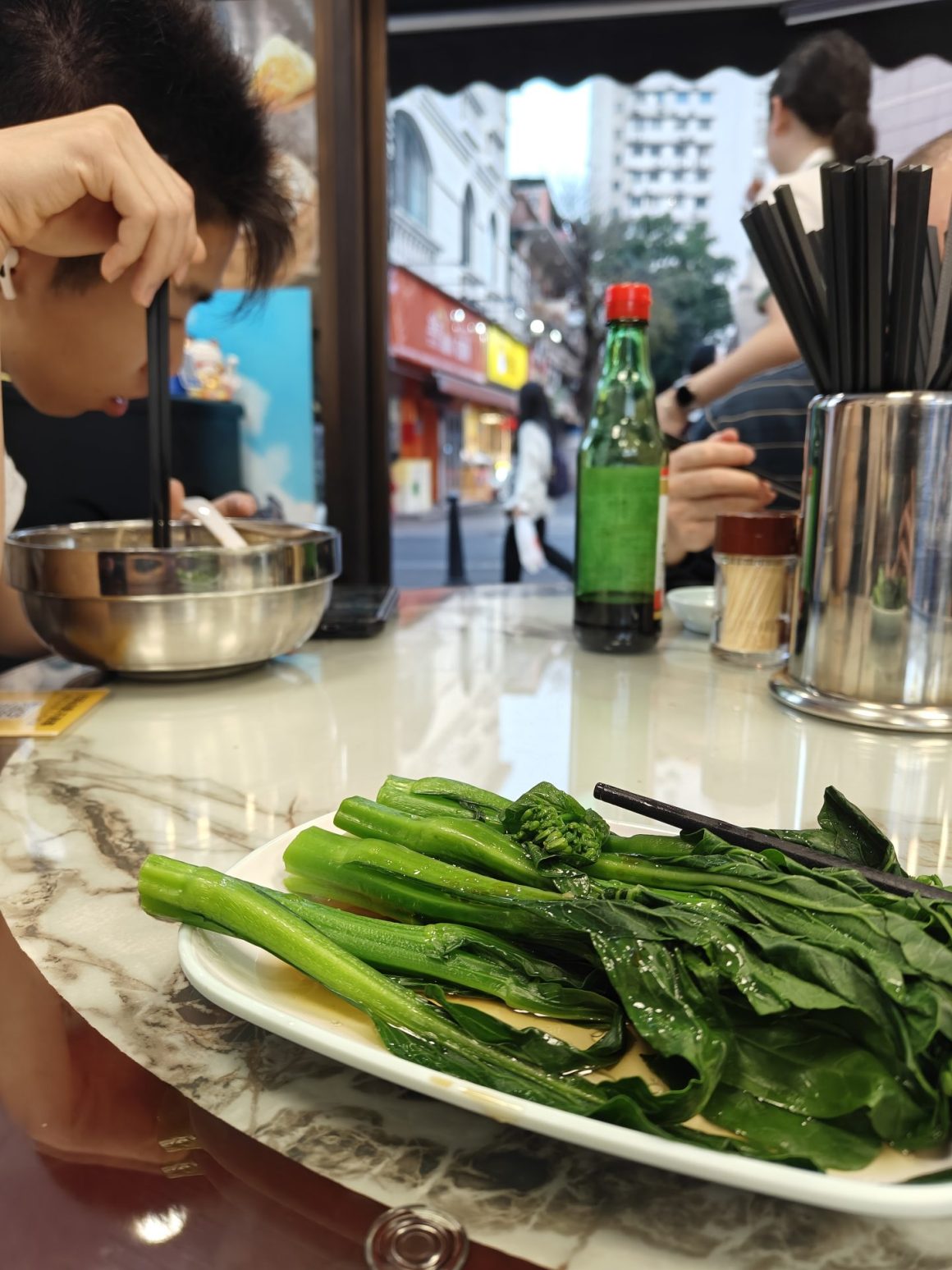
In Guangzhou, dim sum isn’t a destination—it’s the default setting. I wouldn’t walk across town for one specific restaurant, because almost everywhere I tried was genuinely good: warm soups, fast service, plates that arrive faster than you can decide what you meant to order. Just swipe, swipe, pay, and wait a bit, then suddenly food appears at the table. Maybe I am too used to the European way of several interactions, almost like rituals to get what you want. At least it erases most of the language barrier, which is a thing. And be sure to have internet and your apps setup, otherwise game over.
Late-night grazing
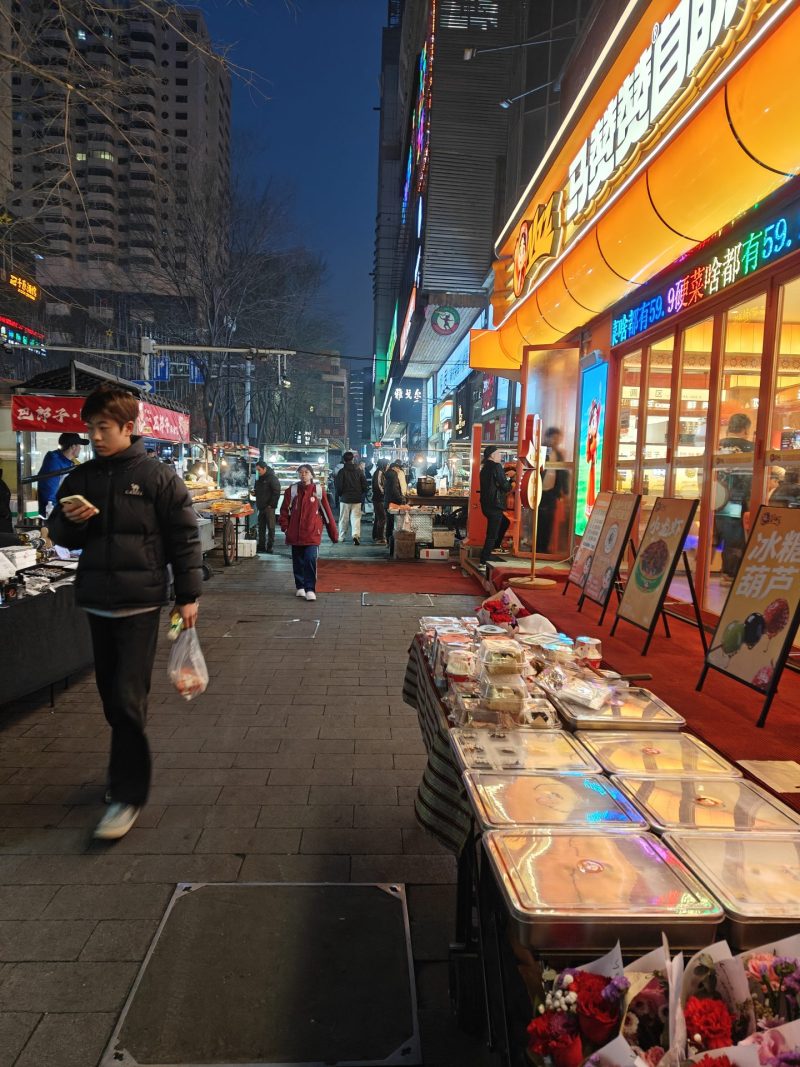
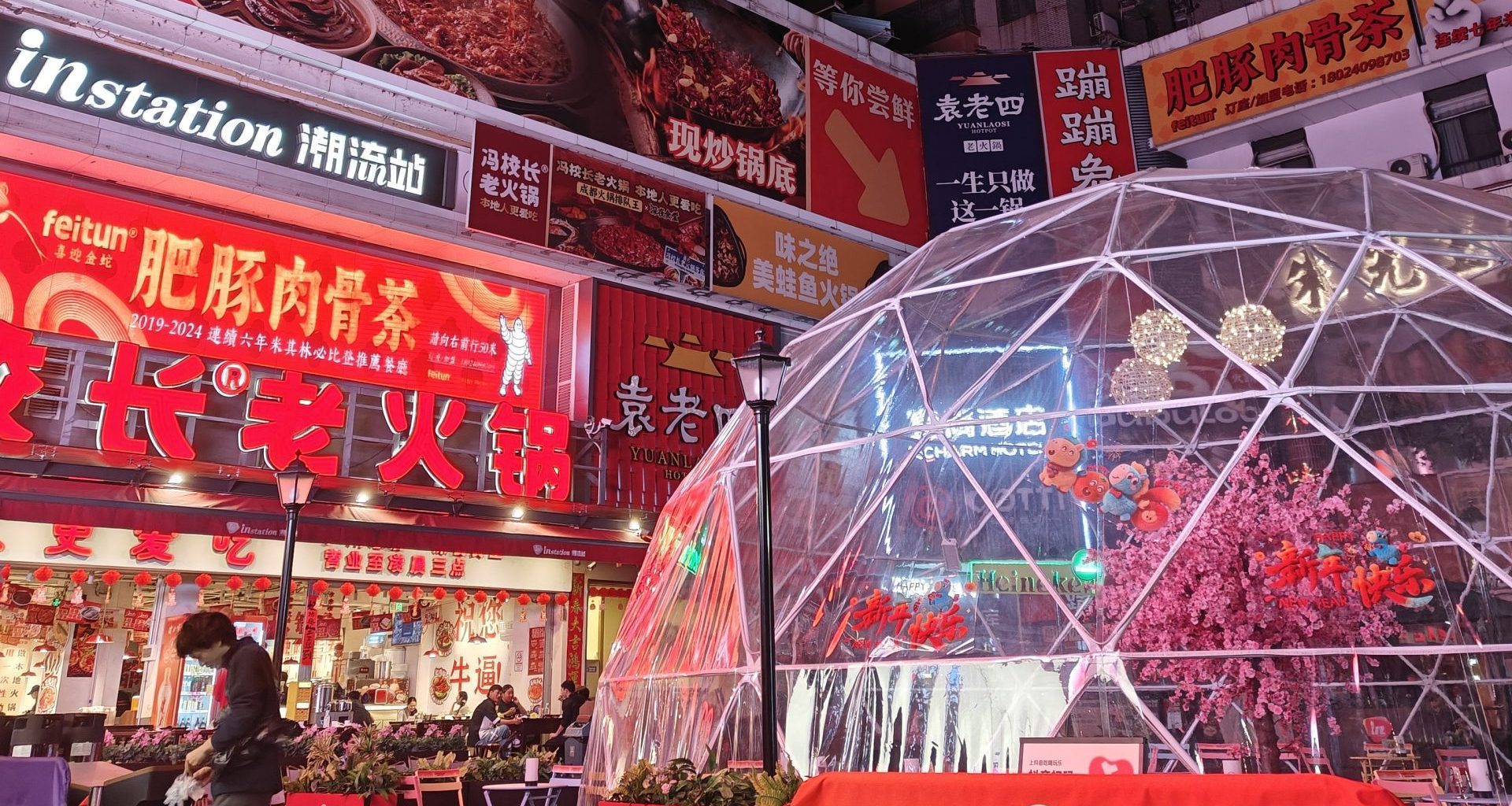
For a late snack wander, I liked Beijing Road after dark—bright, busy, and built for grazing rather than sitting through a long dinner. In the side streets, it is easy to find some decent Dim Sum and other Cantonese food, easy places, in and out. It can be quite busy, though.
One bite (and coffee)
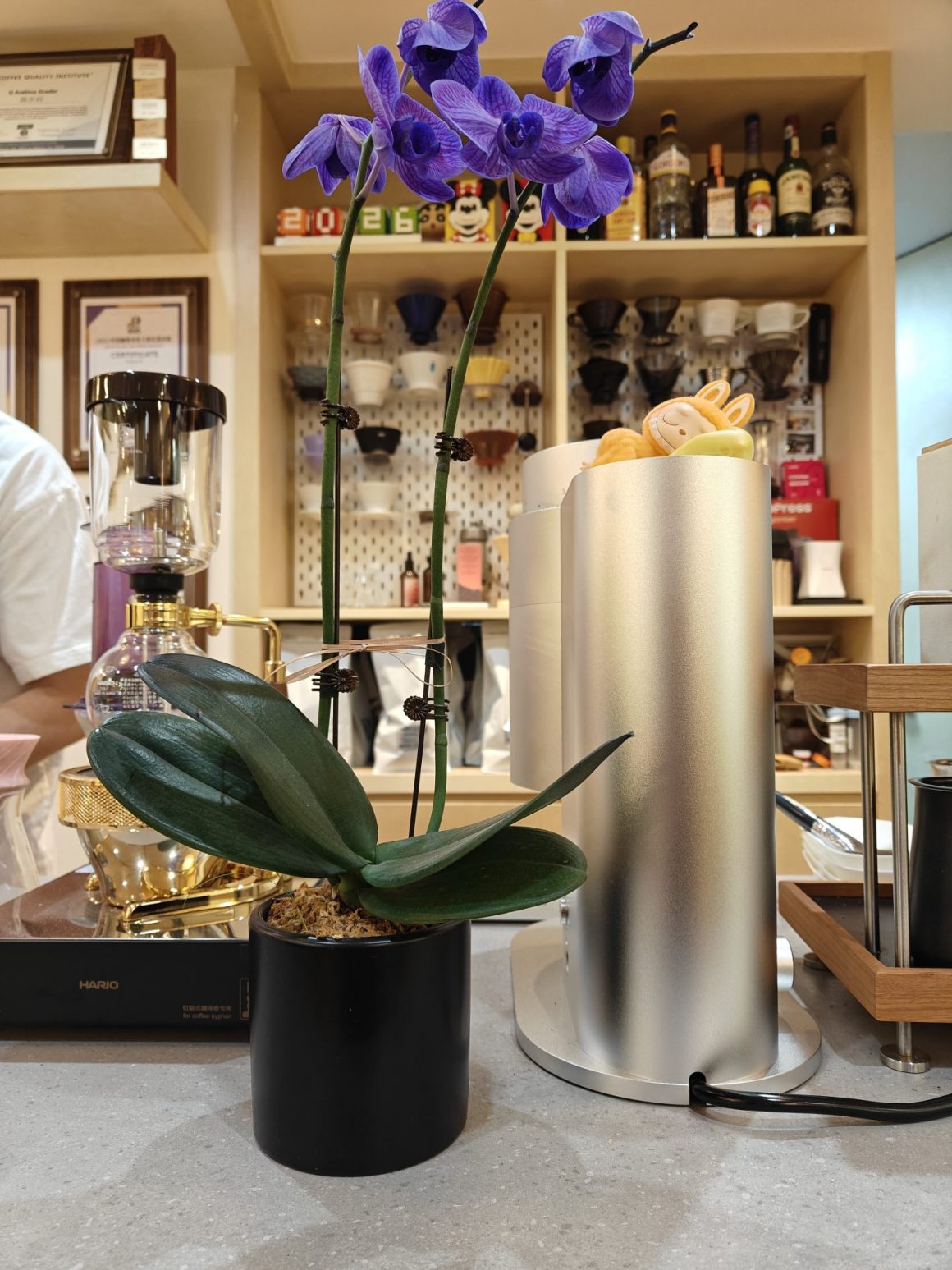
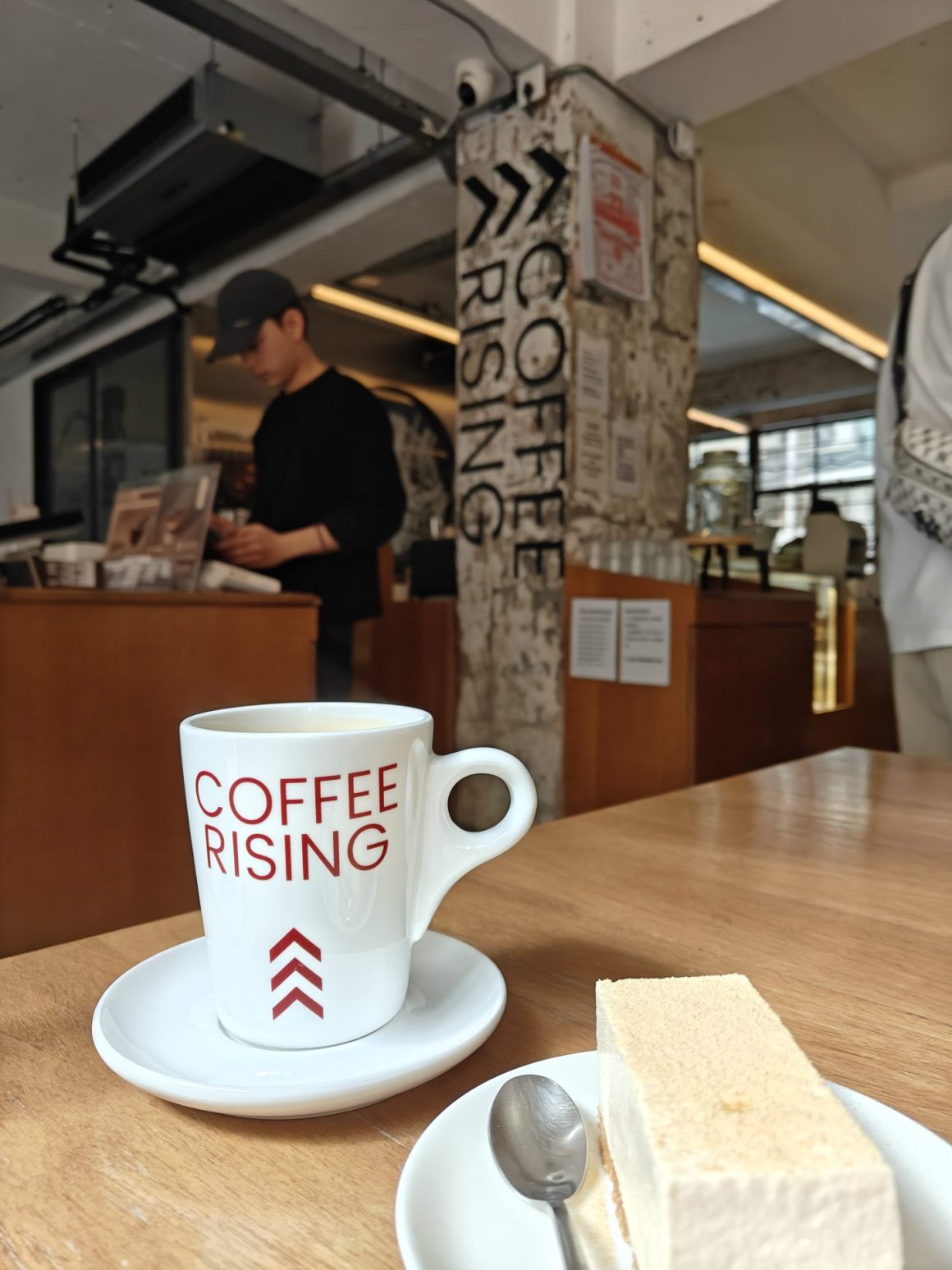
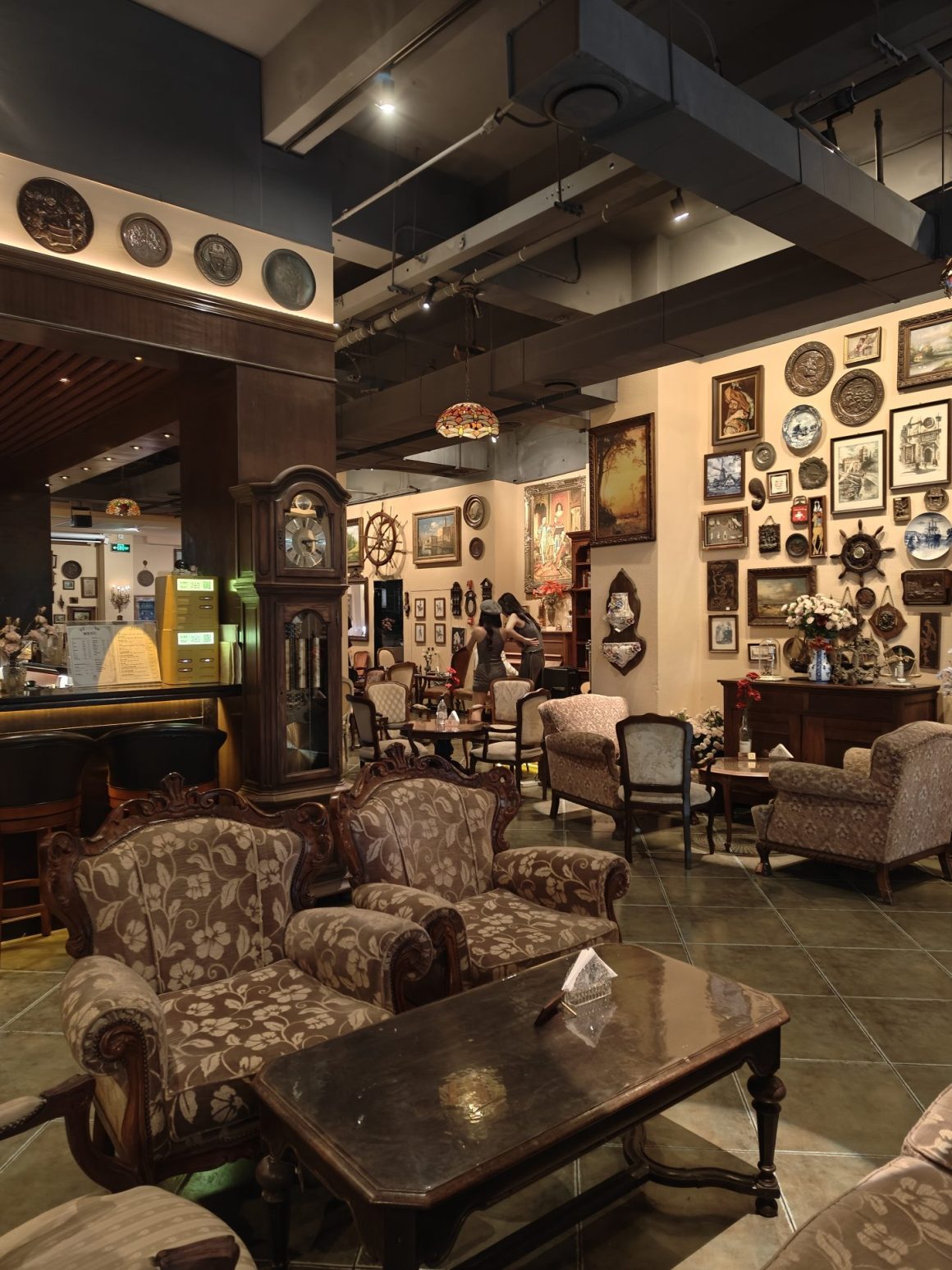
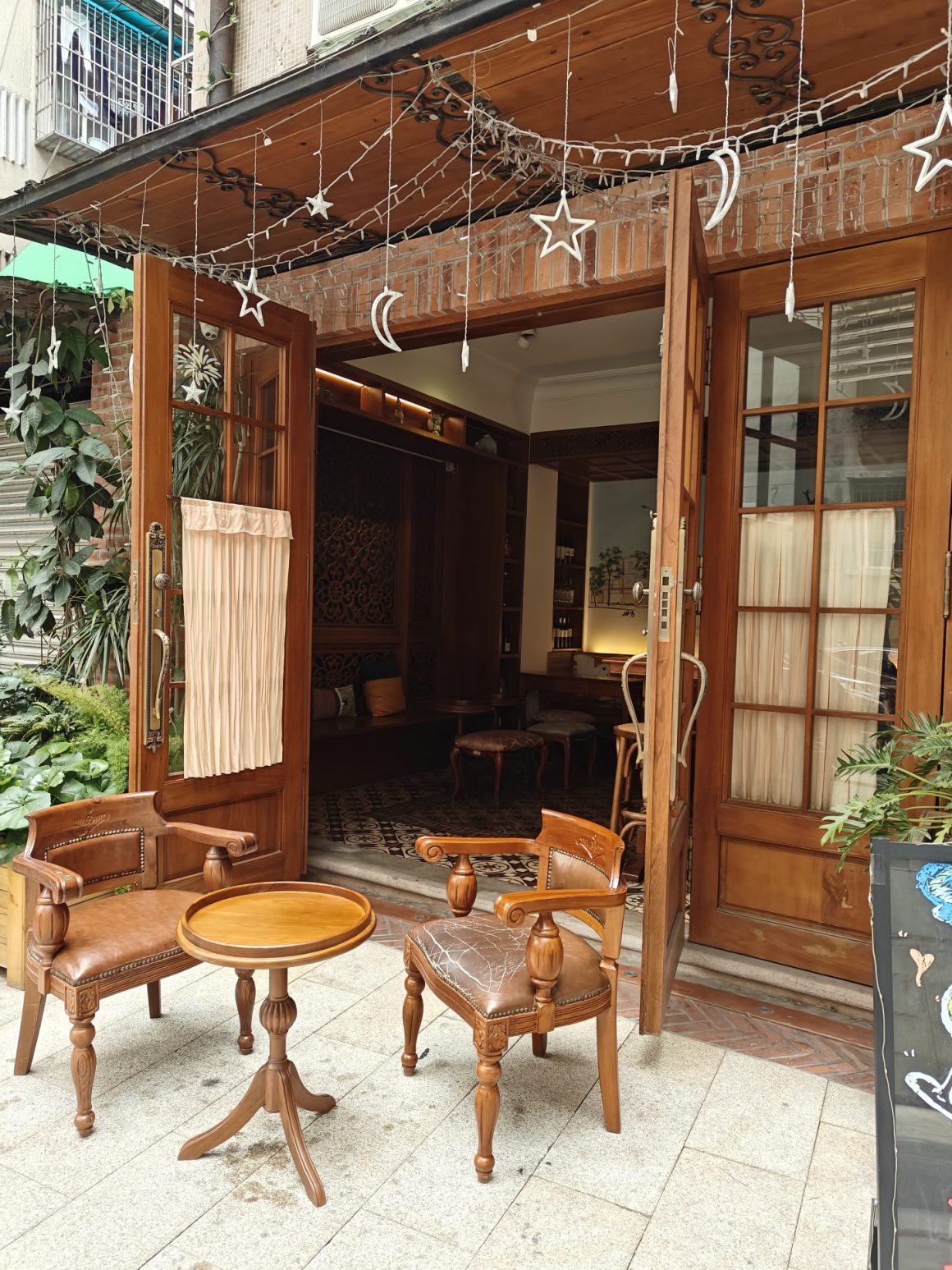
In Dongshankou, I liked Coffee Rising at Donghua Market for its tofu cake and a delicious specialty coffee. There are several cafés, each specializing in bubble tea, coffee, or cakes. Another interesting thing: I went to three (or maybe more) vintage-styled cafés (Tiff Cafés), and each one had a serious photo session going on—girls and guys in baroque or gothic dresses. I now wish I’d snapped a few more pictures, but I got the notion this is an ongoing thing.
What to do in Guangzhou: the city, by mood
West side: old Guangzhou, street-level and chaotic in a good way
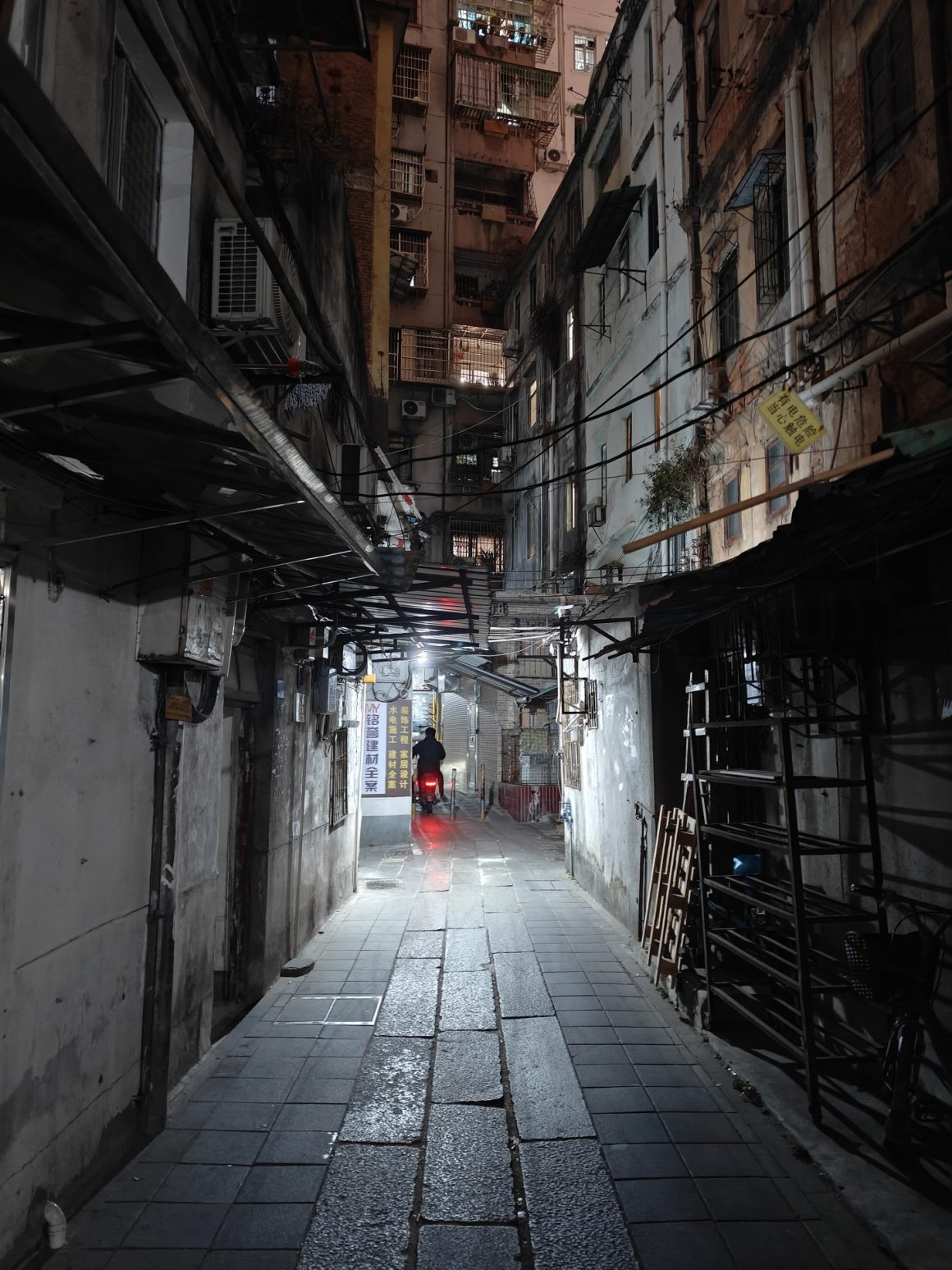
The older parts of the city were what I kept returning to. Streets fold into each other, the ground rises and dips, and the chaos feels useful—not curated, just alive.
Yongqingfang (Liwan)
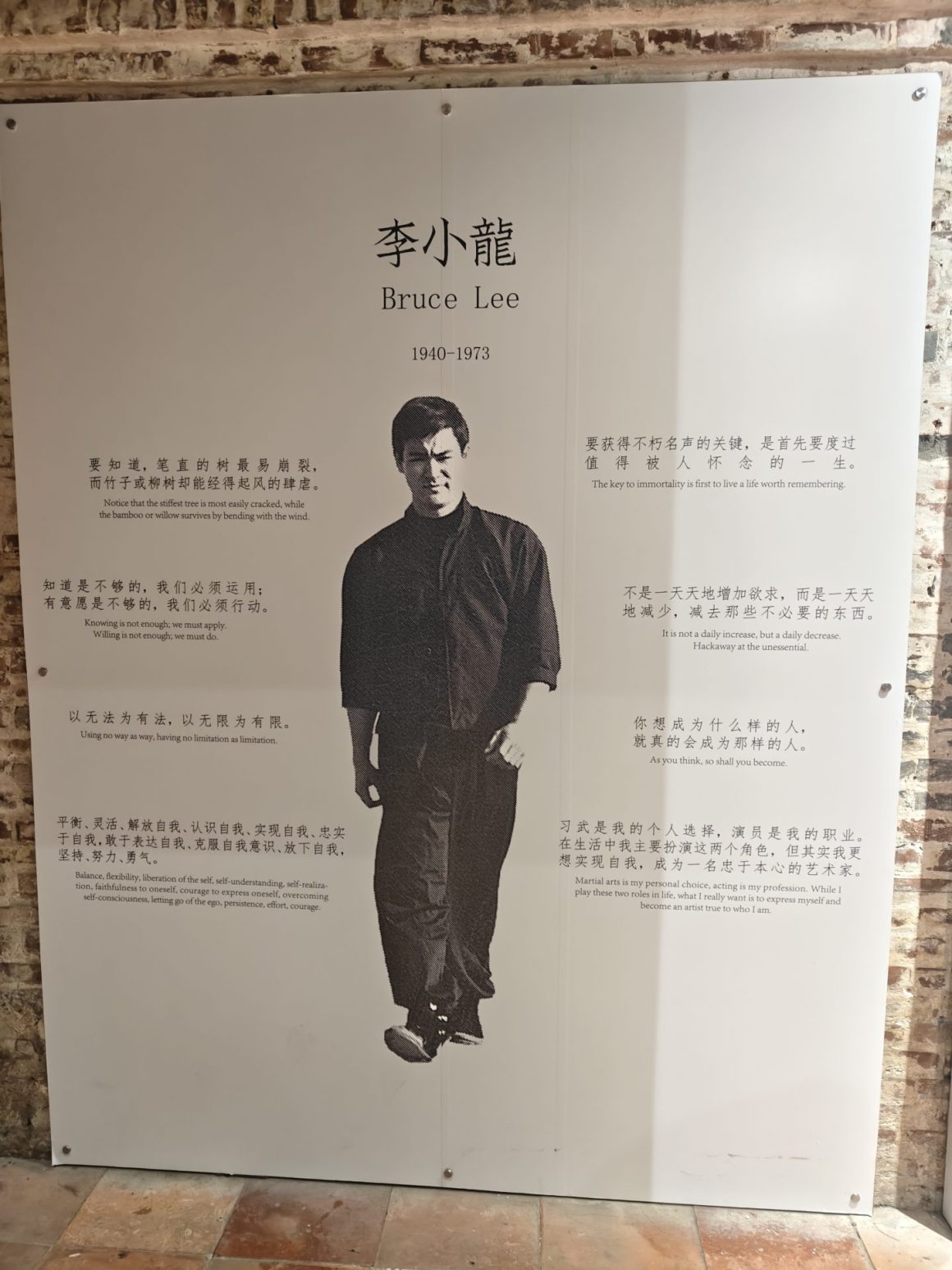
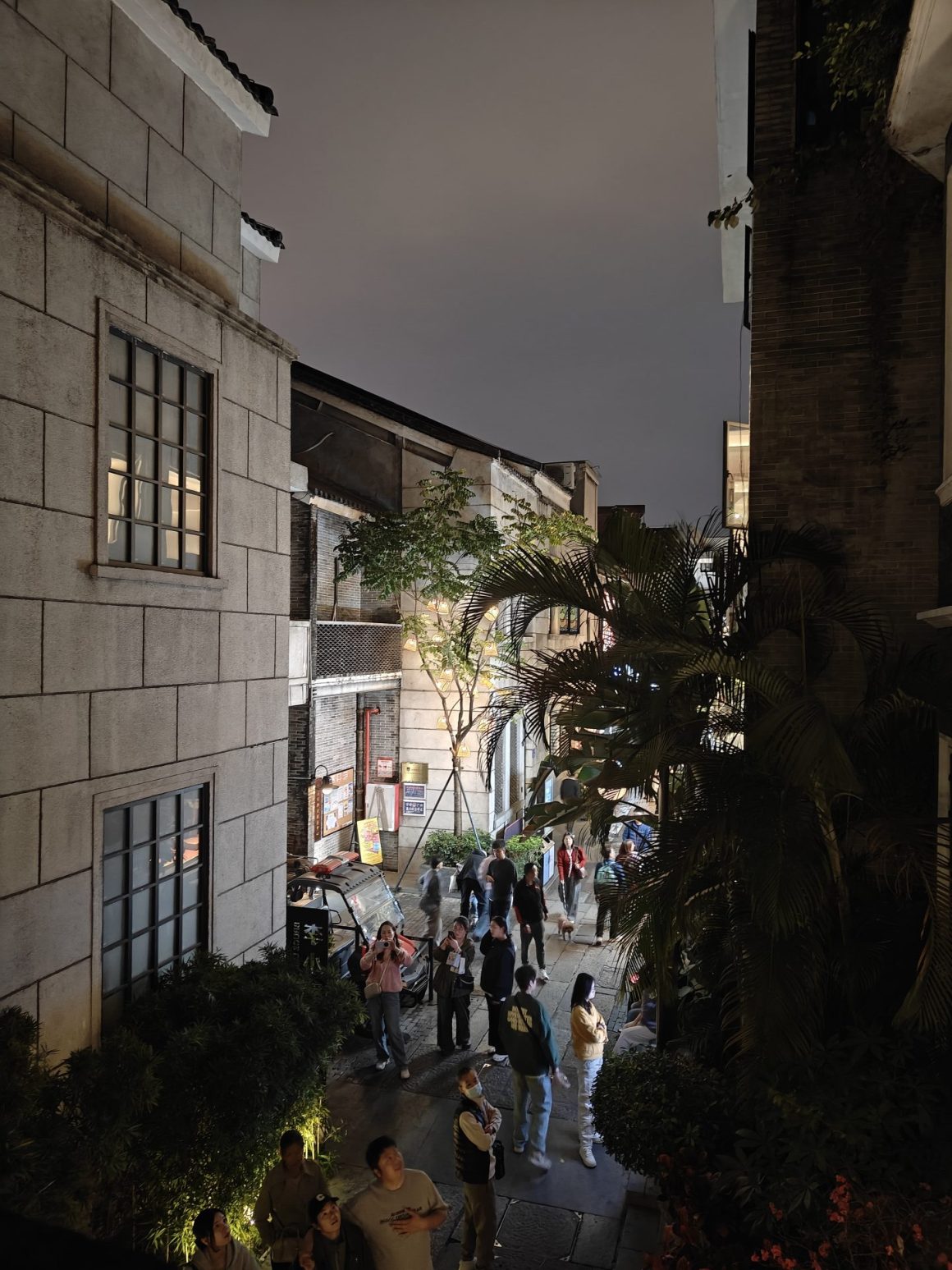
Yongqingfang is restored historic Guangzhou—brick, old façades, crowds, cameras, snacks. It’s commercial, yes, but it’s also where you see how locals use the city: hanging out, eating, taking photos, drifting without a plan.
If you’re already in the area, Liwan Lake Park is a good reset—green, water, slower pace.
Shamian Island (Shamiandao)
If the west side gets loud in the best way, Shamian is where you go to exhale. It’s a small island with tree-lined streets and old concession-era buildings, calmer than the rest of the city, made for a slow walk when you want the volume turned down. Small Europe in the center of China town.
Beijing Road + Dafo Temple (Big Buddha Temple)
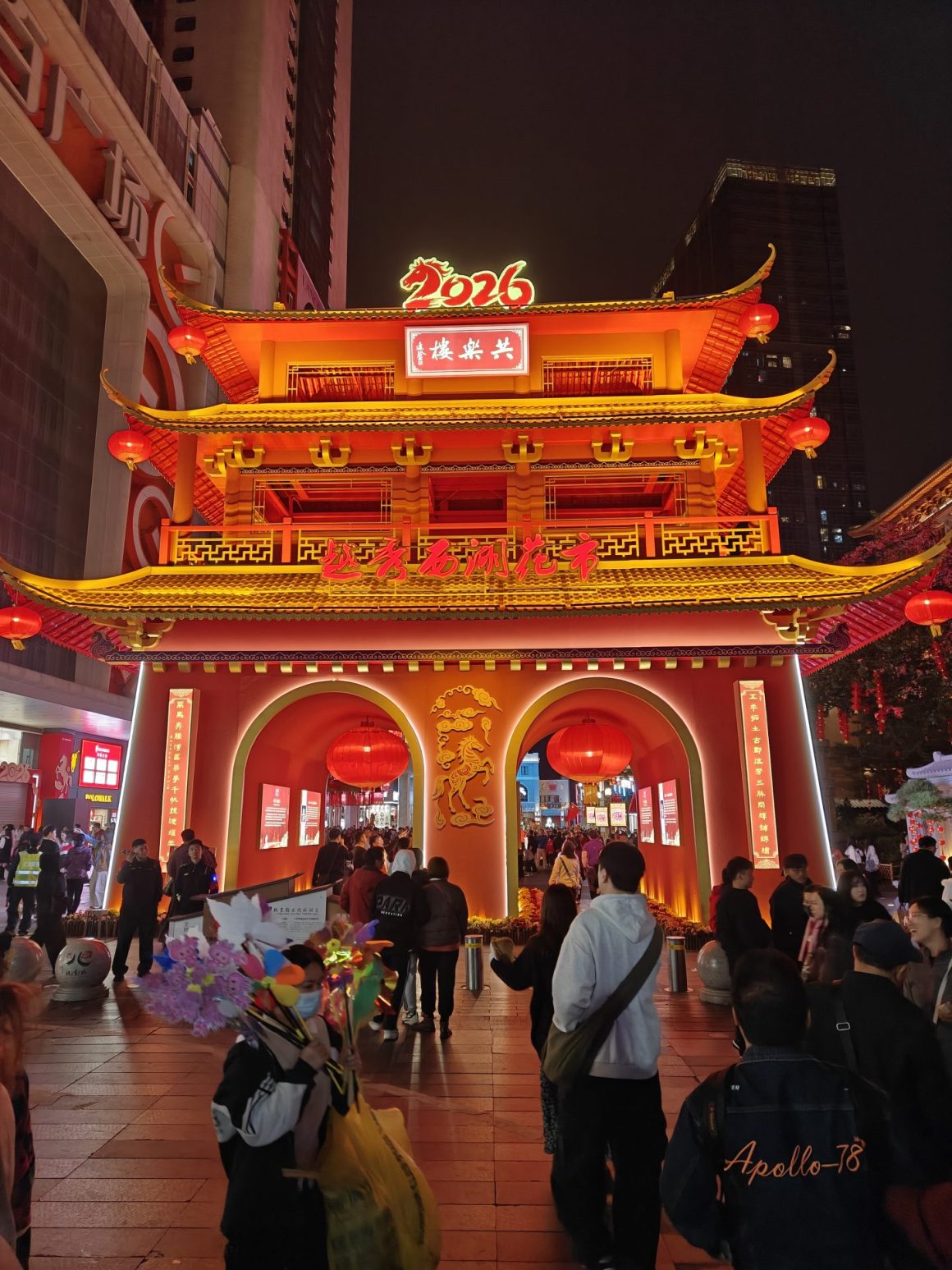
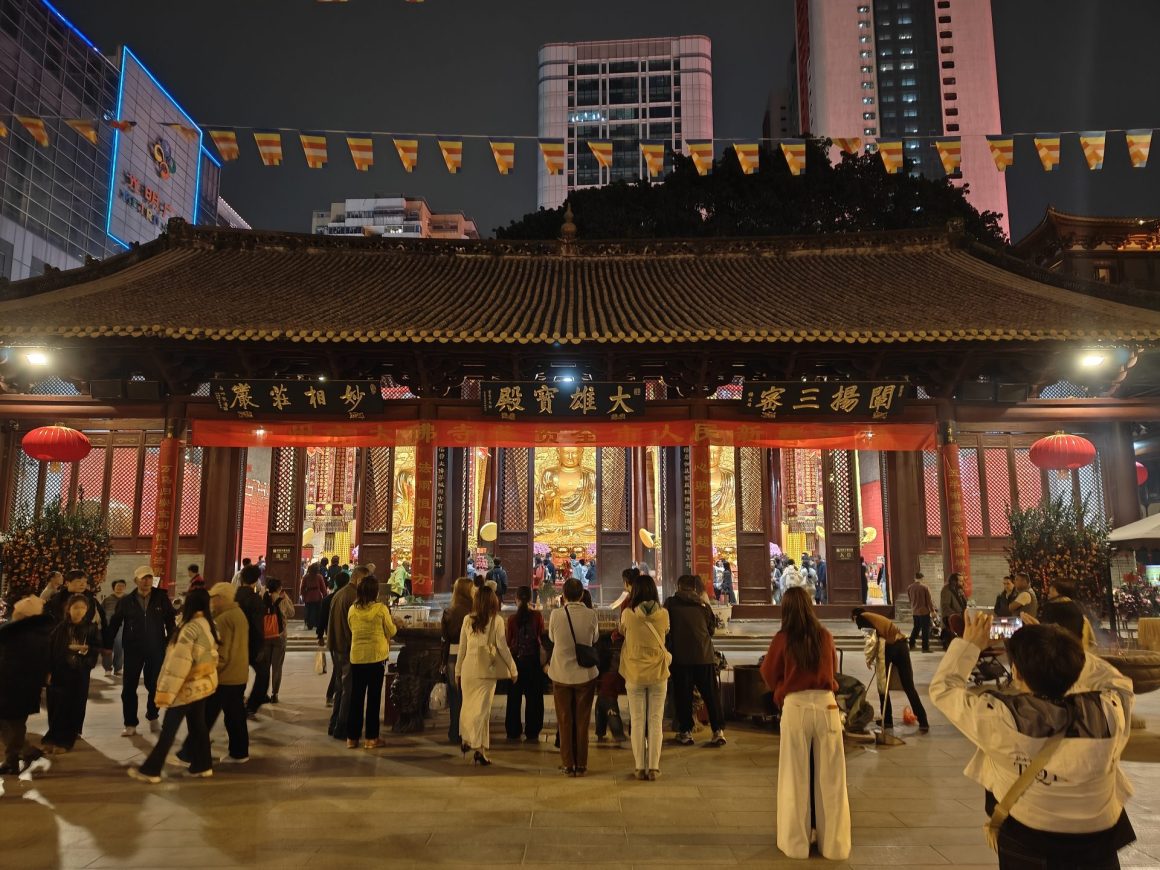
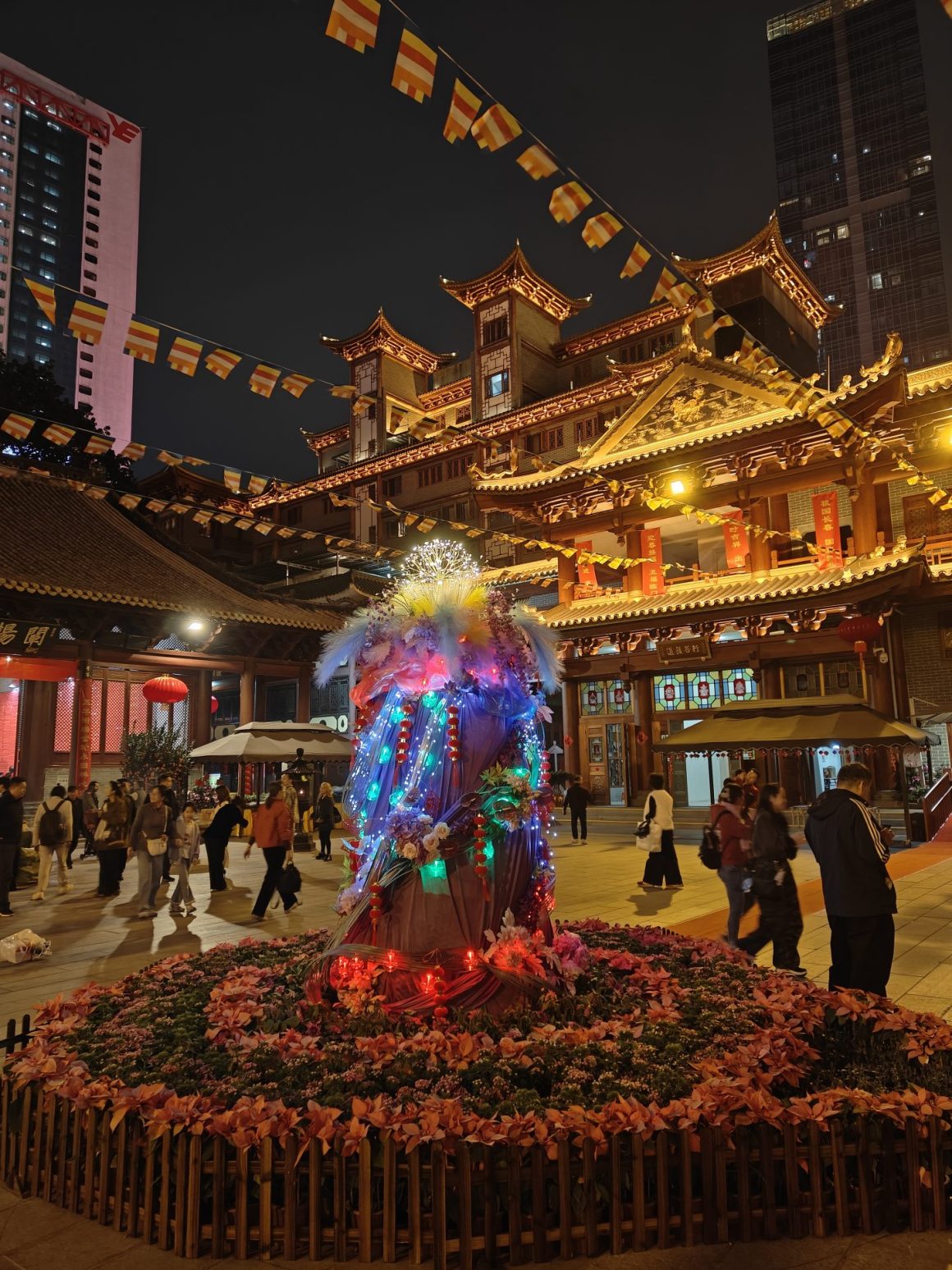
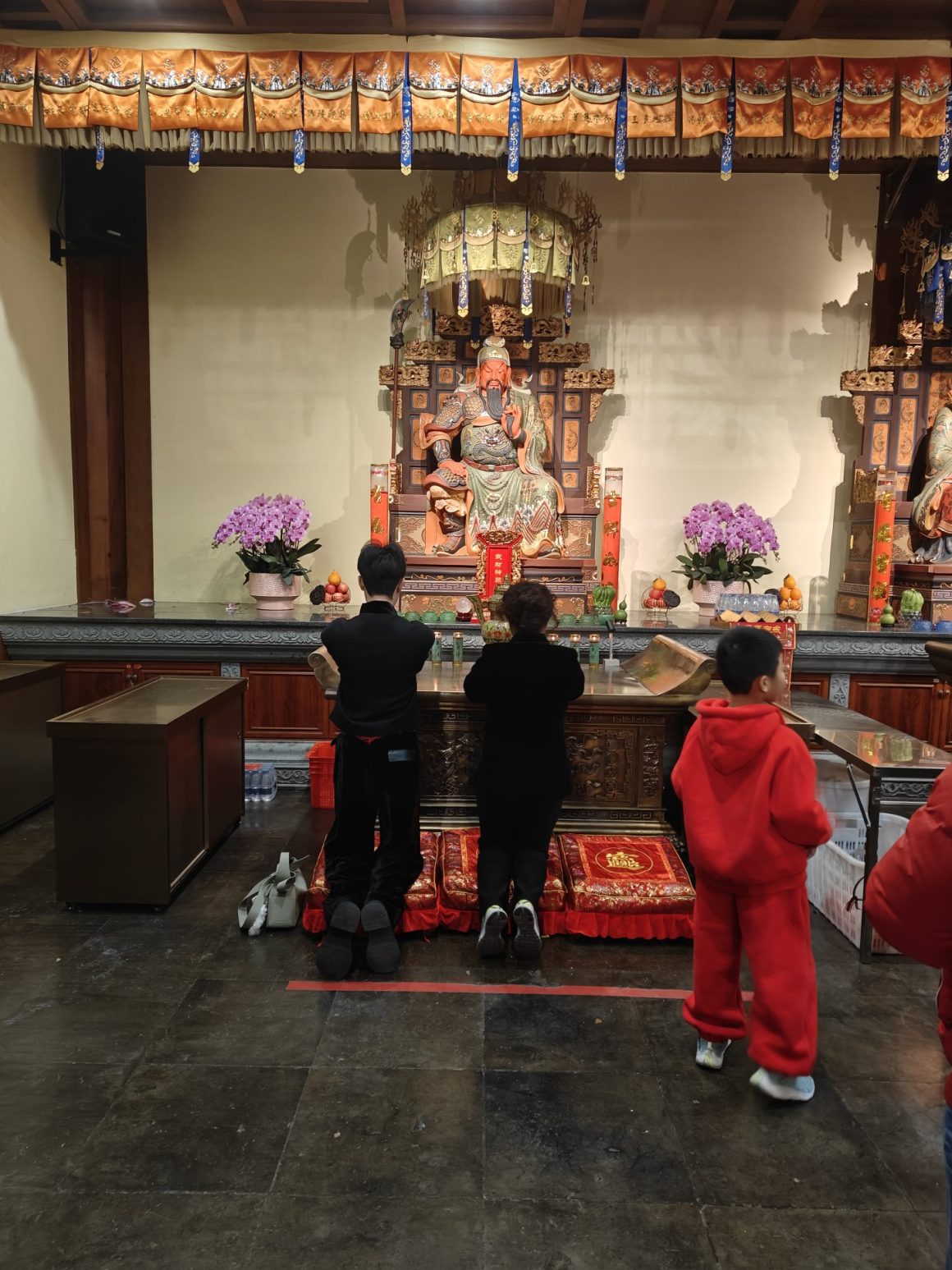
Beijing Road is the neon-and-crowds version of Guangzhou, especially at night. Close by is Dafo Temple (Big Buddha Temple)—a sudden hush off a busy street.
One detail I noticed (and appreciated): it felt less strict about footwear than Buddhist sites I’m used to in places like Japan or Thailand — less choreography, more flow.
Dongshankou: cafés, style, and small obsessions
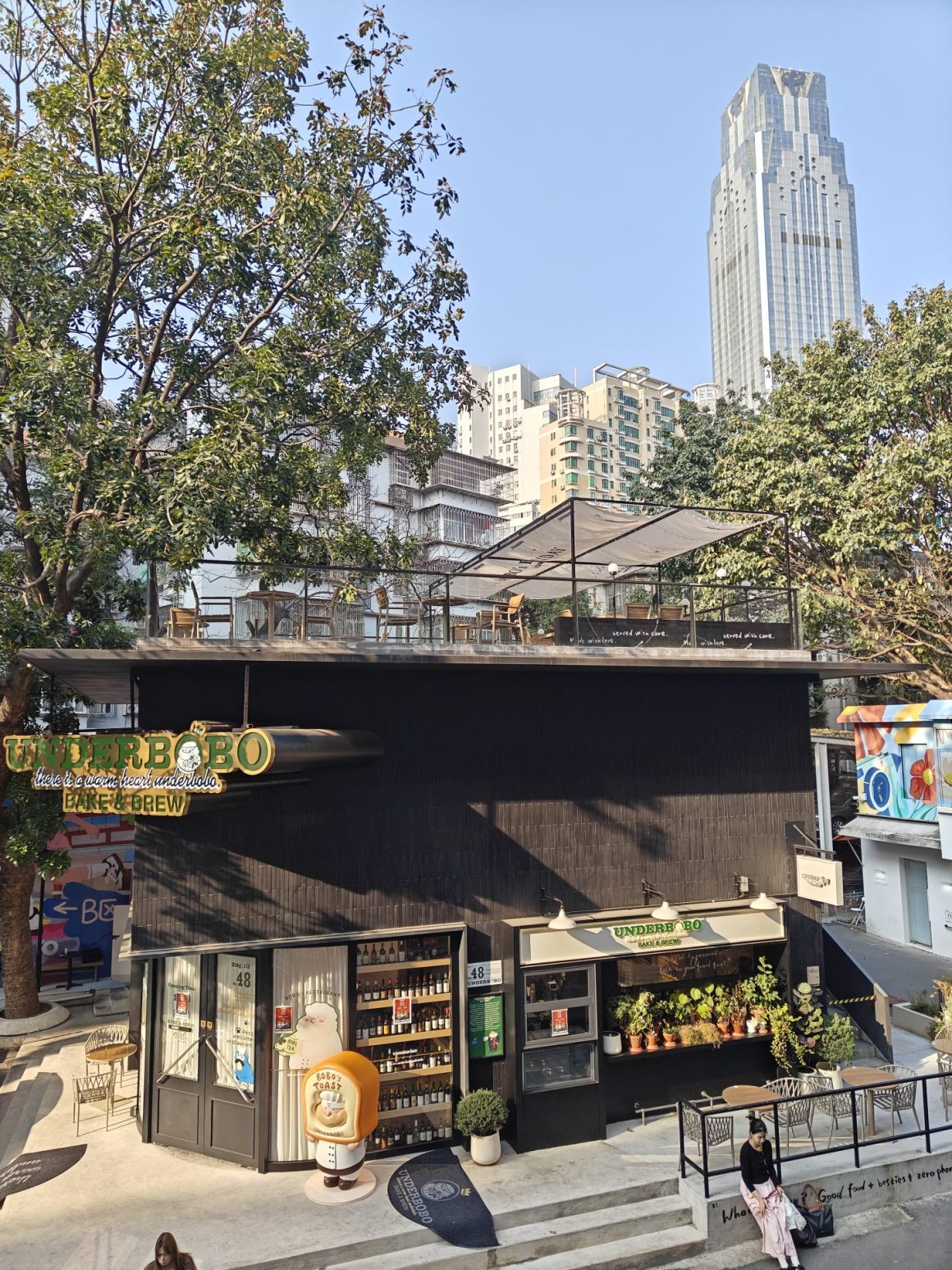
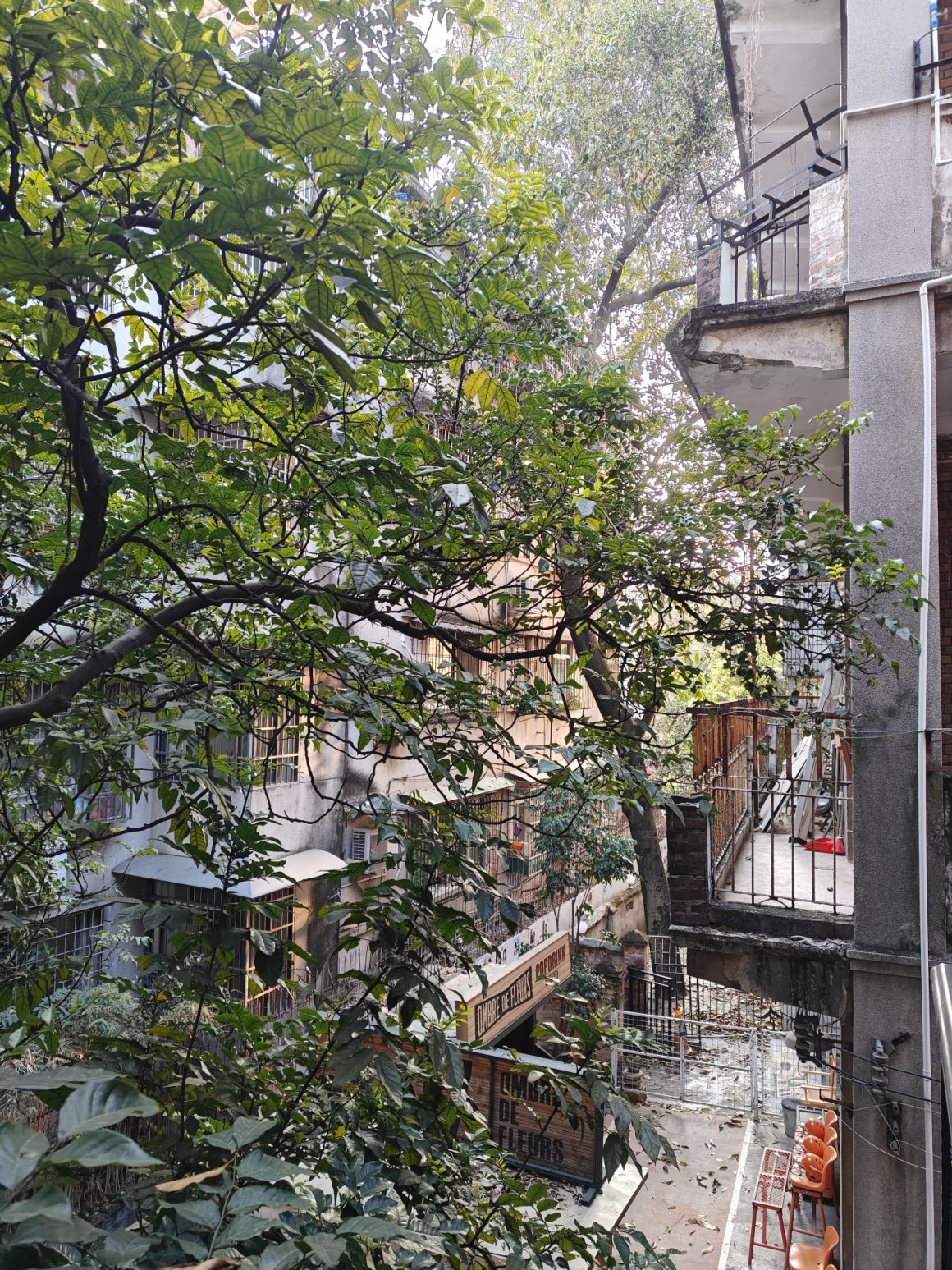
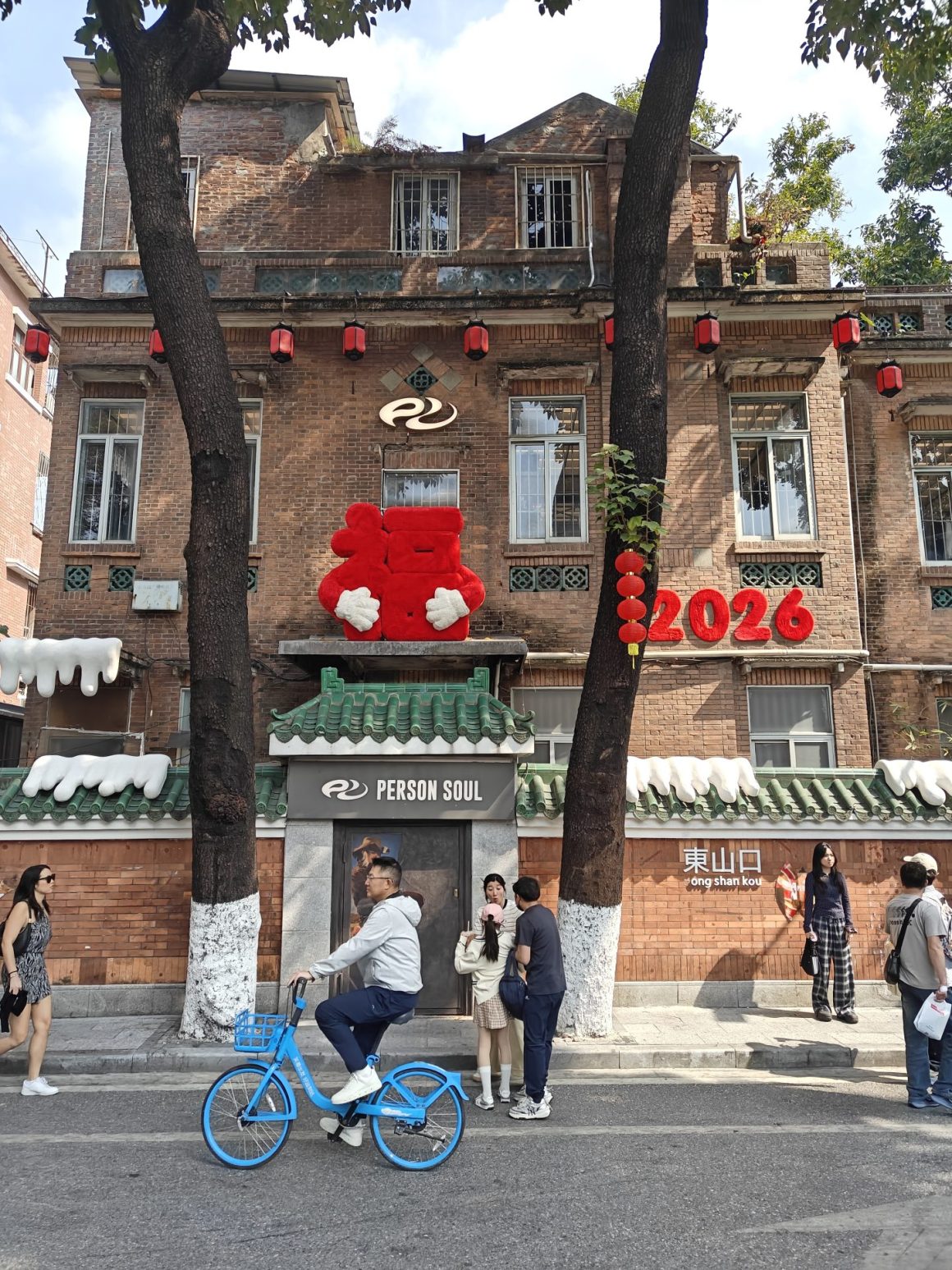
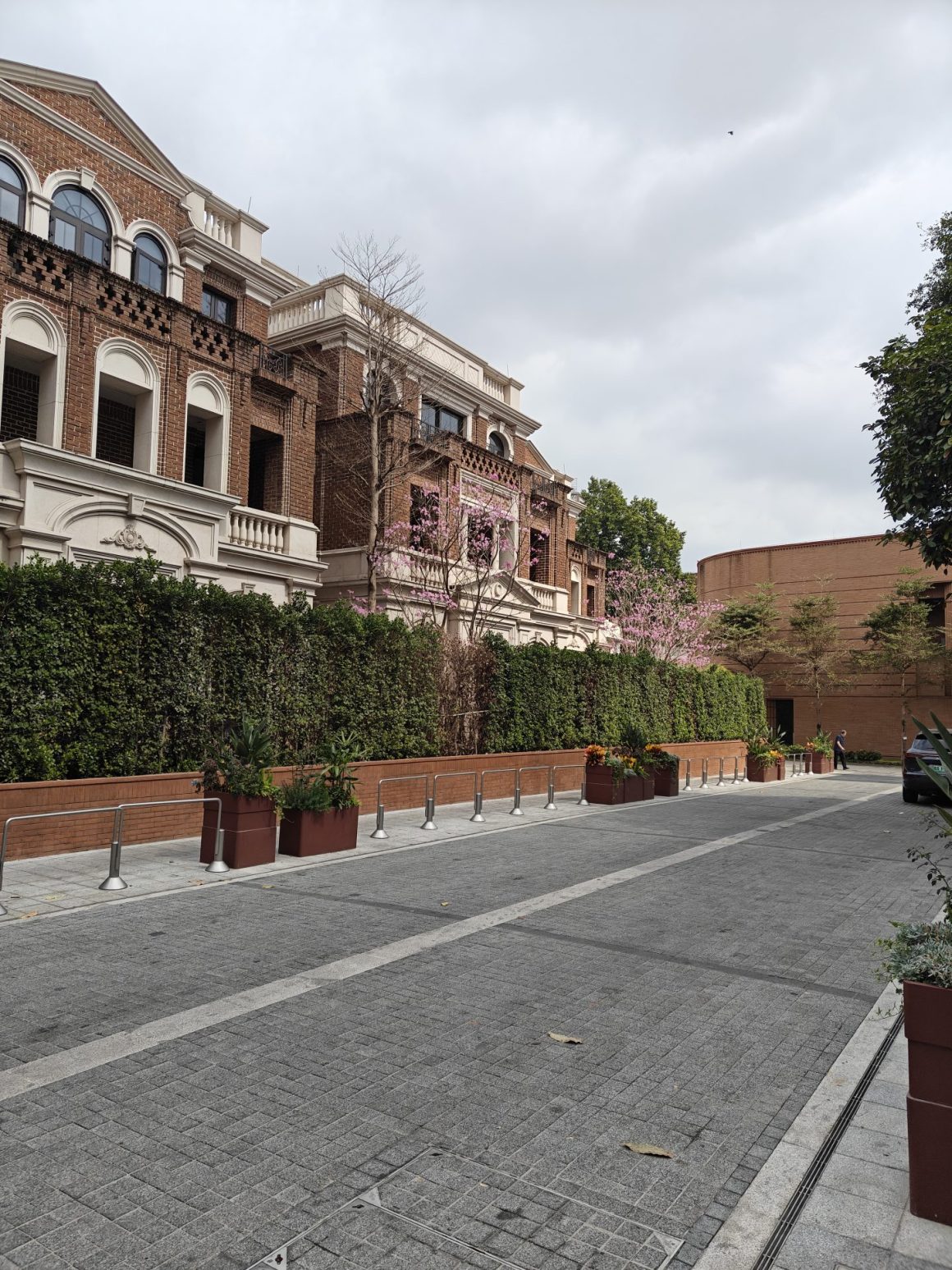
Dongshankou is one of my favorite parts of the city because it can hold two moods at once: laid-back café streets, and then suddenly these photogenic early-1900s brick houses with a slightly Western silhouette—more like what you see in Shanghai’s former French Concession.
It’s also just full of places. Vintage shops and specialty stores are mixed in with the everyday Guangzhou layer—bubble tea, snack counters, convenience stores—so you end up drifting in and out of tiny shops without needing a plan.
What people wear here
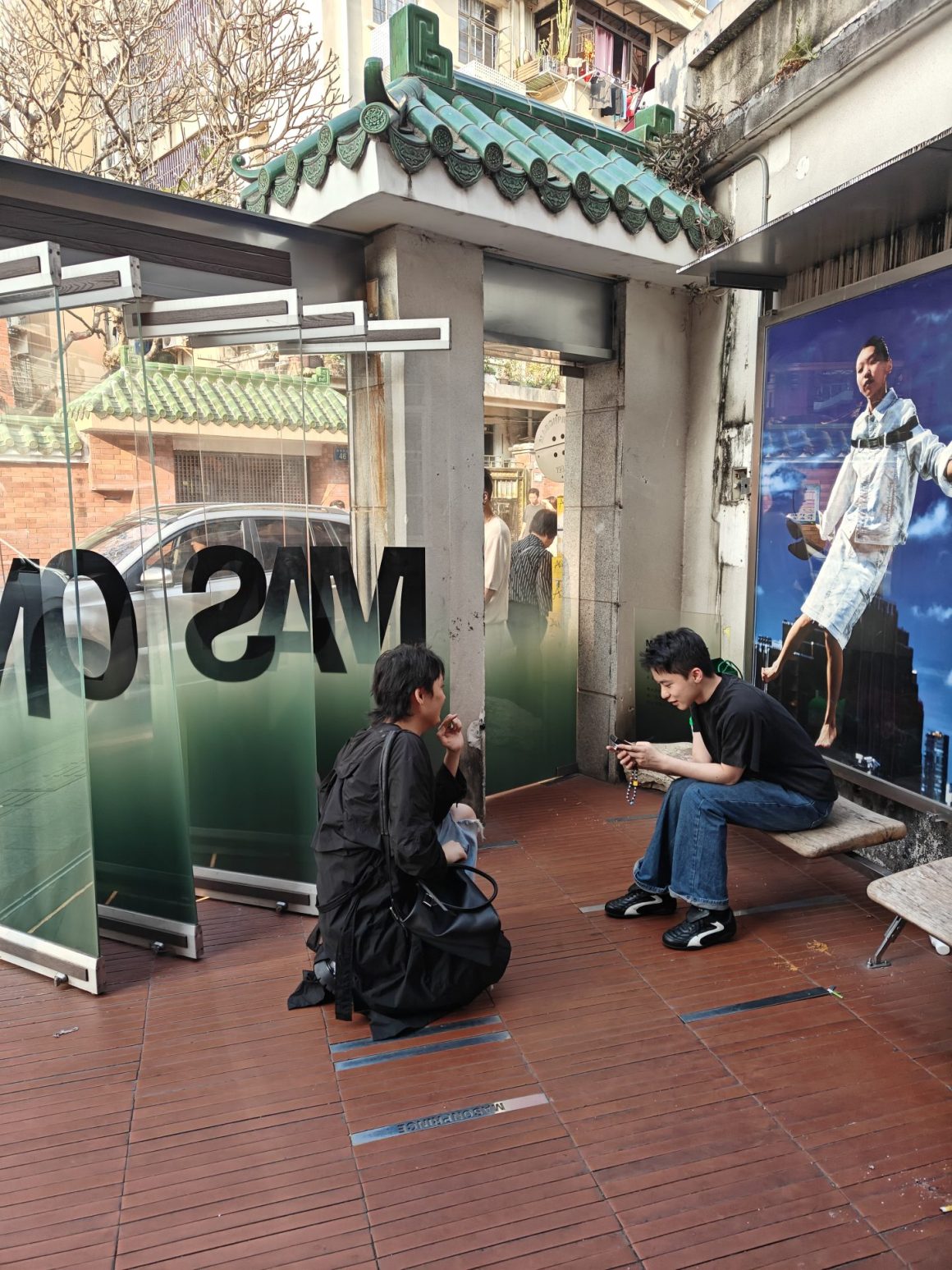
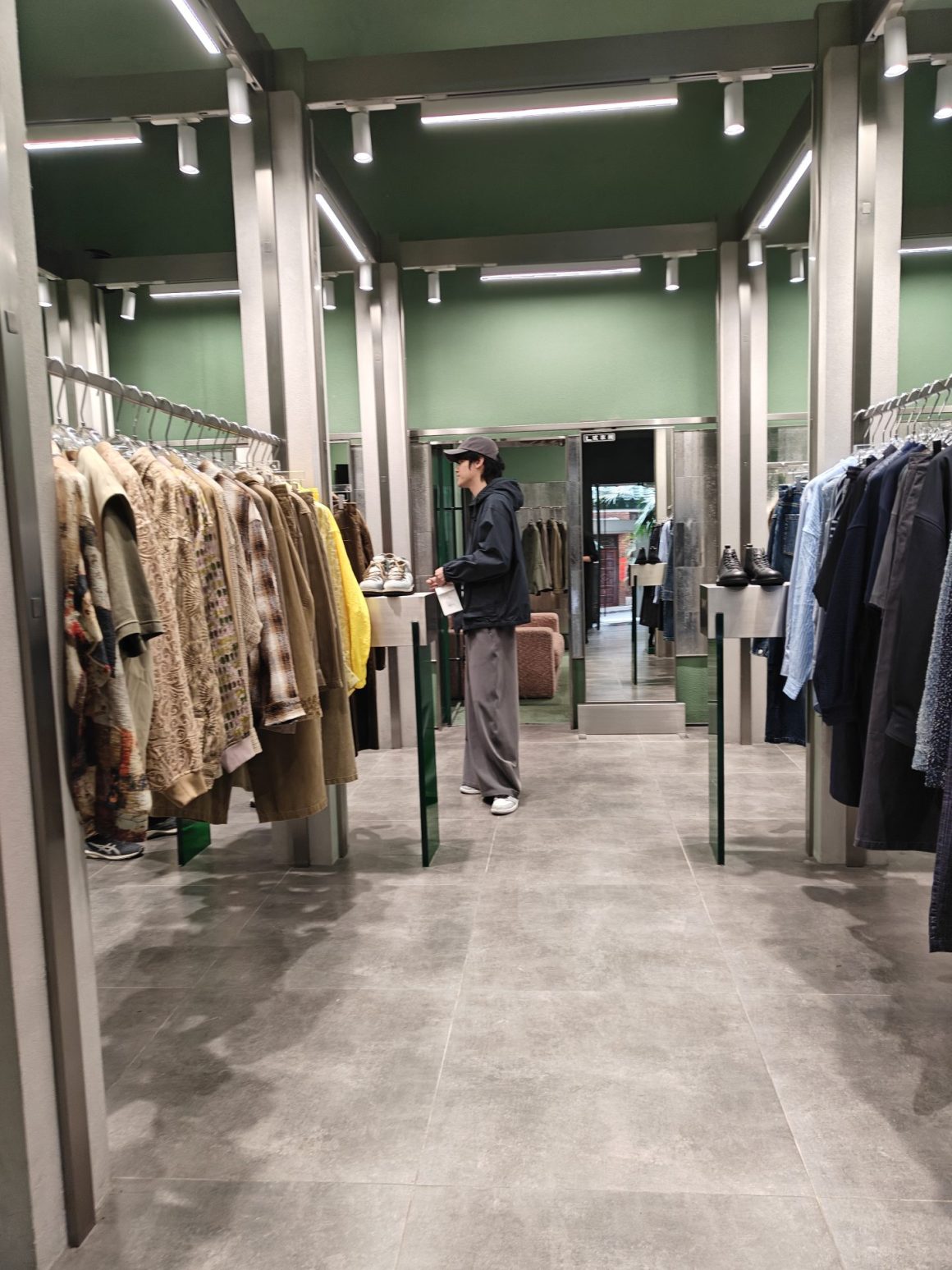
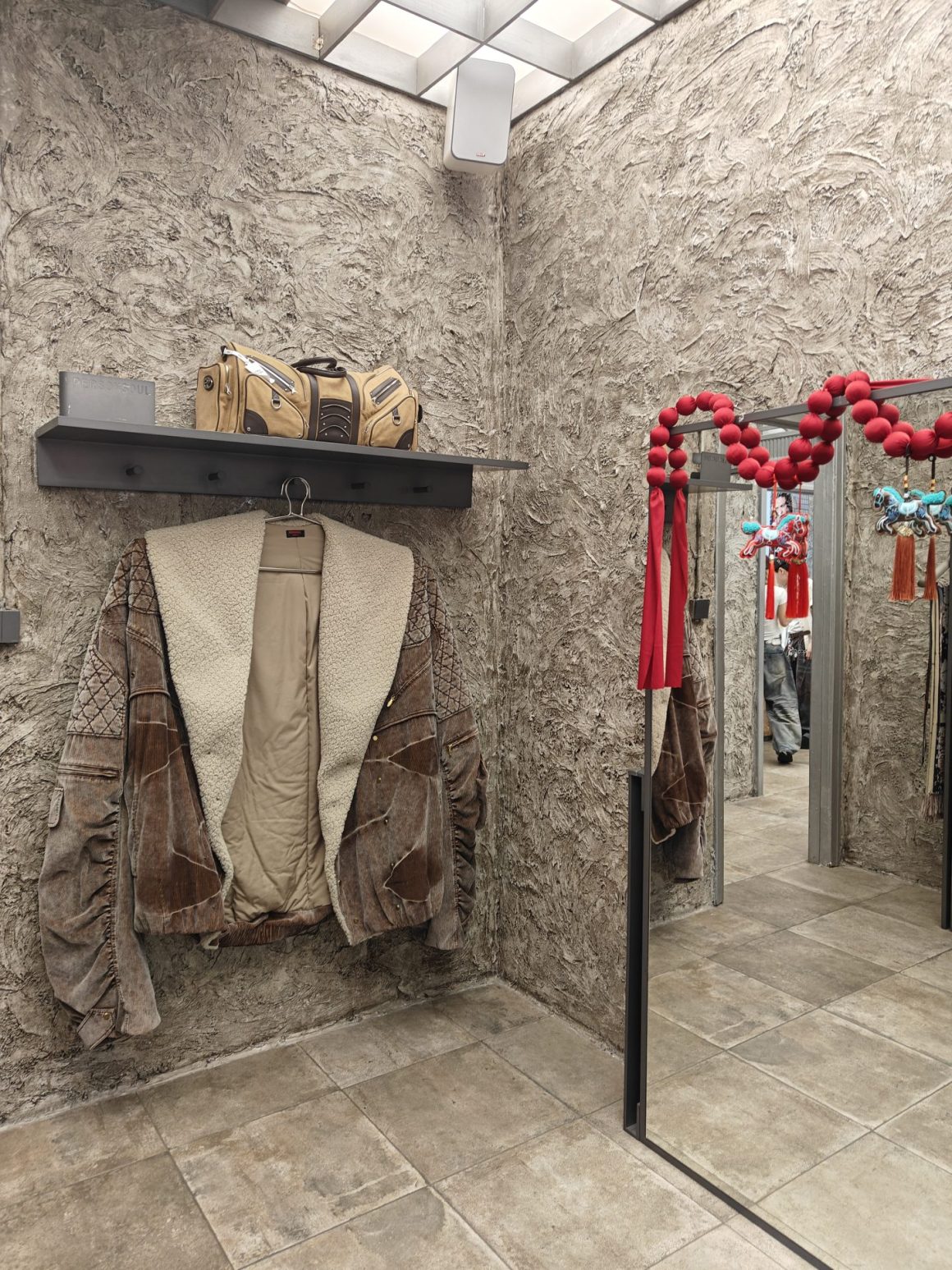
Dongshankou has a specific fashion energy—minimalist, sharp, sporty, highly styled. I liked Simwood for the affordable, no-nonsense approach. In the same orbit you’ll also see the louder streetwear end of things—Personsoul, Mason Prince—pieces that look designed for photos, but still worn like real clothes.
The perfume pocket near the 3rd National Congress memorial
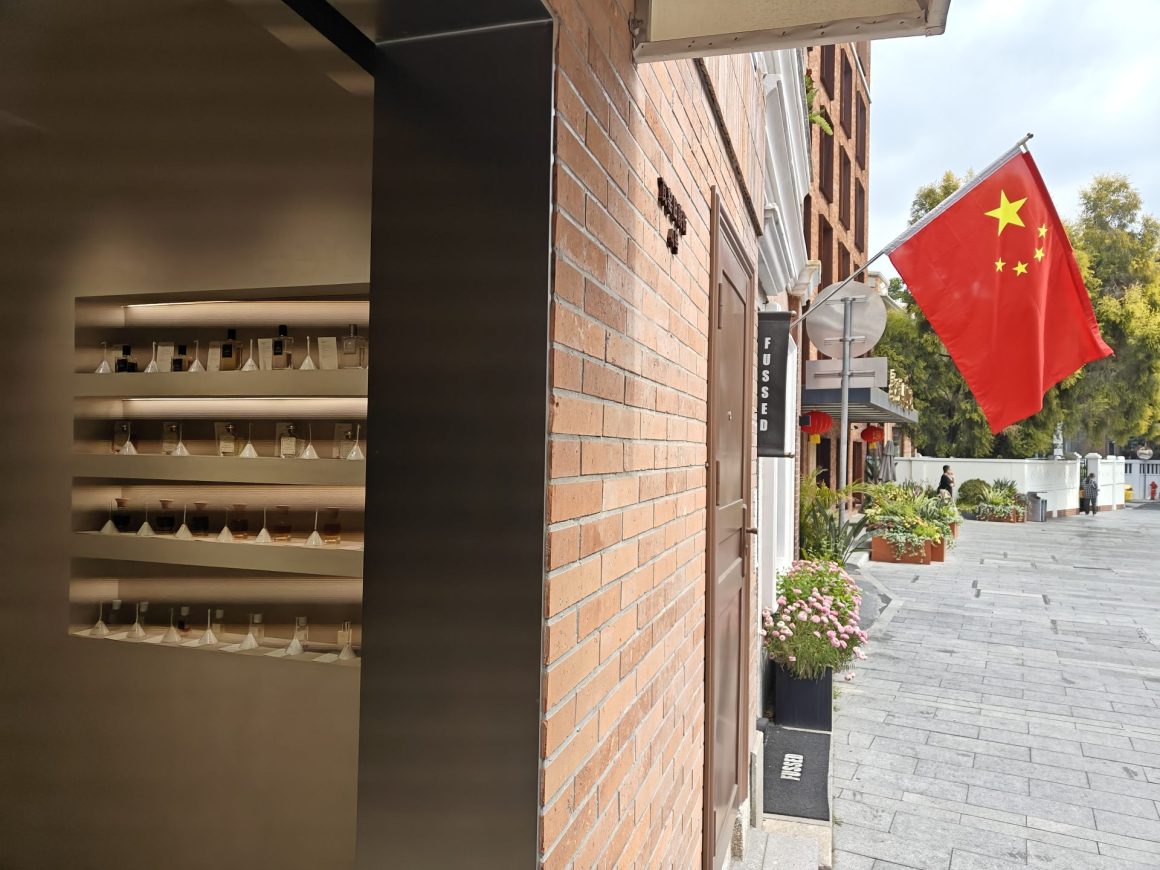
This is one of those Guangzhou mysteries I never fully solved: why are there so many perfume shops around here?
I remember FUSSED and Bainiao Zhige, plus other scent-forward little stores clustered nearby. It’s not a “shopping district” in the obvious way—it’s more like you stumble into a niche scene you didn’t know the city had. Another coffee place called Under the Tree, was a nice to have a break and do people watching.
Tianhe: modern Guangzhou, best in the evening
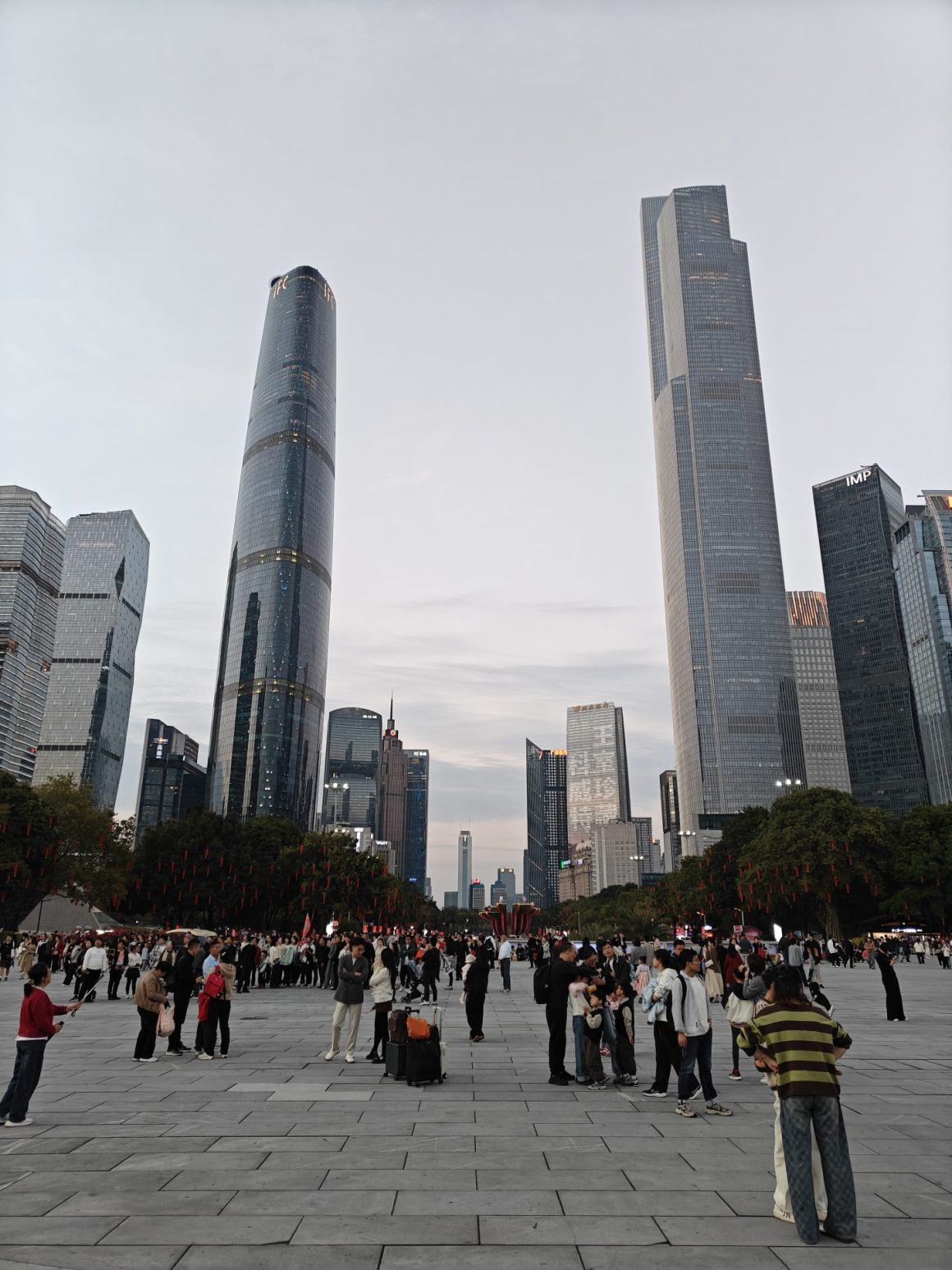
Tianhe is newer and more vertical—business, entertainment, glass and steel. It can lack the texture of the older districts, but it’s where Guangzhou’s scale feels clearest. It also means it is less impressive in the daytime, while in te evening it becomes alive.
Going out: Tiyu Xilu in Tianhe
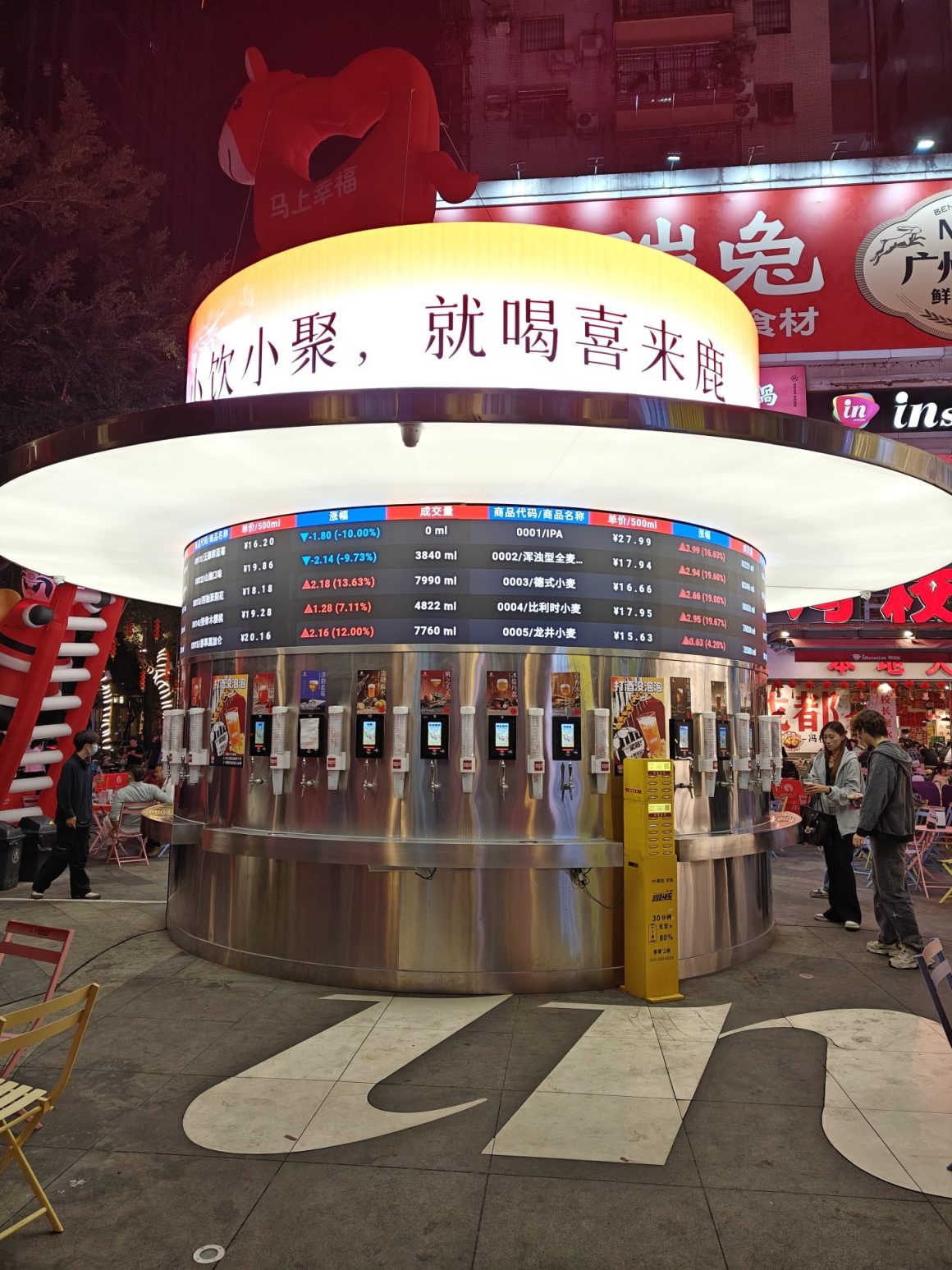
For nightlife, the Tiyu Xilu area (West Tiyu Road) felt young and busy—people spilling out of the metro, meeting friends, moving in groups. Not romantic, just alive. I had a beer at the Qingdao Beer Exchange with some intestine snacks from one of the food outlets. You choose your beer and swipe on WeChat, though there isn’t much to choose from—it’s more focused on aromatic punch drinks than beer. Very affordable, though.
A better place for beer is the nearby taphouse, Wuwang Taproom, with a much better selection. Another more casual beer spot is the El Nido Fang Bar, but there are so many places around here that if I found myself in the area, I’d pick a destination—and if something good shows up on the way, even better.
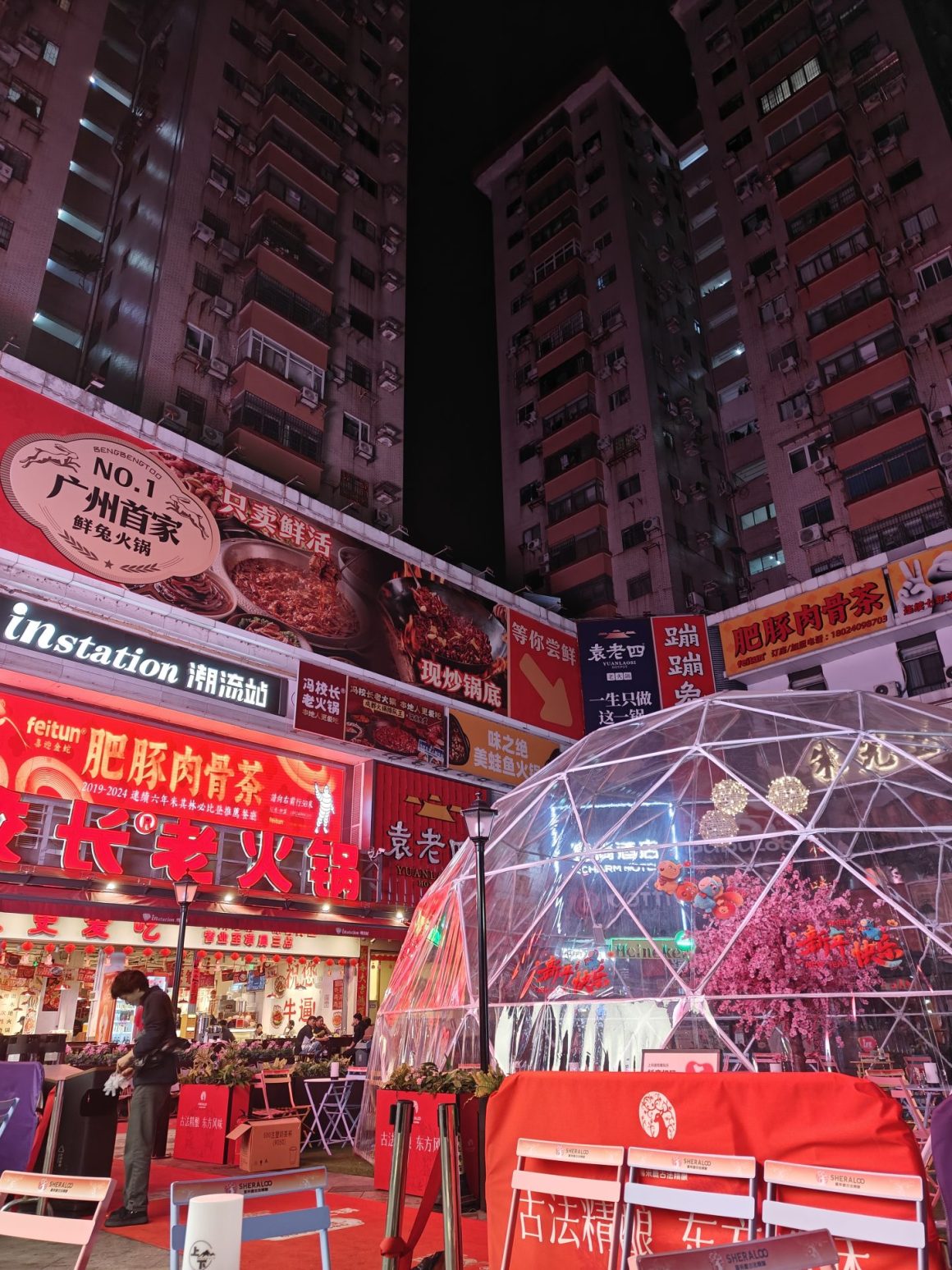
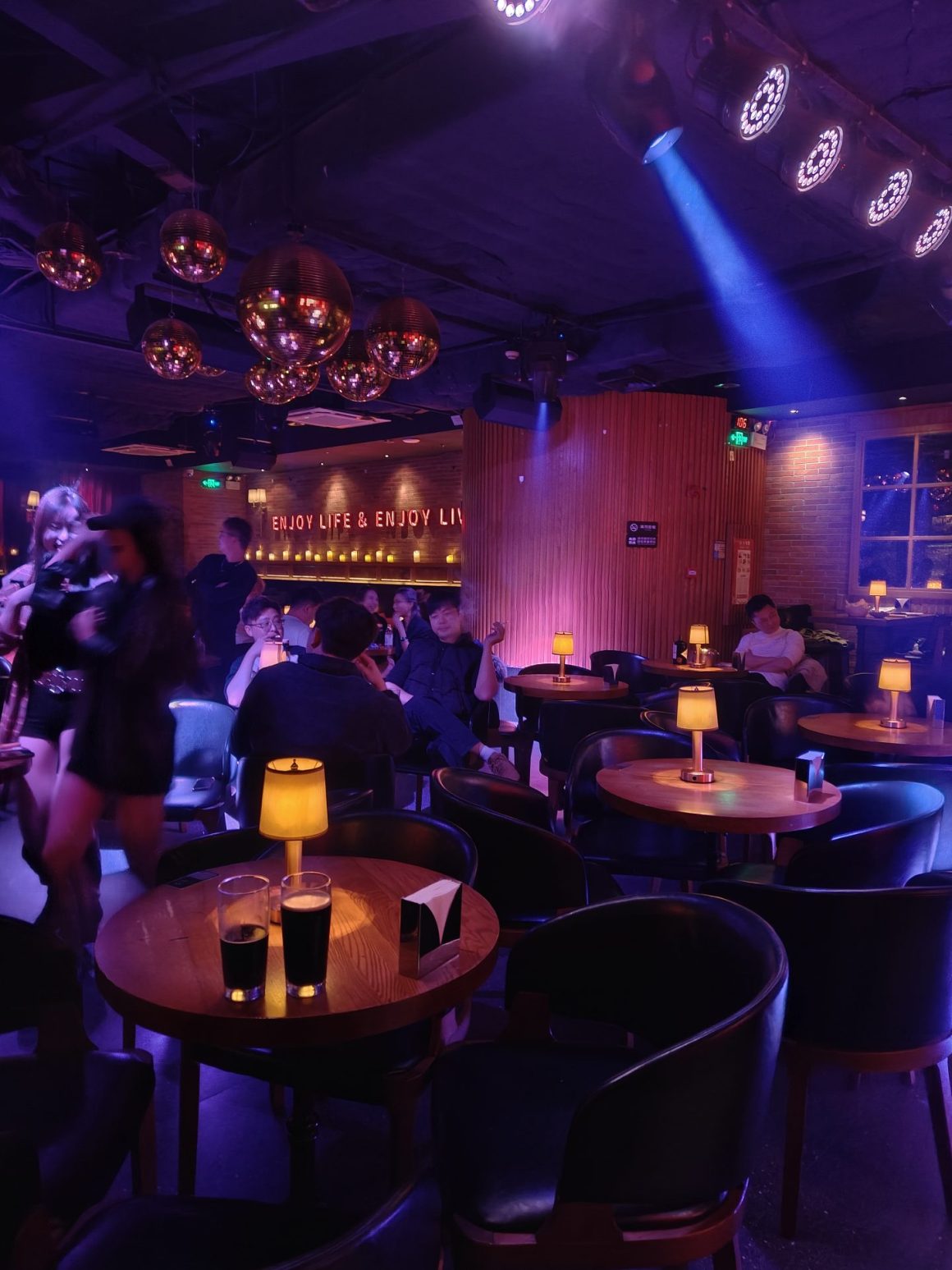
If you want a night out that isn’t alcohol-focused, Ting Fanchaji Tévo Lounge is an interesting one. It’s basically tea served like a bar menu — the kind of place where ordering feels like picking a cocktail, just with different teas and presentations. It’s a nice change of pace after the Beijing Road chaos, and it still feels like going out.
Super Wenheyou: Canton nostalgia, staged
Super Wenheyou is an intentional time capsule—1980s Canton nostalgia built as an environment, with snacks and retro street scenes, surrounded by modern towers.
If you’ve already done similar nostalgia setups elsewhere, it may not amaze you. But it’s still fun, and slightly surreal.
Walks + parks: when I wanted Guangzhou to feel lighter
I walked a lot in Guangzhou; it is walkable, you just pick an area. There are even public toilets along the way, just need to check out the Amap app or similar. And the air is relative clean, so do not feel uncomforable being outsite, compared to for example Bangkok.
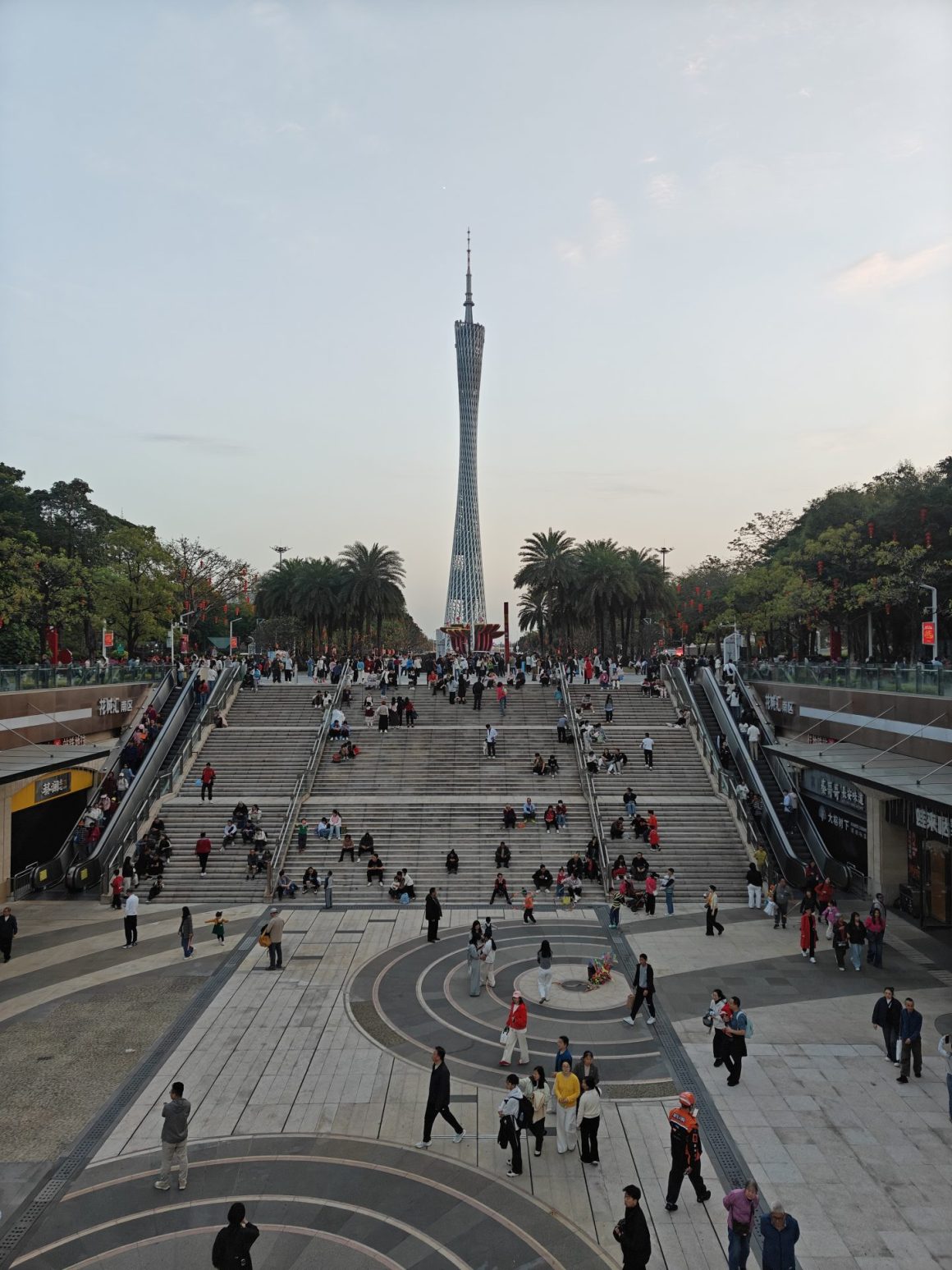
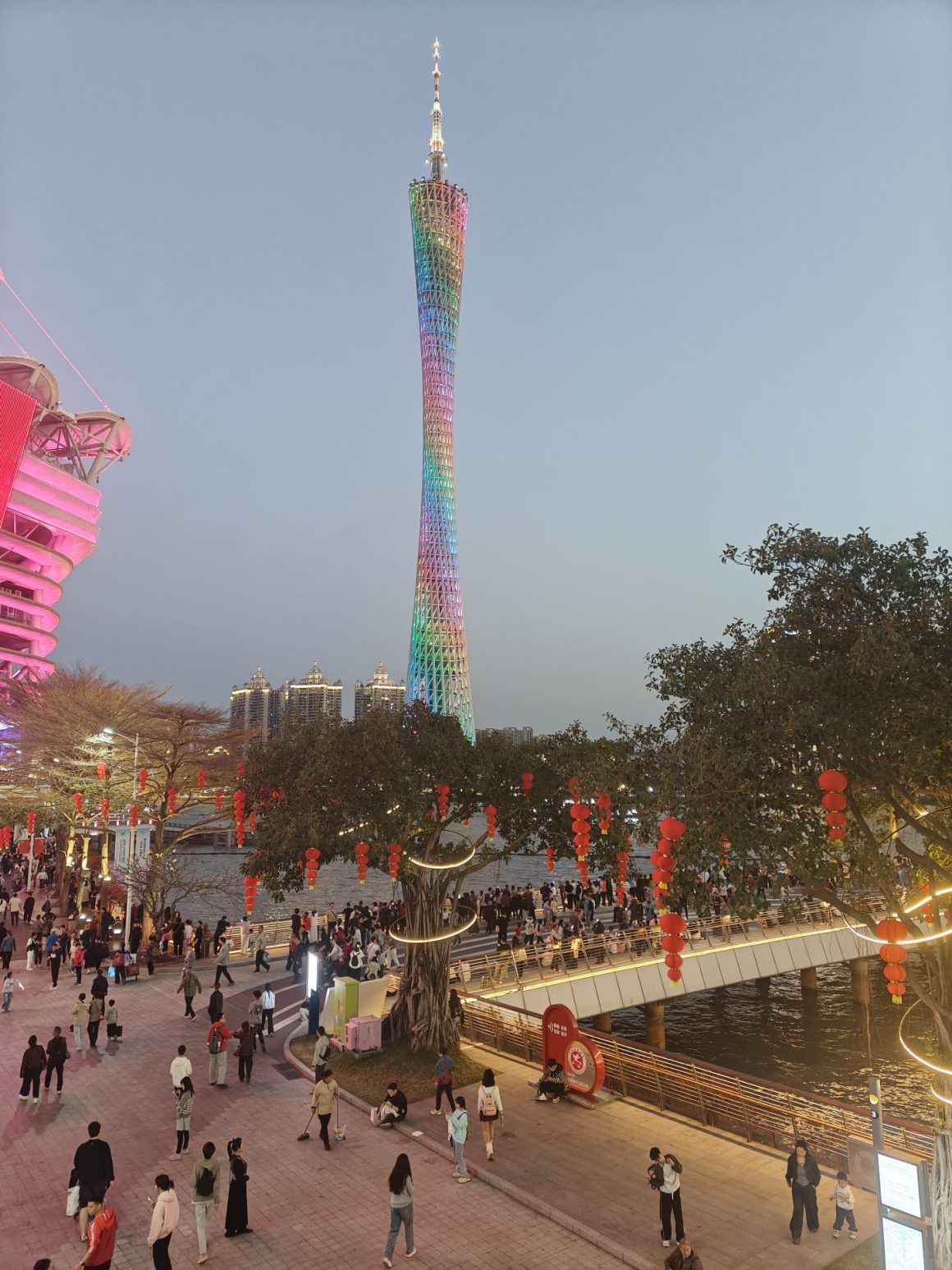
Along the river toward Canton Tower and Haixinsha, you get a long, open stretch that feels unusually spacious for a city this dense.
And if you want one classic park: Yuexiu Park. It’s the kind of central green space that anchors a city—easy to drop into, easy to leave.
If you have enough city and need a break, green spaces are not out of reach.
Haizhu Wetland Park
A nature reset inside the city—boardwalks, water, birds, and a different pace. Easy as a half-day when you want green without leaving Guangzhou.
Baiyun Mountain
When you want to hike and see the whole city laid out below you. It’s the half-day trip that changes your sense of scale. It is not as spetacular as some views like in Hong Kong island, but it is a good break and it is well paved and structured, so less hike, more nature park walk.
T.I.T Creative Industry Zone in Haizhu
A repurposed former textile site turned creative zone—good for an hour or two of drifting: design, small fashion energy, coffee, old industrial bones with a new life.
Shortlist of Cool Places in Guangzhou
Hotels & Stay
- Guangzhou W Hotel
- Rosewood Guangzhou
- Conrad Guangzhou
- Paco Business Hotel (near Ouzhuang Metro or one of the other locations)
Food, Coffee & Nightlife
- Beijing Road (night food streets)
- Coffee Rising (Donghua Market)
- Donghua Market
- Yongquinfang (If in west part of GZ, all area is food oriented with all you could ever wish for)
- Dingsuji Homemade Quinceng (On the go only)
- Huixiang Coffee – All about coffee
- Wilber’s café and restaurant
- Tiff Cafés (vintage cafés and shops)
- Qingdao Beer Exchange
- Wuwang Taproom
- El Nido Fang Bar
- Ting Fanchaji Tévo Lounge
- WOW Club (Gay Club)
Cultural & Historic Spots
- Yongqingfang (Liwan)
- Liwan Lake Park
- Chen Clan Ansestral Hall
- Shamian Island (Shamiandao)
- Starbucks at Shamian Island
- Guangdong Overseas Chinese Museum
- Guangdong Museum of Art
- Dafo Temple (Big Buddha Temple)
- Beijing Road
- 3rd National Congress Memorial area
- Super Wenheyou
- T.I.T Creative Industry Zone
Parks & Nature
- Canton Tower riverfront area
- Haixinsha
- Jufang Garden
- Yuexiu Park
- Haizhu Wetland Park
- Baiyun Mountain
Shops & Lifestyle Stops
- Miaoqian West Street full of shops of local Guangzhou designers
- Under the Tree (designer shop and café)
- Simwood (Minimalist afforable)
- Personsoul (Avant-garde and conceptual)
- Mason Prince
- SND (Mixed brands like Acne Studio and other established fashion houses)
- Joe With LOL (Functional and high-end)
- HallowHare Zhichu Zimao (ALL about hats)
- Wocai Happy Custome Club (Funky)
- FUSSED (perfume shop)
- Zhaimen LAPORTE (perfume)
- Bainiao Zhige (perfume shop)
Essential Guangzhou Travel Tips (Quick Practical List Before You Go)
Evenings are best for Tianhe. The modern district feels much more lively after dark than during the daytime.
Set up mobile payments before arrival. Most places expect digital payment via WeChat Pay or Alipay. Cash is rarely used in cafés, taxis, or small eateries.
Download Didi for taxis. It’s the easiest way to get around when walking or metro isn’t convenient. The app has English support and reliable pricing.
Use the Guangzhou Metro for longer distances. It’s efficient, clean, and well connected between old Guangzhou and newer districts like Tianhe.
Have mobile internet ready. Many restaurants use QR ordering and translation apps help a lot since English is limited in everyday spots.
Double-check café and restaurant openings. Some curated guides may list places that have closed — things change fast in Guangzhou.
Use Amap (or similar Chinese maps) to find facilities. Helpful for locating public toilets, walking routes, and nearby services. See Google map alternatives here. Google Maps shows mostly wrong is nor reliable.
Plan visits by season. Winter and spring are comfortable; summers in the Pearl River Delta are extremely hot and humid.
Walk strategically. Guangzhou is walkable by district, but distances between neighborhoods are large — combine walking with metro or Didi.
Expect fast, app-based dining. In many dim sum spots you scan, order, and pay digitally — service is quick and interaction minimal.
Longer Distances: For a short trip to nearby Shenzhen or Fushan, you can use 12306 (the Official China Train website) directly or via the Alipay/WeChat app.
Use a reliable VPN before you arrive. Some Western sites and apps (Google services, Instagram, WhatsApp in certain cases) are restricted in mainland China. Installing one of the top VPNs like NordVPN before entering China can help maintain access. Always check the latest local regulations and app functionality.
Consider an eSIM for easier connectivity. Travel eSIMs often provide smoother access to international data and can be more convenient than local SIM cards. They’re especially useful for maps, translation, ride-hailing, and payments.