


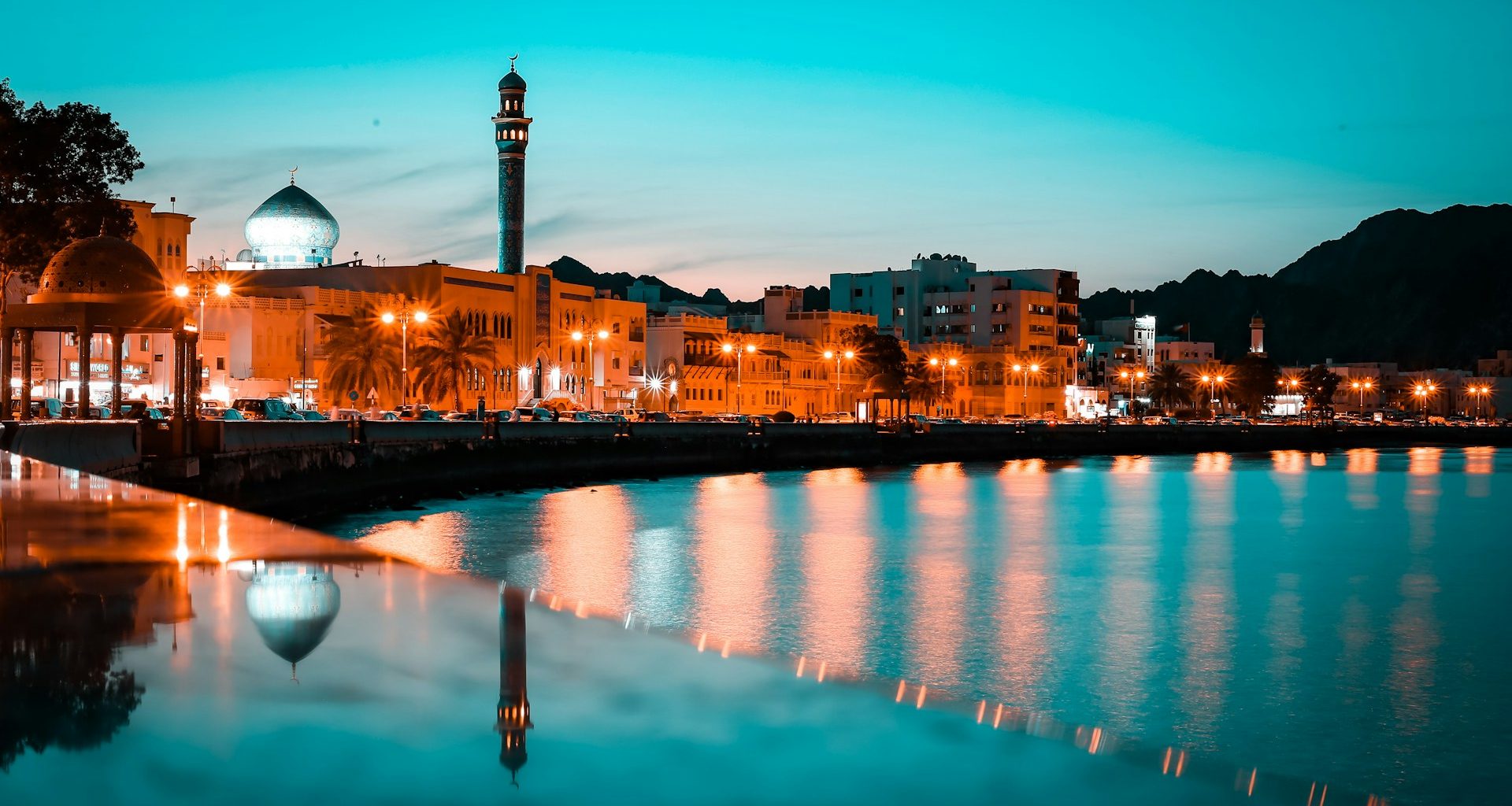
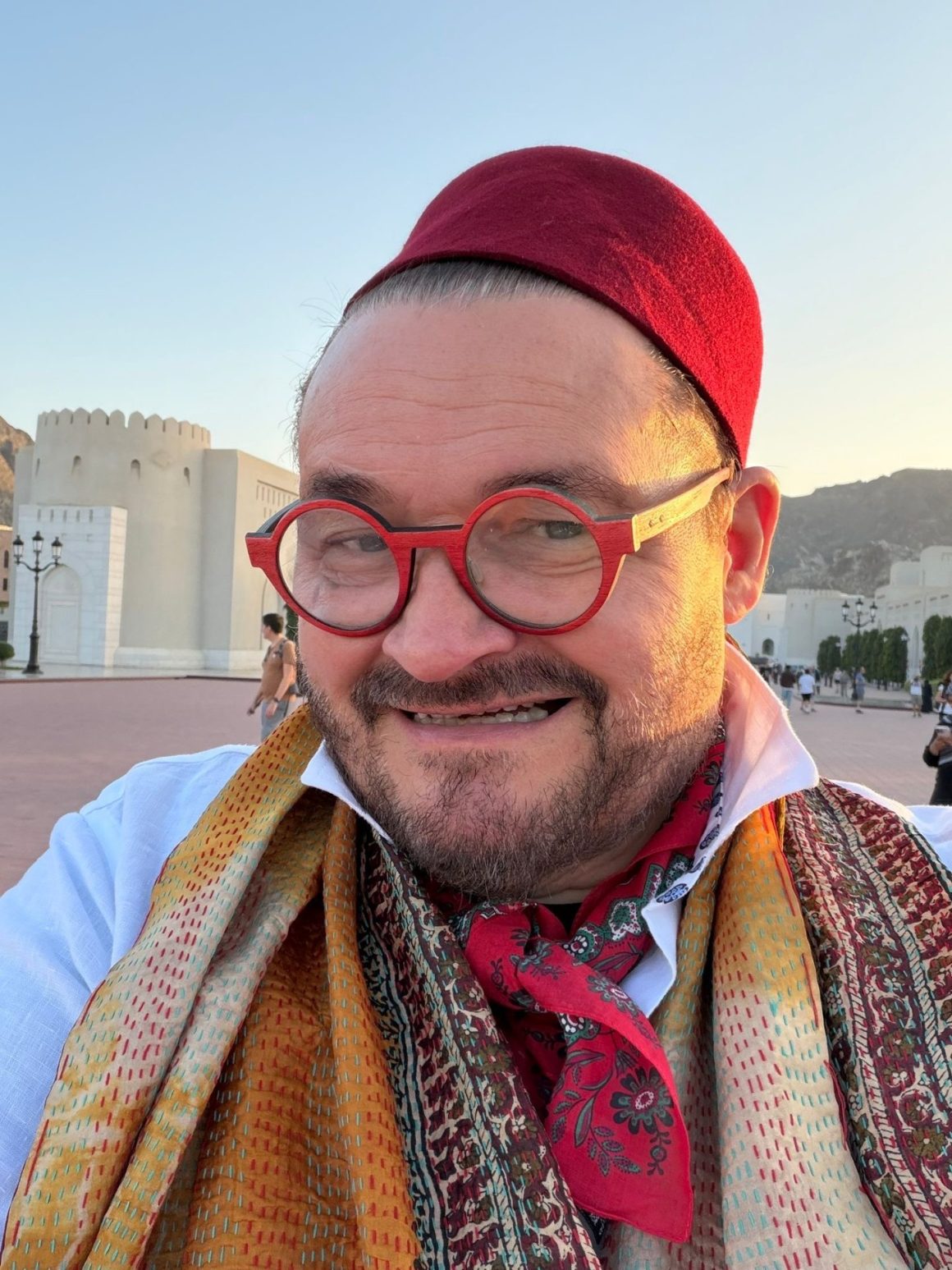
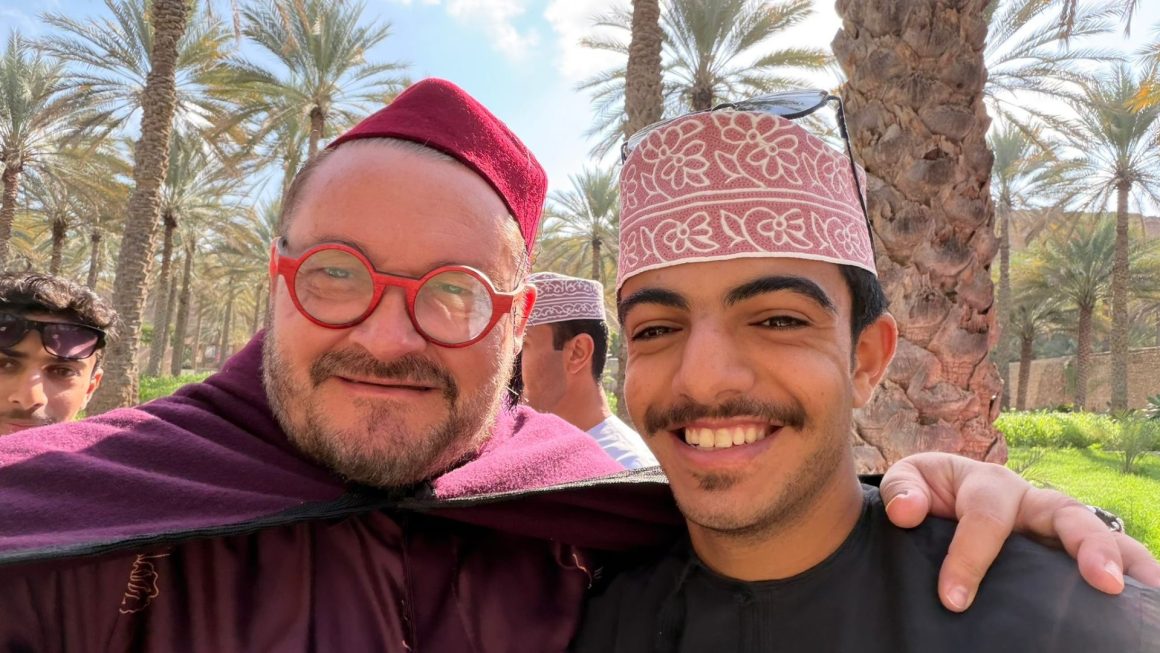
Alexandre Vassiliev has been to Oman several times and personally knew one of the princesses of the ruling family. That rare proximity to a fairytale sultanate — a country that seems suspended in an era of legends and pirate lore — shaped his particular view of the country. Exclusively for Locals Insider, the fashion historian, set designer, and collector has put together a personal guide to Oman.
What Oman Looks Like at First Glance
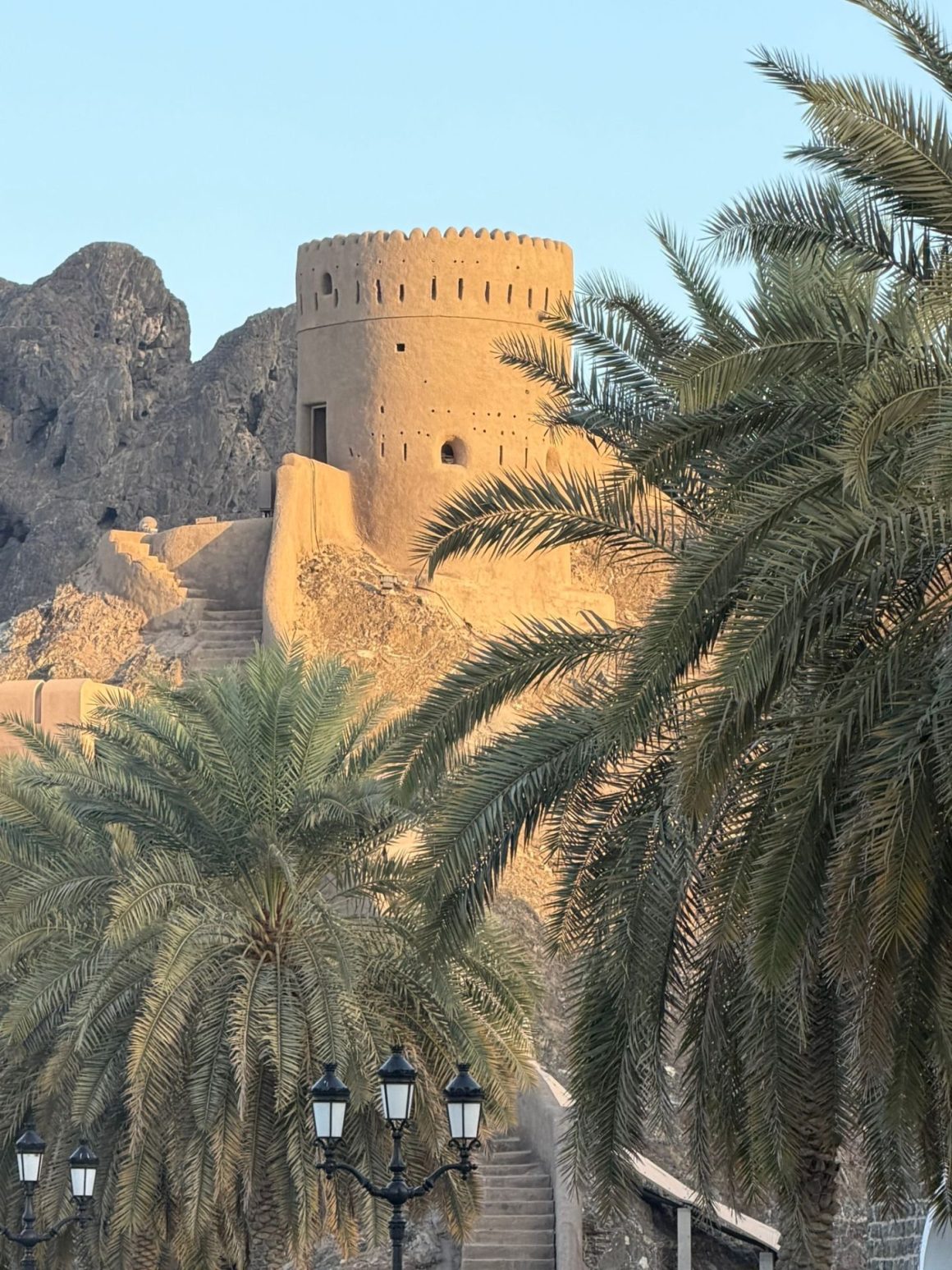
Oman is a principality, a fairytale sultanate on the southeast tip of the Arabian Peninsula — a country that leaves an unforgettable impression of sheer wonder. Why wonder? Because somehow this country managed to skip not only the catastrophes of the 20th and 21st centuries but their progress as well, and now exists in a kind of dreamscape. Not from the depths of antiquity, but from legends and myths of a pirate past.
A Country Without Skyscrapers
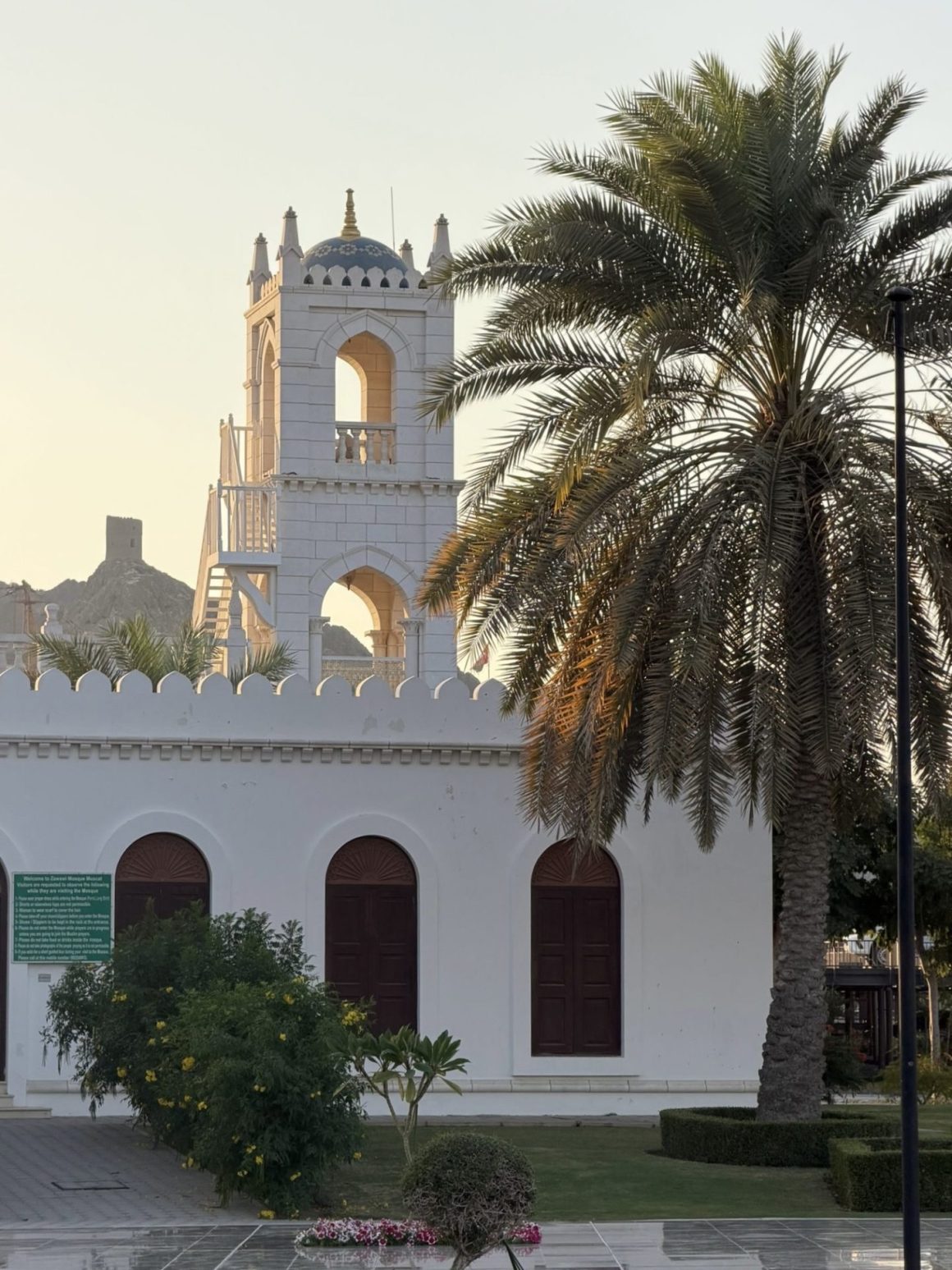
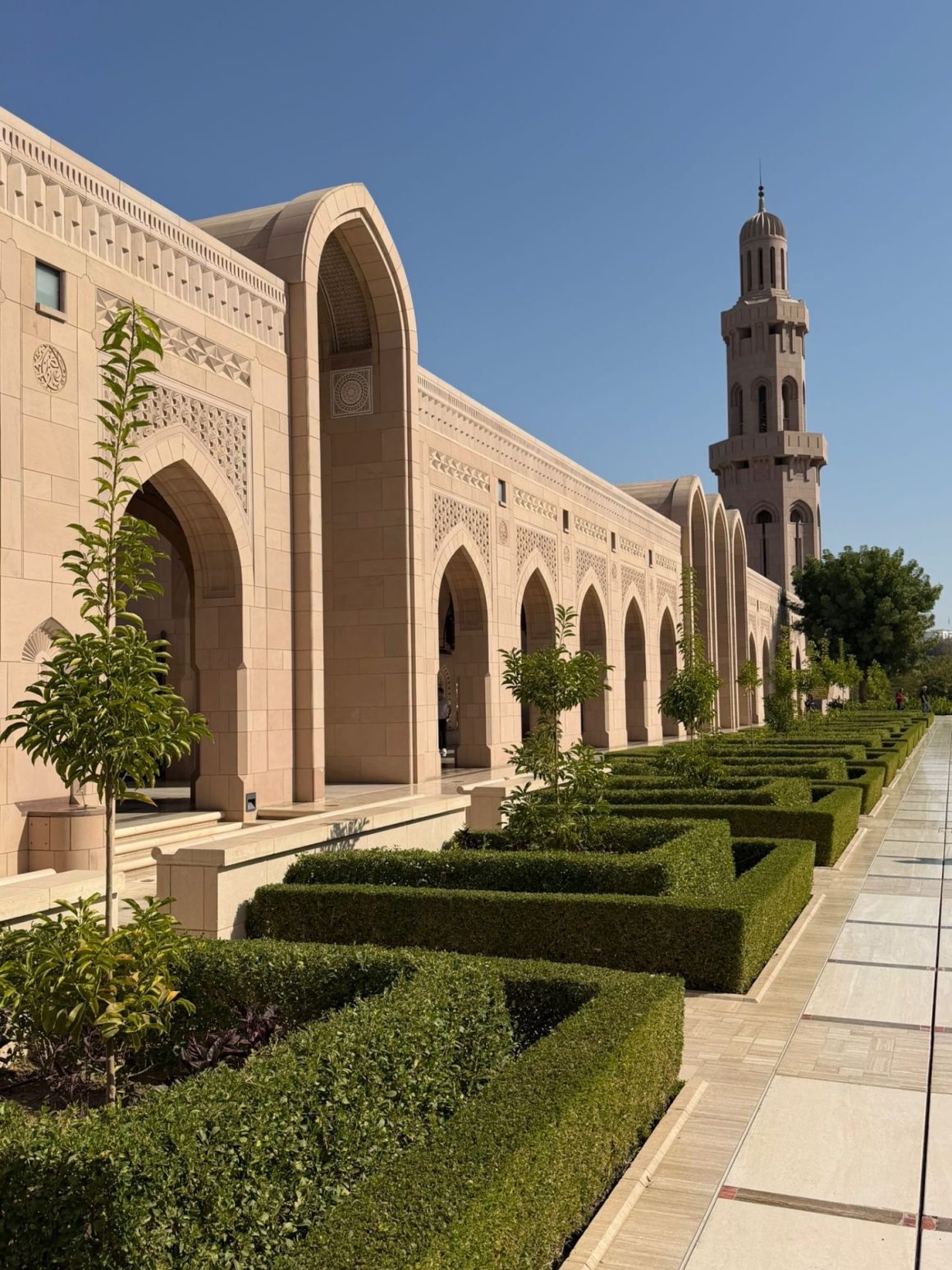
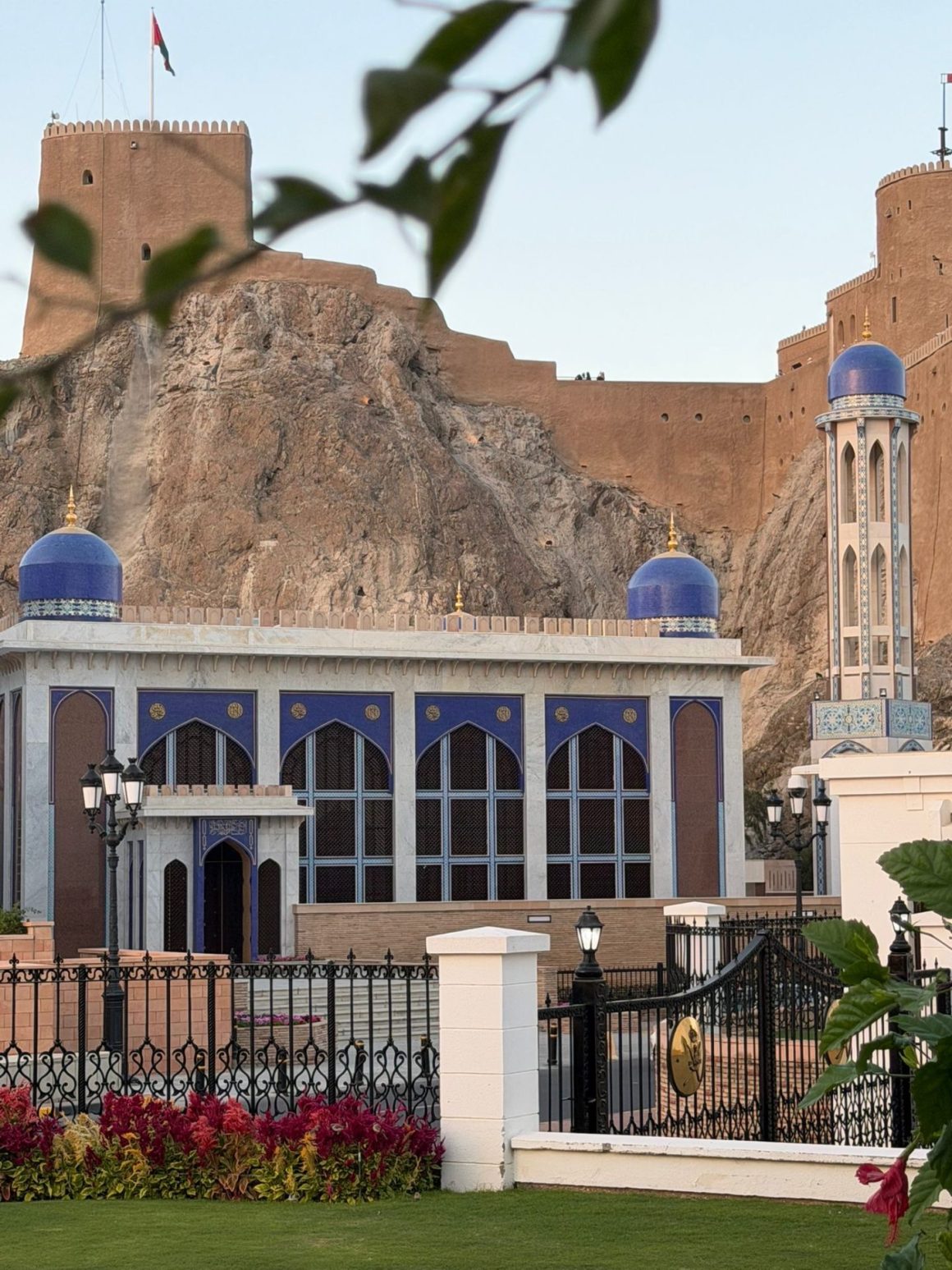
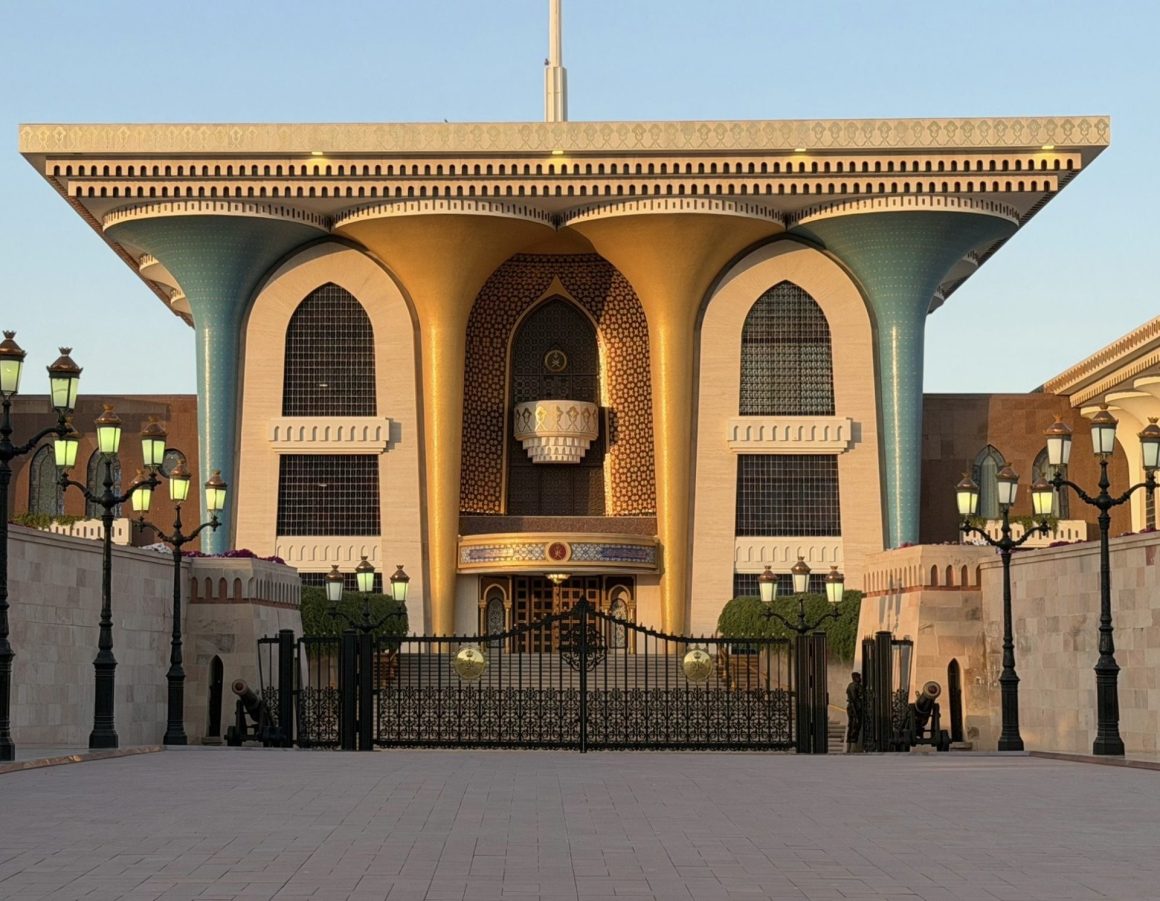
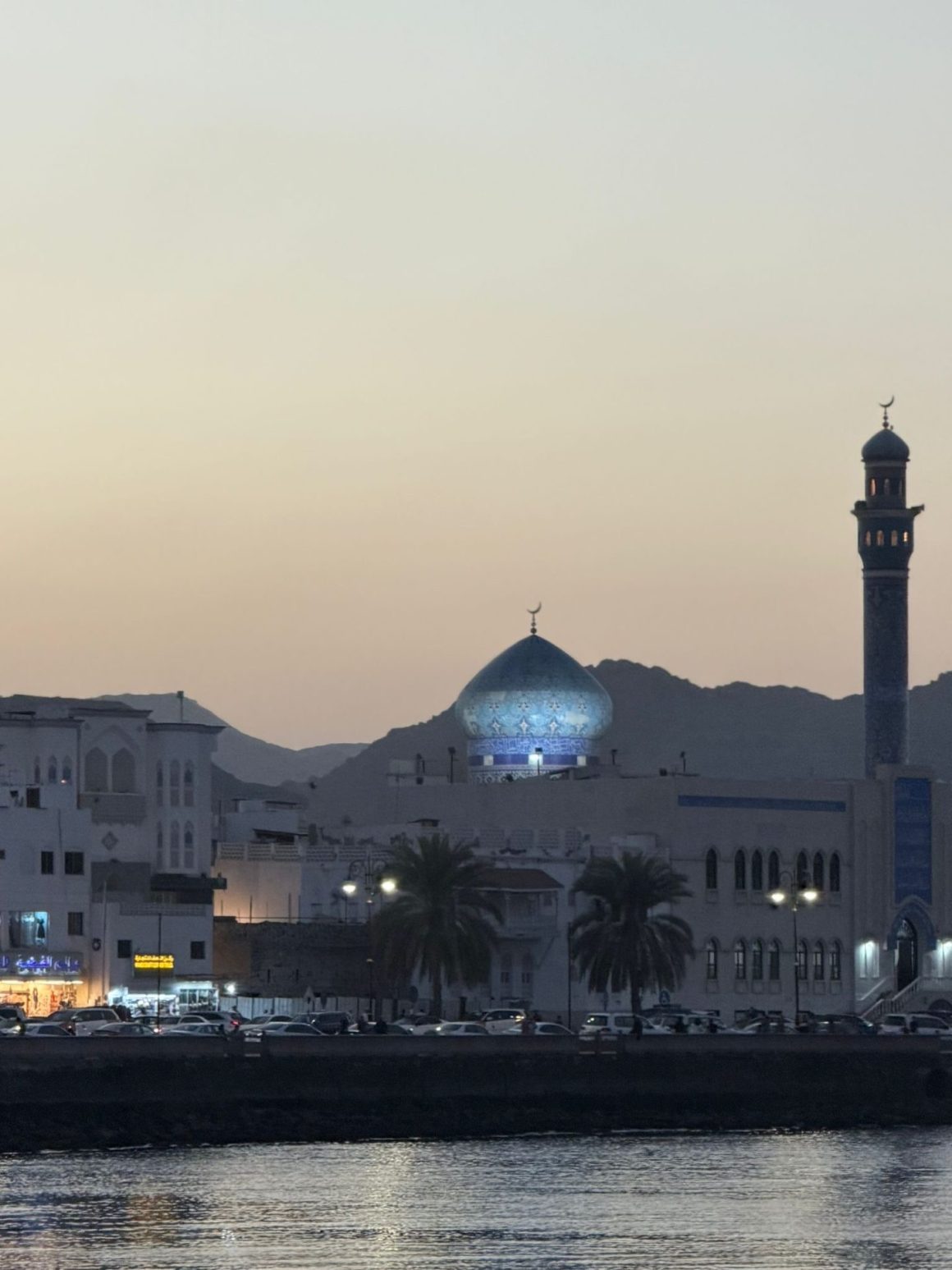
This is a mountainous country with extraordinary landscapes and very limited urbanization. There are few cities and few villages, the population is small, and Muscat operates under a strict building height restriction. Most buildings rise no higher than a few floors, so as not to exceed the height of the minaret of the Sultan Qaboos Mosque. As a result, what you mostly see are very low buildings set far apart from one another — there’s plenty of space, and everything is in beautiful condition.
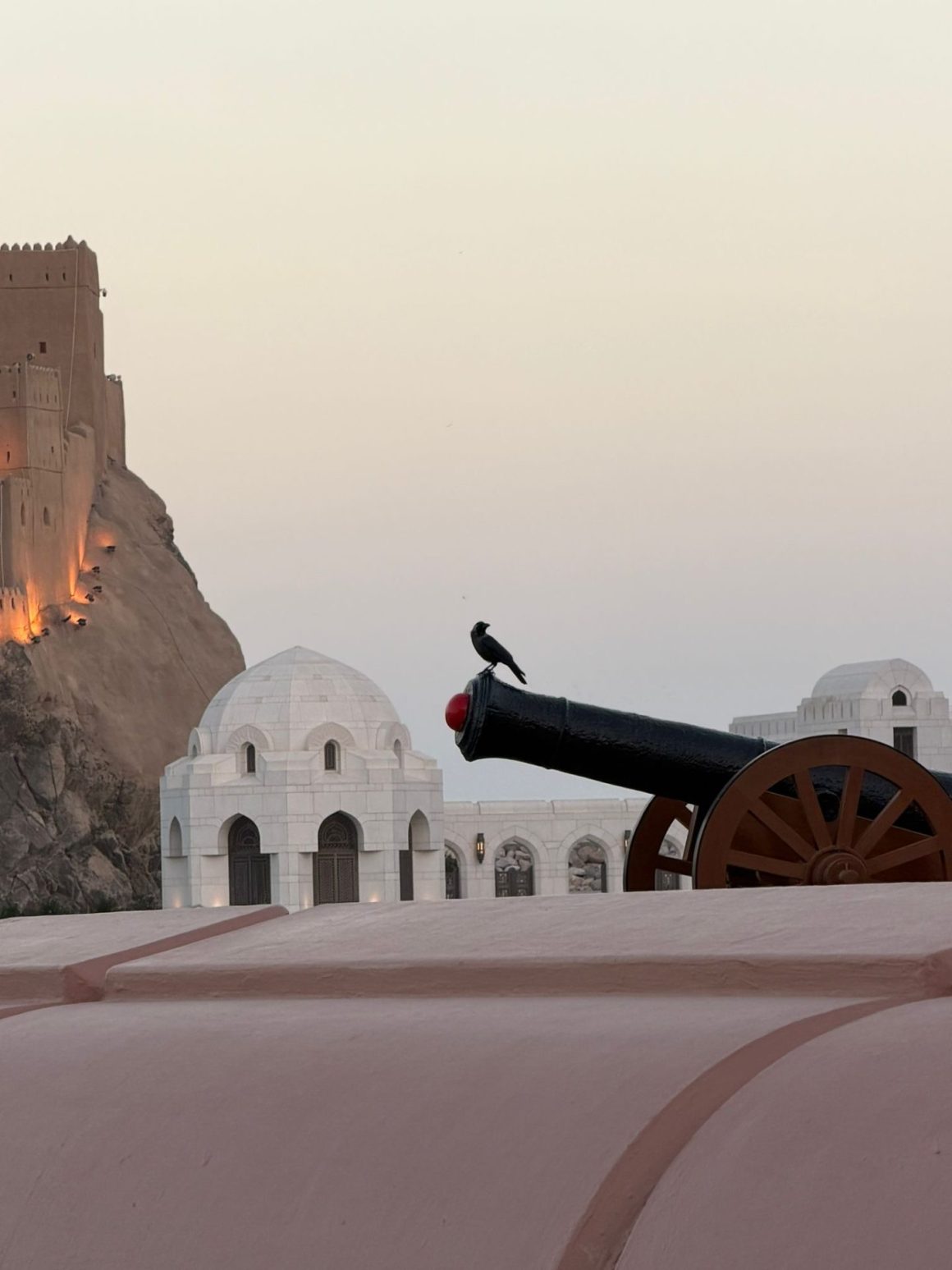
Oman has rich natural resources that the rest of the world depends on, and the Sultan shares that wealth with his citizens. Omanis are well-off and deeply traditional.
Dishdasha, Abaya, and Khanjar: The Black-and-White Code of the Country
All the men wear white, all the women wear black. Omanis wear nothing but traditional dress — no trousers, no shorts. Men wear the dishdasha, a long, collarless white robe, with a light cloth wrapped underneath called the wizaar — a traditional undergarment that calls to mind the era of the pharaohs.
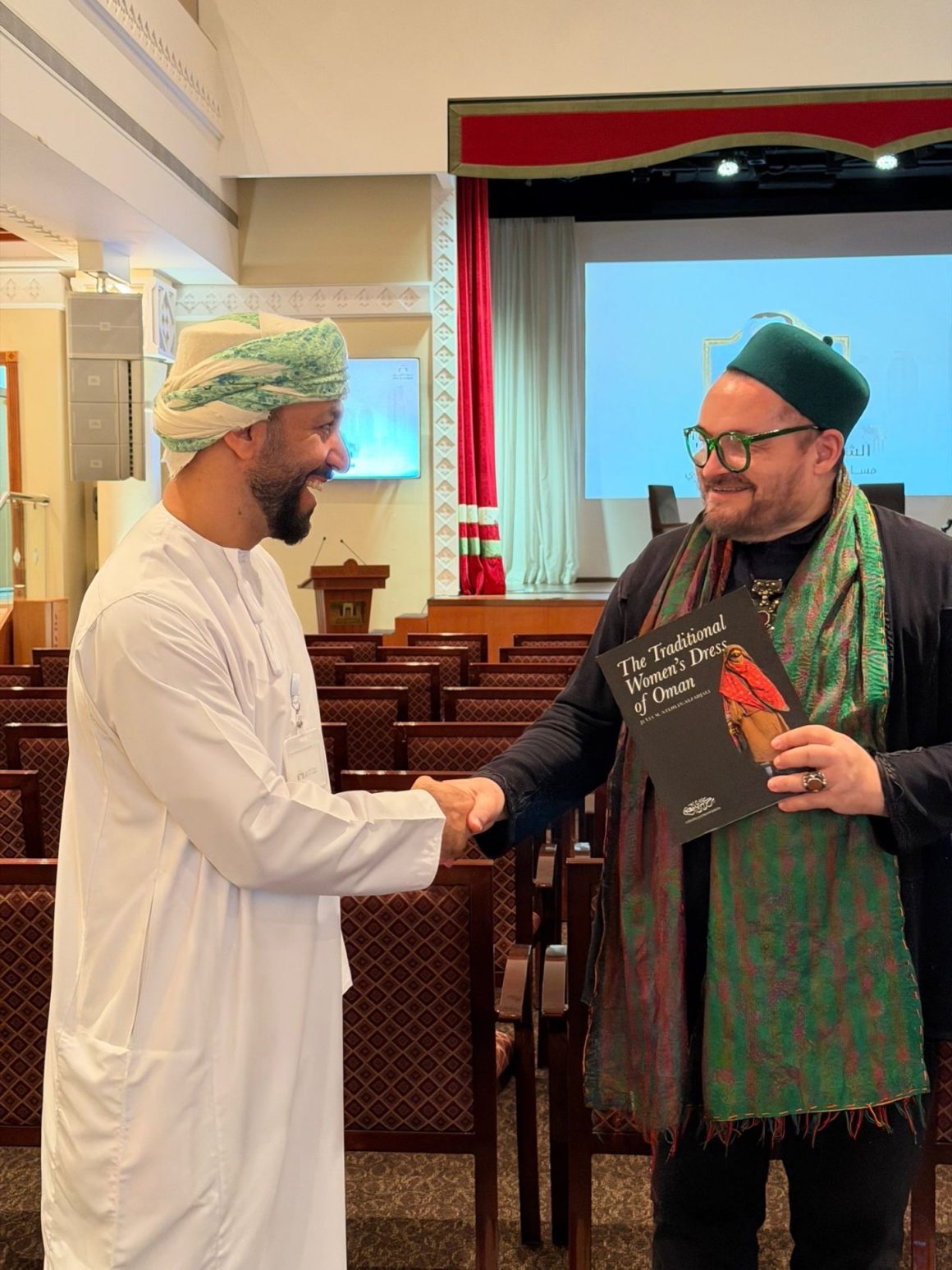
Every Omani man wears an embroidered cap — white with black, dark green, or burgundy patterns — called the kummah. On formal occasions, a cashmere turban known as the mussar is wrapped over it.
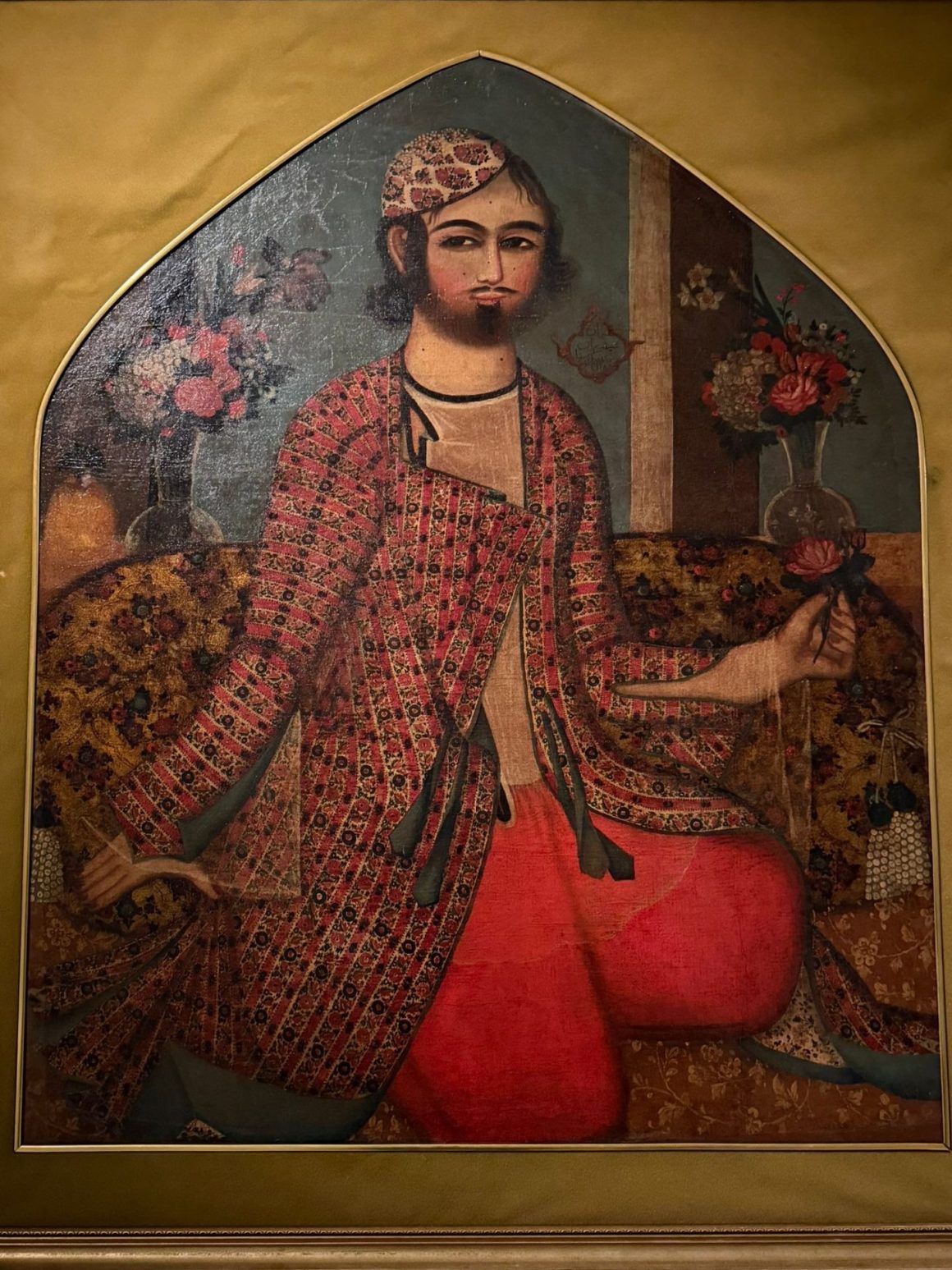
Women, by contrast, wear nothing but black — the abaya, a long black cloak; a black scarf covering the hair; and floor-length garments that almost entirely conceal the shoes. Underneath the abaya, Omani women often wear vividly colored traditional dresses with embroidery — but on the street you see only the black silhouette.
And the essential accessory of an Omani man on formal occasions is the khanjar, the curved dagger that is the country’s chief symbol — it appears even on Oman’s coat of arms.
Things to Do in Oman: The National Museum and 21st-Century Curation
Beyond the spectacular landscapes and the magnificent mud-brick fortresses scattered across the country, the National Museum of Oman is essential. It is genuinely magnificent — and it tells the story of a country we know almost nothing about so richly, with lavish vitrines, holograms, and superb lighting, that what you’re seeing is 21st-century museum design at its peak. Nothing dusty, nothing old-fashioned: this is hyper-contemporary work.
In the cases: Omani khanjars in various forms, traditional sandals, silver jewelry, vessels. But Oman also had close ties with Ottoman Turkey at one point, and you’ll find quite a few Ottoman-Turkish pieces, mostly furniture. And quite a few things the British brought — Oman was once under British protectorate.
When it comes to painting, this is a country still in its early stages. One of Oman’s leading artists is a princess of the royal family, a London-trained artist who works in collage: she tears apart photographs from glossy magazines and arranges them by color into mosaic-like compositions. It’s lovely work, though not yet what one would call painting. I had the chance to know this princess personally.
Royal Opera House Muscat: Opera in Pink Limestone
What is unforgettable about Oman is the Royal Opera House Muscat, opened on October 12, 2011, under Sultan Qaboos bin Said. The Sultan, who passed away in January 2020, was renowned for his cultural vision, and the building he managed to complete features a singular pink-limestone facade — contemporary Omani architecture with echoes of a 16th-century Italian opera house.
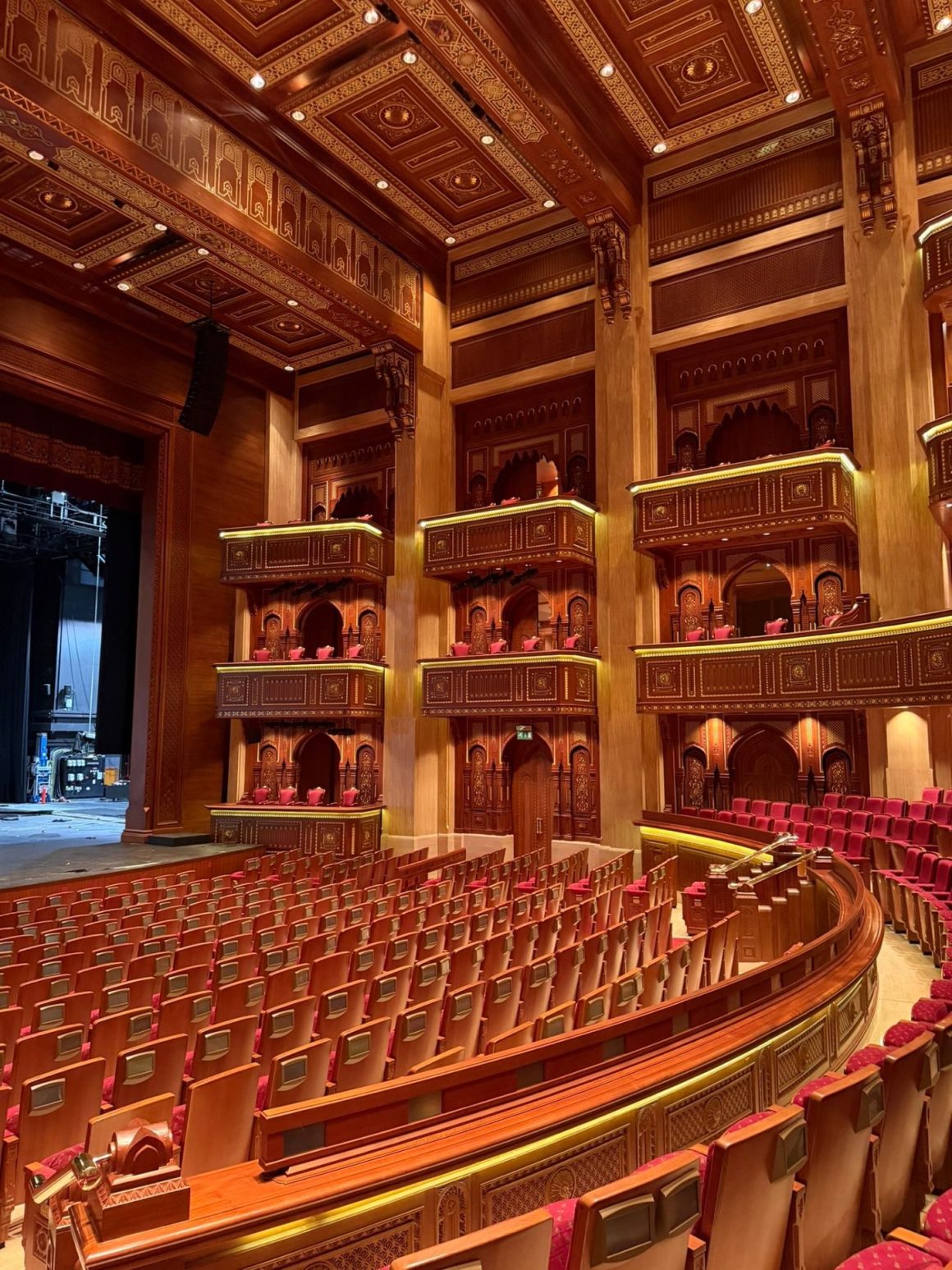
The world’s leading opera and ballet companies compete to perform here — La Scala, the Bolshoi, the Bayerische Staatsoper, the Turkish State Opera, the Tbilisi Opera — all of them eager to entertain Omani audiences. Oman has no resident company of its own.
The 1,100-seat hall is so comfortable, so welcoming, the stage so vast and so technically equipped that if you make it to Muscat, you absolutely must visit both the theater itself and the music museum attached to it.
There you’ll find historic musical instruments, an enormous score collection, and a connection even to Western composers — because the late Sultan was extraordinarily generous in his patronage of Western musicians.
A Third Museum: Ethnography
Oman’s third major museum is the Bait Al Zubair Museum in Muscat — devoted to costumes from the country’s various regions. To a Western eye they may not look enormously varied, but they’re highly decorative. Plenty of silver, plenty of strung jewelry; the same color palette — black and white. So it can’t quite be called visually thrilling, but both museums are made with care and done well.
Best Things to Do in Oman, Picked by Locals Insider
- Royal Opera House Muscat (ROHM) — Shati Al-Qurm, Muscat. Opened in 2011. Contemporary Omani architecture with Italian references, in pink limestone. The 1,100-seat hall has interactive translation systems built into every seat. Tours weekdays from 8:30 a.m. to 1:30 p.m.; tickets from 3 OMR. Strict dress code at performances.
- National Museum of Oman — Al Saidiya Street, Muscat. Opened in 2016. The most modern museum in the region: 14 galleries, holograms, multimedia displays. The collection includes the sultans’ khanjars, Ottoman furniture, and silver. Tickets 5 OMR.
- Bait Al Zubair Museum — Old Muscat. A private ethnographic museum in an early-20th-century palace. Costumes, khanjars, Omani domestic life — smaller than the state museums, but beautifully curated.
- Mutrah Souq — Muscat. One of the oldest Arab markets. Oud, frankincense, silver, and cashmere shawls for the mussar. Open daily 9 a.m. to 10 p.m. (with a siesta break from 1 to 5 p.m.).
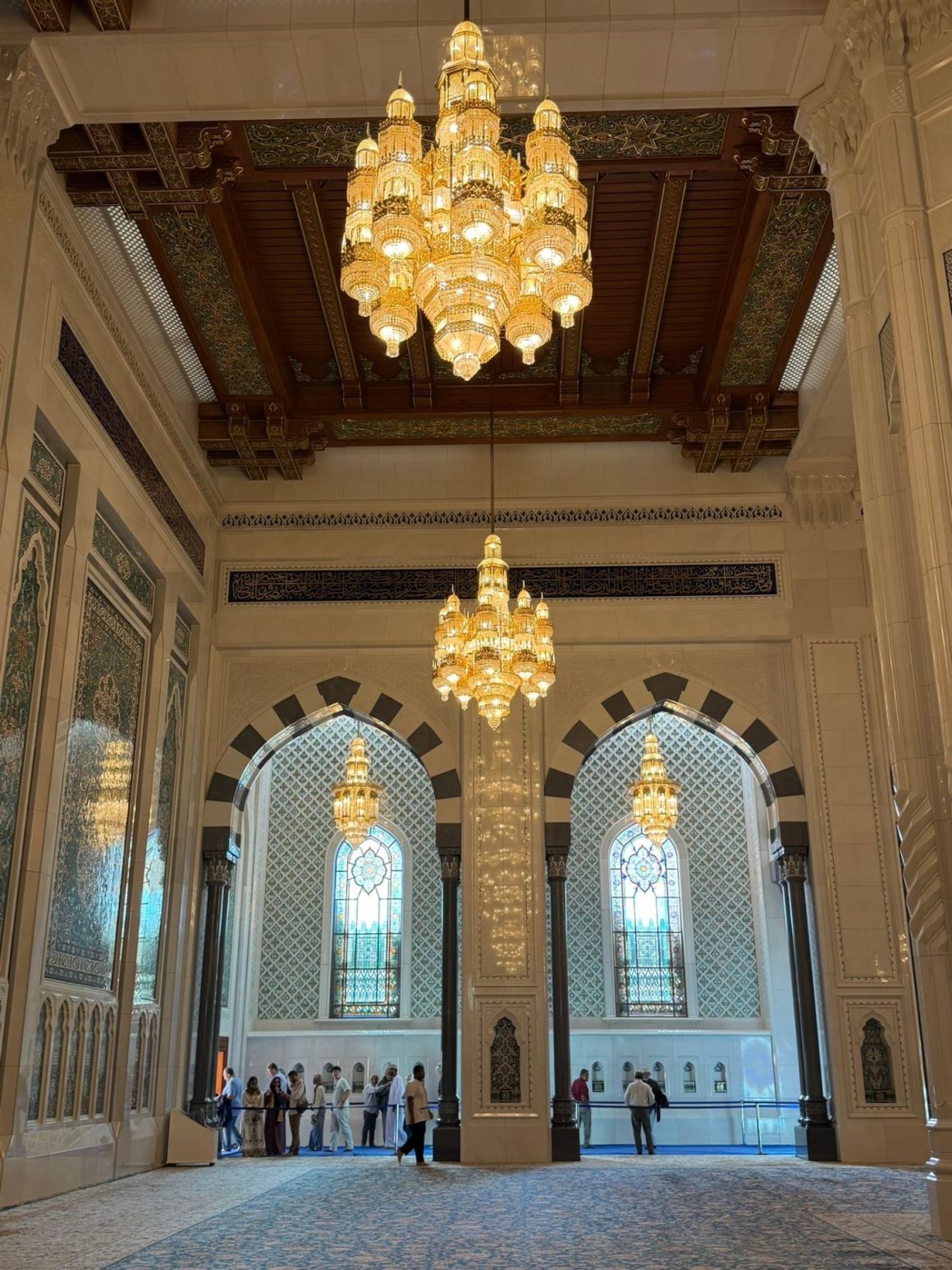
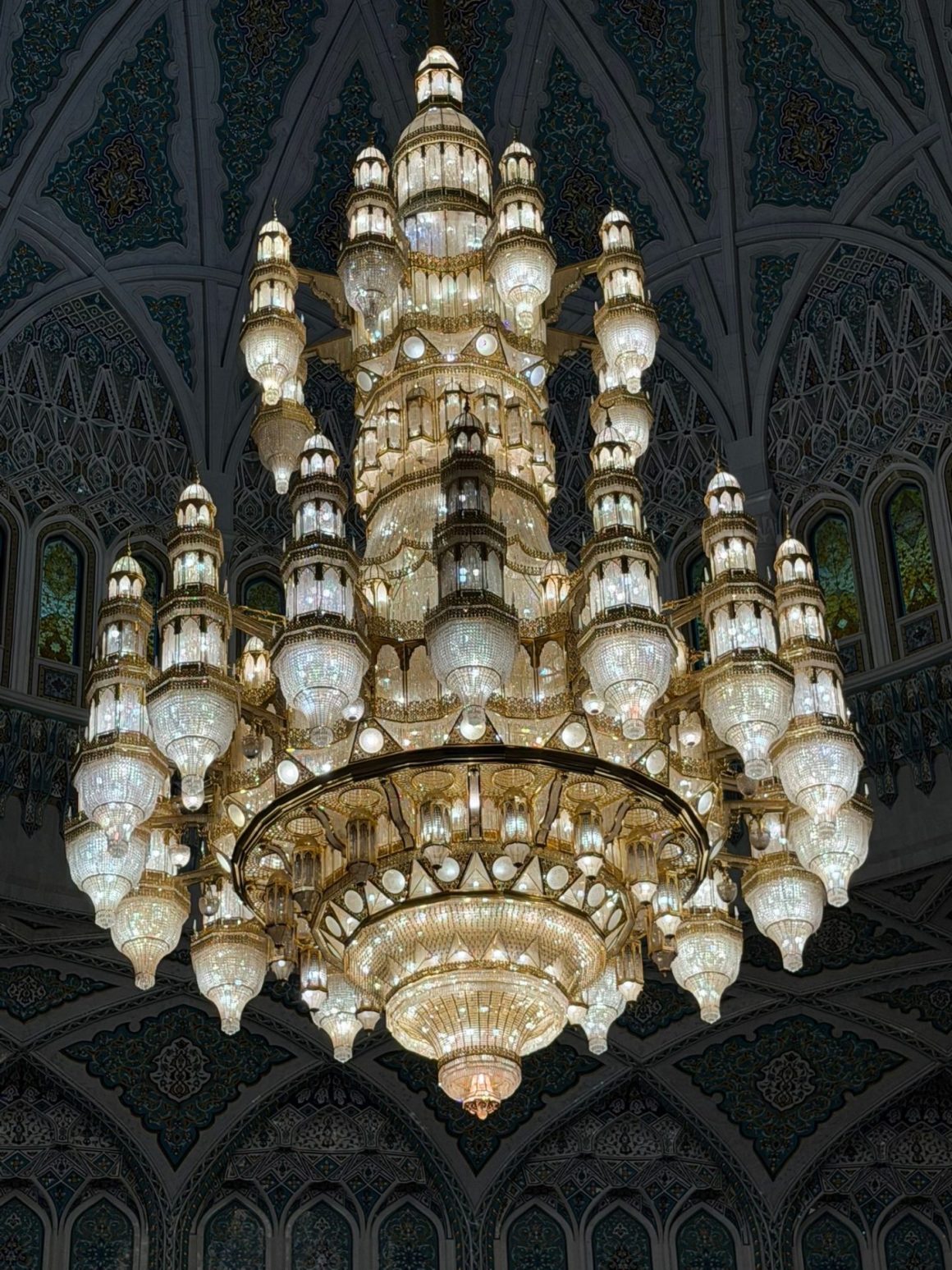
- Sultan Qaboos Grand Mosque — Bawshar Street, Muscat. The country’s principal mosque, open to non-Muslim visitors from 8:30 to 11 a.m. (closed Fridays). The hand-knotted Persian carpet from Khorasan is one of the largest in the world (4,343 m²). Strict dress code: women must wear an abaya and cover their hair.
Where to Stay in Oman: Choosing Your Hotel
Oman is a country that runs more expensive than cheap. I stayed at the first-class Al Bustan Palace, the flagship Ritz-Carlton in Muscat, and it was something truly magnificent. A fairytale of a hotel — entirely safe, breathtakingly beautiful, and absolutely seductive.
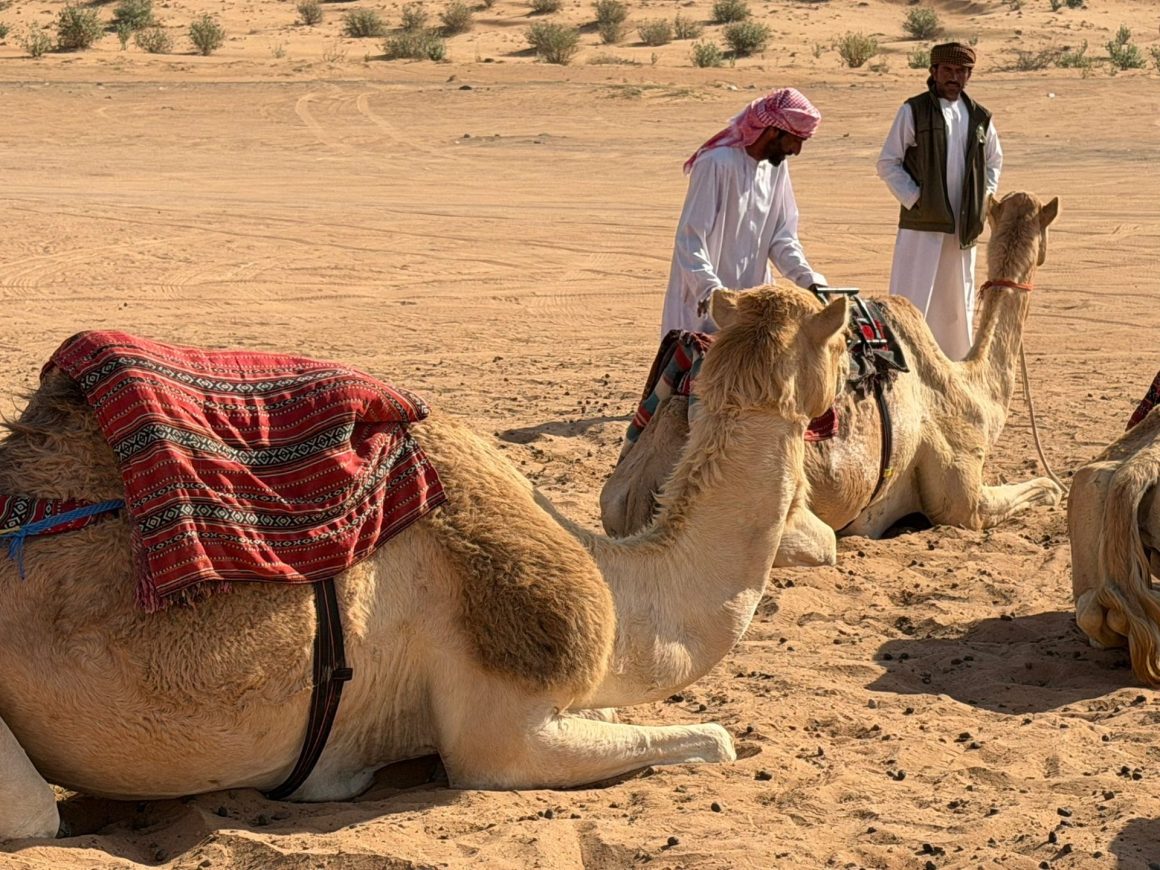
What sets Omani tourism apart is the desert visit. The desert comes so close to the inhabited areas that you can book a bungalow right in the sands. This is not a tent with a guitar around the campfire — it’s a luxury inn in the dunes, with a proper shower, bathtub, beautiful bathroom, plush bed, television, and Wi-Fi. Musicians come in to sing for guests in the evenings.
Best Hotels in Oman, Picked by Locals Insider
- Al Bustan Palace, a Ritz-Carlton Hotel — Quron Beach, Muscat. Built in 1985 for the GCC Summit, joined the Ritz-Carlton portfolio in 2011. 250 rooms, a lobby crowned by a 38-meter dome, and a private beach between the Al Hajar Mountains and the Sea of Oman. This is the place our author had in mind as the country’s finest hotel. From €280 per night. Closing for renovation on July 1, 2026.
- The Chedi Muscat — North Ghubrah Beach, Muscat. A GHM design hotel in serene Asian minimalism. 158 rooms, a private beach, and the longest pool in the Middle East (103 meters). The alternative to Al Bustan for travelers who prefer modern design over palatial grandeur. From €350 per night.
- Anantara Al Jabal Al Akhdar Resort — Nizwa, perched at 2,000 meters on Al Jabal Al Akhdar (the “Green Mountain”). The highest resort on the Arabian Peninsula. The “edge-of-the-world” infinity pool overlooks a canyon. Cool summer temperatures around 25 °C when Muscat hits 45 °C. From €450 per night.
- Desert Nights Camp — Wahiba Sands. A luxury camp in the heart of the Sharqiya Sands: 65 Bedouin-style tent-villas with air conditioning, full bathrooms, and terraces over the dunes. Candlelit dinners under the open sky, evening live music. This is the “bungalow in the desert” our author is talking about. From €250 per night.
- Six Senses Zighy Bay — Musandam Peninsula, Oman’s northern enclave. A resort on a hidden beach by a fjord. Villas with private pools, a clifftop spa. Reachable by car along a steep mountain road — or by paragliding in from the summit. From €600 per night.
What to Bring Home: Oud, Cashmere, and Silver
I’ve been to the Omani souks several times — they’re remarkable for the abundance of Indian goods. I often wear cashmere shawls, for instance — made of fine, hand-embroidered wool — and Oman has them in great quantity, because Omani men use them to make their formal turban. You’ll find different qualities at the market; avoid the machine-made imitations.
The same souks sell jewelry and incense. In the East, perfume is sacred, and most of it is oil-based. The principal scent that Oman promotes in every conceivable variation is oud, or agarwood — a resinous wood that ranks among the most expensive perfume ingredients on earth.
The country is fragrant. There are plants everywhere, a fair amount of wildlife. But don’t forget that this is, after all, the desert. It’s not a forest, and it’s not a grove.
Where to Eat: A Limited Cuisine and Some Misplaced Sushi
Omani cuisine is fairly limited. Hotels do put on lavish breakfast spreads to please tourists. What did surprise me is how often Oman seems to push Japanese restaurants, which to me feel rather out of place here. If you’re choosing a cuisine, choose the local one: shuwa (lamb slow-roasted underground), majboos (spiced rice with meat), and Omani halwa (sweetened with sugar, saffron, and rosewater).
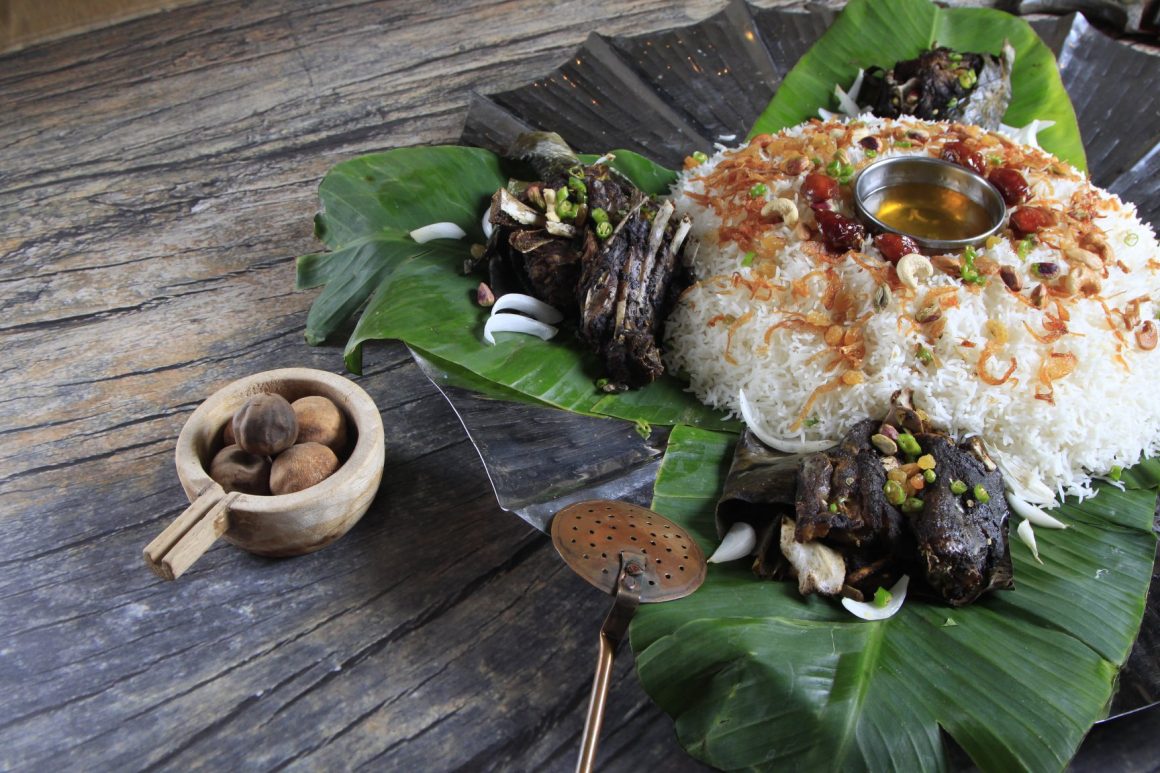
Best Restaurants in Oman, Picked by Locals Insider
- Bait Al Luban — Mutrah Corniche, Muscat. One of Muscat’s best Omani restaurants. Lunch in a 19th-century traditional house overlooking the harbor. Shuwa, grilled fish, Omani rice.
- Al Angham — Next to the Royal Opera House. High-end Omani cuisine in a palatial interior: halwa, cardamom coffee, lamb majboos. The ideal pre- or post-show dinner.
- Kargeen Café — Madinat Sultan Qaboos, Muscat. A local legend: a vast garden of tents and cushions, Omani and Levantine cooking, a shisha section. Open until midnight.
- The Beach Restaurant — Inside The Chedi Muscat. Seafood, Mediterranean cooking, tables right on the sand. Expensive but unforgettable.
- Ubhar — Bareeq Al Shatti, Muscat. Modern, chef-driven Omani cuisine. Classic recipes given a contemporary presentation. A good way to understand the cuisine without falling into the tourist trap.
Tips from the Oman Guide
- Safety is excellent — but be discreet with your camera. It is not customary in Oman to photograph locals without permission, especially women.
- Update your information before you travel. The Middle East is currently unsettled, and Oman experienced severe flooding in 2024. Check the news in the week before your flight: a place that was calm a month ago may not be now.
- Al Bustan Palace closes for renovation on July 1, 2026. If you want to stay there specifically, book before that date — or wait for the reopening.
- The Royal Opera House has a strict dress code. No jeans, no shorts, no sneakers. Men: jacket required. Women: a covered dress.
- Sultan Qaboos Grand Mosque is open only until 11 a.m. Visitors are welcome from 8:30 to 11 a.m., closed Fridays. Dress correctly: women must cover their hair, with long sleeves and long skirts or trousers. If you arrive without, an abaya can be rented at the entrance.
- At Mutrah Souq, don’t buy machine-made cashmere. A real hand-woven mussar shawl is significantly more expensive — but the weight of the fabric and the fineness of the thread give it away instantly.
- Oud is oil-based, not alcohol-based. Buy it in tiny vials and apply to the skin of your wrists. The scent will last for days.
- In the desert: only with an organized camp. Driving into Wahiba Sands on your own without a guide is a bad idea. The dunes shift with the wind, and GPS isn’t always reliable.
Where Next with Alexandre Vassiliev?
Alexandre Vassiliev writes for Locals Insider on cities and countries around the world — places where cultural codes are layered as densely as in fairytale Oman.
- The Rome guide — a city where antiquity gives way to Gothic, and Gothic to Baroque.
- The Casablanca guide — another Arab country, but a wholly different colonial trace: art deco, Bogart, and Piaf.
- The Hong Kong guide — the British city the Chinese never renamed.