
In many ways, Georgia can be described as a country of contrasts. Drive for just a few hours and you may find yourself in an entirely different climate: snow-covered mountain passes and stark, wind-swept peaks give way to green pastures dotted with sheep and rolling vineyards. Just as you begin to take in one landscape, the view outside the window shifts again.
Most striking of all, these dramatic natural settings are generously scattered with ancient monasteries, stone towers, and mountain villages where time seems to have slowed to a standstill. Exploring Georgia by car is the most rewarding way to travel, allowing you to see more and stop where the landscape invites you to linger. Below are several destinations worth the drive, all tested and experienced firsthand.
Kazbegi (officially Stepantsminda)

This small mountain settlement lies in northern Georgia at the foot of Mount Kazbek, one of the Caucasus five-thousanders. Kazbegi is not a resort in the traditional sense, but a living mountain village where freshly painted guesthouses stand alongside stone homes and old gardens. The main street runs along the Terek River, and in the evenings the air smells of firewood and freshly steamed khinkali.
The journey from Tbilisi follows the Georgian Military Road, one of the most scenic routes in the Caucasus. The road passes through Mtskheta, runs alongside the Ananuri Fortress and the turquoise Aragvi Reservoir, then climbs to the Jvari Pass at nearly 2,400 meters before descending into the Kazbegi Valley. Driving is comfortable, with smooth asphalt and views so striking that stopping every few minutes feels inevitable.
The drive from Tbilisi takes about four hours. Shared minibuses depart from Didube station, though the trip usually stretches to five hours. For most travelers, the main destination is the Gergeti Trinity Church, perched on a hill above the village at an altitude of over 2,000 meters.
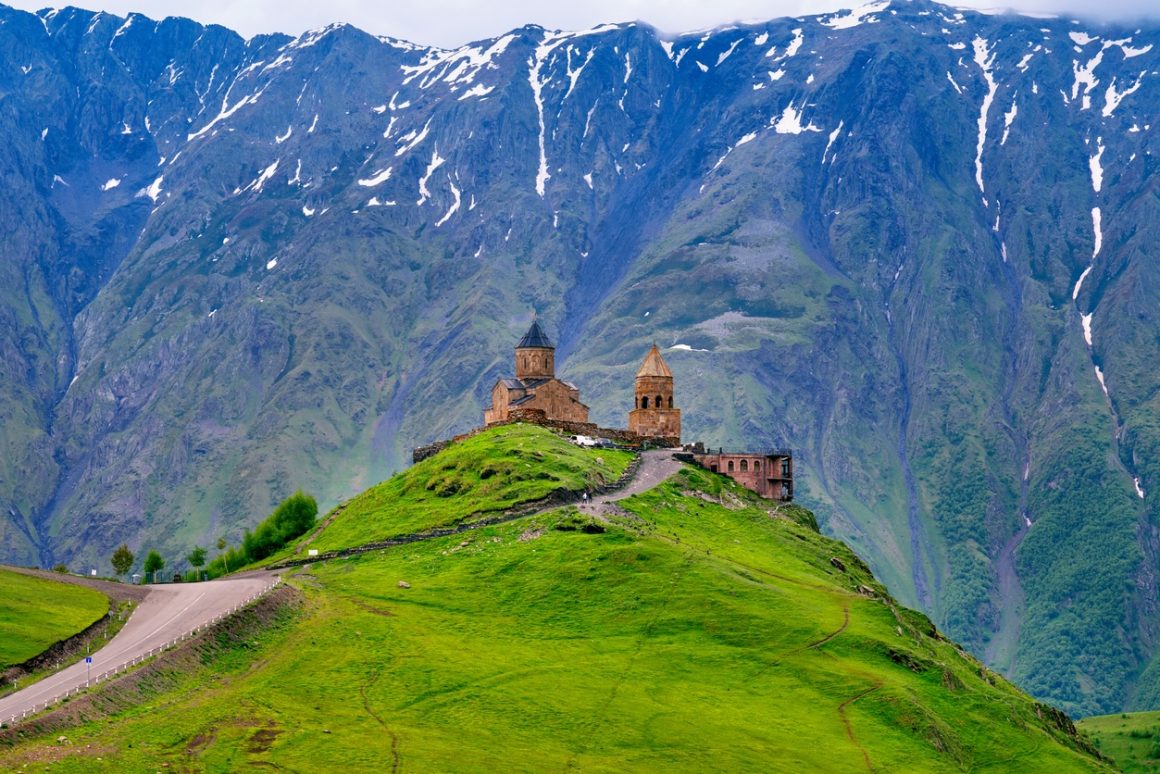
Built in the fourteenth century, the church has become one of Georgia’s most recognizable landmarks. From here, Mount Kazbek rises in the distance, a glacial pyramid disappearing into the clouds. The ascent can be done on foot: the trail begins near the bridge over the Terek River and climbs steadily for about ninety minutes.
The elevation gain is roughly 400 meters. The ascent is steep, but the views along the way more than compensate for the effort. Even in summer, temperatures at the top often stay below ten degrees Celsius, so a warm jacket is essential. It is also wise to refuel in advance, as gas stations become scarce after Gudauri.

Internet coverage is unreliable, especially in the valleys. Spending at least one night in Kazbegi is highly recommended, and choosing a hotel with a view makes a real difference. Rooms Kazbegi is a standout option, a minimalist design hotel set at the foot of the mountains with a panoramic terrace.
The interiors combine wood and glass, wide windows, fireplaces, sweeping views, and the atmosphere of a contemporary mountain retreat. Room rates start at approximately 200 US dollars per night.
Website: roomshotels.com/hotel/kazbegi
Mestia, Svaneti

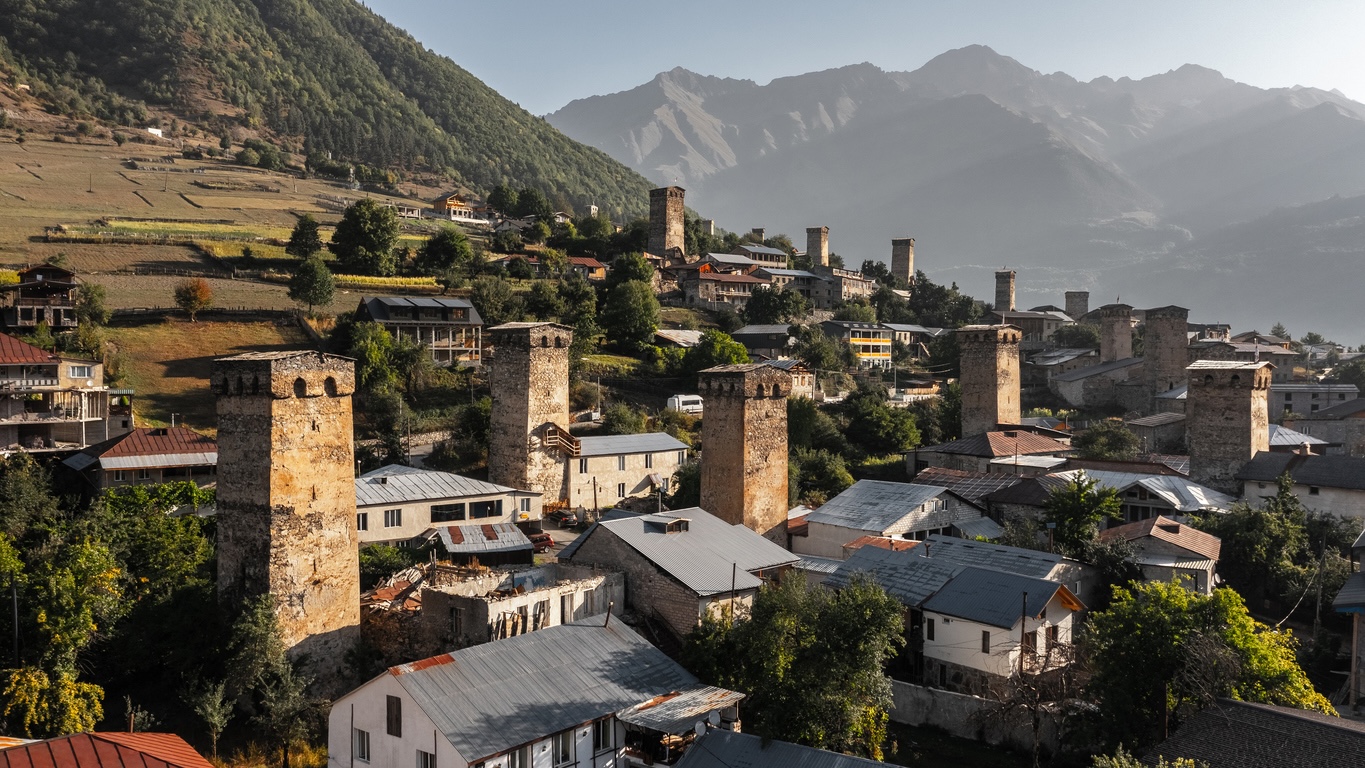
Svaneti is a dramatic region in northwestern Georgia. Its main town, Mestia, sits in a valley framed by glaciers and medieval stone towers that for centuries served as both homes and fortresses. Reaching Mestia is part of the adventure: the road from Zugdidi is about 130 kilometers long and follows the Enguri River gorge almost the entire way.
The journey begins with a jade-colored reservoir, followed by winding mountain roads, sheer cliffs, and bridges suspended above fast-moving water. While the road is generally in good condition, sharp turns and frequent photo stops mean the drive rarely takes less than three and a half hours. Mestia itself is compact, with a central square, cafés, museums, and numerous guesthouses overlooking the mountains.
Most of the region’s hiking routes begin here. The most popular leads to the Chalaadi Glacier: from the town center, you can drive to the trailhead and then walk for about an hour along the river until the glacier nearly touches the trees. Another route climbs to the Koruldi Lakes, which requires either a four-wheel-drive vehicle or patience for a steep ascent.

The views from above are among the finest in the Caucasus. With extra time, it is worth continuing to Ushguli, a village at around 2,100 meters and one of the highest permanently inhabited settlements in Europe. The road from Mestia is unpaved; it is best avoided in winter but manageable in summer.
Ushguli feels like an open-air museum, with stone towers, leaning wooden fences, and mountains rising directly behind the houses. In clear weather, Mount Shkhara, Georgia’s highest peak, is visible from the village. Weather in Svaneti is unpredictable, and the best time to visit is from late June to early October.
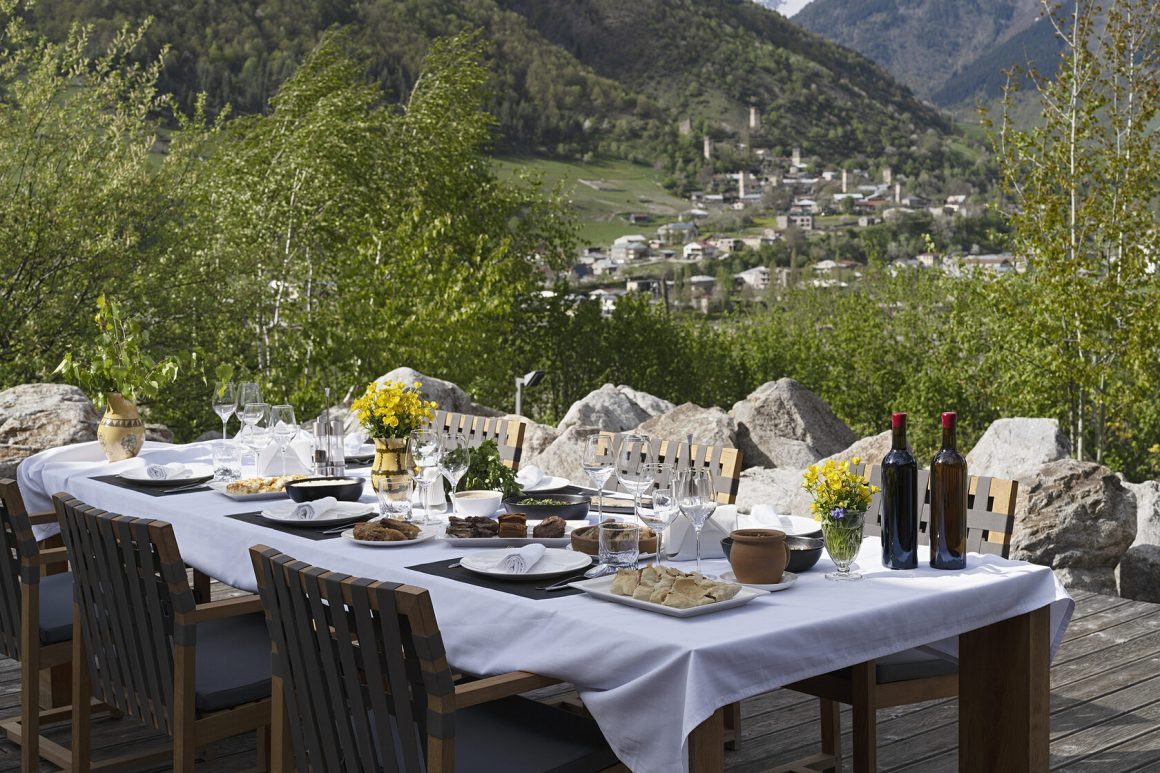
Mobile coverage exists but can be weak, so downloading offline maps is advisable. Mestia has ATMs, cafés, rental services, and even a cable car. Local cuisine is a highlight: be sure to try kubdari, a spiced meat-filled bread that is Svaneti’s answer to khachapuri.
For accommodation, consider the newly opened and stylish Sami Mta Chalet near Mestia. This striking property overlooks ancient Svan towers and features a distinctive interior. The chalet offers several room categories, including Deluxe Mountain View, Luxe Mountain View, and a Presidential Suite with a private terrace and sauna.

The interiors were designed by the Georgian Design Bureau and complemented with artworks sourced from across the country.
Website: samimta.com
Mtskheta

Mtskheta is the ancient capital of Georgia and one of the country’s most sacred places. The city stands at the meeting point of the Aragvi and Kura rivers, just twenty kilometers from Tbilisi. Approaching by road, the stone silhouette of the old town gradually appears, along with the Jvari Monastery rising above the valley.
The spiritual heart of Mtskheta is Svetitskhoveli Cathedral, built in the eleventh century. Its name translates as “The Life-Giving Pillar.” According to legend, the robe of Christ was brought to Georgia by a woman named Sidonia and buried on this site. A miraculous pillar later rose from her grave, emitting light, which gave the cathedral its name.
Today, Svetitskhoveli remains the country’s main religious center, hosting major services and weddings. At Christmas and Easter, believers travel here from all over Georgia. Across the valley, on a hilltop, stands the sixth-century Jvari Monastery, a small stone church overlooking the town.
From this vantage point, the classic postcard view unfolds: Mtskheta below and the two rivers merging at its edge. The drive to Jvari is short and easy, taking about thirty minutes from Tbilisi on a paved road. Visiting early in the morning or toward evening is best, when the crowds thin out.
Lake Paravani
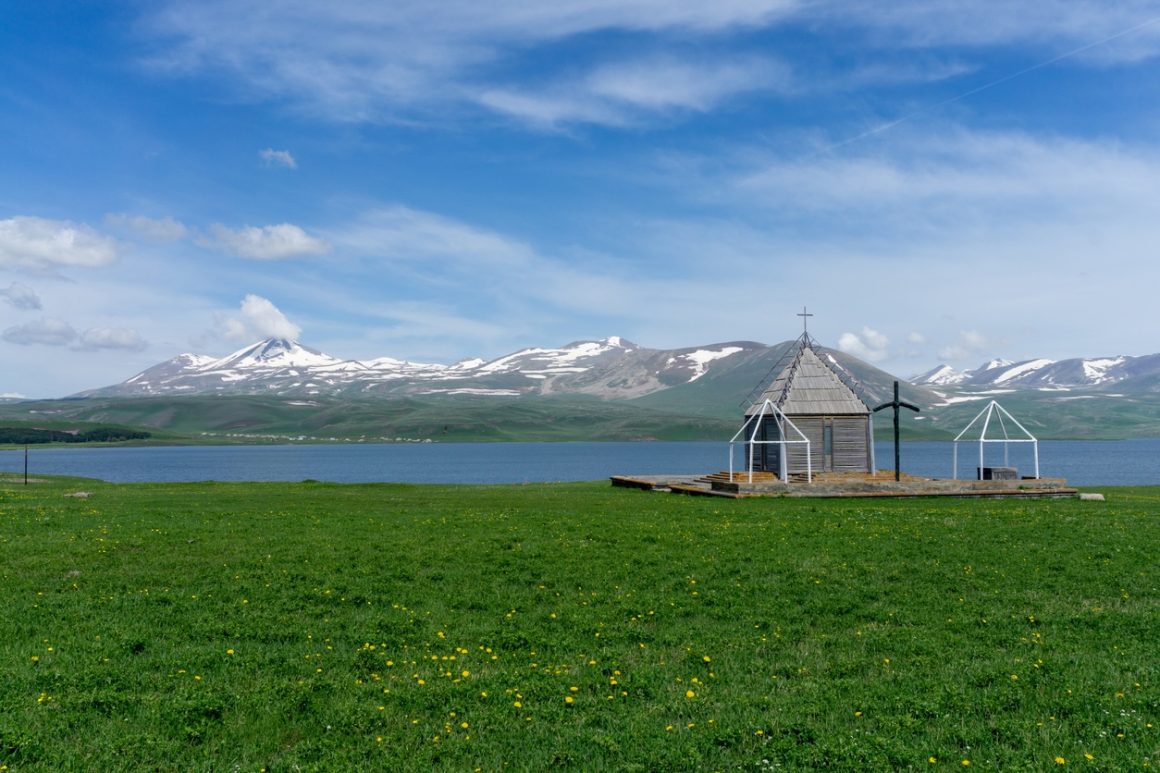
Lake Paravani is the largest lake in Georgia, covering approximately 37 square kilometers. Its waters remain cold even in summer, and in winter the surface freezes completely. The surrounding landscape consists of wide rolling hills and traces of ancient lava flows, as the area forms part of an old volcanic plateau.
The lake lies in southern Georgia, in the Samtskhe-Javakheti region, at an elevation of about 2,073 meters. It can be reached from Tbilisi via a paved road in roughly three hours, passing through Tsalka. After Borjomi or the Kasp highway, the scenery changes abruptly as forests disappear and the open plateau begins.
This is a remote and striking place, largely absent from mainstream tourist routes, which is part of its appeal. Only a few small villages with stone houses and grazing pastures surround the lake. The main settlement is Paravani, located near the Ninozminda Monastery, founded in the sixth century.
One of the oldest Christian structures in the region, the monastery sits on a small rise overlooking the entire lake. In summer, sheep graze nearby, and monks continue to live here year-round, despite the harsh winters, when temperatures can drop to minus thirty degrees Celsius.
A road from Paravani leads to the smaller but picturesque Lake Saghamo, crossing a mountain pass and a narrow gorge. The area is known for its birdlife, including herons, wild geese, and birds of prey, earning Javakheti the nickname “the Georgian Iceland” among ornithologists.
Lagodekhi National Park
Located in the far east of the country, near the border with Azerbaijan, Lagodekhi is one of Georgia’s oldest protected areas, established in the nineteenth century. The drive from Tbilisi takes about four hours, first through the vineyards of Kakheti and then toward the foothills of the Greater Caucasus.
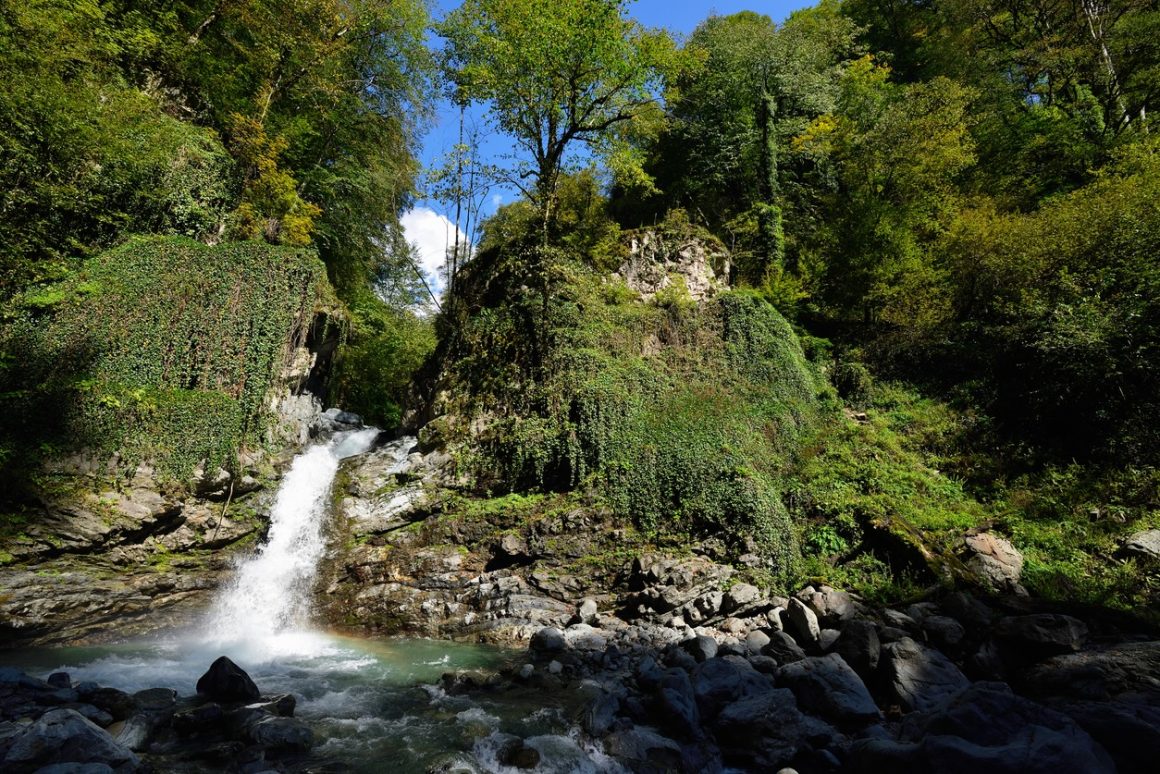
The park begins just beyond the town of Lagodekhi. Several routes are available, ranging from short hikes to the Ninoskhevi Waterfall, which takes about three hours round trip, to multi-day treks leading to alpine lakes and mountain passes. The waterfall itself is tall and powerful, hidden deep in a gorge, with the trail winding through dense, humid forest.
Trees are wrapped in moss, and the air feels cool and heavy. June and July are particularly beautiful, when everything is in bloom, streams are full, and the only sound is rushing water. For those seeking a quieter walk, the short trail to the Black Waterfall offers fewer visitors and a more secluded atmosphere.
Rest areas are set up throughout the park, and local guides or four-wheel-drive vehicles can be arranged at the entrance for those who wish to venture higher into the mountains.
To end the journey, returning to Tbilisi is ideal, where the switch from winding mountain roads to urban ease feels especially rewarding. Locals Insider offers a curated selection of boutique hotels in Tbilisi, where Georgian character is reflected in every detail.