

Irina Luchak treats Serbia as a place to land, not a place to stay. It is where you can arrive, legalise yourself without much trouble, open bank accounts and work out where you want to go next.
Luchak was born in Moldova and left for Moscow at seventeen to study at HSE University. She trained as a journalist, worked out while still at university that it was a dead end, and went into marketing instead. Since 2019 she has worked for herself.
She left Russia in March 2022, went to Montenegro first, then moved to Belgrade in 2024. She now runs two businesses: a creative agency making branded campaigns on Twitch, and Citeus.ai, a GEO service that helps brands understand and improve how they show up in AI-generated answers. Two years into Serbia, she is applying for a UK Innovator Founder visa and heading for London.
This guide to digital nomads and founders who move to Serbia covers residence permits, the tax threshold that changes the maths, doctors, finding a flat with a dog and a cat, and why a city can stop being big enough. More relocation stories sit in our Digital Nomads section.

Belgrade is, in the end, a bit small for me.
Irina Luchak
Why Move to Serbia? A Country to Land In, Then Move On From
For me, as for a lot of Russians, Serbia was the country that made sense: predictable, friendly, somewhere you can arrive, legalise yourself without much trouble, open bank accounts, set up a life, and then work out what you actually need and where you want to go next.
I have been here two years, and the understanding that it is time to move on has already arrived. That said, I have plenty of friends who live here and see their future in Serbia, and I understand their reasons perfectly well.
Running Two Businesses From Belgrade: A Twitch Agency and a GEO Startup
All my projects orbit marketing and advertising in one way or another.
The first is a creative agency. We make branded campaigns on Twitch.
It is a genuinely good business and an interesting one, and all my colleagues on that project are Gen Z — thanks to them I now half-understand the memes and the language of a generation younger than mine.
The second is Citeus.ai, a GEO service that helps brands understand and improve their visibility in the output of AI models. That one is still a startup rather than a business, and my partner and I have very ambitious plans for it.
Citeus has global ambitions. The market is already enormous, interesting and growing fast — which is also the drawback, because we are in a red ocean. We will see what comes of it.
Locals Insider
The founder’s business · Belgrade
Irina Luchak's two businesses in numbers
A Twitch creative agency and a GEO startup, both built around marketing and advertising and neither tied to the Serbian market.
- Businesses
- 2 A Twitch agency and Citeus.ai
- Working for herself
- Since 2019 After training as a journalist
- In Serbia
- 2 years Moved to Belgrade in 2024
- Citeus.ai stage
- Startup Global ambitions, a red ocean
The timeline
- 2019Starts working for herself
- March 2022Leaves Russia, Montenegro first
- 2024Moves to Belgrade
- NextApplying for a UK Innovator Founder visa
How it's built
- AgencyBranded campaigns on Twitch, a team of Gen Z colleagues
- Citeus.aiA GEO service for brands' visibility in AI model output, run with a partner
- MarketNot tied to the local Serbian market
- AmbitionGlobal, in a market she calls a red ocean
“All my projects orbit marketing and advertising in one way or another.”
Irina Luchak, founderLiving in Serbia as an Expat: Safety, Low Costs and a Large Russian-Speaking Community

Easy to settle. Adaptation and legalisation are straightforward, the language is not hard to learn, the cost of living is low, and people are genuinely kind.
Safety. One of the most important advantages, and I would put it near the top: Serbia is extraordinarily safe.
In every sense. For women that matters a great deal.
The community. There is an enormous Russian-speaking community here.
Two years ago I would have said that Serbs like Russians more than Russians like themselves. That attitude has started to shift, and not for the better — partly because of how some of my compatriots have behaved, and possibly because of the general tension in the country over the past two years.
Doing Business in Serbia: Nepotism, a Slow Pace and the Founder’s Loneliness
Nepotism. A small market and not many business opportunities. A slow pace of life and of doing business, which is hard to get used to and harder to accept.
My own projects are not tied to the local market at all, but I have friends with local businesses here, and they very often have a difficult time of it.

And there is a particular kind of loneliness in it. The Russian-speaking community in Serbia is huge, but most of them are salaried employees. There are few entrepreneurs like me, and what I miss most is like-minded people from the business world — the sort you can sit down to dinner with and discuss taking over the world.
Digital business — yes, absolutely. But I would not get involved in anything local and offline here.
That is my honest assessment of Serbia as a place to start or grow a company, taking everything together.
Digital business — yes, absolutely. But I would not get involved in anything local and offline here.
Irina Luchak
Serbia Residence Permit for Founders: From Talent Visa to Your Own Company
I had a talent visa first, valid for a year, and after that I legalised myself by opening a company.
The talent visa is issued easily and simply — but not to everyone, only to graduates of leading Russian universities. A residence permit through registering a sole proprietorship or a company is also not difficult to obtain.
That said, I know a lot of people in Serbia who have lived here for years, do visa runs, and have never legalised themselves at all.
Has anything changed in the last few years? Hard to say. Broadly, no — except that citizenship is not being granted, even where every condition for it has already been met.
Taxes in Serbia for Company Owners: The €100,000 Line
If a company turns over more than €100,000 a year, Serbia can be one of the lowest tax burdens in Europe.
Below that, it is much less attractive, and you pay a fair amount of tax by comparison — with neighbouring Romania, for example, which has a special regime for micro-enterprises at 1% of revenue.
Healthcare in Serbia for Expats: Same-Day Doctors, No Insurance
The medical system is fine overall. Not Moscow before 2022, obviously, but I have had no problems here, happily.
I do not have insurance. When I need a doctor I simply book, go, and pay for the visit — that is easier and more convenient for me.
Getting an appointment is not difficult, and sometimes you can catch a slot the same day you call.
Where to Live in Belgrade: Vračar or Dorćol?

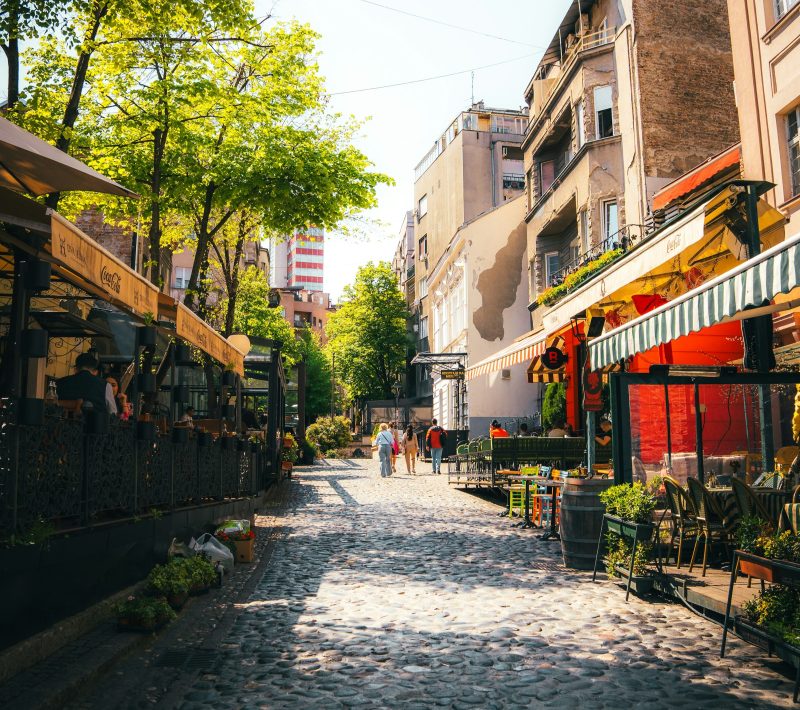
I spent my first year in Vračar, then moved to Dorćol. Both are good; it is purely a question of priorities.
There is no point looking for a flat in Vračar, for instance, if you have a car or plan to buy one — parking there is dreadful.
My advice is the obvious advice: come, rent a flat for a month, then look around and work out what suits you specifically.
Renting an Apartment in Belgrade With a Dog and a Cat
Not difficult. Finding a flat usually takes a couple of weeks. Even with animals it is not hard.
I have a dog and a cat, and I now live in a wonderful apartment of a kind that would have been difficult to find in Moscow with pets. That is another excellent thing about Belgrade, incidentally: the city is extremely dog-friendly.
Dogs are welcome almost everywhere, there are masses of pet-friendly places, and you can take a dog into the bank.
So if you arrive in Serbia without a dog, there is a strong chance you will acquire one here.
Is Belgrade a Good Place to Live Long-Term? What She Loves and Why She Is Leaving

What I love about Serbia: the climate, the very kind and positive people, the enormous Russian-speaking community.
Would I leave? Yes — for London.
I am in the middle of applying for an Innovator Founder visa in the UK. Belgrade is, in the end, a bit small for me.
Belgrade Beyond Work: Padel, Cycling and Classic French Wine
I play padel. There is a huge padel community here, lots of courts both open-air and indoor, and plenty of places to go with your padel buddies afterwards.
I also cycle. It is not Switzerland, obviously, but there are plenty of routes, flat and hilly, where you can work up a sweat.

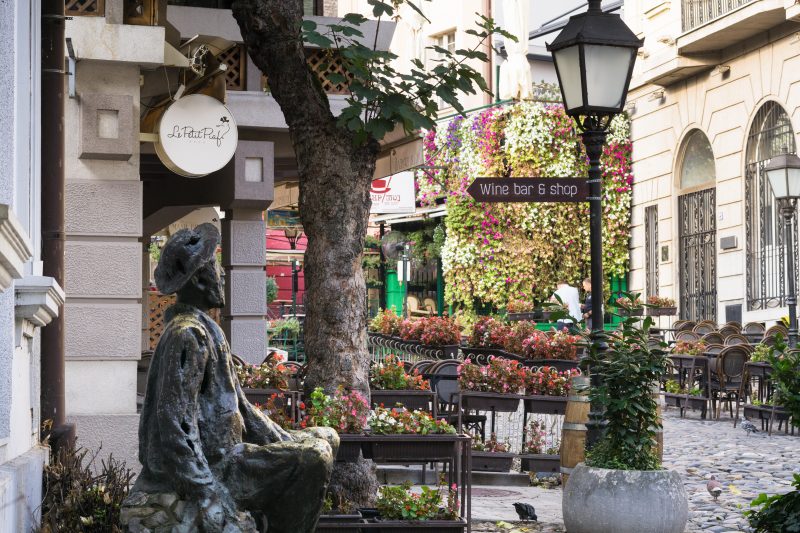
And I like French wine — which puts me outside the mainstream here, because Belgrade is mad for organic and I do not like organic at all. I like gathering friends at Delice, a wine bar in Vračar. It is one of the few places in the city with a serious selection of classic French wines.
Locals Insider
Expat, nomad & founder fact file
Belgrade, SerbiaResidence, company set-up, taxes and costs for founders
Serbia taxes salaries and self-employment profit at a flat 10% and company profit at a flat 15%. Founders can live and work on a single permit tied to their own business.
- Income tax
- 10% Flat rate on salary and on self-employment profit
- Company tax
- 15% Flat corporate income tax on profit
- VAT
- 20% 10% special rate on listed goods; registration above RSD 8,000,000 turnover
- Social contributions
- 35.05% Pension 24%, health 10.3%, unemployment 0.75%; employee 19.9%, employer 15.15%
Visas & residence
Routes a founder can use
- Single permit (self-employment)
- Residence and work in one permit; apply online at welcometoserbia.gov.rs
- Founder evidence
- Registry excerpt showing you as founder or owner
- Validity
- Up to three years, extendable
- Talent
- Needs a decision recognising your degree; first permit one year
- Startup
- Innovation confirmed by a Science and Technology Park; first permit one year
- Startup renewal
- Serbian employees, RSD 1,000,000 business income, or a renewed park document
- Digital nomad
- Remote employees of foreign firms are a defined tax category with their own rules
Opening a business
Forms, registration and flat-rate option
- Entrepreneur tax
- 10% on taxable profit or on flat-rate income, your choice if eligible
- Flat-rate ceiling
- Turnover above RSD 6,000,000 ends flat-rate taxation
- Tax ID
- Resident legal entities must hold a Tax Identification Number
- VAT registration
- Within five days of passing RSD 8,000,000 turnover in 12 months
Taxes in detail
Rates that apply to founders
- Corporate income tax
- 15%, proportional and uniform
- Salary tax
- 10% on salary above a monthly non-taxable amount
- Employee contributions
- 19.9%: pension 14%, health 5.15%, unemployment 0.75%
- Employer contributions
- 15.15%: pension 10%, health 5.15%
- Self-employed contributions
- Pension 24%, health 10.3%, unemployment 0.75%, plus 10% tax
- VAT
- 20% general rate, 10% special rate
Cost of living
Official wage and price data
- Average net salary
- RSD 119,335 a month (September 2026)
- Average gross salary
- RSD 164,746 a month (September 2026)
- Median net salary
- RSD 94,829 a month (September 2026)
- Net wage growth
- +11.2% nominal, +8.2% real, January–September on a year earlier
- Consumer prices
- +0.8% in October on September
- Annual inflation
- 4.1% in September, against a 3% ±1.5% target
Where to live
The two districts Irina knows from living in them
Irina spent her first year in Vračar and then moved to Dorćol. Parking is the catch in Vračar if you own a car.
Official links
Apply and check the rules at the source
FAQ: Moving to Belgrade and Starting a Business in Serbia
How do you get a residence permit in Serbia as a founder?
Irina Luchak first had a talent visa, valid for a year, then legalised herself by opening a company. She says the talent visa goes only to graduates of leading Russian universities, while a permit through registering a sole proprietorship or a company is not difficult to obtain. She also knows people who have lived in Serbia for years doing visa runs and have never legalised themselves.
Is Serbia a good place to start a company?
In her view, yes for a digital business and no for anything local and offline. She points to nepotism, a small market, not many business opportunities and a slow pace of doing business, and says friends with local businesses very often have a difficult time.
How much tax does a company pay in Serbia?
Luchak says that above €100,000 in annual turnover Serbia can be one of the lowest tax burdens in Europe, and that below that line it is much less attractive. She compares it with neighbouring Romania, which she says has a special micro-enterprise regime at 1% of revenue.
How does healthcare work for expats in Belgrade?
She describes the medical system as fine overall. She has no insurance: she books a doctor, goes and pays for the visit, and says appointments are not difficult to get, sometimes on the same day.
How long does it take to find a flat in Belgrade with pets?
Usually a couple of weeks, according to Luchak, who found an apartment with a dog and a cat. She calls Belgrade extremely dog-friendly, with dogs welcome almost everywhere.
Which Belgrade neighbourhood is better for expats, Vračar or Dorćol?
She lived in Vračar for her first year, then moved to Dorćol, and calls both good. Her one warning is that parking in Vračar is dreadful if you have or plan to buy a car, and her advice is to rent a flat for a month before choosing.