




Alexandre Vassiliev has been coming to Istanbul for 35 years and has learned exactly how the city works from the inside: where to stay without going broke, how to avoid being taken for a ride, and where the old European heart of Beyoğlu still beats. Exclusively for Locals Insider, the fashion historian, set designer, and collector has put together a personal guide to Istanbul.

Istanbul: Eastern Sweetness on the European Side
The Great Istanbul. The Gate of the East. Eastern sweetness on the European side. Its extraordinary position between two continents — split by the magnificent Bosphorus — makes Istanbul perhaps the most beautiful city in the world from a purely geographical standpoint. Not for its architecture, its traditions, or its urban culture, but for its setting. On one shore: beauty. On the other shore: beauty. Between them: the strait.

Istanbul is enormous. Even the statisticians have lost count — the official census puts the population at about 15.7 million, though some believe the real figure is closer to twice that. The city has spread so far on both sides of the strait that residents of the outer Asian districts almost never make it to the European center; it’s a long ride by train or ferry, and quite a project.

But the genius of Istanbul lies in this: every district has its own center, its own square, its own police, its own university, its own administrative offices, its own shopping. Nobody has to commute to “the center” — everyone has their own center within walking distance.
Istanbul is beautiful at sunset, at sunrise, in its ferries, in its frantic nightlife (the city doesn’t sleep until 7 a.m.) — and, on the other hand, in the measured passage of ships along the Bosphorus, which gives the whole place a feeling of calm. Despite the skyscrapers thrown up in the newer neighborhoods, Istanbul remains remarkably green: there are still gardens, parks, and trees, and the closeness of water softens the urban aggression of this ancient Roman, then Byzantine, then Ottoman city.

It was called Byzantium, then Constantinople, and on March 28, 1930, it was officially renamed Istanbul. The name has Greek roots — from εἰς τὴν Πόλιν (eis tin polin), meaning “into the city.” So Istanbul is literally “into the City.” Very Eastern, and very modest.
Sultanahmet Square: Where Not to Linger — and Why You Still Have to Go
Almost every great monument in Istanbul is concentrated in one place: Sultanahmet Square. Here you have Hagia Sophia, the Blue Mosque, the Topkapı Palace, and the ancient hippodrome. This is the most touristed pocket in the city. The less time you spend here, the happier your trip.
But once in your life, you have to enter Hagia Sophia. It became a mosque again in July 2020 by decree of President Erdoğan; before that, from 1934, it had served as a museum under Atatürk’s decree, and before 1934 — a mosque since 1453. The first floor is now free (as is normal for a working mosque), but a fee is charged for the upper gallery and its mosaics. Nobody likes to pass up the money.

The Blue Mosque (Sultan Ahmet Camii) is magnificent — but often closed for prayers, so timing matters.
The Topkapı Palace (Topkapı Sarayı) is expensive but very beautiful. Don’t miss the Church of Hagia Irene (Aya Irini), one of the oldest Byzantine churches in the city — and Topkapı’s astonishing collection: kitchen wares, Chinese porcelain, the sultans’ gifts encrusted with diamonds, turquoise, and rubies, gold jewelry, and a truly mind-bending collection of sultans’ robes, kaftans, and trousers so vast that five people could comfortably fit in one and not feel crowded.

You will see some of the largest diamonds and emeralds in the world, the ancient treasures of the Islamic world — and the deeply melancholy harem of the Sultan, where the lives of the odalisques look nothing like a paradise. The lives of the eunuchs who guarded the palace and the Janissaries who policed contact between the harem and the outside world come across as their own variety of confinement — the men slept on shared mattresses, one against the other, rather than in individual beds. A well-known if uncomfortable fact.
The Basilica Cistern and the Archaeology Museum
- Hagia Sophia / Ayasofya — Sultanahmet, Fatih. Built in 537 under Justinian I as a cathedral. A mosque from 1453, museum from 1934, and a mosque again from 2020. UNESCO. Ground floor free (mosque), upper gallery (mosaics) — €25.
- Topkapı Palace — Cankurtaran, Fatih. The sultans’ residence from 1465 to 1856. Treasury, harem, porcelain collection, sultans’ kaftans, relics of the Prophet. Ticket €30; harem additional €15. Closed Tuesdays.
- Blue Mosque (Sultan Ahmet Mosque) — Sultanahmet. Built 1609–1616 under Sultan Ahmed I. 20,000 blue Iznik tiles. Free entry, closed during prayer times. Dress code: women must cover hair, wear long sleeves and long skirts.
- Basilica Cistern (Yerebatan Sarnıcı) — Alemdar, Fatih. Underground reservoir, 532–542 under Justinian. 336 columns, Medusa heads. Ticket €25.
- Istanbul Archaeology Museums — Cankurtaran. One of the finest archaeological museums in the world. Alexander Sarcophagus, treasures of the ancient Near East. Ticket €13.50.
The Basilica Cistern and the Archaeology Museum
Sultanahmet really needs two full days — one isn’t enough.

Be sure to include the Basilica Cistern (Yerebatan Sarnıcı) — an underground reservoir built between 532 and 542 under Emperor Justinian I, after the Nika riots. 336 marble columns, two famous Medusa heads, soft underlighting, reflections in the water. One of the great cisterns of the world.

And the Istanbul Archaeology Museum — home to artifacts of ancient Mesopotamia, Babylon, Egypt, Greece, Rome, and Byzantium. A genuinely wonderful museum that fewer people visit, precisely because the famous mosques and palaces consume all the touristic attention.
Best Museums in Istanbul, Picked by Locals Insider

- Istanbul Modern — Necatibey Caddesi, Karaköy. Turkey’s leading museum of contemporary art, in a Renzo Piano building (2023). Ticket €18.
- Pera Museum — Meşrutiyet Caddesi 65, Tepebaşı. Orientalist paintings, Anatolian weights and measures, and superb traveling exhibitions. Ticket €8.
- Sakıp Sabancı Museum — Sakıp Sabancı Caddesi 42, Emirgan. On the European shore of the Bosphorus, in a waterside mansion. Turkish calligraphy, Orientalist painting, traveling exhibitions of international caliber. Ticket €12.
- Museum of Innocence — Çukurcuma Caddesi 2, Beyoğlu. The museum built around Orhan Pamuk’s novel — in a real apartment in Çukurcuma. A unique experiment in world museum practice. Ticket €6.
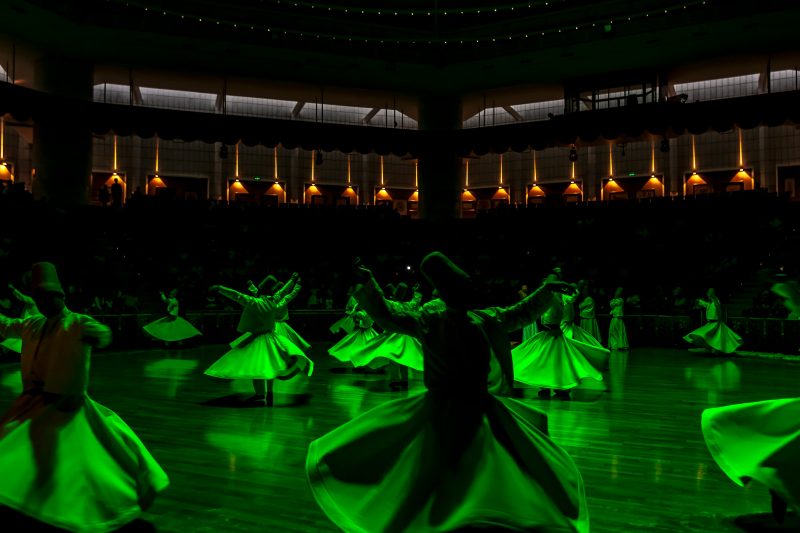
- Galata Mevlevi Museum — İstiklal Caddesi, Beyoğlu. The 17th-century lodge of the whirling dervishes. Sema ceremonies every Sunday at 5 p.m. Ticket €10.

Beyoğlu and the European Past of Pera
The other half of Istanbul — the European side — is Beyoğlu, which begins at Taksim Square. It belongs to a more modern chapter, from the 19th and 20th centuries. And Beyoğlu remembers more than the Ottomans.
This was Pera once — “the foreign quarter.” The whole of cosmopolitan European Istanbul was here: Greeks, Armenians, French, Italians, and, in the early 1920s, a wave of White Russian émigrés fleeing the Bolshevik Revolution. They opened restaurants, cabarets, and the city’s first modern fashion houses, and left their mark on Istanbul’s nightlife and cinema. Some of their addresses are still there.
The most legendary is Rejans (today 1924 Istanbul) on a quiet passage off İstiklal — founded in 1924, reopened in 2016, with Atatürk’s old table still set aside with a bottle of rakı.
Two Russian Orthodox churches still serve in Karaköy, perched improbably on the upper floors of historic merchant buildings. Their frescoes are richer than their location would suggest.
İstiklal at 1 a.m. and Late-Night Shopping

The Beyoğlu district doesn’t sleep until 7 a.m. On İstiklal Caddesi — the great pedestrian artery, once known as the Grande Rue de Péra — the foot traffic at 10 or 11 at night is enormous, like a parade that never ends. You’ll either be exhilarated or terrified, depending on your character.
I am exhilarated, and I move with the rhythm of the crowd; in 35 years not a single person has shoved me. And I know what I am talking about.
Istanbul is a rare city where clothing, shoe, jewelry, and music shops stay open until midnight. I cannot think of another capital with this kind of nighttime commerce.
Restaurants, Nightclubs, and the Opera


Istanbul’s restaurants are overwhelmingly Turkish — and Turkish is exactly what you should be eating here. There are Georgian, Russian, Italian, and French places, but they aren’t really what brings travelers to the city.
The nightlife is enormous, concentrated in Beyoğlu and Taksim. The clubs run as dance halls with a familiar arithmetic: women enter free, men pay. They are meeting places, with happy or unhappy endings.

Theater and cinema are everywhere, though performance art isn’t Turkey’s strongest suit. That said, the country supports six State Opera and Ballet houses (Ankara, Istanbul, İzmir, Mersin, Antalya, and Samsun) — impressive for a country of its scale.
Laleli: Istanbul’s Wholesale Engine Room
Turkey runs on textile factories, which is why the volume of fast fashion moving through the city is almost incomprehensible. The Laleli district is wholesale headquarters, shipping in bulk to Eastern Europe and the post-Soviet space — knitwear, denim, designer counterfeit, anything you might want, and a great deal you wouldn’t.
Çukurcuma: Antiques and Vintage
Istanbul’s antique trade is serious business, and nearly all of it concentrates in Çukurcuma — the same district that houses Orhan Pamuk’s Museum of Innocence. Here you’ll find carpets, porcelain, brass, jewelry, and vintage clothing across every price tier.
The two essential addresses for wearable vintage are Bayretro and Pied de Poule — both worth the visit for collectors who want to actually put the pieces on.

The big antique market is Bomonti in Şişli, open Sundays only, from 8 a.m. to 3 p.m. Bargaining is expected and welcomed. Plenty of Ottoman-era objects, plenty of Russian Imperial relics, and plenty of curiosities that Turkish dealers pick up at British auctions to resell in Germany and Austria. The selection is enormous, the pieces are usually small, and everything is interesting.
The Best Antique and Vintage Stops in Istanbul, Picked by Locals Insider
- Çukurcuma — A district in Beyoğlu, Istanbul’s main antique quarter. Dozens of shops carrying furniture, carpets, silver, porcelain, jewelry, and vintage clothing. Most close by 7 p.m. and many shutter on Sundays.
- Bomonti Antika Pazarı — Bomonti, Şişli. A Sunday-only antique market, 8 a.m. to 3 p.m. Ottoman empire, Russian empire, vintage clothing, accessories, curiosities. Bargain hard.
- Pied de Poule — Faikpaşa Yokuşu, Çukurcuma. International-grade vintage. Twentieth-century couture — Saint Laurent, Chanel, Dior, Pierre Cardin.
- Bayretro — Çukurcuma. A vintage boutique at the heart of the district. Dresses, accessories, all of it ready to wear.
- Grand Bazaar (Kapalı Çarşı) — Beyazıt, Fatih. Istanbul’s covered bazaar since the 15th century: 4,000 shops, carpets, silver, textiles. Tourist-heavy, but unmissable at least once.
Taxis, Inflation, and Safety
Istanbul runs on taxis, and almost none of the drivers speak English. Don’t push for it. Show them the address on your phone, and don’t expect comprehension. Many drivers will take you the long way around — for them, that’s part of the job description. Don’t take it personally. They are making a living off you; you don’t know your way around. This is the normal rhythm of the city.
For the size and density of its population, Istanbul is strikingly safe. This is not Barcelona — your bag won’t be snatched on the street. The rare exception will see Turks themselves stepping in to defend you. That said: don’t flash money around, don’t show off your wealth, don’t wave bills in anyone’s face. Turks find it distasteful.

Learn a handful of Turkish phrases — merhaba (hello), teşekkür ederim (thank you), lütfen (please) — and the warmth will flow back toward you. Turks have a particular fondness for fair hair and blue eyes, and travelers who match the description will collect a great deal of attention. The intent behind it tends to be unambiguous. If your intentions happen to align, fine. If not, exercise the usual caution in long, intimate conversations.
Inflation and Currency Exchange
Turkey has serious inflation. Prices change almost daily, and the lira’s rate against the dollar and euro shifts at the same speed. Never exchange a week’s worth of money at once — by the next day, it’s already worth less. Change day by day. Tomorrow, the same dollar will buy you more lira than today.
Where to Stay: The Pera Palace and the Hotel That’s Falling Apart Beautifully
There are countless hotels in Istanbul. The most legendary of the historic ones is the Pera Palace in Tepebaşı — the first five-star hotel ever built in Constantinople. Construction began in 1892 and the doors opened in 1895, expressly for passengers of the Orient Express from Paris. Agatha Christie wrote Murder on the Orient Express in one of its rooms; Atatürk’s old suite (Room 101) is now a museum; Hemingway, Greta Garbo, Sarah Bernhardt, and Edward VIII all passed through.

For second-class travelers there was another option — and that’s the one our author has been staying at for over thirty years. The Grand Hotel de Londres (Büyük Londra Oteli) is gloriously cheap, beautifully threadbare, and the perpetual setting for film shoots, music videos, and wedding photography. Squeezing past the constant throng of Muslim brides in dresses embroidered with crystals and seed pearls is its own performance. But it’s worth every second.
The spectacle alone is a kind of immersive theater — you’re seeing a slice of Istanbul life from the inside, the kind of thing no luxury hotel can manufacture. Antique piano, antique furniture, antique stoves, and a parrot in the lobby. Our author loves the place and forgives its desperate need for renovation. At this price, you can hardly ask for more.
The Best Hotels in Istanbul, Picked by Locals Insider

- Pera Palace Hotel — Meşrutiyet Caddesi 52, Tepebaşı. Opened in 1895 for the Orient Express. Atatürk’s Room 101 is now a museum, as is Agatha Christie’s Room 411. A full restoration in 2010 returned the hotel to its original splendor.
- Grand Hotel de Londres / Büyük Londra Oteli — Meşrutiyet Caddesi 53, Tepebaşı. Opened in 1892 — Istanbul’s oldest European-style hotel. Original Victorian interiors, a parrot in the lobby, a beautiful antique elevator. The hotel where our author has been staying for three decades.
- Çırağan Palace Kempinski — Çırağan Caddesi 32, Beşiktaş. A former 19th-century Ottoman sultan’s palace on the Bosphorus. Outdoor pool with strait views, ballet at breakfast.
- Soho House Istanbul — Evliya Çelebi Mahallesi, Beyoğlu. Housed in Palazzo Corpi — the former U.S. embassy (1873). A members-only club whose hotel rooms are open to travelers.
Where to Eat: Turkish Cooking First, Last, and Always
Istanbul has an enormous restaurant culture, and the vast majority of it is Turkish — which is exactly what you should be eating. Şiş kebab and köfte (meatballs), manti (Turkish dumplings), dolma, börek, fresh fish from the Bosphorus, raki on the table beside it. There are Georgian, Russian, Italian, and French restaurants in the city as well — but they aren’t really why anyone comes to Istanbul. Trust the local kitchen.
Cross the Bosphorus to the Asian side for the city’s most uncompromising regional Turkish cooking. The neighborhood of Kadıköy is residential, walkable, and entirely free of the tourist hum that dominates Beyoğlu. This is where Istanbulites eat on their day off.

The most legendary Russian address, 1924 Istanbul (formerly Rejans), was founded in 1924 by émigrés fleeing the Bolsheviks. Atatürk used to dine here, and his table is still reserved with a bottle of raki on permanent standby. Our author used to recommend it as a living piece of history — but unfortunately, the place has lost its way entirely. We can no longer send our readers there.

The Best Restaurants in Istanbul, Picked by Locals Insider
- Mikla — Meşrutiyet Caddesi 15, Tepebaşı. On the rooftop of the Marmara Pera hotel, helmed by chef Mehmet Gürs. New Anatolian cooking, sweeping views across the city to the Bosphorus. World’s 50 Best. Book a month ahead.
- Çiya Sofrası — Güneşli Bahçe Sokak 43, Kadıköy. Regional Turkish cooking from all 81 provinces of the country — Black Sea to Hatay, Aegean to the Kurdish southeast. Run by the legendary chef Musa Dağdeviren. Walk-ins only.
- Karaköy Lokantası — Kemankeş Caddesi 37, Karaköy. Turquoise-tiled walls, classic Istanbul cooking, the city’s most polished mezze spread. One of the most beautiful dining rooms in town. Reservations essential.
- 1924 Istanbul — Olivya Geçidi 7, off İstiklal Caddesi, Beyoğlu. Opened by White Russian émigrés in 1924, reopened in 2016. On the Locals Insider blacklist: Russian cuisine and vodka at prices that no longer match the experience.

Survival Tips from the Istanbul Guide
- Don’t flash your money. This isn’t Dubai. Turks don’t appreciate ostentation, especially in crowded places.
- Don’t stay in Sultanahmet. It’s the tourist epicenter. Stay in Beyoğlu (Tepebaşı, Karaköy) or in Kadıköy on the Asian side — the real city. Hagia Sophia is 20 minutes away. Give
- Sultanahmet two days. One isn’t enough. Hagia Sophia + the Cistern one day; Topkapı + the Archaeology Museum another.
- Visit Hagia Sophia early. Before 9 a.m., the crowd is thinner and the mosque is quieter. The upper-gallery mosaics carry a separate €25 ticket.
- Time the Blue Mosque between prayers. It closes for 30 to 40 minutes after each call to prayer. Check the schedule ahead.
- In taxis: show the address on screen and photograph the license plate. Better yet, use BiTaksi — the local app, Istanbul’s answer to Uber. Cheaper, and no improvised detours.
- Change money day by day. Never more than you need for the next 24 hours. The lira loses value fast.
- Hit İstiklal after 10 p.m. That’s when the real Istanbul comes out. Earlier in the evening, it’s just tourist traffic.
- Visit Çukurcuma on a weekday. Weekends overwhelm the district. Shops are open until 7 p.m.; many close on Sundays.
- Get to Bomonti early on Sunday. The market runs 8 a.m. to 3 p.m. The best pieces are gone by 10. Bargaining required.
- Pera Palace, even if you’re not staying there. Come for afternoon tea in the Kubbeli Saloon. Both Atatürk’s room and Agatha Christie’s are open to visitors.
- At Bomonti, bargain. Turks love the back-and-forth. The opening price isn’t the closing price — knock 30 to 40% off and stay calm.
- A few words of Turkish go a long way.Merhaba (hello), teşekkür ederim (thank you), lütfen (please). Turks notice, and they appreciate the effort.
Where Next with Alexandre Vassiliev?
Alexandre Vassiliev writes for Locals Insider on cities around the world — places where cultural codes layer as densely as in Istanbul:
- The Chefchaouen guide — Morocco’s blue city, where the paint on the walls is more than a question of beauty.
- The Oman guide — a fairytale country without skyscrapers, with an opera in the desert and the scent of oud.
- The Paris guide — a city of love triangles, fashion, and the sales, from a forty-year resident.
- The Hong Kong guide — the British city the Chinese never renamed.
- The Rome guide — a city where antiquity gives way to Gothic, and Gothic to Baroque.