

 Argentina
 Austria
 Azerbaijan
 Belgium
 Brazil
 Canada
 Chile
 China
 Colombia
 Costa Rica
 Croatia
 Cyprus
 Czech Republic
 Denmark
 Egypt
 Estonia
 Finland
 France
 French Polynesia
 Georgia
 Germany
 Greece
 Greenland
 Hong Kong
 Hungary
 Iceland
 India
 Indonesia
 Ireland
 Italy
 Japan
 Kenya
 Lithuania
 Malta
 Mauritius
 Mexico
 Mongolia
 Montenegro
 Morocco
 Netherlands
 Norway
 Oman
 Peru
 Poland
 Portugal
 Saudi Arabia
 Serbia
 Singapore
 Slovenia
 South Africa
 South Korea
 Spain
 Sweden
 Switzerland
 Taiwan
 Thailand
 Türkiye
 USA
 United Arab Emirates
 United Kingdom
 Uruguay
 Uzbekistan
 Vietnam
Destinations › Europe › Montenegro
Country guide · Europe
Montenegro
Montenegro Travel Guide: Kotor, Budva, Durmitor & Where to Go 2026
Your Montenegro guide, curated by Locals Insider
Montenegro, by Locals Insider
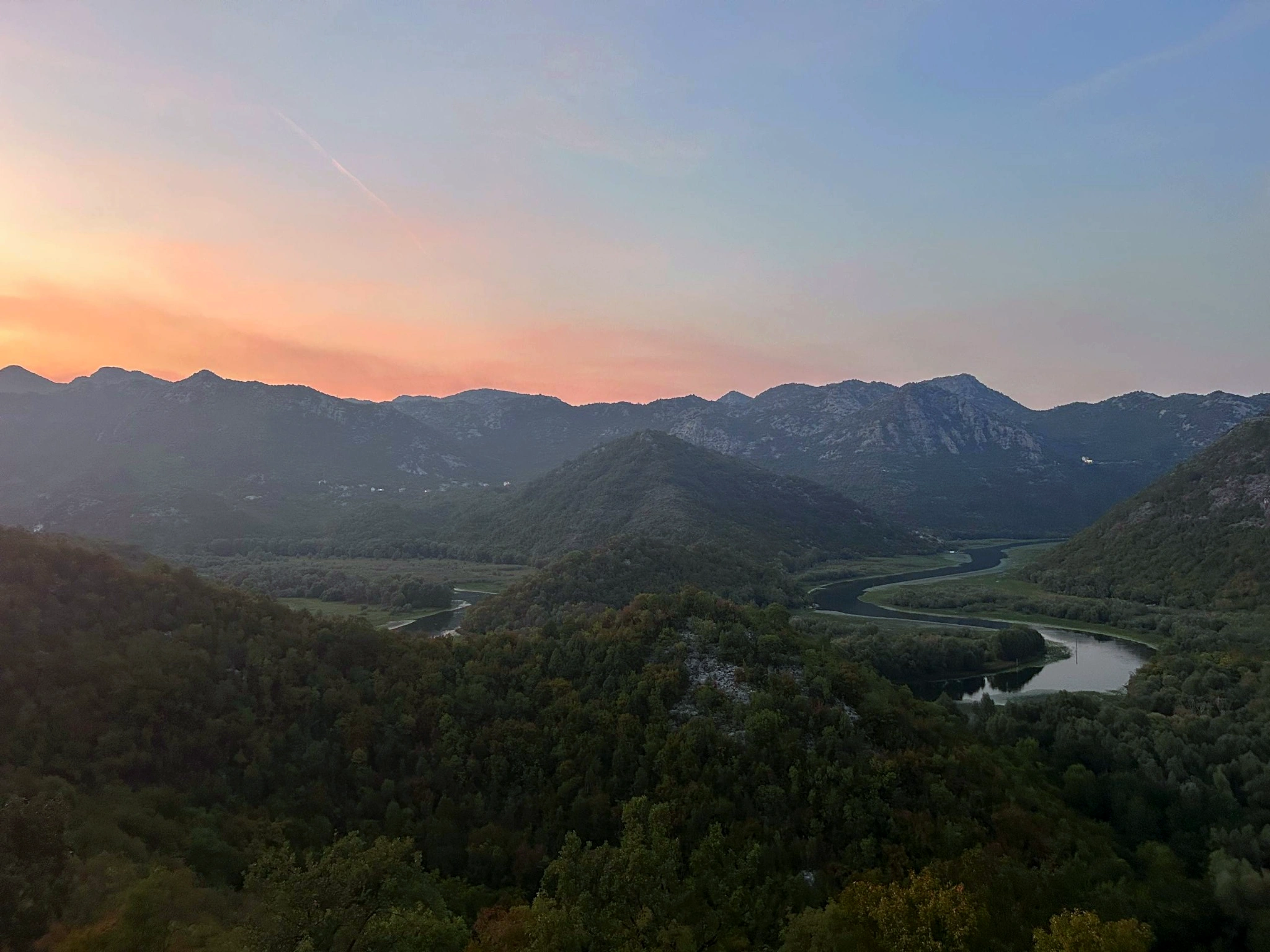
Montenegro is the tiny Adriatic country that packs the mountains, the coast, and the dramatic geography into one extremely small package.
The Bay of Kotor is fjord-like, surrounded by 1,800-meter peaks rising directly from the water — Kotor itself is the UNESCO walled medieval town, Perast the tiny baroque village across the bay.
Budva has the beaches and the summer party scene; Sveti Stefan is the iconic peninsula village turned private resort. Inland: Durmitor for hiking, the Tara Canyon for rafting (Europe's deepest canyon), Lake Skadar for the bird life and small vineyards.
Our Montenegro coverage focuses on Kotor and Perast, the boutique stays worth booking, and how to navigate a country where the cruise ships arrive daily in summer.
Quick facts · Live right now
Montenegro at a glance
CapitalPodgorica
LanguageMontenegrin
CurrencyEUR
Time zoneCET (UTC+1)
Plug typeType C/F (230V)
Weather in Podgorica
via Open-Meteo · updated every 6 hours
Currency exchange · EUR
via European Central Bank · updated daily
Cities to explore
Where to go in Montenegro
Kotor
UNESCO walled medieval town on Europe's most dramatic bay
Budva
Montenegro's beach capital, Old Town on a peninsula, lively summer
Perast
Tiny baroque village across the bay from Kotor — boat trips to island churches
Durmitor
Montenegro's national park — Tara Canyon, hiking, glacial lakes
Stories · updated as we publish
Latest from Montenegro
All 5 stories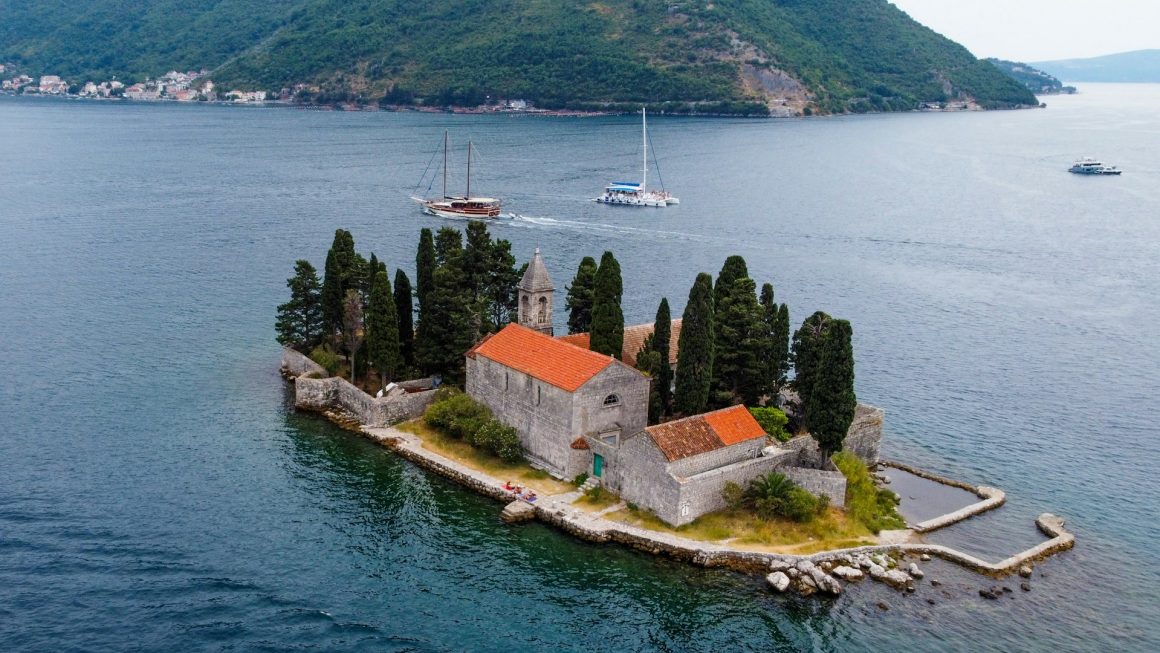
Recommended in our stories
Places in Montenegro we recommend and like

Restaurant · Kotor
When you arrive in Morinj, a small village on the edge of the Bay of Kotor, it’s hard to guess that one of Montenegro’s most atmospheric restaurants hides here.
In Locals Insider’s story · The Best Seafood Restaurants in Montenegro, According to Locals: Oysters at an Old Mill and Sea Bass Fresh from the Fishermen
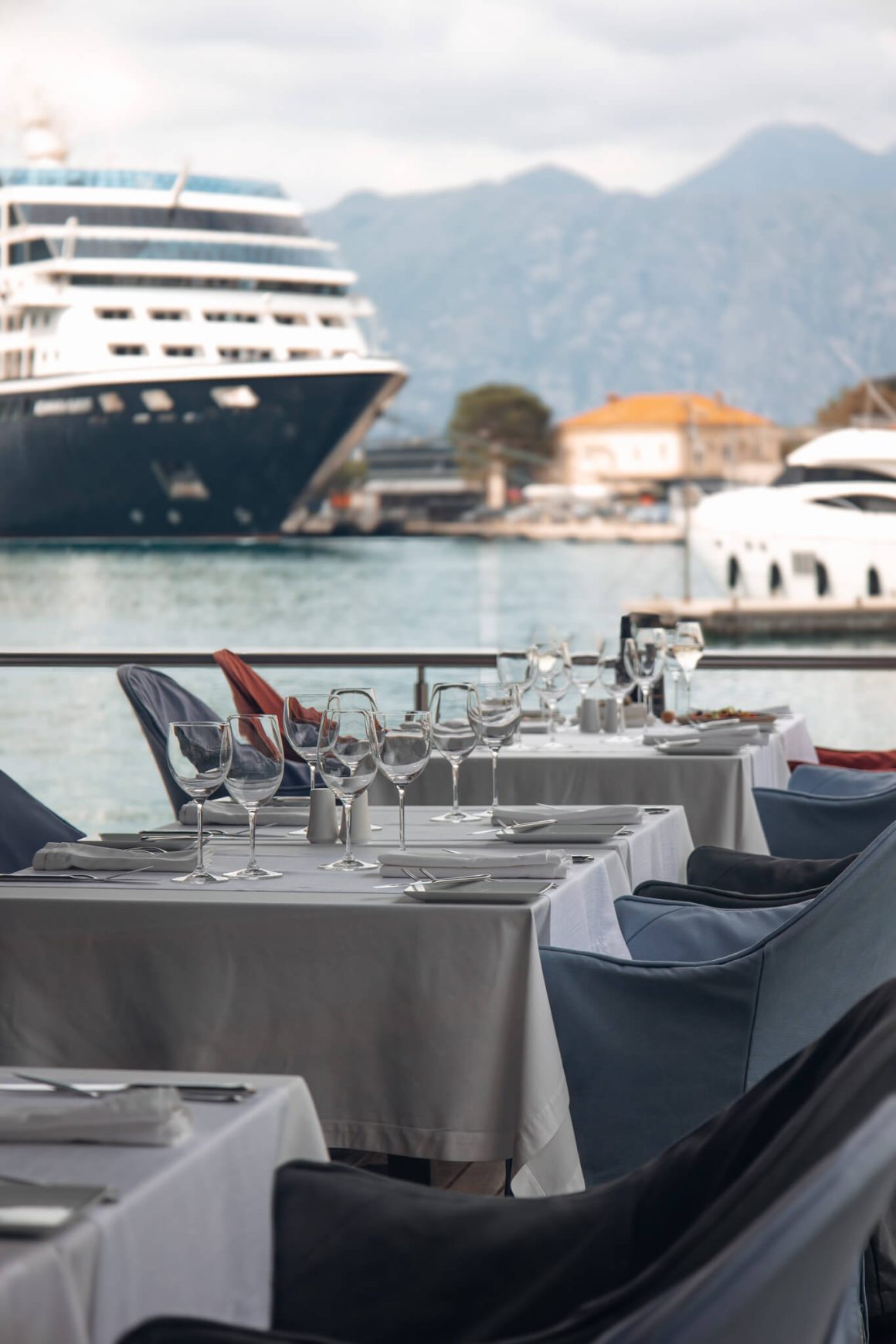
Restaurant · Kotor
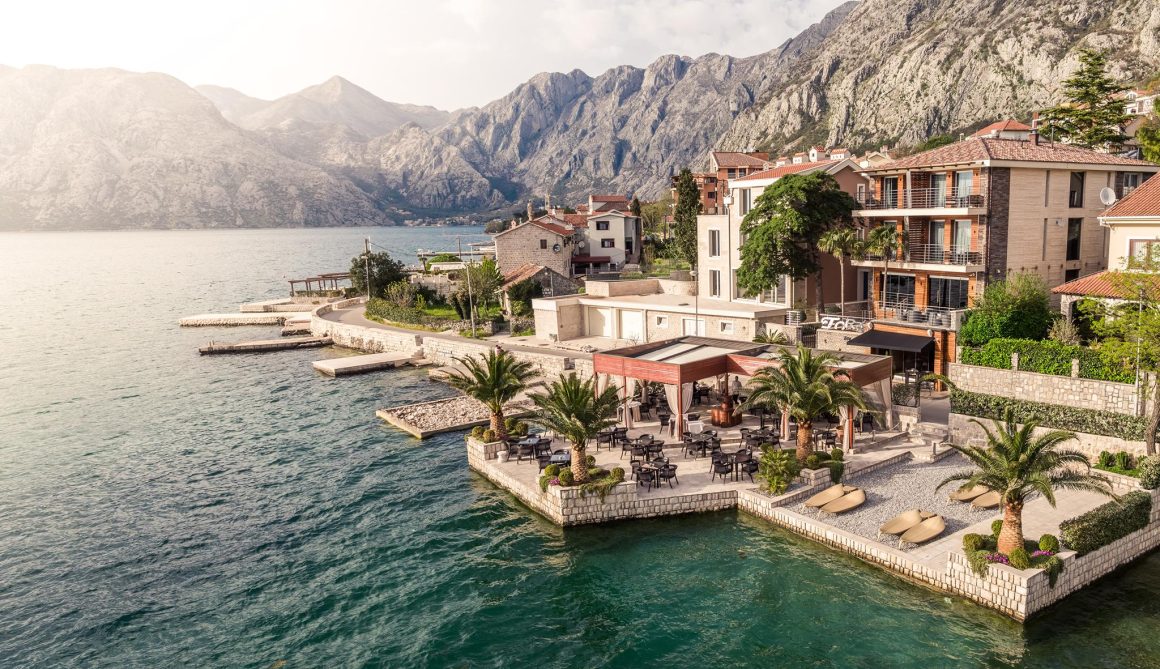
An elegant seafood menu, a remarkable wine list, and a terrace with sweeping views of the Bay of Kotor—that’s what sets Galion apart.
In Locals Insider’s story · The Best Seafood Restaurants in Montenegro, According to Locals: Oysters at an Old Mill and Sea Bass Fresh from the Fishermen

Restaurant · Budva
This isn’t a restaurant in the usual sense, but a cluster of fishermen’s cottages right on the shore.
In Locals Insider’s story · The Best Seafood Restaurants in Montenegro, According to Locals: Oysters at an Old Mill and Sea Bass Fresh from the Fishermen
Don’t miss
Don’t miss in Montenegro
Must visit · Bay of Kotor
Boat trip to Our Lady of the Rocks (Gospa od Škrpjela)
Tiny artificial island in Kotor Bay — built by local sailors over centuries by throwing rocks into the sea after every safe return. The Baroque church on top has 68 paintings of Kotor Bay ships. Boats leave from Perast every 30 minutes.
€5 round-trip boat from Perast harbor; €3 church entry. 90-minute total excursion.
UNESCO mountains + canyon
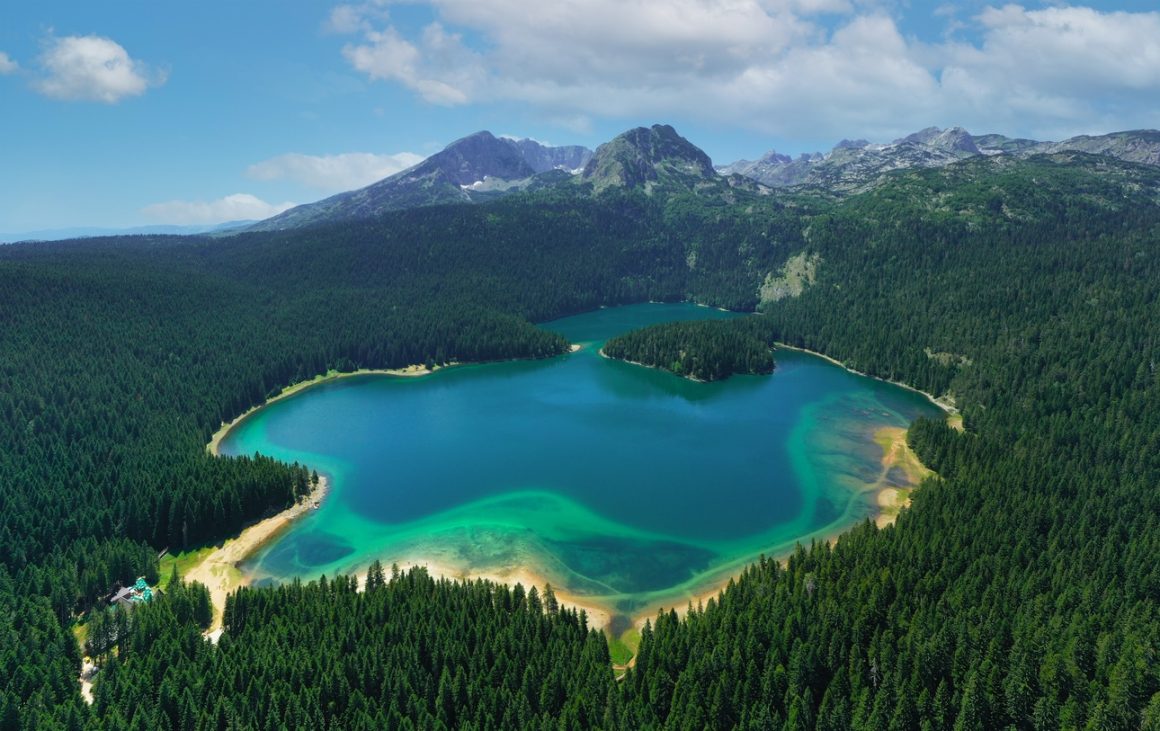
Durmitor National Park & Tara Canyon
Europe's deepest canyon (Tara River, 1,300m at its deepest), with rafting trips through it. Surrounded by Durmitor's 48 peaks above 2,000m, glacial lakes, and the most dramatic alpine landscape in the Balkans.
3 hours from Kotor by car. Rafting season May-September.
Experiences
Experiences in Montenegro locals love
- Climb Kotor's medieval walls at sunrise — 1,350 steps, views over the bay
- Boat trip to Our Lady of the Rocks — the artificial-island church off Perast
- Rafting the Tara Canyon — Europe's deepest, second-deepest in the world
- Sveti Stefan view from above — the iconic peninsula village (now a private resort)
- Lake Skadar boat trip — pelican colonies, monasteries, vineyard villages
Insider tips
Insider tips for Montenegro
- Stay in Old Town Kotor or Perast rather than Budva — the magic is in the bay, not the beach
- Konoba Catovica Mlini between Kotor and Tivat — old water-mill restaurant locals defend
- The Lovćen mountain road — switchbacks from Kotor up to the mausoleum, white-knuckle views
- Cetinje is the old royal capital — 30 minutes inland, museums, no tourists
- Cruise ships dock in Kotor — visit before 9am or after 5pm to dodge them
Our picks
Montenegro’s best restaurants, hotels and museums
Checked against Michelin, the venue or Google.
Galion
Seafood
$$$ (€50-100 per person)
Waterfront seafood under Kotor's Old Town walls — black risotto with cuttlefish ink, grilled Adriatic fish. The terrace view to the medieval city walls is the destination.
Konoba Ćatovića Mlini
Traditional
$$$ (€45-90 per person)
Old water-mill converted to traditional Montenegrin konoba between Kotor and Tivat — slow-cooked lamb, fresh trout from the stream that powers the mill. Family-run for generations.
Hotel Astoria Restaurant
Traditional
$$ (€30-60 per person)
Kotor Old Town family-run institution — traditional Montenegrin dishes (pršut, kajmak, peka), rooftop dining over the medieval streets.
Casa del Mare Restaurant
New 2026
$$$ (€60-110 per person)
Modern Mediterranean by chef Davor Pavkovic on Boka Bay — the seafood tasting menu, sunset terrace dining. Opened in the boutique Casa del Mare hotel.
Aman Sveti Stefan
Luxury
€2,500-8,000
Aman's most spectacular property — an entire 15th-century fortified fishing village on a peninsula, converted to a single hotel. 50 stone cottages, three restaurants, the famous pink-sand beach below.
Regent Porto Montenegro
Luxury
€450-1,400
Five-star in the Porto Montenegro yacht marina — Mediterranean modern Renaissance design, three pools, walking distance to the yacht-spotting promenade.
Hotel Forza Mare
Boutique
€350-900
11-room boutique just outside Kotor Old Town — each room themed after a continent (Africa, India, Japan, etc.), the seafront infinity pool with Old Town views, in-house Japanese restaurant.
Casa del Mare Hotel
New 2026
€200-500
Small Boka Bay boutique opened 2019, refreshed 2024 — three locations along the bay (Capitano, Pietra, Amfora) each with own personality. The hidden pool is the find.
Maritime Museum of Montenegro (Pomorski muzej)
Naval & seafaring history
Inside the Grgurina Baroque palace in Kotor's Old Town — three floors covering Boka Bay's seafaring tradition. The famous Captain's table dating room is here.
Njegoš Mausoleum
National monument
Atop Mount Lovćen (1,657m) — mausoleum of Petar II Petrović-Njegoš, Montenegro's national poet-prince-bishop. Designed by Ivan Meštrović. The 461-step approach is a pilgrimage.
On the world lists
Editor’s picks for Montenegro
A few additions worth knowing about beyond Sveti Stefan:
Aman Sveti Stefan
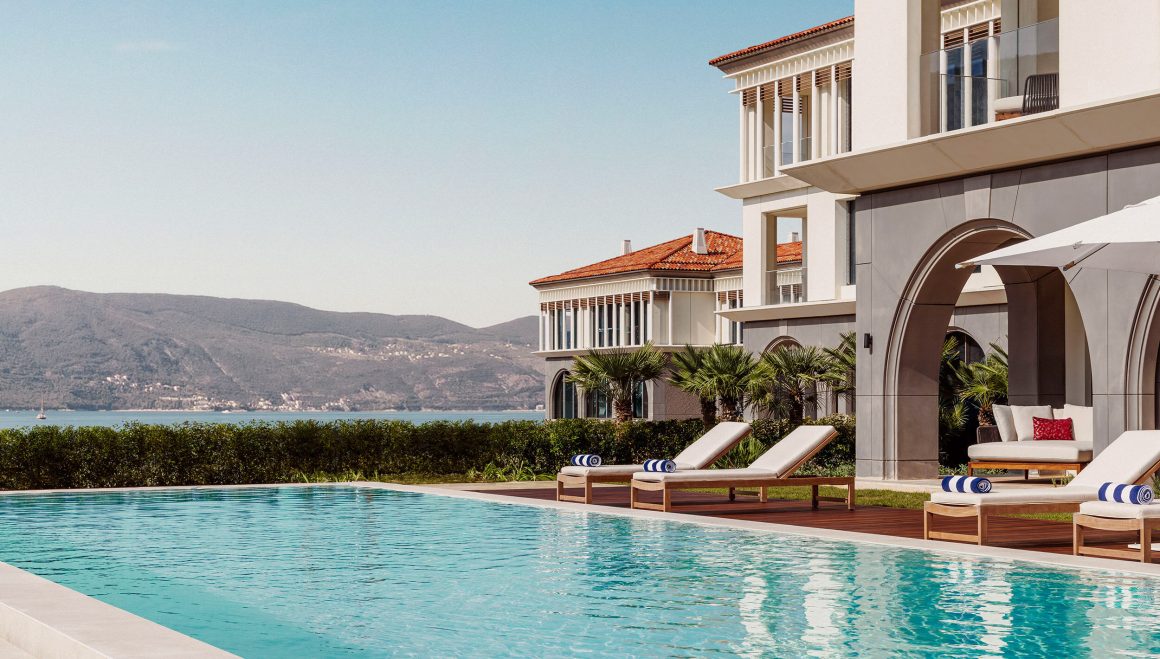
The fortified island village just off the coast, restored as an Aman — reopened after a closure dispute and remains the country's icon.One&Only Portonovi
Boka Bay's anchor luxury resort — the only Espace Chenot wellness center in the Mediterranean.Mamula Island Hotel
An island fortress turned hotel — opened 2023 with 32 suites carved into a 19th-century military fort.Restaurant Conte, Perast
Boka Bay seafood beside the Church of St Nicholas — impeccable buzara and grilled local fish.Sail Boka Bay by private yacht
With a stop at Our Lady of the Rocks — arranged from Tivat or Kotor.
Through the year
Montenegro festivals and what’s on
February or August
Kotor Carnival
Twice-yearly carnival — the August summer version is the party, February is more traditional
July
Sea Dance Festival
Montenegro's biggest music festival on Buljarica beach south of Budva
February
Mimosa Festival
Herceg Novi celebrates the mimosa bloom with parades and yellow flowers everywhere
Need a visa for Montenegro?
Many travelers can enter Montenegro visa-free, but it depends on your passport. Check your specific requirements:
Check requirements for your passport
Powered by evisas.com · We'll open your nationality-specific requirements page in a new tab.
Partner link — Locals Insider may receive a small commission at no extra cost to you. Always confirm the latest requirements with the official embassy.
Questions
Montenegro FAQ
Kotor or Budva — which Montenegro base is right for me?
They're only 25km apart but feel like different countries. Kotor is the dramatic one — a UNESCO-listed medieval old town wedged between the Bay of Kotor's almost-fjord walls, cobbled lanes, cathedral, and the brutal 1,350-step climb to San Giovanni Fortress for the iconic bay view.
The bay's water is calm and shallow rather than swimmable beach.
Stay in Kotor for atmosphere, history, day-tripping by boat to Perast and Our Lady of the Rocks. Budva is the beach one — a small old town surrounded by 12km of beaches (over 30 of them), serious nightlife, and the iconic Sveti Stefan island view from Mogren Beach.
Stay in Budva for swimming, sun, and parties. With a week, do both: Kotor for 3–4 nights, then move down to Budva for 2–3 days of beach.
Where should I hike in Montenegro?
Durmitor National Park, a UNESCO biosphere in the north — glacial lakes, ancient black pine forest, and the Tara Canyon (1,300m deep, Europe's deepest). Easy: the loop around Crno Jezero (Black Lake), an hour, mostly flat. Serious: Bobotov Kuk, the highest peak at 2,523m, a full day of scrambling.
Base in Žabljak (€35–60/night for guesthouses). For coastal hiking, Vrmac Ridge gives the best photo of Kotor Bay, and Lovćen Mountain with the Njegoš Mausoleum at its peak is reachable by cable car from Kotor.
Tara Canyon also has serious white-water rafting — Class III–IV in spring, gentler in summer. Best months for mountain hiking: June through September; trails are snow-covered the rest of the year.
When is the best time to visit Montenegro?
Mid-May to mid-June and September to early October are the sweet spots — beach water 21–24°C, less crowded than peak, hotel prices noticeably lower. Beach season officially runs mid-May to early October, with water peaking at 26°C in August.
July and August deliver crowds, full restaurants, doubled hotel prices, and 32°C+ heat in Kotor. Winter is unique: empty coast (most beach hotels close November–April), but ski season at Durmitor's Savin Kuk runs December to March (€25/day pass).
Cruise ships pour into Kotor in summer mornings — the old town empties dramatically after 5pm when they leave, which is also when the light is best.
Do I need a visa to visit Montenegro?
Montenegro is not part of the EU or Schengen, but its visa policy is friendly. Citizens of the EU/EEA, UK, US, Canada, Australia, Japan, and around 100 other countries can enter visa-free for up to 90 days. Russian citizens can enter visa-free for up to 30 days; longer stays require registration.
A valid Schengen visa, US visa, or UK visa can also be used to enter Montenegro short-term. Passport must be valid for at least 90 days beyond your stay.
Within 24 hours of arrival, you (or your hotel/Airbnb host) must register your address with police (called "bela karta" — most hotels do this automatically; if you stay in Airbnb, ask the host to confirm). Montenegro uses the euro but isn't in the eurozone.
Is Montenegro cheap, or has it caught up with Croatia?
Montenegro is still meaningfully cheaper than Croatia or the Greek islands — particularly outside July and August.
Realistic 2026 daily budgets per person: backpacker (hostel dorms €18–28, konoba meals €6–10, buses) €50–80; mid-range (3-star hotel, restaurants, occasional taxi) €100–160; comfortable (4-star hotel, full restaurant dining, day tours) €200–280.
Coastal hotels in Kotor and Budva are 30–50% cheaper in May, June, and September than in peak summer. Inland (Žabljak, Lake Skadar, Cetinje) is dramatically cheaper than the coast.
Three places to save real money: eat at konoba family restaurants rather than touristy seafront spots, use Blue Line buses between cities (€8 Kotor–Budva), and skip cruise-port souvenir shops.
Capital PodgoricaTime CET (UTC+1)Plugs Type C/F (230V)
Locals Insider
Spotted a mistake? Know a better place?
We check every guide against official sources, but places change. Tell us what’s out of date, or the spot you’d send a friend to.
Tell us about itWant to share your experience about Montenegro? Email us at hello@localsinsider.com.
More countries
Is Montenegro for you?
The Adriatic country that does mountains and coast in one tiny package. The Bay of Kotor is one of Europe's most dramatic — fjord-like, surrounded by 1,800-meter mountains. Budva has the beaches.
Lake Skadar is the largest in the Balkans and a flamingo migration site. Plus the Durmitor mountains for hiking and the country's small-but-improving wine scene.
You’re
The Adriatic Adventurer
Adventure travelers
Couples
Beach travelers
Sailing enthusiasts
Photographers
Walkability7
Safety8
Weather8
Value for money7
LGBTQ+ friendly5
Crowds5
Food scene6
English spoken7
Remote work6
Safety scores reflect UK FCDO & US State Department travel advisories. LGBTQ+ scores reflect Equaldex and ILGA-Europe rankings. Both refreshed quarterly.
Not sure if Montenegro is right for your next trip?We'll compare 53 destinations against your travel style.
Take our country matcher quiz →When to go
Best time to visit Montenegro
10 places on the map
Elsewhere on Locals Insider