


Most of the time, we at Locals Insider don’t book an airport transfer. Uber, Bolt, or a local taxi rank gets the job done in the vast majority of the cities we cover, and there’s rarely a reason to pay a premium for something a ride-hailing app already handles well.
The exception is the city where none of that works. In Athens, with no Uber available, we booked a transfer through Booking.com to be safe — and the car that showed up was just an ordinary taxi, charging more than a regular metered ride would have cost, dressed up as a “transfer” for a markup. It’s the kind of experience that makes you wonder what you’re actually paying for when you book a transfer instead of hailing a cab at the curb.
That is why we talked to Kiwitaxi, a global transfer company operating in more than 100 countries, and asked their CEO, Marie Borisova, to make the case for what a transfer service is supposed to deliver when it’s done right — and why, after 14 years building one, she still believes the driver waiting at arrivals matters more than any app. By the way, Kiwitaxi is, according to the company, the largest rollout of a female-driver option in the private transfer industry. Her answer, in her own words, follows.

Fourteen Years, One Rule That Never Moves
July 2026 marks our 14th year, and through every one of them we’ve held onto one rule that never moves: quality always comes first.
We do grow, but growth here is slow and deliberate rather than fast. Before we open in a new country, we work through every detail first — the logistics of the local airports, the legal requirements, the things that could go wrong before they do. That groundwork is the whole point. It means travelers land somewhere new and don’t have to think about any of it, because we already have.
Istanbul is a good example of why that discipline matters.
A few years ago, after operating under one set of rules for a long time, a new security regulation banned meeting passengers with a name sign at the airport. We had to rebuild our meeting points from scratch and reach every client who’d already been told to expect something different. The same thing happened again this year at Antalya airport.
It’s a reminder that this business rewards patience, not speed. Chasing growth for its own sake never gives a company anything lasting, and it definitely doesn’t give you a great customer experience. Slow, careful growth is what earns a traveler’s trust for the next trip, and the one after that. That’s the real win-win.
As for which cities get the best feedback, it tends to be the places where getting around is genuinely hard for a traveler landing for the first time — no easy taxi, no ride-hailing apps, a system that only makes sense once you already know it. Istanbul is the obvious one. Beyond that, we hear it consistently from travelers arriving in the Middle East, in Bangkok, across Latin America, and in Japan. Those are the places where a smooth pickup matters most, and where it shows just how far the service really reaches.
The Driver Is the First Person You Meet
The driver is the first person a traveler meets in a new country, and that first meeting sets the tone for the whole trip. That’s exactly why I feel we carry real responsibility, and why we work so hard to get that moment right.
We read through feedback on every single ride, and travelers consistently point out how much the conversation with the driver matters to them. It’s not just about being polite. People want to hear about the city, the country, get a recommendation from someone who actually lives there. Our drivers are always glad to share that.
“You won’t find it in any guidebook, but you’ll hear about it in the twenty minutes between the airport and the hotel.”
We hear this play out in small, specific ways all the time. Drivers in Southeast Asia often mention a local market that’s only open one or two nights a week, the kind of thing you won’t find in any guidebook, but you’ll hear about it in the twenty minutes between the airport and the hotel. That’s the kind of detail that stays with a traveler long after the ride is over.
Most of the conversation actually happens before the meeting itself, while a traveler is messaging us to confirm the pickup. But once they’re in the car, the questions tend to be practical, human ones: how long will the ride take, can we stop somewhere on the way at a shop or a currency exchange, where should we go while we’re in town.
There’s small talk too. Drivers get asked about the weather often, and travelers will sometimes double-check who they’re riding with — something like, “So you’re from Kiwitaxi?” — usually right at the meeting point, just to feel sure they’ve found the right car. Then there are the small comfort questions: can I get some water, is it free, can you turn the air conditioning up or down. In Turkey specifically, we get asked about wifi in the car fairly often.
None of these are complicated questions, but they’re the ones that tell you whether a traveler feels looked after or not. Getting the small things right is most of the job.
What Ten Years of Technology Actually Changed
The obvious answer is that technology has made everything faster and easier. You can book in two clicks, pay however you like, reach support any hour of the day, customize the ride a dozen different ways. All of that is true, and we’re proud of it.
But there’s something less obvious that I’ve noticed over the past few years. The more technology advances, the more people seem to crave an actual human being. Real contact. Not just a ride to where they’re going, but someone there to meet them.
That’s exactly why we’ve made a deliberate choice to go against the trend of full automation. Picture a delayed night flight, lost luggage, a traveler who’s tired and turned around in a city they don’t know. At that moment, what they need is a person, not a chatbot. It’s the same with our drivers. We work with people who can read a passenger, who know when someone wants to talk and when they just want quiet.
Each of the tools we use plays its own role, and what matters isn’t the technology itself so much as what it frees us up to focus on. AI mostly helps us behind the scenes. It automates operational work, takes routine tasks off the team’s plate, and adds a lot at the product level. Travelers rarely see this directly, but it’s exactly what lets our people spend their time where it actually counts: on the details of the trip itself.
“The more technology advances, the more people seem to crave an actual human being.”
This year, for the first time, we moved to partial automation in support. Our bot only handles questions that genuinely don’t need a quick human response, things like general questions about the service or our terms. Anything urgent still goes straight to a person.
We use translation tools specifically where we don’t yet have full language coverage ourselves. When you operate in more than 100 countries, there will always be regions where local language support needs a bit of extra help. For us that’s a practical necessity, not a replacement for our drivers or support team.
Real-time traffic data is probably the most directly useful tool for travelers. We use it to update information as it happens. If there’s a strike somewhere in Europe, or traffic is disrupted, travelers see that on our site and know what to expect instead of running into it unprepared. We also forecast average travel time, which matters more than people might think, especially for business travelers whose day is often planned down to the minute and who need to know exactly how long it will take to get to a conference.
What the Booking Data Actually Shows
One of the trends I find most interesting right now is the steady rise in demand from solo women travelers. Our Women Driving Women option, which lets travelers choose a female driver, has been live in more than 25 countries since late 2025, and demand for it keeps growing organically, without any aggressive marketing push from our side.
The geography of that growth is interesting too. Over the past period we’ve entered markets that weren’t considered obvious for the private transfer industry not long ago: Saudi Arabia, Australia, and countries across Africa. Each of these markets is growing for its own reasons. In some, it’s business travel. In others, it’s a rising interest in destinations that are less traditionally touristy.
If You’re Headed to Vilnius, Here’s My Own List
I’m based in Vilnius, Lithuania, and there’s so much I’d love to talk about here. First of all, come see the Baltic states for yourselves. They’re a seriously underrated place to visit.
Vilnius is a beautiful city, the kind that makes you slow down without really trying, wander the old town, and just take it in. I’d recommend seeing it in both seasons if you can. Summer brings open terraces, so much greenery, and parks everywhere. Christmas is a must, when the city turns into something out of a storybook. Walking the old streets with a hot mulled wine in hand, taking in the decorations, is something everyone should do at least once.

Here are a few spots, straight from my own list:
- Užupis — The neighborhood that declared itself its own republic and put its constitution on a mirror. Walk through it, stop at Not Only Coffee on Užupio g. 13, and let the morning slip away.
- Balzac — Savičiaus g. 7. French onion soup on one of the prettiest streets in the old town. Go for dinner and stay longer than you meant to.
- Paupio Turgus — Aukštaičių g. 7. An entire food hall under one roof. Bring someone who can never decide what to eat.
- BOKA — Verkių g. 31A. A bit north of the center, but worth the trip. The cheesecake alone is reason enough. Trust me on this one.
What is Kiwitaxi?
Kiwitaxi is an international airport transfer booking service founded in 2012 and headquartered in Vilnius, Lithuania. The company now operates in more than 100 countries, connecting travelers with licensed local drivers for fixed-price, pre-booked rides between airports, hotels, and city centers.
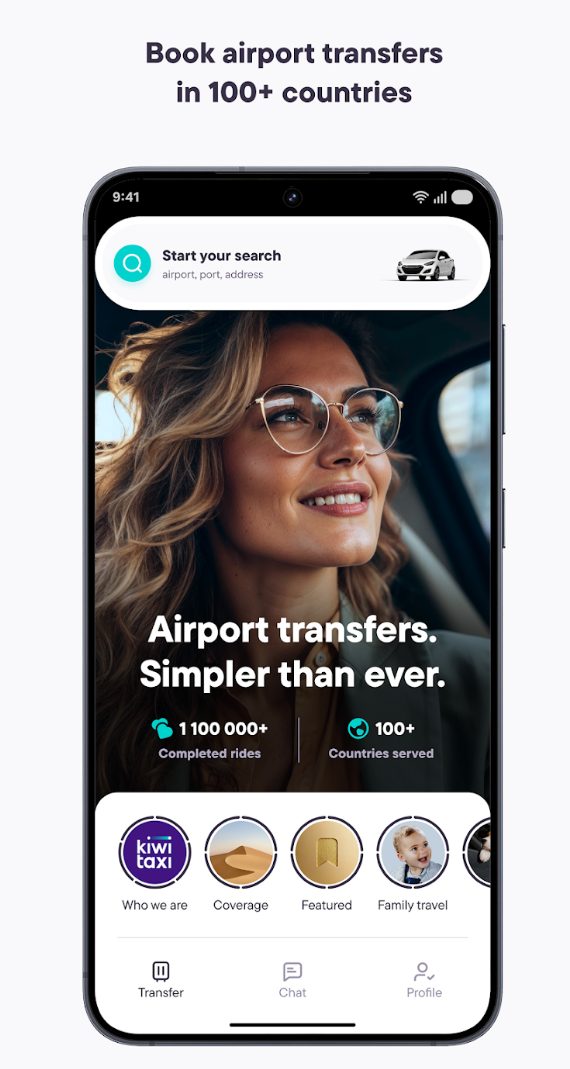
According to its own figures, Kiwitaxi has served more than 1.5 million travelers to date. It also offers a Women Driving Women option, letting travelers request a female driver, currently available in more than 25 countries.
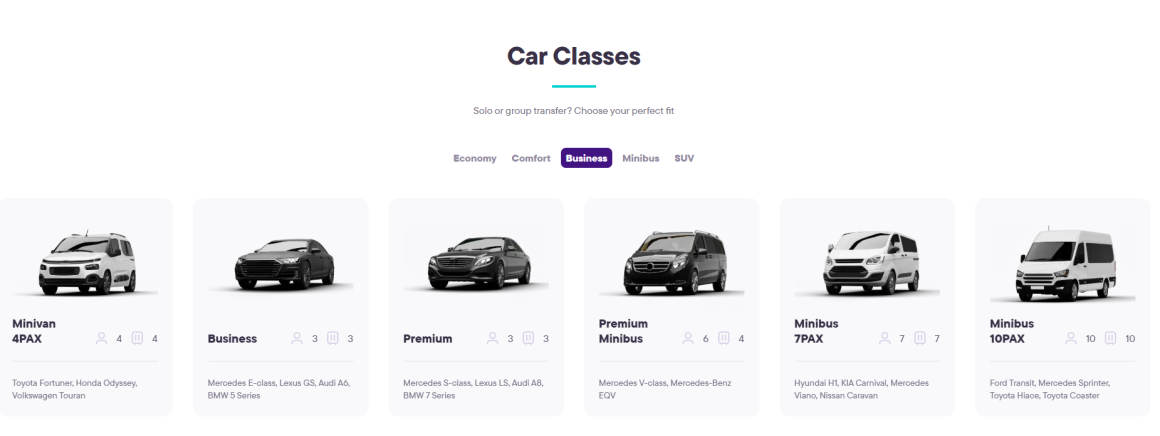
What Kiwitaxi Actually Costs: We Checked the App
Locals Insider tested the Kiwitaxi app ourselves to see what it actually costs. A ride from JFK Airport to a Equinox Hotel New York priced out at $110 for Economy and $116 for Comfort. A transfer from Malta’s airport to an address in Santa Marija came in at $39 Economy and $52 Comfort.
In most cases, that’s a bit more than you’d pay flagging a local taxi at the curb. What you’re paying for isn’t a cheaper ride — it’s a driver already waiting for you, holding a sign with your name on it, before you’ve even cleared baggage claim.
If you’re traveling with family or meeting a guest and want that handled without any guesswork on either end, that’s the case for using Kiwitaxi over a regular taxi.
Here is our guide to the Kiwitaxi first-order discount of 7%. Book transfer here!