


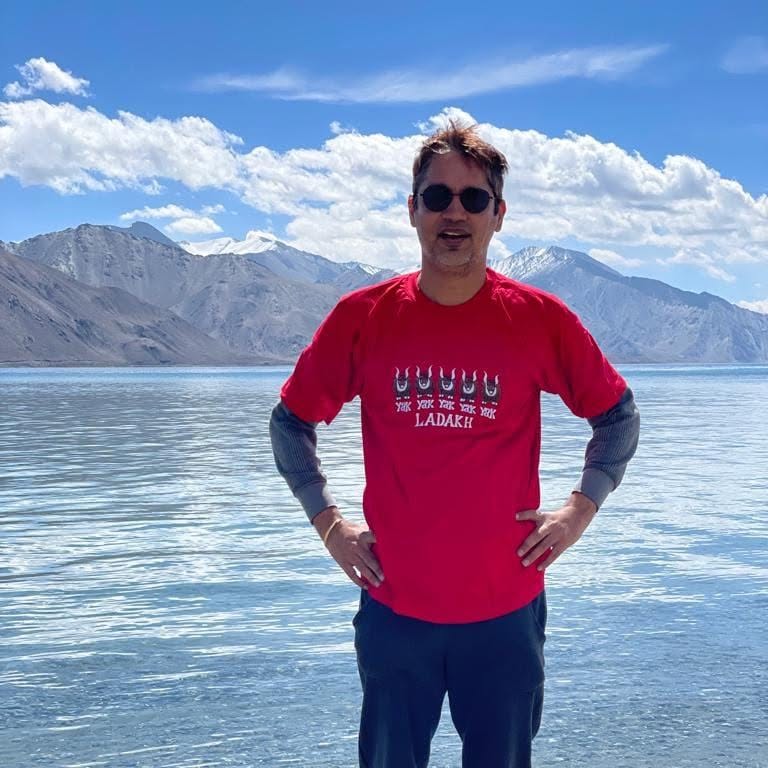
Sudhir Sundrani is the founder of G8Trip, an AI travel planner he started in Bengaluru after eighteen years building digital products at ShareChat, Dailyhunt, and Vizury.
He calls himself a DIY traveler first and a founder second — the kind of person who tests his own product live, mid-trip, somewhere off the coast of Bali.
We asked him two things. What’s G8Trip doing differently in a category that already has a dozen AI trip planners chasing the same idea? And what, in his view, is AI actually changing about the way the rest of us travel? Then we asked him the harder question: pick three Indias, for three kinds of traveler, from the inside. Below, in his own words.
G8Trip is an AI travel planner I started about eighteen months ago. The name is shorthand for “great trip” — we wanted something honest. The planning side is free; we make a small commission on the down-funnel actions — flights, hotels, visas, experiences — when people book through us or one of the partners we recommend. The mission statement is one line: become a handy tool for DIY trip planners.
That’s it. That’s what we’re solving for.
You’ll have noticed we are not the only AI trip planner around, and I get asked, often, what we’re doing differently. I’ll answer in two parts.
Against ChatGPT
There’s a real difference between a generalist and a specialist. ChatGPT is the friend who’s been to London once and is happy to tell you what to do there. We’re trying to be the destination expert who actually lives there. We’re fine-tuned only for travel, and deeply integrated into the down-funnel actions — booking flights, hotels, visas, experiences. The proof of the pudding is in the taste.
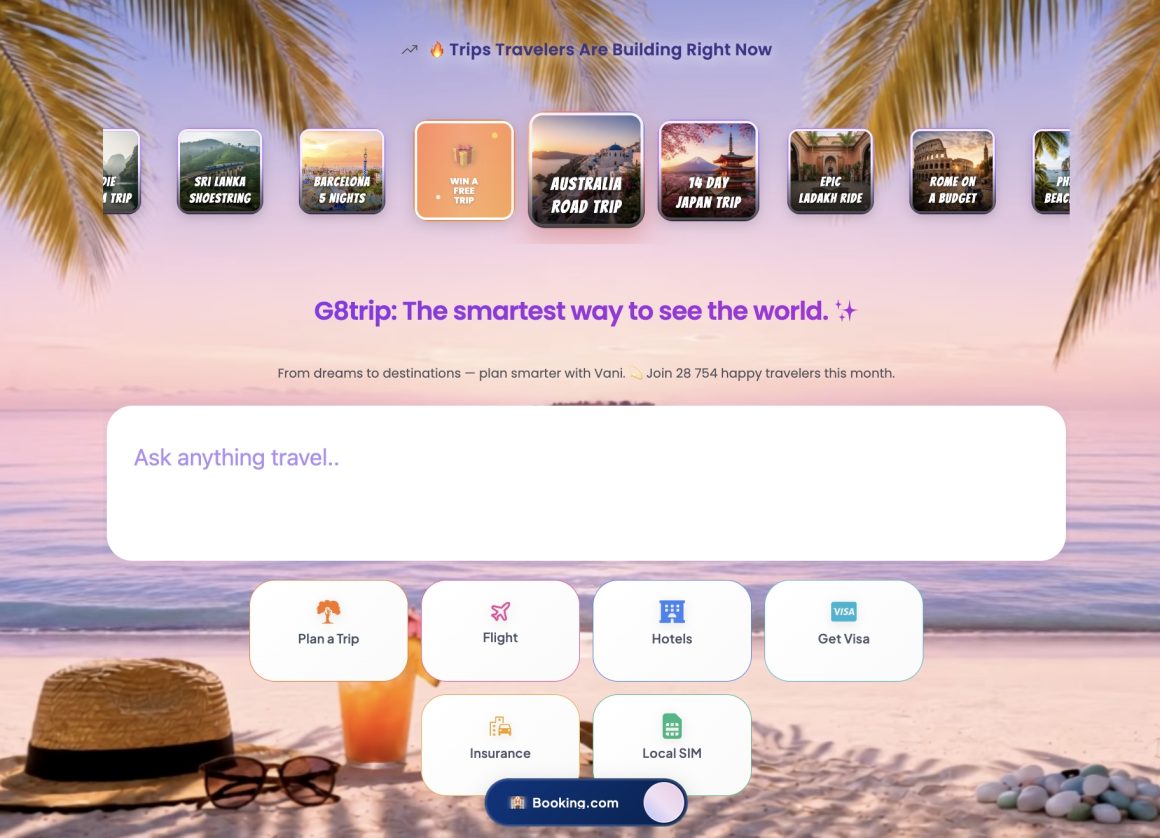
I’d rather you planned a trip on G8Trip than took my word for it; you’ll see a marked difference in the quality of the response, with actionable steps sitting right alongside the advice. It’s the difference between asking a friend how to plan a London trip and asking a destination-expert travel agent how to experience London given your specific taste.
Against the wider AI trip planner category
Honestly, there’s a reason no one has a blockbuster B2C AI app on the market yet. AI is a smart idiot — it parrots the smartest and the stupidest things in one sentence without understanding either. Many startups, including ours, are putting in their best effort to tame it. We currently believe the best AI trip planner experience involves keeping a human in the loop.
One of our most popular features is collaborative planning — you can plan with your friends in something that feels like a WhatsApp group, with the AI as a fly on the wall, helping where useful and staying quiet where not. We think we’ve done a good job of it. The jury, on the wider feature set, is still out.
Editor’s note: For travelers comparing the rest of the field, see Locals Insider’s 2026 round-up of AI travel planning tools.
What is AI actually changing about travel?
In my personal experience, the biggest thing is upper-funnel discovery. The Google-searching that used to eat hours before a trip — and sometimes hours during a trip — is collapsing into a single question, asked of ChatGPT or, on a good day, of a vertical specialist trip planner that’s earned a bit of credibility. Even on a trip where time is genuinely of the essence, getting to the right information faster is just very useful.
A small example. I recently went to Bali. We had to hop from one island to another, and there were multiple entry ports. Pre-AI, this would have been a nightmare — multiple Reddit threads, an outdated blog post, a patchy ferry company website.
With AI (I used G8Trip, of course), the tool figured out my current location, suggested the nearest port to board from, and gave me the pros and cons of ferrying into each of the possible landing ports. Our actual agenda was to try scuba, so it pointed me at the best dive spot and the most convenient port to land at for it. The whole question, answered, in a few minutes.
Editor’s note: For everyday navigation once you’re on the ground, Locals Insider’s piece on Google Maps alternatives is a useful starting point.
Three Indias, for three kinds of first-time visitor. Where I’d send you, where I’d book, what to eat.
If you’re coming for wellness and nature: Rishikesh
For someone who wants wellness and nature, I’d send you to Rishikesh. It’s the kind of place where you stay at an ashram for a genuinely local, one-of-its-kind experience — the whole town is vegetarian only and focuses on spirituality, which sets the rhythm of everything you do there.
My recommendation is to stay at Parmarth Niketan and do a three-day course that revolves around yoga, meditation, and healthy eating. For cheat-day meals, Chotiwala is the famous local restaurant — try the chole bhature and the lassi. You don’t get that taste anywhere else in India.
Parmarth Niketan Ashram · Main Market Road, near Ram Jhula, Swarg Ashram, Rishikesh, Uttarakhand 249304
Chotiwala · Swarg Ashram, Rishikesh, Uttarakhand 249304
For an alternative stay, I’d also recommend Glampers Resort — we were in Rishikesh for three days and then moved here. It’s about five kilometers from the center, very peaceful, with natural surroundings. Rent a two-wheeler for the best way to get around this small town and explore the cafés. For unique local cuisine, try Om Shanti Shanti Cafe.
Glampers Resort · Rattapani, Neelkanth Temple Rd, Rishikesh, Uttarakhand 249302
If you want the big-city vibe: Kochi
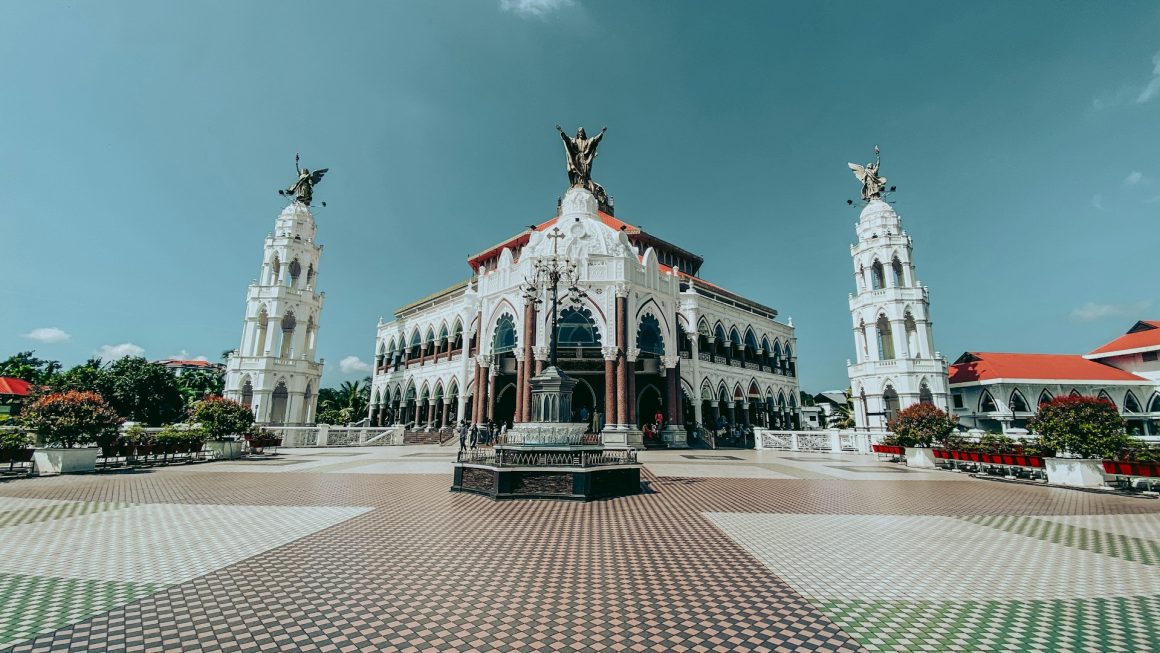
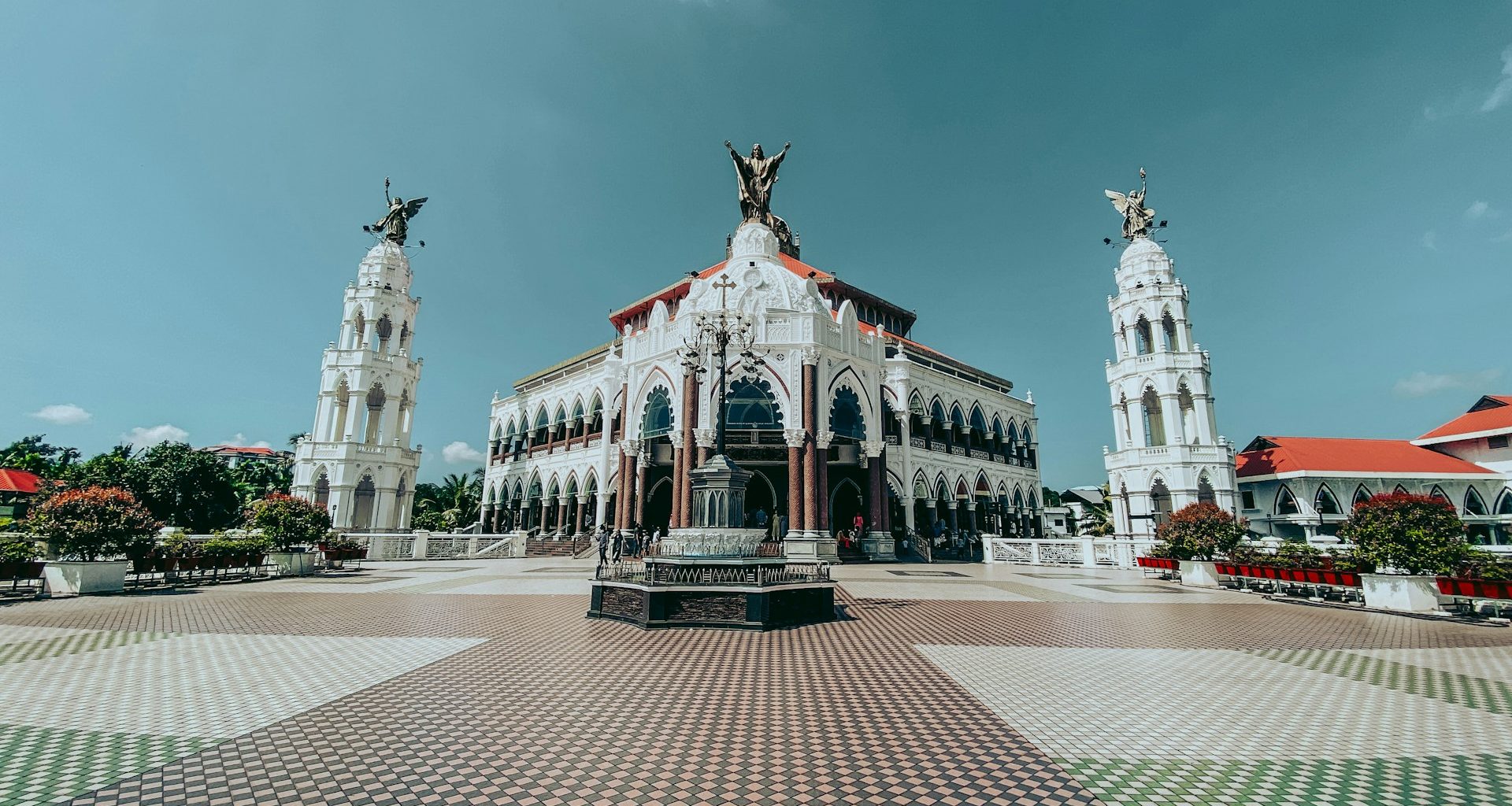
If you want a big-city traveler experience, try Kochi. It’s the capital of India’s southernmost state, Kerala, and it has a distinct cosmopolitan flavor with one important advantage over the obvious alternatives: the traffic is way better than in Delhi, Mumbai, or Bengaluru.
Because Kerala is so frequently visited by tourists from across India and from abroad, Kochi has fun tourist vibes throughout and is filled with restaurants serving the best of seafood. The absolute must-try is karimeen — a steamed fish flavored in local spices and wrapped in banana leaves.
For the stay, head south to Marari Beach Paradise. The beach right outside was so clean and pleasant for walking around — which I don’t say lightly. And there’s a small market just outside the property that’s worth an evening of exploring.
Marari Beach Paradise · Thayil Beach Rd., Pollathai P.O., Mararikulam, Kerala 688523 · +91 90487 94776
Editor’s note: If you keep going down the coast after Kerala, Locals Insider’s India surf guide covers the small fishing villages further south, where the swell turns surfable.
If you’re coming for history and culture: Jodhpur
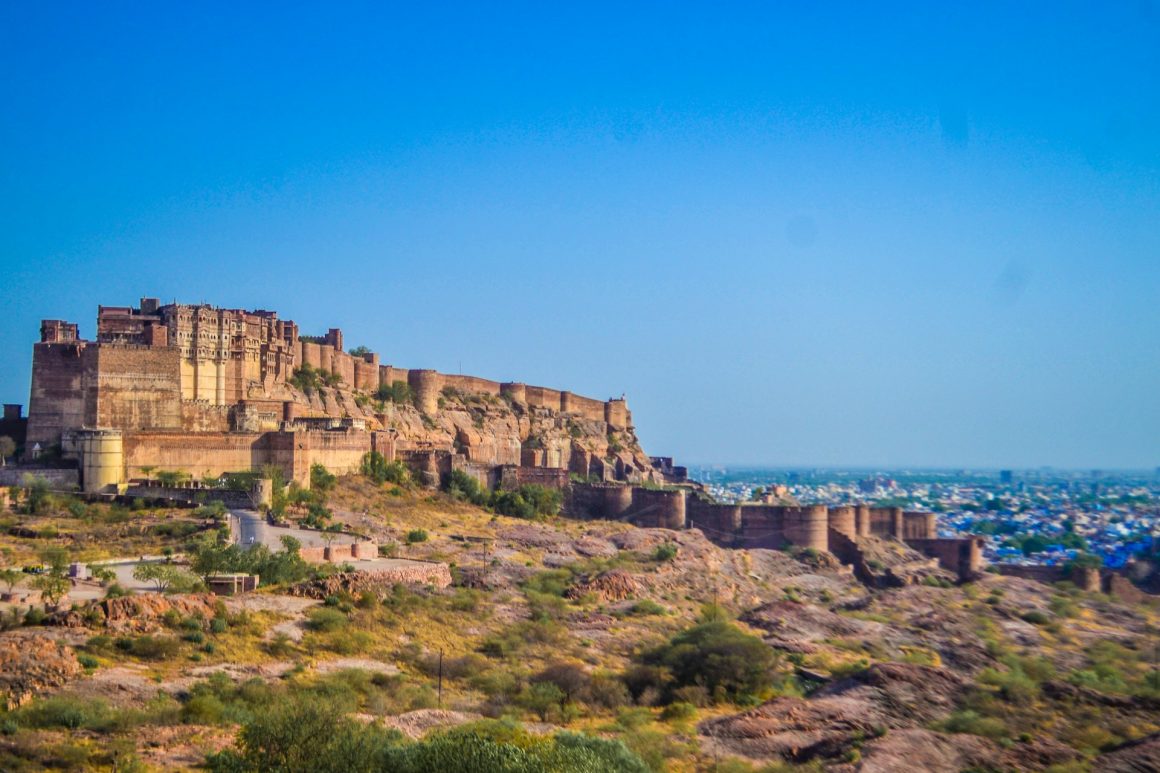
For culture and history, I’d send you to Jodhpur in Rajasthan. The thing to see — and to stay in — is the havelis. Think of these as the houses of the who’s-who of the region from about three hundred years back. A lot of them have been converted, in the last couple of decades, into boutique hotels, and staying in one gives you a genuine time-travel-to-the-past experience.
For dinner, three things, in this order:
- Pyaaz kachori (veg) — Jodhpur’s specific contribution to Indian street food
- Daal baati (veg) — the local Rajasthani classic
- Laal maas (mutton) — the defining red, chili-driven Rajasthani curry. Not for the polite-about-spice.
Editor’s note: Sudhir’s three Indias are deliberately about ashram, beach, and table — but Jodhpur’s Mehrangarh Fort looms over the haveli quarter and most travelers spend half a day inside it. Sodagaran Mohalla, Jodhpur, Rajasthan 342001 · +91 291 254 8790.
And on the haveli aesthetic itself, see Locals Insider’s piece on hotels that are more than an Instagram backdrop.
That’s where I’d send a first-timer. Wellness in Rishikesh, the city in Kochi, history in Jodhpur. Three Indias, deliberately spread apart, because trying to do all of India in one trip is the most common mistake first-timers make. The trip is still great. It just doesn’t have to be that inefficient.
If you’d like to test what an AI travel planner can actually do with any of the above, G8Trip is where I’d suggest you start.
Sudhir Sundrani is the founder of G8Trip, an AI travel planner. Before that he spent eighteen years building digital products at ShareChat, Dailyhunt, and Vizury, with an IIT Kanpur education in the background. He’s traveled to 15+ countries — most recently Bali, where he tested his own product live, mid-trip. Lives in Bengaluru. Connect on LinkedIn.