Portugal had its biggest tourism year on record in 2025 — 32.5 million guests, 82.1 million overnight stays, with tourism receipts reaching €29.1 billion, a 5% increase on 2024, according to the Bank of Portugal and INE. But the more interesting number is buried in the regional breakdown.
The headline destinations (Lisbon, the Algarve) grew modestly, while off-radar Portuguese islands with golden sands like Porto Santo gained some interest. The corners did the heavy lifting: the Setúbal Peninsula — which includes Comporta — was up 17.3%, the Azores 15%, the Alentejo 10.7%, and rural tourism overall posted the strongest growth of any accommodation category in Q2 2025, up 13.1%. Translation: where the country’s quietest, lowest-density, most design-led hotels happen to live.
This tracks with what’s happening everywhere else. The Global Wellness Institute calls privacy “the new status signal” and notes that travelers are now prioritizing low-density environments, limited-access settings and experiences that don’t feel crowded or overexposed. Hilton’s 2026 trends report has given it a name — hushpitality (or, as we call it, calmodernism).

Over the past year, travel publications around the world have documented the same shift: travelers are increasingly choosing small-scale, design-focused properties, private guides, secluded nature experiences, and authentic local culture over large resorts and conspicuous displays of wealth.
The global wellness tourism market is projected to surpass one trillion dollars in 2026, and what’s interesting is what the spending is on: sleep, longevity, stress regulation, nature immersion — not the public “wellness theater” of the last decade.
Portugal — quietly, without anyone particularly meaning to — has been ahead of this trend for about a decade. It started in Comporta, that hour-south-of-Lisbon stretch of pine, rice paddy, and Atlantic dune that the Portuguese establishment, then the European fashion set, then everyone else fell for in succession.
The fishermen’s huts that gave the region its visual vocabulary became the foundation of a new design language: weathered timbers and thatch, reinterpreted by architects like Manuel Aires Mateus and José Alberto Charrua and a small army of owners who decided “luxury” could come without the gold-leaf ostentation Portugal had been quietly resisting for years anyway. What started as a Comporta moment is now a country-wide wave.
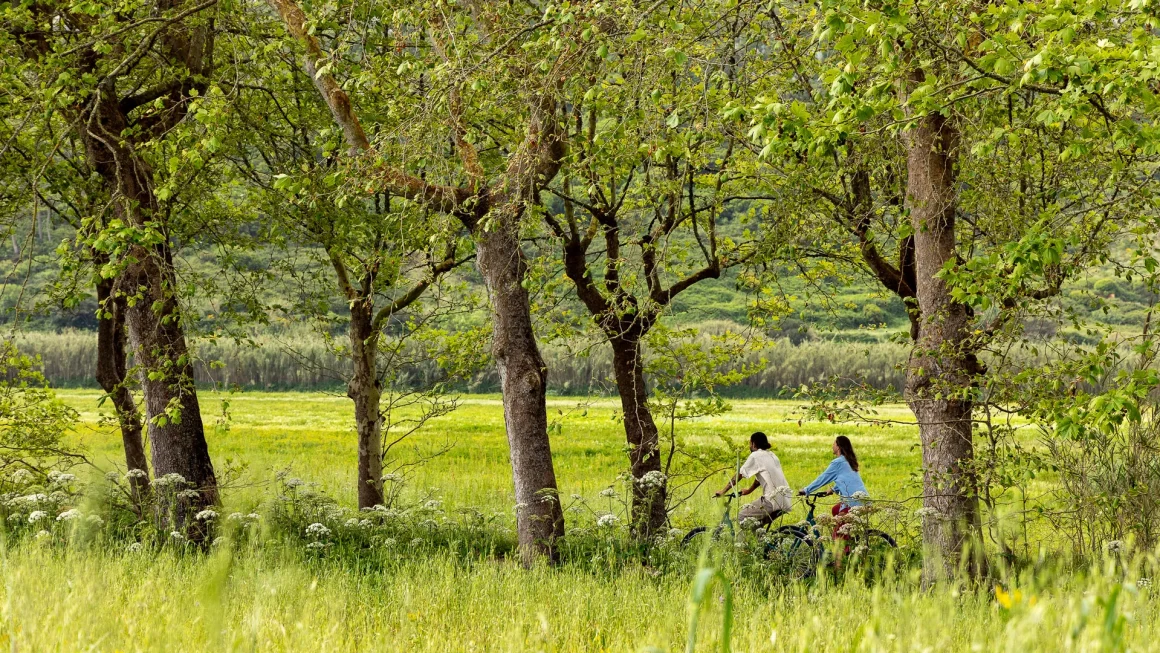
Below, our curated list of eight hotels and resorts — from the southern coast to the Costa de Prata to the Douro Valley — that fit what 2026 luxury actually wants: serious design, small footprints, real wellness, properly maintained silence, and the kind of nature you can hear.
Each one is purpose-built for the quality of rest the next decade of travel is going to be measured against. With what to know about who built them, who runs them, what they charge, and what makes each one different from the next.
Calmodernism: eight Portugal retreats for design, silence, and quality rest
1. Espírito da Comporta — for the cabin-and-rice-field romance
The whole-house archetype: zero shared spaces, total privacy, the limited-access end of the hushpitality spectrum.
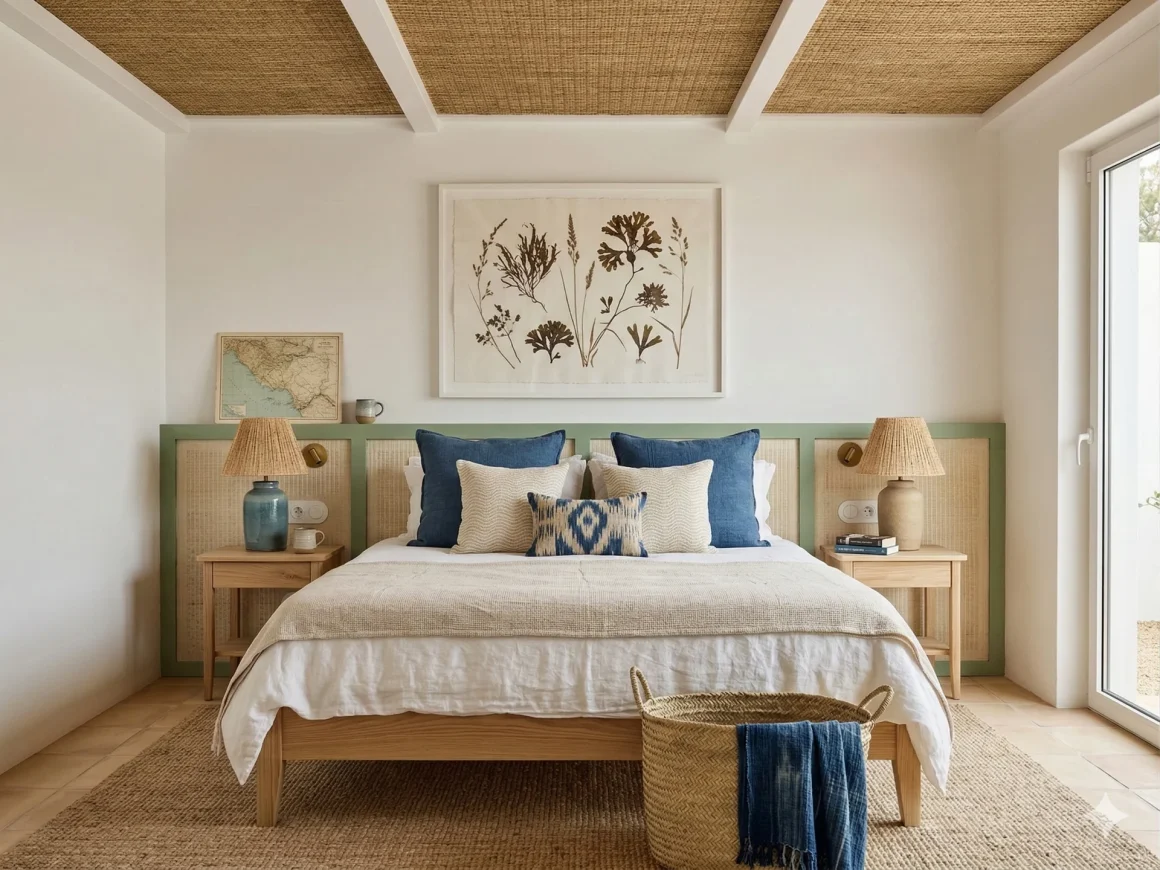
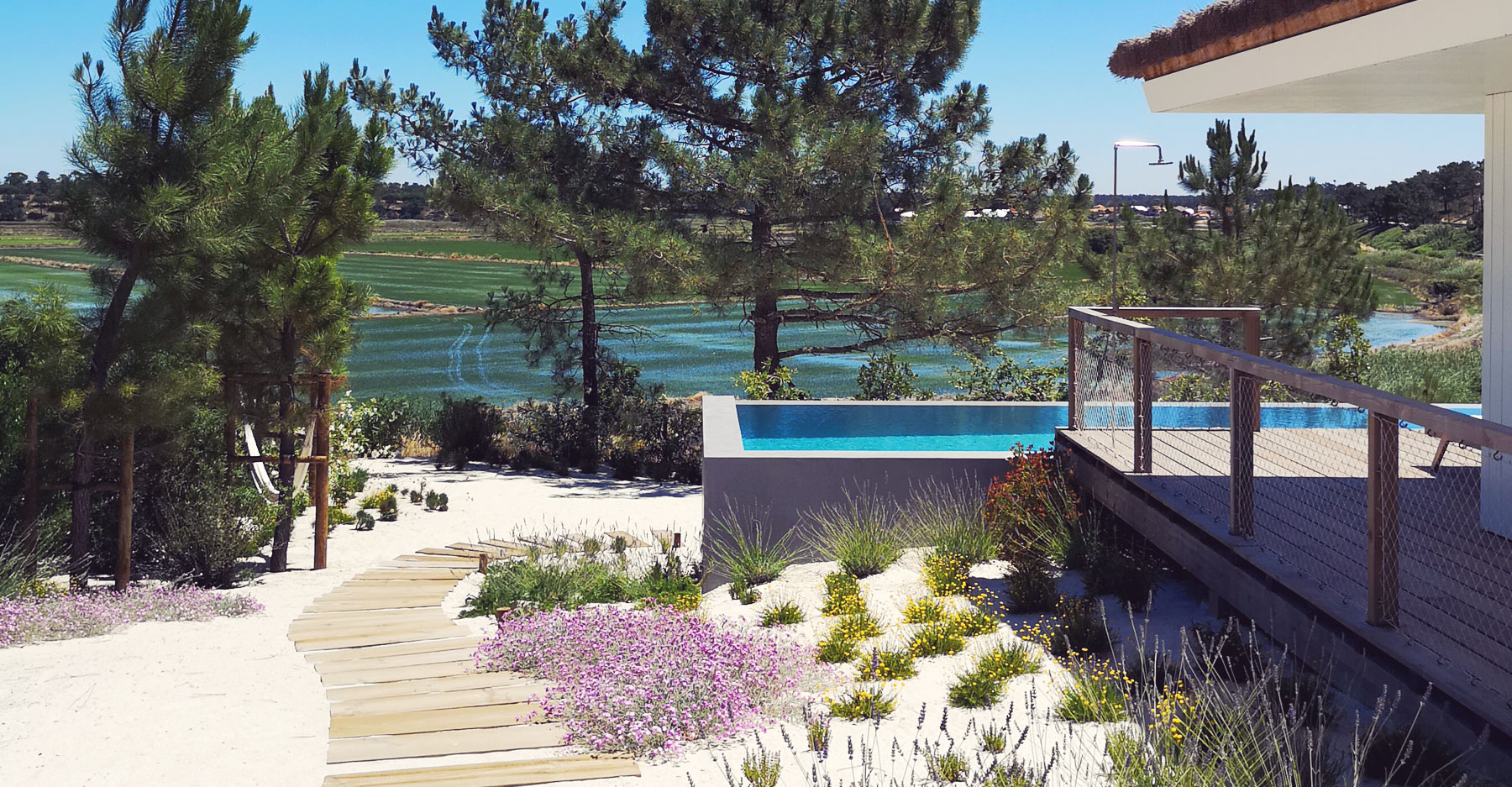
A French couple, Charline and Antoine Gurwitch, fell hard for Comporta years before the rest of Europe figured out what the fuss was about. They wrote a blog, then they built a house, then they built another, and now they run a small collection of villas and thatched cabins that are arguably the cleanest expression of what “Comporta style” actually means.
Architecture is by Luís Pereira Miguel (PM-ARQ), a Portuguese architect who shares the Gurwitches’ allergy to artifice — every house follows the local fishermen’s-hut vocabulary of weathered timbers, thatched roofs, and stilts, but with the kind of light, comfort, and discretion you’d want for a fortnight.
The collection sits across three named properties: Campo de Arroz (a typical Comporta beach house, for 1 to 10), Casas de Arroz (authentic cabins, for 1 to 12), and Flor de Arroz (villas facing the rice fields, for 1 to 8).
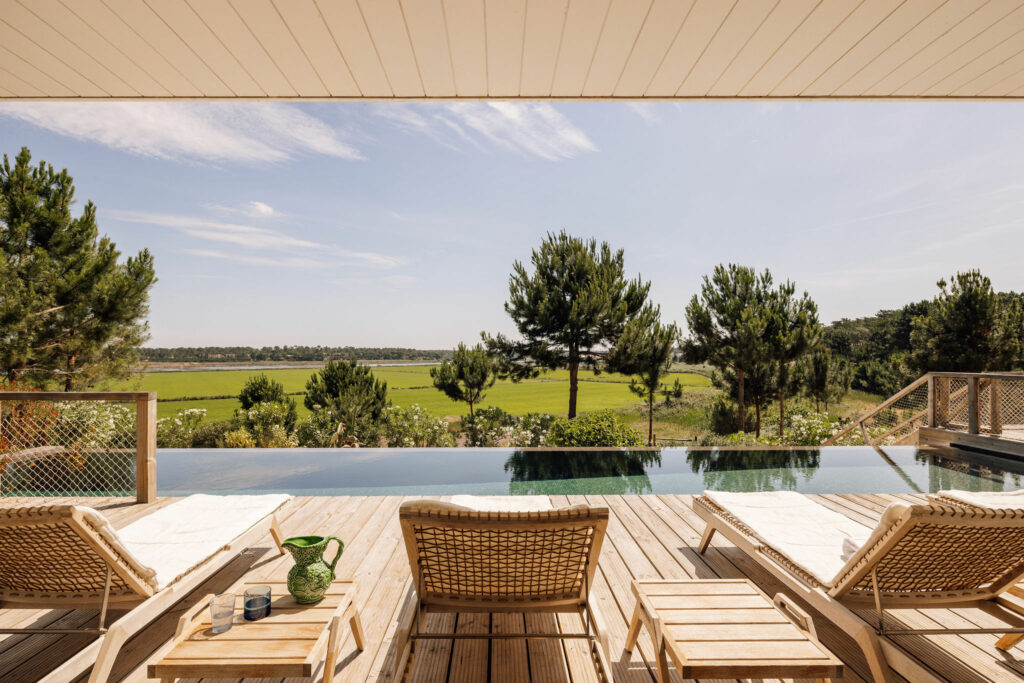
Each comes with its own private pool. The hospitality is the point. Stays come with private chefs and breakfasts at home, in-villa massages, yoga and pilates classes on the deck, boat trips along the Sado and Sesimbra rivers, private picnics on the dunes, wine tastings, cocktail evenings, painting workshops, surf lessons, horseback rides, and outdoor cinema nights.
Bicycles are available for rides through the rice paddies — the most authentically Comporta way to move around. Baby cribs, sun loungers and high chairs can be added on request.
Multiple villas and cabins across Comporta · 1 hour from Lisbon · from approximately €1,150/night in July–August · book direct or via Airbnb
2. Pa.te.os — for the architecture pilgrims
The single most privacy-forward property on this list — and the one that reads cleanest against the 2026 quiet-luxury thesis.
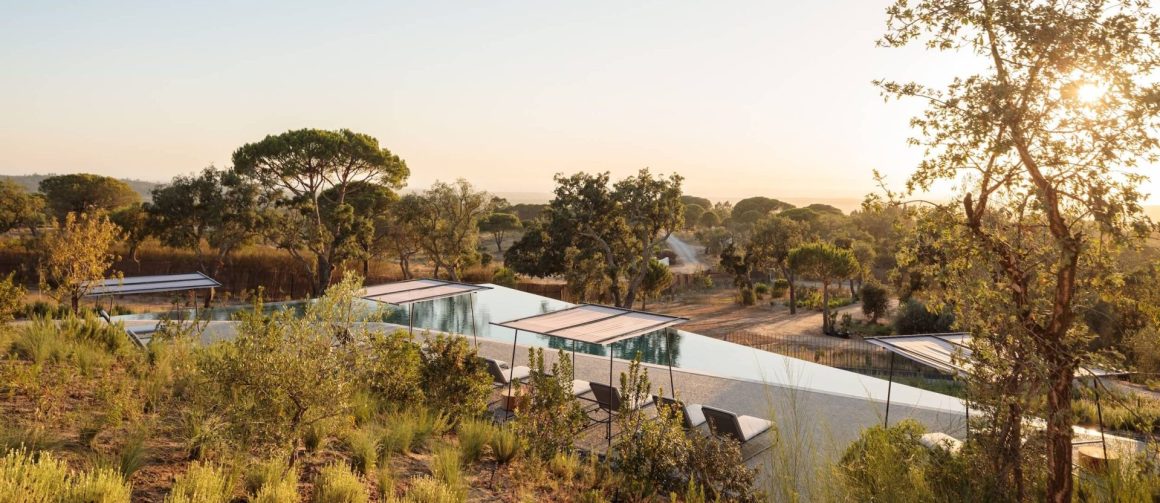
The most architecturally serious project on this list. Sofia and Miguel Charters — also behind the Portuguese real-estate company Primosfera — owned an 80-hectare wine and farming property near Melides for nearly two decades before they asked their friend, the Pritzker-shortlisted Manuel Aires Mateus, to build something on it.
The result is four bare-concrete courtyard houses arranged on a hillside above the Atlantic, each one a meditation on the Moorish-Iberian patio tradition, each with retractable glass walls that turn the rooms inside out when you want them to.
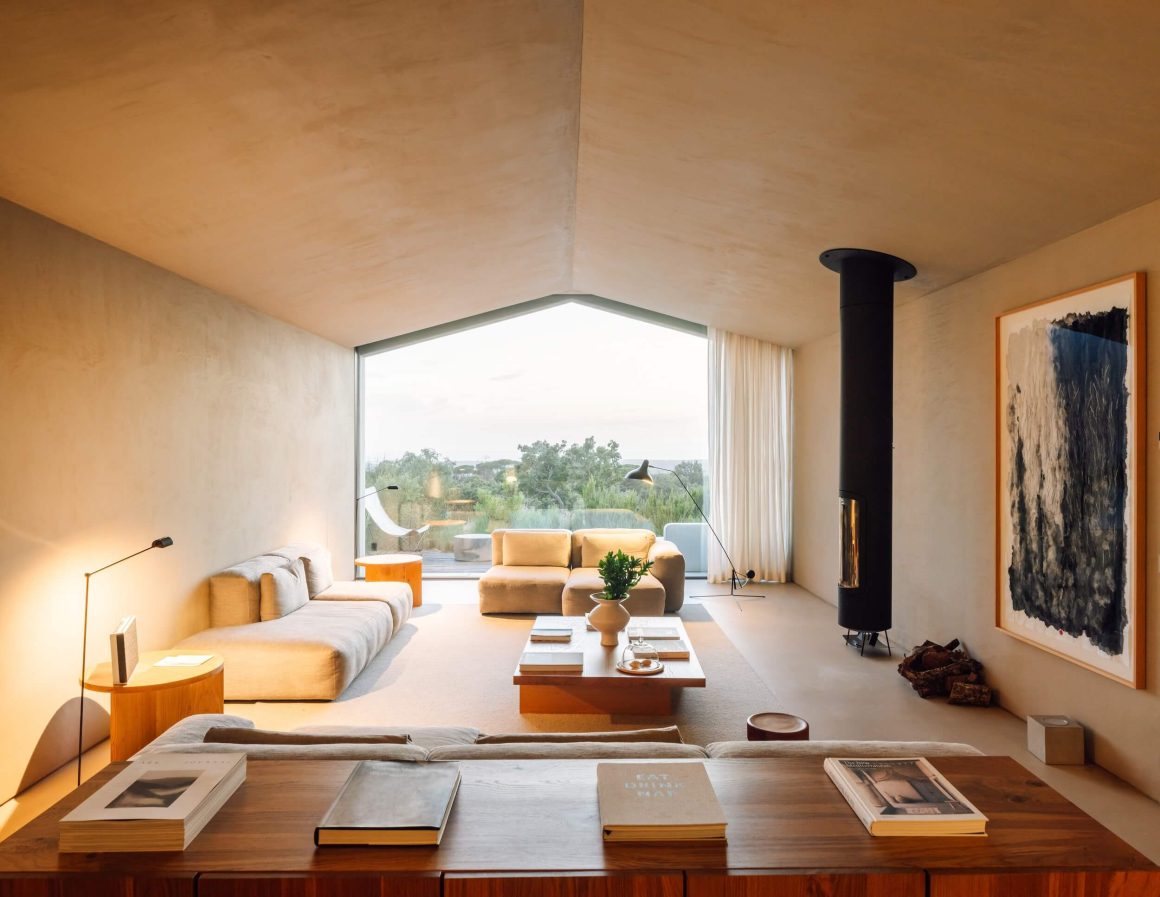
Materials are deliberate and few: bare concrete, European oak, stone. Project leader João Esteves, interior lead Maria Rebelo Pinto, landscape by FC Landscape Architecture (Filipa Cardoso de Menezes and Catarina Assis Pacheco). The property even has a bespoke fragrance — a sea-pine-citrus blend by perfumer Lyn Harris (of Miller Harris and Perfume H), who composed it on-site.
The four houses can be booked individually or as a full property buyout for a single group — there’s no lobby, no public space beyond the infinity pool, and no programming you didn’t ask for. Dining is farm-to-table in the hands of Chef Sergi Sanz — Spanish, Mediterranean, ingredient-led, with most of what lands on the plate sourced from the property itself or its immediate neighborhood. Breakfast is delivered to your house every morning.
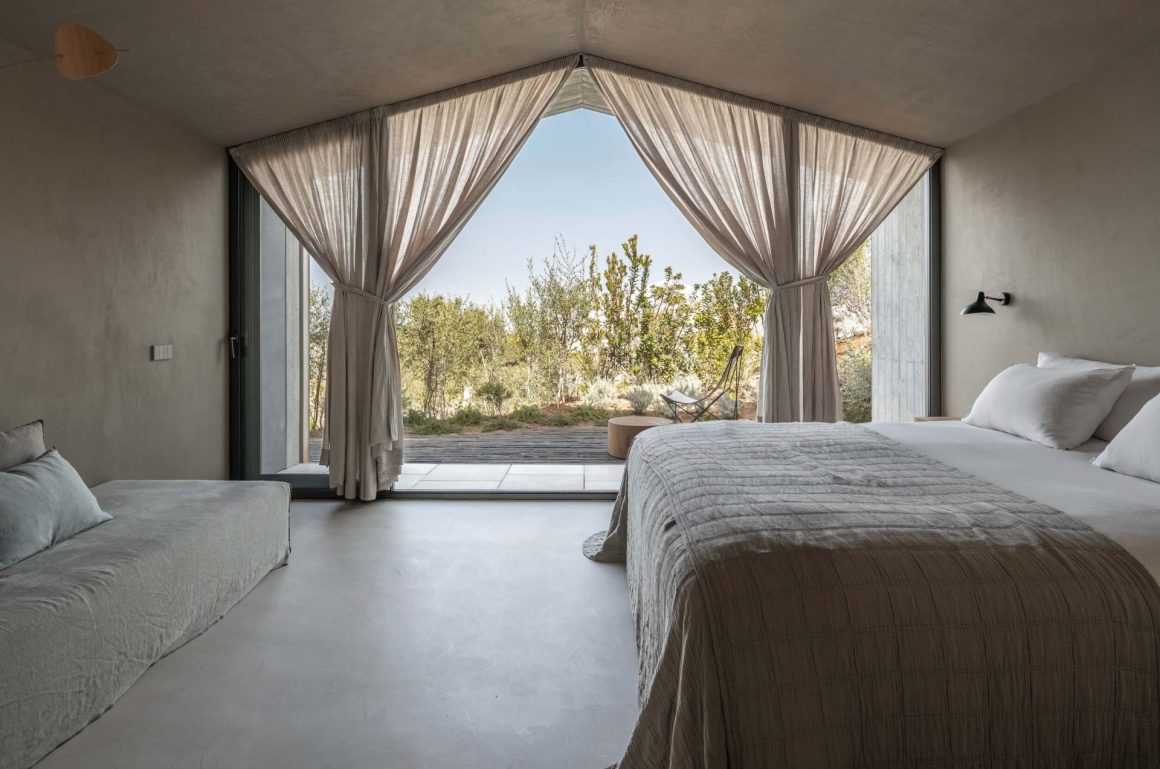
The wellbeing layer runs through massages, cold plunges, yoga, and sound healing in the property’s dedicated pavilion. The access road is roughly two kilometers of off-road — an SUV is recommended, and that final approach is deliberately designed as a reset before you arrive.
Estrada Nacional 261-2, Km 4, 7570-769 Melides, Portugal · 1 hour from Lisbon, 5 km from Melides village, 20 minutes from Comporta · from €950/night (smallest house, 85 m²) · 5.0 on Google
3. Areias do Seixo — for the eco-true-believers
The “sustainability as baseline expectation” archetype — what the 2026 trend forecasters describe as a default, this property has been running as design principle since 2010.
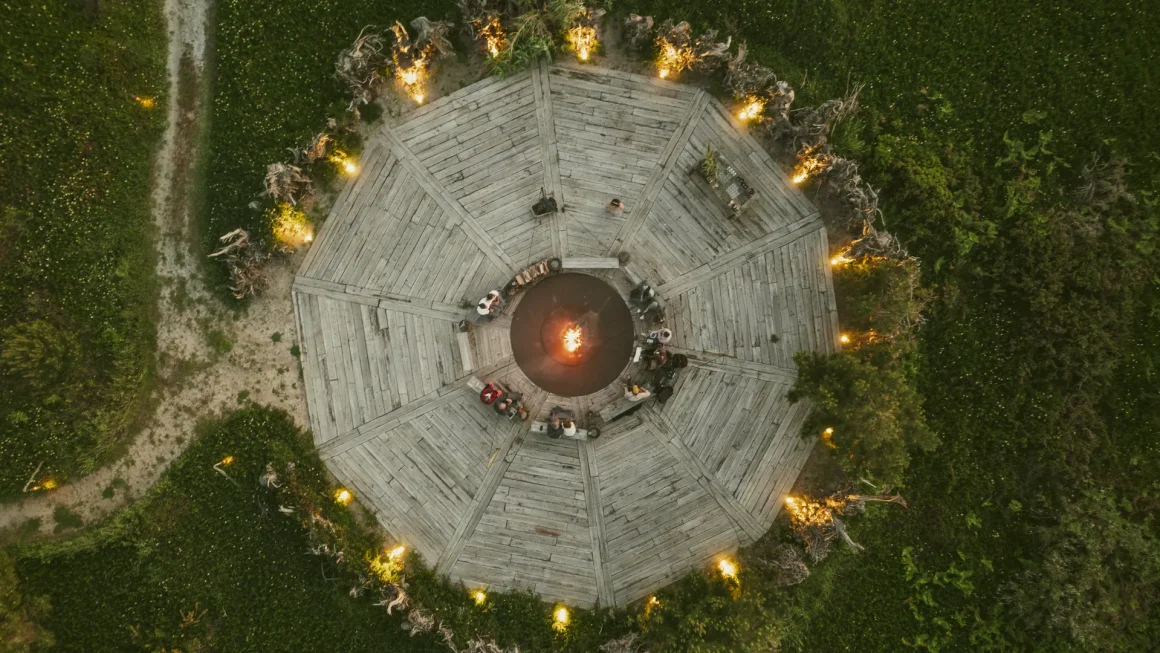
Open since 2010 and still one of the most-quoted reference points for Portuguese eco-hospitality — Decanter‘s 2025 “Dream Destination” and a consistent fixture on serious sustainable-luxury lists. Marta Fonseca and Gonçalo Alves — childhood friends, lifelong surfers, both with hospitality DNA — spent eight years turning a defunct chicken farm on the Costa de Prata.
The result is a seven-hectare retreat of glass-and-concrete villas, permaculture gardens, geothermal heating, solar power, and a passive-cooling system that works simply by opening the windows; by design, there is no air conditioning anywhere on the property.
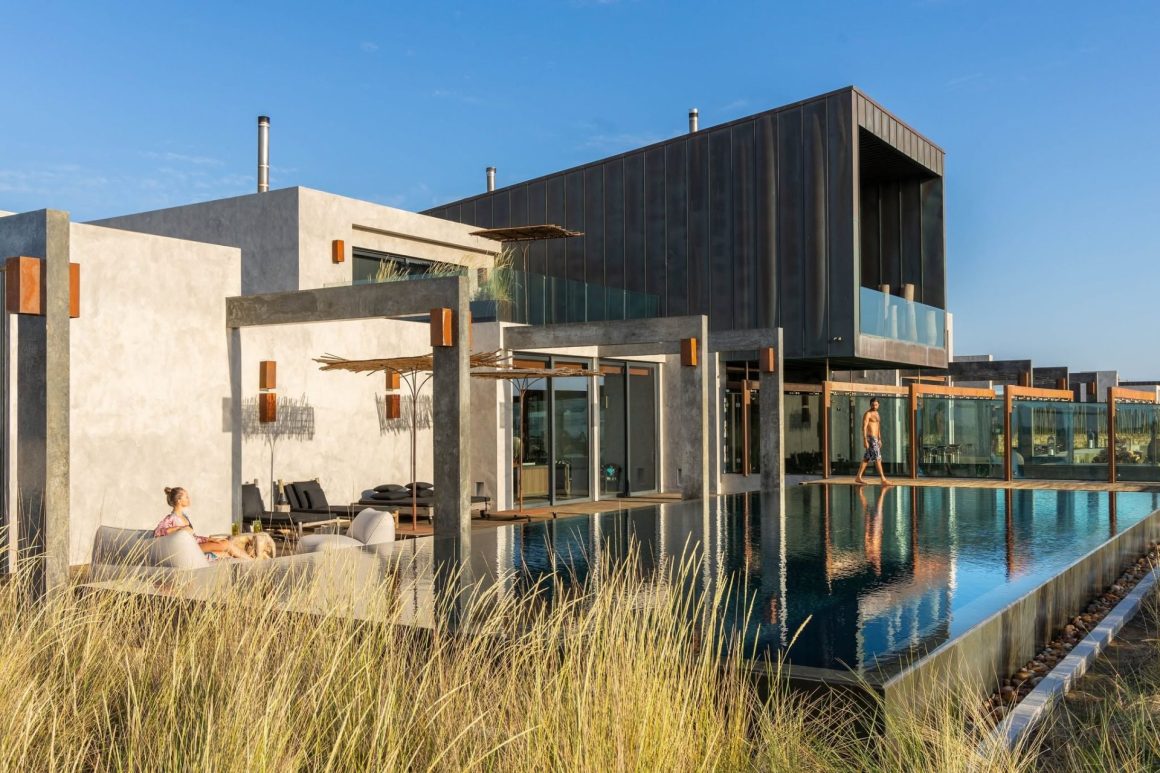
Architecture is by Portuguese architect Vasco Vieira, with interiors by Rosario Gabriel and Isabel Schedel — the kind of late-modern Portuguese vocabulary that gets compared to Eduardo Souto de Moura and Álvaro Siza without embarrassing itself.
A 2008 storm during construction destroyed most of the property’s pine trees, and the salvaged wood is now part of the decor — light fixtures, candle stands, table surfaces, the upside-down trunk circle around the firepit where Marta and Gonçalo themselves gather guests every evening for wine and folk music.
There are 15 individually designed rooms in the main building plus 19 self-catering villas, each with private heated swimming pools and decor that runs to Moroccan rugs, Indian textiles, driftwood-frame beds, and fireplaces that hang from the ceiling. Activities are surf-coast: lessons and stand-up paddle in the Atlantic ten minutes away, daily yoga and sound bath sessions, functional training, a wood-fired hot tub.
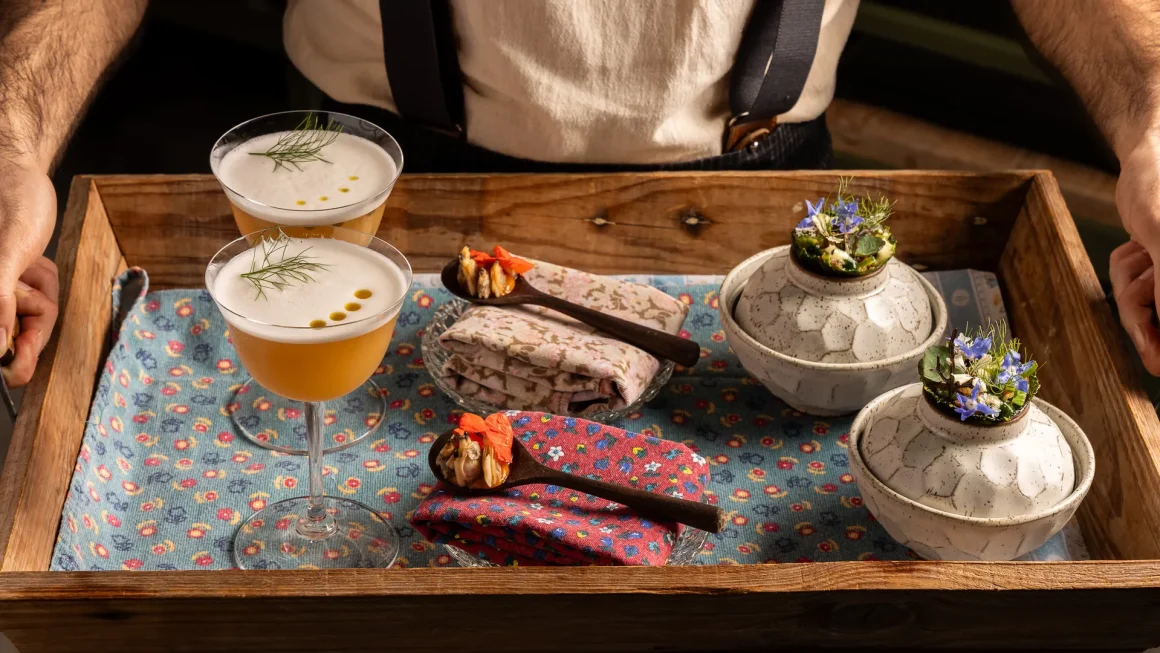
The spa runs from €120 for an hour, with treatments using house-blended natural products. The on-site organic vegetable garden supplies most of the kitchen, and guests can tour it with the gardener as part of a “garden to plate” experience that’s widely cited as a highlight. Sister property: Noah Surf House, on a nearby beach.
Praceta do Atlântico, Mexilhoeira, 2560-046 A dos Cunhados e Maceira, Portugal · +351 261 936 350 · 40–45 minutes from Lisbon, 30 minutes from Ericeira · from €396/night · 4.7 on Google (814 reviews)
4. Sublime Comporta — for the original Comporta luxury benchmark
The property that established the visual language the global “quiet luxury” trend is now arriving at: polished concrete, driftwood, Danish linen, light through pine.
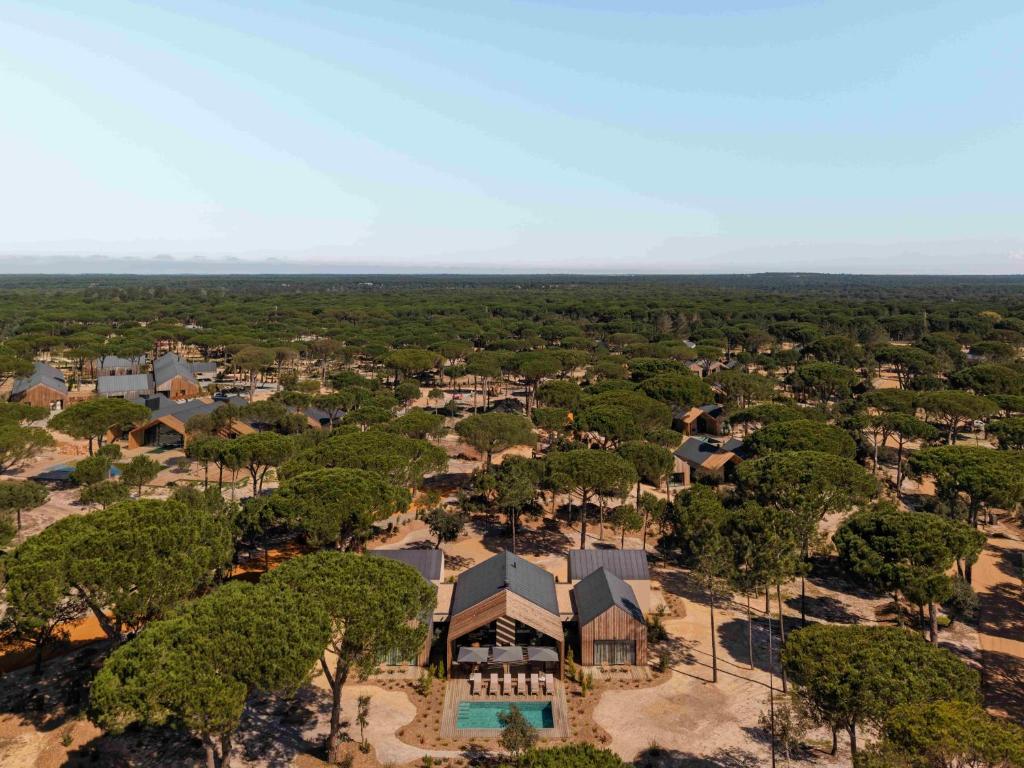
Founder Gonçalo Pessoa opened Sublime Comporta as a modest nine-bedroom property; today it spans a 68-hectare estate of umbrella pine and cork trees across two complementary wings — Terracotta and Sand — with Two Michelin Keys to its name.
Architecture by José Alberto Charrua; interiors by Miguel Câncio Martins, the Portuguese-French designer who built Buddha Bar Paris and Man Ray before turning to hotels (he later went on to design Quinta da Comporta, just down the road, as his own owner-project).
The Câncio Martins signature — polished concrete walls, blue-and-white Danish linen, driftwood furniture, light flooding through floor-to-ceiling glass — defined the modern Comporta aesthetic before half the rest of this list was even on the drawing board.
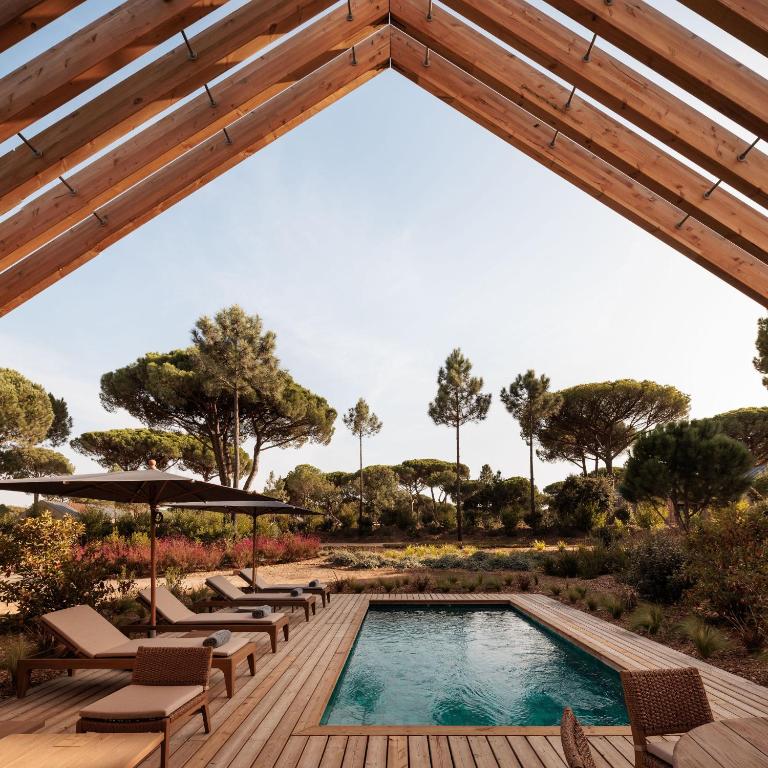
The accommodation runs across eight categories: Spa Suite, Spa Room King Bed, Cabana Suite, Cabana Suite Superior, Bio-Pool Suites (with a biological plunge pool at your patio), and 2-, 3-, and 4-bedroom Cabana Villas with private pools, scattered through the pine forest.
Dining is unusually deep for a resort of this size — twelve distinct restaurants and bars on the estate. Sem Porta for contemporary Portuguese; Beefbar for French Riviera meets Comporta; Food Circle for a fire-led communal dining ritual; Davvero Comporta and the seafront Davvero BLU for the Italian wing; Ruína, the Sublime Comporta Beach Club, Sado, and Da Comporta rounding it out.
The wellness side runs across the main spa, in-room treatments, tennis and padel courts, a gym, and the Aqua experience built around what’s billed as the largest biological swimming pools in Europe, inspired by the wooden stilt fishing harbor at nearby Carrasqueira. Chef-in-villa, picnics on the dunes, and full event hosting (weddings, meetings) all available.
EN 261-1, 7570-337 Muda, Grândola, Portugal · +351 269 449 376 · 1 hour from Lisbon · from approximately €1,100/night in July · 4.5 on Google (839 reviews)
5. Six Senses Douro Valley — for the wine-and-wellness pilgrimage
The textbook expression of the trillion-dollar wellness market’s new direction — sleep, longevity, vinotherapy, shinrin-yoku, programs designed around stress regulation rather than poolside cocktails.
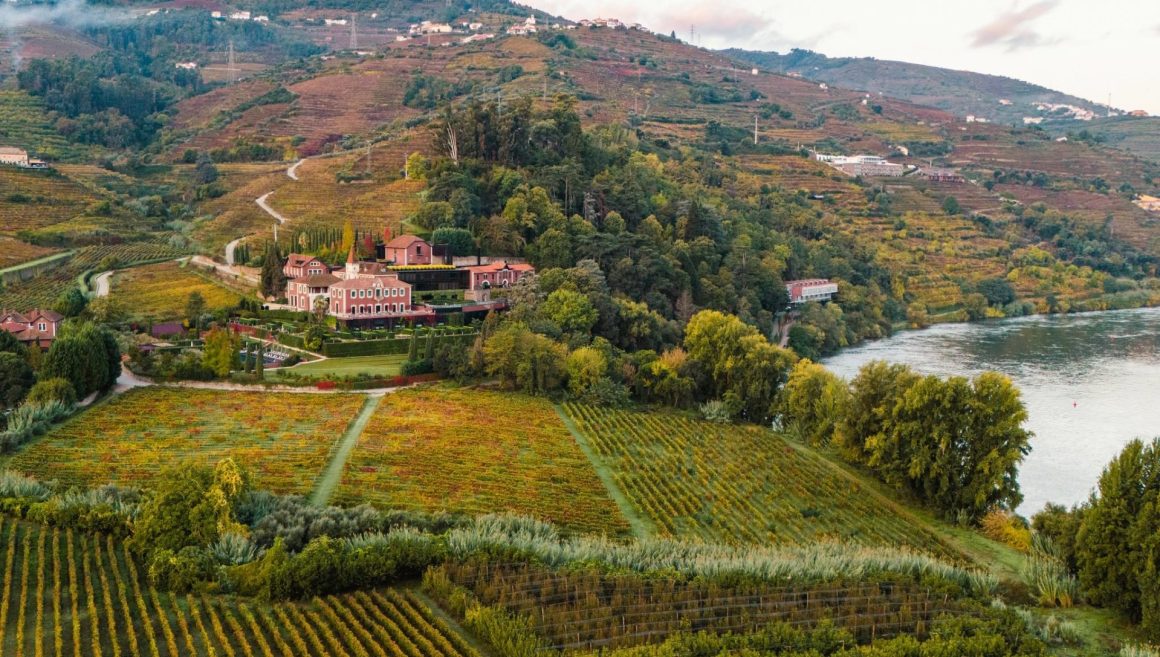
The one entry on this list that isn’t on the Atlantic coast. Six Senses’ Portuguese flagship sits in a beautifully restored 19th-century manor house — Quinta de Vale Abraão — on a hilltop above the terraced vineyards of the Douro River, the world’s first demarcated wine region and a UNESCO World Heritage site.
Architectural restoration by Lisbon’s Rebelo de Andrade Architects (lead: Luís Rebelo de Andrade); interiors by the Irish-American designer Clodagh (Clodagh Design, New York), who pulled the palette directly from the river and the slate-and-grape land — burnished metals behind the beds, raked golden plaster, reclaimed wood, lighting made from old wine cases and bottles. Landscape design by Topiaris.
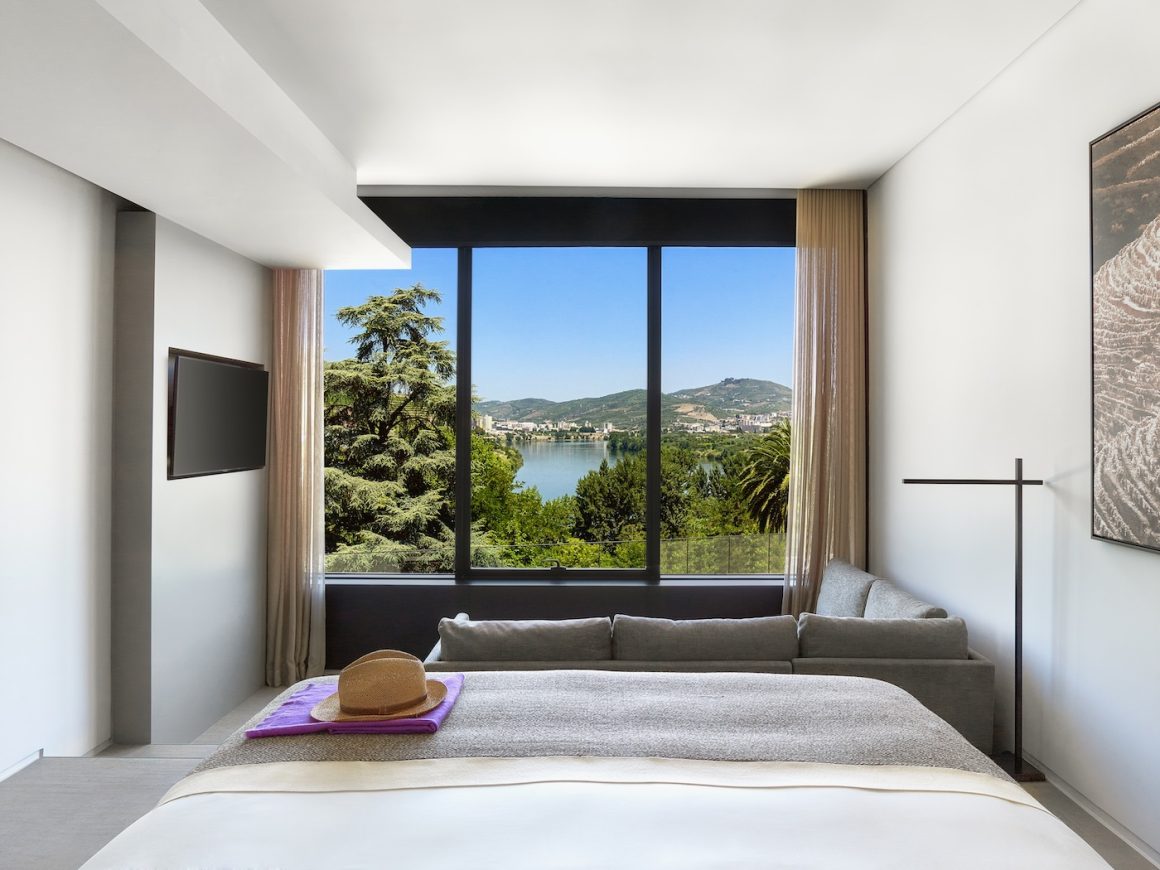
There are 71 rooms, suites, and villas, all with views down the valley — the manor itself houses the historic categories, with newer Quinta Suites and Vineyard Villas (including the multi-bedroom Vineyard Villa with private pool) set among the working vines.
The spa is one of Europe’s most-quoted: signature treatments use the antioxidant properties of Douro grapes (vinotherapy), with an indoor pool, sauna, hammam, and watsu pool.
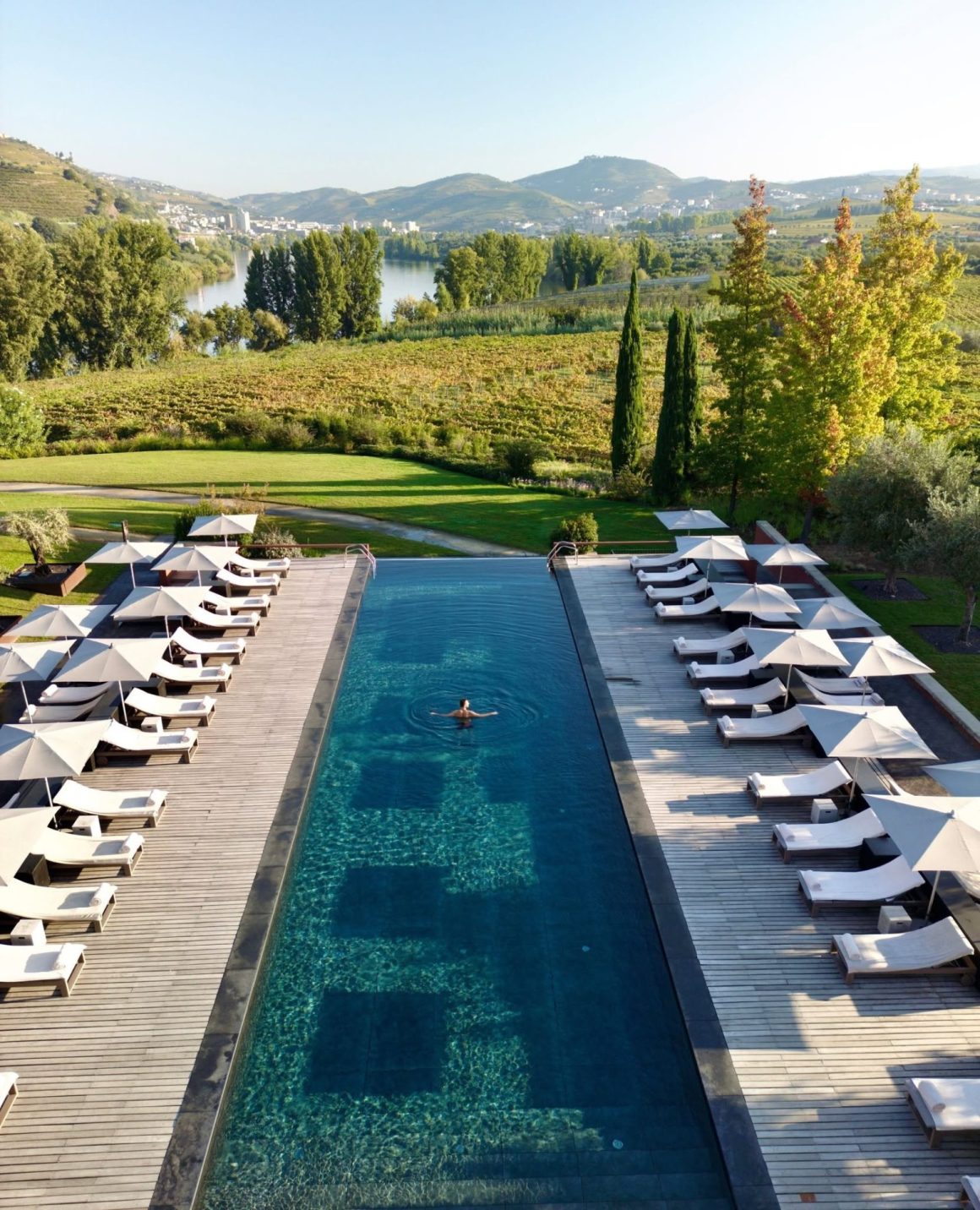
The property also includes five hectares of surrounding forest set up for shinrin-yoku (Japanese forest bathing), an on-site Wine Academy for tastings and blending sessions, hosted tours of nearby Douro estates, and a kitchen-garden program that drives most of what lands on the plate. Two Michelin Keys.
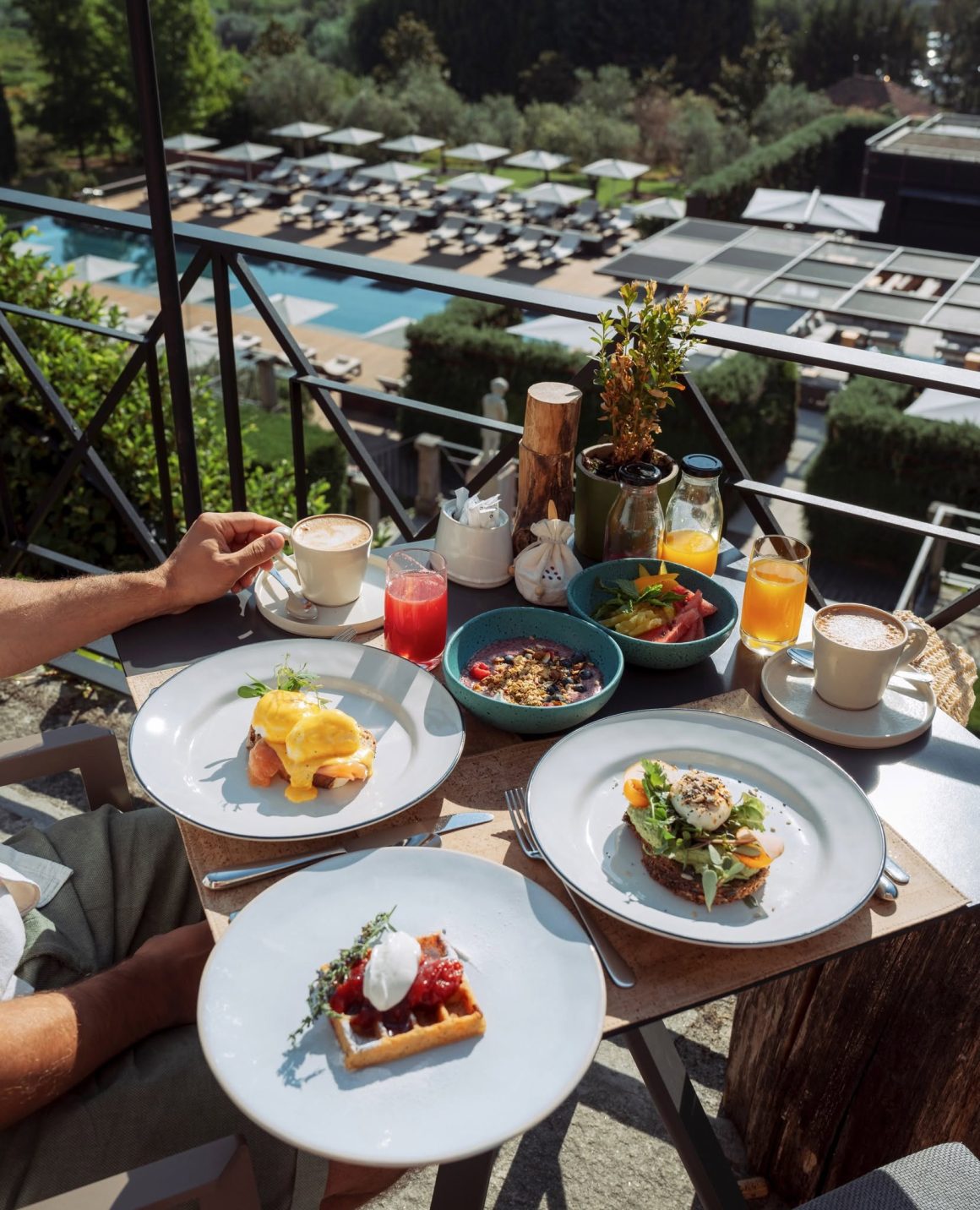
On-site dining ranges from the main restaurant in the manor to a more casual open-kitchen room and a warm-weather terrace.
Quinta de Vale Abraão, 5100-758 Samodães, Lamego, Portugal · +351 254 660 600 · 90 minutes by car from Porto Airport · from approximately €1,100/night · 4.9 on Google (1,817 reviews)
6. Gandum Village — for the lowest carbon footprint on the list
The “high-end, low-impact” archetype — the most credible answer on this list to the trend’s hardest question: how do you build new luxury without the environmental cost the previous generation refused to count?
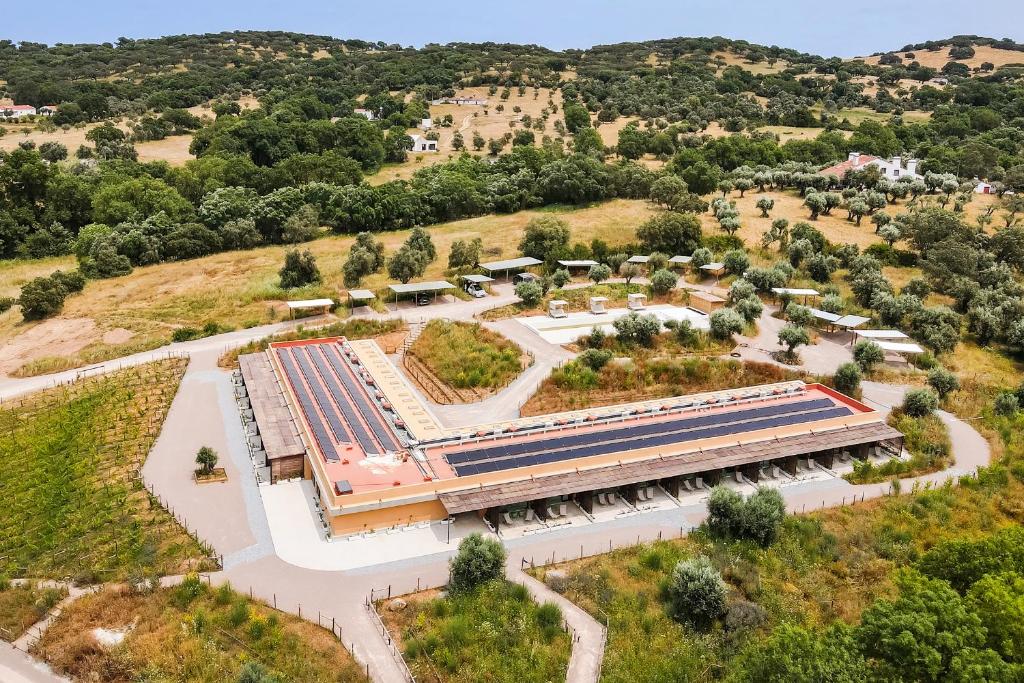
The most quietly radical project on this list. Martina Wiedemar (Swiss) and João Almeida (Portuguese) met as students of geography and economics in Bern; their respective backgrounds in climate change research and food waste innovation eventually became Gandum Village — a 14-hectare estate in the Monfurado nature park outside Montemor-o-Novo, in the rolling Alentejo interior (the region that grew 10.7% in 2025, a domestic-travel trend Gandum is partly responsible for).
The hotel’s new construction is built using taipa (rammed earth), the ancient Portuguese sustainable-building technique that uses local soil and dramatically lowers a building’s embodied carbon. Walls regulate indoor temperatures naturally — cool in summer, warm in winter — and the property runs on 170 solar panels, regenerative agroforestry, and a water system designed around the Gandum Creek that gives the farm its name. More than 50,000 trees have been planted on the property to date.
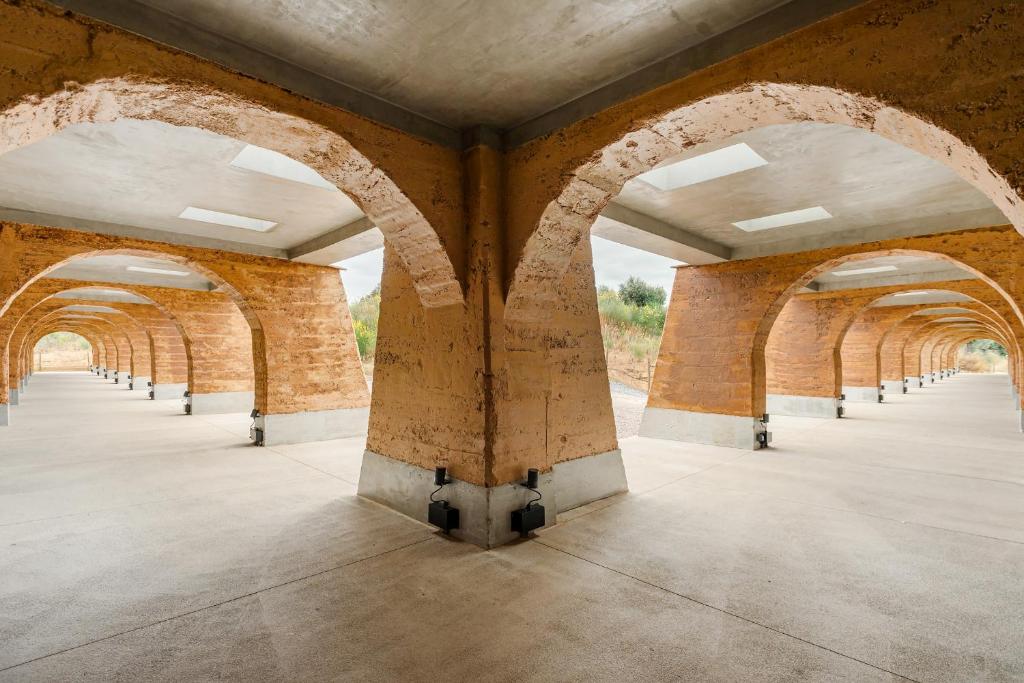
Accommodation splits between the Claustro building (the new rammed-earth construction, with 18 Earth Rooms designed for couples and solo travelers) and the Monte Houses (three minimalist family apartments with kitchenettes, balconies, and 4–6-person capacity). Three pools sit across the property, including one for children.
The on-site restaurant Provenance is a destination in its own right — most ingredients grown on the farm or sourced from named ultra-local suppliers; the daily menu changes with the season, and the team has built a serious editorial program around the philosophy.
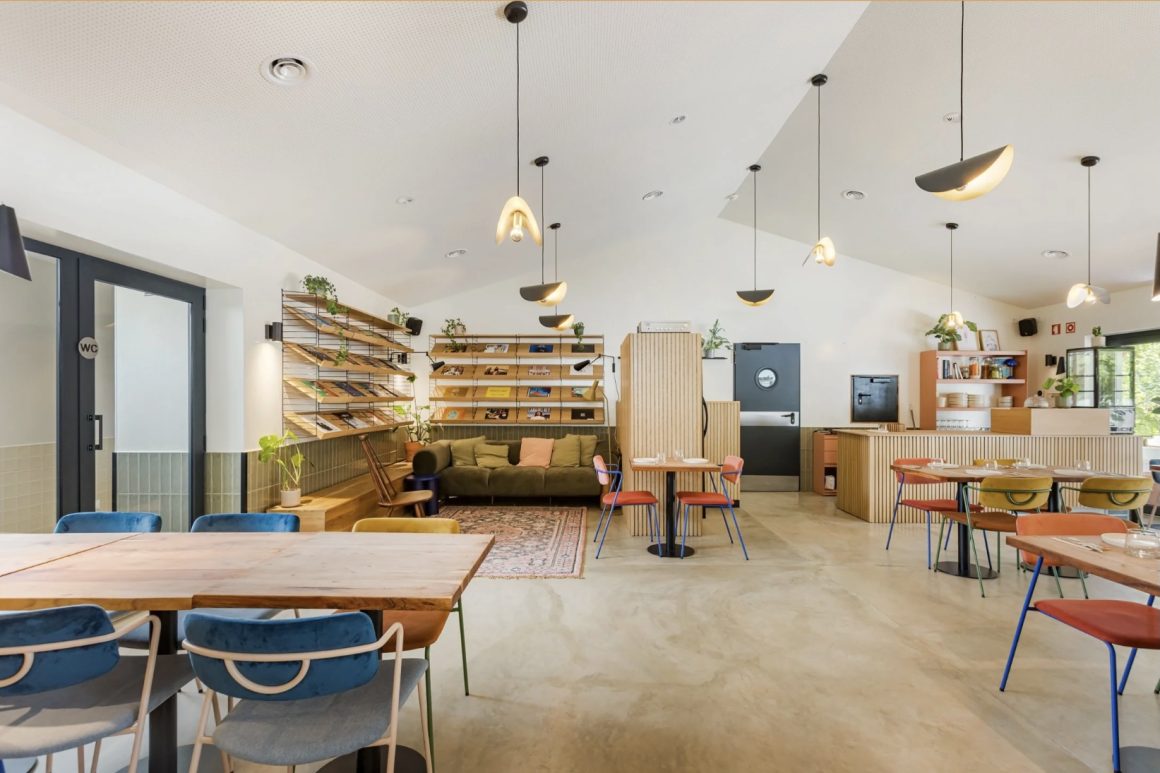
The retreat also runs a co-working space built into the rhythm of the hotel — quiet corners, reliable internet, good light — and explicitly markets to digital nomads, with packages like “Working Day at Gandum” and “3 Nights for the Price of 2.” Activities lean countryside-quiet: walks through the agroforestry plots, swimming, the farm’s animals (sheep, chickens, working biodiversity), a playground, ping-pong, and visits to nearby Évora and Montemor-o-Novo Castle.
Rua de São Domingos (EM 537), 7050-032 Montemor-o-Novo, Portugal · +351 266 079 000 · 1 hour from Lisbon, 3 km from Montemor-o-Novo, near Évora · from €160/night · 4.9 on Google (176 reviews)
7. Immerso — for the surf-set design hotel
The most explicit hushpitality property on the list — the marketing line is literally “here the days have no hours, they have time.”
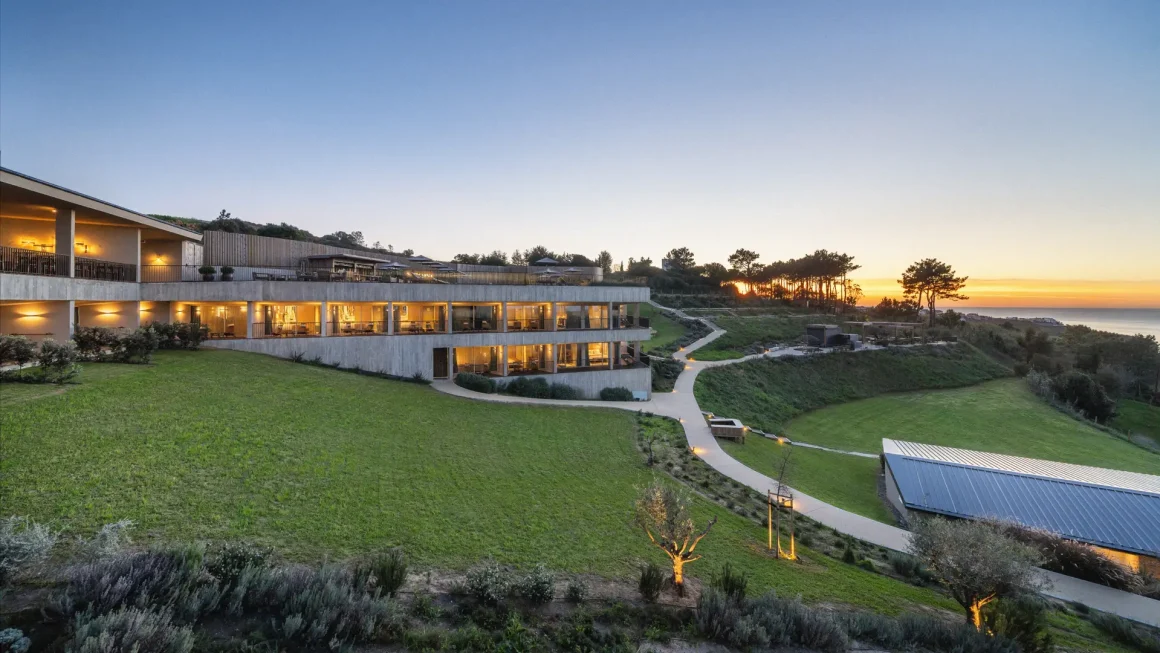
Opened in 2021 on a hillside above Santo Isidoro — a mile from Ericeira, Europe’s first World Surfing Reserve. Architecture by Portuguese studio Silva Dias Arquitectos (lead architect Tiago Silva Dias); design co-directed by founder Alexandra Almeida d’Eça (Querido Hotels) with Bárbara Neto; landscape by Margarida Quelhas.
The result is four low concrete blocks that look like they’re emerging out of the hillside, with earthy colors, curved interior shapes, and an art program built around Portuguese contemporary artists. Member of Design Hotels (Marriott) and a Michelin recommendation.
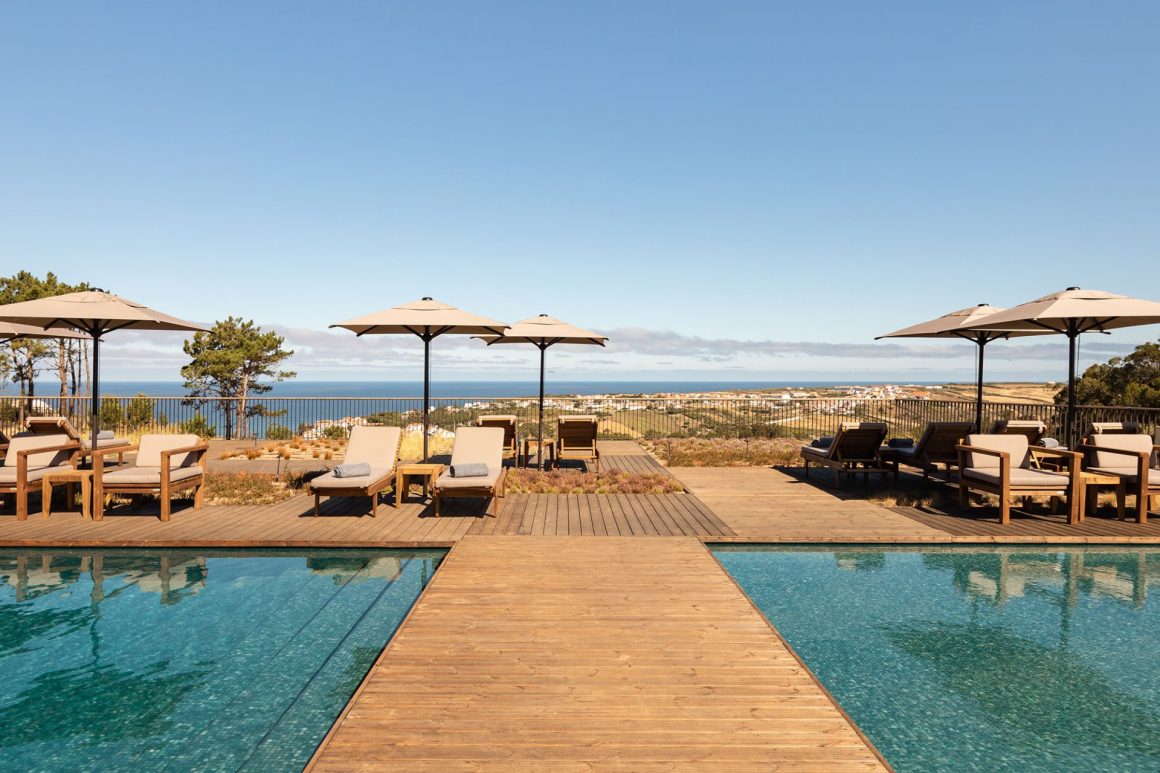
The 37 rooms and suites all face the Atlantic, with wraparound terraces, deep soaking tubs in many of the upper categories, and the property’s signature understated palette. Two pools — one heated year-round — sit at different levels of the hillside; the yoga deck overlooks the sea, and the spa (Spa Ericeira) runs treatments built around the surrounding pine, citrus, and salt.
Dining is across two restaurants: Emme for the seasonal main room, and Emme on Fire, a smaller open-flame space for fire-cooked Portuguese plates.
The Portuguese luxury retreat hotel runs a year-round events calendar of open-air cinema (Saltwater Sessions, curated by Portuguese surfer-filmmaker Tiago “Saca” Pires and João Valente), live music dinners, Popular Saints festivities in June, and tasting nights.
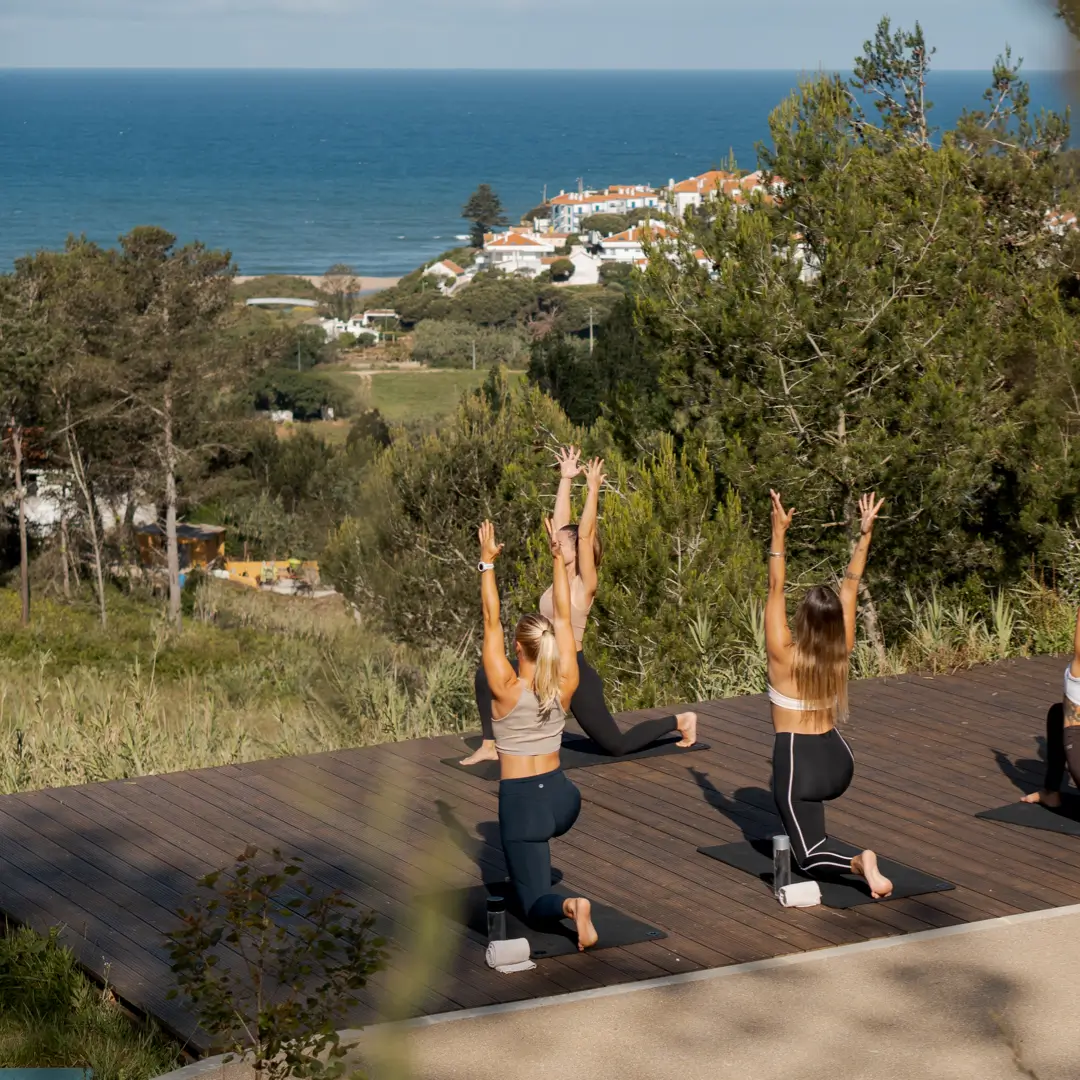
Surf lessons run through the Tiago Peres Surf School, and the property’s “Surf Experience” and “Immerso Experience” packages bundle stays with the wellness program.
Rua Bica da Figueira, Marvão, 2640-065 Santo Isidoro, Ericeira, Portugal · +351 261 104 420 · 50 km / 1 hour from Lisbon · from €430/night · 4.7 on Google (341 reviews)
8. Spatia Comporta — for the resort experience without the resort feel
The low-density privacy answer — 27 villas spread across plots up to nine hectares each, in a region that grew 17.3% in 2025 mostly because people wanted exactly this kind of distance from their neighbors.
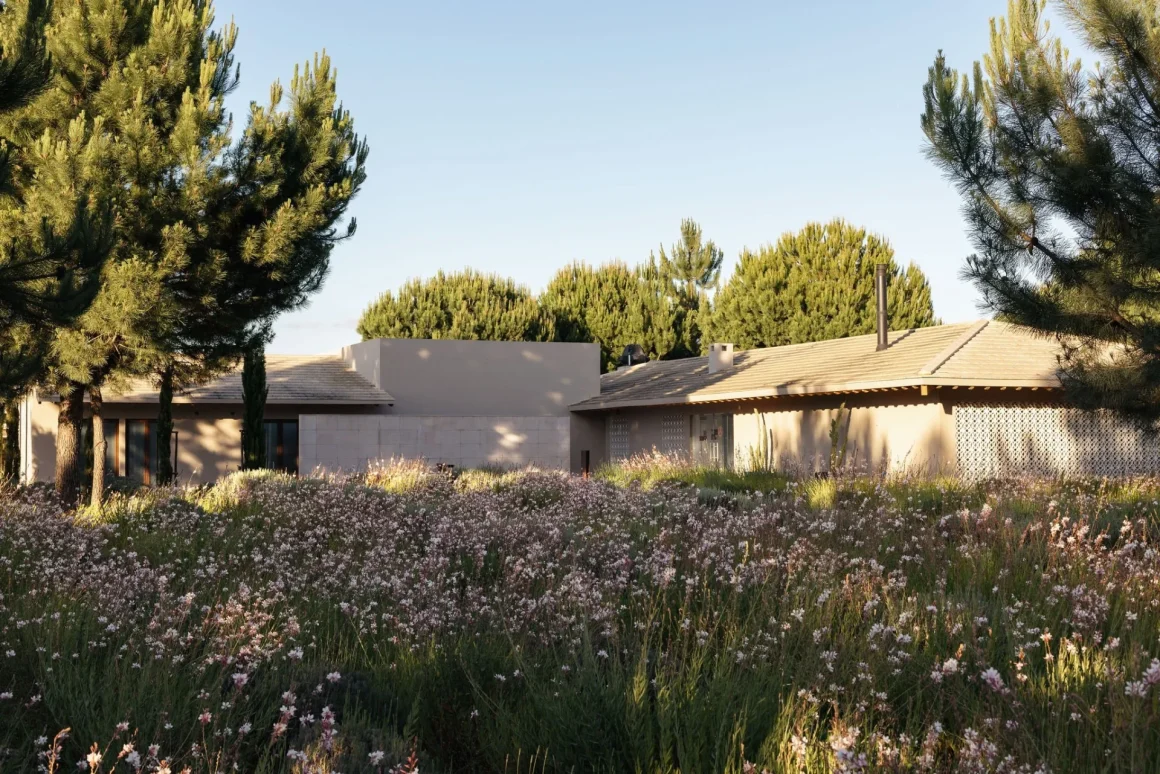
The name is the Latin word for “space” — and that’s the design brief in one. Spatia Comporta sits in the pine forest and dune system at Comporta’s edge, with the turquoise Atlantic and the Arrábida hills framing the property on either side. Architecture is a clean-lined, contemporary take on the regional vocabulary — whitewashed walls, traditional tiled roofs, generous lawns and lavender gardens — that draws on local building crafts without quoting them too literally.
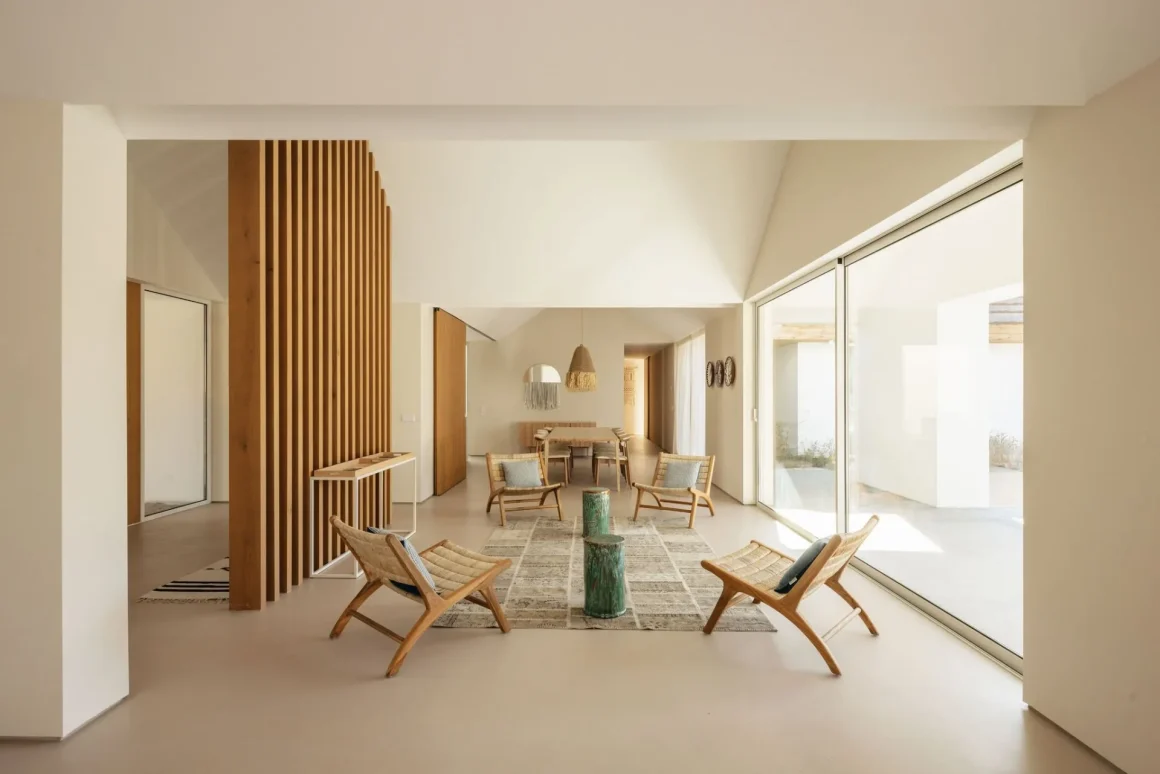
Accommodation is structured across three product categories at this retreat in beautiful Portugal. The 20 Club Rooms are the original key type, with high wooden ceilings, family-friendly access to a dedicated pool, and Family Suite variants with private patios and outdoor showers.
The 18 Cabanas (50 m² each, added in summer 2023) are the more design-led product — thatched-roof, solid-oak finishings, Scandi-style polished concrete floors, open bathrooms with rainfall showers, private gardens, hammocks, and outdoor showers; the Cabanas turn adults-only outside the October-to-December window.
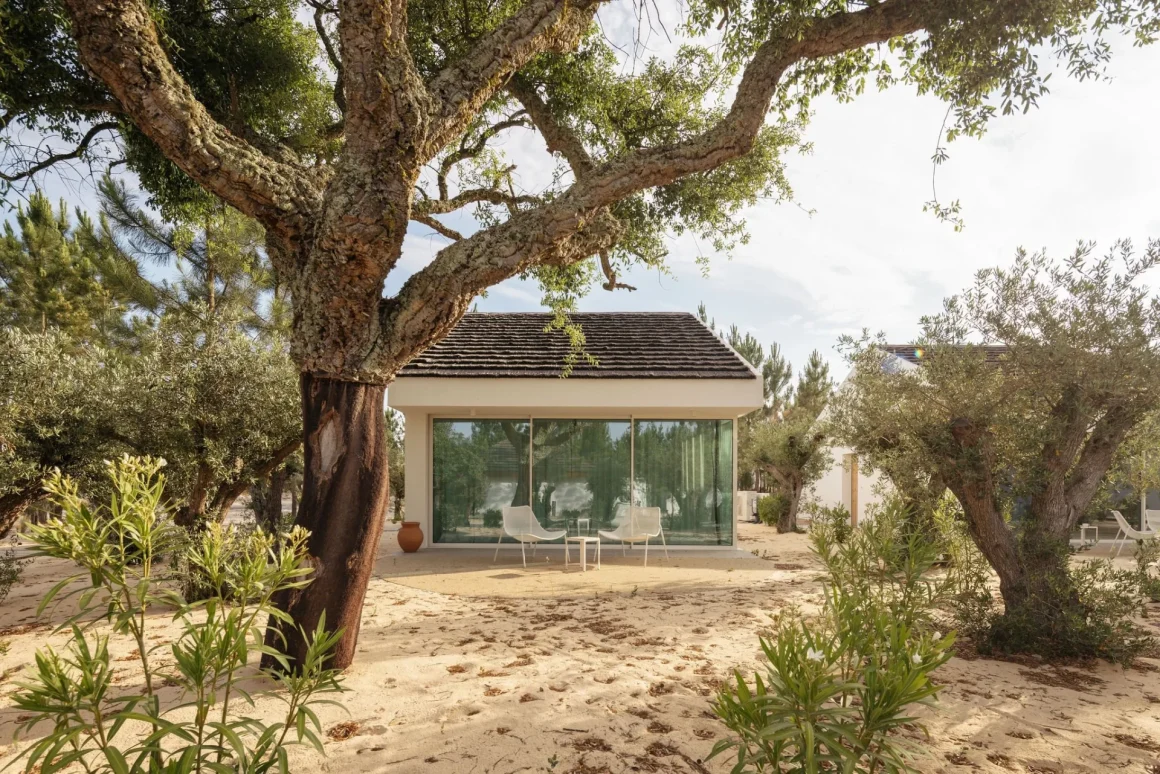
The 27 Villas sit on private plots up to nine hectares with two-to-six bedrooms each, 2.5-meter sliding doors, and private heated pools. Bath products throughout are by Oliófora, custom-made for the property.
The on-site restaurant Nesto is the main dining room (breakfast is included); two large pools, a children’s pool, a tennis court, padel, pickleball, free bike rental, a gym, a yoga pavilion, a beach clubhouse, and a firepit round out the facilities. Service runs to airport transfers and 24-hour reception.
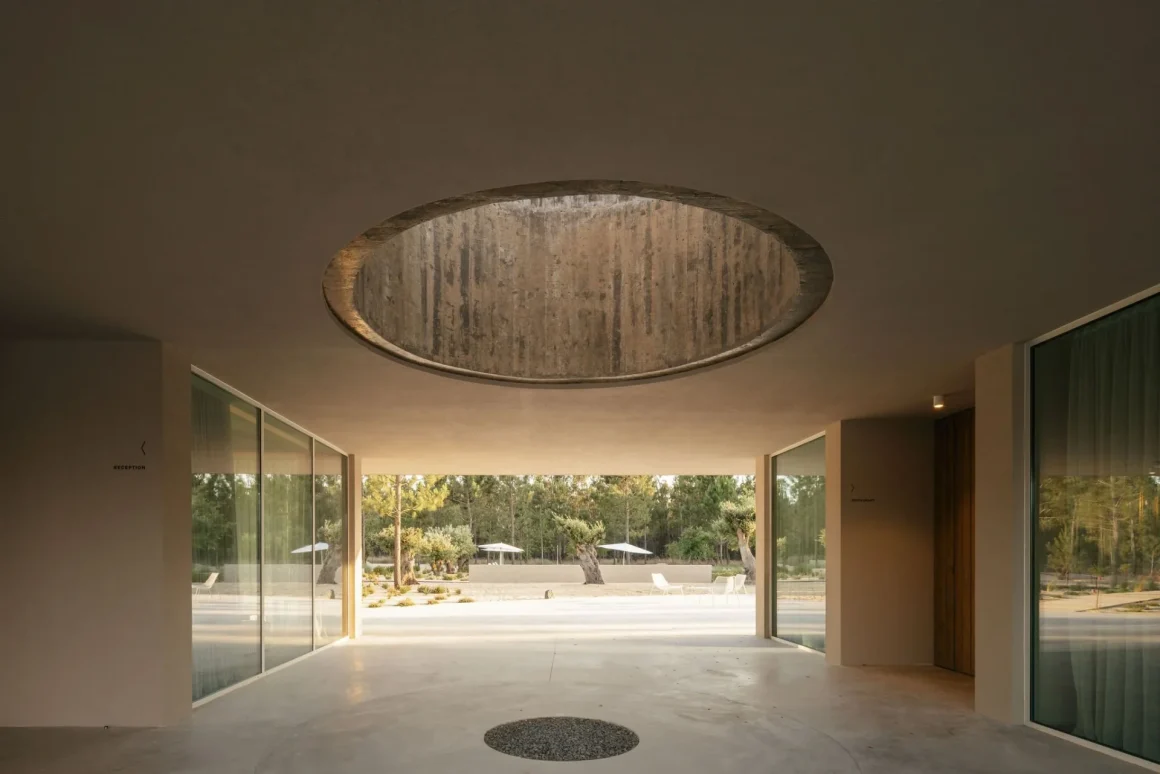
N261-1, Estrada das Bicas, Marco da Saibreira, Bicas, 7570-337 Grândola, Portugal · +351 269 249 486 · 1 hour from Lisbon · from €720/night in July · 4.6 on Google (226 reviews)
Where to go from here, Locals Insider tips
Portugal’s eco-luxury renaissance is still very much in motion — Christian Louboutin’s Vermelho in Melides, Pierre Yovanovitch’s project further down the Alentejo coast, and a steady drip of new properties in the Douro and around Ericeira are all part of the same wave.
For more on the country’s evolving hospitality landscape, our growing travel coverage picks up where this list finishes. And on the broader picture — what defines a hotel worth flying for in 2026 — see our pieces on the new luxury hotels we’re watching this year and on hotels that are more than an Instagram backdrop.
- If your priority is sleep and longevity programs: Six Senses Douro Valley, by some distance.
- If it’s lowest-impact / lowest-carbon stay: Gandum.
- If it’s maximum privacy / smallest guest count: Pa.te.os or Espírito da Comporta.
- If it’s spa and beach in one stay: Areias do Seixo or Immerso.
- If it’s the long-weekend Comporta classic: Sublime Comporta, plus a day at Espírito da Comporta.
- If you’ve come to surf: Immerso or Areias do Seixo, depending on whether you want the design-hotel vibe or the eco-true-believer one.
- If you want to work remotely without losing the holiday: Gandum, on the digital-nomad package.
- If you want the resort feel without the resort scale: Spatia Comporta.