




There is a particular feeling — somewhere between freedom and slight panic — that comes from unlocking a stranger’s vehicle on a foreign pavement. A Lime scooter rental delivers it on demand. You spot one of the lime-green machines leaning against a railing — in Lisbon, Berlin, or Brisbane.
You scan a QR code. Within a minute you are gliding past the queue for the tram. Hair very much not in place. Suddenly part of the city, instead of squinting at it from a tour bus window.
One of the modern travel apps, founded in 2017 in Silicon Valley by Brad Bao and Toby Sun, Lime began life as LimeBike, piloting dockless rentals in Greensboro, North Carolina, before sprawling into e-bikes and scooters across the United States. Today the company operates more than 280,000 vehicles in over 280 cities across 30-plus countries, which means the same app that gets you to a meeting in Seattle will, with no extra fuss, get you to dinner in Paris.
It is also one of the cheapest ways to cover the awkward last mile — too far to walk, too close to justify a cab, too unfamiliar to risk the bus. Below: how Lime works, what it actually costs in 2026, the promotions worth knowing about before you tap unlock, and where it falls short.
Find out how Lime’s e-bikes and scooters work, how much they cost, and whether there’s a better alternative in your city.
How Does Lime Work?
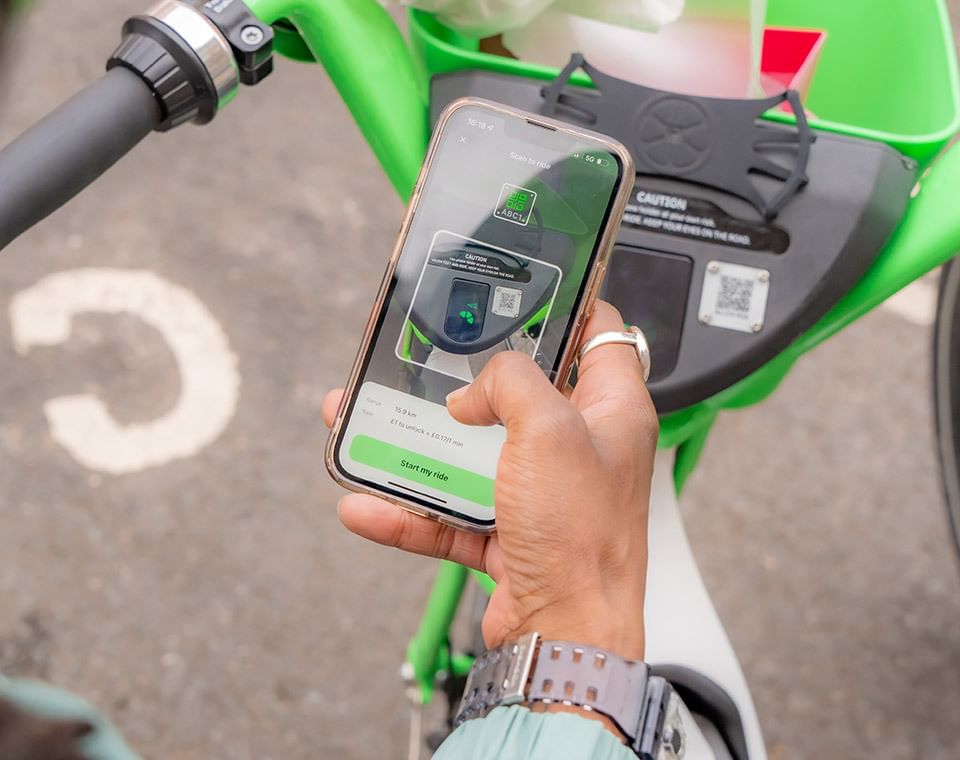
Lime’s transportation network is managed through its app. You’ll need to register and add a payment method to see nearby available scooters and e-bikes. When you arrive at the vehicle, you scan its QR code to unlock it, paying a one-time activation fee before per-minute charges begin.
You can also reserve a vehicle for a short period, which is handy if you’re a few minutes away from the pick-up point.
Lime monitors its vehicles with GPS trackers and geofencing, while enforcing speed restrictions in some cities. It’s a good idea to read up on local requirements regarding e-bikes and scooters before renting a Lime vehicle, as they vary from city to city, and if you use or park the bike incorrectly, you could be subject to a fine.
Once you’ve finished using your e-bike or scooter, you’ll need to park it in a legally approved area. You can leave it for a short time in an authorized bike rack or find designated parking pins nearby in the Lime app.
You’ll then need to tap ‘End Ride’ on the app and take a photo of your parked vehicle, which you then upload to confirm that you’ve legally parked the e-bike or scooter.
How Much Does It Cost? Activation, Per-Minute Charges & Subscriptions
The cost of renting a Lime vehicle isn’t fixed and varies by city, vehicle type, and the current demand. Renting during peak commuting hours in busy cities will be more expensive than hiring a bike for midday sightseeing tours, for instance.
There are two costs: the one-time activation fee and the per-minute charge. Most Lime vehicles require a $1.00 activation fee, and you can then expect to pay between $0.15 and $0.50 per minute, though rates can exceed this during peak hours.
So, you can expect a 10-minute ride during peak times to cost between $5.00 and $7.00, but the same journey could cost less than $3.00 during off-peak hours.
If you’re a regular user, you might consider LimePass or LimePrime, introduced below.
LimePass
LimePass lets you prepay for minutes to access free unlocks and discounts on the standard per-minute charges. Your minutes are usually valid for between three and 30 days, and you can spread them across multiple rides before they expire.
LimePrime
This is a recurring monthly subscription that auto-renews monthly. You benefit from free vehicle unlocks, extended 30-minute reservations, and discounted flat-rate rides or reduced per-minute pricing. The cost of LimePrime varies by city, but is usually between $5.99 and $8.99 per month.
Lime Discounts, Bonuses & Promotions
Lime does not run flashy seasonal sales, but it does offer three legitimate ways to ride for less, each available straight from the official Lime app.
- LimePrime — A monthly subscription that waives the unlock fee on every ride and discounts per-minute pricing. Pricing varies by city — typically $5.99–$9.99 per month in the US.
- LimePass — Pre-paid minute bundles (valid 3–30 days) with free unlocks and reduced per-minute rates. Better than LimePrime if you’re only in town for a few days.
- Lime Access — Up to 70% off standard rates for riders enrolled in qualifying programmes (SNAP, Medicaid, Pell Grant, subsidised housing and similar). Apply at li.me/community-impact.
- Student & city pilots — Verified university students in eligible markets (e.g. Italy) get 20% off the standard rate; some cities — Grand Rapids, Hackney — run their own local credits and free-ride programmes.
Insider tip: New-user promo codes float around the web but are largely unreliable and city-specific. Skip the coupon sites — open the Lime app’s Promotions tab, where Lime sends targeted offers (often 25–50% off) to inactive accounts every few weeks.
Reviews & Ratings: Is Lime Legit?
Lime’s app is excellent, rated highly by iOS and Android users:
- Google Play Store: 4.7/5.0 (669,000+ ratings)
- App Store: 4.9/5.0 (2,200,000+ ratings)
Google Play Rating: “My first time to trial a Lime bike hire. For a 60-year-old, the instructions are clear and easy to follow, and the bike is easy to operate, even with 10kg of cargo in the basket.” Rodney Luke

Users agree that Lime is easy to use, with an intuitive interface that helps them find vehicles nearby. The unlocking process is also praised for being simple and easy to follow.
On the flip side, some users have been frustrated by the drop-off process, finding it difficult to locate approved drop-off zones. To combat this, plan your journey ahead of time and consider where you’ll leave your Lime ride.
Alternatives to Lime for e-Bike Rentals? Check out Veo
Lime’s closest rival is Veo, which runs a similar app-based model but operates almost entirely in US cities (for now). Its appeal is variety — pedal bikes, seated scooters, and adaptive vehicles sit alongside the standard fleet — and it tends to be marginally cheaper, with unlock fees under $1 and per-minute rates capped around $0.20.
Lime and Veo both offer app-based electric bikes and scooters, but Lime has broader availability, operating in 280+ cities in 30+ countries. Veo is primarily offered in US cities at the time of writing, with aspirations to expand in the coming years.
The reason to choose Veo over Lime is its broader vehicle selection. Alongside scooters and bikes, Veo also offers pedal bikes, seated scooters, and adaptive vehicles. Veo is also slightly cheaper than Lime, with a lower one-time activation fee (usually <$1.00) and lower per-minute rates (up to $0.20 compared to Lime’s $0.50).